

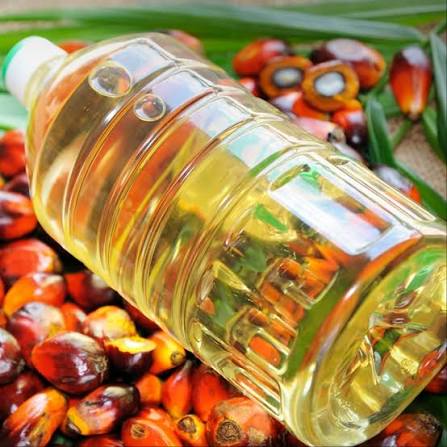
If you work in food manufacturing, you’ve probably already used refined palm oil today without necessarily thinking about it by name. Refined palm oil applications in food industry production span frying, baking, packaged snacks, confectionery, dairy alternatives, and more, and the reason it shows up in so many categories comes down to a fairly simple set of functional properties, not just price. We manufacture and export RBD palm oil, olein, and stearin, so this is written from the supply side of that relationship, covering where each form actually gets used and why a formulator would choose it.
We’ll go category by category rather than staying general, since “used in food” doesn’t tell you much on its own, and the specific application usually determines which grade or fraction you actually want to be sourcing.

Frying: The Single Biggest Application
Among refined palm oil applications in the food industry, frying oil is probably the largest single use by volume, both for commercial food service and for packaged fried snacks. Palm olein, the liquid fraction produced through fractionation, is the form most commonly used here, and it’s chosen for a specific reason: its fatty acid profile gives it better oxidative stability at high, sustained frying temperatures than many other liquid vegetable oils, meaning it breaks down more slowly across repeated fry cycles.
That stability matters commercially in ways that go beyond flavor. An oil that degrades slowly needs to be changed out less often, which affects both ingredient cost and the consistency of the finished product across a long production run or a busy service day. Instant noodles, potato chips, and countless other fried snack categories rely on this property specifically, and it’s a big part of why palm olein remains a default choice in commercial frying operations worldwide, not just a cheaper substitute for something else.
Restaurant and quick-service frying is a related but slightly different case, since the oil there gets reused across many shorter fry cycles rather than one continuous production run. Palm olein’s resistance to polymerization, meaning it doesn’t thicken and darken as quickly as some oils under repeated heating, is why it remains popular in commercial kitchens that fry continuously through a service day and can’t afford to change oil every few hours without hurting margins.
Bakery, Margarine, and Shortening
Palm stearin, the higher-melting solid fraction, does most of the work in this category. Margarine and shortening formulations need a fat with a specific solid fat content across a temperature range, meaning it stays workable and spreadable at room temperature but doesn’t melt out too early during baking. Palm stearin, often blended with palm olein or other oils to hit a precise melting curve, gives formulators that control without relying on partial hydrogenation, which is increasingly avoided across the industry due to trans-fat concerns.
In laminated dough products like croissants and puff pastry, the fat’s plasticity, meaning how it behaves when rolled and folded between dough layers, is what creates the distinctive flaky layering, and palm-based shortenings are formulated specifically to hold that structure through the lamination and baking process. Cookie and cracker doughs use similar palm-based shortenings for a different reason: controlling spread and texture in the finished baked product.
Cake and sponge formulations use palm-based shortening for aeration, since a fat with the right crystal structure holds air bubbles during creaming better than a purely liquid oil would, directly affecting the final crumb texture and volume of the baked product. Bread-making uses smaller amounts of palm-based fat as a dough conditioner, improving softness and extending shelf life by slowing staling, which is a meaningful commercial consideration for any packaged bread product sitting on a retail shelf for days rather than being consumed same-day.
Confectionery and Chocolate Compounds
Confectionery is one of the more technically demanding refined palm oil applications in the food industry, because chocolate and compound coatings need a fat that melts within a narrow temperature window, close to body temperature, to get that clean snap and melt-in-the-mouth texture consumers expect. Specially fractionated palm-based fats, sometimes further processed through techniques like interesterification, are formulated to mimic cocoa butter’s melting behavior at a lower cost, and they’re widely used in compound coatings, fillings, and center creams.
These aren’t standard CP8 or CP10 grade oils used as-is, they’re specialty fractions built for this exact purpose, but they start from the same refining and fractionation chain covered in our piece on how refined palm oil is made. If your confectionery application needs a specific melting profile, that’s a conversation worth having directly with us about what fraction or blend actually matches your target.
Cocoa butter equivalents (CBEs) and cocoa butter substitutes (CBSs) are the two main categories formulators ask about, and the difference matters for labeling as much as function. CBEs are typically blended to be compatible with cocoa butter in any ratio without disrupting the fat’s crystal structure, while CBSs are formulated to replace cocoa butter more fully and usually can’t be mixed with it freely. Palm mid-fraction, a further-fractionated cut of palm stearin, is a common base for CBE production specifically because its melting behavior closely tracks cocoa butter’s own profile.
Instant Noodles and Snack Foods
Instant noodles deserve their own mention among refined palm oil applications in the food industry because of sheer volume, they’re one of the most widely consumed packaged food categories globally, and nearly all of them are fried in palm olein during production. The oil’s stability under the high-throughput, high-temperature frying used in noodle manufacturing directly affects the shelf life and consistent flavor of the finished product across every batch that comes off the line.
Beyond noodles, savory snacks like potato and corn-based chips, crackers, and extruded snacks lean on the same frying and coating properties. Palm oil’s neutral flavor is actually an asset here too, since it doesn’t compete with or mask the seasoning applied to the finished snack, which matters more than people expect in a category where flavor consistency drives repeat purchases.
Non-Dairy Creamer and Dairy Alternatives
Non-dairy creamers, whipped toppings, and coffee whiteners are a less visible but genuinely large category among refined palm oil applications in the food industry. Palm kernel oil is more common in the very fine powdered creamers, but refined palm oil and its fractions show up broadly across coffee whiteners, dessert toppings, and plant-based dairy alternative products, chosen for the same combination of oxidative stability and a clean, neutral flavor that doesn’t interfere with the product it’s added to.
These formulations tend to be sensitive to exactly the quality parameters we cover in our guide to refined palm oil quality standards, since even small variations in FFA or peroxide value can show up as an off flavor in a product meant to be flavor-neutral. That’s part of why buyers in this segment often specify tighter-than-standard tolerances on their purchase contracts.
Refined Palm Oil vs Other Vegetable Oils in Food Manufacturing
Formulators comparing refined palm oil applications in food industry use against soybean, sunflower, canola, or coconut oil usually land on a few consistent tradeoffs. Soybean and sunflower oils are liquid at room temperature and need hydrogenation or blending to reach the solid fat functionality palm oil provides naturally, which adds a processing step and, historically, the trans-fat concern discussed above. Canola oil offers a favorable fatty acid profile for some nutritional labeling purposes but doesn’t match palm oil’s frying stability at sustained high heat.
Coconut oil is closer to palm oil in being naturally solid at room temperature, but it has a distinct flavor and aroma that palm oil largely lacks, which rules it out for applications where flavor neutrality matters, and it also carries a higher price point in most markets due to more limited global supply. Palm oil’s combination of natural semi-solid structure, frying stability, flavor neutrality, and large, year-round supply is what keeps it competitive across such a broad range of categories rather than excelling narrowly in just one.
None of this means palm oil is the automatic right choice for every formulation, some products specifically want the flavor coconut oil brings, or the labeling profile canola offers, and we’re upfront about that with buyers rather than pretending palm oil is a universal answer. It’s simply the oil that fits the widest range of food manufacturing applications without requiring extra processing steps, which is the practical reason it dominates the categories covered above.
Why Refined Palm Oil Applications in Food Industry Manufacturing Keep Growing
Across nearly every one of these refined palm oil applications in food industry manufacturing, a few practical advantages keep coming up. Palm oil is naturally semi-solid, so it can substitute for hydrogenated fats without the trans-fat issue that partial hydrogenation carries, which has made it a go-to replacement as regulations around trans fats tightened globally over the past couple of decades. Its oxidative stability at high heat outperforms many liquid oils for frying use specifically, which translates directly into longer shelf life and fewer oil changes in commercial kitchens.
Its neutral flavor and odor mean it doesn’t compete with other ingredients in a formulation, and fractionation lets a single crude source be split into fractions with very different functional properties, olein for frying, stearin for solid fat applications, rather than needing entirely different crops to hit different melting points. On top of the functional case, palm oil’s year-round tropical harvest cycle keeps supply more consistent and generally more price-stable than seasonal oilseed crops, which matters to a food manufacturer trying to hold a consistent cost basis across a full production year.
Palm Oil and the Global Shift Away from Trans Fats
It’s worth spending a moment on why so many of these applications moved toward palm oil in the first place, because the timeline actually explains a lot about current demand. Through the 1990s and 2000s, food manufacturers relied heavily on partially hydrogenated vegetable oils to get solid-at-room-temperature fats for margarine, shortening, and bakery products. As the health risks of industrially produced trans fats became clear, regulators worldwide began phasing them out, and the World Health Organization’s REPLACE initiative has pushed for their global elimination from the food supply.
Palm oil’s naturally semi-solid structure made it one of the most practical replacements available at scale, since fractionation could produce the range of melting points formulators needed without hydrogenation. That’s the underlying reason refined palm oil applications in food industry production expanded so quickly across bakery, confectionery, and snack categories over roughly the past two decades, not a marketing trend but a direct response to a regulatory and public health shift that reshaped how food manufacturers source solid fats.
That history is also why quality and sourcing documentation matter more in this category than they might have a generation ago. A manufacturer replacing a hydrogenated fat with a palm-based one is making a food safety and labeling decision, not just a cost decision, and buyers increasingly want to see the certifications and lab data behind that switch rather than take a supplier’s word for it.
Sourcing Refined Palm Oil for Food Manufacturing
We supply CP8 and CP10 RBD palm oil, along with fractionated olein and stearin, for food manufacturers sourcing at bulk volumes, with certificates of analysis and RSPO-aligned, HACCP, ISO 22000, Halal, and Kosher documentation available depending on your market. Packaging runs from flexitanks and ISO tanks for full container loads down to drums for smaller production runs.
Food manufacturers evaluating a new supplier typically want to see both the functional specs and the paper trail behind them, which is exactly what we cover in our companion guide to refined palm oil quality standards. If your production line has specific handling or storage requirements once the oil is on-site, our piece on refined palm oil storage and handling covers tank temperatures and shelf-life practices in more depth.
Our full product catalog and palm oil overview page cover every grade and fraction we currently produce, and our guide on the refined palm oil manufacturing process walks through the specifications table for each grade if you’re comparing us against another supplier on paper.
Frequently Asked Questions
What’s the most common refined palm oil application in commercial food production?
Frying is the largest single use by volume, both in food service and for packaged fried products like instant noodles and snack foods, mainly because palm olein holds up well under repeated high-heat frying cycles.
Can refined palm oil replace hydrogenated fats in a formulation?
In most cases, yes. Its naturally semi-solid structure gives formulators the texture and stability benefits that used to require partial hydrogenation, without introducing trans fats, which is one of the main reasons it became a standard substitute across bakery and confectionery applications.
Is palm olein or palm stearin better for baking applications?
It depends on the product. Stearin’s higher melting point suits margarine, shortening, and laminated doughs where structure matters, while olein’s liquid state at room temperature suits applications that need a pourable or spreadable fat.
Does refined palm oil affect the flavor of the finished food product?
Properly refined RBD palm oil is deliberately neutral in flavor and odor, which is one of its practical advantages, it doesn’t mask or compete with other ingredients, unlike some unrefined or minimally processed oils.
What grade of refined palm oil is used in instant noodle production?
Palm olein is the standard choice for frying instant noodles, chosen specifically for its oxidative stability under the high, repeated frying temperatures used in noodle manufacturing.
Is refined palm oil suitable for plant-based or dairy-alternative products?
Yes, it’s widely used in non-dairy creamers, whipped toppings, and plant-based dairy alternatives, valued for its neutral flavor and functional stability, though formulations in this category often specify tighter quality tolerances than standard food-grade use.
Do confectionery-grade palm fats require special processing beyond standard refining?
Yes. Confectionery coatings typically use specially fractionated or interesterified palm fats engineered to match a specific melting profile, which goes beyond the standard degumming, bleaching, and deodorization used for general food-grade RBD oil.
How do I know which grade or fraction fits my specific food application?
Tell us the application, expected processing temperature, and any texture or melting requirements, and we can recommend whether standard RBD oil, olein, stearin, or a specialty fraction is the right fit before you commit to an order.
Why did food manufacturers switch to palm oil instead of partially hydrogenated oils?
Partially hydrogenated oils create trans fats, which regulators worldwide have moved to eliminate on public health grounds. Palm oil’s naturally semi-solid structure lets formulators get similar textural properties without hydrogenation, which made it a practical, widely available substitute during that transition.
What documentation should I expect when sourcing refined palm oil for a food product?
At minimum, a certificate of analysis for the specific batch and any certifications relevant to your market, such as HACCP, ISO 22000, RSPO, Halal, or Kosher. A supplier should be able to produce current documentation on request rather than a static reference sheet reused across every order.
If you’re formulating a new product or switching suppliers on an existing line, send us the application and volume you’re working with and we’ll put together a spec sheet and quote that actually matches what you need, not a generic one-size-fits-all offer.


2 thoughts on “Refined Palm Oil Applications in Food Industry Manufacturing”