

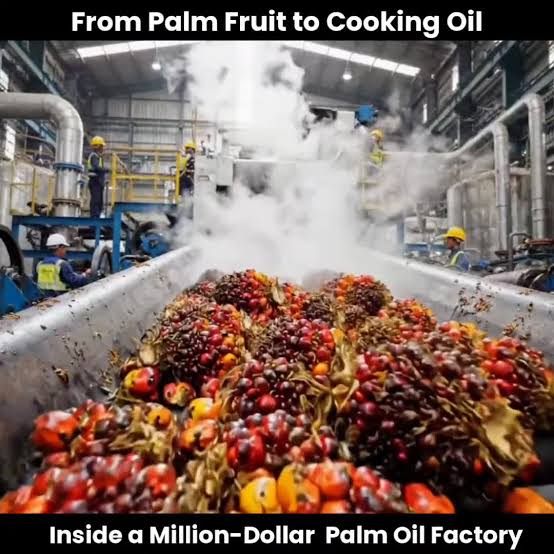
If you’ve ever compared quotes for refined palm oil and wondered why one supplier’s CP8 looks nothing like another’s on paper, the answer usually comes down to one thing: what actually happens between the fruit bunch and the drum you receive. We’re a Thailand-based manufacturer and exporter of refined palm oil, and this guide walks through the refined palm oil manufacturing process the way we run it on our own lines, not the textbook version.
We’ll cover how refined palm oil is made step by step, the refined palm oil quality standards we test every batch against, where refined palm oil applications in the food industry actually show up on a shelf, and the refined palm oil storage and handling practices that keep a shipment stable from our tank farm to your factory. Specs are included throughout, because buyers don’t need marketing copy, they need numbers they can put in a purchase order.

The Refined Palm Oil Manufacturing Process, Step by Step
People ask us “how is refined palm oil made” more than almost any other question, usually right after asking about price. Fair enough. The process determines everything else, including price, so it’s worth walking through properly.
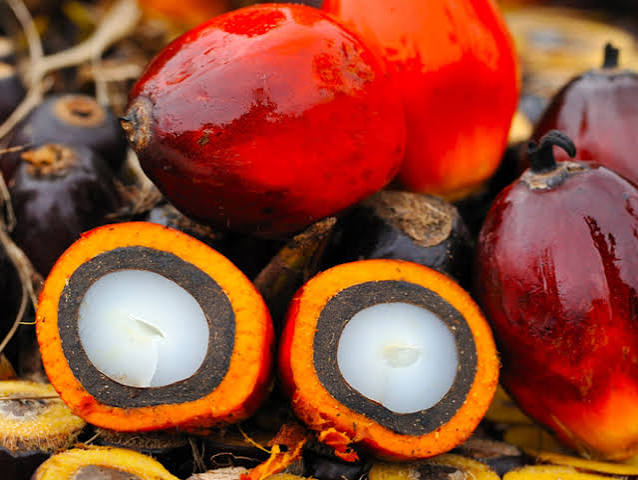
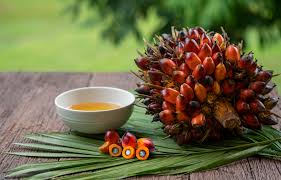
It starts with fresh fruit bunches from the oil palm tree, harvested and sent to a mill within about 24 to 48 hours. Palm fruit starts breaking down the moment it’s cut, and free fatty acid content climbs fast if the fruit sits around, so timing here matters more than people expect. At the mill, the bunches are sterilized with steam, the fruit is stripped from the bunch, and the fruit is pressed to extract crude palm oil, or CPO.
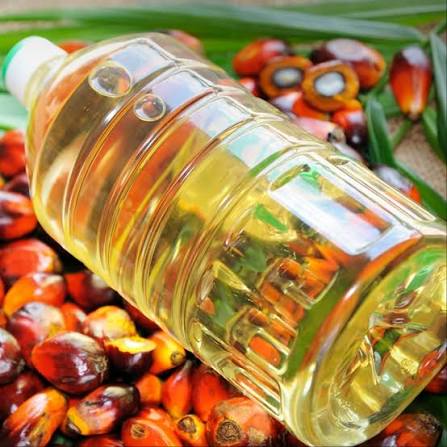
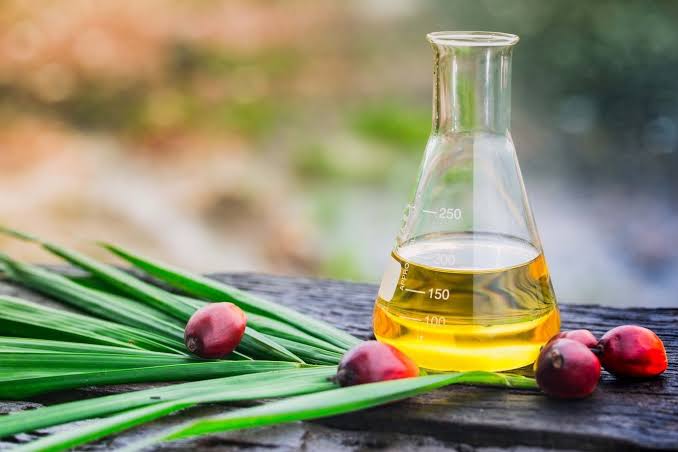
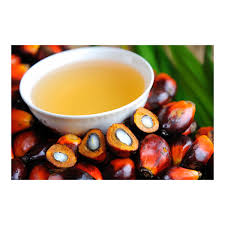
This crude oil is dark red-orange because of its natural carotene content, and it’s not something you’d want to cook with straight out of the press. It carries gums, free fatty acids, trace metals, moisture, and odor compounds that need to come out before it’s food-grade.
That’s where refining comes in, and this is the part of the refined palm oil manufacturing process that actually turns CPO into the clear, light-colored, neutral-tasting oil people picture when they hear “cooking oil.” Most of the industry, us included, uses physical refining rather than the older chemical (caustic) refining route, because physical refining handles palm oil’s specific fatty acid profile more efficiently and produces less wastewater.
Degumming. The crude oil is treated to remove phospholipids and gums. This step usually uses a small dose of phosphoric acid to convert non-hydratable gums into a form that can be removed, protecting the bleaching earth used in the next stage from getting used up too fast.
Bleaching. Degummed oil is mixed with bleaching earth (an activated clay) under vacuum and heat, then filtered. This pulls out carotenoids, trace metals, and oxidation byproducts, and it’s the step that takes the oil from deep red-orange toward a pale yellow. Color is actually one of the easiest ways to sanity-check a batch before it even reaches the lab, though we never rely on color alone.
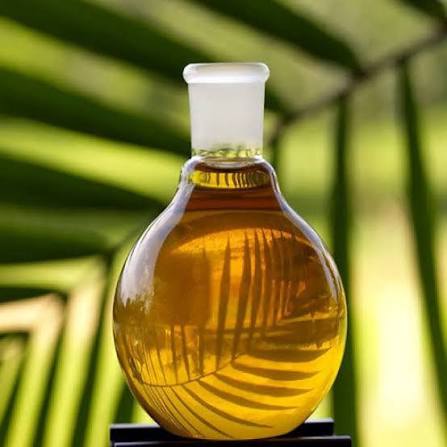
Deodorization. This is the step most people have never heard of but that does the heavy lifting on taste and smell. The bleached oil is heated to somewhere around 240 to 270°C under high vacuum, and steam is passed through it. This strips out free fatty acids and volatile odor compounds through steam distillation, which is also where the free fatty acid level gets pulled down to the low numbers buyers expect on a spec sheet. What comes out the other end is RBD palm oil, meaning Refined, Bleached, and Deodorized, and this is the base product behind grades like CP8 and CP10.
Fractionation. Depending on what a customer needs, RBD palm oil can be split further into palm olein (the liquid fraction, used for frying and as a general cooking oil) and palm stearin (the higher-melting solid fraction, used in margarine, shortening, and bakery fat blends). This is done by controlled cooling and crystallization, then filtering out the solid crystals from the liquid.
That whole sequence, degumming through deodorization and optional fractionation, is really the entire answer to how refined palm oil is made at commercial scale, and we go even deeper into each step, with more on harvest timing and fractionation, in our dedicated guide on how refined palm oil is made. It’s not a secret process, it’s a controlled one, and the consistency comes from tight control at each stage rather than any single trick. On our end, every batch gets pulled and tested at each of these transition points before it moves forward, because catching an off-spec batch after deodorization is a lot cheaper than catching it after it’s loaded on a vessel.
None of this changes depending on who’s buying, either. Whether an order is headed to a bakery in Europe, a snack food plant in the Middle East, a distributor in the Americas, or a noodle manufacturer in Asia, the refined palm oil manufacturing process on our side stays the same. What changes is packaging, documentation, and sometimes the specific grade, not the underlying refining steps. We say this because buyers occasionally ask if there’s a “better” version of the process reserved for certain markets, and there isn’t. A batch either passes spec or it doesn’t, and we don’t ship the ones that don’t.
Refined Palm Oil Quality Standards We Actually Test Against
“Quality” gets thrown around loosely in this industry, so here’s what we mean by it in practical terms. Refined palm oil quality standards aren’t a vague promise, they’re a specific set of lab numbers, and any serious supplier should hand these to you before you ask.
Here’s what a typical RBD palm oil / CP8-CP10 spec sheet looks like on our end:

| Parameter | Typical Specification | Why It Matters |
|---|---|---|
| Free Fatty Acid (as palmitic) | 0.10% max | Higher FFA means more breakdown, shorter shelf life, and a worse smoke point in frying |
| Moisture & Impurities | 0.10% max | Excess moisture accelerates hydrolysis and spoilage during storage |
| Peroxide Value | 5 meq/kg max | An early warning sign of oxidation before rancidity is noticeable by smell or taste |
| Iodine Value | 50–55 (Wijs) | Indicates the degree of unsaturation and how the oil will behave at different temperatures |
| Melting Point | 33–39°C | Affects texture, cloud point, and suitability for a given end use |
| Color (Lovibond, 5.25" cell) | 3.0 Red max | A practical, fast check for refining consistency |
| Slip Melting Point | Per grade requested | Relevant for stearin/olein fraction specs |
We test against these using the same reference methods labs and buyers already recognize, including the Codex Alimentarius standard for named vegetable oils, which sets out the internationally accepted identity and quality parameters for palm oil and other vegetable oils. If you want to see how that standard is structured, the Codex Alimentarius portal publishes the full text, and it’s worth a look if you’re writing your own incoming QC spec.
Beyond the lab numbers, refined palm oil quality standards also cover where the oil came from and how it was produced. Buyers increasingly ask for RSPO-aligned sourcing, whether that’s mass balance or segregated supply chains, on top of standard food safety certifications like HACCP and ISO 22000, plus Halal and Kosher certification depending on the destination market. We get asked about RSPO status on close to every enquiry now, not just from European buyers, and you can check what that certification actually requires directly on the RSPO website if you’re building sustainability sourcing requirements into your own procurement policy.
One thing worth saying plainly: a certificate of analysis is only as good as the lab that issued it and the sample it was pulled from. We run our own in-house testing on every production lot, and we’ll send a pre-shipment sample and third-party inspection report on request, because we’d rather a buyer catch a concern before the container leaves port than after.
We’d also push back gently on the idea that refined palm oil quality standards are only a concern for large buyers running their own QC labs. Smaller importers and food service distributors ask us for the same documentation, just less formally, and we treat those requests the same way. If your incoming inspection is a quick smell-and-color check rather than a full lab panel, that’s fine, but it’s still worth knowing what the numbers behind that check should be, which is the whole point of publishing a spec sheet in the first place rather than making buyers ask for one.
If you want to see the exact grade breakdown we offer, our CP8 and CP10 product pages list current specs and packaging, our general palm oil overview compares all three grades side by side, and we also supply crude palm oil for buyers running their own refining. For a broader look at how HACCP certification factors into supplier selection, our piece on choosing a HACCP certified cooking oil manufacturer covers what to actually check, not just what to ask for.
Refined Palm Oil Applications in the Food Industry
This is the part that actually matters to most of our buyers: what refined palm oil is used for once it leaves our facility. Refined palm oil applications in the food industry are broader than most people assume, and the specific grade or fraction usually depends on the end use.
Frying oil. Palm olein is one of the most widely used frying oils globally, largely because of its high oxidative stability at frying temperatures. It resists breakdown better than many unsaturated oils, which matters a lot to quick-service restaurants and snack food manufacturers running continuous fryers for hours at a stretch.
Bakery and confectionery fats. Palm stearin and interesterified palm-based fats are used heavily in margarine, shortening, biscuit fillings, and cake fats, largely because of their functional melting behavior. Getting that mouthfeel right in a chocolate coating or a laminated pastry dough depends on the solid fat content curve, which is a direct result of how the oil was fractionated during refining.
Instant noodles and snack coatings. A huge volume of refined palm oil goes into instant noodle production, both for frying the noodle block and for the flavor oil sachets, because it holds up well to the high-heat, short-time frying process used at scale.
Non-dairy creamer and processed foods. Refined palm kernel and palm oil derivatives show up in coffee creamers, spreads, and a long list of processed food formulations where a stable, semi-solid fat is needed at room temperature.
Industrial and food-adjacent uses. Beyond direct food use, refined palm oil and its derivatives are used in soap making, some cosmetics, and animal feed, though the specs and grade requirements differ from food-grade oil.
Put all of that together and refined palm oil applications in food industry settings really break down into two categories: oils that stay liquid and go into a fryer or a bottle, and fractions that firm up and go into a mold, a wrapper, or a mixing bowl. Knowing which category your product needs before you place an order saves everyone time, since asking for the wrong fraction is one of the more common mix-ups we sort out during onboarding with a new buyer.
We hear from a lot of buyers, restaurant supply distributors especially, who are switching suppliers because their current source can’t keep specs consistent order to order. If that’s part of why you’re reading this, our bulk cooking oil supply page covers how we handle recurring orders and private label packaging for that kind of buyer, and our earlier piece on palm oil wholesale price factors is worth reading if pricing volatility is your main concern right now.
Refined Palm Oil Storage and Handling: Keeping Spec From Origin to Your Tank
Refined palm oil storage and handling is where a lot of quality problems actually happen, and it’s rarely the refining process that’s at fault. Palm oil is semi-solid at room temperature, which means storage and handling requires more attention than a fully liquid oil like soybean or sunflower.
Temperature control. RBD palm oil should generally be held between about 45°C and 55°C in storage to keep it fully liquid and pumpable without overheating it. Go much above roughly 70°C for extended periods and you start accelerating oxidation and color reversion, undoing some of what the refining process just achieved. Go too low and the oil starts to crystallize unevenly, which causes pumping and quality headaches on the receiving end.
Tank design and insulation. Storage tanks carrying palm oil are typically insulated and fitted with heating coils to maintain that temperature band evenly, rather than just heating from one point and letting the rest of the tank drift. Uneven heating is one of the more common causes of localized oxidation we see when we’re asked to troubleshoot a buyer’s receiving tank.
Avoiding contamination. Trace metals, particularly copper and iron, catalyze oxidation in vegetable oils, so tanks, pipework, and pumps in contact with refined palm oil are typically stainless steel or coated to avoid metal pickup. Moisture ingress is the other main risk, since water promotes hydrolysis and free fatty acid formation over time, which is exactly what the refining process was designed to remove in the first place.
Nitrogen blanketing. For longer storage periods, an inert nitrogen blanket over the oil surface in the tank reduces oxygen exposure and slows oxidative degradation, particularly relevant for buyers holding larger reserve stock between shipments.
Packaging for transport. For export, we ship in flexitanks for full container loads, ISO tanks for larger volumes, and steel drums, IBC totes, or jerry cans for smaller or retail-adjacent orders. Each format has different temperature-holding characteristics in transit, and we advise on the right choice based on your shipping route and climate, particularly for buyers in colder destination ports where the oil may need reheating on arrival.
Shelf life and rotation. Properly refined and stored RBD palm oil typically holds spec for around 12 months from production, though we always recommend first-in, first-out rotation rather than relying on the shelf life number alone, since real-world storage conditions vary a lot between facilities.
Getting refined palm oil storage and handling wrong doesn’t usually show up immediately. It shows up three months later as a slightly higher FFA reading, a color shift, or an off note in the finished food product, and by then it’s a lot harder to trace back to the cause. That’s part of why we document tank temperatures and turnaround times on our end for every shipment, and we’re happy to share that data alongside the certificate of analysis if it helps your own quality team.
What You Get When You Order From Us
We manufacture and export refined palm oil in the following grades and formats:
- CP8 and CP10 RBD Palm Oil – our standard export grades, full specs on the CP8 and CP10 pages
- Crude Palm Oil (CPO) – for buyers running their own refining, detailed on our crude palm oil page
- Private label and OEM packaging – bottled, drummed, or bulk under your own brand, as outlined on our private label palm oil page
- Certifications – HACCP, ISO 22000, Halal, and RSPO-aligned sourcing available on request
- Packaging options – flexitanks, ISO tanks, drums, IBC totes, and jerry cans, sized to your order volume
- Full documentation – certificate of analysis, pre-shipment inspection reports, and Codex-referenced spec sheets with every order
If refined palm oil is one product among several you’re sourcing, our full product catalog covers our other edible oils as well, and if you’d rather start with a conversation than a spec sheet, that’s what we’re here for.
On lead time and order size: most first orders start at container-load volumes, though we’ll talk through smaller trial shipments for buyers who want to run their own quality checks before committing to a full container. Production-to-shipment lead time typically runs a few weeks depending on grade, packaging, and current production schedule, and we’ll give you a real date rather than a placeholder once we know your order details. None of this is meant to lock you into a rigid process, it’s just what tends to go smoothly for both sides based on the orders we handle every week.
Frequently Asked Questions
What’s the difference between CP8 and CP10 refined palm oil?
Both are RBD grades that have gone through the same refined palm oil manufacturing process; the grade numbers relate to color and specification tolerances rather than a different production method. We’ll walk you through which one fits your application when you send us your intended use.
Is refined palm oil the same as palm olein?
Not quite. RBD palm oil is the full refined product; palm olein is the liquid fraction produced after fractionating RBD palm oil, and it’s what most frying-oil buyers actually want.
How long does refined palm oil last in storage?
Around 12 months when refined palm oil storage and handling practices are followed correctly: consistent temperature between roughly 45 and 55°C, protection from moisture and metal contamination, and first-in, first-out stock rotation.
Can refined palm oil be used for baking, not just frying?
Yes. Fractionated palm stearin and interesterified palm-based fats are standard ingredients in margarine, shortening, and bakery fat blends, which is one of the larger refined palm oil applications in the food industry outside of straight frying use.
Do you supply refined palm oil outside of any specific region?
Yes, we ship refined palm oil worldwide, with packaging and documentation adjusted for each destination’s import requirements, climate, and preferred container format.
What paperwork should I expect with a refined palm oil shipment?
At minimum, a certificate of analysis matching the agreed spec, a certificate of origin, packing list, and bill of lading. We also provide RSPO, Halal, or Kosher certificates where applicable, and a pre-shipment inspection report if that’s part of your import requirements. If your customs broker needs something specific to your country’s import rules, tell us early rather than after the container is booked, since some documents take longer to issue than the shipping schedule allows for.
If you’re ready to move past research and get an actual quote, tell us your required grade, volume, and destination port, and we’ll put together a spec sheet and pricing based on current production, not a generic price list.

3 thoughts on “Refined Palm Oil Manufacturing Process: How We Make, Test, and Ship RBD Palm Oil Worldwide”