

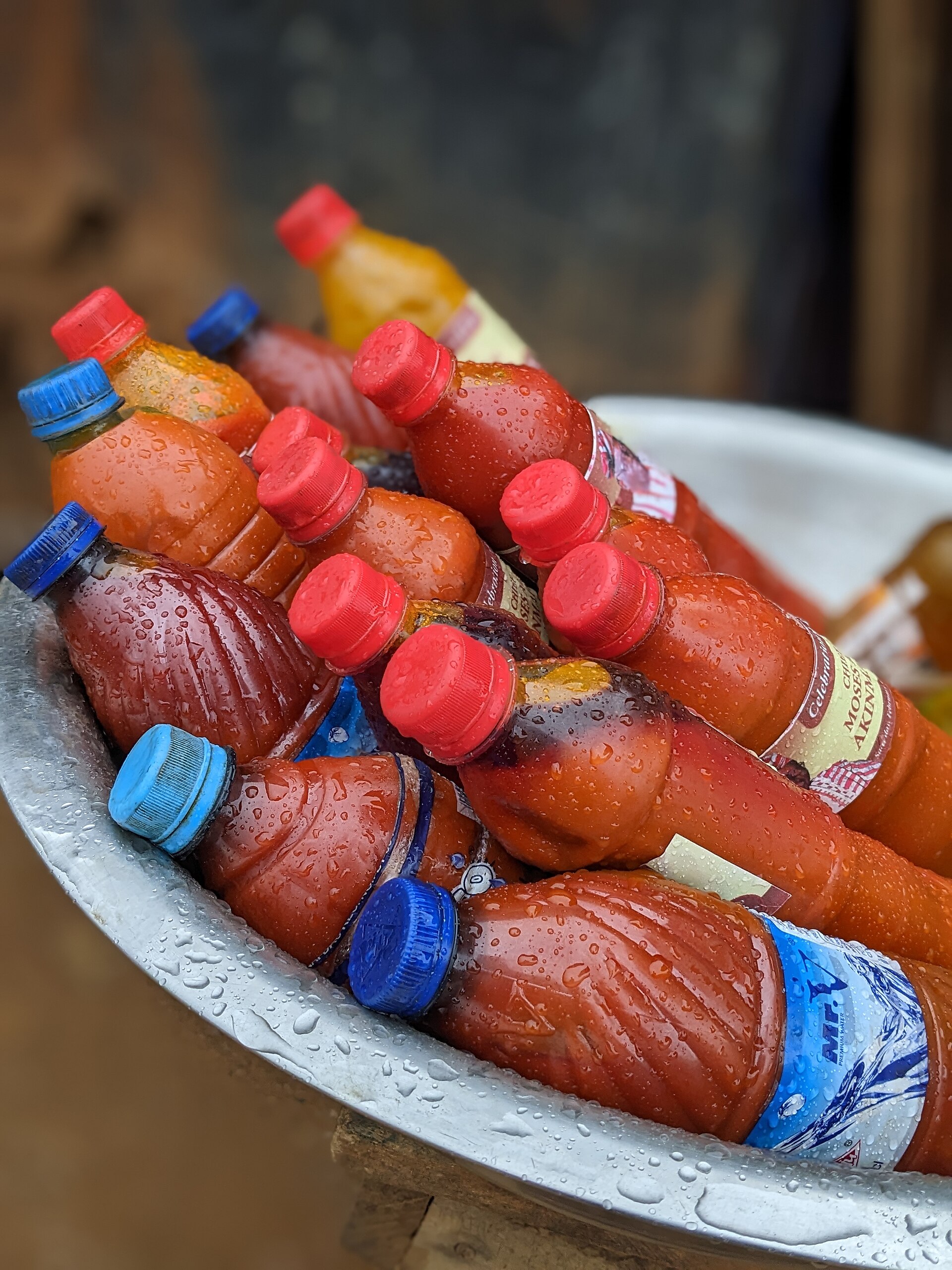
Why does palm oil solidify when other cooking oils stay liquid? If you’ve ever opened a drum of palm oil on a cool morning and found something closer to soft butter, or seen white flakes settle at the bottom of a bottle, you’ve probably asked that. The short answer is that palm oil has a lot of saturated fat, and saturated fats freeze at much higher temperatures than the fats in sunflower or soybean oil.
That isn’t a defect. It’s the reason palm oil works so well in baking, frying and margarine. But if you sell or store it, you need to understand it, or you’ll end up with complaints about oil that’s perfectly fine.
We sell crude palm oil, refined palm oil and the liquid CP8 and CP10 grades to buyers worldwide. Below we explain why does palm oil solidify, at what temperatures, what that means for each grade we sell, and how to handle it.
Table of Contents
The short answer
Palm oil is roughly half saturated fat, mostly palmitic acid. Saturated fat molecules are straight and pack together neatly, so they form crystals easily as soon as the temperature drops. Liquid oils like sunflower or canola are mostly unsaturated fat, with kinked molecules that don’t stack well, so they stay liquid even in a fridge.
So why does palm oil solidify at room temperature? Because “room temperature” in much of the world is below its melting range of about 33 to 39 °C. In the tropics, where palm grows, it’s often liquid. In cooler places, it sets.
What palm oil is made of
To really answer why does palm oil solidify, you have to look at the fats inside it. A typical breakdown for palm oil looks like this:
| Fatty acid | Type | Approx. share in palm oil |
|---|---|---|
| Palmitic acid (C16:0) | Saturated | 42 to 46% |
| Stearic acid (C18:0) | Saturated | 4 to 6% |
| Oleic acid (C18:1) | Monounsaturated | 37 to 41% |
| Linoleic acid (C18:2) | Polyunsaturated | 9 to 11% |
| Others | Mixed | Around 1 to 2% |
That table answers most of why does palm oil solidify on its own. Compare it to sunflower oil, which is around 10% saturated, or canola at about 7%. That big block of palmitic acid is the whole story. It’s the same fat that makes palm oil stable at high frying temperatures and slow to go rancid.
These fatty acids don’t float around alone. They’re joined in threes on a glycerol backbone, forming triglycerides. Some triglycerides in palm oil have three saturated chains and melt above 60 °C. Others are mostly unsaturated and stay liquid near freezing. Palm oil is a mix of all of them, which is why it doesn’t snap from liquid to solid at one temperature. It goes cloudy, then soft, then firm over a range.
Why does palm oil solidify slowly, and in layers?
This is the part that confuses buyers who ask why does palm oil solidify unevenly. Palm oil doesn’t set evenly. You might see:
- A clear liquid layer on top
- A cloudy middle
- A white or pale solid layer at the bottom
The fats with the highest melting points crystallise first, and because crystals are denser than liquid oil, they sink. If oil sits still while it cools, it separates by itself into something like palm stearin at the bottom and palm olein on top. That’s actually the same principle refineries use on purpose in fractionation. Our article on palm stearin vs palm olein explains the two fractions, and the palm oil fractionation process post shows how it’s done in a plant.
Palm fat also crystallises slowly. Its crystals take time to settle into their stable form. So oil that seems fine in the evening can be noticeably thicker the next morning, even if the temperature didn’t fall much more overnight.
What happens inside the crystals
If you want the slightly deeper science of why does palm oil solidify the way it does, it comes down to crystal forms. Fats can crystallise in more than one shape. The three main ones are called alpha, beta-prime and beta.
Alpha crystals form first when oil cools fast. They’re small and unstable. Over hours or days they rearrange into beta-prime crystals, which are fine, smooth and good for margarine and shortening. Palm oil likes to stay in beta-prime, which is one reason bakers value it. Some other fats move on to beta crystals, which are bigger and feel grainy.
This slow change is part of the answer to why does palm oil solidify further after you think it has finished. A drum that looked soft on day one can be noticeably firmer on day three at the same temperature. Nothing has gone wrong. The crystals are just settling into their stable form.
A simple test you can do yourself
You don’t need a lab to see the difference between grades. Take three small clear bottles. Fill one with RBD palm oil, one with CP10 and one with CP8. Warm them all until clear, then put them in a cool room or a fridge set to around 8 to 10 °C.
After a few hours you’ll see the RBD palm oil set firm, the CP10 go hazy, and the CP8 stay mostly clear. It’s the easiest way to show your own team, or your customers, why does palm oil solidify in some products and not others. It’s also a quick way to check that a delivery matches the grade you paid for.
At what temperature does palm oil solidify?
It depends on which palm oil you have. Ask why does palm oil solidify at 25 °C in one case and stay clear at 12 °C in another, and the answer is always the grade. Here’s how the main grades we sell behave.
| Product | Slip melting point | Cloud point | What you’ll see at 20 °C |
|---|---|---|---|
| Crude palm oil (CP0) | 33 to 39 °C | Not specified | Semi-solid, orange-red paste |
| RBD palm oil | 33 to 39 °C | Not specified | Soft, pale yellow solid |
| Palm olein CP10 | 24 °C max | 10 °C max | Clear liquid |
| Palm olein CP8 | 22 °C max | 8 °C max | Clear liquid |
| Palm stearin | 44 to 56 °C | Not applicable | Hard white solid |
So, why does palm oil solidify in one drum and stay liquid in another? Usually because they aren’t the same product. Crude and RBD palm oil are meant to be semi-solid at room temperature. CP10 and CP8 olein are meant to stay liquid, and only cloud when it gets cold.
You can see the full specs on our pages for crude palm oil (CP0), refined palm oil CP10 and refined palm oil CP8.
Is solid palm oil bad?
No. This is the most common worry behind the question why does palm oil solidify, and it’s almost always unfounded. Solid or cloudy palm oil hasn’t gone off. Melt it and it’s the same oil it was before.
Signs that oil really has gone bad are different: a sharp, rancid or soapy smell, a bitter taste, darker colour than normal, or foaming heavily in the fryer. Those point to high free fatty acid or oxidation, which we explain in free fatty acid and peroxide value. Clouding alone tells you nothing about freshness.
That said, if refined olein goes cloudy at a temperature well above its cloud point, ask questions. CP10 shouldn’t haze at 18 °C. If it does, the oil may be a different grade, or have moisture in it.
Why it’s actually useful
People sometimes see the question “why does palm oil solidify” as a complaint. For food makers, it’s a feature.
- Baking. Semi-solid fat traps air when creamed, which gives pastries and biscuits their texture.
- Margarine and shortening. Palm gives solid fat without hydrogenation, so no trans fats are created.
- Frying. Saturated fats resist breaking down at high heat. Fried food also comes out less greasy because the fat sets on the surface as it cools.
- Chocolate and confectionery. Palm fractions help coatings set and give a clean snap.
- Soap. Hard fats make firm bars. See palm oil in cosmetics and personal care manufacturing.
Our guide to refined palm oil applications in food industry goes into each of these in more detail.
Why does palm oil solidify in food products?
The same thing happens inside finished foods, and food makers use it on purpose. In a biscuit or a cream filling, palm fat sets as the product cools and holds its shape on the shelf. In instant noodles, palm oil used for frying sets on the noodle surface and keeps it from going soggy. In margarine, a blend of palm oil and liquid oil gives a spread that’s firm in the tub but soft on bread.
So when a food technologist asks why does palm oil solidify, they’re usually asking how to control it. The answer is blending and fractions. More stearin gives a harder set. More olein gives a softer one. We supply RBD palm oil, olein and can quote stearin, so you can tune the blend to your product.
Why does palm oil solidify in crude form too?
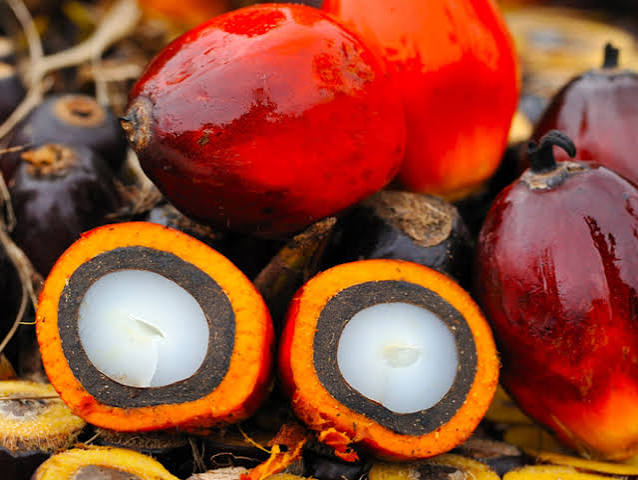
Crude palm oil sets for the same reason as refined palm oil: the fat profile is the same. It just looks different because it’s orange-red from carotene. Crude oil is usually kept warm in tanks at the mill and port, and heated before it’s pumped onto a ship. Our guide to crude palm oil price per ton explains how heating and packaging feed into the cost of a crude cargo.
How to melt solid palm oil safely
Once you know why does palm oil solidify, melting it is simple. If your oil has set and you need it liquid, warm it gently. Don’t rush it.
- Warm drums or jerrycans in a warm room, a hot water bath or with a drum heater on a low setting.
- Aim for about 10 °C above the melting point. For RBD or crude palm oil, 50 to 55 °C is plenty.
- Stir or roll the container once it’s melted, so the fractions mix back together.
- Never use a direct flame on a drum. It burns the oil at the wall and can damage the drum lining.
- Don’t hold oil hot for days. Heat speeds up oxidation, so melt what you need.
For bulk tanks, steam coils or hot water coils do the job. Industry practice, including the Codex Alimentarius code of practice for storing and transporting fats and oils, is to keep palm oil only slightly above its melting point during storage and heat it to around 50 to 55 °C for discharge.
How to stop palm olein clouding
For CP10 and CP8, clouding is the real issue, not solidifying. Why does palm oil solidify less in these grades? Because most of the hard fat has already been taken out as stearin. A few things help:
- Store above the cloud point, with a margin. Keep CP10 above about 15 °C and CP8 above 12 °C if possible.
- Keep oil dry. Moisture makes oil cloud earlier.
- Choose the right grade for the climate. In cool markets, CP8 is the safer bet. We compare the two in detail in CP8 vs CP10 palm oil.
- Blend with a liquid oil. Mixing palm olein with sunflower oil or soybean oil lowers the cloud point of the blend.
Shipping palm oil without solidifying problems
When buyers ask us why does palm oil solidify in transit, it’s usually a shipping question. Crude and RBD palm oil travel in flexitanks, ISO tanks or ship tanks. On cool routes, the oil sets during the voyage. That’s normal. It just has to be heated before it’s pumped out.
- Flexitanks for palm oil should come with a heating pad, so the container can be connected to steam or hot water at destination.
- ISO tanks often have built-in steam coils.
- Allow time. A 20 ton flexitank of solid palm oil can take a day or more to heat through.
We explain the pros and cons of each container in flexitank vs ISO tank, and general storage tips in refined palm oil storage and handling.
Why does palm oil solidify faster in some batches?
Two batches of the same grade can behave a bit differently, and buyers often ask us why does palm oil solidify sooner in one shipment than another. A few reasons:
- Iodine value. Lower IV means more saturated fat, so the oil sets sooner. This is why IV is on every spec sheet.
- Diglycerides. Higher levels can slow or change crystallisation. Fresher oil with good refining tends to behave more predictably.
- Cooling speed. Oil that cools quickly forms many small crystals and looks smooth. Oil that cools slowly forms bigger crystals and can look grainy.
- Moisture and impurities. Both give crystals something to start growing on.
If you see a big change between shipments, check the iodine value on each COA. Our crude palm oil specification and refined palm oil quality standards guides explain what to look for.
Palm oil vs other fats
It helps to compare palm oil with fats people already know, because it puts why does palm oil solidify into context.
| Fat or oil | Saturated fat (approx.) | State at 20 °C |
|---|---|---|
| Coconut oil | About 85 to 90% | Solid below about 24 °C |
| Palm kernel oil | About 80% | Solid |
| Palm oil | About 50% | Semi-solid |
| Palm olein (CP10) | About 40 to 45% | Liquid |
| Soybean oil | About 15% | Liquid |
| Sunflower oil | About 10% | Liquid |
| Canola oil | About 7% | Liquid |
Coconut oil sets even harder than palm oil, which surprises some people. We sell RBD coconut oil too, and it behaves the same way in cool weather. For more on the two palm oils, read palm kernel oil vs palm oil.
What to tell your customers
If you sell palm oil or palm olein in bottles, a lot of the complaints you’ll get boil down to one question: why does palm oil solidify, and is it still good? A short line on the label saves a lot of phone calls. Something like:
“Natural product. May turn cloudy or solid below 15 °C. Warm gently to restore. Quality is not affected.”
Adjust the temperature to the grade. For RBD palm oil you might say it’s “naturally semi-solid at room temperature”. Retailers appreciate it too, because they can answer shoppers without guessing.
Regions where this matters most
Where you sell changes how often people ask why does palm oil solidify.
- Tropical markets. Most of Southeast Asia, West Africa, the Caribbean and Central America. Palm oil and olein usually stay liquid all year. Questions are rare.
- Hot, dry markets with cool nights. The Middle East, North Africa and parts of South Asia. Olein can cloud overnight in winter, then clear by afternoon.
- Temperate markets. Europe, North America, northern China, Central Asia. RBD palm oil is solid most of the year, and CP10 clouds in winter. CP8 or blends are common in bottles.
If you’re shipping to more than one of these, it’s normal to buy different grades for each one.
Mistakes we see when handling solid palm oil
Overheating. Melting palm oil at 80 or 90 °C to save time damages flavour and colour and speeds up oxidation. Keep it around 50 to 55 °C.
Pumping half-melted oil. The solid layer at the bottom is the hard fat. If you pump only the liquid off the top, you change the product. Melt fully and mix.
Blaming the supplier too fast. We’ve had calls asking why does palm oil solidify in a delivery that turned out to be perfectly in spec. A cold test and a look at the COA usually settle it.
Storing next to a cold wall or open door. Oil near cold surfaces sets first. Move drums into the middle of the store in winter.
Is solid palm oil healthy?
That’s a fair question, and the honest answer is that it depends on how much you eat and what it replaces. Palm oil is high in saturated fat, which is why it solidifies. Most health bodies suggest keeping saturated fat in moderation. On the other hand, palm oil carries no trans fat, which used to be common in hydrogenated vegetable fats, and it’s a natural source of vitamin E tocotrienols, covered in palm oil vitamin E and tocotrienol content.
Refining quality matters too. Contaminants like 3-MCPD can form if refining isn’t controlled well. Our guide to 3-MCPD in palm oil explains what buyers should ask for.
Frequently asked questions
Why does palm oil solidify in the bottle? Its saturated fat crystallises at cool temperatures. Refined olein clouds below its cloud point, and RBD palm oil is semi-solid at room temperature in most climates.
Has my palm oil gone bad if it’s solid? No. Warm it gently and it’ll go back to liquid. Check smell and taste for spoilage, not appearance.
Can I put palm oil in the fridge? You can, but it’ll set hard. There’s no need. Store it in a cool, dark place, tightly closed.
Can I melt it more than once? Yes, but each heating speeds up oxidation a little. Melt what you’ll use, rather than heating the whole drum again and again.
Which palm oil stays liquid? Palm olein, sold as CP10, CP8 or CP6. The lower the CP number, the colder it can get before clouding.
Why does palm oil solidify at a different temperature from coconut oil? Both are high in saturated fat, but the fats are different. Coconut oil melts sharply at about 24 °C, while palm oil softens over a higher, wider range. Which one looks solid depends on your room temperature.
Get the right palm oil for your climate
Knowing why does palm oil solidify makes it easier to buy the right grade. If you want a fat that sets, for baking, margarine or soap, RBD palm oil or palm stearin is the right choice. If you want oil that stays clear in the bottle, choose CP10 for warm markets or CP8 for cooler ones.
We supply all of them from Thailand to buyers worldwide, with ISO 22000, HACCP, GMP and Halal certification. See our palm oil range and full product list, or read about us. Tell us your destination, storage conditions and use through our contact page, and we’ll recommend a grade and send a price with full specifications.
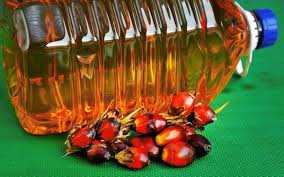
Featured photo: Ei’eke, CC BY-SA 4.0.
2 thoughts on “Why Does Palm Oil Solidify? The Simple Science and 5 Easy Fixes”