
CP8 vs CP10 palm oil is one of the first questions we get from new buyers, and it’s a fair one. Both are refined palm olein. Both look like the same pale golden oil in a bottle. The difference shows up when the weather turns cold, and it can decide whether your customers see clear oil on the shelf or a cloudy bottle they think has gone bad.
We sell both grades in bulk and in retail packs to buyers worldwide. This guide lays out the CP8 vs CP10 palm oil difference in plain terms, with our full specifications, and helps you pick the right one for your market.
Table of Contents
The quick answer
CP stands for cloud point. That’s the temperature at which the oil starts to turn hazy as the heavier fats begin to crystallise.
- CP10 stays clear down to about 10 °C.
- CP8 stays clear down to about 8 °C.
That’s the core of CP8 vs CP10 palm oil. CP8 has been fractionated a bit further, so it holds up better in cooler weather. It costs a little more because the refinery gets less of it from each ton of palm oil. For hot climates, CP10 is usually all you need. For places with real winters or cold warehouses, CP8 is the safer pick.
Our specifications side by side
Here are the specs we load against for both grades. These are what our certificate of analysis is tested against for every shipment.
| Parameter | CP10 palm olein | CP8 palm olein |
|---|---|---|
| Cloud point | 10 °C max | 8 °C max |
| Iodine value (Wijs) | 56 min | 58 min |
| Free fatty acid (as palmitic) | 0.1% max | 0.1% max |
| Moisture and impurities | 0.1% max | 0.1% max |
| Peroxide value at loading | 2.0 meq/kg max | 2.0 meq/kg max |
| Colour (5¼” Lovibond) | 3.0 red max | 3.0 red max |
| Slip melting point | 24 °C max | 22 °C max |
| Smoke point | About 230 °C | About 230 °C |
| Odour and taste | Neutral, bland | Neutral, bland |
You can see that most lines are identical. The CP8 vs CP10 palm oil difference is almost entirely in the cloud point, iodine value and melting point. FFA, moisture, peroxide and colour are refining quality numbers, and both grades are refined to the same standard.
You’ll find more detail on each grade on our product pages for refined palm oil CP8 and refined palm oil CP10.
Where CP8 and CP10 come from
Both grades start as crude palm oil. The crude oil is refined, bleached and deodorised into RBD palm oil. Then it’s fractionated. That means the oil is cooled slowly so the harder fats crystallise, and the crystals are filtered off as palm stearin. What’s left is the liquid palm olein.
A single fractionation gives you something like CP10. Run it more carefully, with slower cooling or a second stage, and you strip out more of the hard fat. That gives you CP8, and going further still gives CP6 or super olein. Our article on the palm oil fractionation process covers the steps, and palm stearin vs palm olein explains the two fractions.
So when people ask about CP8 vs CP10 palm oil, what they’re really asking is how much hard fat has been taken out.
What about CP6 and super olein?
CP8 vs CP10 palm oil isn’t the whole family. There’s also CP6, sometimes called super olein, with a cloud point of 6 °C max and iodine value of 60 or higher. It goes into the coldest markets and into premium bottled oil where the brand can’t risk any haze.
CP6 costs more again, and fewer refineries produce it regularly, so lead times can be longer. For most buyers it’s not needed. But if you’re shipping into a market with long, hard winters and selling clear bottles, ask about it. We can quote CP6 alongside CP8 and CP10 so you can see the full price ladder.
How cloud point is tested
Cloud point is tested by cooling a clear, dry sample in a glass tube at a set rate and watching for the first sign of haze. The standard method is AOCS Cc 6-25, from the American Oil Chemists’ Society. It’s simple, cheap and quick, which is why it’s the main test that separates CP8 vs CP10 palm oil.
A few things can throw the result off. Moisture in the sample makes it cloud early. So does a sample that wasn’t fully melted and mixed before testing. If your lab gets a result that looks wrong, ask them to dry the sample and run it again before you raise a claim.
Difference 1: cloud point
Cloud point is the headline number. At 10 °C, CP10 begins to turn hazy. At 8 °C, CP8 does. Two degrees doesn’t sound like much, but it matters on a cold night in a warehouse with no heating, or in a truck crossing high ground.
Cloudy oil isn’t spoiled. Warm it up and it goes clear again. But a retail customer doesn’t know that. They see a cloudy bottle and assume it’s old or fake. That’s the main reason the CP8 vs CP10 palm oil choice comes up so often with bottlers and supermarket brands.
Difference 2: iodine value
Iodine value is the second big line in any CP8 vs CP10 palm oil comparison. It tells you how unsaturated the oil is. CP10 runs at 56 minimum, CP8 at 58 minimum. Higher IV means more liquid, unsaturated fat and less of the saturated palmitic acid that crystallises first.
That’s why IV is also a handy identity check. If someone sells you CP8 and the COA shows IV 56.2, it’s really CP10 with a new label. Always check IV when you compare CP8 vs CP10 palm oil offers.
Difference 3: melting behaviour
CP8 has a lower slip melting point than CP10. In practice it stays fully liquid at lower temperatures, and when it does get cold, it clouds more slowly and less heavily.
If your oil goes into a product that’s stored in a fridge, such as dressings or sauces, CP8 is less likely to leave a solid layer. For our full explanation of why this happens, see why does palm oil solidify.
Difference 4: price
CP8 costs more than CP10. The gap moves with the market, but CP8 usually trades at a modest premium per ton. The reason is yield. A refinery gets more CP10 out of a ton of RBD palm oil than it does CP8, because CP8 requires more of the fat to be removed as stearin.
When you’re weighing CP8 vs CP10 palm oil on price alone, think about the cost of complaints, returns and relabelling too. Paying a little more for CP8 can be cheaper overall in a cold market. For the bigger picture on what moves prices, read our guide to crude palm oil price per ton.
Difference 5: shelf appearance
In tropical and warm markets, CP10 and CP8 look the same on the shelf all year. In places with cool seasons, CP10 can show a hazy layer at the bottom of the bottle in winter. CP8 holds clear longer.
If you sell clear PET bottles, appearance is half your brand. That alone settles the CP8 vs CP10 palm oil question for many bottlers in cooler regions.
Difference 6: frying performance
Here’s the good news: in the fryer, the CP8 vs CP10 palm oil gap almost disappears. Both have a high smoke point, around 230 °C, and good resistance to breakdown. Both give a crisp, non-greasy finish. Restaurants and snack makers in hot countries often buy CP10 because the extra cost of CP8 doesn’t buy them anything at 180 °C.
If you’re running commercial fryers, our cooking oil smoke point chart and how often to change fryer oil guides are worth a look.
Difference 7: market fit
This is where the CP8 vs CP10 palm oil decision really gets made. As a rough guide:
- Hot all year (much of Africa, the Middle East, South and Southeast Asia, the Caribbean): CP10 is the usual choice.
- Warm with mild winters (parts of China, North Africa, South America): CP10 for most of the year, CP8 for winter shipments or retail.
- Cool or cold winters (Europe, North America, northern China, Central Asia): CP8, or CP6 for very cold markets.
Many of our buyers don’t treat CP8 vs CP10 palm oil as a one-time decision. They switch between the two by season. They take CP10 from spring to autumn and move to CP8 for winter cargoes.
A seasonal buying calendar
Plenty of importers handle the CP8 vs CP10 palm oil question with a simple calendar instead of picking one grade forever. Here’s how it often looks for a buyer in the northern hemisphere with cool winters:
| Shipment month | Arrives roughly | Grade most buyers choose |
|---|---|---|
| March to August | April to September | CP10 |
| September | October | CP10 or CP8, depending on storage |
| October to January | November to February | CP8 |
| February | March | CP8, switching back to CP10 next order |
Transit time matters here. A cargo shipped in late September from Thailand might land in a cold port in November, so you plan the grade for arrival and storage, not for the day it leaves. For the southern hemisphere, flip the calendar.
Mistakes we see when buyers choose a grade
Choosing on price per ton alone. The cheaper offer isn’t cheaper if a winter batch comes back from supermarkets. In the CP8 vs CP10 palm oil decision, the right question is “what will this oil go through?” not “which is cheaper today?”.
Forgetting about the warehouse. Your port might be warm, but the inland warehouse could drop to 5 °C at night. Think about the coldest point in the chain.
Not stating the grade on the label. Retail buyers in some markets look for “CP8” or “super olein” on the label in winter. If you’re paying for it, show it.
Mixing grades in one tank. Topping up a CP8 tank with CP10 gives you something in between. Keep them separate or label the tank honestly.
Skipping the cold test. It takes a few hours and a fridge. It’s the cheapest way to settle the CP8 vs CP10 palm oil question for any delivery.
An example from a cool-climate bottler
Here’s a typical case. A bottler sells 1 litre PET bottles to supermarkets in a city where winter nights drop to 3 or 4 °C and the stores keep cooking oil near the entrance. They buy CP10 all year because it’s cheaper. Every January, complaints come in about cloudy bottles, and a slice of stock gets sent back.
Switching only the October to February shipments to CP8 costs them a small premium on those containers. The returns stop, and the extra cost is less than what they were losing in write-offs and handling. That’s the kind of maths that settles CP8 vs CP10 palm oil for most retail brands.
Which grade for which use?
| Use | Better grade | Why |
|---|---|---|
| Deep frying in hot climates | CP10 | Same performance, lower cost |
| Retail bottles in cool climates | CP8 | Stays clear on the shelf |
| Food factories with heated tanks | CP10 | Heating removes the cloud point issue |
| Sauces and dressings kept chilled | CP8 | Less clouding in the fridge |
| Bakery and snack production | Either | Depends on storage temperature |
| Blending with soybean or sunflower oil | CP10 | Blend lowers cloud point anyway |
That last point is useful, and it’s often overlooked in CP8 vs CP10 palm oil talks. If you blend palm olein with a liquid oil like sunflower or soybean, the blend’s cloud point drops. Some bottlers buy CP10 and blend it rather than buy CP8. We sell sunflower oil and soybean oil too, so we can quote both together.
Is CP8 healthier than CP10?
Not in any way that matters much, and health shouldn’t be the deciding factor in CP8 vs CP10 palm oil. CP8 has slightly more unsaturated fat and slightly less saturated fat because more stearin has been removed. The gap is small. Both grades carry natural vitamin E, mostly as tocotrienols, which we cover in palm oil vitamin E and tocotrienol content.
If your buyers are asking about health, we’d talk about the quality of refining and contaminant control rather than CP8 vs CP10 palm oil. Our guide to 3-MCPD in palm oil explains why that matters, especially for Europe.
How to check you got the grade you paid for
It’s surprisingly common for buyers to pay for CP8 and receive CP10, which is why a clear CP8 vs CP10 palm oil spec in your contract matters. Here’s how to protect yourself.
- Write cloud point and iodine value into the contract with clear limits.
- Ask for a COA from an independent lab, not just the supplier.
- Do a simple cold test on arrival. Put a sample bottle at 8 °C for a few hours. CP8 should stay clear. CP10 may start to haze.
- Keep a sealed sample from loading in case you need to make a claim.
Our refined palm oil quality standards article explains the other numbers on the COA, and free fatty acid and peroxide value covers the two freshness checks in more depth.
Storage and handling for both grades
Whatever your choice in the CP8 vs CP10 palm oil debate, both grades keep best in clean, dry, closed tanks, away from sunlight. Keep storage temperature a few degrees above the cloud point. For CP10 that means above 15 °C if you can, for CP8 above 12 °C.
If oil does go cloudy in storage, warm it gently and stir. Don’t overheat it, and don’t use direct flame on drums. Once it’s clear and mixed, it’s fine to use. More detail is in our guide to refined palm oil storage and handling.
Packaging options
We pack both sides of the CP8 vs CP10 palm oil choice in the same range of packaging:
- Flexitanks, about 20 to 22 metric tons per 20 ft container
- ISO tanks
- 190 kg steel drums
- 18 to 20 litre jerrycans and tins
- PET bottles from 1 to 5 litres, plain or private label
For long cold routes in winter, an insulated flexitank or ISO tank with heating is the safest way to keep either grade easy to discharge. See flexitank vs ISO tank for the trade-offs.
Shipping CP8 vs CP10 palm oil: what changes
Not much changes on the paperwork. Both grades ship under the same HS code family, with the same commercial invoice, packing list, bill of lading, certificate of origin and COA. The COA is where the CP8 vs CP10 palm oil difference has to show, with cloud point and iodine value clearly stated. Our list of documents required to import vegetable oil covers the full set.
What does change is how careful you need to be about temperature in transit. CP10 in a flexitank going into a northern winter port can arrive thick at the bottom. Ask for a heating pad on the flexitank, or plan to warm the container before discharge. CP8 gives you a little more room, but on very cold routes it needs the same care.
Private label CP8 and CP10
A lot of our bottled oil goes out under the buyer’s own brand. If you’re building a cooking oil brand, the CP8 vs CP10 palm oil choice also affects your label and your price point. Some brands run two lines: a value line on CP10 for warm regions and a premium “winter clear” line on CP8. Others just use CP8 everywhere to keep things simple.
We can print your labels, match your bottle shape and pack mixed containers with both grades if you want to test the market first. Our refined palm oil applications in food industry guide may help if you’re also selling to food factories.
Common questions about CP8 vs CP10 palm oil
What does CP mean in palm oil? Cloud point, the temperature in °C at which the oil starts to look hazy. CP10 clouds at 10 °C, CP8 at 8 °C.
Is CP8 better than CP10? It’s better for cool weather, not better in general. In hot climates CP10 does the same job for less money.
Can I use CP10 in winter? Yes, if your storage and shelves stay above about 12 to 15 °C, or if you blend it with a liquid oil.
Do CP8 and CP10 taste different? No. Both are deodorised and have a neutral taste and smell.
Is RBD palm oil the same as CP10? Not quite. RBD palm oil is refined but not fractionated, so it’s semi-solid at room temperature. CP10 and CP8 are the liquid fractions. Our RBD palm oil CP8 meaning post explains the naming.
What’s the minimum order? One 20 ft container is the usual starting point for bulk. For bottled oil, ask us about mixed loads.
Our take on CP8 vs CP10 palm oil
If we had to boil it down: pick CP10 when your oil lives in heat, and CP8 when it has to look good in the cold. Everything else about the two grades is close to identical. Don’t overpay for CP8 if you’re shipping to a hot port and frying all day. Don’t save a few dollars on CP10 if your bottles sit on cold shelves for months.
Still not sure where you land on CP8 vs CP10 palm oil? Tell us your destination, how the oil will be stored, and what it’ll be used for. We’ll tell you straight which grade makes sense, even if it’s the cheaper one.
Buy CP8 or CP10 palm oil from us
We supply CP8, CP10 and crude palm oil from Thailand to buyers worldwide, with ISO 22000, HACCP, GMP and Halal certification. The full range is on our palm oil page and products page.
Send your grade, volume, packaging and destination port through our contact page, and we’ll reply with full specifications and a price. You can read more about us and how we work before you get in touch.
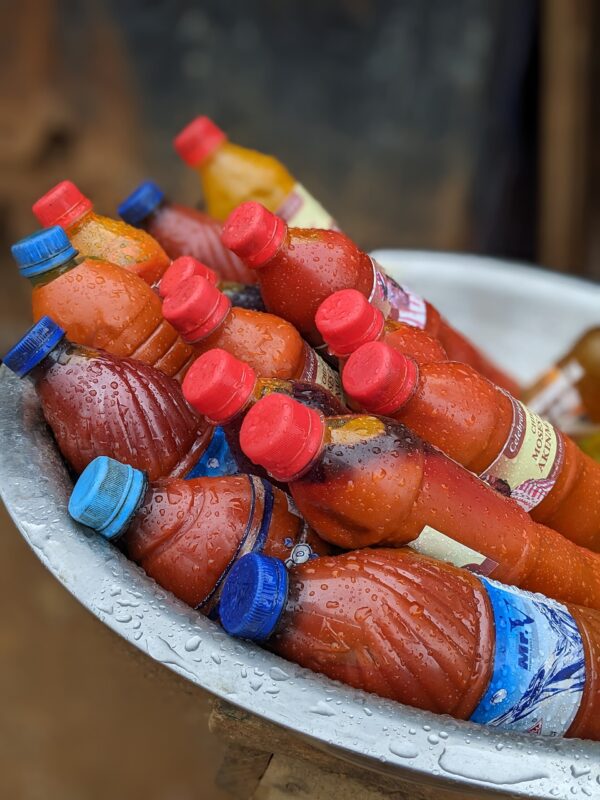
Featured photo: Yahuzaishat, CC BY-SA 4.0.