
3-MCPD in palm oil is one of those topics that sounds alarming the first time you hear about it, and then turns out to be a fairly well understood quality issue once you dig in. It’s a contaminant that forms during refining, not something that grows in the oil or gets added to it. It can be measured, it can be reduced, and in markets like the European Union it’s strictly limited by law.
If you buy refined palm oil for food, especially for Europe, baby food or big brand owners, you’ll be asked about it. We sell refined palm oil, CP8 and CP10 palm olein and crude palm oil to buyers worldwide, and this guide explains 3-MCPD in palm oil in plain language: what it is, why palm has more of it than some oils, what the limits are, how it’s tested, and what to put in your contract.
Table of Contents
The short answer
3-MCPD stands for 3-monochloropropane-1,2-diol. In refined oils it’s found mainly as fatty acid esters, so you’ll often see it written as 3-MCPD esters or 3-MCPDE. It forms when oil is heated to high temperatures during deodorisation, the last step of refining, and there’s chlorine present in the oil.
A close relative, glycidyl esters (GE), forms in the same step from diglycerides at very high temperatures. The two are almost always tested and limited together.
3-MCPD in palm oil tends to be higher than in most other refined oils, mainly because palm oil contains more of the starting materials and is refined at high temperatures. The good news is that refiners have learned a lot about how to keep it down.
Why it matters
Food safety authorities have looked closely at 3-MCPD in palm oil and other foods, and at glycidyl esters too. The European Food Safety Authority set a tolerable daily intake for 3-MCPD of 2 micrograms per kilogram of body weight per day. Glycidol, released from glycidyl esters during digestion, is treated more strictly because it’s considered a possible genotoxic carcinogen, so the advice is to keep it as low as reasonably possible.
For most adults eating a normal diet, exposure is low. The concern is mostly for infants and young children, who eat more per kilo of body weight, and for heavy consumers of fried and processed foods. That’s why the strictest limits apply to oils for baby food and infant formula.
For buyers, the practical point is simple. If you sell into a regulated market and your oil is over the limit, it can’t be sold. If you supply a big brand, they’ll have their own limit, often lower than the law.
The EU limits you need to know
The EU sets maximum levels for 3-MCPD in palm oil and other oils in Regulation (EU) 2023/915 on contaminants in food. Here are the key numbers, expressed in micrograms per kilogram of oil (µg/kg).
| Product | 3-MCPD (sum of free and esters) | Glycidyl esters (as glycidol) |
|---|---|---|
| Coconut, maize, rapeseed, sunflower, soybean, palm kernel and olive oils, and mixtures of these | 1,250 µg/kg | 1,000 µg/kg |
| Other vegetable oils, including palm oil, and fish oils | 2,500 µg/kg | 1,000 µg/kg |
| Oils and fats for baby food and processed cereal-based food for infants | 750 µg/kg (500 µg/kg from 1 January 2027) | 500 µg/kg (250 µg/kg from 1 January 2027) |
Notice that palm oil sits in the 2,500 µg/kg group, which reflects that 3-MCPD in palm oil is naturally harder to push as low as in seed oils. The glycidyl ester limit of 1,000 µg/kg is the same for all vegetable oils. For baby food oils, the EU is tightening limits again from 2027 under Regulation (EU) 2026/1825.
Other countries and big food companies often follow these EU numbers, or set their own tighter ones. Always check the rules for your own market.
How levels have changed over the years
When surveys first looked closely at 3-MCPD in palm oil about fifteen years ago, palm came out highest among the common refined oils, sometimes by a wide margin. That got a lot of attention, and it pushed the whole industry to change how it refines.
Since then, levels in refined palm oil from well-run refineries have come down a lot. Water washing of crude oil, better bleaching earths and lower deodorising temperatures are now standard practice in many plants. Glycidyl esters in particular dropped sharply once refiners understood what drove them.
That doesn’t mean the problem is solved everywhere. It means good oil is available, and the spread between careful and careless refiners is wider than ever. Asking for test results is how you find out which one you’re dealing with.
How palm compares with other oils
Here’s a simple way to think about 3-MCPD in palm oil next to the other oils we sell. These are general patterns, not guarantees for any single batch.
| Oil | Typical tendency for 3-MCPD and GE | Why |
|---|---|---|
| Refined palm oil and olein | Highest of the common oils | More diglycerides, chlorides and high refining heat |
| Refined palm kernel and coconut oil | Moderate | Refined at high heat, but fewer precursors |
| Refined sunflower, soybean and canola | Lower | Fewer diglycerides, often chemically refined |
| Virgin and cold-pressed oils | Very low | Not deodorised at high temperature |
That’s why the EU puts palm oil in a higher limit group. It’s also why some food makers blend palm olein with sunflower oil or canola oil, which brings the blend’s level down.
Why palm oil has more 3-MCPD
There are three main reasons 3-MCPD in palm oil tends to be higher than in other refined oils.
More diglycerides. Palm oil contains more diglycerides than seed oils, partly because enzymes in the fruit start breaking the oil down soon after harvest. Diglycerides are the main precursor for glycidyl esters, and they also feed 3-MCPD formation.
Chlorine in the crude oil. Chlorine compounds come from the soil, fertilisers, water used at the mill and the fruit itself. Palm fruit can pick up quite a lot, and some of it ends up in the crude oil.
High deodorisation temperatures. Palm oil is usually physically refined, which means free fatty acids are stripped out with steam at high temperature. Typical deodorising temperatures are 240 to 260 °C. That heat is exactly what drives the formation of both contaminants.
Put those together and you get a raw material that needs careful handling to meet strict limits.
How refiners reduce 3-MCPD in palm oil
This is the part buyers should care most about when it comes to 3-MCPD in palm oil, because it’s where a good supplier is different from an average one. Reducing 3-MCPD in palm oil starts at the plantation and continues all the way through the refinery.
At the mill
- Process fresh fruit quickly after harvest, so fewer diglycerides form.
- Use clean, low-chloride water for sterilising and clarifying.
- Keep free fatty acid low, which also means a gentler refining process later. Our guide to crude palm oil specification explains the crude oil numbers that matter.
Before refining
- Wash the crude oil with water to remove chlorides. This is one of the most effective steps for lowering 3-MCPD in palm oil.
- Choose degumming acid and dose carefully.
- Use neutral or low-acid bleaching earths, since highly acid-activated earths can promote formation.
During deodorisation
- Lower the temperature where possible, often below 230 °C, and make up for it with better vacuum and stripping steam.
- Use two-step or dual-temperature deodorisation: a short, hotter step to strip FFA and a longer, cooler step to finish.
- Keep residence time at the highest temperature short.
After refining
- Some refineries use a second, mild stripping step or special adsorbents to pull glycidyl esters out after deodorisation.
None of these on its own fixes the problem. Good refiners combine several. That’s why 3-MCPD in palm oil can vary a lot from one supplier to the next, even when the oil looks identical.
How 3-MCPD in palm oil is tested
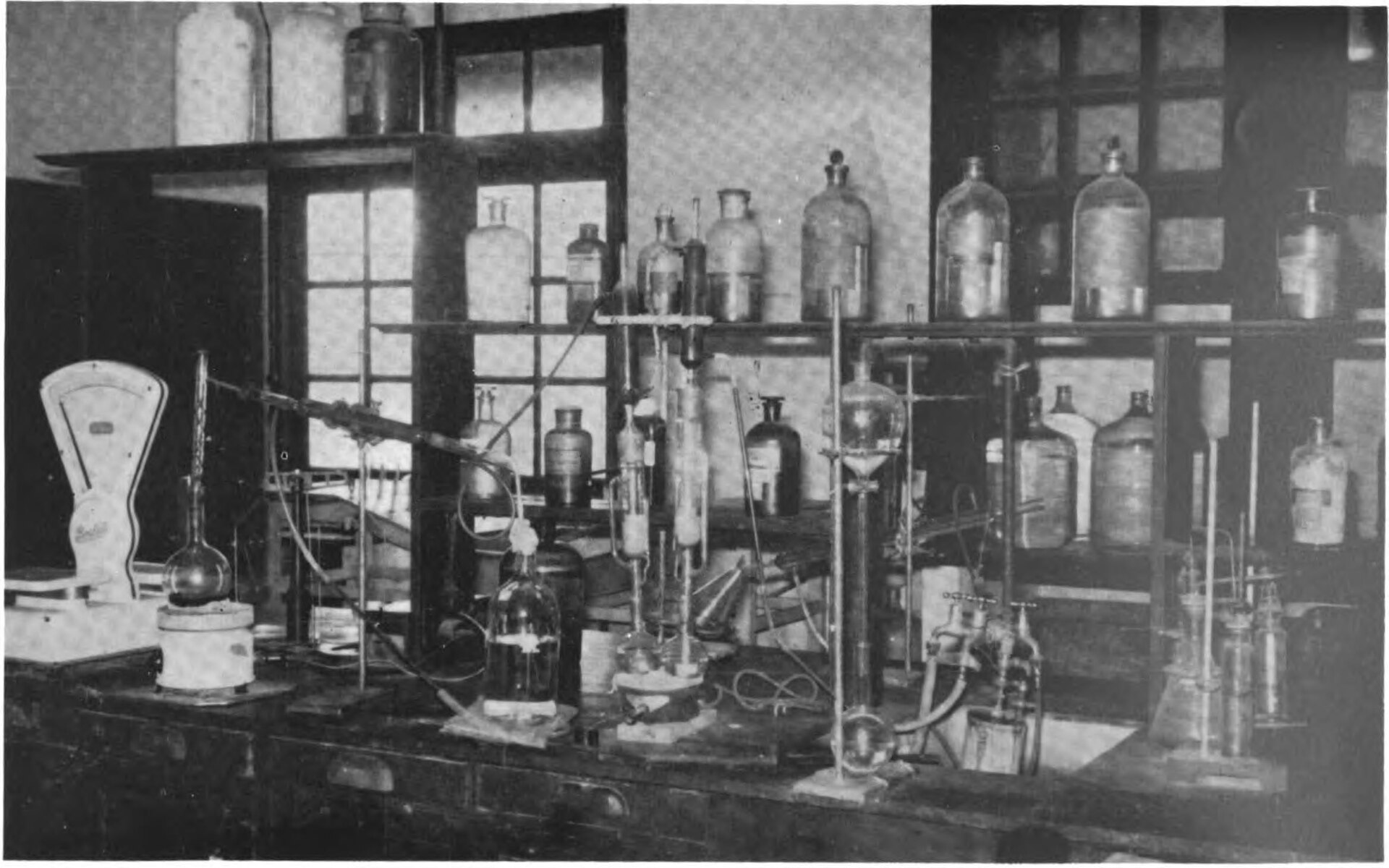
Testing 3-MCPD in palm oil is done by gas chromatography with mass spectrometry (GC-MS). The common official methods are AOCS Cd 29a-13, Cd 29b-13 and Cd 29c-13, and the matching ISO 18363 series. They differ in speed and in how they handle glycidyl esters, which can be partly converted to 3-MCPD during the test if the method isn’t set up properly.
Three practical tips when you order testing:
- Agree the method in the contract. Different methods can give slightly different numbers, and you don’t want to argue about that later.
- Use an accredited lab. Ask for the lab’s ISO 17025 accreditation for that method.
- Check the units. Labs report in mg/kg or µg/kg. 1 mg/kg is 1,000 µg/kg, and mistakes here are more common than you’d think.
Our guide to refined palm oil quality standards covers the other lab tests you’ll see on a COA, and pre-shipment inspection for edible oil explains how to arrange your own testing before the oil sails.
Our refined palm oil specification
Here’s the spec we load our refined palm olein against. For buyers who need it, we add 3-MCPD and glycidyl ester limits to the contract and include an independent lab report with the shipment.
| Parameter | CP10 palm olein | CP8 palm olein |
|---|---|---|
| Free fatty acid (as palmitic) | 0.1% max | 0.1% max |
| Moisture and impurities | 0.1% max | 0.1% max |
| Peroxide value at loading | 2.0 meq/kg max | 2.0 meq/kg max |
| Iodine value | 56 min | 58 min |
| Cloud point | 10 °C max | 8 °C max |
| Colour (5¼” Lovibond) | 3.0 red max | 3.0 red max |
| 3-MCPD (sum of free and esters) | To EU limit or tighter, by contract | To EU limit or tighter, by contract |
| Glycidyl esters (as glycidol) | To EU limit or tighter, by contract | To EU limit or tighter, by contract |
If you need a lower 3-MCPD in palm oil than the EU limit, for example for a brand owner or an infant food maker, tell us at the quote stage. Low-contaminant oil needs specific refining and testing, so it’s priced and planned separately. See the full product details for refined palm oil CP10 and refined palm oil CP8.
Does 3-MCPD rise during storage or frying?
Not much during normal storage. 3-MCPD in palm oil is mainly a refining issue, not a storage one. Most of it forms in the refinery, so what’s in the oil when it leaves is roughly what you’ll find at your end, as long as the oil is stored properly. Glycidyl esters can drop slightly over time.
Frying is a different story. Food fried at high temperature can form small amounts of these compounds, especially if salt or chloride-rich ingredients are involved and the oil is overused. Change fryer oil on time and don’t overheat it. Our guides to how often to change fryer oil and the cooking oil smoke point chart will help.
Is palm oil unsafe because of 3-MCPD?
No, not when it’s refined properly and meets the limits. The limits are set with a wide safety margin for normal diets. 3-MCPD in palm oil is a known, measurable quality parameter, in the same way free fatty acid or peroxide value are. The issue is with oil that’s refined carelessly or never tested.
It’s also worth knowing that other refined oils contain these compounds too, just usually at lower levels. Switching away from palm doesn’t make the topic go away. Buying from a refiner who controls it does.
If health questions come up from your customers, you might also find our posts on palm oil vitamin E and tocotrienol content and palm oil vs soybean oil useful.
Which buyers need to worry most
Not every buyer needs special low-contaminant oil, and not every buyer needs to worry about 3-MCPD in palm oil in the same way. Here’s a rough guide.
- Infant formula and baby food makers. Strictest limits. You need oil made specifically for this use, with testing on every lot.
- Brand owners selling into the EU. Expect to meet the legal limits at minimum, often lower internal limits set by the brand.
- Food manufacturers outside the EU who export. Your finished goods must meet the limits of the country you sell into.
- Fryers and caterers in domestic markets. Standard refined olein from a good refinery is usually fine, but ask for test results if your customers request them.
- Soap and oleochemical users. Food contaminant limits don’t apply in the same way.
Knowing which group you’re in helps you decide how strict your contract needs to be on 3-MCPD in palm oil, and avoids paying for a spec you don’t need.
Questions to ask your supplier
Before you place an order where 3-MCPD in palm oil matters, ask these. A serious supplier will answer them without fuss.
- Do you test for 3-MCPD and glycidyl esters on every lot, or only sometimes?
- Which lab, and which method?
- Can I see results from your last five or ten shipments?
- What do you do at the mill and refinery to keep levels down?
- Will you put a maximum in the contract, with a remedy if it’s exceeded?
- Can you supply a lower level than the legal limit if I need it?
If a supplier can only show you one perfect report, ask for more. One result tells you about one tank. A run of results tells you about the process.
How we handle 3-MCPD in palm oil
We work with refining partners who use water washing of crude oil, controlled bleaching and lower-temperature deodorising. For buyers who need it, we test every lot at an independent accredited lab and send the report with the shipping documents, matched to the lot number on the bill of lading.
If you’re buying for a market without legal limits, we’ll still tell you what’s in the oil if you ask. We’d rather you know. And if a buyer’s limit is stricter than we can reliably meet for a given grade, we’ll say so up front rather than promise something we can’t deliver.
What to put in your contract
If 3-MCPD in palm oil matters for your market, write it in. A clear contract looks something like this:
- Product, grade and full standard spec.
- 3-MCPD (sum of free and bound) max, in µg/kg.
- Glycidyl esters (as glycidol) max, in µg/kg.
- Test method, for example AOCS Cd 29c-13 or ISO 18363-1.
- Named accredited lab, and whether testing is at loading, discharge or both.
- What happens if the result is over the limit: rejection, replacement or price adjustment.
- Retained sealed samples for at least three months.
Pair it with the right payment terms. Our article on letter of credit vs TT payment explains how to tie payment to documents like the lab report.
Does 3-MCPD in palm oil affect price?
A little, yes. Oil refined and tested to a tight 3-MCPD and glycidyl ester limit costs more to make. Refining runs slower or cooler, some steps add cost, and every lot needs a lab test. The premium is usually modest for EU-limit oil and higher for infant-grade oil.
For most buyers it’s money well spent. A single rejected container costs far more than the premium on a year’s supply. If you want to understand the rest of what goes into the price, see our guide to the crude palm oil price per ton, and if you’re choosing between olein grades, CP8 vs CP10 palm oil.
Common mistakes
Assuming all refined palm oil is the same. It isn’t. 3-MCPD in palm oil can vary several times over between refineries.
Asking for a test after the oil arrives. By then it’s too late to fix. Ask for results before shipment, and make sure the lab report matches the lot number.
Mixing up units. A result of 1.8 mg/kg is 1,800 µg/kg. That’s under the palm oil limit, but well over a baby food limit.
Forgetting glycidyl esters. Some buyers only ask for 3-MCPD. Glycidyl esters are limited too, and they’re often the harder number to control.
Using a supplier who doesn’t know what 3-MCPD is. If the answer is vague, that tells you something. Our list of fake vegetable oil supplier warning signs covers more of these.
Frequently asked questions
What is 3-MCPD in palm oil? A process contaminant that forms mainly as fatty acid esters during the high-temperature deodorising step of refining, when chlorine is present.
What is the EU limit for 3-MCPD in palm oil? 2,500 µg/kg for palm oil sold to consumers or used as a food ingredient. Oils for baby food have a much lower limit.
Does crude palm oil contain 3-MCPD? Very little. It forms mainly during refining. But the quality of the crude oil, especially its chloride and FFA levels, strongly affects how much forms later.
Is 3-MCPD the same as glycidyl esters? No. They’re related and form in the same step, but from different precursors. Both are limited.
Can you supply palm oil with low 3-MCPD? Yes. Tell us your limit and use, and we’ll quote oil refined and tested to that spec, with an independent lab report.
How long does testing take? Usually a few working days at an accredited lab. Build it into your shipping schedule.
Buy refined palm oil with 3-MCPD control
We supply CP10, CP8 and crude palm oil from Thailand to buyers worldwide, under ISO 22000, HACCP, GMP and Halal certification. If you need 3-MCPD in palm oil kept below a set limit, we’ll write it into the contract and back it with an independent lab report.
See our palm oil range and other products, read about us, or send your grade, limits, volume and destination through our contact page. We’ll reply with full specifications and a price.