

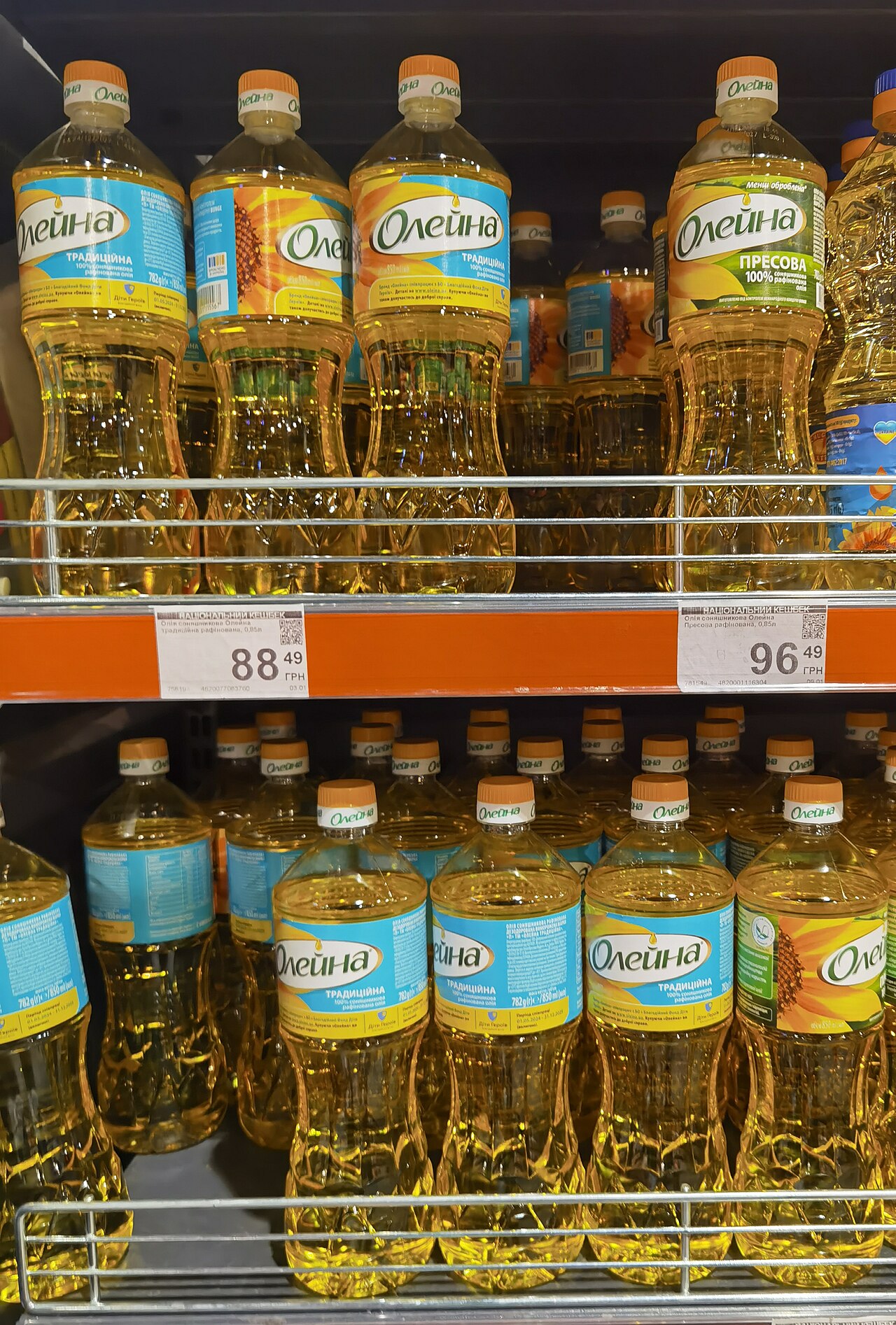
A fake vegetable oil supplier doesn’t look fake. That’s the whole problem. The website is tidy, the prices are a bit better than everyone else’s, the sales contact answers WhatsApp at midnight, and the PDF certificates look official. Then you pay the deposit, and the vessel name they gave you doesn’t exist.
We sell bulk sunflower, palm, soybean, canola and coconut oil from Thailand, and scams come up in a lot of our first conversations with new buyers. Some have had a bad experience already. Others are halfway through a deal that smells wrong and want a second opinion. We also know that a new buyer reading our own website has every right to ask whether we’re real. That’s fair. So this guide covers how to spot a fake vegetable oil supplier, including the checks you should run on us.
Table of Contents
Why edible oil is such a target
Cooking oil is bought by everyone, in huge volumes, and sold on thin margins. Buyers are used to paying deposits by bank transfer to companies in other countries. Prices are public enough that a scammer can undercut the market by a believable amount. And the product itself is simple to describe, so a fake vegetable oil supplier can copy a real spec sheet off the internet in five minutes.
Put that together and you get a trade where scams are common, especially around sunflower oil and palm oil. The good news is that almost every fake vegetable oil supplier makes the same few mistakes. Once you know them, most scams fall apart in a day or two of checking.
Warning sign 1: a price that’s too good
Real oil prices move with the market. Refiners, traders and exporters all pay roughly the same for crude oil, and everyone’s costs for refining, packing and freight are in the same range. A real supplier can be a bit cheaper than the next one. They can’t be 25% cheaper for long.
If a quote for refined sunflower oil is far below what three other suppliers are asking, the missing money is coming from somewhere. Usually it’s from your deposit. The first rule for avoiding a fake vegetable oil supplier is boring: get several quotes, and treat the lowest outlier with suspicion instead of excitement.
Warning sign 2: they only want payment up front, by transfer, to a personal or odd account
A fake vegetable oil supplier wants your money before anything physical happens. Watch for:
- 100% payment before loading, with no documents in exchange.
- A bank account in a different country from the company’s address.
- An account in a person’s name rather than the company’s.
- A last-minute email saying “our bank details have changed”, even from an address you’ve used before.
That last one is common and it catches even experienced buyers, because sometimes the real supplier’s email has been hacked. Always confirm new bank details by phone, on a number you already had, not one from the same email.
Payment terms like a letter of credit exist partly to protect you here. Our guide on letter of credit vs TT payment explains the trade-offs.
Warning sign 3: no company you can actually check
Every real exporter is registered somewhere. In Thailand, companies are registered with the Department of Business Development, and a registration number can be checked. Other countries have their own registries. A fake vegetable oil supplier either won’t give you a registration number, gives one that belongs to a different company, or tells you it’s “confidential”.
It isn’t confidential. Ask for the company registration certificate and check it yourself. Then match the name, the address and the directors against the contract and the bank account. If any of them don’t line up, stop.
Warning sign 4: certificates that don’t hold up
Fake certificates are the easiest thing in the world to produce. A PDF with an ISO logo proves nothing, and every fake vegetable oil supplier knows it.
Real certificates have a number and an issuing body. ISO 22000, HACCP, GMP and Halal certificates can usually be checked with the certification body or on its public database. Call them or email them. A real certifier will confirm whether that certificate number belongs to that company at that address.
A fake vegetable oil supplier often uses certificates that belong to a real refinery, with the name changed, or a certificate for a totally different product. Read the scope line. A certificate for “rice milling” doesn’t cover a sunflower oil refinery.
If you’d like to understand what those certifications should actually mean for oil, our article on what to check with a HACCP certified cooking oil manufacturer goes through it.
Warning sign 5: the spec sheet is copied or impossible
Here’s a quick test. Ask for the full specification of the grade you’re buying. A real refinery or exporter will give you numbers that match the product and don’t contradict each other.
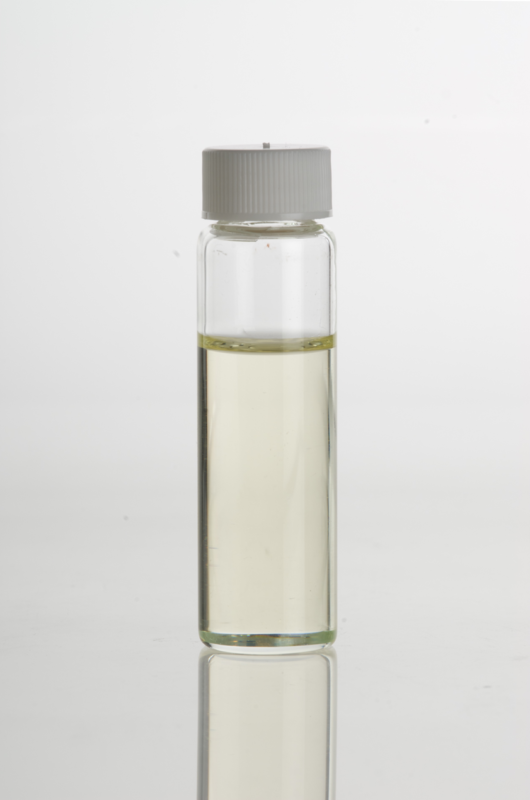
For example, these are the real numbers on our refined sunflower oil:
| Parameter | Value |
|---|---|
| Colour | Clear, light golden yellow |
| Free fatty acids (as oleic) | Max 0.1% |
| Moisture and volatile matter | Max 0.1% |
| Peroxide value | Max 10 meq/kg |
| Iodine value | 118 – 144 |
| Saponification value | 188 – 194 |
| Unsaponifiable matter | Max 1.5% |
| Smoke point | Approx. 232°C (450°F) |
A fake vegetable oil supplier will sometimes send a spec with an iodine value that belongs to palm oil, or a free fatty acid level for “refined” oil that’s actually a crude oil number. If you’re not sure what a sensible range is, compare it with the Codex standard for named vegetable oils, published by the FAO/WHO Codex Alimentarius, or ask your own lab.
For crude oil, the numbers should look different. Our crude palm oil CP0, for example, runs at around 3 to 5% FFA with a melting point of 33 to 39°C. That’s normal for crude. It’s not normal for refined.
Warning sign 6: they can’t show you the product
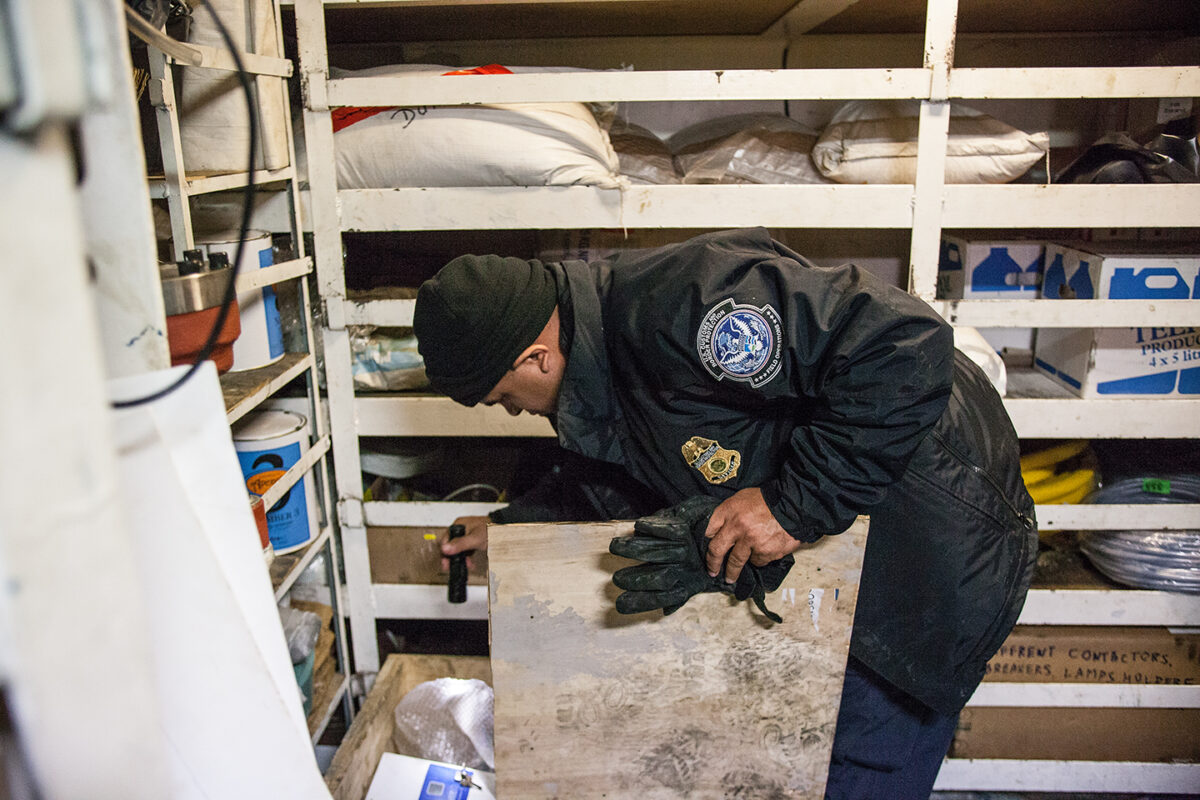
A real supplier can send a sample. They can send photos or video of the loading, with the container number visible. They can arrange for you or your inspector to visit.
A fake vegetable oil supplier has reasons why none of that is possible. The factory is “closed for maintenance”. Samples “can’t be exported”. The warehouse “doesn’t allow visitors”. Video calls keep dropping.
Real businesses have these problems now and then. They don’t have all of them at once, for weeks.
Warning sign 7: they refuse independent inspection
This is one of the strongest signals. Ask for inspection by an independent company like SGS, Intertek or Bureau Veritas before loading, at your cost. A real supplier says yes. A fake vegetable oil supplier finds reasons to say no, or offers their “own” inspector.
Our guide to pre-shipment inspection for edible oil explains how to book one and what it covers.
Warning sign 8: the documents don’t match each other
A fake vegetable oil supplier will often send a draft bill of lading or a “proof of product” early to reassure you. Check it carefully:
- Does the vessel exist, and is it actually going to that port on that date? You can look up vessels on public ship-tracking sites.
- Does the container number follow the ISO format (four letters, seven digits)?
- Does the shipper name match the company on your contract?
- Is the bill of lading issued by a real shipping line or forwarder you can call?
We wrote a full guide on the documents required to import vegetable oil. Knowing what the real set looks like makes a forged one easier to spot.
Warning sign 9: pressure
“The price is only good until tonight.” “Another buyer wants this container.” “The vessel closes tomorrow, pay now or lose the slot.”
Real suppliers have deadlines too, but they don’t need you to skip your checks. A fake vegetable oil supplier needs you to act before you’ve had time to think. If you feel rushed, slow down. A real deal will still be there in two days.

Red flags on the website itself
A lot can be learned before you even send an email. When you look over a supplier’s website, these are the things that usually give away a fake vegetable oil supplier:
- Stock photos only. Every image is a glossy bottle on a white background, or a field of sunflowers. No factory, no tanks, no staff, no loading bay.
- Free email addresses for the “sales department”, even though the company has its own domain.
- No landline, no street address, or an address that turns out to be a residential flat or a virtual office when you look it up on a map.
- Dozens of unrelated products: sunflower oil next to urea fertiliser, next to jet fuel, next to frozen chicken.
- Prices shown per tonne with no incoterm, no port and no date. Real prices always say FOB, CFR or CIF, and to where.
- Text copied from other sites. Paste a sentence from the “about us” page into a search engine. If it appears on ten other supplier sites, that’s telling you something.
None of these alone proves a fake vegetable oil supplier. Put three or four together and you should walk away, however good the price is.
How to check a supplier in one afternoon
Here’s a simple routine to rule out a fake vegetable oil supplier. Run it on any new seller, including us.
- Search the company name plus “scam” or “fraud”. It won’t catch everything, but it catches a lot.
- Look up the website’s domain age. A site registered three weeks ago claiming 20 years of exporting is a red flag.
- Check the company registration. Number, address, directors.
- Check one certificate with the issuing body.
- Call the landline. Not just WhatsApp. Real companies have a number that someone answers during business hours.
- Ask for a sample and a video of the product with today’s date written on paper beside it.
- Ask for references you can call. Real exporters have existing customers.
- Propose a safe payment method, like a letter of credit or a small trial order with payment against documents.
Most fake vegetable oil supplier setups fail at least three of those. A real one should pass all of them without fuss.
What a real supplier looks like
To be fair, here’s the other side. Unlike a fake vegetable oil supplier, a genuine exporter will usually:
- Give you a company registration number without being asked twice.
- Have a physical address you can find, and people who answer the phone there.
- Send a proforma invoice with bank details in the company’s own name.
- Accept independent inspection and a certificate of analysis from a known lab.
- Offer payment terms that give you some protection, even if they ask for a deposit on a first order.
- Explain their prices when you push back, instead of just dropping them.
- Be clear about what they don’t do. A real oil exporter won’t claim to also sell cement, sugar, diesel and gold.
That last point matters. Scam websites often list every commodity under the sun. A real business has a focus.
How we’d like you to check us
We’d rather you check us properly than trust us blindly. Here’s what we’ll give you when you ask:
- Our company details and registration, so you can verify them yourself.
- Our office address: 201/7 Patan Rd., Patan, Muang, Chiang Mai 50300, Thailand. Phone and WhatsApp +66 91 765 9104, email info@dthcompanyltd.com.
- Copies of our certifications with numbers you can check with the issuing body.
- Full specifications for the grade you’re buying, and a certificate of analysis with every shipment.
- Loading photos with container and seal numbers.
- Agreement to independent inspection before loading.
If anyone contacts you claiming to be us, using a different email domain or bank account, don’t pay. Call the number above first. People copy real company names too, and that’s a trick every fake vegetable oil supplier knows.
You can read more about our company and how we export vegetable oil from Thailand.
Scam scripts that come up again and again
Buyers who’ve been caught out tend to tell very similar stories. The names change. The script doesn’t. If any of these sound familiar, treat the seller as a fake vegetable oil supplier until proven otherwise.
The “stock in the tank farm” story. The seller says they have thousands of tonnes sitting in a storage terminal, ready to go, at a discount because the original buyer backed out. They send a “tank receipt” or “storage certificate” as proof. When you ask to have an inspector dip the tank, the terminal suddenly won’t allow it.
The “procedure” story. You get a long document full of letters: ICPO, FCO, SPA, POP, POF. You’re asked to send a letter of intent, then proof of funds, then a partial payment for “documents”. Real oil trading has contracts and paperwork, but it doesn’t need a ten-step ritual before anyone sends a sample. A fake vegetable oil supplier uses jargon to make you feel like the slow one in the room.
The “customs is holding your container” story. After a deposit, you’re told the goods are stuck and need a fee to be released. Then another fee. Then another. There’s no container.
The “we’re the refinery’s sole agent” story. A middleman claims exclusive rights to a big, well-known refinery’s output. Big refineries sell through their own sales teams and a handful of known traders. Call the refinery directly and ask. They’ll tell you in one phone call whether the agent exists.
The “same company, new email” story. Someone copies a real company’s website and logo, registers a lookalike domain, and emails buyers. Everything looks right except the domain, which is one letter off, and the bank account. This is the hardest fake vegetable oil supplier trick to catch because the company is real. Only the person writing to you isn’t.
Start with a trial order
Even with a supplier that passes every check, it’s smart to start smaller than your full need. One container, or a mixed load of drums and jerrycans, tells you a lot:
- Whether the oil arrives to spec.
- Whether the documents arrive complete and on time.
- How the supplier handles questions and problems.
- How long your customs clearance really takes.
A fake vegetable oil supplier hates trial orders because the scam depends on a big first payment. A real supplier is happy to ship one container and earn the next ten. We’re happy to start small with new buyers.
Quick answers to common questions
Is a very low price always a scam? Not always, but a price far below the market is the single most common feature of a fake vegetable oil supplier. Ask why it’s low. A real seller will have a real reason, like an old crop, a short shelf life left, or a cancelled order they need to move, and they’ll let you inspect the product.
Are online B2B marketplaces safe? Some sellers on them are real and some aren’t. A listing, a badge or “verified” tick doesn’t replace your own checks.
Should I ever pay 100% in advance? On a first order with a new supplier, it’s risky. A deposit with balance against documents, or a letter of credit, gives you more protection.
Can a fake vegetable oil supplier fake an inspection report? Yes, they can forge one. That’s why you book the inspection company yourself, and get the report directly from them, not through the seller.
What to do if you’ve already paid a fake vegetable oil supplier
If it’s already happened, move fast. The first 24 to 48 hours matter most.
- Call your bank straight away and ask them to try to recall the transfer. The sooner they contact the receiving bank, the better the chance.
- Report it to the police in your country and get a case number. Banks often need it.
- Report it to the receiving country’s authorities too, if you can. Many have online fraud reporting.
- Keep everything. Emails, chats, invoices, the website address, phone numbers. Screenshots with dates.
- Warn your network. Trade groups and chambers of commerce often circulate names of known scam operations.
Don’t pay “release fees”, “insurance fees” or “customs fees” that the same people ask for after the first payment. A fake vegetable oil supplier will keep inventing new costs as long as you keep paying.
Products we genuinely supply
So you know what a real product list from us looks like, here it is. No cement, no gold, no diesel.
- Sunflower oil: crude, refined, high oleic, organic and deodorized.
- Palm oil: crude CP0, refined CP8 and CP10.
- Soybean oil: crude, refined and high oleic.
- Canola oil: crude, refined and RBD.
- Coconut oil: RBD, virgin and crude.
Packing runs from 1 L PET bottles up to flexitanks and ISO tanks. If you’re not sure which bulk option to choose, read our comparison of flexitank vs ISO tank.
Final word
You won’t avoid every fake vegetable oil supplier by instinct. You avoid them by running the same simple checks every time, even when the person on the other end seems friendly and the price looks great. Especially then.
If you’re buying bulk edible oil and want to start with a supplier you can verify, send us your grade, quantity and destination through our contact page. We’ll send specs, a proforma in our company name, and you can check every detail before a cent moves. You can also browse our full product range first.
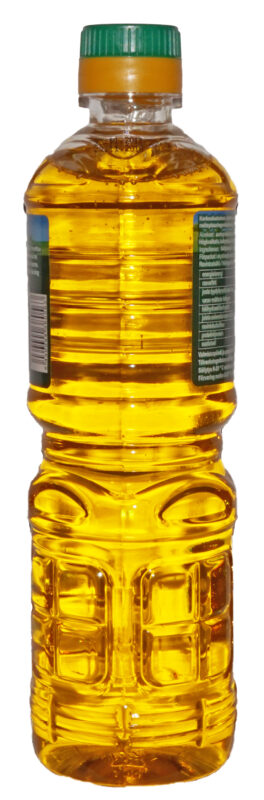
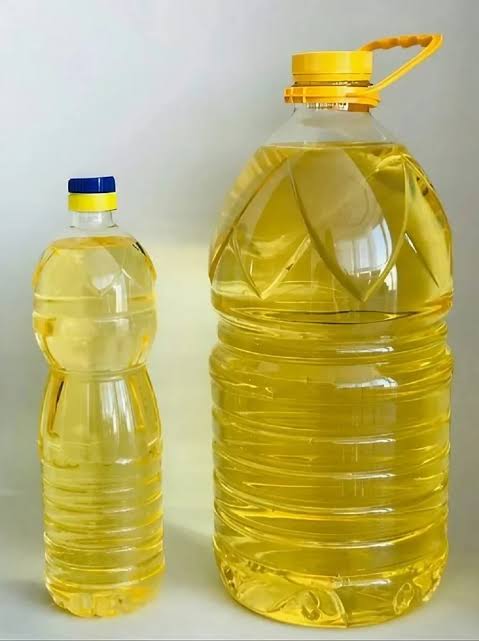
Image credits: Featured photo: Alex Blokha, CC BY-SA 4.0, Wikimedia Commons.


3 thoughts on “Fake Vegetable Oil Supplier: 9 Warning Signs to Spot Before You Pay”