


Letter of credit vs TT payment is the conversation that happens right after the price is agreed, and it’s where plenty of good edible oil deals stall. The buyer wants protection. The seller wants to know they’ll get paid. Both are reasonable. The question is which payment method gives each side enough comfort without adding weeks and fees to every shipment.
We export bulk and packed sunflower, palm, soybean, canola and coconut oil from Thailand, and payment terms come up with every new buyer. This article lays out letter of credit vs TT payment in plain terms: how each one works, what it costs, where the risks are, and which fits which kind of order.
Table of Contents
The two methods in one paragraph each
Telegraphic transfer (TT) is a plain bank transfer. You send money from your bank to ours through the international banking network. It’s fast, cheap and simple. The catch is that it protects nobody on its own. Whoever pays first is taking the risk.
Letter of credit (LC) is a promise from your bank to pay us, as long as we present exactly the documents the credit asks for. Your bank’s promise replaces your promise. It’s slower and it costs more, but it means we know the money is there, and you know it won’t be released unless the shipping documents show the goods were loaded as agreed.
That’s the core of letter of credit vs TT payment. Everything else is detail, but in edible oil the detail matters.
How TT payment usually works for edible oil
TT on its own is rarely “100% in advance” for bulk oil between new partners. The common patterns are:
- Deposit plus balance against copy documents. For example, 30% when the contract is signed, 70% when you receive scans of the bill of lading and certificate of analysis. Originals or a telex release follow once the balance lands.
- Deposit plus balance before arrival. Same idea, but the balance is due before the vessel reaches your port.
- 100% after arrival. Only for long-standing buyers with a clean payment record.
With TT, the deposit is the buyer’s risk. The balance is the seller’s risk, because the oil has already been shipped. That split is why the deposit size is always the first thing buyers negotiate.
How an LC works, step by step
A letter of credit has more moving parts, so here’s the usual flow:
- We sign the contract, which says payment is by LC and lists the documents.
- You apply to your bank to open the LC. Your bank is the issuing bank.
- The LC is sent to our bank, which is the advising bank. We check the wording.
- We load the oil and collect the documents: invoice, packing list, bill of lading, COA, certificate of origin and anything else the LC names.
- We present the documents to our bank, which checks them and sends them to your bank.
- Your bank checks them against the LC. If they comply, your bank pays.
- You pay your bank (or it debits your account) and you get the originals to clear the goods.
The rules banks follow are set out by the International Chamber of Commerce in UCP 600. You don’t need to memorise it, but it’s worth knowing the ICC publishes the standard your bank is working to.

Letter of credit vs TT payment: cost
TT is cheap. A transfer fee at each end, maybe a correspondent bank charge in the middle. For a container of oil worth tens of thousands of dollars, it’s a rounding error.
An LC has an opening fee, an advising fee, a document checking fee, amendment fees if anything changes, and sometimes a confirmation fee if the seller wants a second bank to guarantee it. Add them up and the letter of credit vs TT payment gap on one container can run from a few hundred to a couple of thousand dollars, depending on the banks and the countries.
On a single container, that can eat a noticeable share of the margin. On a big contract of many shipments, it’s often worth it.
Letter of credit vs TT payment: speed
TT arrives in one to three working days in most cases. That’s it.
On speed, letter of credit vs TT payment isn’t close. An LC takes time at both ends. Opening it can take a few days to a couple of weeks, depending on your credit line. After shipment, document checking takes several working days at each bank. If there’s a discrepancy, add more.
For fast-moving buyers who reorder every few weeks, that slowness is a real cost. When regular customers compare letter of credit vs TT payment, speed is often what tips them to TT.

Letter of credit vs TT payment: risk for the buyer
This is where the LC shines. With a well-written LC, your money doesn’t move until documents show the goods were loaded, on the right vessel, with a COA inside the agreed limits. If you’ve read our guide on how to spot a fake vegetable oil supplier, you’ll see why that matters on a first deal with an unknown seller.
It isn’t perfect. An LC checks documents, not the oil itself. If the documents are right but the oil is wrong, the bank still pays. That’s why smart buyers put an independent inspection certificate in the LC’s list of documents. Our article on pre-shipment inspection for edible oil explains how to set that up.
With TT, your protection is the deposit size and the trust you’ve built. For a first order, the letter of credit vs TT payment choice leans toward LC, or at least toward a small deposit with the balance against documents.
Letter of credit vs TT payment: risk for the seller
From our side, the LC protects us from a buyer who changes their mind while the oil is at sea. Prices move. If the market drops 10% during transit, some buyers suddenly find reasons not to pay. With an LC from a solid bank, that doesn’t matter. We get paid if the documents comply.
The seller’s LC risk is discrepancies. If we make a mistake on a document, the bank can refuse to pay until the buyer agrees to accept it. So an LC protects us only if we’re careful. That’s why we read every draft LC closely and push back on clauses we can’t meet.
With TT, our risk is shipping before the balance arrives, which is the other side of letter of credit vs TT payment. The deposit usually covers enough of that to make it acceptable.
Clauses to watch in an edible oil LC
A lot of the letter of credit vs TT payment debate is really about how the LC is written. A clean one works smoothly. A messy one causes problems for everyone. Look out for:
- Latest shipment date too tight. Leave room for vessel changes.
- Expiry date too close to shipment. The seller needs time to collect and present the documents.
- Presentation period too short. 21 days after shipment is standard.
- Tolerance on quantity. Bulk oil loads never hit an exact figure. Allow plus or minus 5% or 10%.
- Documents the seller can’t get. For example, a certificate issued only in the buyer’s country.
- Product description that doesn’t match normal trade names. Copy the contract wording exactly.
- Partial shipments and transhipment. Allow them unless there’s a strong reason not to.
It’s not unusual to see an LC ask for a COA “showing FFA 0.00%”. No refined oil in the world tests at zero, so the credit has to be amended, which costs time and fees. Here are the real limits on our main refined oils, so you can write an LC that matches:
| Parameter | Refined sunflower oil | Refined soybean oil | Refined canola oil |
|---|---|---|---|
| Free fatty acids | Max 0.1% | ≤ 0.1% | ≤ 0.1% |
| Moisture and volatiles | Max 0.1% | ≤ 0.10% | ≤ 0.1% (with impurities) |
| Peroxide value | Max 10 meq/kg | ≤ 10 meq O₂/kg | ≤ 2.0 meq O₂/kg |
| Iodine value | 118 – 144 | 120 – 141 | 105 – 126 |
| Saponification value | 188 – 194 | 189 – 195 | 175 – 195 |
See the full product pages for refined sunflower oil, refined soybean oil and refined canola oil.
Letter of credit vs TT payment side by side
If you only have a minute, this table sums up letter of credit vs TT payment for an edible oil order:
| Point | Telegraphic transfer (TT) | Letter of credit (LC) |
|---|---|---|
| Bank fees | Low | Noticeably higher |
| Time to set up | None | A few days to two weeks |
| Time to get paid after shipment | 1 – 3 days after buyer sends | Several working days after presentation, longer with discrepancies |
| Buyer protection | Depends on deposit and trust | Strong on documents, needs inspection for quality |
| Seller protection | Deposit, plus control of originals | Strong, if documents comply |
| Paperwork | Normal shipping documents | Documents must match the LC exactly |
| Best for | Repeat buyers, smaller orders | First orders, large contracts, currency-controlled markets |
Neither column wins everywhere. The right answer depends on how well you know each other, how big the order is, and what your bank and your country allow.
The middle options
Letter of credit vs TT payment isn’t a strict either-or. A few in-between options are common in the oil trade:
- Cash against documents (CAD / D/P). The banks handle the documents, but there’s no bank promise to pay. Your bank releases the originals when you pay. It’s cheaper than an LC and gives the seller some control, since you can’t get the goods without paying.
- Standby LC. A guarantee that only gets used if the buyer doesn’t pay by TT. It’s used on longer contracts with regular shipments.
- Deposit by TT, balance by LC. Sometimes used when the buyer’s bank limit doesn’t cover the full value.
- Escrow services. Less common in bulk oil, but some buyers use them for smaller packed orders.
A worked example on one container
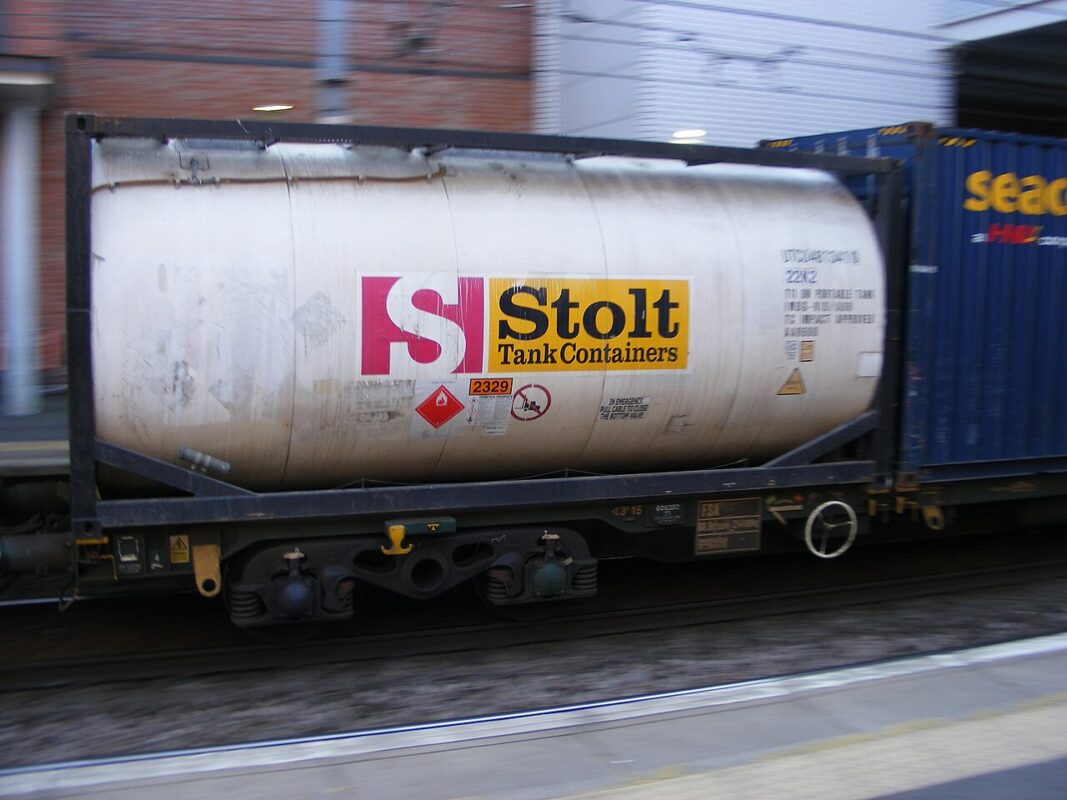
Numbers make letter of credit vs TT payment easier to judge, so here’s a simple, rounded example. Say you’re buying one 20-foot flexitank of refined sunflower oil, about 21 metric tonnes, CIF your port.
With TT at 30/70: you send 30% when the contract is signed. We book the vessel, load, and send you scans of the bill of lading, packing list and certificate of analysis. You check them and send the remaining 70%. We telex release the bill of lading, or courier the originals. Bank fees are small at both ends, and the whole cycle from contract to release can be under a month on a short route.
With an LC at sight: you apply for the LC, and your bank takes a few days to a couple of weeks to issue it. Our bank advises it, we check it and ask for any amendments. We load, gather the documents, and present them. Each bank takes several working days to check. If everything complies, your bank pays and releases the documents. Fees at both ends add up to a noticeable figure on a single container.
On a one-off, the LC may cost more than the peace of mind is worth, if you’ve already checked the supplier. On a first order where you haven’t, it’s cheap insurance. That’s the practical heart of letter of credit vs TT payment.
Crude oil, palm oil and larger contracts
The bigger the order, the more the LC makes sense. Refinery buyers taking crude sunflower oil or crude soybean oil by the thousands of tonnes usually work on LC or on documentary collection, with quality and quantity certified by an inspection company at loading. The contracts often follow standard trade forms, like those published by FOSFA, which set out how disputes over quality and payment are handled.
Palm oil buyers see similar terms. With prices that can move a lot in a month, both sides want certainty, and letter of credit vs TT payment usually lands on the LC side for anything beyond a trial shipment.
For packed oil in bottles, tins and jerrycans, orders tend to be smaller and more frequent, so TT is more common.
How the terms usually change over time
For most buyers, letter of credit vs TT payment isn’t a one-time choice. It changes as trust builds.
A typical path looks like this. First order: LC, or a small TT trial with a deposit. Second and third orders: TT with a deposit and balance against copy documents. After a year of clean shipments and on-time payments: lower deposits, or balance after arrival for some buyers. It works the other way too. If payments start slipping, terms tighten again.
That’s normal, and it’s worth talking about openly at the start, so both sides know what to expect.
Questions buyers ask about letter of credit vs TT payment
Is an LC always safer for me as a buyer? Safer than paying a big TT deposit to someone you don’t know, yes. But it only checks documents. Pair it with an independent inspection certificate to check the oil.
Can I ask for a confirmed LC? That’s usually something the seller asks for, when they’re worried about the buyer’s bank or country. It adds cost on the seller’s side.
What’s a usance LC? One that pays later, for example 60 or 90 days after the bill of lading date. It gives the buyer time to sell the goods before paying. Sellers price that in, because they’re waiting for the money.
Why won’t some sellers accept an LC? Usually because they’ve been burned by discrepancies or by bad LC wording. Or because the order is too small for the fees to make sense. Or, in some cases, because they’re not a real supplier. Keep that last possibility in mind.
Can we switch from LC to TT halfway through a contract? Yes, if both sides agree in writing. Just make sure the bank knows so there’s no confusion over which shipments are covered.
Which one should you use?
Here’s how we’d frame letter of credit vs TT payment for different buyers:
- First order, new supplier, big value: LC, with an inspection certificate among the documents. Or a small TT trial order first.
- First order, small value (one container of drums or bottles): TT with a modest deposit and balance against copy documents is usually fine, if you’ve checked the supplier.
- Regular buyer, trusted relationship: TT. It’s faster and cheaper, and the trust is already there.
- Big annual contract with many shipments: LC or standby LC, often with the terms relaxing as the relationship builds.
- Buyer in a country with currency controls: LC, because your central bank may require it to release foreign currency.

Currency, bank charges and who pays what
A small point that causes plenty of back-and-forth: bank charges. With TT, agree that each side pays its own bank’s fees. Otherwise the seller receives less than the invoice value and the balance is short.
With an LC, charges are usually split: the buyer pays the issuing bank’s charges, the seller pays the advising and negotiating bank’s charges. Put it in the contract. Most edible oil trades are in US dollars, which keeps things simple, but if you want to pay in another currency, raise it before the contract is signed.
The paperwork has to be right either way
With an LC, documents are the whole game. With TT, they still matter, because your customs broker needs them. Either way, it helps to know what a full set looks like. Our guide to the documents required to import vegetable oil goes through each one.
Container choice also feeds into payment. Under CIF we book the freight and insurance, so it’s all on our invoice. If you’re deciding on packing, read our comparison of flexitank vs ISO tank first.
Common mistakes on both sides
- Buyers opening an LC before the contract is final. Every change afterwards is an amendment with a fee.
- Sellers accepting LC terms they can’t meet and hoping the bank won’t notice. The bank will.
- Buyers paying a TT deposit to a bank account that doesn’t match the company name. Always a warning sign.
- Nobody agreeing who pays bank charges. Small amounts, big arguments.
- Treating letter of credit vs TT payment as a trust test. It’s a business decision. Asking for an LC isn’t an insult, and asking for a deposit isn’t either.
How we work with buyers
Tell us which terms you prefer. For a new buyer, we’ll discuss letter of credit vs TT payment based on the order size and your country, and we’ll read your draft LC before your bank issues it, so it matches what we can actually deliver. For TT orders, our bank details are always in our registered company name, shown on our proforma invoice. If you ever receive an email saying our bank details have changed, call us on +66 91 765 9104 before sending anything.
We supply sunflower oil, palm oil including CP8, CP10 and CP0, soybean oil, canola oil and coconut oil, in bulk or packed, to buyers worldwide. Browse the product range, read about us, or send your grade, quantity, destination and preferred payment terms through our contact page. We’ll reply with a proforma and a clear answer on letter of credit vs TT payment for your order.
Image credits: Featured photo: Marcel Sala, CC BY 2.0, Wikimedia Commons.










5 thoughts on “Letter of Credit vs TT Payment: 6 Proven Tips for Safe Edible Oil Imports”