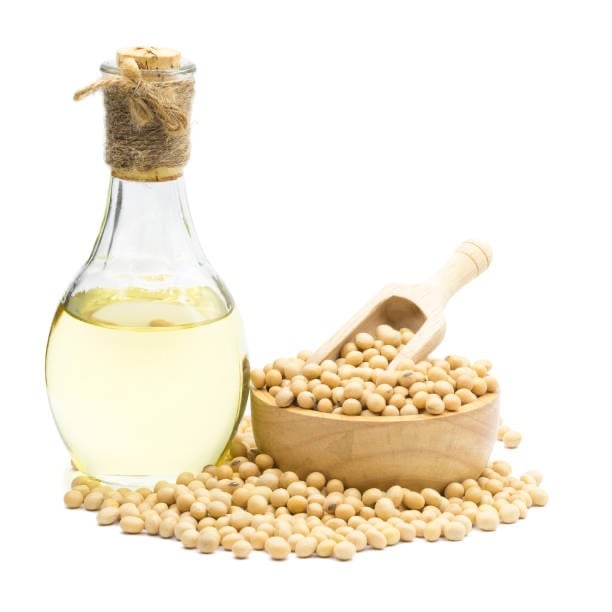

How many liters in a ton of vegetable oil? About 1,080 to 1,100 liters per metric ton for most liquid oils at room temperature. The exact number depends on the oil and its temperature, because oil is lighter than water. Sunflower and soybean oil come in at roughly 1,085 liters per tonne at 20°C, canola a little more, and palm oil measured warm at 50°C at around 1,120 liters. If you buy by the tonne and sell by the litre, or the other way round, getting this right is the difference between a profit and a loss you can’t explain.
We export vegetable oils from Thailand in flexitanks, ISO tanks, drums, tins, jerrycans and bottles, so we convert between tonnes and liters every day. This guide gives you a clear conversion table for each oil, explains why temperature matters, shows how many tonnes fit in each type of packing and container, and gives you simple formulas you can use in your own costing.

Table of Contents
The Quick Answer
For most liquid vegetable oils at about 20°C:
- 1 metric ton (1,000 kg) is about 1,085 to 1,095 liters.
- 1 liter weighs about 0.91 to 0.92 kg.
- 1 US gallon weighs about 3.45 to 3.5 kg.
- 1 metric ton is about 287 to 290 US gallons.
That’s the short version of how many liters in a ton of vegetable oil. The rest of this guide shows the numbers for each oil and why they shift.
Why Oil Isn’t 1,000 Liters Per Ton
Water has a density of about 1.0 kg per liter, so 1,000 kg of water is 1,000 liters. Vegetable oils are lighter, with densities around 0.91 to 0.92 kg per liter at room temperature. That means a tonne of oil takes up more space than a tonne of water.
The formula is simple:
- Liters = kilograms ÷ density (kg/L)
- Kilograms = liters × density (kg/L)
So for an oil with a density of 0.92 kg/L, 1,000 kg ÷ 0.92 = about 1,087 liters.
Liters Per Ton by Oil Type
Here are typical densities and the matching liters in a ton of vegetable oil for each of the oils we sell. Densities are in line with the reference values in the international standards for named vegetable oils published by the Codex Alimentarius. Real lots vary slightly.
| Oil | Typical density | Measured at | Liters per metric ton (approx.) | US gallons per metric ton (approx.) |
|---|---|---|---|---|
| Refined sunflower oil | 0.918 to 0.923 kg/L | 20°C | 1,083 to 1,089 | 286 to 288 |
| Refined soybean oil | 0.919 to 0.925 kg/L | 20°C | 1,081 to 1,088 | 286 to 287 |
| Refined canola oil | 0.914 to 0.920 kg/L | 20°C | 1,087 to 1,094 | 287 to 289 |
| High oleic sunflower oil | About 0.91 to 0.92 kg/L | 20°C | About 1,087 to 1,099 | About 287 to 290 |
| RBD palm olein | About 0.90 to 0.92 kg/L | 40°C | About 1,087 to 1,111 | About 287 to 293 |
| RBD palm oil | 0.891 to 0.899 kg/L | 50°C | 1,112 to 1,122 | 294 to 296 |
| Coconut oil | 0.908 to 0.921 kg/L | 40°C | 1,086 to 1,101 | 287 to 291 |
As a rule of thumb for costing, many traders use 1,087 liters per tonne (density 0.92) for soybean and sunflower oil, and about 1,090 for canola.
Crude vs Refined: Does Density Change?
A little. Crude oils carry small amounts of free fatty acids, gums, moisture and other minor compounds, so their density can be very slightly different from the refined oil. In practice, the difference is small enough that most traders use the same conversion for crude and refined versions of the same oil.
The bigger differences come from the type of oil and its temperature, not from refining. So when you work out the liters in a ton of vegetable oil, pick the right oil and note the temperature, and you’ll be close enough for costing. For contracts and custody transfer, the surveyor’s measured density at the measured temperature is what counts. For background on how oils differ in composition and physical properties, the vegetable oil article on Wikipedia is a useful overview.
Why Temperature Matters
Oil expands when it warms up and contracts when it cools. Density falls by roughly 0.00065 kg/L for every 1°C rise in temperature. That sounds tiny, but across a whole flexitank it adds up.
Example: refined soybean oil with a density of 0.920 kg/L at 20°C will be about 0.907 kg/L at 40°C. One tonne at 20°C is about 1,087 liters. The same tonne at 40°C is about 1,103 liters. Same oil, same weight, 16 more liters.
That’s why:
- Bulk oil is sold by weight, not volume. Weight doesn’t change with temperature.
- Volume measurements in tanks are always corrected to a standard temperature.
- Palm oil and coconut oil densities are quoted at higher temperatures, because they’re solid or semi-solid at 20°C.
If you’re checking how many liters in a ton of vegetable oil for your own tanks, always note the temperature of the oil when you measure.
How Much Oil Fits in Common Packaging
Here’s how liters and kilograms line up for the packs we ship most, using a density of about 0.92 kg/L.
| Pack | Volume | Net weight of oil (approx.) |
|---|---|---|
| PET bottle | 1 L | 0.92 kg |
| PET bottle | 5 L | 4.6 kg |
| PET bottle | 10 L | 9.2 kg |
| Tin | 18 L | 16.5 kg |
| Jerrycan | 20 L | 18.4 kg |
| Jerrycan | 25 L | 23 kg |
| Steel drum | 200 L | About 180 to 185 kg |
So when someone asks for “a 200 kg drum” of oil, they usually mean a 200 to 220 liter drum. When they ask for “a 20 liter jerrycan”, they get about 18.4 kg of oil. Always agree whether a pack size is by volume or by weight before you sign. Our post on vegetable oil export packaging covers each format.
How Many Tonnes Fit in a Container
This is where the liters in a ton of vegetable oil really matter for freight.
| Shipping format | Typical volume | Typical oil weight (approx.) |
|---|---|---|
| Flexitank in a 20ft container | 20,000 to 24,000 L | 18 to 22 tonnes |
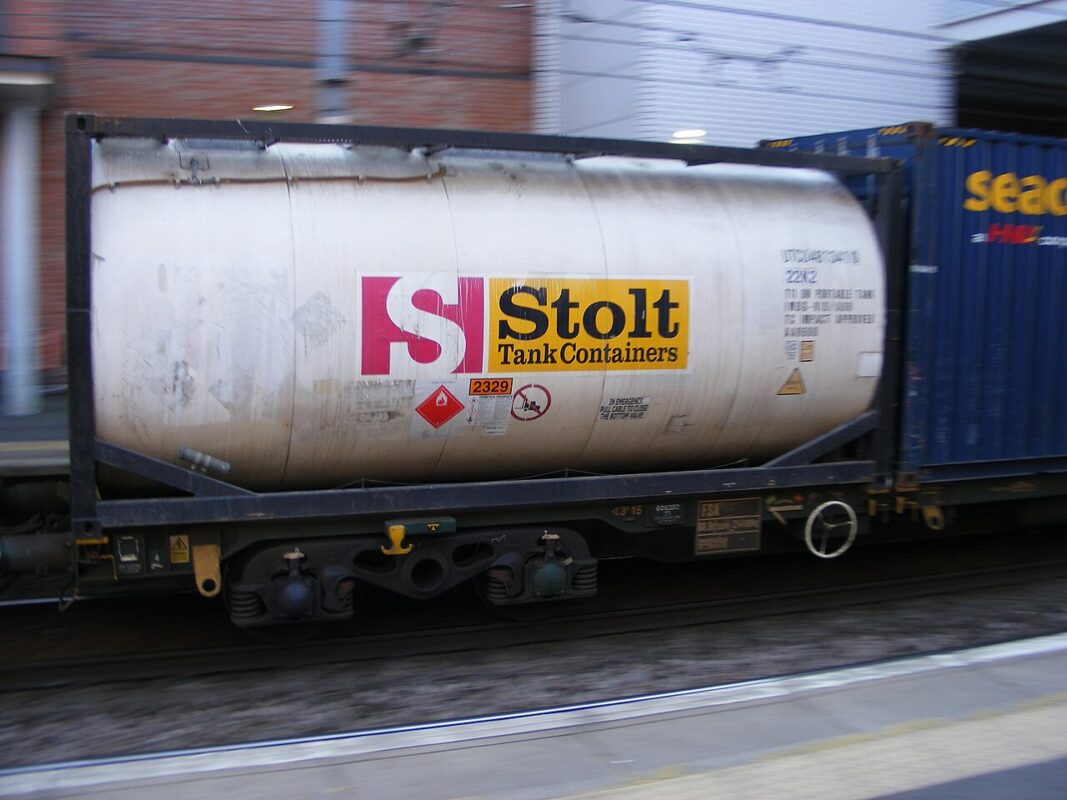
| ISO tank container | 21,000 to 26,000 L | Up to about 22 to 23 tonnes, depending on weight limits |
| 20ft container of 200 L drums | 80 drums | About 14.5 to 15 tonnes |
| 20ft container of 18L tins | About 1,000 to 1,200 tins | About 16.5 to 20 tonnes |
| 20ft container of 20L jerrycans | About 900 to 1,000 jerrycans | About 16.5 to 18.5 tonnes |
| 20ft container of 1L bottles in cartons | About 15,000 to 18,000 bottles | About 14 to 16.5 tonnes |
Exact numbers depend on carton size, pallets, the container and road weight limits in your country. Bulk formats like flexitanks fit the most oil per container, which is why they’re cheapest per tonne. See flexitank vs ISO tank for more.
Simple Conversion Formulas
Keep these handy:
- Liters = tonnes × 1,000 ÷ density
- Tonnes = liters × density ÷ 1,000
- US gallons = liters ÷ 3.785
- Imperial gallons = liters ÷ 4.546
- Pounds = kilograms × 2.2046
Worked example: you want to fill 10,000 one liter bottles with sunflower oil at 0.92 kg/L. 10,000 × 0.92 ÷ 1,000 = 9.2 tonnes of oil, plus a little extra for filling losses.
Another: a flexitank holds 24,000 liters. At 0.92 kg/L that’s 24,000 × 0.92 ÷ 1,000 = about 22 tonnes.
Price Per Ton vs Price Per Liter
This is where the conversion pays for itself. Bulk oil is quoted per tonne. Retail oil is sold per liter. To compare, you need the number of liters in a ton of vegetable oil.
| Price per metric ton | Approx. price per liter (density 0.92) |
|---|---|
| US$1,000 | US$0.92 |
| US$1,200 | US$1.10 |
| US$1,400 | US$1.29 |
| US$1,600 | US$1.47 |
The formula is: price per liter = price per tonne × density ÷ 1,000.
Remember that price per liter from a bulk quote is only the oil. Bottles, caps, labels, cartons, filling, freight and duties all come on top. For current market levels, see our posts on soybean oil price per ton, sunflower oil wholesale price per ton and crude palm oil price per ton.
Metric Ton vs US Ton vs Long Ton
Not all tons are the same, which causes real confusion in international trade.
| Unit | Weight | Liters of oil (density 0.92) |
|---|---|---|
| Metric ton (tonne) | 1,000 kg | About 1,087 L |
| US short ton | 907.2 kg | About 986 L |
| UK long ton | 1,016 kg | About 1,104 L |
Almost all international vegetable oil trade uses metric tons. If a buyer in the United States says “ton”, check whether they mean a metric ton or a short ton. On our contracts we always write “metric ton” to avoid any doubt.
How Bulk Oil Is Measured at Loading
For flexitanks and ISO tanks, the quantity of oil is usually confirmed in one of two ways:
- Weighbridge: the truck is weighed full and empty, and the difference is the oil. This gives weight directly and is the most common method for container shipments.
- Flow meter or tank gauging: the volume is measured and converted to weight using the density at the measured temperature. This is common for shore tanks and vessels.
Independent surveyors can witness either and issue a weight certificate. That certificate, in metric tons, is what your invoice and payment are based on. See our guide to pre-shipment inspection for edible oil.
A Worked Plan for a Bottling Line
Say you run a bottling plant and want to fill 5L bottles of refined sunflower oil for a supermarket order of 20,000 bottles. How much oil do you buy?
- Total volume: 20,000 bottles × 5 liters = 100,000 liters.
- Convert to weight: 100,000 × 0.92 ÷ 1,000 = 92 tonnes.
- Add filling and handling losses, often 0.5 to 1%: about 92.5 to 93 tonnes.
- In flexitanks of about 21 to 22 tonnes, that’s 5 containers.
If you’d assumed 1,000 liters per tonne, you’d have ordered 100 tonnes, about 7 tonnes more than you needed. At bulk oil prices that’s a lot of money tied up in oil sitting in your tank. That’s why knowing how many liters in a ton of vegetable oil matters so much for bottlers and repackers.
Tank Calibration and Temperature Correction
If you store oil in your own tanks, two things keep your numbers honest:
- Calibration. Every tank should have a calibration table that turns a dip reading or level gauge into liters. Tanks that aren’t calibrated give rough numbers at best.
- Temperature correction. Measure the oil temperature at the same time as the level, then convert the volume to weight using the density at that temperature. Many companies use standard correction tables or software for this.
For heated oils like palm oil and coconut oil, this matters even more, because they’re stored warm and the density at storage temperature is well below the density at 20°C. Our guide to refined palm oil storage and handling covers heating and storage.
Converting for Different Markets
Different countries think about oil in different units:
- Most of the world: metric tons for trade, liters for retail.
- United States: pounds and short tons in some domestic trade, gallons for food service, metric tons for imports.
- United Kingdom: metric tons for trade, liters for retail, though older contracts may mention long tons or imperial gallons.
A useful habit is to always write the unit in full on contracts and invoices: “metric ton (1,000 kg)”, “liter”, “US gallon”. It costs nothing and prevents expensive arguments later.
Why We Sell by the Metric Ton
We quote bulk oil per metric ton, and packed oil per pack with the net volume and net weight stated. Weight doesn’t change with temperature, it’s what weighbridges and surveyors measure, and it’s how the whole international oil trade works. When you need liters for your own planning, use the conversions in this guide, or ask us to state the density at a given temperature on your COA.
Liters in a Ton of Vegetable Oil: Cheat Sheet
Print this and stick it on the wall next to your costing spreadsheet.
| If you have | You get about |
|---|---|
| 1 metric ton of soybean or sunflower oil | 1,087 liters |
| 1 metric ton of canola oil | 1,090 liters |
| 1 metric ton of palm oil (at 50°C) | 1,117 liters |
| 1,000 liters of soybean or sunflower oil | 0.92 tonnes |
| 1 flexitank of 24,000 liters | About 22 tonnes |
| 1 tonne of oil in 1L bottles | About 1,087 bottles |
| 1 tonne of oil in 5L bottles | About 217 bottles |
| 1 tonne of oil in 18L tins | About 60 tins |
| 1 tonne of oil in 20L jerrycans | About 54 jerrycans |
These figures assume a density of about 0.92 kg/L for liquid oils at 20°C, and they’re good enough for planning. For contracts, use the surveyor’s weight certificate.
Shipping by the Liter vs by the Ton
Some buyers, especially in retail and food service, think in liters, cartons and bottles. Bulk sellers think in tonnes. Both are right, as long as everyone knows the conversion.
When you ask us for packed oil, we’ll quote per carton or per pack, and state the net volume and the net weight. When you ask for bulk, we’ll quote per metric ton and state the expected volume per flexitank or ISO tank. If you want to compare a bulk and a packed offer, just convert using the liters in a ton of vegetable oil for that oil, then add the packing cost to the bulk price. That gives you a fair, like-for-like comparison.
Common Mistakes
- Assuming 1,000 liters per tonne. You’ll underestimate how many bottles you can fill by about 8 to 9%.
- Mixing metric tons and US short tons.
- Ignoring temperature when measuring oil in a tank.
- Assuming a “20 liter” jerrycan holds 20 kg of oil. It holds about 18.4 kg.
- Using the density of liquid oil for palm oil or coconut oil at room temperature, when they’re partly solid.
- Forgetting filling losses and residues in tanks and flexitanks when planning bottling runs.
The Bottom Line
If you remember one thing, make it this: for most liquid oils, there are about 1,087 liters per ton at room temperature, not 1,000. Palm oil measured warm comes in higher, at around 1,117 liters per ton. Use the right figure for your oil and your temperature, and your costing, bottling plans and freight bookings will line up with what actually arrives.
And whenever you’re unsure how many liters in a ton of vegetable oil you’ll get from a specific lot, ask for the density on the COA. We’re happy to include it.
Our Oils and Specifications
We export these oils from Thailand, with full specifications on each product page:
- Refined sunflower oil: FFA 0.1% max, iodine value 118 to 144, cold test clear after 5.5 hours at 0°C
- Refined soybean oil: FFA 0.1% max, iodine value 120 to 141
- Refined canola oil: FFA 0.1% max, iodine value 105 to 126
- Refined palm oil CP10 and CP8: FFA 0.10% max or lower
- RBD coconut oil: FFA 0.1% max, iodine value 6 to 11
All are produced under ISO 22000, HACCP, GMP and Halal. Every shipment comes with a certificate of analysis, and we can state the density at a given temperature on the COA if you need it for your costing.
Frequently Asked Questions
How many liters in a ton of vegetable oil?
About 1,080 to 1,100 liters per metric ton for most liquid oils at room temperature. Around 1,087 liters is a good average for soybean and sunflower oil.
How many liters in a ton of vegetable oil for canola?
About 1,087 to 1,094 liters per metric ton at 20°C, slightly more than soybean or sunflower because canola is a little lighter.
How many tonnes of oil fit in a flexitank?
Usually about 18 to 22 tonnes, depending on the flexitank size and road weight limits.
How many liters in a ton of palm oil?
About 1,110 to 1,120 liters per metric ton when measured warm at 50°C, the usual reference temperature for palm oil.
How much does 1 liter of vegetable oil weigh?
About 0.91 to 0.92 kg at 20°C.
How many kilograms of oil are in a 20 liter jerrycan?
About 18.4 kg.
Is vegetable oil sold by volume or weight?
Bulk oil is sold by weight, in metric tons. Retail oil is usually sold by volume, in liters.
Why does the volume change with temperature?
Oil expands when warm and contracts when cool. The weight stays the same, but the number of liters changes.
Order Vegetable Oil by the Tonne or by the Liter
That covers how many liters in a ton of vegetable oil, and how to convert in both directions. Whether you buy by the tonne in flexitanks or by the liter in bottles and jerrycans, we’ll quote clearly and state net weight and volume on every offer. We export sunflower, soybean, canola, palm and coconut oils from Thailand worldwide, with private label available, full documents and independent inspection on request.
Send us your oil, quantity (in tonnes or liters), packing and destination port. We’ll reply with a price, specifications and the net weight per pack.
Email info@dthcompanyltd.com, WhatsApp +66 91 765 9104, or use our contact page. You can also browse all our products.