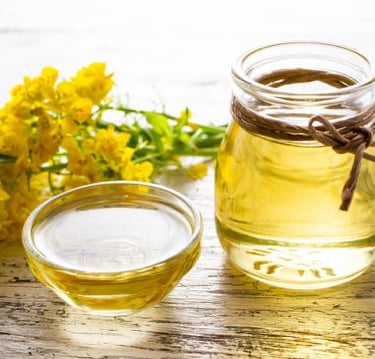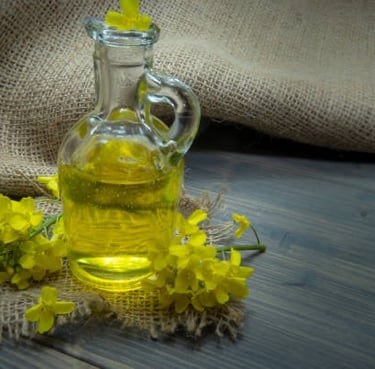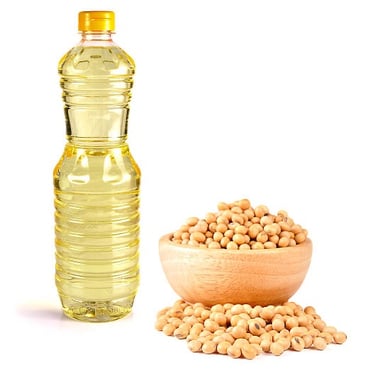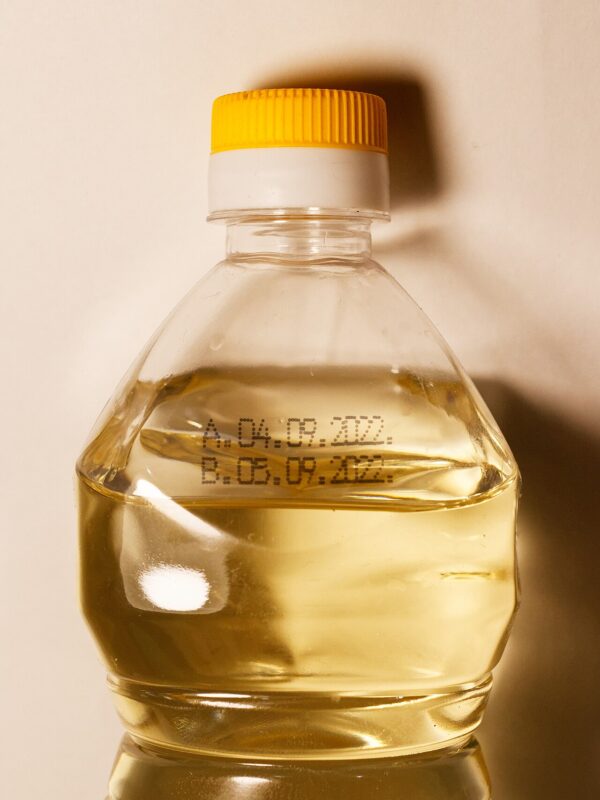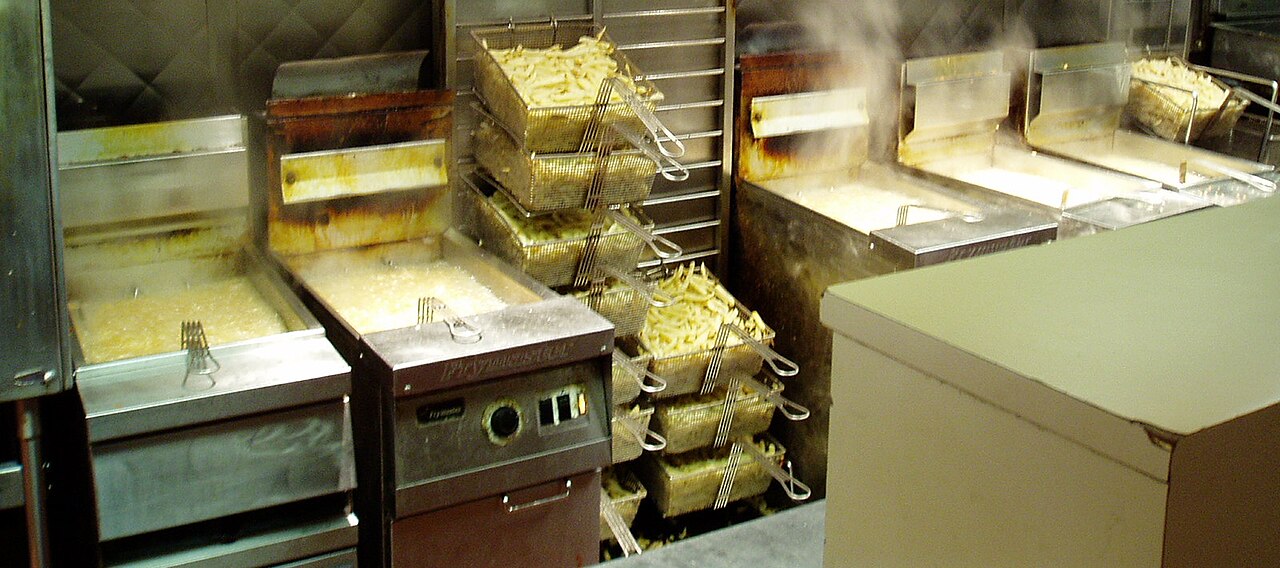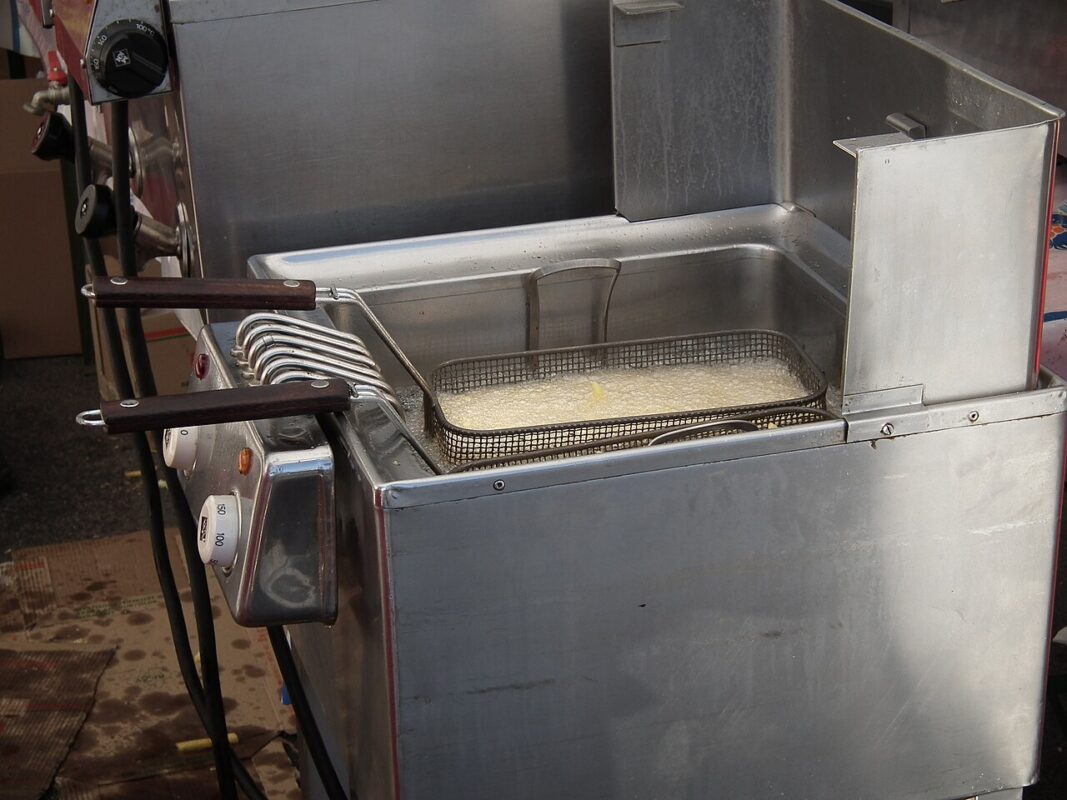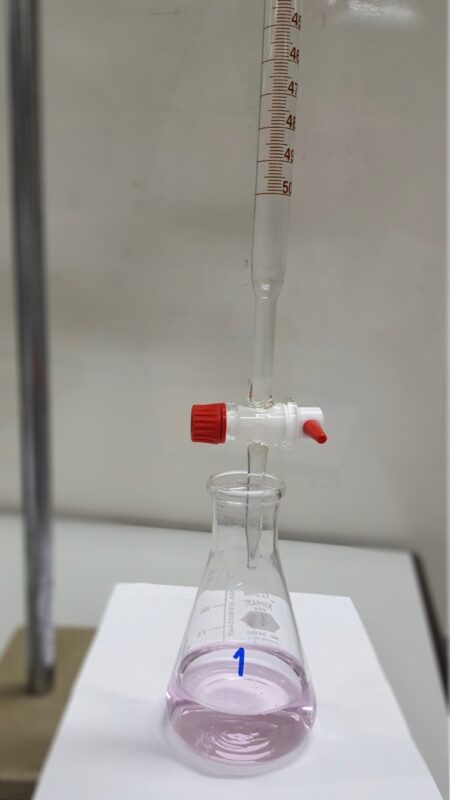

Canola oil vs sunflower oil is one of the most common choices our buyers face. Both are light, neutral, liquid oils. Both fry well after refining. Both sit on supermarket shelves side by side, often at similar prices. But under the label they’re quite different: canola is high in oleic acid with some omega 3, while regular sunflower oil is mostly linoleic acid (omega 6) with almost no omega 3. That changes how they behave in a fryer, how long they last on a shelf, and which markets prefer which.
We export both from Thailand: refined, RBD and crude canola oil, and refined, high oleic, deodorized, organic and crude sunflower oil. This guide compares canola oil vs sunflower oil on composition, frying, shelf life, taste, price and supply, and lists the specifications you get from us for each.
Table of Contents
Canola Oil vs Sunflower Oil in Short
The quick version:
- Canola oil comes from canola seeds, a low-erucic type of rapeseed. Sunflower oil comes from sunflower seeds.
- Canola is about 60% oleic acid, 20% linoleic and 9 to 11% alpha-linolenic (omega 3), with the lowest saturated fat of the common oils.
- Regular sunflower oil is about 60 to 65% linoleic acid, 20 to 30% oleic, and almost no omega 3. High oleic sunflower oil is a different product with 75 to 85% oleic.
- Both are clear, light and neutral after refining. Sunflower is a touch lighter in colour and taste.
- Regular sunflower oil is a little less stable at high heat than canola because of its high linoleic content. High oleic sunflower is more stable than both.
- Price and supply depend on the Black Sea (sunflower) and Canada, Europe and Australia (canola) harvests.
So the canola oil vs sunflower oil choice is mostly about fatty acid profile, stability and what your market is used to.
Where Each Oil Comes From
Canola oil
Canola was developed in Canada in the 1970s from rapeseed, by breeding out most of the erucic acid in the oil and the glucosinolates in the meal. The name comes from “Canada” and “oil”. Today, canola and low-erucic rapeseed are grown mainly in Canada, the EU, Australia, China and Ukraine. The Canola Council of Canada explains the history and standards in detail.
Sunflower oil
Sunflower oil is pressed and extracted from sunflower seeds. Ukraine and Russia produce well over half of the world’s sunflower oil, with Argentina, the EU, Turkey and Kazakhstan adding most of the rest. That concentration in the Black Sea region is the biggest single factor in sunflower oil supply and price.
Canola Oil vs Sunflower Oil in World Supply
A little context on scale helps. Rapeseed and canola oil together make up the third biggest vegetable oil in the world, after palm and soybean, at roughly 30 million tonnes a year. Sunflower oil is fourth, usually somewhere around 20 to 22 million tonnes a year depending on the Black Sea harvest.
The difference that matters for buyers is concentration. Sunflower oil supply is heavily concentrated in Ukraine and Russia, so one bad harvest or one disruption to Black Sea shipping can move the whole market. Canola and rapeseed supply is spread across Canada, the EU, Australia, China and others, which spreads the risk, though Canadian trade policy can still swing prices.
So in the sunflower oil vs canola oil supply picture, sunflower is more exposed to a single region, and canola more exposed to trade politics.
Fatty Acid Comparison
This is where canola oil vs sunflower oil really differ.
| Fatty acid | Canola oil (%) | Regular sunflower oil (%) | High oleic sunflower oil (%) |
|---|---|---|---|
| Palmitic (C16:0) | About 4 | About 5 to 7 | About 3 to 5 |
| Stearic (C18:0) | About 2 | About 3 to 6 | About 2 to 5 |
| Oleic (C18:1, omega 9) | About 58 to 63 | About 20 to 30 | About 75 to 85 |
| Linoleic (C18:2, omega 6) | About 18 to 22 | About 58 to 68 | About 5 to 15 |
| Alpha-linolenic (C18:3, omega 3) | About 8 to 11 | Under 0.5 | Under 0.5 |
| Total saturated | About 7 | About 10 to 12 | About 8 to 10 |
The numbers sit within the reference ranges set out for these oils by the Codex Alimentarius.
Three things stand out:
- Canola has the lowest saturated fat of the major cooking oils.
- Canola carries a meaningful amount of omega 3. Sunflower has almost none.
- Regular sunflower oil is very high in omega 6 linoleic acid, which is less stable under heat.
Specification Comparison
Here are the specs we supply for refined canola and refined sunflower oil.
| Parameter | Refined canola oil | Refined sunflower oil |
|---|---|---|
| Appearance | Clear, light yellow liquid | Clear, bright, light golden yellow |
| Odour and taste | Neutral, bland | Neutral, free from off flavours |
| Free fatty acids (as oleic) | 0.1% max | 0.1% max |
| Moisture and impurities | 0.1% max | 0.1% max moisture, 0.05% max impurities |
| Peroxide value | 2.0 meq O2/kg max | 10 meq O2/kg max (much lower at loading) |
| Iodine value (Wijs) | 105 to 126 | 118 to 144 |
| Saponification value | 175 to 195 | About 188 to 194 |
| Colour (Lovibond 5.25″) | Light yellow | 1.5 red max |
| Cold test | Stays clear in cool storage | Clear after 5.5 hours at 0°C |
| Shelf life | 12 to 18 months | 12 to 18 months |
Iodine value is the quickest identity check. Canola sits lower because it has more oleic acid and less linoleic. Regular sunflower sits higher.
Difference 1: Frying Performance
For light frying and home cooking, both oils work well. For heavy commercial frying, there’s a difference.
Regular sunflower oil, with around 60% linoleic acid, breaks down faster at frying temperatures than canola. It darkens, foams and develops off flavours sooner. Canola, with more oleic acid, holds up a bit better, though its omega 3 can give a slightly fishy note in very long frying.
If frying life is your main concern, the real comparison is high oleic sunflower oil or high oleic canola against the regular versions. High oleic sunflower is one of the most stable liquid frying oils you can buy. See high oleic vs regular sunflower oil and our guide on how often to change fryer oil.
Difference 2: Smoke Point
Refined canola and refined sunflower oil both have high smoke points, around 220 to 230°C, so both are fine for deep frying at normal temperatures of 170 to 190°C. Smoke point falls as oil is reused, which is why fry life matters more than the fresh oil number. Our cooking oil smoke point chart compares them with palm, soybean and coconut oil.
Difference 3: Taste and Colour
Both are neutral after refining. Sunflower oil is often slightly lighter in colour and a little cleaner in taste, which is one reason it’s so popular for retail bottles in Europe, the Middle East and much of Africa. Canola can carry a faint grassy or green note if it isn’t refined well, and is very slightly more yellow.
In cooked food, most people can’t tell canola oil vs sunflower oil apart.
Difference 4: Shelf Life and Storage
Both last 12 to 18 months sealed, cool and dark. Canola’s omega 3 makes it a bit more sensitive to light and air once opened. Sunflower’s high linoleic content makes it more sensitive to heat. In practice, both store well if kept cool, sealed and out of sunlight. See shelf life of sunflower oil, soybean and canola for practical tips.
Difference 5: Cold Behaviour
Both oils stay liquid in a normal fridge. Sunflower oil can contain natural waxes that make it cloudy in cold weather unless it’s been winterized. Good refined sunflower oil for retail is winterized so it passes a cold test. See winterized sunflower oil. Canola has very little wax and rarely clouds.
Difference 6: Nutrition
We don’t make health claims, but the composition differences are clear:
- Canola: lowest saturated fat, high monounsaturated fat, and a useful amount of omega 3.
- Regular sunflower: low saturated fat, very high omega 6, almost no omega 3, rich in vitamin E.
- High oleic sunflower: high monounsaturated fat, low omega 6, rich in vitamin E.
Which one your customers prefer often depends on local nutrition advice and habits.
Difference 7: Price and Supply
Canola oil vs sunflower oil prices move with two different sets of harvests:
- Sunflower oil depends heavily on Ukraine and Russia. Weather, war, export policies and Black Sea shipping all move the price. Smaller sunflower crops in the 2025 season made supply tighter and pushed prices up in 2025 and 2026.
- Canola oil depends on Canada, the EU and Australia. Canadian crop size and trade policy, especially with China, are big drivers.
In most years the two trade fairly close, and buyers in many markets switch between them when one gets noticeably cheaper. For current sunflower levels, see sunflower oil wholesale price per ton.
Difference 8: GMO Status
This matters in some markets. Most canola grown in Canada and Australia is genetically modified, though non-GMO canola and European rapeseed are available. Sunflower oil is generally non-GMO, because commercial sunflower varieties are conventionally bred. If your market requires non-GMO, sunflower is usually easier, and for canola you’ll need the right origin and documents. Ask us for the status of any lot.
Canola Oil vs Sunflower Oil for Food Factories
Food factories look at this differently from retailers. A few things we hear:
- Snack and chip makers care about fry life and the flavour of the finished product after weeks on a shelf. They often pick high oleic sunflower oil or canola over regular sunflower.
- Mayonnaise and dressing makers care about taste, colour and cold stability. Both work. Some prefer sunflower for its very light taste, others canola for its fatty acid profile.
- Bakeries and biscuit makers usually blend liquid oils with harder fats, and pick whichever liquid oil is cheaper that month.
- Ready meal makers care about consistency and price, and often switch between canola and sunflower as the market moves.
If you run a factory, the easiest way to decide is a trial. We can send samples of canola and sunflower oil from the same month so you can run both on your line.
A Simple Side by Side Fry Test
You don’t need a lab to compare canola oil vs sunflower oil for frying. Try this:
- Fill two identical fryers with the same amount of each oil.
- Fry the same food at the same temperature, in the same batches, for several days.
- Top up both with fresh oil the same way.
- Check colour, foaming, smoke and food taste every day, or use test strips for total polar compounds.
- Note the day each oil needs a full change.
Then work out cost per day of frying, not just price per litre. That’s the number that matters.
Which Markets Prefer Which
| Market | Usually prefers | Why |
|---|---|---|
| North America | Canola | Local supply, habit |
| Australia | Canola | Local supply |
| Europe | Sunflower, rapeseed | Local supply, retail habit |
| Middle East and Gulf | Sunflower | Light colour, retail habit |
| Africa | Sunflower, palm | Price, retail habit |
| South Asia | Mixed | Price driven |
| East and Southeast Asia | Mixed, palm and soybean dominant | Price driven |
Who Should Buy Which
| Use | Better choice |
|---|---|
| Retail bottles in sunflower-loving markets | Refined sunflower oil |
| Retail bottles in North America or Australia | Refined canola oil |
| Heavy commercial frying | High oleic sunflower oil, or canola over regular sunflower |
| Salad dressings and mayonnaise | Either. Canola for omega 3, sunflower for light taste |
| Bakery and margarine | Either, often blended with harder fats |
| Non-GMO requirement | Sunflower, or certified non-GMO canola |
| Lowest saturated fat claim | Canola |
Blending Canola and Sunflower Oil
Many bottlers and food factories don’t choose one. They blend. A canola and sunflower blend can balance price, taste and fatty acid profile. Some “vegetable oil” bottles in shops are exactly that. If you blend, label it correctly and keep the ratio steady so your product doesn’t change from batch to batch.
Canola Oil vs Sunflower Oil for Retail Brands
If you sell bottled oil under your own label, the canola oil vs sunflower oil choice is partly about what shoppers already trust. In sunflower markets, a canola bottle can sit on the shelf for months, even at a lower price. In canola markets, the reverse happens. Look at what the market leaders in your country sell, and price your bottle against them.
Bottle size matters too. Retail sunflower oil sells well in 1L, 2L and 5L PET. Canola sells well in the same sizes in North America and Australia, with larger jugs for food service. We pack canola and sunflower oil under your label in any of these.
Labelling and Claims
Both oils can be sold under their own names: “canola oil”, “rapeseed oil” (in some markets), or “sunflower oil”. If you blend them, most countries require “vegetable oil” with the oils listed, or a clear blend description. Claims like “low in saturated fat”, “source of omega 3” or “high in vitamin E” are controlled differently in each country, so check your local rules before printing them.
Mistakes Buyers Make
- Comparing regular sunflower oil with canola for heavy frying and being surprised when sunflower breaks down faster. Compare high oleic sunflower instead.
- Buying sunflower oil that isn’t winterized for retail in cool markets, then getting cloudy bottles.
- Ignoring GMO status for canola in markets that care.
- Choosing on price alone without a fry test.
- Switching oils without updating the label.
Canola Oil vs Sunflower Oil: A Quick Decision Guide
If you still can’t decide between canola oil vs sunflower oil, run through this:
- Do your customers expect sunflower oil on the shelf? Buy sunflower.
- Do you want the lowest saturated fat and some omega 3? Buy canola.
- Is heavy frying your main use? Buy high oleic sunflower, or canola over regular sunflower.
- Do you need non-GMO with minimal paperwork? Buy sunflower.
- Is price the only thing that matters this month? Ask us for both, and buy whichever is cheaper.
Most of the time the canola oil vs sunflower oil question has a clear answer once you know your market and your main use.
Our Specifications
Refined Canola Oil
| Parameter | Specification |
|---|---|
| Appearance | Clear, light yellow liquid |
| Free fatty acids (as oleic) | 0.1% max |
| Moisture and impurities | 0.1% max |
| Peroxide value | 2.0 meq O2/kg max |
| Iodine value (Wijs) | 105 to 126 |
| Saponification value | 175 to 195 |
| Shelf life | 12 to 18 months |
See refined canola oil for sale, RBD canola oil and crude canola oil. For the full RBD spec, read our RBD canola oil specification guide.
Refined Sunflower Oil
| Parameter | Specification |
|---|---|
| Appearance | Clear, bright, light golden yellow |
| Free fatty acids (as oleic) | 0.1% max |
| Peroxide value | 10 meq O2/kg max (usually far lower at loading) |
| Moisture and volatile matter | 0.1% max |
| Insoluble impurities | 0.05% max |
| Iodine value (Wijs) | 118 to 144 |
| Colour (Lovibond 5.25″) | 1.5 red max |
| Cold test | Clear after 5.5 hours at 0°C |
| Shelf life | 12 to 18 months |
See refined sunflower oil for sale, high oleic sunflower oil and our full refined sunflower oil specification.
All our oils are produced under ISO 22000, HACCP, GMP and Halal.
Why Buy Canola and Sunflower Oil From Thailand
Thailand doesn’t grow much canola or sunflower seed, so why buy these oils from a Thai supplier? For many importers, it comes down to convenience and range. A Thai exporter can load canola and sunflower oil alongside palm, soybean and coconut oil in one order, with one set of documents, from ports with fast sailings to Asia, the Middle East, Africa and the Pacific. That’s useful if you sell several oils and want one reliable supplier instead of four.
It also helps to have a second source when Black Sea or Canadian supply gets disrupted. If you’re weighing canola oil vs sunflower oil partly because one is hard to get this month, a supplier with access to both can keep your shelves full. More on how we work in our guide to vegetable oil export from Thailand.
Packing and Shipping
Canola and sunflower oil ship in the same formats: 1L and 5L PET bottles, 18L tins, 25L jerrycans, 180 to 200 kg drums, flexitanks and ISO tanks. Mixed containers of canola and sunflower oil are easy to arrange, which helps if you want to test both in your market. Private label is available for both.
Frequently Asked Questions
Which is healthier, canola oil vs sunflower oil?
They’re different. Canola has less saturated fat and some omega 3. Sunflower is high in omega 6 and vitamin E. We don’t make health claims. Follow local dietary advice.
Which is better for deep frying?
Canola holds up a little better than regular sunflower oil. High oleic sunflower oil is better than both.
Do canola and sunflower oil taste different?
Very little after refining. Sunflower is slightly lighter.
Is canola oil GMO?
Much of it is, especially from Canada and Australia. Non-GMO canola and rapeseed are available. Sunflower oil is generally non-GMO.
Can I swap sunflower oil and canola oil in recipes?
Yes, almost always, one for one.
Sunflower oil vs canola oil: which is better for mayonnaise?
Both work. Sunflower gives a very light taste and colour. Canola gives a slightly richer fatty acid profile. Many makers blend canola and sunflower oil.
Which is cheaper?
It depends on the season. They usually trade fairly close, and the cheaper one changes with Black Sea and Canadian harvests.
Order Canola or Sunflower Oil From Us
The canola oil vs sunflower oil decision comes down to fatty acids, frying needs, what your customers are used to and price at the time you buy. We supply both from Thailand worldwide, in bulk or packed, with private label, full documents and independent inspection on request.
Send the oil, grade, quantity, packing and destination port. We’ll reply with specifications, prices and samples so you can compare canola oil vs sunflower oil in your own kitchen or factory.
Email info@dthcompanyltd.com, WhatsApp +66 91 765 9104, or use our contact page. You can also browse all our products.