

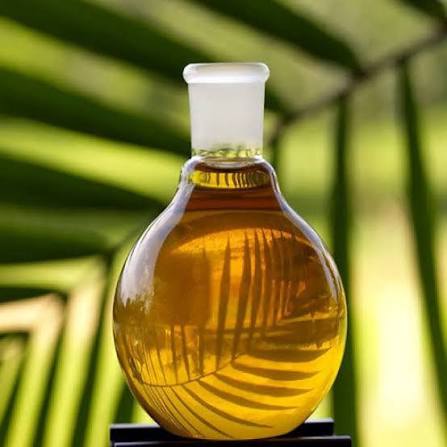
A shipment can leave our refinery meeting every spec on the sheet and still arrive at a buyer’s facility out of spec three months later, and almost every time that happens, the cause traces back to refined palm oil storage and handling rather than anything wrong with the original refining. We’re a Thailand-based manufacturer and exporter, and this is the practical side of the business that doesn’t get talked about as much as the chemistry, tank temperatures, packaging choices, and the handling mistakes that quietly turn a good batch into a customer complaint.
This covers how we store refined palm oil before it ships, the packaging formats available depending on order size, what happens to the oil in transit, and what a buyer should actually do once a shipment lands, wherever in the world that happens to be.

Why Refined Palm Oil Storage and Handling Is Trickier Than It Looks
Refined palm oil is semi-solid at normal room temperature, which is exactly what makes it useful in so many food applications, but it also means storage and handling isn’t as simple as it is for a purely liquid oil. Get the temperature wrong at any stage between our tanks and the buyer’s own storage, and you either end up with an oil that’s too solid to pump and load, or one that’s been held too hot for too long, which accelerates oxidation and quietly shortens shelf life even though nothing looks wrong on the surface.
That balance, warm enough to stay workable, not so warm that quality degrades, is the whole game behind getting this right, and it applies at every stage: our tanks, the vessel or container in transit, and the buyer’s own facility once it arrives.
Tank Storage: Temperature and Design
We hold RBD palm oil in temperature-controlled storage tanks, generally in the range of 30 to 35°C for standard RBD oil, warm enough to keep it fully liquid and pumpable without pushing temperatures high enough to accelerate oxidation unnecessarily. Palm olein can be held slightly cooler since it stays liquid at lower temperatures than unfractionated RBD oil, while palm stearin needs to be kept warmer given its higher melting point.
Tanks are insulated and usually fitted with heating coils rather than relying on ambient temperature, since Thailand’s climate alone isn’t a reliable substitute for actual temperature control, particularly overnight or during cooler months. We also avoid unnecessary temperature cycling, repeatedly heating and cooling oil stresses it in ways that a single stable holding temperature doesn’t, and that stress shows up later as reduced oxidative stability even if the oil tests fine at the point of loading.
Tank material matters too. Storage vessels for edible oils should be food-grade stainless steel or properly lined to avoid any metal contamination that could catalyze oxidation over time, which is part of why we go into detail about lab testing for trace metals in our companion piece on refined palm oil quality standards.
Tank turnover matters as much as tank design. A tank that holds oil for weeks between fills needs tighter monitoring than one with fast, regular throughput, since slower-moving inventory has more time for small temperature deviations to compound. We monitor tank temperature continuously rather than spot-checking periodically, precisely because a brief heating system failure overnight can go unnoticed for hours on a spot-check schedule but shows up immediately on continuous monitoring, giving us time to correct it before it affects the oil.
Packaging Formats and How to Choose Between Them
How you package a shipment matters just as much as tank temperature does, since the packaging format determines how the oil is held for the entire ocean voyage, not just at origin.
- Flexitanks – a flexible bladder fitted inside a standard 20-foot container, the most cost-efficient option for a full container load of bulk oil, though they require careful heating and handling since they lack rigid insulation of their own.
- ISO tanks – reusable stainless steel tank containers with better built-in insulation than flexitanks, suited to buyers who ship regularly on the same lanes and want a more consistent, controllable temperature profile in transit.
- Steel drums and IBC totes – practical for smaller or mixed orders that don’t fill a container, easier to handle in smaller warehouse operations, though they have more surface area relative to volume, which makes them more sensitive to ambient temperature swings.
- Private label bottling – finished retail packaging under a buyer’s own brand, which shifts the storage question toward shelf conditions at the retail level rather than bulk transport.
We help buyers choose based on order volume, destination climate, and how the oil will actually be used on arrival, since the right packaging for a food manufacturer receiving a full container is often the wrong choice for a smaller distributor splitting orders across multiple customers.
What Happens to the Oil During Ocean Transport
Once a shipment leaves port, temperature control gets harder to guarantee, and that’s a reality that catches first-time buyers off guard. Container temperatures fluctuate meaningfully depending on route, season, and how long the container sits on deck versus below it, and palm oil can partially solidify if it drops below its cloud point during a longer or colder crossing.
Partial solidification during transit isn’t automatically a quality failure. It’s a normal physical response for a semi-solid fat exposed to lower temperatures, and it reverses with proper reheating on arrival. The real risk isn’t the solidification itself, it’s what happens if a receiver doesn’t know to expect it and either rejects a shipment that’s actually fine, or handles the reheating badly and damages the oil in the process of trying to fix a problem that wasn’t really a problem.
We flag expected transit conditions to buyers before shipment specifically so this doesn’t turn into a dispute over something that’s actually normal. If you’re shipping to a colder destination market or during winter months, that’s worth discussing with us at the quoting stage so we can recommend packaging and any heating requirements at destination accordingly.
The cloud point for standard RBD palm oil, meaning the temperature at which it starts to visibly cloud and crystallize, sits somewhere around 8 to 10°C depending on the exact fatty acid composition, with olein clouding at a lower temperature than unfractionated RBD oil and stearin clouding at a considerably higher one. A route that passes through cold ocean waters or a winter port call can bring container temperatures close to or below that range even when the surrounding air temperature seems mild, which is why we base packaging recommendations on the actual shipping route and season rather than a generic default.
Refined Palm Oil Storage and Handling After Delivery
What happens after a shipment arrives matters just as much as everything before it, and this is the part that’s entirely in the buyer’s hands. If the oil has partially solidified in transit, it needs to be reheated gradually and evenly, ideally with a proper heating coil or jacketed system, rather than blasted with high heat in one spot, which can locally overheat and degrade the oil right at the point of contact while the rest of the tank is still cold.
Agitation matters too. Palm oil can separate into different melting fractions if it sits still through repeated partial freeze-thaw cycles, and gentle mixing after reheating brings it back to a homogeneous state before use or repackaging. Storage tanks at the receiving end should follow the same principles we apply ourselves: stable temperature in the 30 to 35°C range for standard RBD oil, food-grade tank materials, and minimal unnecessary temperature cycling.
For buyers repackaging into smaller retail containers, the filling environment matters as well, oil should be filled at a controlled temperature into clean, dry containers, since any residual moisture introduced at this stage can quietly raise FFA over the following weeks, the same mechanism that affects quality during the original refining and shipping stages we cover in our guide to how refined palm oil is made.
Shelf Life and What Shortens It
Properly refined and properly stored RBD palm oil has a genuinely long shelf life, commonly cited around 12 months from production when storage conditions are maintained correctly, though this varies somewhat by grade and packaging. Palm olein, being more unsaturated than unfractionated RBD oil, is somewhat more prone to oxidation over time and benefits from slightly more conservative storage practices.
Four factors shorten shelf life more than anything else: heat exposure beyond what’s needed to keep the oil workable, light exposure (which is why bulk storage and shipping containers are opaque rather than clear), oxygen exposure through poorly sealed containers or excessive headspace, and moisture, which drives the same FFA increase whether it’s introduced during refining, packaging, or storage. Reference standards like the Codex Alimentarius guidelines for fats and oils inform a lot of the storage and packaging practices the industry follows, even where a specific national regulation doesn’t spell out exact conditions.
Buyers planning long-term inventory, rather than fast turnover, should factor these four variables into their own warehouse setup rather than assuming any enclosed space is good enough. A dark, temperature-stable warehouse with properly sealed tanks or containers will consistently outperform a space that technically keeps the oil “in storage” without controlling for any of these factors.
Refined Palm Oil Storage and Handling Across Different Climates
We ship worldwide, and refined palm oil storage and handling needs look genuinely different depending on where a shipment ends up. In warmer climates like Southeast Asia or the Middle East, the challenge is usually the opposite of what buyers expect, ambient heat means the oil rarely fully solidifies, but sustained high temperatures without any active cooling can quietly accelerate oxidation over months of storage, so ventilation and shade for warehoused drums matter even in a place that never gets cold.
In colder climates across parts of Europe or North America, particularly during winter, warehouses and tanks need active heating to keep the oil workable, and buyers there should budget for that heating cost as part of the real cost of holding palm oil in inventory rather than treating it as a surprise line item. Buyers in the Americas and other temperate markets fall somewhere in between, needing seasonal adjustment more than the constant management either extreme requires.
None of this changes the underlying chemistry or the target temperature range, 30 to 35°C is 30 to 35°C whether the warehouse is in a hot or cold country, but it does change how much active intervention is needed to hold that range consistently. We factor destination climate into our packaging and handling recommendations for every order specifically because a one-size-fits-all instruction sheet doesn’t actually serve a buyer shipping to a different hemisphere than the last one we quoted.
Common Handling Mistakes We See
A few mistakes come up repeatedly enough that they’re worth naming directly, since they’re avoidable and we’d rather a buyer hear about them from us than learn the hard way. Overheating to force a fast reheat is probably the most common, applying too much heat too quickly to save time ends up degrading the oil locally even as the bulk of the tank is still cold, which is a worse outcome than a slower, patient reheat.
Leaving containers open or poorly sealed between uses is another one, every exposure to air and light adds up, particularly for oil that’s meant to sit in inventory for weeks rather than being used immediately. Mixing old and new stock without rotation is a third, first-in-first-out inventory practices matter for palm oil the same way they do for any perishable ingredient, and skipping that discipline means older, more oxidized oil sometimes gets blended with fresher stock in ways that are hard to track back to a specific quality issue later.
The last one is assuming refined palm oil storage and handling doesn’t need much attention because the oil looks stable sitting in a drum at room temperature. It looks stable right up until the FFA or peroxide numbers say otherwise, which is exactly why we build testing at multiple points into our own process, covered in more depth in our guide to refined palm oil quality standards, rather than relying on how the oil looks or smells at a glance.
We export CP8 and CP10 RBD palm oil, olein, and stearin worldwide, with packaging and storage guidance included as part of every order, not as an afterthought once a shipment is already on the water. Our full product catalog and palm oil overview page cover every grade we currently offer, and our guide to the refined palm oil manufacturing process and refined palm oil applications in the food industry round out the picture from production through end use.
Frequently Asked Questions
What temperature should refined palm oil be stored at?
Standard RBD palm oil is typically held between 30 and 35°C to stay liquid and pumpable without unnecessary heat exposure. Olein can be stored slightly cooler, while stearin needs a higher holding temperature given its higher melting point.
Is it normal for palm oil to solidify during shipping?
Yes, partial solidification during a cold or long ocean crossing is a normal physical response, not a quality defect, and it reverses with proper gradual reheating and mixing on arrival.
How long can refined palm oil be stored before it goes bad?
Properly refined and stored RBD palm oil commonly holds its quality for around 12 months from production, though this depends on storage temperature, packaging, and how consistently proper refined palm oil storage and handling practices are followed at every stage.
What’s the best packaging option for a small trial order?
Steel drums or IBC totes are usually the practical choice for smaller volumes that don’t justify a full flexitank or ISO tank, and they’re easier to handle in a smaller warehouse without dedicated bulk-unloading equipment.
Can I reheat a fully solidified drum of palm oil myself?
Yes, with a gradual, even heat source rather than direct high heat in one spot. Overheating locally can degrade the oil even while the rest of the drum is still cold, so patience matters more than speed here.
Does palm oil need to be stored away from light?
Yes. Light exposure contributes to oxidation over time, which is why bulk storage tanks, drums, and shipping containers are opaque rather than clear, and why long-term inventory should be kept in a similarly enclosed, dark space.
Should I rotate stock when storing multiple shipments of refined palm oil?
Yes, first-in-first-out rotation matters for palm oil the same way it does for any perishable ingredient, and skipping it risks blending older, more oxidized stock with fresher oil in ways that are hard to trace back later.
Does packaging format affect shelf life?
Indirectly, yes. Formats with more surface area relative to volume, like drums, are more sensitive to ambient temperature swings than insulated ISO tanks, so the packaging you choose does factor into how tightly you need to manage storage conditions.
Does the destination climate affect how refined palm oil should be shipped?
Yes. Warmer climates need less active heating but still benefit from shade and ventilation to limit heat-driven oxidation over long storage, while colder climates need active heating to keep the oil workable, especially through winter months.
What is the cloud point of refined palm oil and why does it matter?
Cloud point is the temperature at which the oil starts to visibly crystallize, roughly 8 to 10°C for standard RBD oil depending on composition. It matters because a shipment passing through cold waters or a winter port can approach that temperature even when handled correctly, which is a normal, reversible condition rather than a defect.
If you’re planning a shipment and want specific guidance on packaging and storage for your destination and climate, tell us the volume, grade, and destination port and we’ll build that into the quote from the start rather than leaving it as a question for after the oil ships.



2 thoughts on “Refined Palm Oil Storage and Handling: The Complete Guide”