

We probably get this question more than any other from a first-time buyer: is palm kernel oil just another name for palm oil, or a different product with your name stamped on it by a supplier trying to look sophisticated? It’s a fair question, because the names are close enough to cause real ordering mistakes, and we’ve had buyers call us after a shipment arrived semi-solid when their formulation needed a liquid oil, simply because someone upstream quoted “palm oil” and shipped palm kernel oil instead, or the reverse.
Palm kernel oil vs palm oil isn’t a marketing distinction, it’s a distinction in botany, chemistry, and end use, and getting it right before you sign a contract saves you a wasted shipment. This guide walks through where each oil actually comes from, how their fat profiles diverge, and which one you should be asking us for based on what you’re making.
Where Each Oil Actually Comes From
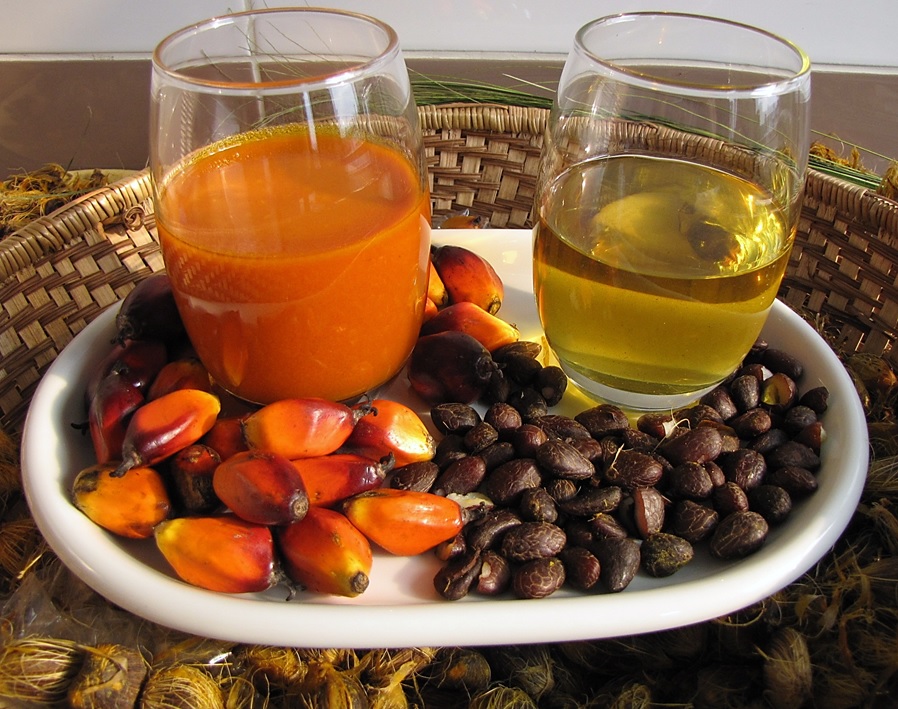
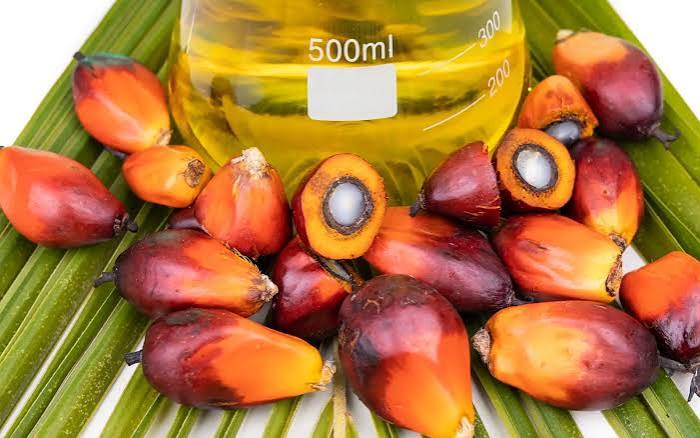
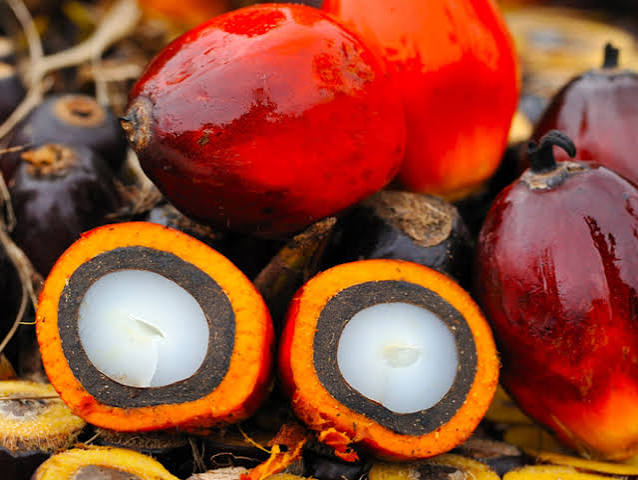
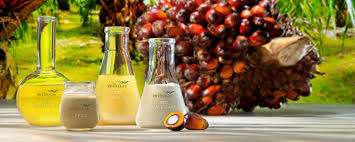
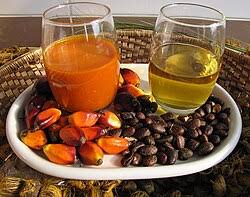
Both palm oil and palm kernel oil come from the fruit of the same tree, Elaeis guineensis, the African oil palm. That shared origin is exactly why the names get confused. But a palm fruit has two distinct oil-bearing parts, and each supplier processes them separately into two commercially unrelated products.
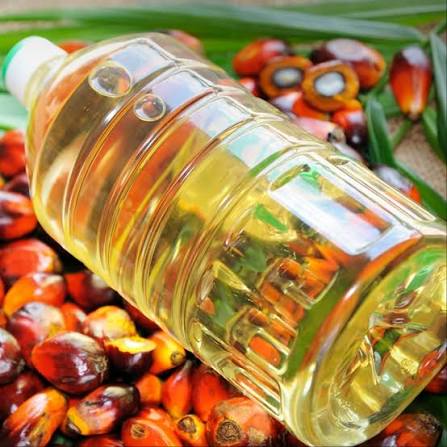
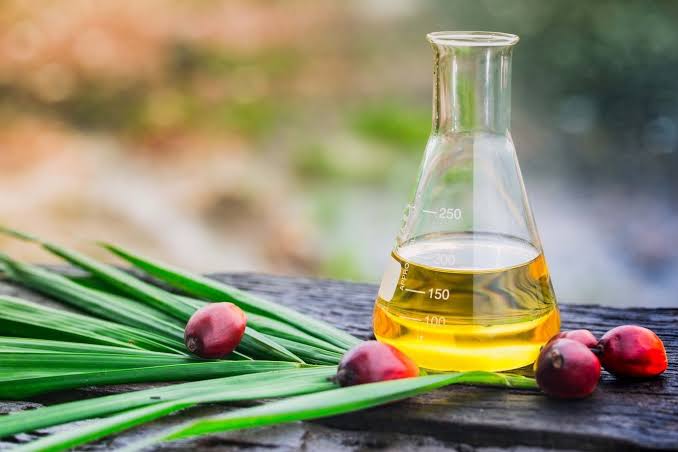
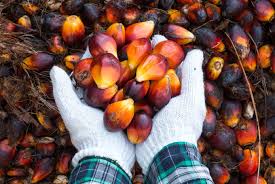
Palm oil comes from the mesocarp, the soft orange-red flesh that surrounds the seed. This is the larger portion of the fruit by weight, and it’s what most of the world means when it says “palm oil” without qualification. It’s pressed out through mechanical extraction at the mill, shortly after harvest, because the mesocarp starts breaking down into free fatty acids quickly once cut from the bunch.
Palm kernel oil comes from the kernel, the small, hard seed inside the fruit that palm oil production leaves behind. Getting oil out of the kernel requires cracking the shell, separating it from the nut, and then pressing or solvent-extracting the oil from inside, which is a completely separate processing line from mesocarp extraction. A palm oil mill typically doesn’t produce kernel oil itself; the kernels are usually sold onward to a dedicated kernel crushing plant.
That difference in processing already tells you something about scale: a tonne of fresh fruit bunches yields roughly 20 to 22% crude palm oil by weight, but only about 4 to 5% palm kernel oil, since the kernel is a much smaller part of the fruit. Palm kernel oil is inherently a smaller-volume, higher-relative-cost product on a per-tonne-of-fruit basis, even before demand and certification premiums enter the picture.
The extraction process is different enough that a mill built for one doesn’t double as a mill for the other without added equipment. Mesocarp pressing is a relatively fast mechanical process on fresh fruit. Kernel crushing needs the shell removed first, either mechanically or through a ripple mill, followed by pressing or solvent extraction on the nut itself, which is a slower, more specialized line. That’s part of why palm kernel oil sometimes has a longer lead time than palm oil on the same purchase order, particularly for refined grades.
Fatty Acid Profile: Why the Difference Matters
This is where palm kernel oil vs palm oil stops being about geography and starts being about chemistry, and it’s the part that actually determines what each oil is good for.
Palm oil has a roughly even fatty acid split: about 44 to 45% palmitic acid and 4 to 5% stearic acid on the saturated side, balanced against roughly 39 to 40% oleic acid and 10 to 11% linoleic acid on the unsaturated side. That balance is why palm oil is liquid at warm room temperature but starts to cloud and solidify as it cools, and why it fractionates cleanly into a solid stearin fraction and a liquid olein fraction when you chill and press it.
Palm kernel oil looks almost nothing like that on paper. It runs close to 80 to 82% saturated fat, and the saturated fat itself is a different mix: roughly 48% lauric acid and 16% myristic acid, with palmitic acid making up a smaller share than in palm oil. Lauric acid is a shorter-chain fatty acid, and it’s the same fatty acid that makes coconut oil behave the way it does, which is exactly why palm kernel oil and coconut oil are considered close substitutes in formulation, while palm oil and coconut oil are not.
That fatty acid gap has a direct physical consequence. Palm oil pours as a liquid at normal room temperature in most climates. Palm kernel oil is semi-solid, with a melting point around 24 to 30°C depending on the specific fraction, meaning it can be a soft solid or a thick liquid depending on the day’s temperature in a non-climate-controlled warehouse. If your process assumes a pumpable liquid oil and someone ships you palm kernel oil instead, you’ll find that out the first time you try to move it through a pipe on a cool morning.
Texture, Melting Point, and How Each Behaves in Use
Because of that fat profile, the two oils don’t behave the same way once they’re in a formulation, even setting aside which one is “correct” for edible use.
Palm oil, especially in its RBD (refined, bleached, deodorized) form, has a moderate, waxy-but-pourable texture that makes it useful across a wide range of food applications without dominating the mouthfeel of the finished product. Its melting behavior is gradual, which is part of why it performs well in margarine and shortening blends where a smooth melt matters.
Palm kernel oil has a much sharper melting profile. It stays solid, then transitions to fully liquid over a narrow temperature range, close to body temperature. That “snap” is exactly why it shows up in chocolate coatings and confectionery fats: a coating made with palm kernel oil (or its fractionated derivatives, like palm kernel stearin) sets with a clean bite and releases its flavor quickly on the tongue instead of coating the mouth the way a slower-melting fat would.
That sharp melt is also useful outside food. In soap and cosmetic formulation, palm kernel oil’s lauric acid content is what produces a hard bar with a fast, dense lather, which is why soap makers specifically ask for it by name rather than accepting palm oil as a substitute; palm oil in a soap recipe produces a softer, more conditioning bar with a slower, creamier lather, a genuinely different product.
Edible vs Non-Edible: Who Buys Which One
The fat profile differences above map fairly cleanly onto two different sets of buyers, and knowing which camp you’re in makes the ordering conversation much faster.
Palm oil, in crude, RBD, or fractionated form, is overwhelmingly an edible oil. It goes into frying oil blends, packaged snack foods, instant noodles, bakery shortening, margarine, and as a general cooking oil across large parts of Asia, Africa, and increasingly the Americas and Europe. Food manufacturers ask for it by grade, RBD palm oil for general use, palm olein specifically when the application needs a liquid fraction that stays clear in the fridge.
Palm kernel oil splits between two buyer types. Food manufacturers use it, usually in its fractionated form, for confectionery fat, non-dairy creamer, and coffee whitener, anywhere that sharp melting point and lauric acid content are assets rather than problems. Industrial and personal care buyers use it for soap, shampoo bars, detergent, and surfactant manufacturing, where the lauric and myristic acid content converts efficiently into the fatty alcohols and fatty acid derivatives that go into cleaning and personal care products, an entire branch of chemistry usually called oleochemicals.
If your end product needs to lather, harden into a bar, or set with a clean snap, you’re almost certainly in the palm kernel oil camp. If it needs to fry, spread, or blend into a dough, you’re almost certainly after palm oil.
Globally, the volumes reflect that split too. Palm oil dominates global vegetable oil trade by a wide margin because it’s the workhorse frying and cooking oil across so many food categories. Palm kernel oil moves in much smaller volumes, and a meaningful share of it competes directly with coconut oil for the same oleochemical and confectionery buyers, which is part of why its price can move somewhat independently of palm oil’s, even though both come from the same fruit and the same mills.
Labeling and Regulatory Differences
There’s a compliance angle to palm kernel oil vs palm oil that catches buyers off guard the first time they reformulate a product for a new market. A number of food safety authorities, including in the EU and several Gulf and Asian markets, require palm oil and palm kernel oil to be listed as separate, named ingredients on packaging rather than lumped together under a generic “vegetable oil” label. That rule exists specifically because the two have such different nutritional and allergen-adjacent profiles that regulators don’t consider them interchangeable for labeling purposes.
Practically, that means if your current spec sheet says “palm oil” and you substitute palm kernel oil to save cost or solve a supply gap, you may need to update your ingredient declaration, your nutrition panel, and in some markets your product registration, not just quietly swap oils in the tank. We flag this to buyers before we ship a substitution, because the packaging consequence is usually a bigger headache than the sourcing one.
Common Ordering Mistakes We See
A few mistakes come up often enough that they’re worth naming directly, because catching them before you place an order is a lot cheaper than catching them after a container arrives.
The first is assuming “vegetable oil” on an old spec sheet or a supplier’s price list refers to whichever product is cheaper that week. Some price lists genuinely do use “palm oil” loosely, and a buyer working from a translated or secondhand spec sheet can end up ordering the wrong one without realizing it until the shipment shows up the wrong consistency. If your spec sheet is more than a year or two old, it’s worth double-checking which product it actually describes before you reorder.
The second is ordering palm kernel oil expecting palm oil pricing. Because kernel yield per tonne of fruit is so much lower than mesocarp yield, palm kernel oil consistently trades at a different price point, and a quote request that doesn’t specify which one you want can come back confusing if the person quoting assumes the cheaper, higher-volume product.
The third is temperature planning. Palm oil ships and stores as a liquid in most climates; palm kernel oil can arrive semi-solid, especially in cooler weather or unheated storage, and a receiving team unprepared for that sometimes assumes the shipment is contaminated or off-spec when it’s simply behaving normally for its melting point. We include handling notes with every palm kernel oil shipment specifically to head that off.
The fourth, and the one that costs the most to fix after the fact, is reformulating a finished product with the wrong oil and only catching the texture or melt problem after a production run. A confectionery coating built around palm kernel stearin’s sharp melt will behave noticeably differently if palm oil quietly ends up in the tank instead, even though both are technically “palm” products. If you’re changing suppliers or reformulating, send us the current spec sheet before the first order, not after the first customer complaint.
How We Test and Certify Each Batch
Every batch of palm oil or palm kernel oil we ship carries its own certificate of analysis, covering free fatty acid, moisture and impurities, iodine value, peroxide value, and color, tested against the exact grade ordered rather than a generic house standard. For palm kernel oil specifically, we also confirm the lauric acid content and melting point range on request, since those two figures are what most soap, cosmetic, and confectionery buyers actually care about when they’re qualifying a new supplier.
If your business runs its own incoming quality checks, we’re glad to send a pre-shipment sample sized for your lab rather than asking you to trust the certificate alone on a first order. That’s a normal ask, and it usually resolves any lingering doubt about which product you’re actually getting faster than another round of emails back and forth about specifications.
Specifications at a Glance
The table below shows the typical spec ranges for the two main grades of each product. Exact figures vary by batch and are confirmed on the certificate of analysis we issue with every shipment.
| Product | Free Fatty Acid | Moisture & Impurities | Iodine Value | Saturated Fat | Melting/Cloud Point |
|---|---|---|---|---|---|
| RBD Palm Oil | ≤ 0.1% | ≤ 0.1% | 50–55 | ~50% | 33–39°C |
| RBD Palm Olein | ≤ 0.1% | ≤ 0.1% | 56–60 | ~44% | Cloud point ≤ 10°C |
| Crude Palm Kernel Oil | ≤ 5% | ≤ 0.5% | 14–21 | ~81% | 24–30°C |
| Refined Palm Kernel Oil | ≤ 0.1% | ≤ 0.2% | 14–21 | ~81% | 24–30°C |
| Palm Kernel Stearin | ≤ 0.2% | ≤ 0.2% | 8–14 | ~85%+ | 30–36°C |
We supply both product lines out of Thailand, so if you’re weighing palm kernel oil vs palm oil for a new formulation, send us the intended use, cooking, confectionery, soap, or something else, and we’ll tell you which grade actually fits rather than quoting whichever one happens to be cheaper that week. You can also see our full palm oil product range for the crude, RBD, and fractionated grades we keep in regular supply.
Frequently Asked Questions
Is palm kernel oil healthier or less healthy than palm oil?
They’re different enough that a direct health ranking isn’t very useful. Palm kernel oil is more saturated overall and closer in composition to coconut oil, while palm oil has a more balanced saturated-to-unsaturated ratio. Neither is a like-for-like nutritional substitute for the other, so the comparison depends on what you’re weighing it against, not which one is “better” in isolation.
Can palm kernel oil be used for frying like palm oil?
Technically yes in small-scale use, but it’s not how it’s typically bought. Its higher cost per tonne relative to palm oil, and its semi-solid state at room temperature, make it an unusual and expensive choice for commercial frying, where RBD palm oil or palm olein is the standard.
Why does my soap recipe specifically call for palm kernel oil instead of palm oil?
Because of the lauric acid content. Palm kernel oil produces a harder bar with dense, fast lather, while palm oil produces a softer, more conditioning bar with a slower lather. Soap formulas are usually written around that specific difference, so substituting one for the other changes the finished bar.
Do you sell palm kernel oil in the same packaging as palm oil?
Yes, both ship in drums, flexitanks, or ISO tanks depending on order volume. Because palm kernel oil can be semi-solid at lower ambient temperatures, we flag handling and heating requirements for that product specifically so it arrives pumpable rather than solid in the container.
What’s the price difference between palm oil and palm kernel oil?
Palm kernel oil generally trades at a premium per tonne over palm oil, partly because kernel yield per tonne of fruit is much lower than mesocarp yield, and partly because demand from the oleochemical sector competes directly with food-grade demand. Ask us for a current side-by-side quote since the spread moves with both markets independently.
Which one should I buy if my supplier just told me to order “palm oil”?
In almost every case, a generic request for “palm oil” means the mesocarp product, in crude, RBD, or fractionated form. If you genuinely need palm kernel oil, for soap, cosmetics, or a confectionery fat, that’s usually specified by name because it’s the less common request. When in doubt, tell us the end application and we’ll confirm the right grade before quoting.
Does palm kernel oil have a shorter shelf life than palm oil?
Not meaningfully, when both are stored properly. Refined palm kernel oil is actually quite stable thanks to its highly saturated fat content, which resists oxidation well. The bigger storage consideration is temperature control for handling, not shelf life, since you want it kept in a state you can still pump and measure accurately.
Can I order a custom blend of palm oil and palm kernel oil?
Yes, blended and fractionated products built from both are common, particularly in confectionery and specialty fat applications that want a specific melting curve. Tell us the target melting point or application and we can advise whether a blend, a fractionated grade, or a straight product is the better starting point.
None of this needs to stay a guessing game on your end. Tell us what you’re making, cooking oil, a confectionery fat, or a soap base, and we’ll confirm whether palm oil or palm kernel oil is actually the right order, along with the grade and packaging that fits your volume.
We ship both worldwide from Thailand with a certificate of analysis on every batch, and if RSPO or halal documentation applies to your order, we’ll have that ready too; our guides on RSPO certified sustainable palm oil and choosing a halal certified palm oil supplier cover those in detail. Reach our team directly here to get a quote started.

4 thoughts on “Palm Kernel Oil vs Palm Oil: What’s Actually Different (Specs Inside)”