

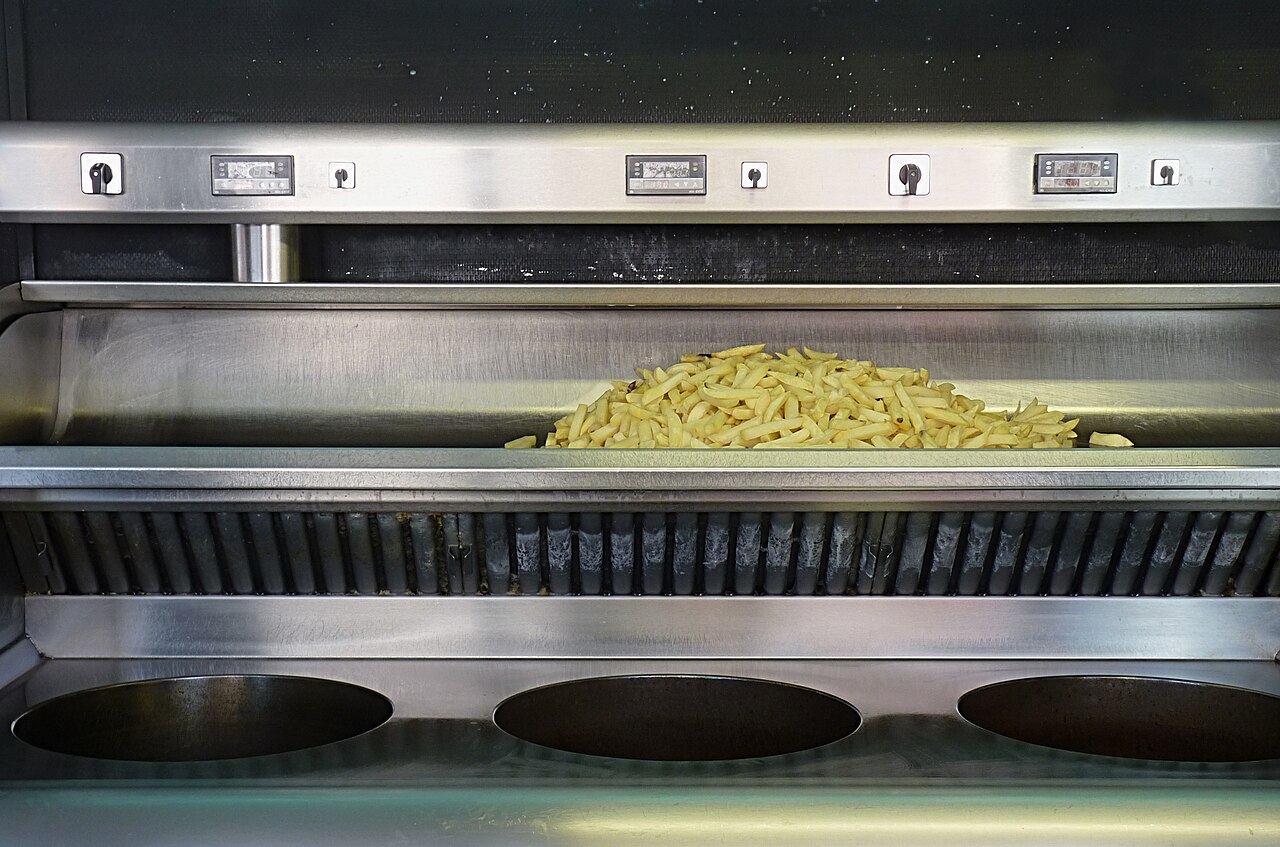
A cooking oil smoke point chart is one of those things every kitchen manager and food buyer ends up needing, usually right after a fryer starts smoking at lunchtime. The smoke point tells you the temperature where an oil starts breaking down and giving off visible smoke. Past that point you get bitter flavours, irritating fumes and oil that wears out fast.
We export refined sunflower, palm, soybean, canola and coconut oil from Thailand, so we get asked about smoke points a lot. This cooking oil smoke point chart covers the five oils we sell, in both refined and unrefined forms, and explains why the numbers you see online don’t always agree.
Table of Contents
The cooking oil smoke point chart
Here’s our cooking oil smoke point chart, with typical smoke points for the five oils. Treat them as ranges, not fixed values. More on why below.
| Oil | Refined smoke point | Unrefined / crude / virgin |
|---|---|---|
| Sunflower oil (regular) | About 232°C (450°F) | About 107°C (225°F) |
| High oleic sunflower oil | About 245°C (473°F) | About 160°C (320°F) |
| Palm oil / palm olein | About 230–235°C (446–455°F) | Red / crude palm oil, about 150°C (300°F) and up |
| Soybean oil | About 230–234°C (446–453°F) | About 160°C (320°F) |
| Canola oil | About 204–230°C (400–446°F) | About 107°C (225°F) |
| Coconut oil | RBD about 204°C (400°F) | Virgin about 177°C (350°F) |
The refined sunflower and high oleic sunflower numbers come straight from our own spec sheets: approx. 232°C for refined sunflower oil and around 245°C for high oleic sunflower oil. The others are typical industry figures for oils refined to normal food-grade specs.
If you only take one thing from this cooking oil smoke point chart, take this: refined oils are in a different league from unrefined ones. The refining process strips out free fatty acids, proteins and other small compounds that start smoking early.
Why smoke point numbers vary so much
Look up the same oil on five websites and you’ll find five smoke points, and five slightly different versions of the same cooking oil smoke point chart. That’s not always someone being wrong. A few real reasons:
- Free fatty acid level. This is the big one. The more free fatty acids in the oil, the lower the smoke point. An oil at 0.05% FFA can smoke dozens of degrees higher than the same oil at 0.5%.
- Refining quality. Well-refined, well-deodorised oil has fewer compounds that burn early.
- Test method. Labs heat the oil in a set way under set lighting and watch for continuous smoke. Different methods give different results.
- Age and storage. Oil that’s been stored warm or open picks up FFA and oxidation products, which bring the smoke point down.
- Use. Every hour of frying lowers the smoke point. Fresh oil and day-three fryer oil are not the same oil.
That’s why a cooking oil smoke point chart is a guide, not a promise. The number printed on a website is for fresh oil in good condition. Quality limits for refined vegetable oils, including free fatty acids, are set out in the standards of the FAO/WHO Codex Alimentarius. Our guide to free fatty acid and peroxide value explains the FFA side in more detail.
Sunflower oil
On any cooking oil smoke point chart, refined sunflower oil sits near the top. It’s one of the most popular frying oils worldwide. Its smoke point of around 232°C gives plenty of room for normal deep frying at 170 to 190°C. It has a neutral taste and a light colour, so it doesn’t change the flavour of food.
Here are our refined sunflower oil specs:
| Parameter | Refined sunflower oil |
|---|---|
| Colour | Clear, light golden yellow |
| Free fatty acids | Max 0.1% (as oleic) |
| Moisture and volatile matter | Max 0.1% |
| Peroxide value | Max 10 meq/kg |
| Iodine value | 118 – 144 |
| Smoke point | Approx. 232°C (450°F) |
| Shelf life | 12 – 18 months |
High oleic sunflower oil pushes the smoke point higher, to about 245°C, and it’s more stable under long frying. Oleic acid is at least 80%, linoleic acid 10% or less. It costs more, but in heavy-use fryers it usually lasts longer.
Crude sunflower oil, by contrast, smokes at a much lower temperature. It’s for refining, not for cooking. Our crude sunflower oil goes to refineries, not kitchens.
Palm oil
Refined palm oil, especially palm olein, is a workhorse for commercial frying. Its smoke point sits around 230 to 235°C, and it’s very stable because it’s rich in saturated and monounsaturated fat. That’s why so many snack makers and fast-food chains use it.
We supply refined palm oil in CP8 and CP10 grades. The number is the cloud point in °C, which tells you how cold the oil can get before it turns cloudy. For frying, both work well. CP8 stays clear in cooler kitchens.
Crude palm oil (CP0) has a lower smoke point and a strong red colour. It’s for refining or specialist cooking. On any cooking oil smoke point chart, crude palm and refined palm olein should never be listed as the same thing.
Soybean oil
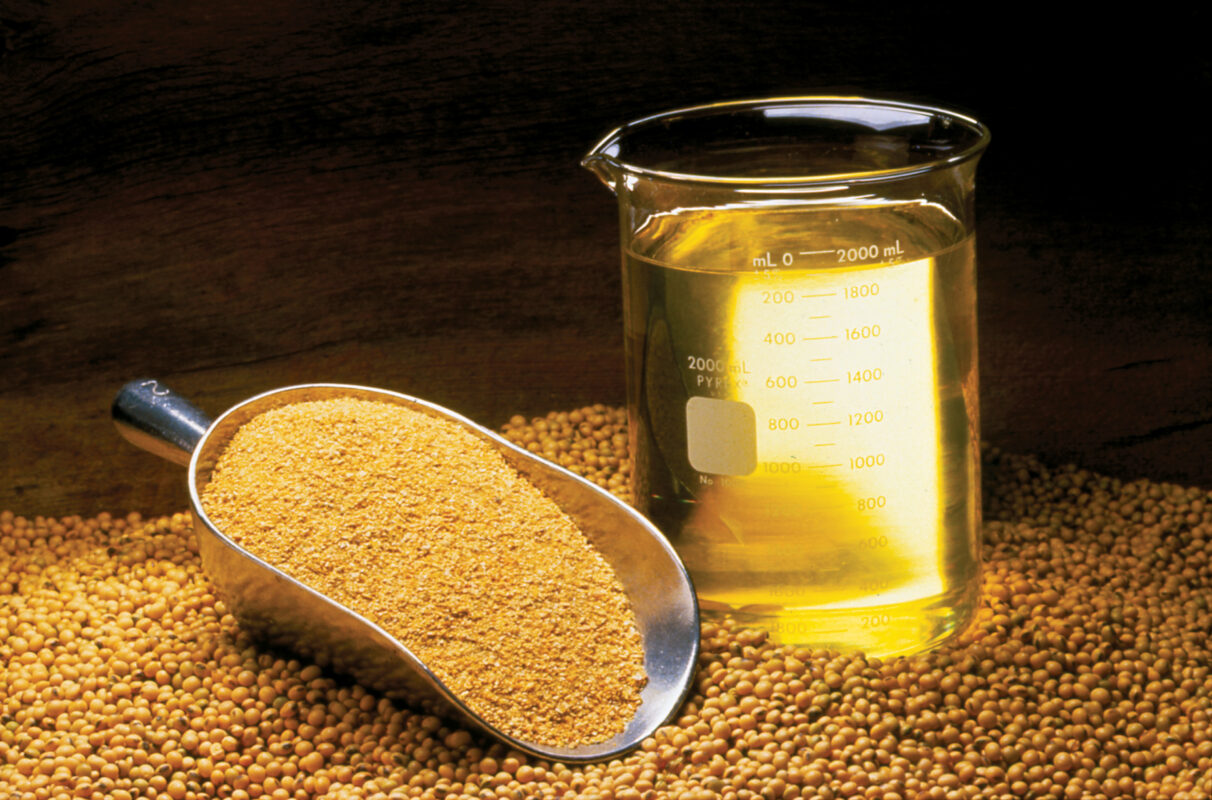
On our cooking oil smoke point chart, refined soybean oil sits at around 230 to 234°C, close to sunflower. It’s widely used in food manufacturing, frying and baking because it’s affordable and neutral. Its weak spot is oxidation: soybean oil has more polyunsaturated fat, so it breaks down faster during long frying.
Our refined soybean oil specs:
| Parameter | Refined soybean oil |
|---|---|
| Appearance | Clear, light yellow |
| Free fatty acids | ≤ 0.1% (as oleic) |
| Moisture and volatile matter | ≤ 0.10% |
| Peroxide value | ≤ 10 meq O₂/kg (typical ≤ 5) |
| Iodine value (Wijs) | 120 – 141 |
| Colour (Lovibond 5.25″) | 2.0 red max |
| Shelf life | 12 – 18 months |
For heavier frying, our high oleic soybean oil has at least 70% oleic acid and 3% or less linolenic acid, which makes it far more stable. See the full refined soybean oil page for details.
Canola oil
On a cooking oil smoke point chart, refined canola oil usually lands between about 204 and 230°C. The wide spread comes from differences in refining and FFA. A well-refined canola with very low FFA sits at the top of that range.
Our RBD canola oil ships at FFA ≤ 0.05% and peroxide value ≤ 1.0 meq O₂/kg, with a shelf life of 18 to 24 months. Our refined canola oil is at FFA ≤ 0.1% and PV ≤ 2.0. Both are neutral in taste and low in saturated fat, which is why many health-focused brands pick canola.
If you’re choosing between canola and soybean for a fryer, read our comparison of canola oil vs soybean oil.
Coconut oil
Coconut oil is the odd one out on this cooking oil smoke point chart. RBD coconut oil smokes at about 204°C. Virgin coconut oil is lower, around 177°C, because it keeps more of the natural compounds that give it its coconut taste and smell.
Coconut oil is extremely stable against oxidation, because it’s mostly saturated fat. So even though its smoke point is lower than sunflower or soybean, it doesn’t go rancid easily. It’s popular for baking, confectionery and some Asian frying styles.
Specs for our RBD coconut oil: FFA ≤ 0.1% (as lauric), PV ≤ 1.0 meq O₂/kg, shelf life 18 to 24 months. Our virgin coconut oil: FFA ≤ 0.2%, PV ≤ 3.0, with a natural coconut aroma. Both go solid below about 24°C.
How to use a cooking oil smoke point chart in a real kitchen
Reading a cooking oil smoke point chart is useful, but what really matters is the gap between the smoke point and your cooking temperature.
- Deep frying usually runs at 170 to 190°C. Any refined oil on this cooking oil smoke point chart handles that comfortably when fresh.
- Stir-frying and searing can hit 200°C or more at the pan surface. Pick an oil at the top of the chart, like refined sunflower, high oleic sunflower, palm olein or soybean.
- Baking rarely gets the oil itself that hot. Coconut, canola and sunflower all work.
- Salad dressings don’t involve heat at all, so smoke point doesn’t matter. Taste does.
The bigger the gap between your cooking temperature and the smoke point, the longer your oil will last. That gap shrinks every day you use the oil, because FFA rises with each frying session. Our guide on how often to change fryer oil covers when to call it.
Smoke point, flash point and fire point
Three terms often get mixed up:
- Smoke point: continuous visible smoke appears.
- Flash point: vapours above the oil can catch fire briefly if a flame is nearby. Usually well above 300°C for fresh refined oils.
- Fire point: the oil keeps burning once lit. A little higher again.
A cooking oil smoke point chart only covers the first. But as oil ages and FFA climbs, all three come down. That’s one more reason to change fryer oil on time.
Does a higher smoke point mean a healthier oil?
Not by itself. A cooking oil smoke point chart tells you about heat tolerance. Health is about fat profile, how the oil is used, and how much of it you eat. An oil with a high smoke point that’s used past its best can still produce breakdown products you don’t want.
The more useful measure for frying is oxidative stability: how well the oil resists breaking down over hours of heat. That’s where high oleic sunflower, high oleic soybean and palm olein do well. On a cooking oil smoke point chart they look similar to regular oils. In a fryer over a full day, they behave better.
What lowers smoke point during use
Every time you fry, several things happen at once, and none of them show up on a cooking oil smoke point chart:
- Water from food causes hydrolysis, which raises free fatty acids.
- Oxygen reacts with the hot oil, forming oxidation products.
- Food particles, starch and salt fall into the oil and burn.
- Some oil polymerises, which makes it thicker and darker.
All of these push the smoke point down. A fresh oil at 232°C might smoke at 190°C after several days of heavy use. That’s when you see smoke during normal frying, and it’s a clear sign to change the oil. No cooking oil smoke point chart can account for that, so trust what you see in the fryer.
Cooking oil smoke point chart by cooking method
Another way to read a cooking oil smoke point chart is to start from the cooking method and work back to the oil. This is the version most chefs actually use.
| Cooking method | Typical oil temperature | Good choices from our range |
|---|---|---|
| Deep frying (fries, chicken, snacks) | 170 – 190°C | Refined sunflower, palm olein CP8/CP10, refined soybean, high oleic sunflower |
| Continuous industrial frying | 170 – 185°C for many hours | High oleic sunflower, high oleic soybean, palm olein |
| Stir-frying and wok cooking | 190 – 220°C at the pan | Refined sunflower, refined soybean, palm olein |
| Pan frying and sautéing | 150 – 190°C | Any refined oil on the chart |
| Baking and roasting | Oil rarely above 180°C | Canola, sunflower, RBD coconut |
| Confectionery and fillings | Low heat | RBD coconut, palm oil |
| Dressings and cold use | No heat | Canola, sunflower, virgin coconut for flavour |
The rule of thumb: keep at least 30 to 40°C between your cooking temperature and the smoke point of fresh oil. That buffer shrinks as the oil ages, and it’s what gives you a decent number of frying days.
Why buyers ask for smoke point on the spec sheet
For food factories and big restaurant chains, a cooking oil smoke point chart isn’t just kitchen trivia. It feeds into product quality, safety and cost. A higher starting smoke point, together with low FFA, usually means:
- Less smoke and fewer complaints from kitchen staff.
- Longer fryer life, so fewer oil changes and less waste.
- More consistent colour and taste in the finished food.
- Lower risk around fume extraction and fire.
That’s why we list smoke point on our refined sunflower and high oleic sunflower spec sheets. If you need it on the certificate of analysis for your shipment, say so when you order and it can be tested at loading.
A note on regional cooking styles
Frying habits differ around the world, and that changes which part of the cooking oil smoke point chart matters most.
In many Asian kitchens, very hot wok cooking puts the oil right at the surface of a pan well over 200°C for short bursts. Oils at the top of the chart, like refined sunflower, soybean and palm olein, suit that style best.
In fast-food frying across much of the world, oil sits at 175 to 185°C for long hours. Here, stability over time matters more than the smoke point number alone, so high oleic oils and palm olein earn their keep.
In bakeries and confectionery, heat is lower but shelf life of the finished product matters, which is where coconut and palm oil stand out. So the same cooking oil smoke point chart gets read three different ways depending on who’s holding it.
What a cooking oil smoke point chart won’t tell you
A chart gives you one number per oil. Real buying decisions need a few more.
Flavour. Refined sunflower, soybean, canola and palm olein are all neutral. Virgin coconut oil tastes of coconut. That’s great in some foods and wrong in others, whatever the smoke point.
Texture at room temperature. Palm and coconut oil can be solid or semi-solid in a cool kitchen. That affects handling, pumping and storage. Sunflower, soybean and canola stay liquid.
Foaming. Some oils foam more as they age, especially when frying battered or starchy foods. Foaming is often an early warning that the oil is near the end of its life.
Price and supply. Palm olein and soybean oil are usually the most affordable. High oleic oils cost more but may pay for themselves in longer fryer life. Prices move with the market, so ask for a current quote.
Labelling and customer preference. Some markets prefer non-palm oils. Others want Halal certification. Some want non-GMO, which matters for soybean and canola. Ask us what’s available for your grade.
So use the cooking oil smoke point chart to narrow the list, then make the final call on these other points.
Storage, packing and smoke point
Oil that’s stored badly loses some of its smoke point before it ever reaches the fryer. Heat, light, air and moisture all push free fatty acids and oxidation up, and both bring the smoke point down.
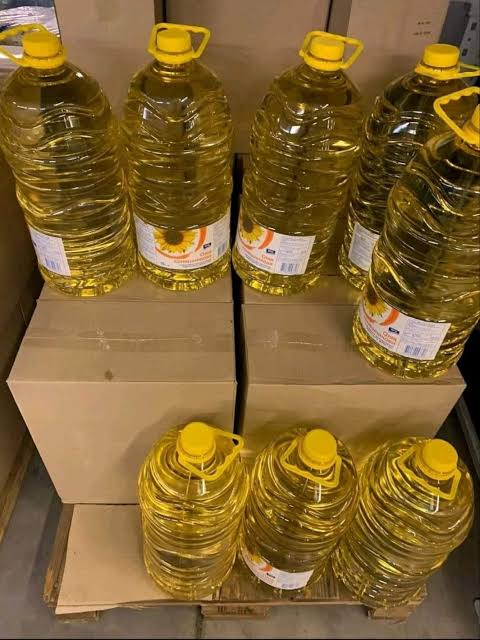
For bulk buyers, a well-filled flexitank or a sealed ISO tank keeps air contact low in transit. For packed oil, cartons keep light off the bottles. Once the oil is with you, keep it cool, dry, closed and out of the sun, and use older stock first.
If you buy oil to last several months, look at the shelf life on the spec sheet as well as the numbers on the cooking oil smoke point chart. Our high oleic sunflower, high oleic soybean, RBD canola and coconut oils carry 18 to 24 months. Refined sunflower and refined soybean carry 12 to 18 months.
Tips to keep your oil below its smoke point
- Set the fryer thermostat correctly and check it with a separate thermometer now and then.
- Don’t preheat for longer than needed. Oil sitting hot and empty breaks down.
- Skim crumbs and filter the oil daily. Burnt particles lower the smoke point.
- Don’t salt food over the fryer. Salt speeds up breakdown.
- Top up with fresh oil as levels drop, which slows the decline.
- Cover the fryer when not in use to keep air and dust out.
Buying for high-heat cooking
If you’re buying oil for a restaurant group, a food factory or a distributor that supplies both, here’s how we’d use this cooking oil smoke point chart:
- Everyday frying at a good price: refined sunflower, refined soybean or palm olein CP8/CP10.
- Long, heavy frying runs: high oleic sunflower or high oleic soybean.
- Health-focused products: refined canola.
- Baking and confectionery: RBD coconut oil or palm oil.
- Premium or specialty foods: virgin coconut oil, where flavour matters more than smoke point.
All of these ship from us in bulk or packed form. For bulk loads, see how we compare flexitank vs ISO tank shipping.
Quick answers
Which of the five oils has the highest smoke point? High oleic sunflower oil, at around 245°C, followed closely by refined sunflower, soybean and palm olein.
Which has the lowest? Unrefined oils in general. Of the refined oils, RBD coconut oil at around 204°C sits lowest.
Is canola good for deep frying? Yes. Refined canola handles normal deep-frying temperatures well.
Can I mix oils? You can, but the blend will behave closer to the weakest oil in it. It’s usually better to pick one oil per fryer.
Does smoke point change in storage? Yes, slowly. As FFA rises over months, the smoke point drops a little. Good storage helps. See our guide to the shelf life of sunflower oil, soybean and canola.
Order high smoke point cooking oil from DTH Company Ltd
We supply sunflower oil, palm oil, soybean oil, canola oil and coconut oil to buyers worldwide. Every shipment comes with a certificate of analysis. Packing runs from 1 L PET bottles to flexitanks and ISO tanks. Trade contracts for bulk oil often follow the rules of FOSFA.
Browse our products page, read about us, or send your grade, quantity and destination through our contact page. We’ll send full specs, including smoke point, and a price.
Image credits: Featured photo: Jamain, CC BY-SA 3.0, Wikimedia Commons.
3 thoughts on “Cooking Oil Smoke Point Chart: 5 Oils Compared for Best Frying Results”