

RBD coconut oil vs virgin coconut oil comes down to one thing: how the oil is made. Virgin coconut oil (VCO) is pressed from fresh coconut meat and never refined, so it keeps the smell and taste of coconut. RBD coconut oil is made from dried coconut (copra), then refined, bleached and deodorized, so it ends up clear, neutral and cheaper. Same fruit, two very different products, and buying the wrong one for your use is an expensive mistake.
We export both from Thailand, along with crude coconut oil, to food factories, cosmetic and soap makers, distributors and retail brands around the world. This guide explains how each oil is made, the real differences in specs, smell, cooking and price, which industries use which, and the specifications you get when you buy either one from us.
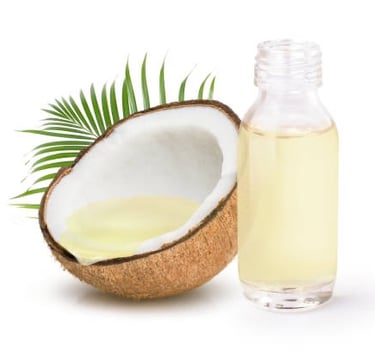
Table of Contents
RBD Coconut Oil vs Virgin Coconut Oil in Short
If you only read one part, read this.
- Virgin coconut oil is made from fresh coconut meat, usually by cold pressing or by separating the oil from fresh coconut milk. No refining, no bleaching, no deodorizing. It smells and tastes of coconut.
- RBD coconut oil is made from copra, the dried coconut meat. The copra is pressed to give crude coconut oil, which is then refined, bleached and deodorized. It has almost no smell or taste.
- VCO costs a lot more, often two to three times the price of RBD per tonne.
- RBD handles high heat better, keeps a neutral flavour and is the workhorse for food factories, frying, soap and cosmetics.
- VCO is the choice when you want a natural, “unrefined” label, a coconut aroma, or a premium retail product.
So in the RBD coconut oil vs virgin coconut oil choice, the right answer depends on whether you’re paying for function or for the natural story.
How Virgin Coconut Oil Is Made
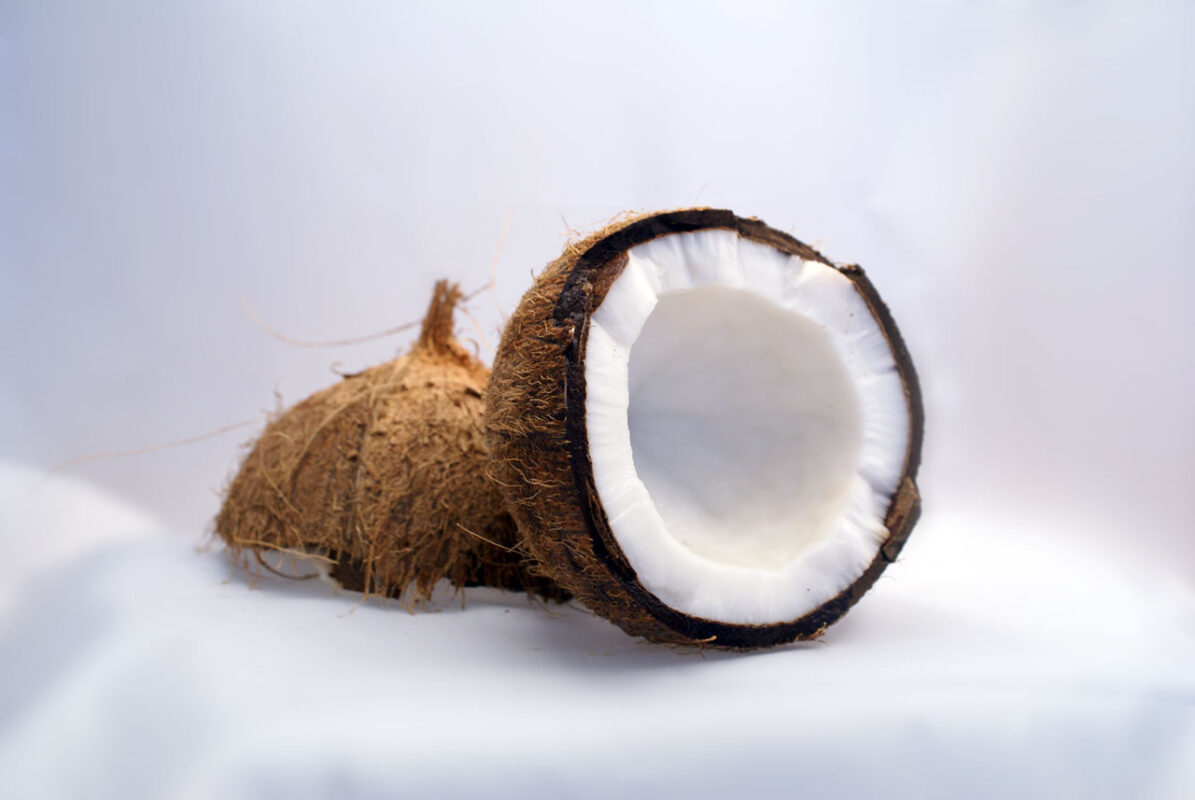
Virgin coconut oil starts with fresh, mature coconuts. The meat is grated and then processed in one of two main ways:
- Cold pressing (dry method): the fresh grated meat is dried quickly at low temperature and pressed. The oil comes out with a light coconut smell.
- Wet milling: the fresh meat is pressed to make coconut milk, and the oil is separated from the water by fermentation, chilling or centrifuge. This method gives very clean, light VCO.
There’s no chemical refining, no bleaching earth, and no high temperature deodorizing. The oil is just filtered. That’s why VCO keeps its natural aroma, tocopherols and polyphenols, and why it’s sold as a natural or “extra virgin” product.
The International Coconut Community publishes quality standards for virgin coconut oil that many buyers use as a reference.
How RBD Coconut Oil Is Made
RBD coconut oil starts further back. Coconuts are split and the meat is dried, in the sun, in kilns or in hot air dryers, to make copra. Copra is easy to store and ship, which is why most of the world’s coconut oil is made this way.
The steps after that:
- Pressing: copra is pressed in expellers, sometimes followed by solvent extraction. The result is crude coconut oil, which is yellow to brown with a strong smell and high free fatty acids.
- Refining: free fatty acids and gums are removed, either chemically or physically.
- Bleaching: the oil is mixed with bleaching earth to pull out colour and impurities, then filtered.
- Deodorizing: the oil is heated under vacuum with steam to strip off odour and the rest of the free fatty acids.
What comes out is clear, almost colourless when liquid, white when solid, with a neutral taste. You can read more about crude coconut oil in our guide to crude coconut oil specification.
Where Our Coconut Oil Comes From
Thailand has a long coconut growing belt along the Gulf coast and in the south, in provinces like Prachuap Khiri Khan, Chumphon and Surat Thani. Fresh nuts from these areas go to virgin coconut oil producers and to the food industry, while copra and crude coconut oil also come in from neighbouring producers to feed refineries.
That mix matters for RBD coconut oil vs virgin coconut oil in a practical way. VCO depends on a steady supply of fresh, mature nuts close to the processing plant, so volumes are smaller and planning matters. RBD depends on copra and crude oil, which are traded across the region in large volumes, so supply is bigger and steadier.
The Market in 2026
Coconut oil had a rough couple of years. Dry weather hit copra output in the Philippines and Indonesia, the two biggest producers, and coconut oil prices climbed sharply through 2024 and 2025. Demand from oleochemicals, food and cosmetics kept growing at the same time.
For buyers this has two effects. First, the gap between coconut oil and other vegetable oils like palm and soybean got wider, so some food factories looked at blends or switched part of their use. Second, VCO and RBD both got more expensive, but the price gap between them stayed roughly in the same range. If you’re planning purchases, it’s worth agreeing supply for several months at a time rather than buying spot.
Specification Comparison
Here are the specs we work to for both products. These are the numbers that actually show the difference.
| Parameter | RBD coconut oil | Virgin coconut oil |
|---|---|---|
| Raw material | Copra (dried coconut) | Fresh coconut meat |
| Process | Refined, bleached, deodorized | Cold pressed or wet milled, filtered |
| Appearance | Clear, colourless to pale yellow liquid | Clear, water-like liquid |
| Odour and taste | Odourless, neutral | Natural fresh coconut aroma and flavour |
| Free fatty acids (as lauric) | 0.1% max | 0.2% max |
| Moisture and impurities | 0.1% max | 0.1% max |
| Peroxide value | 1.0 meq O2/kg max | 3.0 meq O2/kg max |
| Iodine value (Wijs) | 6 to 11 | 6 to 11 |
| Saponification value | 248 to 265 | 250 to 265 |
| Melting point | About 24 to 26°C | About 24 to 25°C |
| Shelf life | 18 to 24 months | 18 to 24 months |
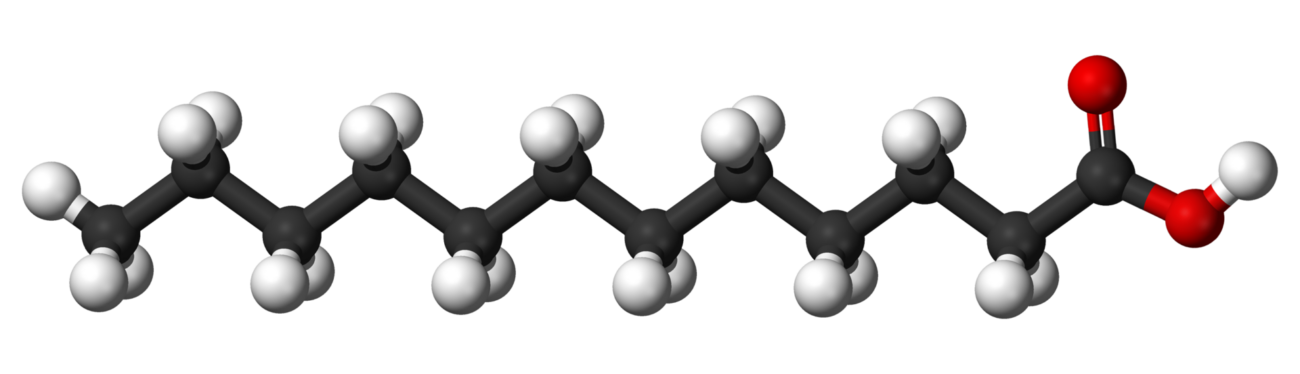
Look at the iodine and saponification values. They’re almost the same. That’s because the fatty acids are the same: both oils are around 90% saturated fat, with lauric acid at roughly 45 to 52%. The chemistry of the oil itself doesn’t change much. What changes is everything that comes with it: smell, colour, minor nutrients, free fatty acids and price.
If you want to understand what free fatty acid and peroxide value actually tell you, our post on free fatty acid and peroxide value explains it in plain language.
Difference 1: Smell and Taste
This is the one everyone notices first. Open a drum of virgin coconut oil and the room smells of coconut. Open a drum of RBD and you get almost nothing.
For some uses that coconut note is the whole point: coconut desserts, Thai and Indian curries, natural skincare, “pure coconut” retail jars. For others it’s a problem. A biscuit maker, a chip fryer or a cream manufacturer doesn’t want everything to taste or smell of coconut. That’s where RBD wins.
Difference 2: Cooking and Frying
RBD coconut oil has a higher smoke point, usually around 200 to 230°C, because the free fatty acids and small particles that smoke early are removed in refining. Virgin coconut oil smokes earlier, around 170 to 180°C.
So for deep frying, commercial frying lines and high heat baking, RBD is the safer bet. VCO works fine for sautéing, light frying, baking at moderate temperatures and anything where you want the coconut taste to come through. See our cooking oil smoke point chart for how coconut oil compares with sunflower, palm, soybean and canola.
Difference 3: Nutrition and Minor Compounds
Both oils have the same fat profile, so calorie for calorie they’re very close. VCO keeps more of the minor compounds that refining removes, like natural tocopherols and polyphenols. That’s why it’s popular in health food and natural cosmetics.
We’re not going to make medical claims about either oil. What we can say is that VCO is the less processed option, and if your customers buy on “natural” and “unrefined”, that matters to them.
Difference 4: Price
This is the big one for most buyers. Virgin coconut oil uses fresh coconuts, a slower process and lower yields per nut. RBD coconut oil uses copra, which is traded in huge volumes, and large refineries run at scale.
In practice, VCO usually costs about two to three times as much per tonne as RBD coconut oil. The exact gap moves with the coconut harvest, demand from the cosmetics and health food sectors, and the price of copra in the Philippines and Indonesia, which set the tone for the whole market.
So in the RBD coconut oil vs virgin coconut oil decision, if the oil goes into a product where nobody will smell or taste the coconut, paying for VCO is usually money wasted.
Difference 5: Shelf Life and Stability
Both oils are very stable because coconut oil is mostly saturated fat, which doesn’t oxidise easily. Our specs give 18 to 24 months for both in cool, dry storage.
RBD has a small edge in stability because it starts with very low free fatty acids and peroxide value, and there’s less in it to go off. VCO, if it’s made well and kept cool and dark, keeps just as long in practice. Badly made VCO with too much moisture can go rancid much faster, which is why moisture and free fatty acid limits matter so much when you buy it.
Difference 6: Colour and Appearance
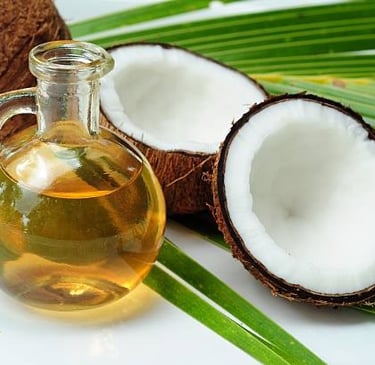
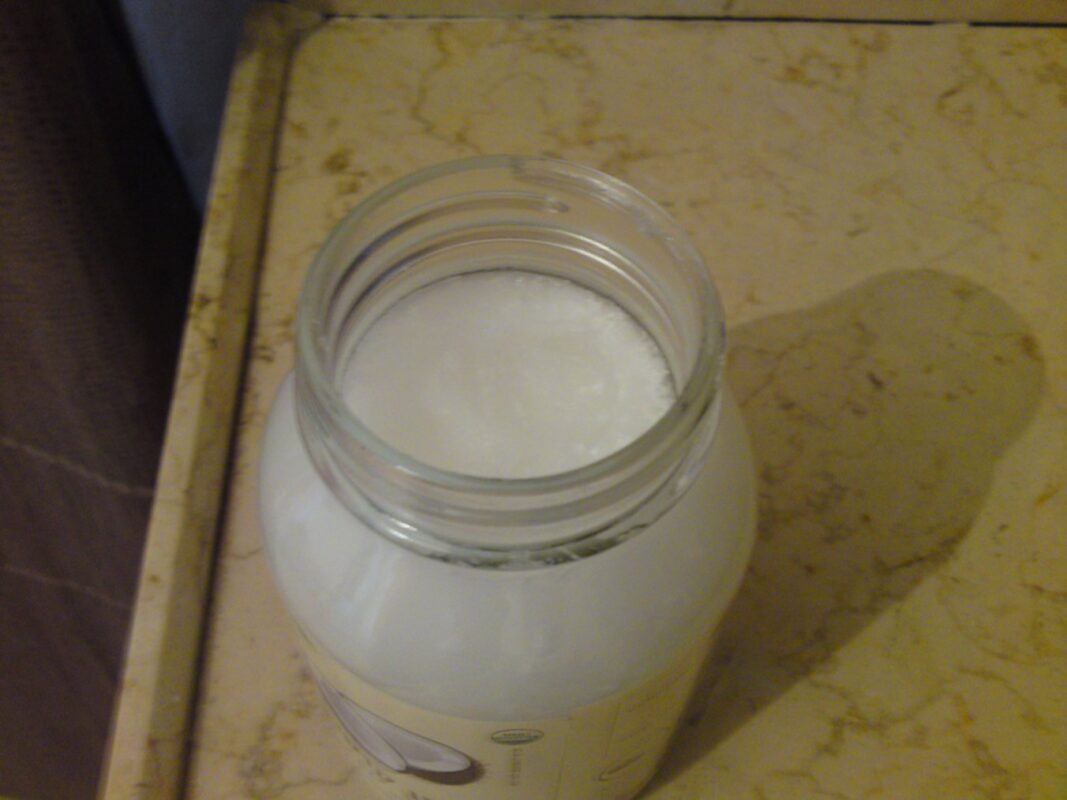
RBD coconut oil is water clear when liquid and bright white when solid. VCO is also clear when liquid, sometimes with a very slight tint, and white when solid.
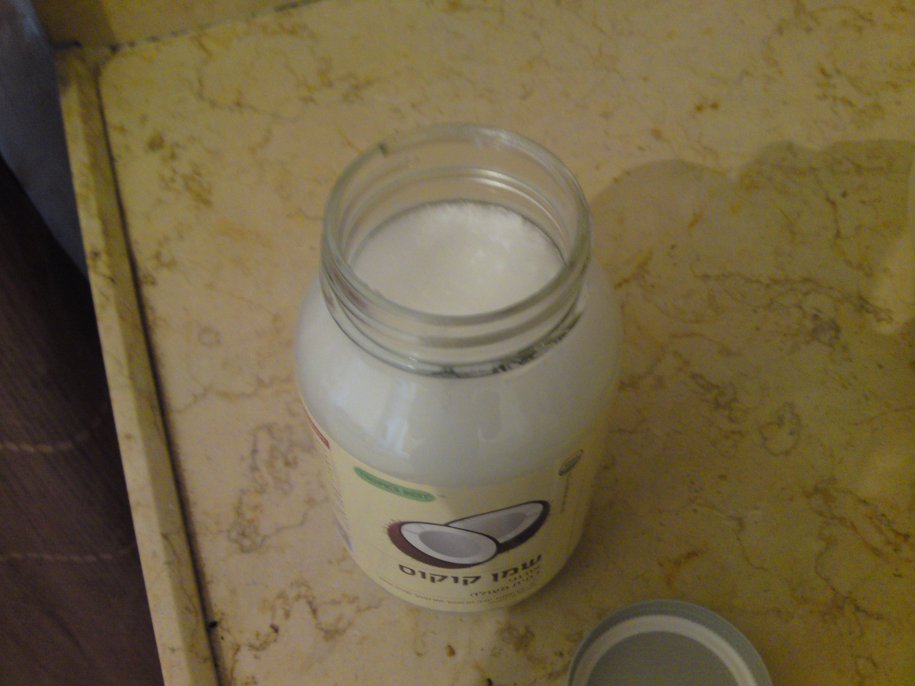
Both turn solid below roughly 24°C. That surprises some first-time importers in cooler countries, who open a container in winter and find it set hard. It’s normal. Our post on flexitank vs ISO tank covers how bulk coconut oil is heated and discharged.
Difference 7: Labelling and Claims
VCO lets you say “virgin”, “cold pressed”, “unrefined” and “natural” on your label, as long as it really is. RBD can’t carry those words, but it can be sold as “refined coconut oil” or simply “coconut oil” in many markets.
Check the labelling rules in your country. The Codex Alimentarius standard for named vegetable oils is the base many countries build on, and some have extra rules for the word “virgin”.
Difference 8: Who Uses Which
| Industry | Usually buys | Why |
|---|---|---|
| Biscuit, snack and bakery factories | RBD | Neutral taste, high heat stability, price |
| Commercial frying | RBD | Higher smoke point, neutral flavour |
| Confectionery and non-dairy creamers | RBD | Clean taste, sharp melting point |
| Soap and detergent makers | RBD or crude | Lauric acid gives good lather, price matters |
| Cosmetics and skincare (mass market) | RBD | Odourless, consistent |
| Natural and organic cosmetics | VCO | “Virgin” and “natural” claims |
| Health food and supplements | VCO | Natural, unrefined |
| Premium retail jars | VCO | Aroma, label claims, higher margin |
| Thai, Indian and island cooking (retail) | VCO | Coconut flavour |
| Hair oils | Both | VCO for premium, RBD for price |
How to Choose Between Them
Ask yourself four questions:
- Will anyone smell or taste the coconut in the finished product? If no, buy RBD.
- Will the oil be heated above about 180°C? If yes, buy RBD.
- Does your label or marketing depend on “virgin”, “unrefined” or “natural”? If yes, buy VCO.
- Is price per tonne your main concern? If yes, buy RBD.
Most industrial buyers end up with RBD. Most premium retail and natural cosmetic brands end up with VCO. Some buyers take both: RBD for the factory, VCO for a retail line.
Our Specifications and Packing
Here’s what you get from us for each oil.
RBD Coconut Oil
| Parameter | Specification |
|---|---|
| Appearance | Clear, colourless to pale yellow liquid |
| Odour and taste | Odourless, neutral |
| Free fatty acids (as lauric) | 0.1% max |
| Moisture and impurities | 0.1% max |
| Peroxide value | 1.0 meq O2/kg max |
| Iodine value (Wijs) | 6 to 11 |
| Saponification value | 248 to 265 |
| Shelf life | 18 to 24 months, cool and dry |
| Packing | Flexitanks, ISO tanks, 180 to 200 kg steel drums, 18L tins, 25L jerrycans, custom |
Virgin Coconut Oil
| Parameter | Specification |
|---|---|
| Appearance | Clear, water-like liquid (solid below 24°C) |
| Odour and taste | Natural fresh coconut aroma and flavour |
| Free fatty acids (as lauric) | 0.2% max |
| Moisture and impurities | 0.1% max |
| Peroxide value | 3.0 meq O2/kg max |
| Iodine value (Wijs) | 6 to 11 |
| Saponification value | 250 to 265 |
| Shelf life | 18 to 24 months, cool and dry |
| Packing | Glass or PET bottles (250ml, 500ml, 1L), 20L to 25L jerrycans, drums, custom |
See virgin coconut oil for sale.
We also supply crude coconut oil for refiners and oleochemical buyers. All our oils are produced under ISO 22000, HACCP, GMP and Halal, and every lot is tested before loading.
RBD Coconut Oil vs Virgin Coconut Oil for Private Label
If you’re building your own brand, the choice shapes the whole product.
A VCO brand sells a story: fresh coconuts, cold pressed, nothing taken out. Your pack, your price and your shelf position all follow from that. You’ll usually sell in glass or PET jars from 250ml to 1L, at a premium.
An RBD brand sells function: a clean, neutral cooking oil or an ingredient for the kitchen and the bathroom cabinet. It’s sold in bigger packs, often 1L to 5L for cooking, or 18L tins and 20L jerrycans for food service, at a lower price per litre.
Some of our private label customers run both under one brand: a premium VCO jar and a value refined coconut oil for cooking. We pack both in Thailand under your label. More on how this works in our guide to private label vegetable oil.
A Simple Side by Side Test
If you’re still not sure, ask us for samples of both and try this:
- Melt a spoonful of each in a warm water bath and compare colour and clarity.
- Smell both warm. The VCO should smell clearly of coconut, the RBD of almost nothing.
- Fry the same food in each at about 180°C for a few minutes and compare smoke and taste.
- Rub a little of each on the back of your hand if you’re in cosmetics, and compare feel and scent.
Ten minutes with two samples will tell you more than any spec sheet about which side of the RBD coconut oil vs virgin coconut oil choice your product belongs on.
Testing When You Receive the Oil
Whichever you buy, check it when it lands. Simple checks:
- Smell: RBD should smell of nothing. VCO should smell clean and fresh, never sour or soapy.
- Colour: RBD should be water clear when melted. Any yellow tint means poor bleaching or old oil.
- Free fatty acids: ask a local lab to test. A big jump from the COA means the oil was stored badly or isn’t what was promised.
- Moisture: high moisture is the main reason VCO goes rancid.
For large orders, book an independent inspection at loading. Our guide to pre-shipment inspection for edible oil explains how.
Common Mistakes Buyers Make
- Buying VCO for frying or industrial use and paying double for no benefit.
- Buying RBD for a “virgin coconut oil” label. That’s mislabelling, and it can get a product pulled.
- Not asking how the VCO was made. Some “virgin” oil is really lightly refined oil.
- Ignoring moisture on the VCO spec.
- Forgetting that both oils go solid in cool weather and planning no heating for bulk discharge.
- Not checking the paperwork. Our list of documents required to import vegetable oil covers what you’ll need.
Frequently Asked Questions
Is RBD coconut oil healthy?
It has the same fat profile as virgin coconut oil. It has fewer minor compounds because of refining. For most food uses it’s a normal, safe edible oil.
Is virgin coconut oil better than RBD coconut oil?
Better for aroma, natural labels and premium retail. Not better for frying, neutral taste or price.
Can I use RBD coconut oil in cosmetics?
Yes. Many soap, lotion and hair oil makers use RBD because it’s odourless and consistent.
Why is virgin coconut oil so expensive?
Fresh coconuts, slower processing, lower yield and higher demand from health and beauty brands.
Do both oils solidify?
Yes. Both are solid below about 24°C. Gentle warming melts them without damage.
What is the main difference in RBD coconut oil vs virgin coconut oil?
The raw material and the process. VCO comes from fresh coconut meat and is never refined. RBD comes from dried copra and is refined, bleached and deodorized. That’s why one smells of coconut and the other doesn’t.
Can I blend RBD and virgin coconut oil?
Yes, and some brands do to get a light coconut note at a lower price. Just don’t sell the blend as 100% virgin coconut oil. Label it honestly.
Which has a longer shelf life?
Both keep 18 to 24 months in cool, dry storage. RBD has a slight edge because it starts with lower free fatty acids and peroxide value.
Which one should a new importer start with?
If you’re selling to factories and food service, start with RBD. If you’re selling to health shops and premium retail, start with VCO.
Order RBD or Virgin Coconut Oil From Us
That’s the RBD coconut oil vs virgin coconut oil question in practice: RBD for function and price, VCO for natural appeal and flavour. We export both from Thailand worldwide, in bulk or packed, with private label available, full documents and independent inspection on request.
Send us the grade, quantity, packing and destination port. We’ll come back with a specification sheet, a price and a sample.
Email info@dthcompanyltd.com, WhatsApp +66 91 765 9104, or use our contact page. You can also see all our products.
2 thoughts on “RBD Coconut Oil vs Virgin Coconut Oil: 8 Best Buyer Tips”