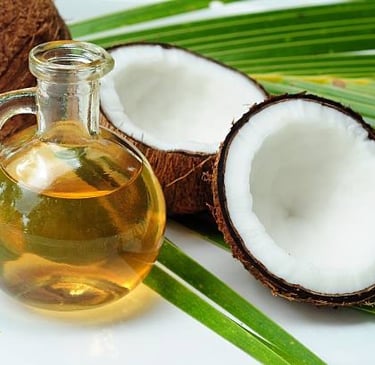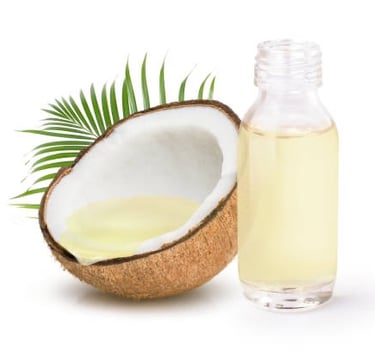

A virgin coconut oil specification does two jobs at once. It tells you the oil is clean and fresh, like any oil spec does, and it tells you the oil really is virgin: made from fresh coconut, without refining, without high heat, and without anything added. That second part matters because virgin coconut oil sells for a lot more than refined oil, and that price gap tempts some sellers to cut corners.
We produce and export virgin coconut oil for retail brands, health food companies, natural cosmetic makers, hair oil brands and distributors around the world. This guide goes through the virgin coconut oil specification point by point, explains how the oil is made and why that shows up in the numbers, and sets out the spec and packing you get when you buy virgin coconut oil from us.
Table of Contents
What Makes Coconut Oil “Virgin”
There isn’t one world law that defines virgin coconut oil, but the trade broadly agrees on what it means. The definition used by the International Coconut Community (formerly the APCC) and by national standards in the main producing countries comes down to four points.
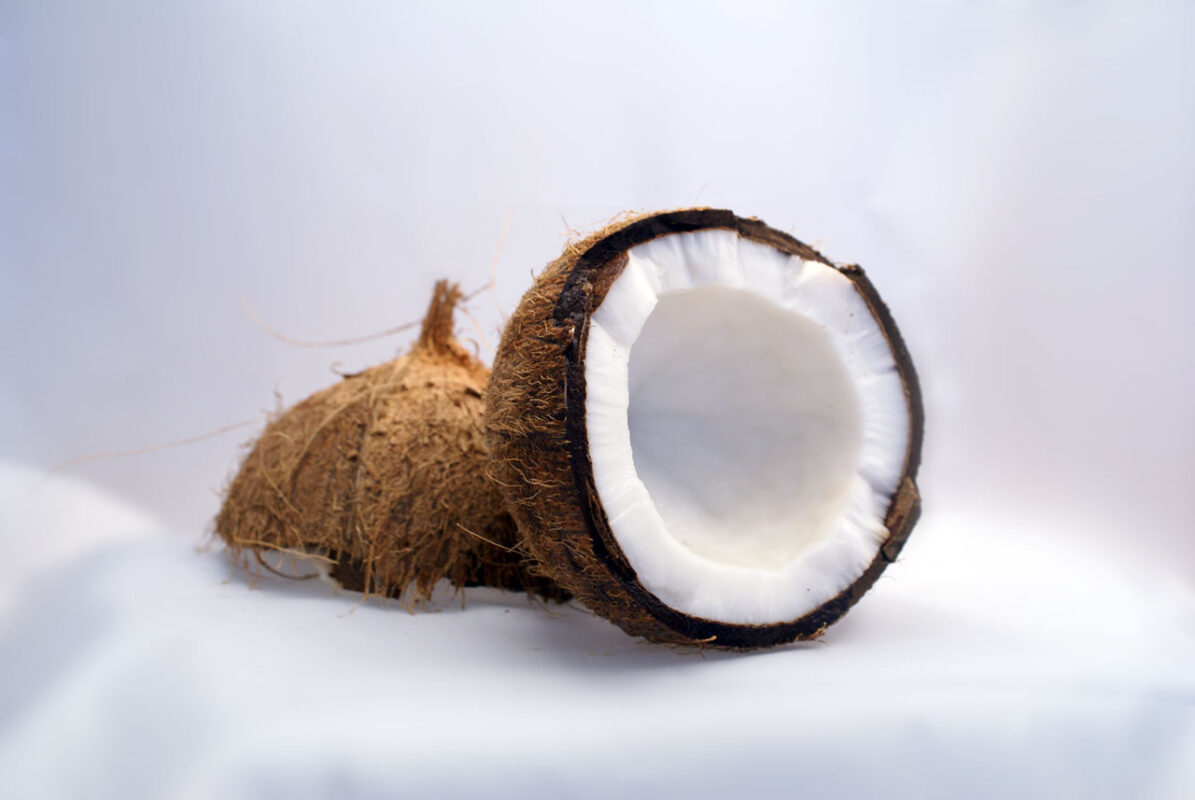
- It’s made from the fresh, mature kernel of the coconut, not from copra.
- It’s extracted by mechanical or natural means, with or without the use of low heat.
- It isn’t refined, bleached or deodorized, and it isn’t chemically changed.
- It’s fit to eat as it is, without further processing.
Compare that with RBD coconut oil, which starts as copra oil and goes through refining at high temperature. Both are useful. They’re just different products for different buyers. Our article on RBD coconut oil vs virgin coconut oil compares them side by side, and our RBD coconut oil specification guide covers the refined grade in detail.
How Virgin Coconut Oil Is Made
The process shapes the virgin coconut oil specification, so it’s worth a quick look. There are three main routes.
Cold pressed from dried fresh meat
Fresh coconut meat is grated and dried quickly at a low temperature until the moisture is down to a few percent. Then it’s pressed in an expeller. The oil is filtered and that’s it. This is the most common route for bulk virgin coconut oil, and it gives a clean, mild coconut taste.
Wet process, centrifuged
Fresh meat is grated and pressed to get coconut milk. The milk is then spun in high-speed centrifuges to separate the oil from the water and protein. No drying, no heat. This gives a very light, delicate oil, and it’s often what premium brands mean by “cold processed”.
Wet process, fermented
Coconut milk is left to stand so the oil separates naturally over a day or so. The oil is skimmed and gently heated to drive off the last moisture. It’s the traditional village method, and it gives a stronger, slightly nutty or tangy aroma. Some buyers love it, some don’t.
Whatever the route, the oil has to land inside the same virgin coconut oil specification, and a few things are constant. The coconuts have to be fresh, the meat has to be processed quickly, everything has to be clean, and the oil has to be dried properly. Leftover moisture is the number one cause of virgin oil going off, which is why moisture sits near the top of any decent virgin coconut oil specification.
Our Virgin Coconut Oil Specification
This is the virgin coconut oil specification we contract on as standard. It’s in line with the main industry and national standards, and in places a bit tighter.
| Parameter | Specification |
|---|---|
| Appearance | Clear, water-white liquid above 25°C, white solid below |
| Odour and taste | Natural fresh coconut, free from rancid, sour or smoky notes |
| Free fatty acids (as lauric) | 0.2% max |
| Moisture and volatile matter | 0.1% max |
| Insoluble impurities | 0.05% max |
| Peroxide value | 3.0 meq O2/kg max |
| Iodine value (Wijs) | 6 to 11 |
| Saponification value | 250 to 265 mg KOH/g |
| Relative density at 30°C | 0.915 to 0.920 |
| Refractive index at 40°C | 1.4480 to 1.4492 |
| Melting point | About 24 to 25°C |
| Total plate count | Under 0.5 CFU/ml |
| Coliforms, E. coli, Salmonella | Absent |
| Shelf life | 18 to 24 months, cool and dry |
| Packing | Glass or PET bottles, jerrycans, drums, IBC, private label |
A few lines in this virgin coconut oil specification are worth explaining, because they’re where good and bad virgin oil really part ways.
Free Fatty Acids in Virgin Coconut Oil
Free fatty acids in virgin oil come from two places: enzymes in the coconut meat, and water left in the oil. If fresh meat sits around for hours before it’s processed, enzymes start splitting the fat. If the oil isn’t dried properly, water keeps doing the same thing in the bottle.
Because virgin oil is never refined, there’s no step that strips FFA out later. Whatever FFA forms during processing stays in the oil. That’s why a low FFA figure, 0.2% max in our virgin coconut oil specification, is a good sign the coconuts were fresh and the plant was run properly. Good lots often come in around 0.1%.
High FFA in virgin coconut oil shows up as a soapy or sharp taste. Lauric acid in free form tastes like soap, and your customers will notice before your lab does. Our guide to free fatty acid and peroxide value explains the testing in more depth.
Moisture: The Number That Decides Shelf Life
If you only look at one number on a virgin coconut oil specification, look at moisture. Our virgin coconut oil specification sets it at 0.1%. Some standards allow up to 0.2% volatile matter, and some cheap oil on the market is well above that.
Here’s why it matters so much. Refined oil has its water stripped out under vacuum at high temperature. Virgin oil doesn’t go through that, so drying is up to the producer. If the oil goes into the bottle with too much water, two things happen. Hydrolysis keeps pushing FFA up, and microbes have something to live in. The oil can turn sour or develop off-flavours within months instead of years.
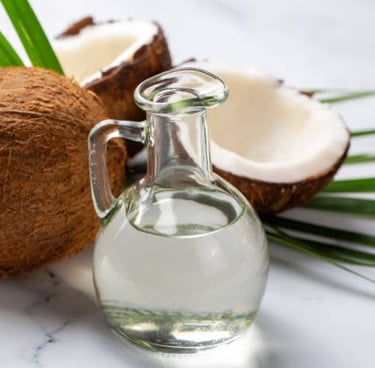
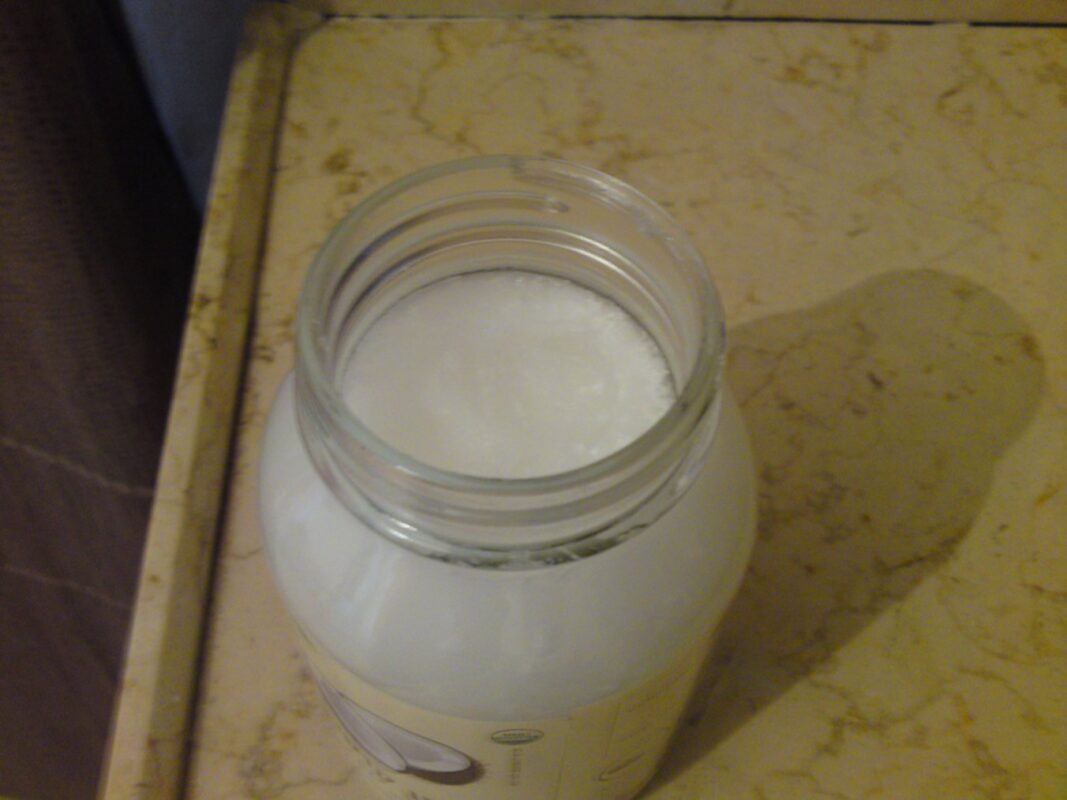
A quick home check: good virgin coconut oil is crystal clear when liquid. Cloudiness at a warm temperature, or a layer at the bottom of the bottle, usually means water or fine solids.
Peroxide Value in Virgin Coconut Oil
Our virgin coconut oil specification sets peroxide value at 3.0 meq O2/kg max, compared with 1.0 for refined oil. That isn’t because virgin oil is less fresh. It’s because refining actually destroys peroxides along the way, while virgin oil keeps whatever forms naturally. Most of our lots come in well under that line of the virgin coconut oil specification.
Virgin coconut oil is very stable against oxidation, because it’s mostly saturated and it keeps the natural antioxidants that refining removes. Stored properly, PV climbs slowly. If it climbs fast, check the storage temperature and whether the containers were left open.
Identity Checks: Iodine Value, SV and Density
Iodine value, saponification value, density and refractive index are mostly there to prove the oil is pure coconut. Coconut oil’s numbers are unusual: very low iodine value, very high saponification value. Mix in palm kernel oil, palm olein or a cheap liquid oil and those numbers move.
A virgin coconut oil specification without these lines makes adulteration harder to spot. With them, a simple lab test can catch most blends. For a fuller check, ask for a fatty acid profile by gas chromatography.
Fatty Acid Profile of Virgin Coconut Oil
The fatty acid profile of virgin coconut oil is basically the same as any other coconut oil. Where virgin and refined differ is in the minor parts: the aroma compounds, the natural tocopherols and polyphenols, and the absence of any processing contaminants.
| Fatty acid | Carbon chain | Typical range (%) |
|---|---|---|
| Caproic | C6:0 | 0.1 to 0.7 |
| Caprylic | C8:0 | 4 to 10 |
| Capric | C10:0 | 4 to 8 |
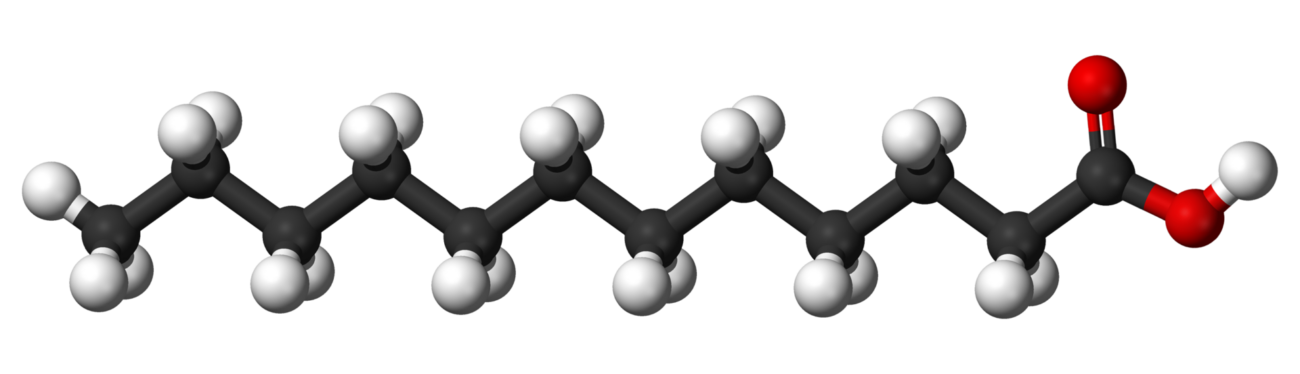
| Lauric | C12:0 | 45 to 56 |
| Myristic | C14:0 | 16 to 21 |
| Palmitic | C16:0 | 7.5 to 10.2 |
| Stearic | C18:0 | 2 to 4 |
| Oleic | C18:1 | 5 to 10 |
| Linoleic | C18:2 | 1 to 2.5 |
Lauric acid makes up about half of it. Caprylic and capric together make up roughly 10 to 15%, which is where the medium chain triglyceride talk comes from. For general background on the oil, coconut oil on Wikipedia is a reasonable starting point.
Microbiology
Refined oil goes through heat that kills off almost everything. Virgin oil doesn’t, so microbiology belongs in any serious virgin coconut oil specification, especially if the oil goes into retail jars or skincare. We test total plate count, yeast and mould, coliforms, E. coli and Salmonella on every batch.
Oil with very low moisture doesn’t support much microbial growth, so good drying and good microbiology tend to go together. If a supplier can’t give you micro results, that tells you something about how closely they watch the plant.
Sensory: Smell, Taste and Look
Numbers matter, but buyers of virgin coconut oil also buy with their nose. Our virgin coconut oil specification says “natural fresh coconut, free from rancid, sour or smoky notes”. Here’s what that means in practice.
- Fresh coconut. Mild, sweet, clean. Centrifuged oil is the lightest, cold-pressed has a little more body.
- Roasted or toasted. Some oils are made from meat dried at higher temperature. It’s still virgin in many standards, but the smell is stronger and some buyers don’t want it.
- Sour or cheesy. A sign of fermentation that went too far, or of too much moisture.
- Smoky. Usually means copra was involved somewhere. That’s not virgin oil.
- Rancid or soapy. High FFA or oxidation.
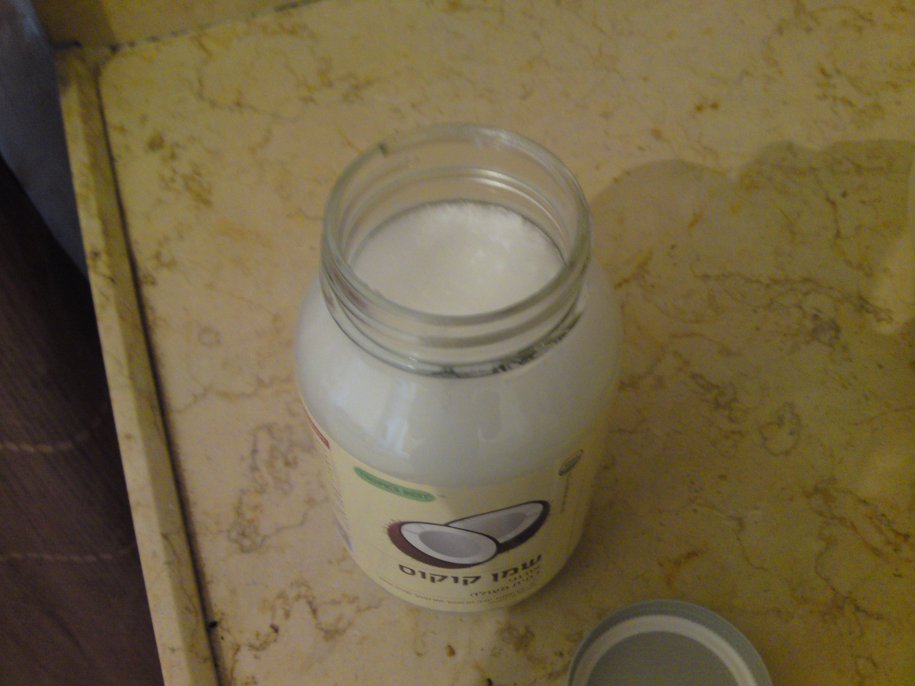
Liquid virgin oil should be completely clear and colourless, like water. Solid oil should be pure white with no yellow tint. Yellow solid oil is usually a sign of copra oil or a blend.
Organic, Halal and Other Certifications
Many virgin coconut oil buyers sell into markets where the label matters as much as the spec. These are the certificates we’re asked for most.
- Organic. Organic virgin coconut oil can be supplied on request from certified sources. Organic certification follows the oil from farm to bottle, so allow a little more lead time.
- Halal. Available as standard.
- Kosher. Available for selected lots.
- Food safety. ISO 22000, HACCP and GMP.
- Non-GMO. Coconut isn’t genetically modified, and we can confirm it in writing.
Food standards bodies such as Codex Alimentarius set general rules for named vegetable oils, and some countries add their own virgin oil rules on top. If your market has a specific standard, send it to us and we’ll confirm against it.
Who Buys Virgin Coconut Oil
| Buyer | What they look for |
|---|---|
| Retail and supermarket brands | Clean taste, clear liquid, white solid, long shelf life, private label |
| Health food and supplement makers | Low FFA, micro results, organic option, capsule-grade clarity |
| Natural skincare and soap | Low odour or fresh odour, low PV, good colour, organic option |
| Hair oil brands | Clarity, fresh scent, stability in clear bottles |
| Bakeries and premium food | Coconut flavour, clean label |
| Distributors and repackers | Consistent spec across lots, flexible packing |
One thing to keep in mind for cooking: virgin coconut oil has a lower smoke point than refined, around 175°C. It’s fine for sauteing and baking, less ideal for deep frying. Our cooking oil smoke point chart has the comparison.
How to Spot Fake or Blended Virgin Coconut Oil
Virgin coconut oil sells at a premium, so some of what’s sold as “virgin” isn’t. These are the checks we’d run against any virgin coconut oil specification, whoever you buy from.
- Look at the solid oil. It should be bright white. A yellow or cream tint suggests refined copra oil or a blend.
- Smell it warm. Fresh coconut is right. No smell at all may mean refined oil. Smoky or sour is wrong.
- Check the iodine value and fatty acid profile. A blend with cheaper oils moves both.
- Ask for the process. A real producer can tell you exactly how the oil is made. Vague answers are a warning.
- Compare the price. If virgin coconut oil is offered at or near RBD prices, something is off. Read our guide on how to spot a fake vegetable oil supplier before you pay a deposit.
Storage and Handling
Oil that leaves us inside the virgin coconut oil specification will stay there for a long time if you treat it right. Virgin coconut oil is tough, but it rewards a little care.
- Keep it below 30°C if you can, out of direct sunlight.
- Keep lids on. Every time a container is open, it takes in a bit of air and moisture.
- Don’t let water near it. A wet spoon in a jar is enough to start trouble.
- If it’s solid and you need it liquid, warm it gently, for example in a warm water bath. Don’t use direct high heat.
- Solid, liquid, solid again is fine. Melting and setting don’t damage the oil. Our article on the coconut oil melting point explains why it changes state around 24°C.
Packing and Shipping
| Packing | Size | Typical buyer |
|---|---|---|
| Glass jars and bottles | 200 ml to 1 L | Retail brands, private label |
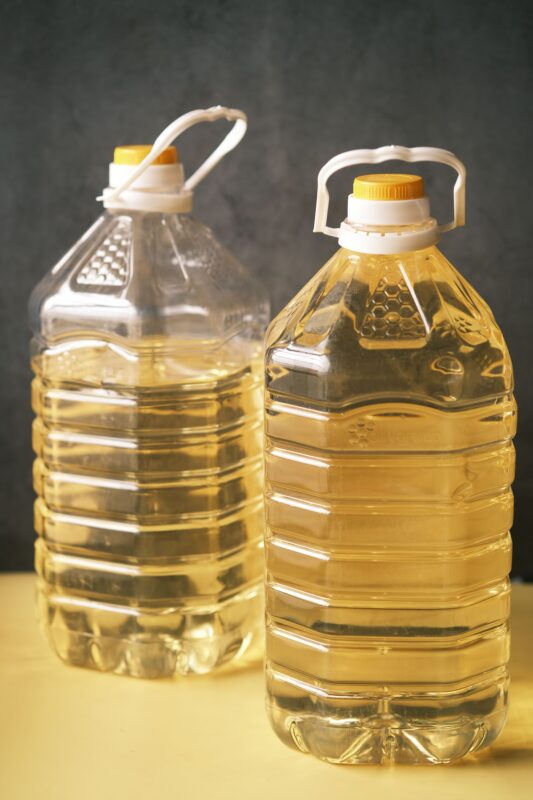
| PET bottles | 250 ml to 5 L | Retail, hair oil, food service |
| Jerrycans | 20 to 25 L | Repackers, bakeries, cosmetic makers |
| Steel or HDPE drums | 180 to 200 kg | Manufacturers, distributors |
| IBC totes | About 900 kg to 1 MT | Larger manufacturers |
For customs, virgin coconut oil normally ships under HS code 1513.19, the same line as refined oil. Our guide to the coconut oil HS code explains why it isn’t classed as crude even though it isn’t refined. For the paperwork side, see documents required to import vegetable oil.
Virgin vs RBD Coconut Oil Specification at a Glance
| Parameter | Virgin coconut oil | RBD coconut oil |
|---|---|---|
| Raw material | Fresh coconut meat | Copra |
| Processing | Mechanical, low or no heat, no refining | Refined, bleached, deodorized |
| Odour and taste | Fresh coconut | Neutral |
| FFA (as lauric) | 0.2% max | 0.1% max |
| Peroxide value | 3.0 max | 1.0 max |
| Moisture | 0.1% max | 0.1% max (with impurities) |
| Smoke point | About 175°C | About 200 to 230°C |
| Relative price | Higher | Lower |
Our Virgin Coconut Oil Specification vs Industry Standards
Buyers often ask how our numbers compare with the standards they see quoted elsewhere. The table below puts our virgin coconut oil specification next to the ranges commonly used in the coconut trade, based on the International Coconut Community standard and the main national standards in producing countries. Where we’re tighter, it’s on purpose.
| Parameter | Our spec | Common industry range |
|---|---|---|
| Free fatty acids (as lauric) | 0.2% max | 0.2% max |
| Moisture and volatile matter | 0.1% max | 0.1 to 0.2% max |
| Insoluble impurities | 0.05% max | 0.05% max |
| Peroxide value | 3.0 meq O2/kg max | 3.0 meq O2/kg max |
| Iodine value | 6 to 11 | 4.1 to 11 |
| Saponification value | 250 to 265 | 250 to 260 |
| Relative density | 0.915 to 0.920 | 0.915 to 0.920 |
| Total plate count | Under 0.5 CFU/ml | Under 0.5 CFU/ml |
The point isn’t to win a numbers contest. It’s that a virgin coconut oil specification you can actually check against a recognised standard gives your QA team and your customers something solid to rely on. If your market uses a different standard, we’ll map our virgin coconut oil specification against it line by line.
Testing the Virgin Coconut Oil Specification on Arrival
Even with a good certificate, it’s smart to test a sample when the oil reaches you, especially on a first order. Here’s a simple routine that covers the important parts of the virgin coconut oil specification without a huge lab bill.
- Look and smell first. Warm a sample to about 30°C. It should be water-clear with a fresh coconut smell. Let it set in the fridge. It should turn bright white.
- Run FFA and moisture. These two tell you most about freshness and shelf life, and any oil lab can do them quickly.
- Run peroxide value. Compare with the certificate. A small rise is normal. A big one isn’t.
- Check identity once in a while. Iodine value, saponification value or a full fatty acid profile on the first lot and then every few lots.
- Do micro for retail and skincare. If the oil goes into jars or creams, test micro on every batch.
Keep a retained sample from every lot, sealed and labelled, for at least the shelf life of the oil. If a customer ever complains, you’ll want to test what was actually delivered against the virgin coconut oil specification in your contract. For a wider view of what to check before oil leaves the origin port, see our guide to pre-shipment inspection for edible oil.
Putting the Virgin Coconut Oil Specification in Your Contract
A spec only protects you if it’s written into the deal. When we sell virgin oil, the contract carries the full virgin coconut oil specification as an annex, with test methods, the point where quality is final and what happens if a parameter fails. For retail and private label orders we also agree the sensory standard with a reference sample, because a number can’t fully describe how the oil should smell.
Buy Virgin Coconut Oil From Us
We’ll put our virgin coconut oil specification in your contract, send a certificate of analysis including micro results with every batch, and provide samples before you commit. We ship worldwide in bottles, jerrycans, drums and IBCs, with private label available for retail brands. Organic and Halal options are on request.
Need refined oil as well? We also supply RBD coconut oil and crude coconut oil. For an idea of where coconut oil pricing sits right now, see our coconut oil price per ton guide. You can also go straight to our virgin coconut oil for sale page.
Send your quantity, packing, destination and any extra spec points to info@dthcompanyltd.com, WhatsApp +66 91 765 9104, or use our contact page.
Virgin Coconut Oil Specification: Common Questions
What is the FFA limit for virgin coconut oil?
Our limit is 0.2% max as lauric acid. Fresh, well-made oil often comes in around 0.1%.
What moisture level is acceptable in virgin coconut oil?
0.1% max in our spec. Higher moisture is the main reason virgin oil turns sour or rancid early.
Why is the peroxide limit higher for virgin oil than refined?
Refining destroys peroxides along the way. Virgin oil isn’t refined, so it keeps what forms naturally. A 3.0 max limit is normal and good oil sits well below it.
Is cold-pressed coconut oil the same as virgin coconut oil?
Usually, yes, as long as it’s pressed from fresh coconut meat and not from copra. Cold-pressed copra oil is not virgin.
Should virgin coconut oil smell of coconut?
Yes, a mild, fresh coconut smell. No smell at all suggests refined oil. A smoky or sour smell suggests a problem.
How long does virgin coconut oil last?
18 to 24 months sealed, kept cool and dry. Low moisture and clean handling make the biggest difference.
Can you meet our own virgin coconut oil specification?
Send it over. We’ll tell you which points we can guarantee, and send a sample tested against your list.
What should a virgin coconut oil specification include?
FFA, moisture, insoluble impurities, peroxide value, iodine value, saponification value, density, a sensory description and microbiology, ideally with test methods. Organic or Halal status and packing details belong in the virgin coconut oil specification too.