

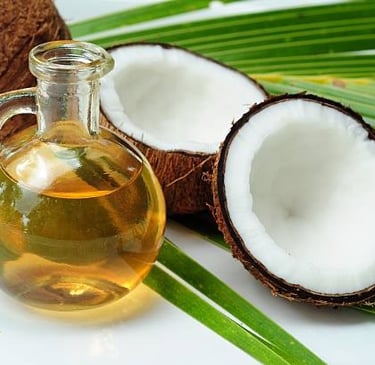
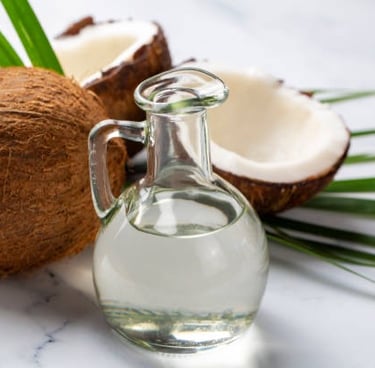
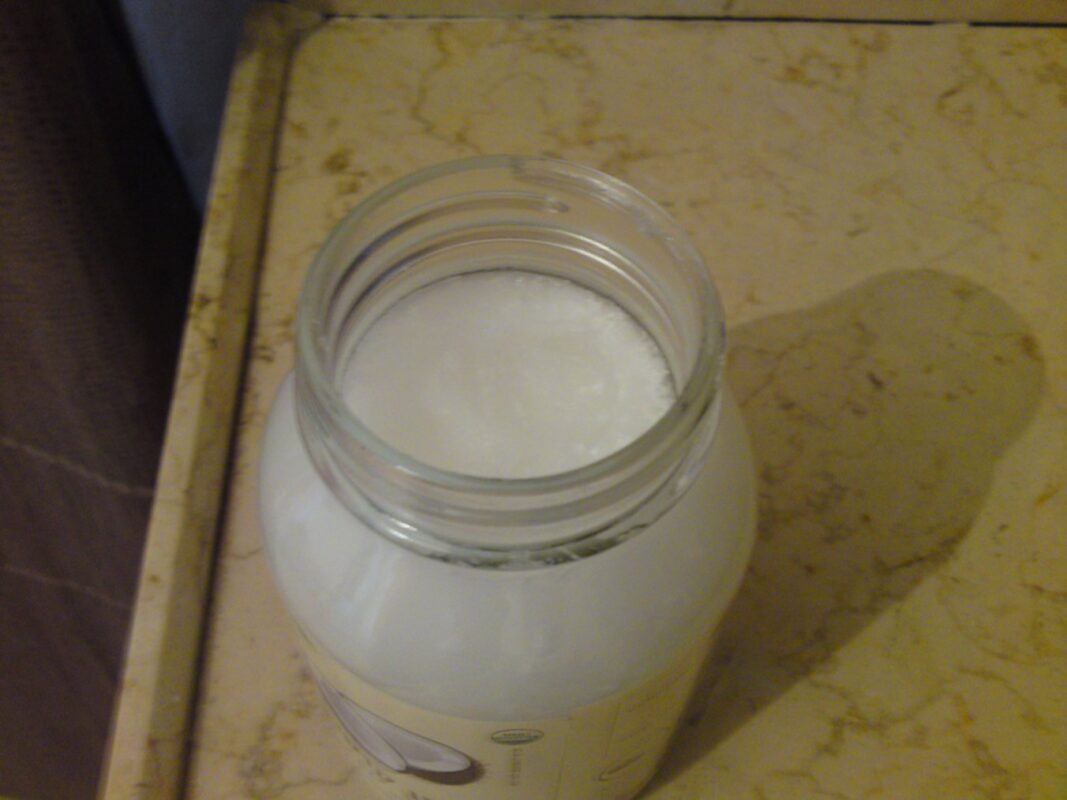
The coconut oil melting point is about 24 to 26°C, or roughly 76 to 79°F. Below that it’s a white solid. Above it, it’s a clear liquid. That sounds like a small detail, but if you buy coconut oil in bulk it shapes almost everything about how the oil is shipped, stored, pumped and used. It’s also why the same jar of oil can look completely different in a kitchen in Lagos and a kitchen in London.
We sell RBD, virgin and crude coconut oil to buyers all over the world, from tropical ports where it never sets to northern ports where it arrives as a solid block. This guide explains the coconut oil melting point in plain language: why it’s where it is, how it differs between grades and fractions, what it means for your shipping and storage, and how to melt the oil safely without damaging it. At the end you’ll find the coconut oil we supply and how to order.
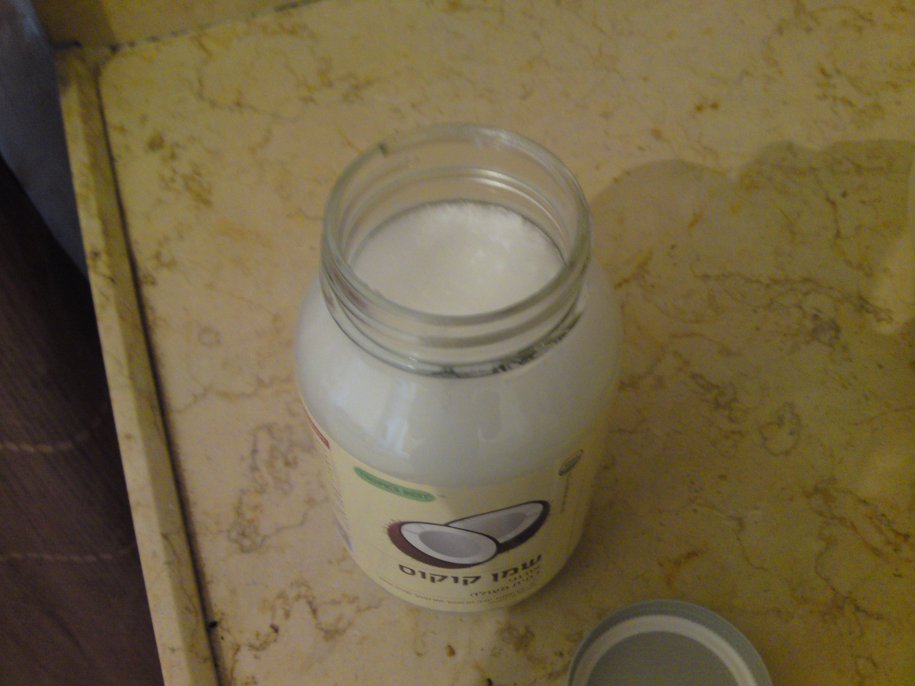
Table of Contents
The Coconut Oil Melting Point in Numbers
| Measure | Typical value |
|---|---|
| Melting range (most coconut oil) | 24 to 26°C (75 to 79°F) |
| Commonly quoted single figure | 24°C (76°F) |
| Slip melting point (lab test) | Around 23 to 26°C |
| Fully clear (no crystals left) | Around 26 to 28°C |
| Starts to cloud and set on cooling | Around 20 to 23°C |
You’ll see slightly different numbers in different places, and that’s normal. Coconut oil isn’t one single compound. It’s a mix of many different fats, and each one melts at its own temperature. So the oil doesn’t flip from solid to liquid at one exact point. It softens over a range of a few degrees. Labs usually report the “slip melting point”, which is the temperature at which a small column of fat in a glass tube starts to move up when heated.
Why Coconut Oil Melts Where It Does
Two things set the coconut oil melting point: how saturated the fat is and how long the fatty acid chains are.
It’s very saturated
Around 90% of the fatty acids in coconut oil are saturated. Saturated chains are straight, so they pack together neatly into crystals, a bit like pencils in a box. That makes the fat solid at cooler temperatures. Oils such as sunflower or soybean are mostly unsaturated, with kinked chains that don’t stack well, so they stay liquid even in a fridge.
But the chains are short
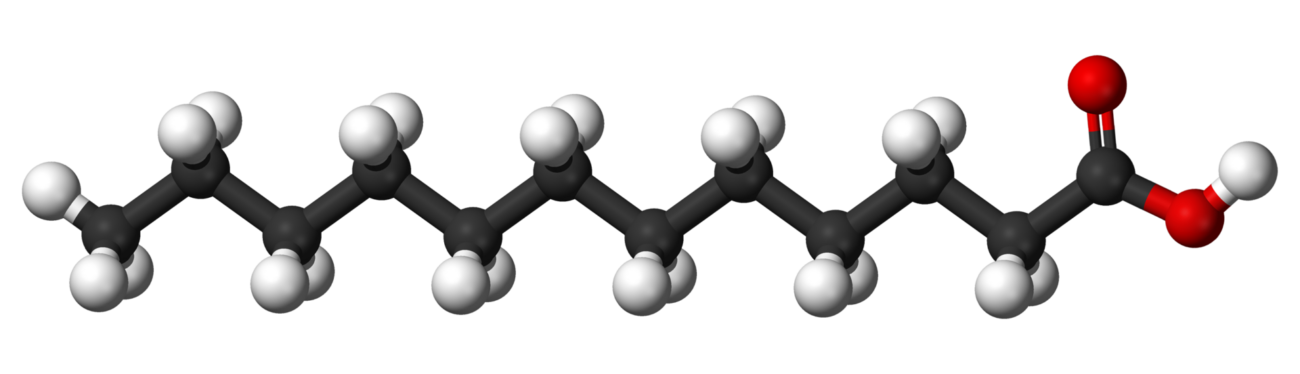
Here’s what makes coconut oil different from, say, lard or palm stearin, which are also saturated. Coconut oil is dominated by lauric acid, with 12 carbons, plus myristic (14), caprylic (8) and capric (10). Those are short and medium chains. Shorter chains have weaker attraction to each other, so the crystals melt at a lower temperature. That’s why coconut oil melts around body-temperature-minus-ten, while palm stearin needs over 50°C.
Put those together and you get a fat that is hard at 20°C, melts almost completely by 26°C, and has very little in between. Fat scientists call it a sharp melting profile. Bakers and confectioners call it “clean melt”. It’s the reason coconut oil feels cool and melts fast on the tongue, and why it’s used in chocolate coatings, non-dairy creamers and ice cream coatings. If you want the fatty acid numbers, our RBD coconut oil specification guide has the full profile, and Wikipedia’s page on coconut oil covers the general chemistry.
Coconut Oil Melting Point vs Smoke Point
People mix these up all the time, so it’s worth separating them. The coconut oil melting point is where it turns from solid to liquid, around 24°C. The smoke point is where hot oil starts to break down and smoke, which is around 175°C for virgin coconut oil and roughly 200 to 230°C for refined oil. They have nothing to do with each other. A low melting point doesn’t mean coconut oil is bad for cooking. Our cooking oil smoke point chart compares coconut oil with other frying oils.
Coconut Oil Melting Point by Grade and Type
Plain coconut oil, whether crude, refined or virgin, has roughly the same coconut oil melting point. Refining doesn’t change the fatty acids much, so it doesn’t change the coconut oil melting point much either. Processed coconut fats are a different story.
| Product | Approximate melting point | Notes |
|---|---|---|
| Virgin coconut oil | 24 to 25°C | Same fatty acids as other coconut oil |
| RBD coconut oil | 24 to 26°C | Refining barely changes it |
| Crude coconut oil | 23 to 26°C | Free fatty acids and impurities can blur the range slightly |
| Coconut olein | About 18 to 22°C | The softer fraction, stays liquid at cooler temperatures |
| Coconut stearin | About 28 to 32°C | The harder fraction, used in confectionery |
| Hydrogenated coconut oil | About 32 to 40°C | Depends on how far it’s hydrogenated. “92 degree” coconut oil melts near 33°C (92°F) |
| MCT oil (“fractionated coconut oil”) | Liquid well below 0°C | Mostly caprylic and capric acids, almost no lauric |
So if you see a “coconut oil” that’s still liquid in a fridge, it’s almost certainly MCT oil. And if you see one that’s still solid at 30°C, it’s probably hydrogenated or a stearin fraction. Both are legitimate products, but they’re not the same as plain coconut oil, and they’re classified differently for customs. Our guide to the coconut oil HS code explains how.
Does Virgin Coconut Oil Melt Differently From Refined?
Not really. The coconut oil melting point for virgin and RBD oil is within a degree or so of each other, because both have the same fatty acid make-up. What you might notice is the look. Solid virgin oil is often a bit whiter and more opaque, and it may set with a slightly grainier texture depending on how fast it cooled. Refined oil can look a little more glassy. Neither tells you much about quality.
What does tell you something is colour. Solid virgin coconut oil should be pure white. A yellow tint suggests copra oil or a blend. Our virgin coconut oil specification guide covers the other checks, and our comparison of RBD coconut oil vs virgin coconut oil lays out the wider differences.
Why the Coconut Oil Melting Point Matters for Shipping
This is where the coconut oil melting point stops being trivia and starts costing money.
Bulk shipments arrive solid in cool ports
Coconut oil is loaded warm and liquid in tropical ports. During a long voyage to Northern Europe, North America, East Asia in winter or southern Africa in winter, it cools down and sets. A flexitank or ISO tank of solid coconut oil can’t be pumped out until it’s melted again.
Heating pads and steam coils
That’s why flexitanks for coconut oil going to cool destinations are fitted with a heating pad underneath, and ISO tanks have steam or electric heating jackets. At the destination, the receiver connects steam or hot water and warms the oil until it flows. Plan for this. A 20-ton flexitank can take 24 to 48 hours to melt fully depending on how cold it got. Our comparison of flexitank vs ISO tank covers heating in more detail.
Discharge temperature
For pumping, aim for an oil temperature of around 35 to 40°C. That’s comfortably above the coconut oil melting point, so the oil is fully liquid and thin enough to pump, but low enough not to damage it. Don’t push it much higher. Holding oil at 60°C or above for long periods speeds up oxidation and pushes free fatty acids up, especially if there’s any water present.
Drums and IBCs
Smaller packs set too. A 190 kg drum of solid coconut oil needs time in a warm room or a drum heater before you can pour it. IBCs can be fitted with heating jackets. Don’t use naked flames or direct high heat on drums. It scorches the oil next to the steel and can damage the drum lining.
Storage: Solid, Liquid and Back Again
A question we get a lot: is it bad if coconut oil keeps crossing its melting point, melting and setting again? The answer is no. Changing from solid to liquid and back doesn’t harm the oil. It’s a physical change, not a chemical one. Your oil will have exactly the same FFA and peroxide value after ten cycles as after one, as long as the temperatures stay reasonable and the container stays closed.
A few things are worth knowing, though.
- Partly melted oil can separate. If oil sits just at the coconut oil melting point, the harder parts can settle as a white sludge under a clear liquid layer. Just warm it until fully clear and mix before use.
- Slow cooling gives a grainy texture. Fast cooling gives a smooth one. This matters for retail jars, where customers notice texture.
- Heat is the enemy, not melting. Long storage above 35°C, or in direct sun, shortens shelf life.
- Keep water out. Condensation can form when cold oil is moved into a warm room. Leave containers closed until they’ve warmed up.
For general bulk storage rules, our guide on refined oil storage and handling applies to coconut oil too. And if you’re curious why palm oil does something similar, see why does palm oil solidify.
How to Melt Coconut Oil Safely
The goal is simple: get the oil just far enough above the coconut oil melting point that it flows, and no further.
In bulk
- Connect the heating pad or tank coils to a hot water or low-pressure steam supply.
- Heat gently. Aim to bring the oil up to about 35 to 40°C. Slower is better than faster.
- Check the temperature at more than one point. The oil near the heater warms first.
- Start pumping only when the oil is fully liquid. Pumping half-melted oil can leave a solid heel behind.
- Turn off the heat once you’ve discharged.
In drums and jerrycans
- Move them into a warm room, ideally 30 to 40°C, and leave them for a day or two.
- Or use a drum heater or heating blanket set to a moderate temperature.
- Roll or mix before use if the oil was partly separated.
In jars and bottles
Stand the jar in warm water for a few minutes. That’s it. Don’t microwave sealed containers, and don’t put glass straight into very hot water.
How Industries Use the Coconut Oil Melting Point
The sharp melt is one of the main reasons people choose coconut oil over cheaper fats. Product developers design around the coconut oil melting point the same way they design around sugar or salt levels.
| Industry | How the melting point helps |
|---|---|
| Chocolate and compound coatings | Firm at room temperature, melts cleanly in the mouth with no waxy feel |
| Ice cream coatings | Sets almost instantly on cold ice cream, then cracks nicely |
| Non-dairy creamer and whipped toppings | Gives body when cold, melts away when warm |
| Biscuits and filled cookies | Crisp fillings that don’t feel greasy |
| Soap | Helps make a hard bar with quick lather |
| Skincare and lip balm | Solid in the pot, melts on skin, which is around 32°C |
| Hair oil | Liquid in warm climates, sets in cool ones, which some brands use in marketing |
For blends that need a different melting point, makers often mix coconut oil with palm kernel oil, palm stearin, or fractions of either. If you’re comparing those fats, our guides to coconut oil vs palm oil and palm stearin vs palm olein are useful background.
Common Myths About the Coconut Oil Melting Point
“If it’s liquid, it’s gone bad.”
No. It’s just warm. In most tropical countries, coconut oil is liquid all year round.
“If it’s solid, it’s been hydrogenated.”
No. Plain coconut oil is solid below about 24°C with no processing at all.
“Real coconut oil never sets in the fridge.”
The opposite. Real coconut oil sets hard in the fridge. The oil that stays liquid in the fridge is MCT oil.
“Melting and setting ruins it.”
It doesn’t. Overheating does. Keep it under about 40°C when you melt it and it’ll be fine.
“A higher melting point means better quality.”
Not for plain coconut oil. The coconut oil melting point is fixed by its fatty acids. A noticeably different melting point usually means a different product or a blend.
Using the Coconut Oil Melting Point as a Quick Purity Check
Because the coconut oil melting point is so consistent, it’s a handy first check. If a lot labelled coconut oil is still soft and runny at 20°C, or still has hard lumps at 30°C, test it properly. Blends with palm olein or liquid oils lower the melting range. Blends with palm stearin or hydrogenated fat raise it. A melting point test isn’t proof on its own, but combined with iodine value and saponification value it catches most adulteration. Our guide to free fatty acid and peroxide value covers the freshness side.
Coconut Oil Melting Point in Different Climates
Where you are in the world decides how often you’ll be dealing with solid oil. It’s worth planning for it before the first container arrives.
| Climate | What you’ll see | What to plan for |
|---|---|---|
| Tropical (most of West Africa, Southeast Asia, Central America) | Liquid nearly all year | Keep it out of direct sun; heat, not cold, is the risk |
| Subtropical and Mediterranean | Liquid in summer, solid in winter | Heating for winter arrivals, warm storage for drums |
| Temperate (Northern Europe, much of North America, East Asia) | Solid most of the year | Heated tanks, heating pads on flexitanks, warm rooms for drums |
| Desert and Gulf | Liquid by day, can set on cool nights | Shade, insulated storage, avoid overheating in summer |
Ocean voyages add another twist. A vessel leaving a tropical port and crossing into cooler water can bring the oil below the coconut oil melting point within days. By the time it reaches a northern port in January it’s solid all the way through. Shipping the same oil to a West African port in the same month, it would probably arrive liquid. We look at the route and the season when we pack, and fit heating pads where they’re needed.
How the Coconut Oil Melting Point Is Measured
If you want to check the coconut oil melting point yourself, there are a few ways to do it, from very simple to properly scientific.
Slip melting point
This is the standard test in the oils trade, set out in methods such as AOCS Cc 3-25. Melted oil is drawn into a thin open glass tube, chilled to set it, then held cold for a set time. The tube is warmed slowly in a water bath, and the temperature at which the fat column starts to rise is the slip melting point. Most labs can run it cheaply.
Clear point
Similar idea, but you note the temperature at which the oil goes completely clear with no crystals left. It’s usually a degree or two above the slip point.
DSC and solid fat content
Food scientists use differential scanning calorimetry or NMR to see exactly how much of the fat is solid at each temperature. That gives a full melting curve rather than a single coconut oil melting point. It’s overkill for most buyers but very useful for confectionery and bakery product development.
The kitchen test
Put a little oil in a glass with a thermometer, let it set in the fridge, then let it warm up slowly at room temperature. Note when it starts to soften and when it’s fully clear. You’ll usually see both happen between about 23 and 27°C. It’s not lab grade, but it’s a good sanity check on a new supplier.
The Coconut Oil We Supply
| Product | Melting point | Key specs | Packing |
|---|---|---|---|
| RBD coconut oil | About 24 to 26°C | FFA 0.1% max, PV 1.0 max, M&I 0.1% max, IV 6 to 11 | Flexitank with heating pad, ISO tank, drums, IBC, tins, jerrycans |
| Virgin coconut oil | About 24 to 25°C | FFA 0.2% max, moisture 0.1% max, PV 3.0 max | Bottles, jerrycans, drums, IBC |
| Crude coconut oil | About 23 to 26°C | For refining and industrial use | Flexitank, ISO tank, drums |
For cool destinations we fit heating pads to flexitanks as standard and include heating instructions with the documents. If you want to know what the market looks like before you ask for a quote, our guide to the coconut oil price per ton covers recent prices and what drives them. For more on our refined grade, see the crude coconut oil specification and RBD guides.
Order Coconut Oil From Us
Tell us the grade, quantity, packing and destination port. We’ll send back a price, a full spec sheet, and handling advice for your climate, including heating if your port gets cold. Samples are available. We ship worldwide with full export documents, and independent inspection at loading on request.
See the products on our RBD coconut oil, virgin coconut oil and crude coconut oil pages, or browse the full coconut oil range. Email info@dthcompanyltd.com, WhatsApp +66 91 765 9104, or use our contact page.
Coconut Oil Melting Point: Common Questions
What is the melting point of coconut oil?
About 24 to 26°C (75 to 79°F). The most commonly quoted single figure is 24°C or 76°F.
Is the coconut oil melting point the same for virgin and refined oil?
Almost. Both melt in the same range, within about a degree of each other.
Why is my coconut oil liquid?
Because it’s warmer than about 24°C where you keep it. That’s normal and doesn’t affect quality.
Why does my coconut oil have white lumps in clear oil?
It’s sitting right around its melting point, so the harder fats have crystallized while the softer ones are still liquid. Warm it fully and stir.
Does melting coconut oil damage it?
No. Melting and re-setting is a physical change. Overheating for long periods is what does the damage.
What temperature should bulk coconut oil be pumped at?
Around 35 to 40°C. That’s well above the coconut oil melting point, so it flows easily, without being hot enough to hurt the oil.
What coconut oil stays liquid in the fridge?
MCT oil, sometimes sold as fractionated coconut oil. Plain coconut oil sets solid in the fridge.
Does the coconut oil melting point change with age?
Very little. The coconut oil melting point is set by the fatty acids, which don’t change much during normal storage. Badly oxidized or very high-FFA oil can melt over a slightly wider range, but by then you’d notice the smell first.
2 thoughts on “Coconut Oil Melting Point: 7 Essential Facts (Best Guide)”