

We get asked some version of this question constantly by food manufacturers and importers doing due diligence: how do you actually verify that a supplier calling themselves a HACCP certified cooking oil manufacturer is telling the truth, and what does that certification actually cover? It’s a fair question, since “HACCP certified” gets thrown around loosely in this industry, and not every supplier using the phrase can back it up the way a serious buyer needs.
This is a practical explanation of what HACCP certification actually means for a cooking oil manufacturer, written by a supplier who holds it, not a compliance consultant selling you a course.
Buyers researching a HACCP certified cooking oil manufacturer usually fall into one of two groups: food businesses whose own compliance depends on their suppliers holding real certification, or buyers who’ve simply seen the term used a lot and want to understand what it actually guarantees before signing a purchase agreement. Both deserve a straight answer, which is what the rest of this covers.
In this guide:
- What HACCP Actually Stands For, and What It Doesn’t
- The Seven Principles Behind Real HACCP Certification
- How to Actually Verify a Supplier’s HACCP Certification
- HACCP vs ISO 22000: What’s Actually Different
- What Our HACCP System Actually Covers
- Product Specifications Across Our Range
- Traceability and Recall Readiness
- How HACCP Fits Into Export Documentation
- Regional Certification Differences Worth Knowing
- Why This Matters More for Some Buyers Than Others
- Common Mistakes Buyers Make Around HACCP Claims
- What a Typical HACCP-Certified Order Looks Like
- Frequently Asked Questions
- Getting Started

What HACCP Actually Stands For, and What It Doesn’t
HACCP stands for Hazard Analysis and Critical Control Points. It’s a systematic, science-based approach to identifying where biological, chemical or physical hazards could enter a food production process, and building specific control points into the process to prevent, eliminate or reduce those hazards to safe levels. It’s not a single inspection or a one-time test. It’s an ongoing system that gets audited and re-verified on a schedule.
What HACCP is not is a general “we’re a clean facility” claim. A genuine HACCP certified cooking oil manufacturer has a documented HACCP plan specific to their process, covering everything from raw crude oil receiving through refining, filtration, storage and loading, with identified critical control points at each stage where something could actually go wrong, along with monitoring procedures, corrective actions, and verification records for each one.
The Seven Principles Behind Real HACCP Certification
Every legitimate HACCP system, regardless of industry, is built on seven core principles: conduct a hazard analysis, identify critical control points, establish critical limits for each one, establish monitoring procedures, establish corrective actions for when a limit is exceeded, establish verification procedures to confirm the system is working, and establish record-keeping and documentation procedures. For a cooking oil manufacturer specifically, this translates into real, concrete steps: monitoring incoming crude oil for contamination and adulteration, controlling refining temperatures and times to prevent chemical hazard formation, verifying filtration removes physical contaminants, controlling storage temperature and tank cleanliness to prevent microbial or chemical contamination, and maintaining traceability records that let a batch be traced back through every stage of production if a question ever comes up.
A supplier who can walk you through their actual critical control points for cooking oil specifically, not a generic food safety pitch, is demonstrating real HACCP implementation. One who can’t name a single specific control point in their own process almost certainly doesn’t have a functioning system, whatever certificate they’re waving around.
How to Actually Verify a Supplier’s HACCP Certification
This is where a lot of buyers get caught out. Ask for the actual certificate, not a logo on a website, and check three things on it: the certifying body’s name, the certificate number, and the expiration date. HACCP certification isn’t permanent; it requires periodic recertification audits, typically annually, and a supplier operating on an expired certificate is not currently HACCP certified no matter what their marketing materials say.
Once you have the certificate number and certifying body, it’s worth contacting the certifying body directly to confirm the certificate is genuine and current, particularly for a first-time supplier relationship involving significant volume. This takes a few extra minutes and it’s a completely reasonable thing to ask any legitimate HACCP certified cooking oil manufacturer to support; a supplier who gets defensive about this request is telling you something.
HACCP vs ISO 22000: What’s Actually Different
Buyers frequently confuse these two, and the difference matters. HACCP is specifically a food safety hazard control methodology, focused narrowly on identifying and controlling hazards at critical points in the process. ISO 22000 is a broader food safety management system standard that actually incorporates HACCP principles within a larger framework covering management commitment, resource management, communication, and continual improvement across the whole organization, not just the production line.
A HACCP certified cooking oil manufacturer has verified hazard control at critical production points. A supplier who also holds ISO 22000 has that plus a documented management system wrapped around it. Neither certification substitutes for the other; they cover overlapping but distinct scopes, and the strongest suppliers hold both rather than treating one as sufficient on its own. General reference material on the HACCP system covers this distinction in more depth if you want the fuller technical background. We hold both HACCP and ISO 22000 certification for exactly this reason, along with GMP and Halal certification covering different but related aspects of production quality.
What Our HACCP System Actually Covers
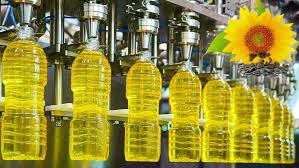
Being specific matters more than making a general claim, so here’s what our HACCP plan actually addresses across our cooking oil production. Incoming crude oil is tested and verified against spec before it enters production, catching contamination or adulteration issues at the earliest possible point. Refining stages, degumming, neutralizing, bleaching and deodorizing, each have documented critical limits for temperature, time and processing agents, with monitoring at each step. Filtration is verified to remove physical contaminants before packaging. Storage tanks are monitored for temperature and inspected for cleanliness between uses, particularly relevant for shared tank logistics during export. And every finished batch carries a Certificate of Analysis with full traceability back through the specific production run, so if a question ever comes up about a shipment, we can trace it back to exactly what happened at each control point.
Product Specifications Across Our Range
HACCP certification covers the process; the finished product specs are what you’re actually buying. As a HACCP certified cooking oil manufacturer, we supply refined sunflower, palm, soybean, canola and coconut oil, each meeting food-grade specifications: free fatty acid under 0.3 percent, moisture and impurities under 0.1 percent, and peroxide value under 5 meq/kg for fresh production across the refined range. Iodine value varies by oil type, generally 118 to 141 for sunflower and soybean, 50 to 55 for palm, and notably lower for coconut oil, which is why coconut oil solidifies at room temperature in cooler climates while the others don’t. Every batch ships with a Certificate of Analysis specific to that production run, not a generic reference sheet. If you’re comparing the crude versus refined distinction specifically for sunflower oil, our breakdown of crude vs refined sunflower oil covers that in more detail, and current wholesale palm oil pricing is covered in our guide to palm oil wholesale price factors.
Traceability and Recall Readiness
One of the parts of a real HACCP system that buyers underestimate until they need it is traceability. A genuine HACCP certified cooking oil manufacturer can trace any finished batch backward through every stage of production: which crude oil lot it came from, what refining run it went through, what dates and temperatures applied at each control point, and which storage tank it sat in before loading. This matters enormously if a quality question ever comes up after a shipment has already reached you, since it’s the difference between a supplier who can pinpoint exactly what happened and one who can only shrug.
It also matters for recall readiness, even though nobody wants to think about that scenario when placing an order. If a hazard is ever identified anywhere in the supply chain, whether at the supplier’s facility or further upstream at a crude oil source, proper traceability records let affected batches be identified and isolated quickly rather than forcing a broad, costly recall across unrelated production runs. Ask a prospective supplier directly how far back their traceability records go and how quickly they could produce them if asked; the honest answer tells you a lot about whether their HACCP system is a living process or a filing cabinet exercise.
How HACCP Fits Into Export Documentation
HACCP certification itself isn’t typically a document that travels with every individual shipment the way a Certificate of Analysis or certificate of origin does. Instead, it underpins the whole production system that generates those shipment-specific documents. A buyer conducting due diligence should think of it less as a single paper to collect and more as the process integrity that makes every other document trustworthy: the Certificate of Analysis on your specific batch is only meaningful if the testing and monitoring behind it followed a real, audited system.
That said, some buyers, particularly larger food manufacturers with their own supplier qualification requirements, do want the actual HACCP certificate on file as part of their vendor documentation, separate from shipment-specific paperwork. We keep current certificates readily available for exactly this reason, and any legitimate HACCP certified cooking oil manufacturer should be able to provide one on request without delay.
Regional Certification Differences Worth Knowing
HACCP itself is an internationally recognized methodology, but the specific certifying bodies and accreditation schemes that audit against it vary by region, and a buyer sourcing internationally should understand this rather than assuming one certificate format looks the same everywhere. Certifying bodies accredited under recognized international accreditation frameworks are generally treated as equivalent for import purposes across most markets, but if you’re supplying a market with unusually strict import requirements, it’s worth confirming your specific certifying body is recognized there before finalizing a large order, rather than discovering a documentation gap at customs.
As a HACCP certified cooking oil manufacturer exporting from Thailand, we work with certifying bodies whose accreditation is recognized across the destination markets we regularly ship to, and we’re happy to confirm recognition for a specific market on request before you commit to an order.
Why This Matters More for Some Buyers Than Others
If you’re a food manufacturer, food service distributor, or private label brand putting your own name on a finished product, your own regulatory exposure and brand reputation depend directly on your suppliers’ food safety systems actually working, not just existing on paper. Many destination markets legally require HACCP-equivalent food safety systems from suppliers to food businesses, which means working with a certified manufacturer isn’t optional in a lot of cases, it’s a compliance requirement for your own business.
Buyers doing smaller test orders or working through distributors sometimes assume HACCP verification matters less at smaller volumes. It doesn’t. A contamination issue at any volume creates the same liability exposure, and building the habit of verifying certification from day one, regardless of order size, protects you as your volume grows with a supplier over time.
Consider a straightforward example: a private label brand that skips supplier certification checks and later has a customer complaint traced back to contaminated cooking oil faces recall costs, retailer delisting risk, and reputational damage that dwarfs whatever time it would have taken to verify a certificate upfront. The certification check costs a buyer almost nothing. The absence of one, if something goes wrong, costs a great deal. That asymmetry is really the whole argument for taking this seriously on every order, not just the large ones.
Common Mistakes Buyers Make Around HACCP Claims
The most common mistake is accepting “HACCP certified” as a blanket claim without asking which specific products or production lines it covers. Some facilities run multiple product lines and hold certification for only some of them; a supplier should be able to confirm certification covers the specific cooking oil product you’re buying, not just some other line in the same facility.
A second mistake is not checking the certificate’s expiration date at all, simply trusting that a certification mentioned once remains valid indefinitely. It doesn’t, and a buyer placing a large recurring order should build periodic re-verification into their supplier review process, not just check once at the start of the relationship.
A third mistake is treating any food safety certification as interchangeable with HACCP specifically. General “quality certified” or “ISO 9001” claims, while legitimate in their own right, are not the same as HACCP food safety hazard control, and a supplier substituting one for the other in their marketing, whether intentionally or not, isn’t giving you what you actually need for food safety compliance. According to the official FDA guidance on HACCP principles and application, the system is specifically hazard-focused, and general quality certifications don’t substitute for that specific hazard analysis framework.
The HACCP approach itself is also formally incorporated into the Codex Alimentarius General Principles of Food Hygiene, which is the international reference most national food safety regulations are built against, so a supplier’s HACCP system should align with that framework regardless of which specific certifying body issued their certificate.
What a Typical HACCP-Certified Order Looks Like
Once you’ve verified certification, the order process itself runs the same as any bulk cooking oil order. You confirm oil type, grade and volume, and we provide current specs along with the certificate numbers for HACCP, ISO 22000, and Halal or other certifications relevant to your market. A pre-shipment sample lets you verify quality independently before committing to a full container, which we’d recommend for any first-time buyer. Once confirmed, production or stock allocation follows, with the Certificate of Analysis issued against the specific batch, and export documentation, including certificate of origin and any required phytosanitary paperwork, prepared alongside loading. For more detail on how that shipping and documentation process works specifically for exports out of Thailand, our guide to sourcing vegetable oil from Thailand covers ports, transit times and Incoterms in depth.
Frequently Asked Questions
Is HACCP certification legally required to sell cooking oil?
Requirements vary by destination market, but many countries either legally require it or make it a de facto requirement for supplying food businesses, particularly larger manufacturers and retailers who require it of their own suppliers as a condition of doing business.
How often does HACCP certification need to be renewed?
Typically annually, through a recertification audit by the certifying body, though the exact interval can depend on the specific certifying body’s standards and any findings from previous audits.
Can a facility be HACCP certified for some products but not others?
Yes, which is exactly why it’s worth confirming certification covers the specific cooking oil product you’re buying rather than assuming facility-wide coverage from a general claim.
What’s the difference between HACCP and Halal certification?
HACCP addresses food safety hazard control across the production process. Halal certification verifies the product and production process meet Islamic dietary law requirements. They’re independent certifications covering entirely different concerns, and a product can hold either, both, or neither.
Does HACCP certification cost more for the buyer?
Not directly as a line item, but the operational rigor behind genuine HACCP compliance, testing, monitoring, documentation, is a real cost that’s reflected in a certified supplier’s pricing versus an uncertified one. It’s usually a worthwhile trade-off against the liability exposure of an uncertified supply chain.
Can I request a copy of your HACCP plan directly?
The full internal plan is proprietary, as is standard across the industry, but we’ll provide certificate numbers, the certifying body’s contact information, and a summary of our critical control points for any buyer conducting supplier due diligence.
What happens if a supplier’s HACCP certification lapses between orders?
A responsible supplier should proactively notify existing customers if certification lapses or is under renewal, rather than waiting to be asked. If you’re placing a recurring order, it’s worth building a certificate re-verification step into your own reorder process rather than assuming nothing has changed since your last purchase.
Does HACCP certification cover packaging materials too, or just the oil itself?
A thorough HACCP system covers packaging integrity as a control point, since contaminated or compromised packaging is itself a hazard pathway, not just the oil’s chemical composition. Ask specifically whether packaging handling is addressed in a supplier’s plan if your application is particularly sensitive to this, such as retail-ready bottling.
Getting Started
If you’re vetting a HACCP certified cooking oil manufacturer for your next order, we’d rather you ask hard questions upfront than find out something doesn’t check out after a shipment arrives. Reach out through our contact page with your product, volume and destination port, and we’ll send current certificate numbers along with your quote. Check specs across our full range on our products page, and see our about us page for more on our certification history and production background. For buyers newer to bulk sourcing generally, our guide to buying vegetable oil in bulk covers vetting a supplier in more depth.
Certification on its own is just a piece of paper. What actually protects your business is a supplier whose HACCP system genuinely works, and who’s willing to prove it rather than just claim it. That’s the standard worth holding any cooking oil manufacturer to, us included.

2 thoughts on “HACCP Certified Cooking Oil Manufacturer: 7 Facts to Verify”