

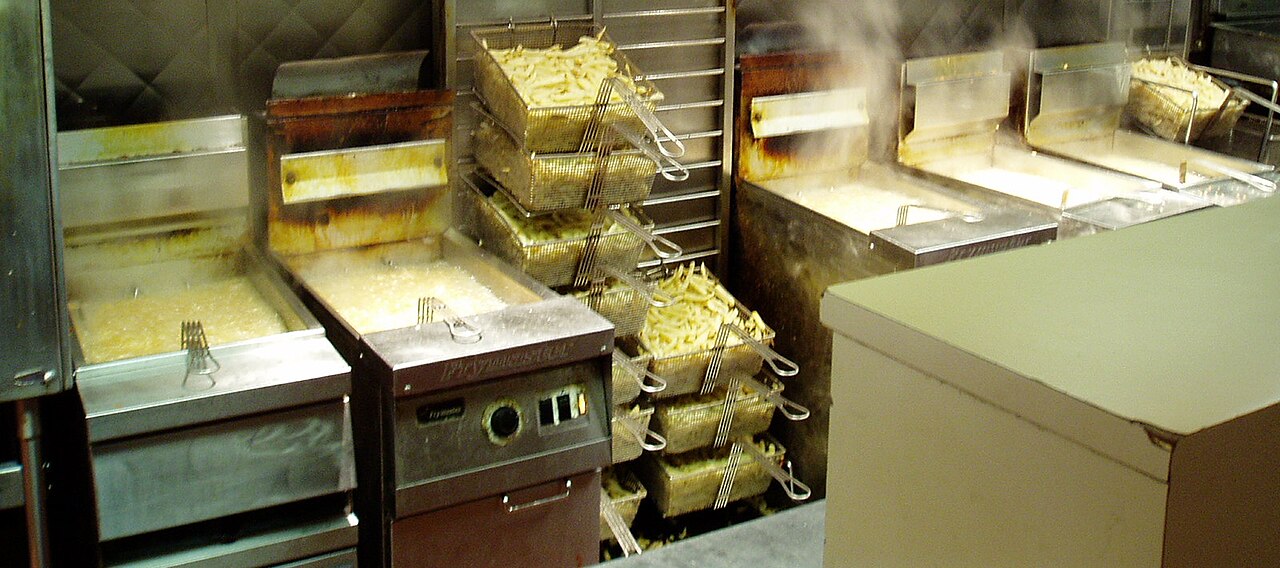
Canola oil vs soybean oil comes up whenever a restaurant group, caterer or food factory reviews its frying oil costs. Both are refined, neutral, widely available and priced in the same broad band. On paper they look almost the same. In a busy commercial fryer, they behave differently enough that the choice is worth thinking about.
We export refined canola oil and refined soybean oil, along with sunflower, palm and coconut oil, to buyers worldwide. This guide compares canola oil vs soybean oil for commercial frying: specs, smoke point, fryer life, taste, health angles, price and supply, so you can pick the right one for your kitchen or line.
Table of Contents
The short version
In the canola oil vs soybean oil question, the honest answer is that for most commercial frying, both work. Canola oil has less saturated fat and usually a slightly better profile for health-focused menus. Soybean oil is often a little cheaper and very widely available. In long frying runs, both are less stable than high oleic oils or palm olein, but canola tends to hold up slightly better than regular soybean because it has more oleic acid and less linoleic acid.
If fryer life matters most, look at the high oleic versions of either oil. If price matters most, compare current quotes, because the canola oil vs soybean oil price gap moves with each crop.
Specifications side by side
Here are the specs for our refined grades:
| Parameter | Refined canola oil | RBD canola oil | Refined soybean oil |
|---|---|---|---|
| Appearance | Clear, light yellow | Clear, light yellow | Clear, light yellow |
| Taste | Neutral, bland | Odourless, neutral | Neutral, bland |
| Free fatty acids | ≤ 0.1% (as oleic) | ≤ 0.05% (as oleic) | ≤ 0.1% (as oleic) |
| Moisture and impurities | ≤ 0.1% | ≤ 0.1% | ≤ 0.10% moisture, ≤ 0.05% impurities |
| Peroxide value | ≤ 2.0 meq O₂/kg | ≤ 1.0 meq O₂/kg | ≤ 10 meq O₂/kg (typical ≤ 5) |
| Iodine value (Wijs) | 105 – 126 | 105 – 126 | 120 – 141 |
| Saponification value | 175 – 195 | 175 – 195 | 189 – 195 |
| Shelf life | 12 – 18 months | 18 – 24 months | 12 – 18 months |
Full details are on our refined canola oil, RBD canola oil and refined soybean oil pages.
One number worth noticing is the iodine value. It measures how unsaturated the oil is. Soybean oil’s higher iodine value means more double bonds in its fatty acids, which makes it a bit more prone to oxidation in the fryer. That’s a big part of the canola oil vs soybean oil story.
Fatty acid makeup
The main difference between canola oil vs soybean oil comes down to fatty acids:
- Canola oil is low in saturated fat, high in oleic acid (a monounsaturated fat), with moderate linoleic acid and some alpha-linolenic acid.
- Soybean oil has a bit more saturated fat than canola, much more linoleic acid (polyunsaturated), less oleic acid, and some linolenic acid too.
More oleic acid means better stability under heat. More linoleic and linolenic acid means faster oxidation. So on fat profile alone, canola has an edge for frying stability, while soybean has an edge in some baking and processing uses where its fat mix suits the recipe.
Smoke point
In the canola oil vs soybean oil comparison, both oils have high smoke points when refined:
- Refined soybean oil: around 230 to 234°C.
- Refined canola oil: around 204 to 230°C, depending on refining and FFA.
Both sit comfortably above normal deep-frying temperatures of 170 to 190°C. In the canola oil vs soybean oil comparison, smoke point isn’t really the deciding factor. Stability over hours of frying matters more. Our cooking oil smoke point chart has the full numbers for all five oils we sell.
Fryer life
Fryer life is where kitchens feel the canola oil vs soybean oil difference. In a busy fryer running all day, the oil is hot for hours, food is releasing water, and air is always in contact with the surface. Oils rich in polyunsaturated fats break down faster under those conditions.
In practice, canola often lasts a little longer than regular soybean oil before hitting the discard point. How much longer depends on your food, temperature, filtering and topping up. Many kitchens see a modest difference rather than a dramatic one.
If fryer life is your main concern, both oils come in high oleic versions. Our high oleic soybean oil has at least 70% oleic acid and 3% or less linolenic acid, with an 18 to 24 month shelf life. That changes the canola oil vs soybean oil picture completely, because high oleic soybean is much more stable than either regular oil. Our guide on how often to change fryer oil covers the fryer side in detail.
Taste and food quality
On taste, canola oil vs soybean oil is close. Both are neutral when fresh and properly refined. Neither adds much flavour, which is why they’re popular for fries, chicken, tempura and snacks.
As the oils age in the fryer, differences can show. Soybean oil, as it oxidises, can develop what some chefs describe as a fishy or painty note sooner than canola. Canola can also develop off-flavours when overused, but often a little later.
For bakeries and food factories where oil goes into the product rather than just frying it, both work well. Flavour stability over the shelf life of the finished product matters there, and that again favours oils with more oleic acid.
Health and labelling
On health, canola oil vs soybean oil is a common question from menu planners. Canola is lower in saturated fat and has a higher share of monounsaturated fat. Both contain omega-3 alpha-linolenic acid, canola more so. Both are free of trans fat when refined properly and not hydrogenated.
Some customers ask about GMO status. Both crops are widely grown from GMO varieties in some countries and non-GMO varieties in others. If you need non-GMO certification, tell us before ordering and we’ll confirm what’s available for your grade and volume.
For health claims on labels, follow your own country’s rules. We can supply the fatty acid profile and a full certificate of analysis to support your labelling.
Price and supply
Prices for canola oil vs soybean oil move with crops, weather, freight and demand from the biofuel sector. Historically, soybean oil has often been a little cheaper, but the gap changes, and sometimes flips.
Supply is strong for both. Soybean oil is one of the most produced vegetable oils in the world. Canola has a large but more concentrated supply base. For a steady, year-round programme, both are reliable choices. Ask us for a current quote on both, and you’ll see the real gap for your volume and port.
Canola oil vs soybean oil for different frying jobs
The best oil depends a lot on what you’re frying. Here’s how the two compare across common commercial jobs.
French fries and potato products. Both do a good job. Fries are gentle on oil, so the stability gap matters less. Soybean oil is a common, economical choice here. Canola gives slightly longer oil life if the fryer runs all day.
Breaded and battered chicken. Coatings shed crumbs and the oil works hard. Canola tends to hold up a bit better. Filtering twice a day helps either oil.
Fish and seafood. Fish flavour carries into the oil, so many kitchens change fish-fryer oil more often anyway. That shortens the life of both oils, which narrows the canola oil vs soybean oil gap. Price may decide it.
Snacks, chips and extruded products. Finished products sit on shelves for months, so the oil they absorb needs to stay fresh. Oils with more oleic acid do better. Canola, high oleic soybean or palm olein are the usual picks.
Doughnuts and sweet fried dough. Both work. Some bakers prefer blends with palm oil for a drier finish.
Tempura and light batters. Both are neutral and give a clean taste when fresh. Canola is popular for its lighter feel.
Cost per portion, not cost per litre
The price per litre is the number on the invoice, but it isn’t the number that matters. What matters is how much oil each portion of food costs you, and that depends on how long the oil lasts in the fryer.
Here’s a simple way to think about canola oil vs soybean oil on cost. Say soybean oil is a little cheaper per litre. If canola lasts noticeably longer in your fryer, you’ll buy less of it over a month, and the cost per portion can come out about the same, or even lower. If your fryers don’t run long hours, the stability advantage matters less, and the cheaper oil wins.
The only way to know for your kitchen is to track it. Log how many litres you use per week per fryer for a month on one oil, then a month on the other. That gives you a real answer to canola oil vs soybean oil for your own menu.
A simple trial before you switch
If you’re thinking of switching a restaurant group or a production line from one oil to the other, run a trial first:
- Pick two similar fryers, or two similar sites.
- Put canola in one and soybean in the other.
- Keep food, temperature, filtering and top-ups the same.
- Test both daily with a TPC meter or FFA strips.
- Log days to discard, litres used and any customer comments.
- Run it for at least three to four weeks.
At the end, you’ll have your own data on canola oil vs soybean oil, not someone else’s opinion. Ask us about trial quantities in tins or jerrycans, so you don’t have to commit to a full container first.
What about blends?
Some suppliers sell blended vegetable oils, often soybean mixed with palm or canola. Blends can balance cost and performance. For example, adding some palm olein to soybean oil improves fryer stability.
If you want a blend, be clear about the ratio and ask for a fatty acid profile on the COA. A blend’s behaviour sits between its parts, and the lower-stability oil usually sets the pace. For most commercial kitchens, a single well-refined oil is simpler to manage, and it makes the canola oil vs soybean oil comparison cleaner.
What happens in the fryer, hour by hour
It helps to picture what’s going on in each oil during a long shift.
In the first few hours, both oils behave almost the same. They’re clear, neutral and well below their smoke points. Food comes out light and crisp.
By the middle of a busy day, water from food has started raising free fatty acids in both. Oxidation is under way too, and this is where soybean oil, with more linoleic and linolenic acid, starts to move a little faster. Colour darkens slightly in both.
After a few days of heavy use, the differences add up. Soybean oil is often a touch darker and closer to the discard point. Canola is usually a little behind. Both need filtering and topping up to stay in good shape.
That’s the canola oil vs soybean oil difference in a nutshell: not dramatic on any single day, but noticeable across a week of heavy frying.
Common mistakes when choosing
- Comparing price per litre only. Cost per portion is what counts.
- Ignoring the starting quality. A well-refined soybean oil with very low FFA can outperform a poorly refined canola. Always check the COA.
- Skipping the trial. One month of logs tells you more than any article, including this one.
- Running fryers too hot. Any gain from a better oil disappears if the fryer sits at 200°C all day.
- Forgetting high oleic options. If canola oil vs soybean oil is a close call, the high oleic versions of either may beat both.
Canola oil vs soybean oil in different markets
Preferences vary around the world. In some markets, canola is seen as the premium, health-focused choice and carries a higher shelf price in retail. In others, soybean oil is the everyday cooking oil that everyone knows, and canola is less familiar. For food service, what matters most is cost and fryer performance. For retail, what matters is what shoppers expect to see on the label.
If you’re a distributor serving both restaurants and shops, it often makes sense to carry both. Ask us about combining canola oil and soybean oil in one container in different pack sizes, which can keep your freight cost per unit down.
Which one to choose
Here’s how we’d frame canola oil vs soybean oil for different buyers:
- Quick-service restaurants frying fries and chicken all day: canola, or a high oleic oil if budget allows. Longer fryer life usually pays back.
- Price-driven caterers and street food: refined soybean oil, with good filtering and regular testing.
- Health-focused menus and brands: canola, for its lower saturated fat.
- Food factories baking or blending: either, based on recipe and cost. Soybean is common in many processed foods.
- Continuous industrial frying: consider high oleic soybean or palm olein. See our palm oil range for CP8 and CP10 grades.
Storage and shelf life
In storage, canola oil vs soybean oil is fairly even. Both keep well in cool, dry, dark storage. Our refined canola oil and refined soybean oil carry a 12 to 18 month shelf life. Our RBD canola oil carries 18 to 24 months thanks to its very low starting peroxide value.
Soybean oil, with more polyunsaturated fat, is a little more sensitive to warm storage. If your warehouse runs hot, factor that into your canola oil vs soybean oil decision. Our guide to the shelf life of sunflower oil, soybean and canola explains storage in more detail.
Testing what you receive
Whichever side of canola oil vs soybean oil you land on, check the oil on arrival. The two most useful numbers are free fatty acids and peroxide value. Low FFA means a higher smoke point and longer fryer life. Low PV means the oil hasn’t started oxidising. Our guide to free fatty acid and peroxide value explains both.
For a bigger order, an independent check at loading adds peace of mind. See our guide to pre-shipment inspection for edible oil. International quality standards for both oils are set out by the FAO/WHO Codex Alimentarius, and many contracts follow trade rules from FOSFA.
Packing options
For commercial kitchens, the practical packs are:
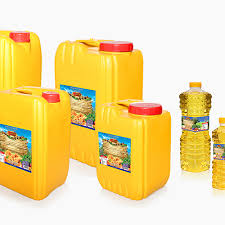
- 18 L tins and 25 L jerrycans for restaurants.
- 180 to 200 kg drums for large kitchens and small plants.
- Flexitanks and ISO tanks for factories and repackers.
- 1 L to 10 L PET bottles for retail and smaller outlets.
For bulk shipments, read our comparison of flexitank vs ISO tank.
Ordering tips for commercial buyers
A few practical points when you place an order, whichever oil you pick:
- Give us your usage. Tell us how many litres you use per week or per month. That helps us suggest the right pack size and order frequency.
- Ask for the COA with every lot. Check free fatty acid, peroxide value and moisture against the spec.
- Plan around shelf life. Don’t order more than you’ll use within the shelf life, especially for refined soybean oil in a warm warehouse.
- Think about mixed loads. If you use both oils in different sites, a mixed container can bring the cost per unit down.
- Agree on payment and documents early. Our guide to letter of credit vs TT payment covers the options.
If you’re comparing canola oil vs soybean oil for a new contract, send us both specs you’re considering and we’ll quote against them.
Quick answers
Is canola oil better than soybean oil for deep frying? Slightly, for fryer life, because of its higher oleic acid content. The gap is modest. High oleic versions of either are better again.
Which is cheaper? It changes with the market. Soybean oil has often been a little cheaper, but ask for a current quote.
Can I switch from one to the other without changing recipes? For frying, usually yes. For baking or processed foods, test first.
Which has more omega-3? Canola.
Does canola oil vs soybean oil matter for air fryers or home use? Much less. At home, oil is used in small amounts and changed often, so either works fine.
Which lasts longer in storage? RBD canola, with its lower starting peroxide value and 18 to 24 month shelf life, has the edge over regular refined soybean oil.
Buy canola oil or soybean oil from DTH Company Ltd
We supply canola oil and soybean oil, plus sunflower oil, palm oil and coconut oil, to buyers worldwide. Every shipment comes with a certificate of analysis. If you’re still weighing canola oil vs soybean oil, we can quote both for your volume and port so you can compare on real numbers.
See the full range on our products page, read about us, or send your grade, quantity and destination through our contact page.
Image credits: Featured photo: David Hoshor, CC BY 2.0, Wikimedia Commons.


3 thoughts on “Canola Oil vs Soybean Oil for Commercial Frying: 7 Honest Differences Explained”