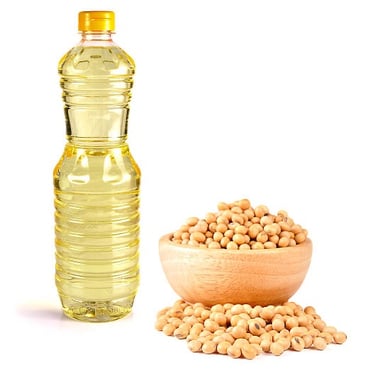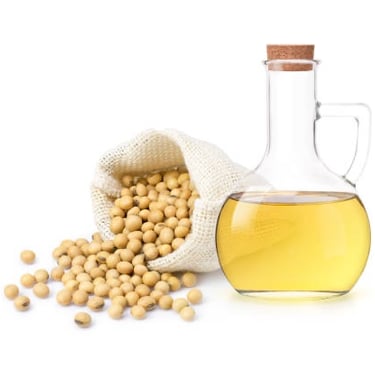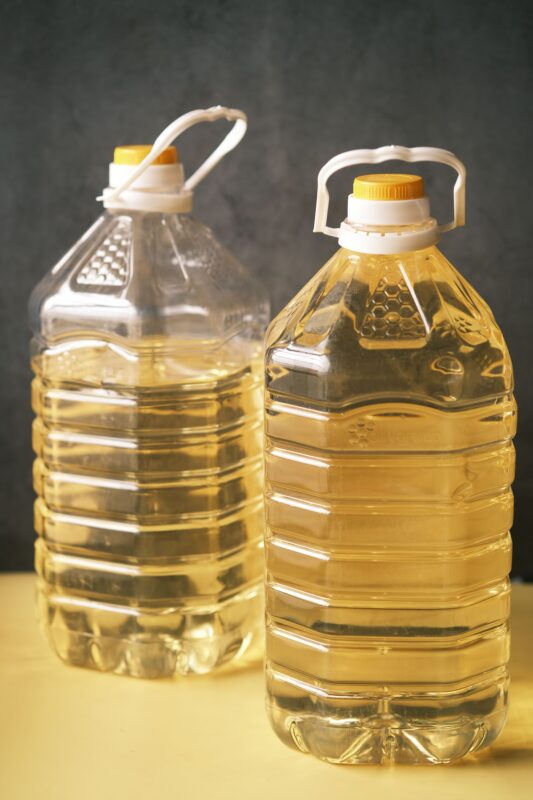

High oleic soybean oil vs regular soybean oil is a question about one thing: fatty acids. Regular soybean oil is mostly linoleic acid, a polyunsaturated fat that oxidises fairly quickly under heat. High oleic soybean oil has been bred to carry 70% or more oleic acid, the same monounsaturated fat that makes olive oil stable. That one change gives it a much longer fry life, a longer shelf life and a cleaner label, at a higher price.
We export both from Thailand, along with crude soybean oil, to fryers, snack makers, bakeries, food factories and distributors around the world. This guide explains how the two oils differ in composition, stability, frying, shelf life, labelling and cost, who should buy which, and the specifications you get from us.
Table of Contents
High Oleic Soybean Oil vs Regular Soybean Oil in Short
The quick version:
- Regular soybean oil: about 50 to 55% linoleic acid, 6 to 8% linolenic acid, around 22 to 25% oleic acid. Good, cheap, neutral oil that oxidises faster at high heat.
- High oleic soybean oil: 70% or more oleic acid, 20% or less linoleic, 3% or less linolenic. Much more stable.
- High oleic lasts noticeably longer in the fryer and on the shelf, and doesn’t need partial hydrogenation, so no artificial trans fat.
- Regular soybean oil is cheaper and much more widely available.
- Taste and colour are almost the same: light yellow, neutral, bland.
So the choice in high oleic soybean oil vs regular soybean oil is mostly about how hard you work the oil, and how much you’re willing to pay for stability.
What Makes Soybean Oil “High Oleic”
Normal soybeans produce oil that’s rich in linoleic acid (omega 6) and contains some linolenic acid (omega 3). Both are polyunsaturated, which means they have several double bonds that react with oxygen when the oil is heated or stored. That’s what causes off flavours, darkening and polymer build-up in fryers.
High oleic soybeans were developed, starting in the United States, by changing the activity of the genes that turn oleic acid into linoleic acid. The plant keeps more oleic acid and makes less of the polyunsaturated fats. Some high oleic varieties come from biotechnology, others from conventional breeding. If GMO status matters for your market, ask us and we’ll confirm the status of the lot on the contract.
The beans are crushed and refined exactly like regular soybeans. The only real difference is the fatty acid profile of the oil that comes out. For background on soybean oil in general, the soybean oil article on Wikipedia is a good start.
Fatty Acid Comparison
| Fatty acid | Regular soybean oil (%) | High oleic soybean oil (%) |
|---|---|---|
| Palmitic (C16:0) | About 10 to 11 | About 6 to 8 |
| Stearic (C18:0) | About 4 | About 3 to 4 |
| Oleic (C18:1) | About 22 to 25 | 70 or more |
| Linoleic (C18:2) | About 51 to 55 | 20 or less |
| Alpha-linolenic (C18:3) | About 6 to 8 | 3 or less |
| Total saturated | About 15 | 12 or less |
Look at the last two polyunsaturated lines. Linolenic acid in particular is the fat that breaks down fastest in a fryer and gives the “fishy” or painty note in old soybean oil. Cutting it from around 7% to 3% or less makes a huge difference.
Specification Comparison
These are the specs we supply to. The numbers show the same story as the fatty acid table.
| Parameter | Refined soybean oil | High oleic soybean oil |
|---|---|---|
| Appearance | Clear, light coloured liquid | Clear, light yellow liquid |
| Odour and taste | Neutral, bland, free from rancidity | Neutral, bland, free from rancidity |
| Oleic acid (C18:1) | About 22 to 25% (typical) | 70% min |
| Linoleic acid (C18:2) | About 51 to 55% (typical) | 20% max |
| Alpha-linolenic acid (C18:3) | About 6 to 8% (typical) | 3% max |
| Saturated fatty acids | About 15% (typical) | 12% max |
| Free fatty acids (as oleic) | 0.1% max | 0.1% max |
| Moisture and volatile matter | 0.10% max | 0.10% max |
| Peroxide value | 10 meq O2/kg max (typical 5 or less) | 10 meq O2/kg max (typical 5 or less) |
| Iodine value (Wijs) | 120 to 141 | 85 to 100 |
| Saponification value | 189 to 195 | 189 to 195 |
| Shelf life | 12 to 18 months | 18 to 24 months |
The iodine value is the quickest check. Regular soybean oil sits at 120 to 141. High oleic soybean oil sits at 85 to 100. If someone sells you “high oleic” with an IV of 125, it isn’t.
Difference 1: Frying Life
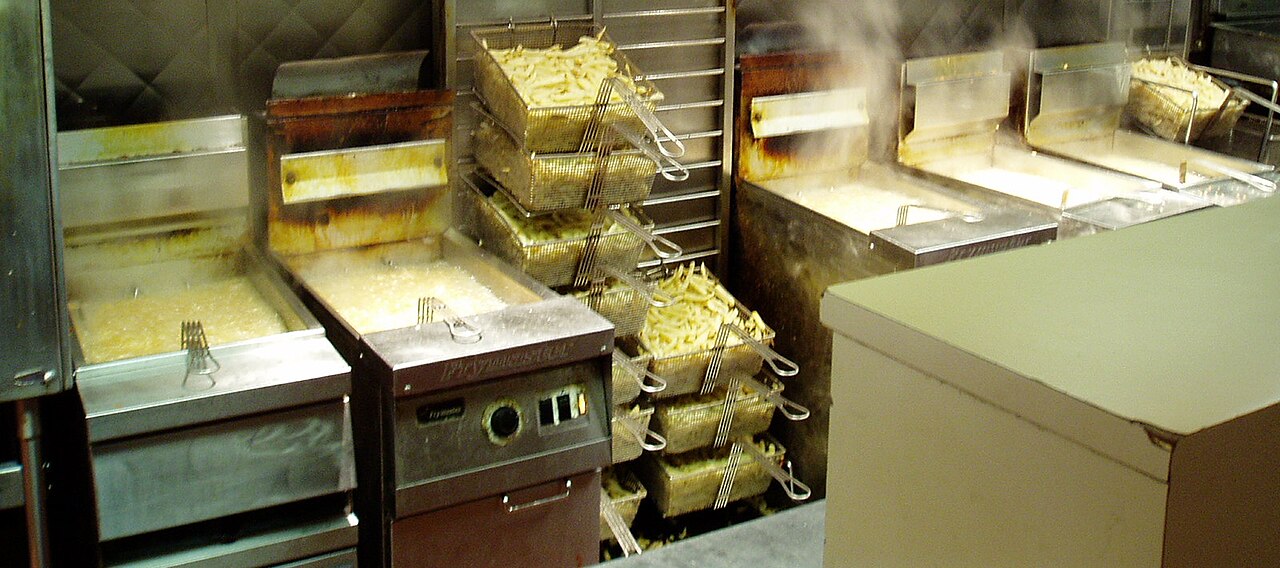
This is the main reason buyers move to high oleic soybean oil. In a commercial fryer, regular soybean oil breaks down faster: it darkens, foams, smokes, builds up gums on the fryer and gives food an off taste. High oleic soybean oil holds up much longer under the same conditions, so you change the oil less often.
How much longer depends on what you fry, temperature, how much fresh oil you top up with and how well you filter. Many food service users find they can go noticeably longer between changes, sometimes much longer. That’s where the higher price per litre pays for itself. Our guide on how often to change fryer oil explains how to measure it.
Difference 2: Shelf Life
Because high oleic soybean oil oxidises more slowly, it also keeps better in storage and in finished foods. Our spec gives 18 to 24 months for high oleic against 12 to 18 months for regular refined soybean oil.
That matters a lot for snack foods, crackers, cereal, nuts and packaged baked goods, where the oil sits inside the product on a shelf for months. A more stable oil means less rancidity and fewer complaints near the end of shelf life. See our post on shelf life of sunflower oil, soybean and canola for more.
Difference 3: No Partial Hydrogenation
In the past, food makers often partially hydrogenated regular soybean oil to make it more stable. That created artificial trans fats, which most countries now restrict or ban. High oleic soybean oil gives much of that stability without hydrogenation, so you get a stable oil with no artificial trans fat. That was one of the main reasons it was developed.
Difference 4: Taste and Appearance
Here the high oleic soybean oil vs regular soybean oil gap is small. Both are light yellow, clear and neutral when fresh. In blind tastings of fresh fried food, most people can’t tell them apart. The difference shows up later: after many hours in the fryer, or months on a shelf, food fried in regular soybean oil is more likely to pick up stale or painty notes.
Difference 5: Nutrition
High oleic soybean oil swaps polyunsaturated fat for monounsaturated fat and has a little less saturated fat. Regular soybean oil gives more omega 6 linoleic acid and more omega 3 alpha-linolenic acid.
In the United States, the FDA allowed a qualified health claim in 2018 for oils containing at least 70% oleic acid, when used in place of fats higher in saturated fat. Whether you can use any health claim depends on the rules in your country, so check before you print it on a label. We don’t make health claims ourselves.
Difference 6: Price and Availability
Regular soybean oil is one of the most traded vegetable oils in the world, made in huge volumes in the US, Brazil, Argentina and China. It’s widely available and usually priced well below specialty oils.
High oleic soybean oil is a smaller, specialty market. Supply is limited by how many acres of high oleic beans are planted and kept separate from regular beans at harvest, storage and crushing. So it costs more, often a meaningful premium per tonne over regular soybean oil. You’re paying for identity preservation as well as the oil.
The maths for most buyers comes down to this: if your oil is heated hard and often, or sits in a product for a long time, the premium for high oleic often pays back. If you use oil for cold uses, light cooking or short shelf life products, regular soybean oil is usually the better value.
Cost per Fry Hour: A Simple Example
Price per tonne doesn’t tell you much for frying oil. What matters is cost per hour of frying, or cost per kilo of food fried. Here’s a simple illustration. The numbers are made up to show the method, not a quote.
| Regular soybean oil | High oleic soybean oil | |
|---|---|---|
| Price per litre (illustrative) | 1.00 | 1.25 |
| Fryer size | 25 litres | 25 litres |
| Days before full oil change | 4 | 7 |
| Daily top-up | 3 litres | 3 litres |
| Oil used per week (approx.) | 65 litres | 46 litres |
| Weekly oil cost (approx.) | 65 | 58 |
In this example the high oleic oil costs 25% more per litre but ends up cheaper per week, because you throw away fewer full fryer loads. Your own numbers will be different. Run the same test in one fryer for two or three weeks with each oil, measure total polar compounds or use test strips to decide when to change, and you’ll know which is cheaper for you.
High Oleic Soybean Oil vs Regular Soybean Oil in Packaged Foods
For food factories, the bigger win is often shelf life, not fry life. Snacks, crackers, roasted nuts, granola and baked goods all carry oil inside them, and that oil keeps oxidising in the pack. With regular soybean oil, rancid notes can creep in towards the end of shelf life, especially in hot markets or clear packaging.
Moving to high oleic soybean oil can let you:
- Extend shelf life without adding more antioxidants
- Reduce customer complaints about stale or off flavours
- Drop partially hydrogenated fats and the trans fat that comes with them
- Ship further, into hotter markets, with less risk
Some factories use a blend: high oleic in the frying step, regular soybean oil in less demanding parts of the recipe. That keeps cost down while protecting the parts that matter most.
How to Switch From Regular to High Oleic
If you decide to move from regular soybean oil to high oleic, a few practical steps make it smooth:
- Run a trial in one fryer or one line first. Measure oil life and product quality side by side.
- Boil out and clean the fryer before switching, so old polymerised oil doesn’t shorten the life of the new oil.
- Keep the same frying temperature to start with. You don’t need to change your process.
- Update your product specification, label and any nutrition data that lists the fatty acid profile.
- Agree supply for several months. High oleic supply is tighter, so don’t rely on spot buying.
Who Should Buy Which
| Buyer | Usually better choice | Why |
|---|---|---|
| Quick service restaurants, fast food chains | High oleic | Longer fry life, fewer oil changes |
| Industrial fryers (chips, snacks, nuts) | High oleic | Stability and longer product shelf life |
| Bakeries and biscuit makers | High oleic or blends | Shelf life, replaces hydrogenated fats |
| Salad dressings, mayonnaise, sauces | Regular | No high heat, price matters |
| Home cooking oil, retail bottles | Regular | Price, familiarity |
| Margarine and spreads | Either, with other fats | Depends on formula |
| Food service with low frying volume | Regular | Premium not worth it |
| Buyers needing longer storage in hot climates | High oleic | Better stability |
How to Test What You Receive
Whichever oil you buy, check the delivery.
- Fatty acid profile by GC: the only real proof of high oleic. Oleic should be 70% or more.
- Iodine value: 85 to 100 for high oleic, 120 to 141 for regular.
- Free fatty acids and peroxide value: both should be low on fresh refined oil. Our post on free fatty acid and peroxide value explains the limits.
- Colour and smell: clear, light yellow and neutral.
For large orders, book a surveyor at loading. See our guide to pre-shipment inspection for edible oil.
Storage and Handling
Both oils store the same way: clean, dry, sealed tanks or containers, away from light, heat and air. Use stainless steel or properly lined tanks, avoid copper and brass fittings that speed up oxidation, and keep headspace small or blanketed with nitrogen for long storage.
High oleic soybean oil forgives more mistakes because it’s more stable, but it isn’t indestructible. Heat, light and oxygen still age it. Keep bulk oil below about 30°C where you can, and use first in, first out.
International reference standards for named vegetable oils, including soybean oil, are published by the Codex Alimentarius, and most importing countries base their rules on them.
Mistakes Buyers Make
- Paying the high oleic premium for cold uses like dressings, where regular soybean oil works just as well.
- Buying “high oleic” without a fatty acid analysis. Always ask for oleic acid as a number.
- Not cleaning the fryer before switching, then blaming the new oil for short life.
- Judging cost by price per litre instead of cost per week of frying.
- Ignoring GMO status when your market cares about it.
- Buying spot with no supply plan, then running out.
Our Specifications and Packing
High Oleic Soybean Oil
| Parameter | Specification |
|---|---|
| Oleic acid (C18:1) | 70% min of total fatty acids |
| Linoleic acid (C18:2) | 20% max |
| Alpha-linolenic acid (C18:3) | 3% max |
| Saturated fatty acids | 12% max |
| Free fatty acids (as oleic) | 0.1% max |
| Moisture and volatile matter | 0.10% max |
| Peroxide value | 10 meq O2/kg max (typical 5 or less) |
| Iodine value (Wijs) | 85 to 100 |
| Saponification value | 189 to 195 |
| Shelf life | 18 to 24 months |
| Packing | Flexitanks, ISO tanks, 1L and 5L PET, 18L tins, 25L jerrycans, 180 to 200 kg drums |
See high oleic soybean oil for sale.
Refined Soybean Oil
| Parameter | Specification |
|---|---|
| Free fatty acids (as oleic) | 0.1% max |
| Moisture and volatile matter | 0.10% max |
| Insoluble impurities | 0.05% max |
| Peroxide value | 10 meq O2/kg max (typical 5 or less) |
| Iodine value (Wijs) | 120 to 141 |
| Saponification value | 189 to 195 |
| Unsaponifiable matter | 1.0% max |
| Colour (Lovibond 5.25″) | 2.0 red max |
| Shelf life | 12 to 18 months |
See refined soybean oil for sale and crude soybean oil for refiners.
All our oils are produced under ISO 22000, HACCP, GMP and Halal.
High Oleic Soybean Oil vs Other Stable Oils
High oleic soybean oil isn’t the only stable frying oil. Buyers often compare it with:
- High oleic sunflower oil: similar oleic level, very stable, often a bit more expensive. See high oleic vs regular sunflower oil.
- Palm olein: very stable and cheap, but more saturated and semi-solid in cool weather. See palm oil vs soybean oil.
- Canola oil and high oleic canola: popular in North America. See canola oil vs soybean oil.
If you’re comparing several, we can send samples of each so you can run them in your own fryer.
Why Buy Soybean Oil From Thailand
Thailand crushes and refines soybeans for its own big food industry, so refining know-how, food safety systems and port logistics are well established. Buying from a Thai exporter gives you short shipping times to Asia, the Middle East and Africa, the option to combine soybean oil with palm, sunflower, canola and coconut oil in one order, and documents prepared to the same standard across all of them. Read more in our guide to vegetable oil export from Thailand.
For buyers comparing high oleic soybean oil vs regular soybean oil, it also means you can trial both from one supplier, with the same packing and paperwork, and switch or blend without changing vendors.
Quick Checklist Before You Order
Before placing an order, have these answers ready. They’ll get you an accurate quote first time.
- Which oil: high oleic, regular refined, or both for a trial?
- Minimum oleic acid you need, if high oleic (70% is our standard minimum).
- GMO or non-GMO requirement.
- Monthly or yearly volume, and whether you want a supply contract.
- Packing: flexitank, ISO tank, drums, tins, jerrycans or retail bottles.
- Private label details, if any.
- Destination port and price basis (FOB, CFR or CIF).
- Any extra tests you need on the COA.
Send us that list and we’ll come back with a clear offer for both sides of the high oleic soybean oil vs regular soybean oil choice.
Frequently Asked Questions
What is the main difference in high oleic soybean oil vs regular soybean oil?
Fatty acids. High oleic has 70% or more oleic acid and much less linoleic and linolenic acid, so it’s far more stable under heat.
Does high oleic soybean oil taste different?
Not when fresh. Both are neutral. High oleic stays neutral for longer.
Is high oleic soybean oil GMO?
Some varieties are, some aren’t. Ask us and we’ll confirm the status of the lot.
Which oil has more omega 3?
Regular soybean oil. It carries about 6 to 8% alpha-linolenic acid, against 3% or less in high oleic soybean oil. That lower omega 3 is part of why high oleic is more stable.
Is high oleic soybean oil worth the extra cost?
For heavy frying and long shelf life products, often yes. For cold uses and light cooking, usually not.
Can I mix high oleic and regular soybean oil?
Yes. Some buyers blend to hit a price and a stability target. The result sits between the two.
How long does high oleic soybean oil last?
Our spec gives 18 to 24 months in cool, dry storage, against 12 to 18 months for regular refined soybean oil.
Order Soybean Oil From Us
The high oleic soybean oil vs regular soybean oil choice comes down to how hard you work the oil and how long it has to last. We supply both from Thailand, plus crude soybean oil, in flexitanks, ISO tanks, drums, tins, jerrycans and retail bottles, with private label available, full documents and independent inspection on request.
Send your grade, quantity, packing and destination port. We’ll reply with full specifications, a price and samples so you can test both in your own kitchen or factory.
Email info@dthcompanyltd.com, WhatsApp +66 91 765 9104, or use our contact page. See all our products.