

An RBD coconut oil specification is the list of lab numbers that tells you whether the refined oil in front of you is fresh, clean and fit for what you plan to do with it. Free fatty acids, peroxide value, moisture, colour, iodine value, saponification value, melting point. Each one says something different, and together they tell you if the oil will fry cleanly, keep its shelf life, and behave the same way batch after batch in your factory.
We refine and export RBD coconut oil to food manufacturers, fryers, bakeries, confectioners, cosmetic makers and traders all over the world. This guide walks through the RBD coconut oil specification line by line, explains what each figure means in practice, shows the fatty acid profile you should expect, and sets out the spec, packing and terms you get when you buy RBD coconut oil from us.
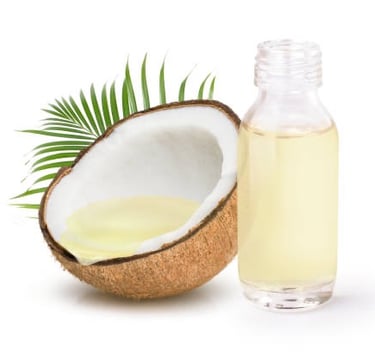
Table of Contents
What RBD Coconut Oil Is
RBD stands for refined, bleached and deodorized. It starts as crude coconut oil pressed from copra, the dried meat of the coconut. Crude oil is yellowish, it smells strongly and it carries free fatty acids, gums, moisture and bits of fibre. Refining takes those out.
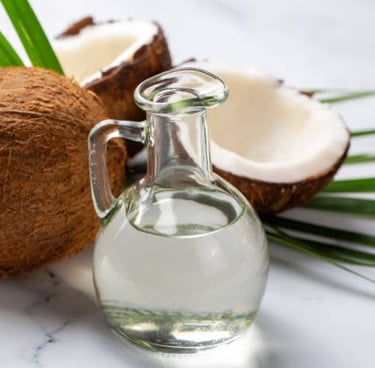
Roughly, the oil goes through three stages. First it’s degummed and the free fatty acids are taken out, either with caustic soda (chemical refining) or by steam stripping later on (physical refining). Then it’s bleached with activated clay, which pulls out colour and traces of metals. Finally it’s deodorized under high vacuum with steam at around 220 to 250°C, which strips out the smell, the taste and most of the remaining free fatty acids. The oil that comes out the other end is clear when warm, white when solid, and has almost no flavour of its own.
That neutral profile is the whole point, and it shows up in every line of the RBD coconut oil specification below. A biscuit maker doesn’t want every cookie to taste of coconut, and a soap maker doesn’t want a copra smell in a lavender bar. If you do want the coconut aroma, that’s what virgin oil is for, and you can read about it in our virgin coconut oil specification guide.
Our RBD Coconut Oil Specification
This is the RBD coconut oil specification we contract on as standard. If you need tighter limits on a particular line, tell us and we’ll quote against your numbers.
| Parameter | Specification | Test method (typical) |
|---|---|---|
| Appearance at 30°C | Clear, bright liquid | Visual |
| Colour (Lovibond 5¼” cell) | 1.0 Red max | AOCS Cc 13e |
| Odour and taste | Neutral, bland, free from rancidity | Sensory |
| Free fatty acids (as lauric) | 0.1% max | AOCS Ca 5a-40 |
| Moisture and impurities | 0.1% max | AOCS Ca 2c-25 |
| Peroxide value | 1.0 meq O2/kg max at loading | AOCS Cd 8b-90 |
| Iodine value (Wijs) | 6 to 11 | AOCS Cd 1d-92 |
| Saponification value | 248 to 265 mg KOH/g | AOCS Cd 3-25 |
| Slip melting point | About 24 to 26°C | AOCS Cc 3-25 |
| Unsaponifiable matter | 0.5% max | AOCS Ca 6a-40 |
| Refractive index at 40°C | 1.448 to 1.450 | AOCS Cc 7-25 |
| Shelf life | 18 to 24 months, cool and dry | – |
| Packing | Flexitank, ISO tank, steel drums, IBC, tins, jerrycans | – |
Methods are the ones most labs use, published by the American Oil Chemists’ Society. Some buyers prefer ISO or PORAM methods, which give very close results. What matters is that you and the seller agree on the method in the contract, so there’s no argument later about whose lab is right.
Free Fatty Acids (FFA)
FFA is the first number most buyers look at, and for good reason. Free fatty acids are fatty acids that have broken off the triglyceride. They come from moisture, heat, enzymes and time. In crude coconut oil you might see 1 to 5% FFA or more. A good RBD coconut oil specification brings that down to 0.1% or lower.
For coconut oil, FFA is reported as lauric acid, because lauric is the main fatty acid. Don’t compare a coconut oil FFA figure with a palm oil figure without checking the basis. Palm oil reports FFA as palmitic, and the numbers aren’t directly comparable.
Why should you care? High FFA lowers the smoke point, so the oil starts smoking and breaking down sooner in a fryer. It can give a soapy taste, which coconut oil is especially prone to because lauric acid in free form tastes soapy. And if FFA is creeping up between loading and arrival, it tells you something went wrong in storage or transit. Our guide on free fatty acid and peroxide value goes deeper into both tests.
Peroxide Value (PV)
Peroxide value measures early oxidation. Oxygen attacks the oil, especially at double bonds, and forms peroxides. They don’t taste of much on their own, but they break down into the compounds that do taste rancid.
Coconut oil is mostly saturated, so it oxidizes much more slowly than soybean or sunflower oil. That’s one reason it keeps so well. Still, PV should be low at loading, and our RBD coconut oil specification sets 1.0 meq O2/kg max at the time of shipment. Some food buyers ask for 0.5 max, which we can meet with fresh product and nitrogen blanketing.
PV always rises a bit over time, so the useful question isn’t just “what was it at loading” but “how fast is it climbing”. If you test on arrival and see a big jump, look at the temperature the oil was held at during the voyage and whether the tank or flexitank was clean.
Moisture and Impurities (M&I)
Water and insoluble dirt don’t belong in refined oil. Water feeds hydrolysis, which pushes FFA up. Impurities can clog filters and look bad in a clear bottle. The RBD coconut oil specification limit of 0.1% combined is normal for refined oil, and well-run refineries usually come in well under it.
If you see M&I creep up between loading and discharge, the usual culprits are condensation in poorly sealed drums or a flexitank that wasn’t dry when filled. That’s one reason we inspect and dry our packing before every fill.
Colour
Colour is measured on the Lovibond scale, usually in a 5¼ inch cell, and reported as red and yellow units. RBD coconut oil is very pale, often close to water-white. Our RBD coconut oil specification limit is 1.0 red max, and typical lots come in lower.
Colour matters most for buyers who sell the oil in clear bottles, and for confectioners and cosmetic makers who need a white solid fat. Colour that darkens after refining is a hint the oil was overheated or stored too long.
Iodine Value (IV)
Iodine value tells you how unsaturated the oil is. More double bonds means a higher IV. Coconut oil is one of the most saturated oils there is, so its IV is low, normally between 6 and 11.
This is more of an identity check than a freshness check. If a lot labelled coconut oil comes in with an IV of 20 or more, something else has been mixed in. Palm kernel oil sits around 14 to 21, so a high IV is one of the first clues of a blend. A tight IV range in the RBD coconut oil specification protects you against that kind of substitution.
Saponification Value (SV)
Saponification value is the amount of potassium hydroxide needed to turn one gram of oil into soap. Short fatty acids give a high SV, and coconut oil is full of short and medium chain fatty acids, so its SV is high, around 248 to 265.
Soap makers use this number every day to work out how much lye they need. For everyone else it’s another identity check. Most common vegetable oils sit around 185 to 200, so an SV below the 248 floor in our RBD coconut oil specification tells you the oil isn’t pure coconut.
Melting Point
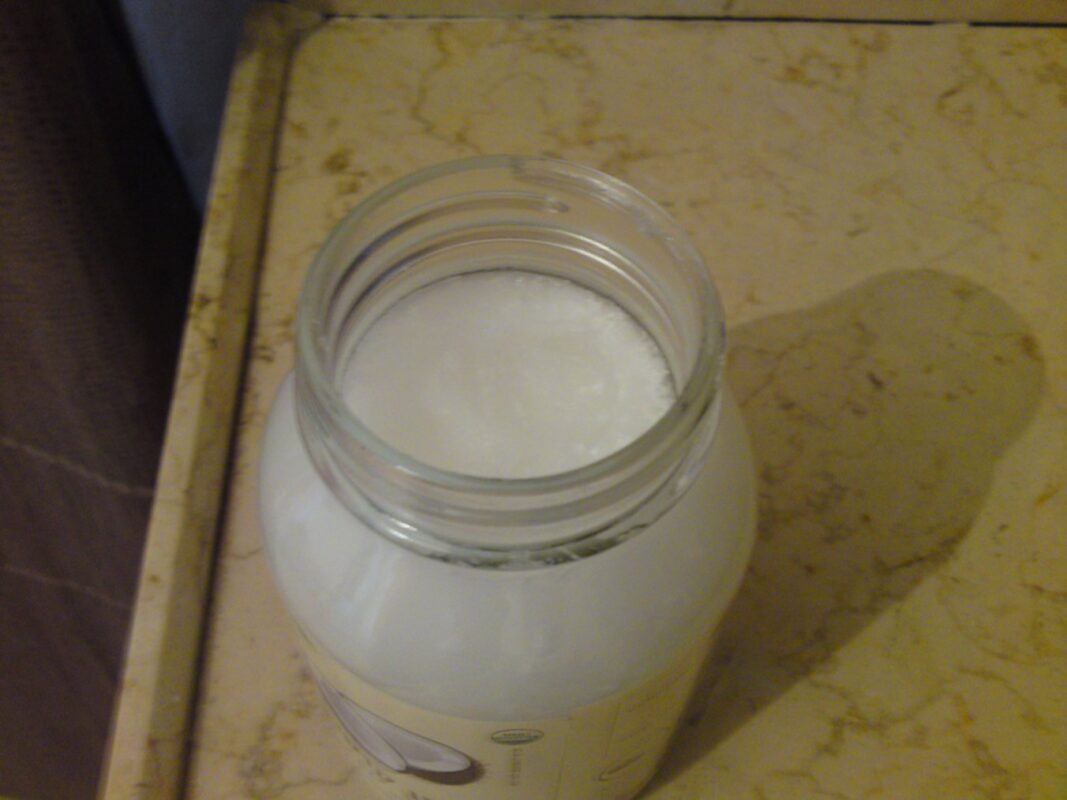
Our RBD coconut oil specification puts the slip melting point at roughly 24 to 26°C. Below that it sets into a white solid, above it it’s a clear liquid. It’s one of the reasons confectioners like it: it’s solid at room temperature in cooler climates and melts quickly in the mouth.
This has real handling consequences. Bulk oil shipped to a cold port arrives solid and needs heating to discharge. Drums stored in a cold warehouse will be rock hard. None of that is a quality problem. We cover it in detail in our article on the coconut oil melting point.
Fatty Acid Profile
The fatty acid composition is what makes coconut oil coconut oil. Any honest RBD coconut oil specification should fall inside the ranges set by the Codex Alimentarius standard for named vegetable oils. Refining doesn’t change the profile much, so these are the same ranges you’d see for crude or virgin oil.
| Fatty acid | Carbon chain | Typical range (%) |
|---|---|---|
| Caproic | C6:0 | Up to 0.7 |
| Caprylic | C8:0 | 4.6 to 10.0 |
| Capric | C10:0 | 5.0 to 8.0 |
| Lauric | C12:0 | 45.1 to 53.2 |
| Myristic | C14:0 | 16.8 to 21.0 |
| Palmitic | C16:0 | 7.5 to 10.2 |
| Stearic | C18:0 | 2.0 to 4.0 |
| Oleic | C18:1 | 5.0 to 10.0 |
| Linoleic | C18:2 | 1.0 to 2.5 |
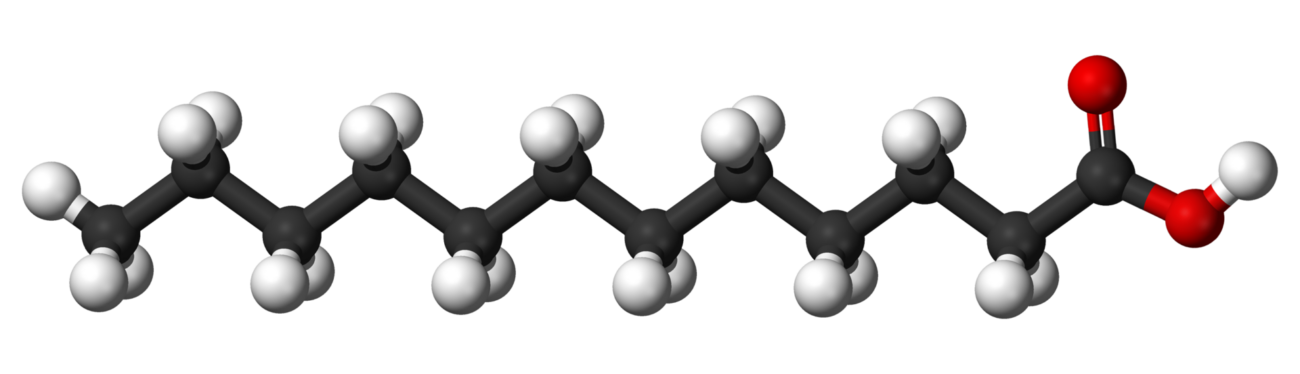
Lauric acid is the star here, at around half the total. It gives coconut oil its sharp melting behaviour, its quick lather in soap and its resistance to oxidation. If you want to read more on the chemistry, lauric acid has a decent overview on Wikipedia.
Food Safety Points Beyond the Basic Spec
A basic RBD coconut oil specification covers quality. Big food buyers, especially in Europe, North America and parts of Asia, now also ask about contaminants. These are the ones that come up most.
3-MCPD and glycidyl esters
These form during deodorization at high temperature, especially when there’s chloride present in the oil. The EU sets limits for refined oils and tighter ones for oil going into infant food. Coconut oil is usually at the lower end compared with palm oil, but you should still ask for results if you sell into regulated markets. We wrote about the palm side of this in 3-MCPD in palm oil, and much of it applies to coconut too.
PAH
Polycyclic aromatic hydrocarbons can get into copra if it’s dried over open smoky fires. Good copra drying and activated carbon during bleaching keep them down. Ask for benzo(a)pyrene and PAH4 results if your market checks them.
Heavy metals and pesticides
Lead, arsenic and pesticide residues are tested on request. Coconut is a low-input crop in most growing regions, so pesticide residues are rarely a problem, but a certificate gives your QA team something to file.
Certifications
Our refined oil is produced under ISO 22000, HACCP and GMP, and we can supply Halal certification. Kosher is available on request for some lots.
Who Uses RBD Coconut Oil, and Which Specs Matter to Them
Different buyers lean on different parts of the RBD coconut oil specification. Here’s a rough guide to what each type of customer checks first.
| Buyer | Specs they watch most | Why |
|---|---|---|
| Biscuit and bakery factories | FFA, PV, melting point, taste | Shelf life of the finished product, texture, no off-flavours |
| Commercial fryers and snack makers | FFA, PV, colour | Smoke point, fry life, clean colour on the food |
| Confectionery and coatings | Melting point, fatty acid profile, colour | Snap, mouthfeel, white appearance |
| Non-dairy creamer and ice cream | Taste, PV, melting point | Clean flavour, fast melt |
| Soap and detergent makers | SV, IV, colour | Lye calculation, lather, bar colour |
| Cosmetics and personal care | Colour, odour, PV, microbial | White base, no smell, stability |
| Traders and repackers | Full spec plus shelf life | Reselling across several markets |
For frying, it helps to know that RBD coconut oil has a smoke point of around 200 to 230°C depending on FFA, well above virgin oil. Our cooking oil smoke point chart compares it with the other oils most fryers use.
How to Check an RBD Coconut Oil Specification Before You Pay
A spec sheet is only a promise. Here’s how we’d suggest you check it, whoever you buy from.
- Ask for a recent certificate of analysis from the actual lot, not a generic sheet from three years ago.
- Get a sample and test it in your own lab or an independent one. Check FFA, PV, IV and SV at the very least.
- Put the RBD coconut oil specification in the contract, with test methods and a clear rule on what happens if a parameter fails.
- Use independent inspection at loading for bulk orders. SGS, Intertek, Bureau Veritas and similar firms sample and seal at the load port. See our guide on pre-shipment inspection for edible oil.
- Test again on arrival, and compare. A small rise in FFA and PV is normal. A big one isn’t.
Trade associations such as FOSFA publish standard contracts that many oil buyers use. They spell out sampling, analysis and arbitration, which is useful if you’re new to bulk buying.
Storage and Shelf Life
Oil that meets the RBD coconut oil specification at loading keeps well, but it doesn’t keep forever. A few simple habits make the most of its 18 to 24 month shelf life.
- Store it cool and dark, ideally below 30°C and away from direct sun.
- Keep containers closed. Oxygen and moisture are the main enemies.
- Don’t overheat when melting. Warm bulk oil gently and stop once it’s fully liquid. Holding it at 60°C for days will push PV and FFA up.
- Use stainless steel or food-grade lined tanks. Copper and iron speed up oxidation.
- Rotate stock first in, first out.
Our general guide on refined oil storage and handling was written for palm oil but the same rules apply to refined coconut oil.
Packing Options
Packing is part of the RBD coconut oil specification too, because it affects how the oil arrives.
| Packing | Net per unit | Per 20 ft container |
|---|---|---|
| Flexitank | Up to about 21 to 22 MT | 1 flexitank |
| ISO tank | About 20 to 23 MT | Tank is the container |
| New steel drums | 180 to 190 kg | About 80 drums |
| IBC totes | About 900 kg to 1 MT | About 18 to 20 IBCs |
| Tins | 18 L | On request |
| Jerrycans | 20 to 25 L | On request |
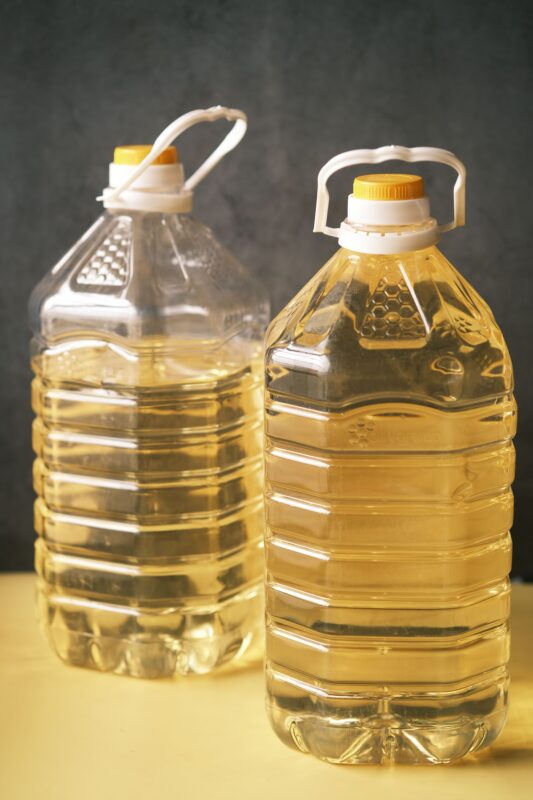
| Bottles and private label | 500 ml to 5 L | On request |
If you’re choosing between bulk options, our comparison of flexitank vs ISO tank sets out cost, cleaning and heating differences. For customs, RBD coconut oil ships under HS code 1513.19, and our guide to the coconut oil HS code explains the national variations.
RBD vs Crude vs Virgin: Quick Comparison
| Parameter | Crude | RBD | Virgin |
|---|---|---|---|
| Raw material | Copra | Crude coconut oil | Fresh coconut meat |
| Colour | Yellow to brown | Water-white to pale | Water-white |
| Odour | Strong copra | Neutral | Fresh coconut |
| FFA | Several percent | 0.1% max | 0.2% max |
| Main users | Refiners, soap, oleochemicals | Food industry, frying, cosmetics | Retail, health food, natural cosmetics |
| Relative price | Lowest | Middle | Highest |
For the full picture on the other two grades, see our crude coconut oil specification guide and our comparison of RBD coconut oil vs virgin coconut oil. If you’re comparing lauric fats more broadly, coconut oil vs palm oil is worth a look.
Red Flags in an RBD Coconut Oil Specification
Over the years we’ve seen plenty of spec sheets from other sellers. A few things make us wary, and they should make you wary too.
- No test methods listed. Without methods, numbers can’t be checked fairly.
- Numbers that look too perfect. FFA 0.00%, PV 0.0 on every lot, year after year. Real oil has real variation.
- An iodine value above 11. Could be a blend with palm kernel or another oil.
- Saponification value below 248. Same suspicion.
- No date on the certificate. A certificate without a lot number and date isn’t worth much.
- A price far below the market. If an RBD coconut oil offer is hundreds of dollars under everyone else, ask why. Our guide to spotting a fake vegetable oil supplier lists the other signs.
How the RBD Coconut Oil Specification Holds Up From Loading to Arrival
A spec at the refinery gate is one thing. What matters to you is the oil that comes out of the flexitank at your end. On a typical voyage of three to six weeks, a well-made lot of RBD coconut oil changes very little, but it does change. Here’s what we normally see, and what we’d treat as a problem.
| Parameter | At loading (typical) | On arrival (typical) | Worry if |
|---|---|---|---|
| FFA (as lauric) | 0.03 to 0.08% | Up to about 0.1% | Above 0.15% |
| Peroxide value | Under 0.5 | Under 1.5 | Above 2.5 |
| Moisture and impurities | Under 0.05% | Under 0.1% | Above 0.15% |
| Colour | Under 1.0 red | Little or no change | Clearly darker |
| Odour | Neutral | Neutral | Rancid, soapy or fishy |
Most RBD coconut oil specification disputes we’ve seen came from one of three things: oil held too hot in transit, water getting into the packing, or samples taken badly at one end. Ask for the surveyor’s sampling report as well as the analysis. If the samples weren’t drawn properly, the numbers don’t mean much.
If you need the RBD coconut oil specification to hold at destination, not just at loading, we can agree arrival limits in the contract. We usually suggest slightly wider limits on arrival than at loading, because that’s what the oil physically does in transit. A seller who promises identical numbers at both ends without blinking either has a very short route or hasn’t thought about it.
Writing the RBD Coconut Oil Specification Into Your Contract
Your contract is where the RBD coconut oil specification actually becomes something you can enforce. A few lines make all the difference.
- List every parameter with a maximum or a range, not just “as per standard”.
- Name the test method for each one.
- Say where quality is final, at loading or at discharge.
- Name the inspection company and who pays for it.
- Agree what happens if a parameter fails: a price allowance, rejection or arbitration.
- Attach the RBD coconut oil specification as an annex, dated and signed, so nobody argues later about which version applied.
We’re happy to send our standard contract with the RBD coconut oil specification attached, or to work from yours. Either way, it’s worth an hour of your QA team’s time before anyone signs.
Buy RBD Coconut Oil From Us
We’ll put the RBD coconut oil specification above in writing in your contract, send a certificate of analysis with every lot, and arrange independent inspection at loading if you want it. We ship worldwide in flexitanks, ISO tanks, drums, IBCs, tins, jerrycans and bottles, with full export documents. We also supply crude coconut oil and virgin coconut oil if you need more than one grade.
Send us your quantity, packing, destination port and any extra spec points you need, and we’ll reply with a price, a full spec sheet and a sample. For an idea of where the market sits right now, read our guide to the coconut oil price per ton. You can see the product itself on our RBD coconut oil for sale page.
Email info@dthcompanyltd.com, WhatsApp +66 91 765 9104, or use our contact page.
RBD Coconut Oil Specification: Common Questions
What is the FFA limit for RBD coconut oil?
The standard is 0.1% max, calculated as lauric acid. Some food buyers ask for 0.05% and that can be met with fresh oil.
What is a normal peroxide value for RBD coconut oil?
1.0 meq O2/kg max at loading is normal. Fresh oil from a good refinery is often well under that.
What is the iodine value of RBD coconut oil?
Between 6 and 11. Anything much higher suggests another oil has been mixed in.
Is RBD coconut oil the same as refined coconut oil?
Yes. RBD is just the full name of the refining steps. Most refined coconut oil sold in bulk is RBD.
Does RBD coconut oil smell of coconut?
No. Deodorization takes the smell and taste out. If you want the coconut aroma, choose virgin coconut oil.
How long does RBD coconut oil last?
18 to 24 months in sealed packing, stored cool, dry and out of the sun.
Can you match our own RBD coconut oil specification?
Usually, yes. Send your spec sheet and we’ll tell you straight away which points we can guarantee and which we’d need to discuss.
What should a complete RBD coconut oil specification include?
At minimum: FFA, peroxide value, moisture and impurities, colour, iodine value, saponification value, melting point and odour, each with a test method. Food buyers often add a fatty acid profile and contaminant limits. A complete RBD coconut oil specification also states the packing and shelf life.
3 thoughts on “RBD Coconut Oil Specification: Best 2026 Guide for Buyers”