


Pre-shipment inspection for edible oil is the cheapest insurance in the whole trade. For a small fee compared to the value of the cargo, an independent inspector stands at the loading point, checks the tanks or packs, draws samples, sends them to a lab, and tells you in writing whether the oil going into your container is the oil you paid for. If something’s wrong, you find out while it’s still in the seller’s country, not yours.
We export sunflower, palm, soybean, canola and coconut oil from Thailand, and we welcome inspectors on our loadings. This guide explains how pre-shipment inspection for edible oil works, what the inspector actually does, what it costs, and how to use the report so it protects you.
Table of Contents
What a pre-shipment inspection covers
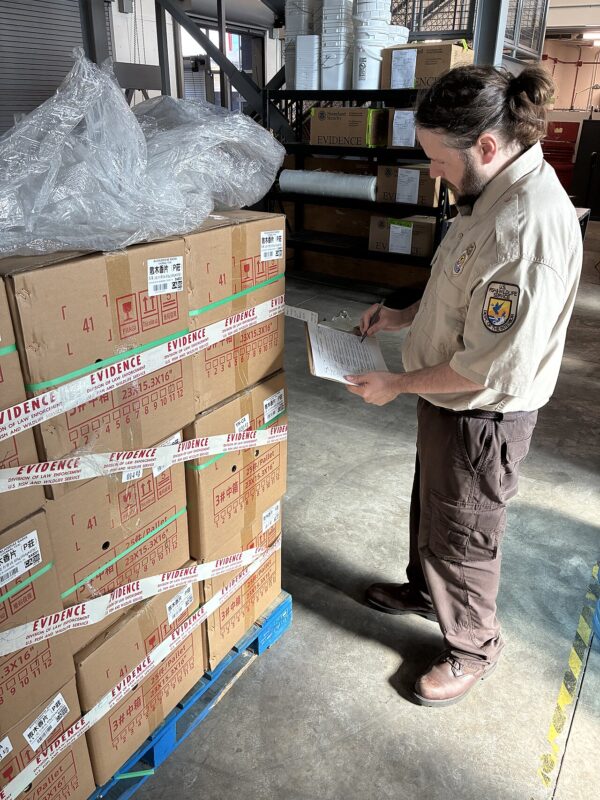
An inspection company works for whoever books and pays it. Usually that’s the buyer. The inspector checks the goods against the contract and issues a certificate. For edible oil, a standard job covers:
- Quality. Samples are drawn during loading and tested against the contract specification.
- Quantity. Weight or volume is measured, by weighbridge, flow meter, tank gauging or drum and carton count.
- Packing. Flexitank, ISO tank, drums, jerrycans, tins or bottles are checked for condition, labels and marks.
- Container. The container is checked before loading for cleanliness, holes, smell and damage.
- Sealing. The inspector witnesses sealing and records the seal numbers.
- Photos. Every stage is photographed for the report.
The best-known companies in this field include SGS, Intertek, Bureau Veritas and Cotecna. Any of them can do a pre-shipment inspection for edible oil at most major loading points in Asia.
Why it matters more for oil than for many goods
Here’s why a pre-shipment inspection for edible oil matters so much. Oil looks the same whether it’s good or bad. A clear, golden refined sunflower oil with a free fatty acid level of 0.3% looks identical to one at 0.08%. Only a lab can tell them apart. A bottle of cheaper oil blended into a more expensive one looks the same too.
That’s why a pre-shipment inspection for edible oil is more useful than a visual check for many other products. It’s also why it’s such a good filter against a fake vegetable oil supplier. A real seller will let the inspector in. A fake one will find reasons not to.
The 7 steps of a typical inspection
Here’s how a pre-shipment inspection for edible oil usually runs, from booking to certificate.
1. You book the inspection
You contact the inspection company, give them the contract details, the specification, the loading address, and the expected loading date. They quote you and confirm an inspector. Book it yourself. Don’t let the seller book it for you.
2. The seller confirms the loading date
We send the inspection company the exact date and time of loading, and the site contact. Loading dates move, so good communication here saves wasted trips.
3. Container and packing check
Before any oil moves, the inspector looks at the empty containers. For a flexitank, they check the box and the bag fitting. For an ISO tank, they check the cleaning certificate and look inside if possible. For packed oil, they check the cartons, drums or jerrycans. If you’re still choosing between packing types, see our comparison of flexitank vs ISO tank.
4. Sampling during loading
The inspector draws samples at the start, middle and end of loading, or from each tank or batch, and mixes them into a representative sample. It’s sealed and labelled. Usually several sets are made: one for the lab, one for the buyer, one for the seller, and one kept in reserve in case of a dispute.
5. Quantity measurement
For bulk oil, quantity is measured by weighbridge (truck weighed full and empty), by flow meter, or by gauging the shore tank before and after. For packed oil, the inspector counts units and check-weighs a sample of them.
6. Lab testing
The sample goes to an accredited lab. The results are compared with the contract. This is the part of a pre-shipment inspection for edible oil that really protects you.
7. Certificate and report
The inspection company issues a certificate of quality and quantity, plus a report with photos. You can name that certificate as one of the documents under a letter of credit, so the bank won’t pay unless it’s clean.
Which tests to ask for
Don’t just write “standard tests”. Name them, with limits. These are the parameters we’d suggest in a pre-shipment inspection for edible oil, with the limits we ship our refined oils to:
| Parameter | Refined sunflower oil | Refined soybean oil | RBD coconut oil |
|---|---|---|---|
| Free fatty acids | Max 0.1% (as oleic) | ≤ 0.1% (as oleic) | ≤ 0.1% (as lauric) |
| Moisture and volatiles | Max 0.1% | ≤ 0.10% | ≤ 0.1% (with impurities) |
| Peroxide value | Max 10 meq/kg | ≤ 10 meq O₂/kg | ≤ 1.0 meq O₂/kg |
| Iodine value | 118 – 144 | 120 – 141 | 6 – 11 |
| Saponification value | 188 – 194 | 189 – 195 | 248 – 265 |
| Colour | Light golden yellow | 2.0 red max (Lovibond 5.25″) | Colourless to pale yellow |
Other tests worth considering, depending on your market:
- Fatty acid profile. Confirms the oil is what it says it is, and catches blending. Important for high oleic sunflower oil, where oleic acid content is the whole point.
- Insoluble impurities.
- Heavy metals (lead, arsenic) for markets with strict limits.
- Aflatoxin and pesticide residues, more relevant to crude oils.
- Cloud point, for palm olein grades like CP8 and CP10.
- Melting point, for crude palm oil CP0 and coconut oil.
The more tests, the higher the lab fee. Choose the ones your market actually checks. International reference limits for named vegetable oils are set out in the Codex Alimentarius standards, which many national rules follow.
Inspecting bulk oil vs packed oil
A pre-shipment inspection for edible oil looks a bit different depending on how the oil is packed.
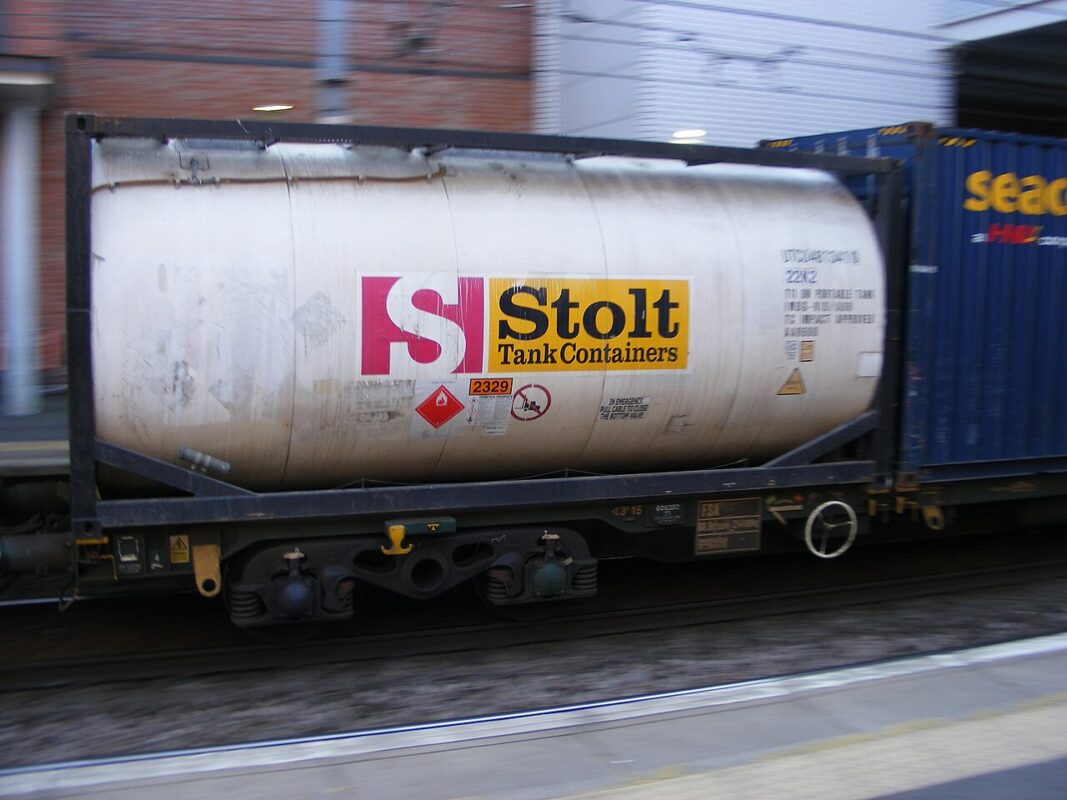
Bulk oil in flexitanks or ISO tanks. The inspector focuses on the container, the bag fitting or tank cleanliness, the sampling during pumping, and the quantity measurement. For a flexitank, they’ll check that the bulkhead is fitted properly and the bag is filled to the right level. For an ISO tank, they’ll ask for the cleaning certificate and check the last three cargoes. Sampling usually happens from the line as the oil goes in, at set intervals.
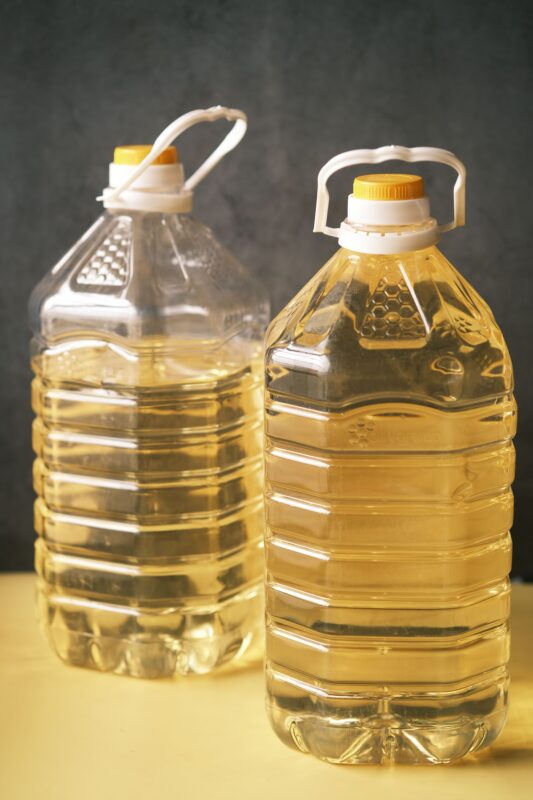
Packed oil in bottles, tins, jerrycans or drums. Now the inspector is also checking labels, batch codes, best-before dates, cap seals and carton marks. They’ll pick random cartons from the stack, open some, check fill volume, and take bottles for the lab. They’ll count the loaded cartons and check-weigh a sample. For private label orders, they’ll compare the printed label against your approved artwork.
Packed oil inspections take longer and cost a little more, because there’s more to count and more to look at. They’re also where many problems hide: wrong labels, short fills, dates that don’t match the COA. If you’re buying bottled oil for retail, a pre-shipment inspection for edible oil is close to essential on the first few orders.

How to read an inspection certificate
When the report comes in, don’t just look for the word “passed”. Check these things:
- The product name and grade match the contract exactly.
- The container and seal numbers match the packing list and the bill of lading.
- The sampling method is stated, and the samples were drawn by the inspector, not handed over by the seller.
- Every test you asked for is on the certificate, with a result and a method.
- Every result is inside your contract limit. Read each number. Don’t rely on a summary line.
- The lab is named, and ideally accredited.
- The quantity matches what’s on the invoice, within the agreed tolerance.
- The photos show the containers, seals and packing you expected.
If something doesn’t add up, call the inspection company, not the seller. They work for you, and they’ll explain what they saw. A pre-shipment inspection for edible oil is only as useful as the attention you pay to the report.
Questions buyers ask about pre-shipment inspection for edible oil
How much notice does an inspector need? A few working days is usually enough at major loading points. More remote sites may need a week. Book as soon as the loading date is firm.
Can I be there myself instead? You can, and some buyers do on their first order. It’s good for building the relationship. But you’re not a lab, so you’ll still want samples tested by one.
Does the inspection delay loading? Not if it’s planned. The inspector works alongside the loading team. Delays only happen when the inspector arrives late or the loading date changes without notice.
What if the seller’s COA and the inspector’s results differ slightly? Small differences between labs are normal. Differences large enough to move a result outside the contract limit need a re-test from the reserve sample, ideally at a third lab both sides accept.
Do I need pre-shipment inspection for edible oil on every order? On the first few, yes. Once you’ve got a track record with a supplier, many buyers move to random inspections, for example one shipment in five. Keep the right to inspect written into the contract so you can bring it back whenever you want.
What does it cost?
Prices for a pre-shipment inspection for edible oil vary by company, location and the number of tests. As a rough idea, a pre-shipment inspection for edible oil on a single container, with a basic set of lab tests, typically costs a few hundred US dollars. Adding a full fatty acid profile or contaminant testing raises that. On multiple containers loaded the same day, the cost per container comes down.
Compared to the value of 20 tonnes of edible oil, it’s small. Compared to the cost of one rejected container at your port, it’s tiny.
Who pays and who books
Normally the buyer books and pays. That keeps the inspector working for you. In some contracts the cost is shared or built into the price. What matters is that the inspection company takes instructions from you and sends the report to you directly.
If a seller insists on using “their” inspector, be careful. It’s not always a scam, but you lose the independence that makes a pre-shipment inspection for edible oil worth having.
Loading-point vs destination inspection
Some buyers inspect at the destination instead, when the container arrives. That tells you what you received, which is useful for claims. But by then the oil is in your country, your money is usually gone, and sending it back is slow and expensive.
The strongest setup is both: pre-shipment inspection for edible oil at loading, and an arrival test at destination. If the two results differ a lot, you know something happened in transit, and your insurer will want both reports. For oils that are sensitive to heat and air, like refined sunflower and canola, comparing peroxide value at loading and arrival is a good check on how the shipment was handled.
What happens if the oil fails?
If a result is outside the contract limit, the inspector reports it. What happens next depends on the contract. Usually:
- The seller can re-test from the reserve sample to rule out a lab error.
- If it really fails, the seller replaces the batch or blends from a different tank to bring it into spec, and a new sample is tested.
- If it can’t be fixed, the container isn’t shipped, and the contract’s rules on cancellation apply.
That’s the whole point of a pre-shipment inspection for edible oil. The problem is dealt with before you’ve paid the balance and before the oil has crossed an ocean.
Using the certificate with your payment
A pre-shipment inspection for edible oil is at its most powerful when it’s tied to payment. Under a letter of credit, list the inspection certificate as a required document, and state that it must show results within the contract limits. Under TT, make the balance payable only after you receive the certificate.
Our guide on letter of credit vs TT payment explains how to set this up. And our guide to the documents required to import vegetable oil shows where the inspection certificate fits alongside the bill of lading, COA and certificate of origin.
Two things an inspection can catch
Here are two typical situations that show what a pre-shipment inspection for edible oil is for.
In the first, a buyer takes a few shipments of refined sunflower oil with only the seller’s own COA and no independent check. When they finally book an inspector, the lab finds the fatty acid profile doesn’t match sunflower oil. It’s been blended with something cheaper. By then the earlier containers have already been sold on to the buyer’s own customers. An inspection on the first shipment would have caught it straight away.
In the second, the inspector rejects an empty container before loading because of a strong smell inside the box. The oil hasn’t touched it yet. The container is swapped, the new one is checked, and loading goes ahead. Without the inspection, nobody may have looked that closely, and the smell could have ended up in the oil.
Both are good reminders that pre-shipment inspection for edible oil isn’t only about catching dishonest sellers. It catches honest mistakes too, and those cost just as much when they reach your port.
Palm oil and coconut oil: temperature matters
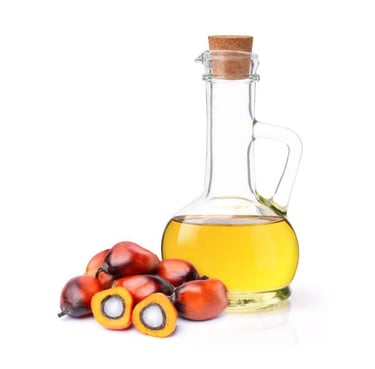
Palm and coconut oils go solid at normal temperatures. Crude palm oil melts at around 33 to 39°C, and coconut oil goes solid below about 24°C. That affects how samples are taken. The oil has to be fully melted and mixed before sampling, or the sample won’t represent the whole batch. A good inspector knows this and will check the heating before sampling. It’s worth mentioning when you book your pre-shipment inspection for edible oil, so the right person is sent. For more on this, our notes on refined palm oil storage and handling are a good read.
Common mistakes
- Booking too late. Inspectors need notice. Book as soon as the loading date is firm.
- Vague test lists. “Standard analysis” means different things to different labs. Name each test and each limit.
- Letting the seller hold the samples. The inspector should seal them and keep control.
- Not checking the container. A perfect oil in a dirty container is a problem.
- Not reading the report. It sounds obvious. Plenty of buyers file the certificate without checking the numbers.
A quick checklist for your first inspection
- Choose an inspection company with an office near the loading point.
- Send them the contract, the specification and the packing details.
- List every test and limit you want, and the lab accreditation you need.
- Ask for container inspection, sampling, quantity check, sealing and photos.
- Ask for the report and certificate to come to you directly.
- Add the certificate to your payment terms.
- Keep a reserve sample until the goods are sold.
What the inspector needs from the seller
A pre-shipment inspection for edible oil goes smoothly when the seller is ready for it. On our side, we prepare:
- The exact loading address, a site contact and a phone number that’s answered on the day.
- A copy of the contract specification, so the inspector knows the limits.
- The container numbers in advance, where possible.
- Safe access to the loading bay, tank farm or packing line.
- Our own loading records: batch numbers, tank numbers, production dates for packed oil.
- Space and time for the inspector to take and seal samples properly.
If a seller can’t give an inspector these basics, that’s useful information in itself. It tells you how organised the loading really is.
How we handle inspections
We’d rather have an inspector at our loading than not. For every order, we issue our own certificate of analysis. If you want an independent pre-shipment inspection for edible oil on top of that, tell us which company you’re using, and we’ll coordinate the loading date and site access with them. We also share our own loading photos, container numbers and seal numbers with every shipment.
It’s one of the simplest ways to check a supplier you haven’t worked with before, including us. Our notes on refined palm oil quality standards and crude vs refined sunflower oil explain more about what the lab numbers mean.
Buy inspected edible oil from DTH Company Ltd
We supply sunflower oil, palm oil, soybean oil, canola oil and coconut oil to buyers around the world. We ship in flexitanks, ISO tanks, drums, tins, jerrycans and PET bottles. Every shipment comes with a certificate of analysis, and we welcome pre-shipment inspection for edible oil by the company of your choice.
Look through our product range, learn more about us, or send your grade, quantity, destination and inspection company through our contact page. We’ll send specs and a quote, and we’ll plan the loading around your inspector.




5 thoughts on “Pre-Shipment Inspection for Edible Oil: 7 Easy Steps to Protect Your Money”