

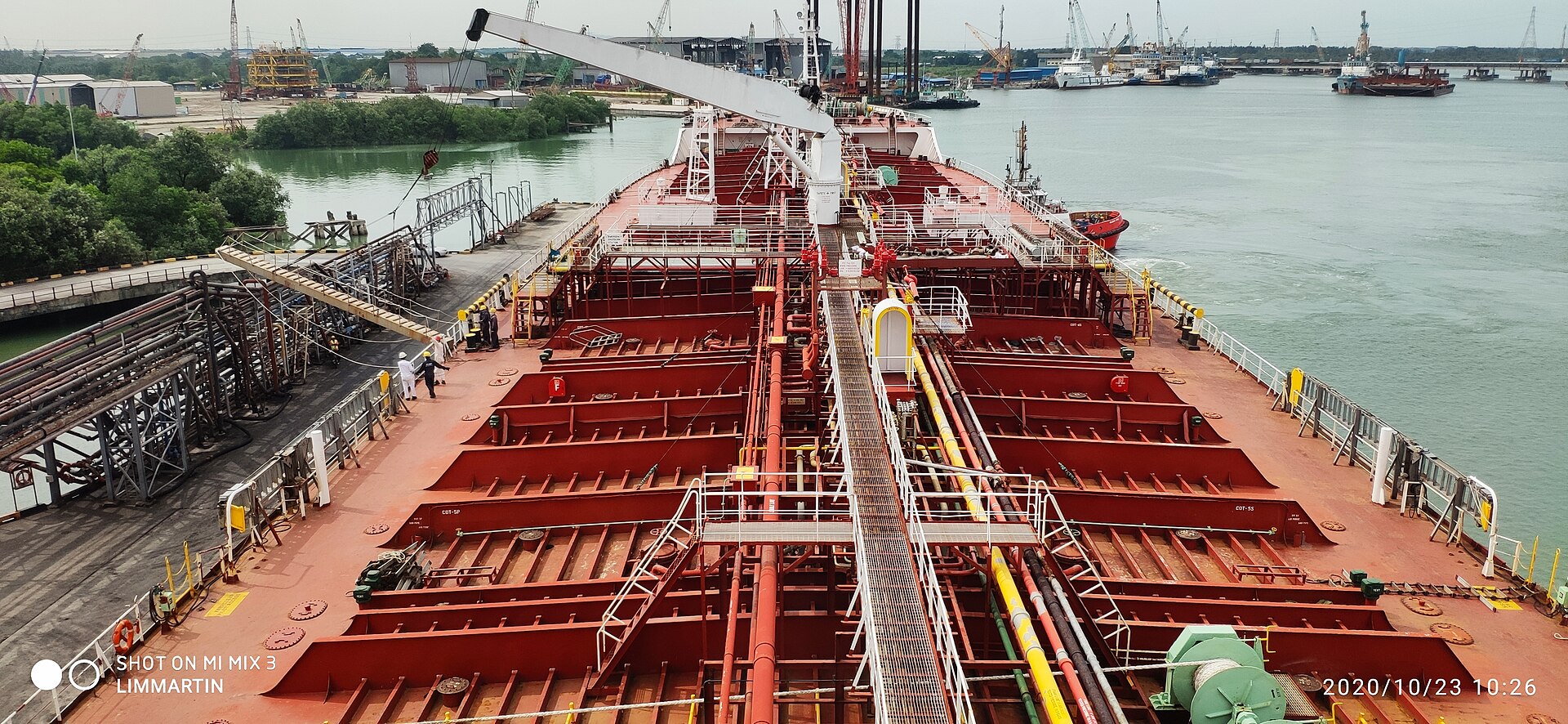
The crude palm oil price per ton changes every trading day, and the number you see on a news site is rarely the number you’ll pay. There’s the futures price, then the physical price at the mill, then the FOB price at a port, and then the CIF price at your port once freight and insurance are added. Each step adds or takes away a few dollars, and if you don’t know which one you’re looking at, comparing offers gets messy fast.
We sell crude palm oil (CP0) and refined palm olein (CP8 and CP10) to buyers worldwide. This guide explains where the crude palm oil price per ton comes from, what’s been moving it lately, how to read a quote, and how to get a firm price from us.
Table of Contents
Where the market stands right now
The world benchmark for the crude palm oil price per ton is the crude palm oil futures contract traded on Bursa Malaysia, quoted in Malaysian ringgit per metric ton.
At the end of September 2026, the benchmark contract closed at about RM4,626 per ton, roughly US$1,135 per ton at the exchange rate at the time. That was a drop of around 5% for the month, the first monthly fall in four months. The main reasons were rising Malaysian stocks, which climbed to about 1.65 million tons at the end of August, strong seasonal output of around 1.82 million tons, and slower exports.
Treat that as a snapshot. The crude palm oil price per ton can move several percent in a week. For a live, firm number on an actual cargo, ask us for a quote. We price against the market on the day you’re ready to buy.
How big the swings can get
If you’re new to palm oil, it helps to know how far the market can travel. In early 2022, with the war in Ukraine cutting sunflower oil exports and Indonesia briefly banning palm oil exports, the crude palm oil price per ton hit record highs. Within months it had fallen back hard as supply returned. Moves of 20% or 30% inside a year have happened more than once.
Most years are calmer than that. Still, it’s worth planning for a price that can move 5% to 10% between the day you start talking to suppliers and the day your cargo loads. That’s one reason we keep quotes short and confirm quickly once the buyer is ready.
Price by origin: Thailand, Malaysia and Indonesia
Malaysian and Indonesian oil set the tone for the world crude palm oil price per ton, since they ship the bulk of it. Thai oil prices track the same market, but local supply, local demand and Thailand’s own policies on exports and biodiesel can open small gaps.
For buyers, origin mostly shows up in two places: freight and paperwork. Freight depends on the port and the route to you. Paperwork depends on trade agreements, so the same oil can land with a different duty depending on where it was produced. Ask your customs broker which origin gives you the best duty treatment before you lock in a seller.
Futures price vs the price you pay
People often take the futures number and assume that’s the crude palm oil price per ton they should pay. It’s a reference, not a quote. Here’s how the layers stack up.
| Price layer | What it includes | Who uses it |
|---|---|---|
| Futures (Bursa Malaysia) | Benchmark for a standard grade, delivered in Malaysia | Traders, hedgers, everyone as a reference |
| Physical ex-mill or ex-tank | Oil sitting in a tank at the producer | Local refiners |
| FOB (Free on Board) | Oil loaded on your vessel or container at the origin port | Importers who arrange their own freight |
| CFR / CIF | FOB plus freight (and insurance for CIF) to your port | Importers who want a delivered price |
| Duty paid at destination | CIF plus import duty, taxes and port charges | Your final landed cost |
When you’re comparing two quotes, make sure they’re on the same basis. An FOB offer will always look cheaper than a CIF offer, even if the CIF offer is the better deal once you’ve paid for freight yourself.
What moves the crude palm oil price per ton
Lots of things, but a handful matter most. We go into more depth in our post on palm oil wholesale price factors. Here’s the short version for crude.
Supply and stocks
Malaysia and Indonesia produce most of the world’s palm oil. When their output rises and stocks build up, the crude palm oil price per ton tends to fall, as it did in September 2026. When stocks are tight, prices climb. Monthly stock and export numbers from the Malaysian Palm Oil Board are watched closely by the whole market.
The seasons
Palm oil output follows a yearly pattern. Production usually peaks in the second half of the year and dips in the early months. Heavy rain, floods or dry spells change that, often with a delay of months because the trees respond slowly.
Competing oils
Palm competes with soybean, sunflower and rapeseed oil. When soybean oil gets cheaper, buyers switch, and palm has to come down to stay competitive. That’s why traders watch soybean oil prices in Chicago and Dalian alongside the crude palm oil price per ton. We compare the two oils in palm oil vs soybean oil.
Crude oil and biodiesel
Palm oil is used to make biodiesel, especially in Indonesia, which blends a high share of palm-based fuel into diesel. When mineral oil prices rise, biodiesel becomes more attractive, and palm demand goes up. When crude oil falls, palm often follows.
Currency
Futures are priced in ringgit. A stronger ringgit makes palm more expensive for buyers paying in dollars, which can slow demand. A weaker ringgit does the opposite.
Export taxes, levies and import duties
Producing countries change export taxes and levies from time to time. Importing countries change their duties. India, the largest buyer, has adjusted its import duty on edible oils many times, and each change ripples through the crude palm oil price per ton.
Freight
Freight rates swing with fuel prices, demand for ships and routes. A move of US$20 to US$40 per ton in freight is common, and on long routes it can be more. Our post on top palm oil exporting countries shows where most cargoes start from, which affects the freight you’ll pay.
How quality affects the crude palm oil price per ton
The benchmark is for a standard grade: FFA 5% max, moisture and impurities 0.25% max. Oil that’s better than that, with lower FFA and higher DOBI, often trades at a premium because refineries get more good oil out of it. Oil near or over the limits trades at a discount, or gets claims after discharge.
We explain each quality number in our guide to crude palm oil specification. The table below is the spec our CP0 price is based on.
| Parameter | Our CP0 limit |
|---|---|
| Free fatty acid (as palmitic) | 5.0% max |
| Moisture and impurities | 0.25% max |
| DOBI | 2.3 min (2.5 min on request) |
| Iodine value | 50 to 55 |
| Slip melting point | 33 to 39 °C |
| Carotene | 500 to 700 ppm |
If you need a tighter spec, for example FFA 4% max, we can quote that too. Just expect the crude palm oil price per ton to be a little higher.

Crude vs refined: the price gap
Refined palm olein (CP10 and CP8) always costs more than crude palm oil. The refinery has to cover the oil lost in refining, the energy, chemicals and bleaching earth, plus the cost of fractionation. CP8 costs more than CP10 because it yields less per ton of crude.
The gap between the crude palm oil price per ton and refined olein moves with refining margins, but it’s usually somewhere in the range of tens of dollars per ton, sometimes more. If you have your own refinery, buying crude is cheaper. If you don’t, refined is almost always the better buy. Our guide on CP8 vs CP10 palm oil explains the refined grades, and our older CP8 palm oil price per ton post covers that grade’s pricing.
How packaging changes the price
Crude palm oil is a bulk product, and packaging has a real effect on the crude palm oil price per ton you’re quoted. The cheapest way to move it is by the shipload. Smaller buyers usually use containers, and that costs more per ton.
| Packaging | Typical load | Effect on price per ton |
|---|---|---|
| Bulk vessel parcel | Thousands of tons | Lowest |
| ISO tank | About 20 to 24 tons | Higher, plus tank rental |
| Flexitank in 20 ft container | About 20 to 22 tons | Higher, plus flexitank cost |
Flexitanks and ISO tanks each carry their own costs. For a side-by-side look, read our flexitank vs ISO tank guide.
Reading a crude palm oil quote
A proper quote should tell you all of the following. If any of these are missing, ask before you compare prices.
- Product and grade: crude palm oil (CP0), with the full spec attached.
- Price per metric ton, and the currency.
- Basis: FOB, CFR or CIF, and the named port.
- Quantity, with a plus or minus tolerance (often 5%).
- Packaging: bulk, flexitank or ISO tank.
- Shipment period: the month or weeks of loading.
- Payment terms: letter of credit, TT, or a mix.
- How long the price is valid. Usually short, often 24 to 72 hours.
That last point surprises new buyers. Because the crude palm oil price per ton moves daily, sellers can’t hold a price for weeks. When you’re ready to buy, be ready to confirm quickly.
Price outlook: what to watch in the coming months
We don’t make forecasts, and you should be wary of anyone who sounds too sure. But here’s what the market will be watching after September’s dip.
- Malaysian and Indonesian stock levels through the end of the year. If stocks keep rising, prices may stay under pressure.
- Seasonal output. Production usually starts to slow towards the end of the year, which can tighten supply in the first quarter.
- Indian buying. Lower import duties in India can bring buyers back when prices look cheap.
- Indonesian biodiesel policy. Higher blending targets pull more oil into fuel and out of export.
- Soybean oil and crude oil. If either rallies, palm often follows.
Any one of these can change the crude palm oil price per ton quickly. If you need oil for the next few months, it’s worth getting a quote now so you know where you stand.
Quantity discounts
Larger and regular orders get better pricing, mainly because fixed costs like documents, inspection and trucking get spread over more tons. A buyer taking ten containers a month will usually see a lower crude palm oil price per ton than a buyer taking one. If you can commit to a regular schedule, tell us. It helps us plan loading and pass the saving on.
Payment terms and price
Payment terms affect the crude palm oil price per ton too, more than many buyers expect. A confirmed letter of credit costs bank fees but protects both sides. A TT with a deposit may get you a slightly lower price. We explain the trade-offs in letter of credit vs TT payment.
Be careful with any offer far below the market. If someone quotes a crude palm oil price per ton $150 or $200 under the benchmark and asks for a big upfront payment, walk away. Our article on fake vegetable oil supplier warning signs lists the patterns we see most.
Fixing the price: spot, forward and formula deals
There are three common ways buyers lock in the crude palm oil price per ton.
Spot. You agree a flat price today for a cargo loading soon. Simple, and most small buyers start here.
Forward. You agree a flat price today for a cargo loading in a later month. You get certainty, and the seller usually prices in the futures curve for that month.
Formula. The price is set as the futures settlement on an agreed day, plus or minus a premium. This suits regular buyers who want to spread their purchases and average out swings.
Larger buyers often hedge on the futures market. If you’re buying one or two containers a month, a simple spot or forward deal is usually enough.
Landed cost: a worked example
Here’s how a quote turns into a landed cost. The numbers below are made up to show the method, not a real offer.
| Item | Per ton (example) |
|---|---|
| FOB price, crude palm oil in flexitank | US$1,180 |
| Ocean freight | US$70 |
| Insurance | US$3 |
| CIF price | US$1,253 |
| Import duty (example rate) | Depends on your country |
| Port, handling and inland transport | US$20 to US$50 |
Do this sum for every offer, at your own port, before you decide. It’s the only fair way to compare a crude palm oil price per ton between two sellers.
When to buy
Nobody can call the market every time, and we won’t pretend to know where the crude palm oil price per ton goes next month. A few habits help, though.
- Watch the monthly MPOB stock and export data. Rising stocks often push prices down.
- Keep an eye on soybean oil and crude oil prices.
- Know your own stock levels, so you’re never forced to buy at a bad moment.
- Split large needs into several cargoes across months to average out the crude palm oil price per ton.
How we build our price
People sometimes ask how we arrive at our number, so here it is plainly. We start from the day’s market for physical crude palm oil at origin. We add the cost of packaging (flexitank or ISO tank), inland trucking to the port, loading and documents. If you’ve asked for CIF, we add freight and insurance to your port at today’s rates. Then we add our margin.
That’s it. There’s no hidden fee later. If something changes before you confirm, like freight jumping, we’ll tell you and re-quote. Once you confirm and the contract is signed, the crude palm oil price per ton on that contract is fixed.
Mistakes that cost buyers money
Comparing FOB to CIF. It happens all the time. Always convert offers to the same basis at your port.
Ignoring the spec. A slightly cheaper crude palm oil price per ton for oil at FFA 5.0% can cost more after refining than oil at 4.0%.
Waiting for the perfect price. Plenty of buyers have watched the market drop, waited for more, and then bought after it bounced. If the price works for your business, buy what you need.
Forgetting duty and port costs. Two offers can be US$10 apart on CIF and US$40 apart once local charges are added, especially if one needs a different port.
Paying too much upfront to an unknown seller. A low crude palm oil price per ton is worthless if the oil never ships.
Price for refiners vs traders
Refiners and traders look at the crude palm oil price per ton differently. A refiner cares most about the price after refining loss, so quality and DOBI matter as much as the headline number. A trader cares more about the spread between buying and selling prices, timing and basis.
If you’re a refiner, ask us for recent COAs from the mills we’re loading from, and price the cargo on your expected yield. If you’re a trader, ask about formula pricing and forward shipments, which can help you match your sales book.
Documents and inspection
Every cargo we ship comes with commercial invoice, packing list, bill of lading, certificate of analysis, certificate of origin, and any health or Halal certificates your market needs. You can put your own surveyor on the loading. Our guides to documents required to import vegetable oil and pre-shipment inspection for edible oil explain both in detail.
Sustainability and price
RSPO-certified crude palm oil usually carries a premium over conventional oil. The size depends on the supply chain model you choose. If your customers need certified oil, tell us at the quote stage. Read RSPO certified sustainable palm oil for how the models work.
Frequently asked questions
What is the crude palm oil price per ton today? At the end of September 2026 the Bursa Malaysia benchmark was about RM4,626 per ton, roughly US$1,135. Physical FOB and CIF prices differ from that. Ask us for a live quote.
Why is my quote higher than the futures price? The quote includes the physical premium, packaging, loading and often freight. Futures are a reference for a standard grade in Malaysia, not a delivered price.
Is palm oil cheaper than soybean oil? Usually, yes, though the gap changes. When palm’s discount to soybean narrows, demand for palm can slow.
How long is a price valid? Usually 24 to 72 hours, because the crude palm oil price per ton moves daily.
What’s the minimum order? One 20 ft container in a flexitank, about 20 to 22 tons, is the usual minimum for crude.
Can I get a monthly contract? Yes. Regular buyers often use a formula price linked to futures, with fixed volumes each month.
Get a crude palm oil price from us
We sell crude palm oil (CP0), refined palm oil CP10 and refined palm oil CP8 from Thailand to buyers worldwide, with ISO 22000, HACCP, GMP and Halal certification. See the full palm oil range and our other products.
Send your grade, quantity, packaging and destination port through our contact page. We’ll come back with a firm crude palm oil price per ton on FOB or CIF terms, plus the full spec. You can also read more about us first.
Featured photo: Limmartin, CC BY-SA 4.0.



One thought on “Crude Palm Oil Price Per Ton: 8 Proven Factors Behind Today’s Price”