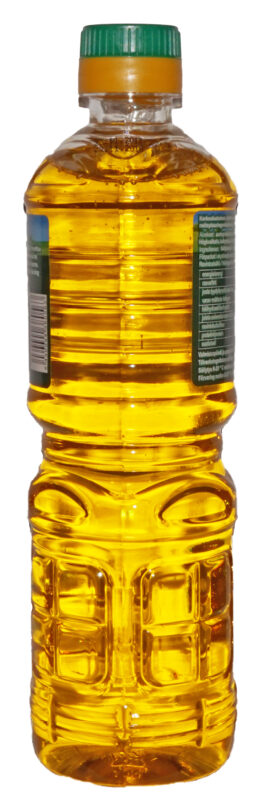
Pure olive oil vs extra virgin olive oil is one of those questions that sounds simple until you’re standing in front of a supplier’s price list. One is a lot cheaper than the other. Both say “olive oil” on the label. And the word “pure” makes the cheaper one sound like the better buy, which it often isn’t, at least not for every use.
We sell both grades in bulk and in bottles, to importers, distributors, restaurants and food factories in many countries. So we get asked about pure olive oil vs extra virgin olive oil almost every week. This guide is the answer we give on those calls: what each oil actually is, how they’re made, the numbers that separate them, which one suits which job, and the specifications and packing we supply.
Table of Contents
Pure Olive Oil vs Extra Virgin Olive Oil in One Paragraph
Extra virgin olive oil is juice from fresh olives, pressed or spun out mechanically, with no chemical refining, and it has to pass both lab tests and a tasting panel. Pure olive oil, which the official standards just call “olive oil”, is mostly refined olive oil with a smaller amount of virgin olive oil blended back in for colour and taste. That’s the whole difference in one sentence. Everything else, the price, the flavour, the smoke point, the shelf life, follows from it.
How Extra Virgin Olive Oil Is Made
Olives are picked, washed, crushed into a paste, mixed slowly for a while (this is called malaxing), and the oil is separated in a centrifuge or, on older farms, a press. That’s it. No heat beyond what’s needed to keep the paste workable, no solvents, no bleaching, no deodorizing.
To be sold as extra virgin, the oil then has to meet strict limits. The free acidity has to be 0.8 percent or less. Peroxide value, UV absorbance and a list of other chemical markers have to sit inside narrow ranges. And a trained tasting panel has to find fruitiness and no defects at all. If tasters pick up any fault, even a small one like fustiness or a winey note, the oil can’t be called extra virgin. The International Olive Council sets these limits in its trade standard, and most producing and importing countries follow the same lines or something close to them.
How Pure Olive Oil Is Made
Not every batch of olive oil comes out good enough to drink straight. Some is too acidic, some has tasting defects, some comes from damaged fruit. That oil is called lampante, an old name from when it was burned in lamps. It isn’t fit to eat as it is, so it goes to a refinery.
The refinery neutralizes, bleaches and deodorizes it, the same steps used for sunflower or soybean oil. What comes out is refined olive oil: clean, pale, almost tasteless, very low acidity. On its own it’s quite bland, so producers blend some virgin or extra virgin olive oil back in. The result is sold as olive oil, pure olive oil, classic olive oil or light olive oil depending on the brand and the market. How much virgin oil goes into the blend isn’t fixed by the standard. In our experience it’s usually somewhere between 5 and 20 percent, and the more virgin oil there is, the greener and fruitier the blend tastes.
Pure Olive Oil vs Extra Virgin Olive Oil: The Numbers
When we explain pure olive oil vs extra virgin olive oil to a buyer, this is the table we put in front of them. It shows the main limits from the international trade standard, which are also the limits we work to in our contracts.
| Parameter | Extra virgin olive oil | Pure olive oil (refined plus virgin) |
|---|---|---|
| Free acidity (as oleic) | 0.8% max | 1.0% max |
| Peroxide value | 20 meq O2/kg max | 15 meq O2/kg max |
| K232 (UV absorbance) | 2.50 max | Not set |
| K270 (UV absorbance) | 0.22 max | 0.90 max |
| Delta K | 0.01 max | 0.15 max |
| Sensory defects | None (median 0) | Not graded |
| Fruitiness | Required (median above 0) | Not graded |
| Refined oil content | None | Most of the blend |
| Typical colour | Green to deep gold | Pale yellow to light gold |
The UV numbers are the giveaway. Refining changes the structure of some fatty acids, and that shows up as higher K270 and delta K readings. That’s why a lab can tell if someone has slipped refined oil into a bottle labelled extra virgin. If you’re buying either grade, ask for those values on the certificate of analysis, not just acidity.
Pure Olive Oil vs Extra Virgin Olive Oil: Taste and Smell
This is where pure olive oil vs extra virgin olive oil is easiest to tell apart. Pour a spoonful of each and taste them side by side. That simple test teaches more about pure olive oil vs extra virgin olive oil than any spec sheet.
Good extra virgin smells like fresh-cut grass, green tomato, artichoke or green apple, depending on the olive variety and how ripe the fruit was. On the tongue it can be bitter, and it often gives a peppery catch at the back of the throat. That pepper and bitterness come from polyphenols, and in good oil they’re a sign of freshness, not a fault.
Pure olive oil tastes much milder. You’ll get a light olive note and not much else. That’s not a flaw. For many kitchens and food factories, a neutral oil that still says “olive oil” on the label is exactly what they want.
Pure Olive Oil vs Extra Virgin Olive Oil for Cooking
A lot of people think extra virgin olive oil can’t be used for frying. That’s mostly a myth. Good extra virgin has a smoke point somewhere around 190 to 210 °C, and its natural antioxidants help it hold up well in normal pan frying.
That said, pure olive oil does have a practical edge for high-heat and high-volume cooking. Because it’s mostly refined, its smoke point sits higher, roughly 230 to 240 °C, and it costs much less. Restaurants that fry all day, bakeries, and factories making sauces or canned fish usually choose pure olive oil for that reason. When we talk through pure olive oil vs extra virgin olive oil with a restaurant buyer, the usual answer is: extra virgin for the table, salads and finishing, pure olive oil for the fryer and the big pots. Our cooking oil smoke point chart puts both next to sunflower, soybean, corn and palm oil if you want to compare.
Nutrition and Health
On nutrition, pure olive oil vs extra virgin olive oil is closer than most people think. Both grades have the same basic fat profile. Olive oil is mostly oleic acid, a monounsaturated fat, usually somewhere between 55 and 83 percent, with smaller amounts of palmitic and linoleic acid. So the calories and the main fats are close to identical.
The difference is in the minor compounds. Extra virgin keeps its polyphenols, vitamin E and other natural antioxidants. Refining strips most of those out, so pure olive oil has far less of them, only what comes from the virgin oil blended back in. If the health angle is part of how you sell, extra virgin is the grade that backs it up. If your customer just wants a reliable cooking oil with an olive oil label, pure olive oil does the job at a lower cost.
Pure Olive Oil vs Extra Virgin Olive Oil: Price
In bulk, the gap between pure olive oil vs extra virgin olive oil can be large, and it moves with each harvest. A few things drive it:
- Yield and selection. Only part of each harvest makes the extra virgin grade. The rest goes to lower grades or refining.
- Harvest size. Olive crops swing a lot from year to year. A dry year in the Mediterranean can push extra virgin prices up very quickly. Refined olive oil prices move too, but usually less sharply.
- Testing and certification. Extra virgin has to pass a tasting panel and more lab work, which adds cost and time.
- Origin. Spanish, Italian, Greek, Tunisian, Turkish and Portuguese oils all carry different prices, and protected origin oils cost more again.
Because of this, we quote olive oil per metric ton or per carton with a short validity, often 48 to 72 hours, and we tell you which harvest the oil comes from.
Which One Should You Buy?
Here’s how we usually advise customers once they’ve understood the basics of pure olive oil vs extra virgin olive oil.
Supermarkets and retail brands: carry both. Extra virgin for customers who want flavour and quality, pure olive oil for everyday cooking at a friendlier price. In many markets the pure grade sells more units, while extra virgin brings more margin per bottle.
Restaurants and hotels: extra virgin for salads, dips and the table, pure olive oil or a pomace oil for frying. Using expensive extra virgin in a deep fryer is usually money wasted.
Food factories: depends on the label. If your product says “made with extra virgin olive oil”, you need extra virgin. For mayonnaise, sauces, canned fish and ready meals where olive oil is just the cooking fat, pure olive oil keeps your cost under control.
Cosmetics and soap: many soap makers use olive pomace oil or pure olive oil. Extra virgin works but costs more than it needs to for this use.
What We Supply: Olive Oil Grades and Specifications
We supply the full range of olive oil grades, sourced from established mills and refiners in the main Mediterranean producing countries. Here’s what we offer and what each grade looks like on our contract:
| Grade | Free acidity | Peroxide value | Main uses |
|---|---|---|---|
| Extra virgin olive oil | 0.8% max (often 0.3% or lower on premium lots) | 20 meq O2/kg max | Retail bottles, restaurants, premium food |
| Virgin olive oil | 2.0% max | 20 meq O2/kg max | Blending, budget retail where allowed |
| Pure olive oil (olive oil) | 1.0% max | 15 meq O2/kg max | Cooking, frying, food factories |
| Refined olive oil | 0.3% max | 5 meq O2/kg max | Blending, industrial use |
| Olive pomace oil | 1.0% max | 15 meq O2/kg max | Frying, soap, cosmetics |
Whichever side of pure olive oil vs extra virgin olive oil you land on, every shipment comes with a certificate of analysis from an independent lab covering acidity, peroxide value, the UV readings, the fatty acid profile and, for extra virgin, the panel test result. We can also arrange sterol and wax tests if your market asks for proof of authenticity.
Packing Options
Olive oil is sold in more packing types than almost any other oil, and the right pack often depends on pure olive oil vs extra virgin olive oil. We supply:
- Glass bottles: 250 ml, 500 ml, 750 ml and 1 litre, in dorica or marasca shapes, dark glass for extra virgin.
- PET bottles: 1, 2, 3 and 5 litre, popular for pure olive oil and pomace oil.
- Tins: 1, 3, 4 and 5 litre, and 18 litre for catering. Tins keep light out completely, which is why many importers prefer them for extra virgin.
- Bulk: flexitanks of around 20 to 22 metric tons in a 20 foot container, IBC totes of 1,000 litres, and steel drums.
We do private label, so we can bottle under your brand with your artwork. Our page on private label vegetable oil explains how that works. For bulk, read our comparison of flexitank vs ISO tank before you decide.
How to Spot Fake or Mislabelled Olive Oil
Olive oil fraud is real, and with pure olive oil vs extra virgin olive oil it usually happens in one direction: cheaper oil sold as something more expensive. Refined olive oil sold as extra virgin. Seed oil blended into olive oil. Old oil sold as new harvest. When you’re comparing pure olive oil vs extra virgin olive oil offers from different suppliers, keep an eye out for these:
- An extra virgin price that’s close to the pure olive oil price. That’s not a bargain. That’s a warning.
- No UV readings on the COA. K232, K270 and delta K are what catch refined oil. A certificate without them is incomplete.
- No harvest year. Extra virgin is best within about 18 months of harvest. Ask when the olives were picked.
- A supplier who won’t send a sample from the actual lot. Test it yourself. A local lab can run the basic checks quickly.
We wrote a broader guide on spotting a fake vegetable oil supplier, and most of the warning signs apply to olive oil too. It’s also worth reading about pre-shipment inspection for edible oil.
Common Mistakes When Comparing Pure Olive Oil vs Extra Virgin Olive Oil
We see the same few mistakes from new buyers again and again, so it’s worth listing them.
Thinking “pure” means “better”. The word sounds like a quality claim, and some brands lean on that. In the trade it just means the bottle holds olive oil and nothing else, not that the oil is unrefined. When a customer in your shop compares pure olive oil vs extra virgin olive oil on the shelf, the cheaper bottle can look like the cleaner choice. Your labels and staff should be able to explain the difference in one line.
Paying extra virgin prices for frying oil. We’ve had restaurant groups switch their fryers from extra virgin to pure olive oil and cut their oil bill by a third without a single complaint from diners. The taste difference disappears once food has been fried and seasoned.
Buying extra virgin from an old harvest at a “discount”. Two-year-old extra virgin may still pass the acidity test but fail on taste. Always ask for the harvest year and a fresh panel test, not one from last season.
Comparing quotes on different terms. One offer is FOB Spain in flexitank, another is CIF your port in 1 litre glass. Put both on the same Incoterm and the same packing before you compare. Our guide to letter of credit vs TT payment also helps if you’re new to setting up payment for a first order.
Forgetting about light. Clear PET bottles look nice under shop lights, but light degrades olive oil fast, and extra virgin suffers most. For retail extra virgin, dark glass or tins protect your product and your reputation.
Pure Olive Oil vs Extra Virgin Olive Oil for Private Label Brands
If you’re launching your own olive oil brand, the choice between pure olive oil vs extra virgin olive oil shapes the whole range. Most successful private label lines we supply start with two products: a 1 litre extra virgin in dark glass or a tin, and a 1 or 2 litre pure olive oil in PET. The extra virgin carries the brand’s image and the pure olive oil carries the volume. Later, many add a 5 litre pure olive oil or pomace oil for caterers. Keep the label honest about which grade is which. Food inspectors in many countries check, and a recall costs far more than the margin you’d gain from blurring the line.
Storage and Shelf Life
Storage is one more place where pure olive oil vs extra virgin olive oil behave a little differently. Olive oil’s enemies are light, heat and air. Keep it cool, dark and sealed.
Extra virgin keeps its best flavour for about 18 to 24 months from bottling if stored well. After that it doesn’t go bad overnight, but the fresh, green notes fade. Pure olive oil, being mostly refined, holds steady a bit longer and is less sensitive, which is another reason caterers like it. In both cases, tins and dark glass protect the oil better than clear PET.
Importing Olive Oil: Codes and Rules
Customs also see pure olive oil vs extra virgin olive oil as two different products. Since the 2022 update of the Harmonized System, olive oil has its own subheadings. Extra virgin olive oil is HS 1509.20, virgin olive oil 1509.30, other virgin olive oil 1509.40, and blends of refined and virgin oil, which is what pure olive oil is, sit under 1509.90. Olive pomace oil has its own heading, 1510. Your country adds more digits, so check the full tariff line with your clearing agent.
Food rules differ from market to market too. Some countries treat olive oil differently from other vegetable oils. Nigeria, for example, bans imports of most refined vegetable oils from outside West Africa, but olive oil is one of the listed exceptions. We explain that in our guide to NAFDAC registration for imported vegetable oil. For the general paperwork, see documents required to import vegetable oil. The Codex Alimentarius standards for olive oils are also a good reference point if your country doesn’t have its own.
Olive Oil Compared With Other Cooking Oils
If you’re deciding between olive oil and a seed oil for a product or a menu, we have a separate guide on vegetable oil vs olive oil, and another on refined vs unrefined oil that explains why refining changes taste, smoke point and price across all oils. Many of our customers buy olive oil alongside refined sunflower oil, refined soybean oil or refined corn oil from our corn oil bulk supplier desk, which lets them fill one container with several products.
Frequently Asked Questions
Is pure olive oil the same as extra virgin olive oil?
No. Pure olive oil is mostly refined olive oil with some virgin oil added. Extra virgin is unrefined oil that passes strict lab and taste tests.
Which is healthier, pure olive oil vs extra virgin olive oil?
Their fat content is almost the same, but extra virgin keeps far more polyphenols and natural antioxidants because it isn’t refined.
Can I fry with extra virgin olive oil?
Yes, for normal pan frying. For long, high-volume deep frying, pure olive oil is usually the better value.
What does “light olive oil” mean?
It means light in flavour and colour, not in calories. It’s a pure olive oil blend with very little virgin oil in it.
What is your minimum order?
One 20 foot container for bulk or bottled oil. We can mix grades and bottle sizes in one container.
Do you supply certified organic olive oil?
Yes, on request, with organic certificates from the producer’s certifying body.
Order Olive Oil From Us
Now that the pure olive oil vs extra virgin olive oil question is out of the way, the next step is simple. Tell us which grade you need, the packing, the quantity and your destination port. We’ll send a price, the current spec sheet and a recent certificate of analysis from the lot we’d ship.
Email info@dthcompanyltd.com, WhatsApp +66 91 765 9104, or use our contact page. You can also look through our full product range or read about us.