


NAFDAC registration for imported vegetable oil is the step that decides whether your oil can be sold in Nigeria at all. Without a NAFDAC registration number on the label, imported cooking oil can be seized at the port or pulled off shop shelves, no matter how good the oil is or how much you paid for it.
We supply vegetable oils to importers, refiners and distributors in many countries, including buyers bringing oil into Nigeria. This guide explains how NAFDAC registration for imported vegetable oil works in practice: which oils can still come in after the 2026 import rules, which documents you need, the steps on the NAFDAC portal, the vitamin A rules, labelling, timelines, and the specifications and paperwork we provide so your file goes through without being sent back.
One important note before anything else. We’re an oil supplier, not a law firm or a NAFDAC agent. Rules change, and fees and timelines get updated. Use this as a practical map, and confirm the current details with NAFDAC or a registered regulatory consultant before you spend money.
Table of Contents
Start Here: Which Vegetable Oils Can Be Imported Into Nigeria in 2026?
Before you think about NAFDAC registration for imported vegetable oil, check that your oil is allowed in. Many people skip this and lose months.
Nigeria has kept refined vegetable oils and fats on its import prohibition list for years. In April 2026 the Federal Ministry of Finance issued a revised prohibition list that applies to goods from outside ECOWAS, and refined vegetable oil is on it again. The exceptions on that list are refined linseed oil, castor oil, olive oil, hydrogenated vegetable fats and crude vegetable oil. In practice this means:
- Crude vegetable oils such as crude palm oil, crude degummed soybean oil and crude sunflower oil can still be imported, mainly by local refineries.
- Olive oil is excluded from the ban, so bottled and bulk olive oil can still come in.
- Refined, ready-to-use cooking oil like refined soybean, sunflower, palm olein or corn oil from outside ECOWAS is on the prohibited list. Some reports describe the ban in terms of retail packs, but customs has seized 25 litre kegs too, so don’t count on pack size to get you through.
The Nigeria Customs Service enforces this list, and it does seize refined oil. In June 2026 customs officers in Cross River intercepted nearly 2,000 kegs of foreign refined vegetable oil, each 25 litres. So the honest answer for anyone planning to bring refined cooking oil into Nigeria from outside West Africa is: don’t. NAFDAC registration for imported vegetable oil won’t get it past a prohibition.
Where NAFDAC registration for imported vegetable oil is still very much needed is for olive oil, specialty oils that fall outside the ban, and the raw material permits that refiners need for crude oil.
Why NAFDAC Registration for Imported Vegetable Oil Matters
The National Agency for Food and Drug Administration and Control controls food that is made, imported, sold or distributed in Nigeria. Packaged food has to be registered before it can be sold. For an importer, that means three things:
- Your product can’t legally be sold in Nigeria without a NAFDAC registration number, often called the NRN.
- Shops, supermarkets and wholesalers increasingly refuse stock without a valid number on the label.
- NAFDAC officers can seize unregistered products at ports, warehouses and markets, and the importer carries the loss.
For crude oil going to a refinery, the oil isn’t sold to consumers as it arrives, so it isn’t registered as a finished product in the same way. Instead, refiners need NAFDAC’s permission to import it as a raw material, and the finished oil they produce is registered under their own name.
Who Can Apply for NAFDAC Registration for Imported Vegetable Oil
A foreign producer can’t simply apply on its own. NAFDAC registration for imported vegetable oil has to go through a company incorporated in Nigeria. In most cases that’s the importer or distributor, acting with the foreign manufacturer’s written authority.
So the usual set-up is:
- The manufacturer or brand owner abroad gives a notarized power of attorney or letter of authorization to a Nigerian company.
- The Nigerian company holds the registration, deals with NAFDAC, and is responsible for the product in the market.
Choose that local partner carefully. The registration is tied to them. If the relationship ends badly, moving the registration to someone else can take time.
Documents You’ll Need
The document list is the heart of NAFDAC registration for imported vegetable oil, and it’s where most delays come from. A missing stamp or an expired certificate sends the file back. These are the documents that are usually asked for. NAFDAC updates its guidelines from time to time, so check the current list on the portal before you submit.
- Application letter addressed to NAFDAC’s food registration directorate.
- Certificate of incorporation of the Nigerian applicant company.
- Power of attorney or letter of authorization from the foreign manufacturer, notarized and properly authenticated.
- Certificate of manufacture and free sale from the health or food authority in the country of origin, showing the oil is produced and sold freely there. It normally needs to be authenticated by the Nigerian embassy or consulate.
- Certificate of analysis for the product from a recognized lab, including vitamin A where fortification applies.
- Trademark registration or proof that you’ve applied for it, if the product carries a brand.
- Product labels or artwork that follow NAFDAC labelling rules.
- Proof of payment of the registration fees.
- Samples of the product for lab testing, once NAFDAC asks for them.
We help our customers with the supplier-side papers for NAFDAC registration for imported vegetable oil. When you buy from us, we provide the certificate of analysis, help coordinate the certificate of manufacture and free sale, and supply label files for review. If you’re new to food import paperwork in general, our guide to the documents required to import vegetable oil covers the shipping side.
Step by Step: NAFDAC Registration for Imported Vegetable Oil
The process now runs mostly online, through the NAFDAC registration portal. Here’s the usual order.
Step 1: Open an account on the NAFDAC portal
The Nigerian applicant company creates an account on the online system, often called NAPAMS. All applications, payments, queries and approvals go through this account.
Step 2: Submit the application and pay the fees
You upload the documents listed above and pay the registration fees. Fees differ by product category and change from time to time, so check the current schedule on the portal.
Step 3: Document review
NAFDAC officers check the file. If anything is missing or inconsistent, you’ll get a query. Answer queries fast. Each round can add weeks to NAFDAC registration for imported vegetable oil.
Step 4: Sample submission and lab analysis
NAFDAC asks for samples and tests them in its own labs. For vegetable oil, the lab checks things like free fatty acid, peroxide value, moisture, impurities, identity of the oil and vitamin A content. If your oil fails here, you’re back to the start, which is why a clean, recent certificate of analysis from the supplier matters so much.
Step 5: Facility inspection
NAFDAC may need to confirm that the factory abroad meets good manufacturing practice. Depending on the product and the agency’s current approach, this can mean an inspection of the overseas plant, with costs paid by the applicant, or acceptance of other evidence. The Nigerian company’s warehouse can also be inspected.
Step 6: Approval and registration number
Once everything is cleared, the file goes for approval and NAFDAC issues the notice of registration with the product’s NRN. The number must then appear on every pack you sell.
Step 7: Renewal
Registration doesn’t last forever. It has to be renewed, usually every five years, and changes to the product, label or manufacturer may need fresh approval. Put the expiry date in your diary well before it arrives.
Vitamin A Fortification Rules
This catches a lot of foreign suppliers out. Nigeria’s food fortification rules require vegetable oil sold in the country to be fortified with vitamin A, and NAFDAC checks it during NAFDAC registration for imported vegetable oil and later in the market.
What that means for an importer:
- The oil must carry vitamin A at the level set in the current regulations, and the label must show the vitamin A content.
- Fortified foods carry a fortification logo, and the certificate of analysis should show the measured vitamin A level.
- Vitamin A breaks down over time and with heat and light, so the level at the factory has to be high enough that the oil still meets the minimum when it reaches the shelf.
If you’re buying oil abroad for Nigeria, make sure your supplier knows the oil is going there and fortifies to the right level. We fortify on request and show the result on the certificate of analysis. The Food Fortification Initiative keeps a useful overview of which countries require fortified oil, if you’re selling into several markets.
Labelling Rules for Imported Vegetable Oil
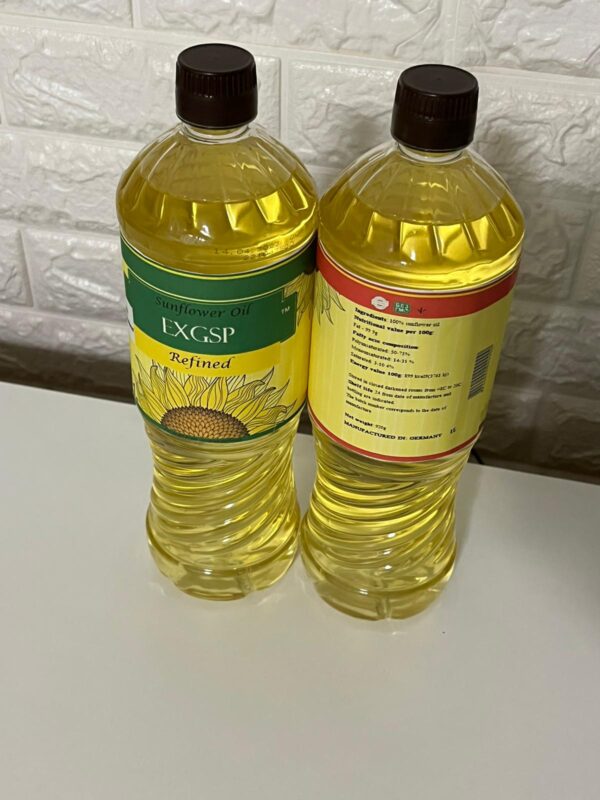
Labels get rejected during NAFDAC registration for imported vegetable oil more often than people expect. The usual requirements include:
- Product name that matches the oil, for example “Refined Sunflower Seed Oil” or “Extra Virgin Olive Oil”. Blends must say they’re blends.
- NAFDAC registration number.
- Net content in metric units.
- Batch or lot number.
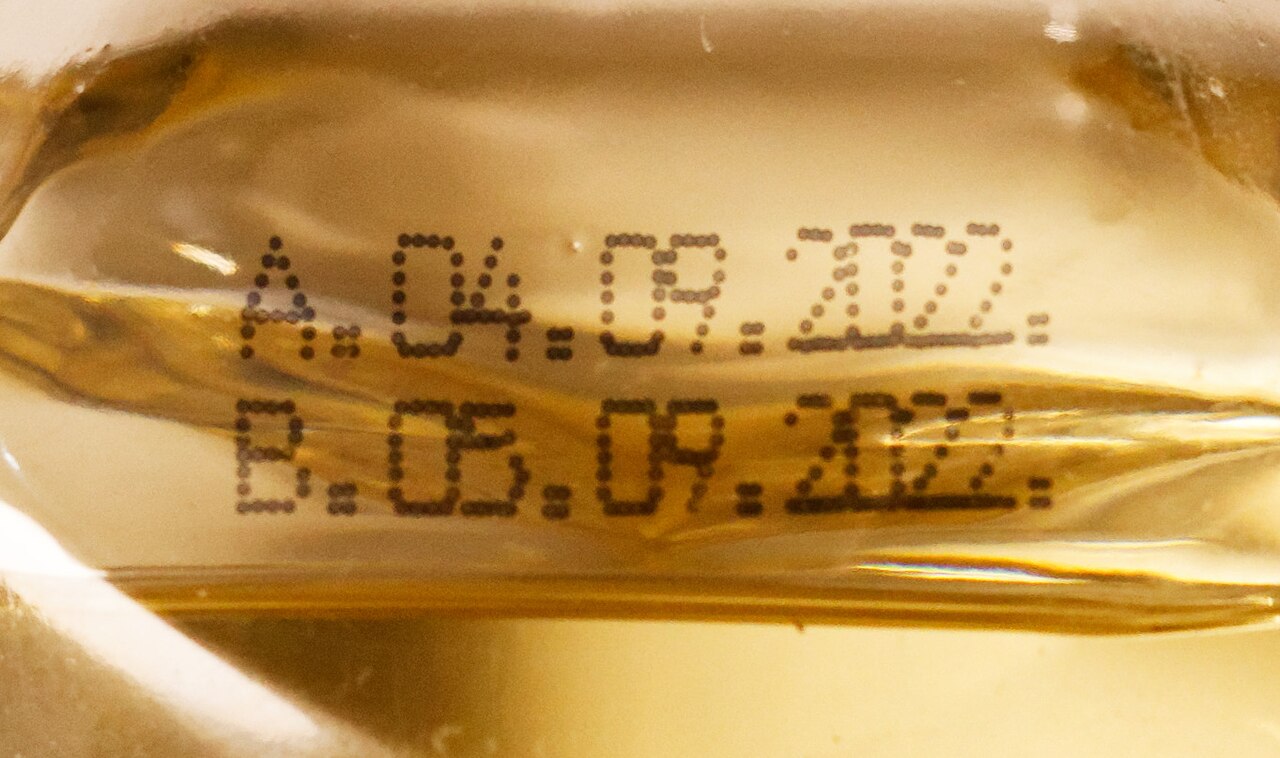
- Date of manufacture and best before or expiry date.
- Name and address of the manufacturer.
- Name and address of the Nigerian importer or distributor.
- Vitamin A content and fortification logo where required.
- Storage instructions.
- Country of origin.
- All text in English.
NAFDAC allows stick-on labels in some cases, as long as they don’t come off easily. But printing the label correctly at the source is cleaner and avoids arguments. We print private label bottles and cartons with your Nigerian details already on them. Our page on private label vegetable oil explains how the artwork process works.
How Long NAFDAC Registration for Imported Vegetable Oil Takes
NAFDAC publishes target timelines, but in practice it depends on how complete your file is, how fast you answer queries, whether a foreign inspection is needed and how busy the agency is. A realistic plan for NAFDAC registration for imported vegetable oil is three to six months, sometimes longer for a first product with a new foreign manufacturer.
The quickest files we’ve seen share the same habits: every document ready before submission, a certificate of analysis that matches the label exactly, a local partner who checks the portal every day, and a supplier who replies to technical questions the same day.
What to Budget for NAFDAC Registration for Imported Vegetable Oil
People often ask us what NAFDAC registration for imported vegetable oil costs in total. We can’t give you the agency’s current fee figures, because they’re set by NAFDAC and change, but we can tell you what to budget for so nothing surprises you:
- Official registration fees for each product, paid through the portal. Each pack size or brand can count as a separate product, so plan your range before you apply.
- Lab analysis fees for NAFDAC’s testing of your samples.
- Foreign inspection costs if the agency decides the overseas plant must be visited. This can be the biggest single cost, since the applicant pays for travel.
- Document costs abroad, such as notarizing the power of attorney and getting the certificate of free sale authenticated by the Nigerian embassy.
- Consultant fees if you use a regulatory consultant, which most first-time importers do.
- Label printing and redesign if the first artwork doesn’t pass.
- Renewal costs every few years.
The cheapest way through is a complete file on the first try. Each query and resubmission adds cost, not just time.
After You Get the Number: Staying Compliant
Getting the NRN isn’t the end. NAFDAC registration for imported vegetable oil comes with ongoing duties, and the agency does check products in the market.
Every shipment must match the registered product. Same oil, same label, same manufacturer. If your supplier changes the source plant, you may need to update the registration.
Keep batch records. NAFDAC can sample from shops and warehouses. If a batch fails, you’ll need to show the certificate of analysis and trace where the rest of it went.
Watch the vitamin A level over time. Oil that passed at the factory can drop below the minimum after months in a hot warehouse. Store it cool and rotate stock.
Keep the label up to date. If the rules on labelling or fortification change, your label has to follow.
We keep a retained sample from every lot we ship for at least the shelf life of the oil, so if a question comes up later, there’s evidence on both sides. Our page on pre-shipment inspection for edible oil explains how those samples are drawn and sealed.
Working With Clearing Agents and Ports
Most oil for Nigeria comes in through the Lagos ports, Apapa, Tin Can Island and Lekki, with some cargo through Onne and other eastern ports. Your clearing agent handles Form M, the customs entry and the inspection at discharge, and NAFDAC officers at the port check that regulated products have the right papers.
Give your clearing agent the NAFDAC registration for imported vegetable oil documents, or the raw material permit for crude oil, well before the vessel arrives. Cargo that sits at the port waiting for paperwork collects demurrage and storage charges fast, and with flexitanks the container lines charge daily for the box. Our guide to flexitank vs ISO tank explains why turnaround time matters so much with bulk oil.
Raw Material Permits for Crude Oil Importers
If you run a refinery or a food factory and you’re importing crude vegetable oil to process, the process is different from NAFDAC registration for imported vegetable oil as a finished product. You generally need NAFDAC’s permit to import the oil as a raw material for your own production, along with the usual customs, Form M and shipping documents.
For refiners, who skip finished-product NAFDAC registration for imported vegetable oil at this stage, the important parts on our side are the crude oil specification and a reliable certificate of analysis. We supply crude oils with the specs refineries normally ask for:
| Product | FFA | Moisture and impurities | Other key limits |
|---|---|---|---|
| Crude palm oil (CPO) | 5% max | 0.5% max combined | DOBI 2.3 min |
| Crude degummed soybean oil | 1.0% max | 0.3% max combined | Phosphorus 200 ppm max |
| Crude sunflower oil | 2.0% max | 0.2% max combined | Phosphorus 200 ppm max |
| Crude corn oil | 2.0% max | 0.3% max combined | Wax and colour per contract |
If you want more detail on the crude palm grade, our crude palm oil specification and crude degummed soybean oil specification guides go through each number.
What We Supply for Nigerian Buyers
Here’s the honest version of what we can do for buyers in Nigeria, and how it fits with NAFDAC registration for imported vegetable oil under the current rules:
- Crude oils for refineries: crude palm oil, crude degummed soybean oil, crude sunflower oil and crude corn oil, in flexitanks, ISO tanks or bulk vessels.
- Olive oil: extra virgin, pure olive oil and pomace oil, in bulk or bottled under your brand. If you’re deciding which grade to register, read our guide on pure olive oil vs extra virgin olive oil.
- Documents for your NAFDAC file: certificates of analysis, help with the certificate of manufacture and free sale, label artwork and samples.
For refined cooking oil from outside West Africa, we’ll tell you plainly that it can’t legally go into Nigeria right now. If you also trade into neighbouring markets where refined oil imports are allowed, our guide to working with a vegetable oil supplier for West Africa covers those routes.
Mistakes That Slow Down NAFDAC Registration for Imported Vegetable Oil
From what our customers tell us, these are the problems that cause the most delay:
- Buying a product that’s prohibited. The registration can’t fix that. Check the prohibition list first.
- Labels that don’t match the certificate of analysis. If the label says sunflower oil and the lab sees a blend, the file stops.
- No vitamin A, or too little. Ask your supplier to fortify and show the level on the COA.
- Unauthenticated certificates. A certificate of free sale without the right embassy stamp gets sent back.
- Choosing a supplier who disappears after the sale. NAFDAC queries often need answers from the factory. You want a supplier who responds. Our page on how to spot a fake vegetable oil supplier is worth reading before you sign anything.
- Paying in full before inspection. Use a letter of credit or a deposit structure. We explain both in letter of credit vs TT payment.
Frequently Asked Questions
Is NAFDAC registration for imported vegetable oil enough to import refined oil?
No. Refined vegetable oil from outside ECOWAS is on Nigeria’s import prohibition list. Registration doesn’t override that.
Can I import olive oil into Nigeria?
Yes. Olive oil is excluded from the refined oil ban, but it still needs NAFDAC registration before it’s sold.
How long is a NAFDAC registration valid?
Usually five years, after which it must be renewed.
Does imported vegetable oil need vitamin A?
Yes. Vegetable oil sold in Nigeria must be fortified with vitamin A, and the label must declare it.
Can a foreign company register directly?
No. The application goes through a company incorporated in Nigeria, with the foreign manufacturer’s authorization.
What do you provide for my NAFDAC file?
A certificate of analysis, support with the certificate of manufacture and free sale, label files and samples from the lot we ship.
Talk to Us About Your Nigeria Shipment
If you’re working on NAFDAC registration for imported vegetable oil, or you need crude oil for a Nigerian refinery, send us the product, quantity, packing and port, and tell us where you are in the registration process. We’ll send a price, the full specification and a sample certificate of analysis you can use to check your file.
Email info@dthcompanyltd.com, WhatsApp +66 91 765 9104, or use our contact page. You can also look at our full product range and read about us.





One thought on “NAFDAC Registration for Imported Vegetable Oil: 7 Easy Steps”