

If you’re looking for a corn oil bulk supplier, you probably already know the hard part isn’t finding someone who says they have corn oil. Everybody says they have corn oil. The hard part is finding one who loads what they promised, on the date they promised, with paperwork that holds up when the oil lands at your port.
We sell refined corn oil in bulk and in packed form to bottlers, wholesalers, food factories, restaurants and distributors around the world. This page is written the way we’d explain things to a new buyer on a phone call. It covers what we supply, the full specification, packing options, how pricing works, what a normal order looks like from first email to discharge, and the things we’d check if we were sitting on your side of the table looking for a corn oil bulk supplier.
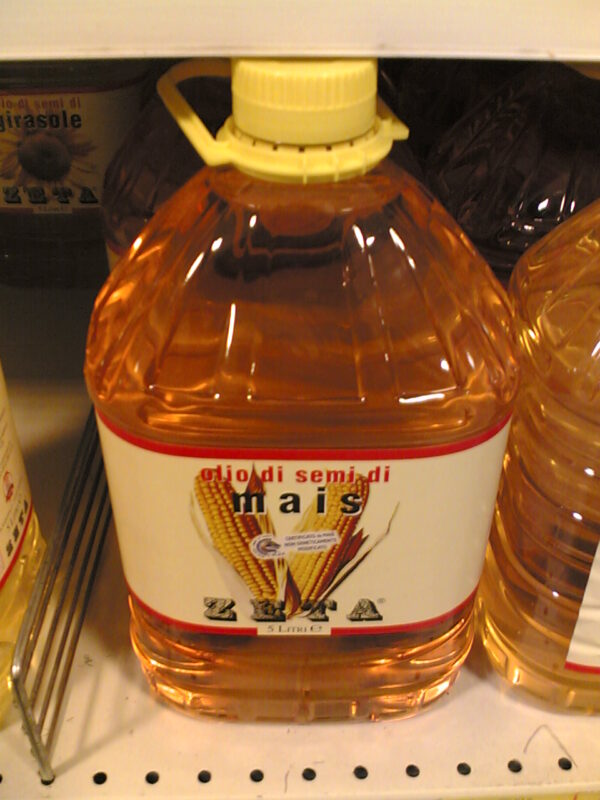
Table of Contents
What We Supply as a Corn Oil Bulk Supplier
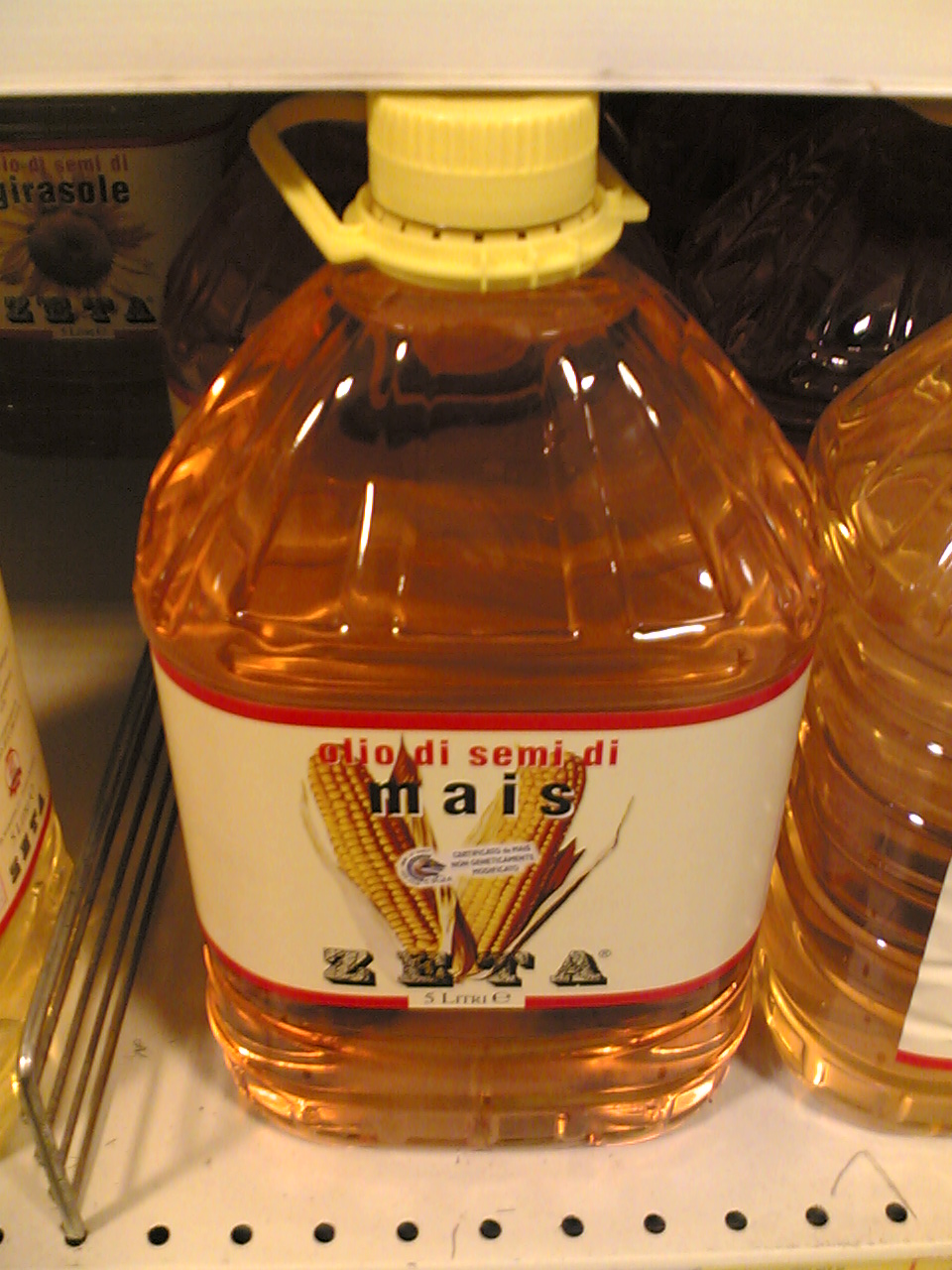
Our main product is refined, bleached, deodorized and winterized corn oil, which is what most of the market simply calls refined corn oil. It’s light golden, has very little smell, and stays clear in a cool storeroom because the waxes have been taken out. That last point matters more than people expect. Corn oil that hasn’t been winterized properly goes cloudy in cold weather, and a cloudy bottle on a supermarket shelf gets returned no matter how good the oil inside is.
As a corn oil bulk supplier we work with three types of buyer, and the order looks different for each:
- Bottlers and repackers who take the oil in flexitanks or ISO tanks and fill their own bottles under their own brand.
- Food manufacturers who use corn oil in mayonnaise, dressings, snacks, baked goods and frying lines and want a steady, consistent spec every month.
- Wholesalers and distributors who want ready-to-sell packs, usually 1 litre to 5 litre PET bottles or 18 to 25 litre jerrycans and tins.
As a corn oil bulk supplier we can also supply crude corn oil to refineries on request, but most of our corn oil business is the refined grade. If you’re comparing corn oil with other oils before you buy, our guide on corn oil vs sunflower oil goes through taste, frying life and cost side by side.
Refined Corn Oil Specification We Guarantee
Below is the spec we put in our contracts. These are loading figures, tested by an independent surveyor at the load port. Any decent corn oil bulk supplier should be able to give you a table like this before you pay anything, and should be happy to have it written into the contract word for word.
| Parameter | Our guarantee | Test method |
|---|---|---|
| Appearance | Clear and bright at 20 °C | Visual |
| Colour (Lovibond 5¼ inch cell) | 3.5 Red max / 35 Yellow max | AOCS Cc 13e-92 |
| Free fatty acid (as oleic) | 0.10% max | AOCS Ca 5a-40 |
| Peroxide value | 2.0 meq O2/kg max at loading | AOCS Cd 8-53 |
| Moisture and volatile matter | 0.10% max | AOCS Ca 2c-25 |
| Insoluble impurities | 0.05% max | AOCS Ca 3a-46 |
| Iodine value (Wijs) | 103 to 135 | AOCS Cd 1-25 |
| Saponification value | 187 to 195 mg KOH/g | AOCS Cd 3-25 |
| Cold test | 5.5 hours min at 0 °C | AOCS Cc 11-53 |
| Relative density at 20 °C | 0.917 to 0.925 | AOCS Cc 10a-25 |
| Smoke point | About 230 °C | AOCS Cc 9a-48 |
| Smell and taste | Bland, typical of refined corn oil | Sensory |
The fatty acid profile is the part people skip, and it’s the part that tells you whether you’re getting real corn oil. Pure corn oil is mostly linoleic acid, usually somewhere around 50 to 60 percent, with oleic acid around 25 to 35 percent and palmitic acid around 10 to 13 percent. The ranges allowed for maize oil in the Codex standard for named vegetable oils are wider than that, but if a sample comes back with oleic acid at 60 percent, you’re looking at something else. We send a full fatty acid profile with every shipment’s certificate of analysis.
If you want to understand what free fatty acid and peroxide value actually tell you, we wrote a plain guide on free fatty acid and peroxide value. And for the longer, line-by-line explanation of each number in the table, see our refined corn oil specification page.
Packing Options From a Corn Oil Bulk Supplier
How you take the oil changes the price more than most buyers expect, and a good corn oil bulk supplier will talk you through it before quoting. Packing material, filling labour and the amount of oil you can fit in a container all move the landed cost. Here’s what we offer and roughly how much fits in a 20 foot container:
| Packing | Typical net per 20 ft container | Who it suits |
|---|---|---|
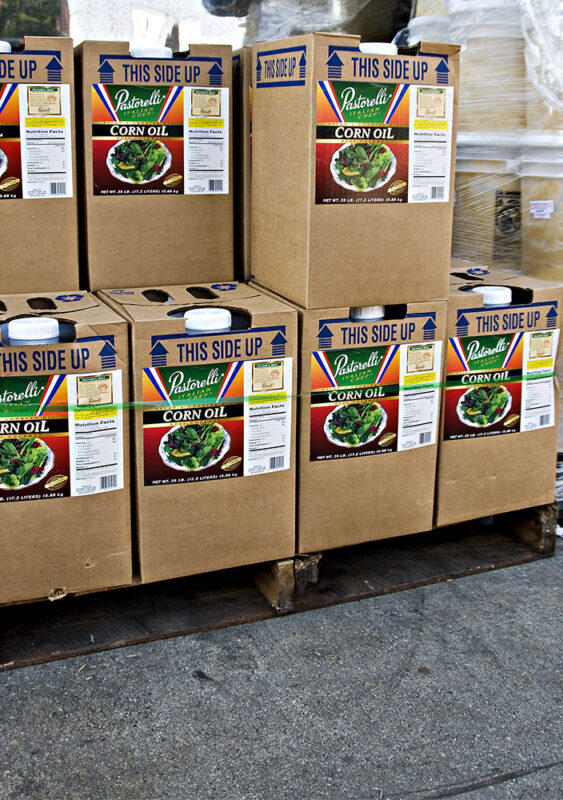
| Flexitank | 20 to 22 metric tons | Bottlers, food factories |
| ISO tank | About 21 to 23 metric tons | Buyers who want a reusable, cleaner tank |
| Steel drums, 200 litre | About 15 to 16 metric tons (80 drums) | Smaller factories, mixed loads |
| IBC tote, 1,000 litre | About 18 to 19 metric tons | Factories without bulk tanks |
| Jerrycans 20 or 25 litre | About 17 to 19 metric tons | Restaurants, caterers, wholesalers |
| Tins 18 litre | About 16 to 17 metric tons | Traditional markets, long shelf life |
| PET bottles 1, 2, 3 and 5 litre | About 14 to 17 metric tons | Supermarkets, retail distributors |
For bulk loads, the choice between a flexitank and an ISO tank comes down to your receiving setup and whether you can return the tank. We explain the trade-off in detail in flexitank vs ISO tank. If you’re converting between litres and tons for your own planning, this page on how many litres in a ton of vegetable oil has the numbers.
For packed oil we can print your label, which is how most of our private label customers work. You send the artwork, we print and fill, and the cartons go out with your brand on them. Our page on private label vegetable oil covers minimum quantities and how artwork approval works.
How Corn Oil Gets From the Field to Your Tank
It helps to know where the oil comes from before you pick a corn oil bulk supplier, because it explains why the price moves and why some corn oil is better than others.
Most corn oil isn’t pressed from whole corn kernels. It comes from the germ, the small part of the kernel that holds most of the oil. The germ is separated at wet mills and dry mills that are really making starch, sweeteners, ethanol or flour. That means corn oil supply is tied to how much corn those mills are grinding, not just to how much corn is grown. When ethanol plants slow down, germ supply drops, and you see it in the corn oil price a few weeks later.
The crude oil from the germ is then degummed, neutralized, bleached, winterized and deodorized. Winterizing is the step that removes waxes, and skipping it or doing it badly is the most common shortcut we see in cheap offers. A corn oil bulk supplier who can’t tell you the cold test result on the last shipment probably isn’t checking it.
How to Check a Corn Oil Bulk Supplier Before You Pay
We’d rather you buy from us, obviously, but we’d also rather you didn’t get burnt by someone else and decide the whole trade is a scam. The edible oil business attracts a lot of fake sellers. Here’s what we’d check.
Ask for a recent certificate of analysis and a fatty acid profile
Not a template. A real COA from a recent shipment, with a lab name, a sample date and a batch or tank number. Any genuine corn oil bulk supplier has dozens of these. If all you get is a nicely formatted spec sheet with no dates, keep asking.
Ask who the surveyor will be
Independent inspection at loading is normal in this trade. SGS, Intertek, Bureau Veritas and similar firms do it every day. A seller who resists third party inspection is telling you something. Our page on pre-shipment inspection for edible oil explains what the surveyor actually does and what the report should include.
Be careful with payment terms that only protect the seller
A full advance payment to a new corn oil bulk supplier you’ve never met, with no inspection, is how people lose money. Letters of credit, or a deposit with the balance against copy documents, are the normal ways to share the risk. We go through both in letter of credit vs TT payment.
Watch for prices that are too good
Corn oil trades at a premium over soybean and palm oil most of the time. If a corn oil bulk supplier quotes you well under the soybean oil price, ask yourself how. Either it’s not corn oil, it’s not refined properly, or the oil doesn’t exist. We wrote a whole page on spotting a fake vegetable oil supplier because we keep hearing the same stories from buyers.
Check the contract terms, not just the price
The contract should state the spec, the inspection company, what happens if the oil fails at loading, the shipment period and the payment terms. Many professional contracts follow the general shape of the FOSFA contracts used across the oils and fats trade, and there’s a good reason for that. They’ve been tested in disputes for decades.
How Pricing Works With a Corn Oil Bulk Supplier
We don’t publish a fixed price list for corn oil, and you should be suspicious of any corn oil bulk supplier who does. The price changes week to week, sometimes day to day. Here’s what moves it:
- The world corn oil market. Supply depends on how much corn the big mills are grinding, and demand follows food use and, increasingly, biofuel use.
- Other vegetable oils. When sunflower, soybean and palm oil prices rise, corn oil usually follows.
- Packing. Bulk in a flexitank is the cheapest per ton. Small PET bottles are the most expensive because you’re paying for plastic, caps, labels, cartons and filling.
- Freight. Container rates to your port can add a lot, especially on long routes or during busy seasons.
- Quantity and timing. Regular monthly contracts get better pricing than one-off spot orders.
When we quote, we give a price per metric ton on FOB, CFR or CIF terms, with the packing, the shipment period and how long the offer is valid. Corn oil quotes are normally firm for a short window, often 48 to 72 hours, because the market moves. A quote that stays valid for a month is a quote the seller doesn’t intend to keep.
Our Minimum Order and Lead Times
Our minimum order as a corn oil bulk supplier is one 20 foot container. For bulk that’s a flexitank of 20 to 22 metric tons. For packed oil it’s a full container of one packing type, though we can mix two or three bottle sizes in the same container if they’re all the same oil.
Normal lead times look like this:
- Quote and pro forma invoice: same day or next day after we have your quantity, packing and port.
- Contract and payment set-up: a few days, longer if a letter of credit needs to be opened.
- Production and packing: around 2 to 3 weeks for bulk, 3 to 4 weeks for private label packs if new labels need printing.
- Inspection and loading: a few days, with samples drawn by the surveyor.
- Sea transit: depends entirely on your port. Short regional routes can be under two weeks, long routes five weeks or more.
Documents You Get With Every Shipment
When you buy from us as your corn oil bulk supplier, you receive a full shipping set. Most buyers need all of these for customs and food authority clearance at destination:
- Commercial invoice and packing list
- Bill of lading
- Certificate of origin
- Certificate of analysis from the independent surveyor
- Quality and quantity inspection certificate
- Health certificate or phytosanitary certificate where required
- Halal certificate, on request
- Non-GMO statement or IP certificate, where the oil is sourced that way and you ask for it
- Fumigation or flexitank certificate where relevant
Every country adds its own requirements on top of that. If you’re new to importing, our guide to the documents required to import vegetable oil lists what most customs offices ask for. Importing into Nigeria has its own rules on registration and on which oils can come in at all, which we cover in NAFDAC registration for imported vegetable oil. For East Africa, see our page on cooking oil importers in Kenya.
HS Code for Corn Oil
Refined corn oil is classified under HS 1515.29 at the six digit level. Crude corn oil is HS 1515.21. Your country will add its own digits after that, and duty rates vary a lot from place to place. Your corn oil bulk supplier should put the HS code on the invoice, but always check the full national tariff line with your clearing agent before you sign, because a wrong code can mean a wrong duty and a delayed release.
What Corn Oil Is Good For
People buy from a corn oil bulk supplier for a few different reasons, and it helps us if we know which one is yours.
Frying. Refined corn oil has a high smoke point, around 230 °C, and a clean taste, so it works well in deep fryers. It’s a little less stable than high oleic oils over long frying runs because of its high linoleic acid content, so restaurants frying all day often change it a bit more often. Our cooking oil smoke point chart compares it with other oils, and how often to change fryer oil has practical tips for kitchens.
Mayonnaise and dressings. Winterized corn oil stays clear in the fridge, which is exactly what you need in a cold emulsion.
Baking and snacks. It gives a neutral flavour and a soft crumb in cakes, and many snack makers like how it carries seasoning.
Retail cooking oil. In many markets, corn oil is seen as a premium household oil. It sells well in 1 litre and 2 litre bottles to families who want something a step above the cheapest oil on the shelf.
Shelf Life and Storage
Refined corn oil keeps well if you look after it, and most of the work happens after it leaves your corn oil bulk supplier. In sealed packs, stored cool and out of the sun, 18 to 24 months is normal. In bulk, it depends on the tank. Keep it away from heat, light, air and moisture, and don’t top up old oil with new oil in the same tank if you can avoid it.
The details matter. Copper and brass fittings speed up oxidation, so stainless steel or coated tanks are better. Nitrogen blanketing in big storage tanks helps a lot. If you’re comparing how corn oil lasts against other seed oils, our shelf life guide for sunflower, soybean and canola oil uses the same logic and most of it applies to corn oil too.
Why Buyers Work With Us as Their Corn Oil Bulk Supplier
We’re a trading and supply company with long relationships with crushing and refining plants. We’re not going to tell you we’re the biggest corn oil bulk supplier in the world, because we’re not, and anyone who says they are is probably selling you a story. What we’ll tell you is what our regular customers tell us they value:
- We put the full spec in the contract and we let your surveyor check it.
- We answer emails and WhatsApp messages the same day, and we tell you early if a shipment is going to move.
- We supply more than corn oil, so you can combine products in one relationship. Many of our customers also buy refined sunflower oil, refined soybean oil, refined canola oil or refined palm oil (CP10) from us.
- We ship worldwide, including Africa, the Middle East, Asia, Europe and the Americas. If you’re buying for a West African market, our page on being a vegetable oil supplier for West Africa explains how we handle those routes.
You can read more about the company on our about us page or see the full product range.
Common Mistakes Buyers Make With Corn Oil
We’ve seen most of these more than once, working as a corn oil bulk supplier for buyers on every continent.
Not asking about winterizing. The oil looks perfect in a warm warehouse and turns hazy the first cold week. Always ask for the cold test.
Comparing prices on different terms. One corn oil bulk supplier quotes FOB, another quotes CIF, and the buyer picks the cheaper number without adding freight and insurance. Line the quotes up on the same Incoterm before you compare.
Ignoring packing costs. A 1 litre PET bottle can add more to the cost per ton than the difference between two oils. Decide your packing early.
Skipping the sample. For a first order, get a sample from the actual lot, test it locally, and keep a retained sample. If there’s ever an argument, that sample is your evidence.
Buying more than the tank or market can handle. Corn oil doesn’t last forever. Buying a year’s stock to save a little on price can cost you more in rancid oil at the end.
Frequently Asked Questions
What is the minimum order from your corn oil bulk supplier team?
One 20 foot container. That’s 20 to 22 metric tons in a flexitank or a full container load of drums, IBCs, jerrycans or bottles.
Do you supply non-GMO corn oil?
Yes, on request and subject to availability. Not every corn oil bulk supplier can document non-GMO origin, so ask early. Non-GMO corn oil usually costs more, and we’ll tell you up front what documents come with it.
Can you print our own brand on the bottles?
Yes. Private label is a big part of our packed oil business. You send the artwork, we confirm the bottle and carton sizes, and we print and fill.
Which ports do you ship to?
As a worldwide corn oil bulk supplier, we ship to most commercial ports. Tell us your destination and we’ll quote CFR or CIF to that port.
How do I know the oil is really corn oil?
Ask your corn oil bulk supplier for the fatty acid profile and iodine value on the certificate of analysis, and have an independent lab test a sample. We send both with every shipment.
How long is your price valid?
Usually 48 to 72 hours for bulk corn oil, because the market moves. We’ll always state the validity on the quote.
Get a Quote From Our Corn Oil Bulk Supplier Desk
If you need a corn oil bulk supplier who puts everything in writing, send us four things: the quantity, the packing you want, your destination port and how often you’ll buy. We’ll come back with a price, our current spec sheet and a recent certificate of analysis.
Email info@dthcompanyltd.com, message us on WhatsApp at +66 91 765 9104, or use our contact page. If you’re still choosing between oils, you can also look at the full product list first.



3 thoughts on “Corn Oil Bulk Supplier: 9 Proven Checks Before You Buy (2026)”