

A refined corn oil specification tells you far more than whether the oil is “good”. It tells you how it’ll fry, how long it’ll last on the shelf, whether it’ll stay clear in a cold shop, and whether you’re actually getting pure corn oil and not a cheaper blend. Corn oil usually sells at a premium over sunflower and soybean oil, so making sure the numbers are right matters even more.
We supply refined corn oil to bottlers, distributors, restaurants and food factories worldwide. This guide goes through the refined corn oil specification line by line: what we guarantee, what each number means, what’s different about corn oil compared with other oils, and the warning signs to look out for. At the end you’ll find the grades and packing we offer.
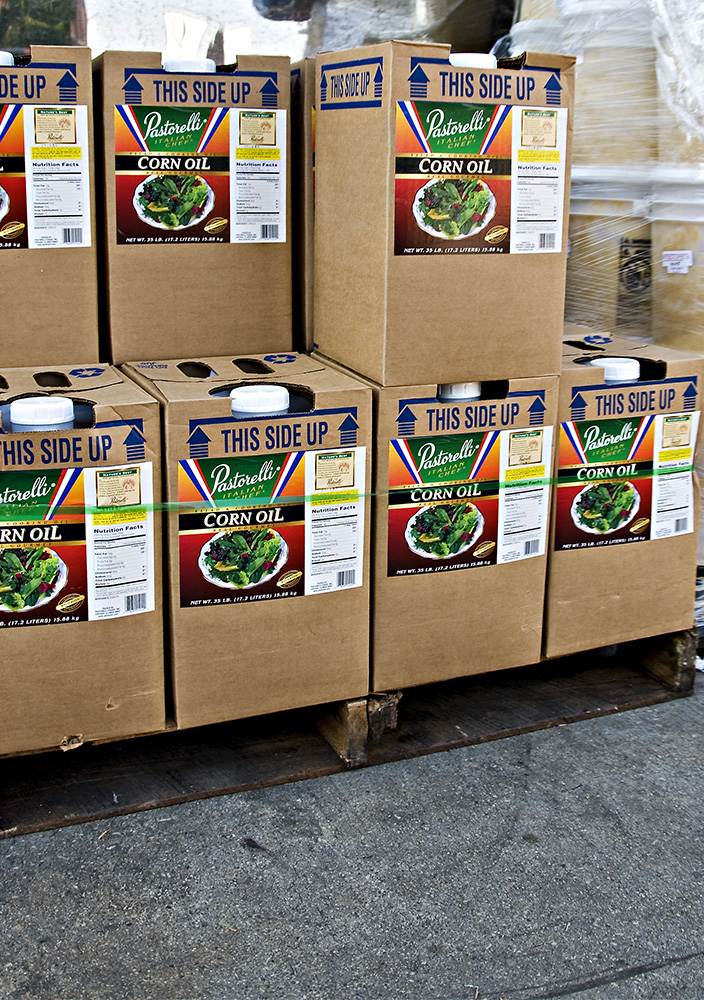
Table of Contents
Refined Corn Oil Specification at a Glance
Here’s the specification we work to for refined, bleached, deodorized and winterized corn oil. We can tighten individual lines if your product needs it.
| Parameter | Our guarantee | Typical method |
|---|---|---|
| Appearance at 20 °C | Clear, bright, golden, free of sediment | Visual |
| Odour and taste | Mild, clean, typical of refined corn oil | Sensory |
| Free fatty acid (as oleic) | 0.10% max | AOCS Ca 5a-40 |
| Peroxide value | 2.0 meq O2/kg max at loading | AOCS Cd 8b-90 |
| Moisture and volatile matter | 0.05% max | AOCS Ca 2c-25 |
| Insoluble impurities | 0.05% max | AOCS Ca 3a-46 |
| Colour, Lovibond 5.25 inch cell | Red 3.5 max, Yellow 35 max | AOCS Cc 13e-92 |
| Iodine value (Wijs) | 103 to 135 | AOCS Cd 1d-92 |
| Saponification value | 187 to 195 mg KOH/g | AOCS Cd 3-25 |
| Unsaponifiable matter | 2.8% max | AOCS Ca 6a-40 |
| Relative density at 20 °C | 0.917 to 0.925 | ISO 6883 |
| Refractive index at 40 °C | 1.465 to 1.468 | AOCS Cc 7-25 |
| Cold test | 5.5 hours clear at 0 °C min | AOCS Cc 11-53 |
| Soap content | Nil to 10 ppm max | AOCS Cc 17-95 |
| Smoke point | about 230 °C | AOCS Cc 9a-48 |
| Trans fatty acids | 1% max | GC |
Test methods are given as a guide. They come from the American Oil Chemists’ Society, though many labs use ISO equivalents. What matters is that buyer and seller agree the method in the contract.
How Corn Oil Is Made
Corn oil comes from the germ of the maize kernel, the small part that would grow into a new plant. Corn mills separate the germ while making starch, sweeteners, grits or flour. The germ holds around 40 to 50% oil. It’s pressed, then solvent extracted, and the crude oil goes to refining.
Crude corn oil is dark, reddish amber and carries gums, free fatty acids, waxes, pigments and a strong smell. Refining turns it into the clear golden oil you know. Each step affects a different part of the refined corn oil specification.
- Degumming removes phospholipids, which would otherwise cause haze and foaming.
- Neutralizing removes free fatty acids as soap. This step brings FFA down.
- Bleaching uses bleaching earth to remove pigments and traces of metals. Corn oil has a natural deep colour, so it’s never as pale as sunflower or canola oil.
- Winterizing chills the oil and filters off waxes. Corn oil has enough wax to turn cloudy in the cold without this step.
- Deodorizing strips off smells, the last free fatty acids and oxidation products under high vacuum and steam.
Some refineries use physical refining, removing free fatty acids by steam instead of caustic. Done well, it meets the same refined corn oil specification.
The Refined Corn Oil Specification, Parameter by Parameter
Free fatty acid (FFA)
Free fatty acids form when the oil starts to break down. Good refining brings them below 0.05%. We guarantee 0.10% max at loading. High FFA lowers the smoke point, makes the oil foam in a fryer and can give a harsh taste. Our guide on free fatty acid and peroxide value explains the chemistry in more detail.
Peroxide value (PV)
PV measures early oxidation. Fresh refined corn oil is close to zero. We hold to 2.0 meq/kg max at loading. Expect a small rise over a long sea voyage, especially in heat. A big rise means the oil was exposed to heat, air or light, and you should ask why.
Moisture and impurities
Water speeds up breakdown and impurities leave sediment in bottles. Both should be very low, 0.05% max each. Most problems here come from dirty or wet tanks, not from the refinery, which is why we check flexitanks and ISO tanks before filling.
Colour
This is one of the places where a refined corn oil specification looks different from other oils. Corn oil is naturally a deeper golden colour because of carotenoid pigments. Typical limits are around red 3.5 and yellow 35 on the Lovibond scale in a 5.25 inch cell, compared with red 1.5 and yellow 15 for refined sunflower oil. If a supplier offers corn oil that’s as pale as water, ask questions. It may have been heavily bleached, or it may not be pure corn oil.
Iodine value
Iodine value shows how unsaturated the oil is. Corn oil usually sits between about 103 and 135, most often around 120 to 128. It works as a fingerprint. A value well outside the range can point to a blend.
Unsaponifiable matter and plant sterols
Corn oil is unusually rich in phytosterols, natural plant compounds that don’t turn into soap. That’s why its unsaponifiable matter limit is higher than most oils, up to about 2.8%. This is a good thing for nutrition, and it’s also another identity check. Pure corn oil has a distinct sterol pattern that labs can test for if you suspect blending.
Fatty acid composition
The fatty acid profile is the surest way to confirm you’re buying real corn oil. Here’s the typical range, based on the Codex standard for maize oil:
| Fatty acid | Typical range (%) |
|---|---|
| C16:0 Palmitic | 8.6 to 16.5 |
| C18:0 Stearic | ND to 3.3 |
| C18:1 Oleic | 20.0 to 42.2 |
| C18:2 Linoleic | 34.0 to 65.6 |
| C18:3 Linolenic | ND to 2.0 |
| C20:0 Arachidic | 0.3 to 1.0 |
You can find the full Codex standard for named vegetable oils on the Codex standards list. Commercial contracts are usually tighter than Codex on quality limits like FFA and PV, but use Codex ranges for identity.
Cold test
Corn oil contains natural waxes. Without winterizing, it can turn hazy when the temperature drops. A proper refined corn oil specification includes a cold test, with the oil staying clear for at least 5.5 hours at 0 °C. Some buyers selling into cold markets or making mayonnaise ask for longer, and we can quote that.
Smoke point
Well refined corn oil smokes at around 230 °C, well above normal frying temperatures. That’s one reason corn oil has such a strong reputation for frying. Smoke point drops as FFA rises and as the oil is used. See our cooking oil smoke point chart for comparisons.
Trans fats and process contaminants
Very hot deodorizing can create small amounts of trans fats and process contaminants such as 3-MCPD esters and glycidyl esters. Our standard sets trans fats at 1% max. If you need low process contaminant levels, for infant food for example, tell us up front so we can allocate the right refinery lot.
Mycotoxins, heavy metals and residues
Corn as a crop can carry mycotoxins, especially zearalenone and aflatoxins, if it’s stored badly. Most of these are removed during refining, but some markets set specific limits for refined maize oil. The EU, for instance, sets a maximum level for zearalenone in refined maize oil, which you can read in Regulation (EU) 2023/915. Lead and arsenic should each be 0.1 mg/kg max. We can supply third party test reports for these on request.
How a Refined Corn Oil Specification Differs From Other Oils
If you already buy sunflower or soybean oil, here’s what’s different when you switch to corn oil:
- Colour limits are wider. Corn oil is naturally darker.
- Unsaponifiable matter is higher. Because of the plant sterols.
- Linolenic acid is very low. Under 2%, compared with 5 to 11% in soybean oil, which helps flavour stability.
- Taste isn’t completely neutral. A mild corn note is normal and expected.
- Blending risk is higher. Because corn oil costs more, identity checks matter more.
If you’re still deciding between the two oils, our comparison of corn oil vs sunflower oil goes through the trade-offs.
How to Read a Certificate of Analysis
Every shipment we load comes with a certificate of analysis. When you read one, check:
- Date and lot number, matching the oil actually loaded
- Where the sample was taken: shore tank, flexitank or ship
- Units: FFA as oleic, colour in which cell, PV in meq/kg
- Comparison with your contract, not with numbers you remember from another supplier
- Who tested it: refinery lab or an independent inspector
You’re welcome to appoint SGS, Intertek, Bureau Veritas or another inspector at loading. Our guide to pre-shipment inspection for edible oil explains how it works.
Writing the Refined Corn Oil Specification Into Your Contract
A spec sheet in an email isn’t enough. If anything goes wrong, what counts is the signed contract. These are the points we put into every refined corn oil specification clause, and you can use the same list with any supplier:
- Name the grade clearly. “Refined, bleached, deodorized, winterized corn oil, food grade” is far better than just “corn oil”.
- List each parameter with a max or a range. At least FFA, PV, moisture, impurities, colour, iodine value and cold test.
- State the test methods, including the cell size for colour.
- Say where quality is final, at loading or at discharge.
- Name the inspector and who pays.
- Agree what happens if a number is out, whether that’s a price allowance, a right to reject or a re-test by an umpire lab.
- Include an identity clause. State that the oil must be 100% corn oil, with the fatty acid profile within Codex ranges.
That last point is especially important for corn oil. An identity clause gives you a clear right to reject a blended cargo, which a general quality spec might not.
Loading Results vs Arrival Results
Buyers sometimes test oil on arrival and find PV or FFA a little higher than the loading certificate. That doesn’t automatically mean anything went wrong. Oil keeps changing slowly, especially in a hot container on a long voyage. A sensible refined corn oil specification sets tight limits at loading and accepts small changes in transit. If you need a guaranteed limit at arrival, say so before you sign. It may mean a faster route, nitrogen flushing or a cooler packing option, and that can affect the price.
Refined Corn Oil Specification by Origin
Corn oil is refined in many countries, and while the basic refined corn oil specification is the same everywhere, a few things vary by origin:
- GM status. Oil from the US, Brazil and Argentina is usually GM origin. Oil from parts of Europe and the Black Sea region is more often non-GM.
- Colour. Some refineries bleach corn oil more than others. Colour within the spec is fine, but consistency between lots matters if you sell in clear bottles.
- Cold test. Refineries in warm climates sometimes winterize less thoroughly. If your market is cold, ask for a longer cold test.
- Packaging habits. Some origins ship mostly in bulk, others mostly in packed form. That affects freight cost and shelf life.
None of this is a rule. A good refinery anywhere can meet a tight spec. That’s why the numbers in the contract matter more than the origin on the label.
Corn Oil in Food Manufacturing
Food factories use refined corn oil in several products, and each one leans on different parts of the refined corn oil specification:
- Frying and snack production. Corn oil’s low linolenic acid and natural antioxidants give good flavour stability. FFA, PV and smoke point matter most.
- Margarine and spreads. Corn oil is used as the liquid part of some premium spreads, often marketed for its plant sterols.
- Mayonnaise and dressings. Less common than soybean or sunflower oil, but used in some markets. A long cold test is essential.
- Bakery. Corn oil works well in cakes and breads where a slightly richer flavour is welcome.
- Ready meals and sauces. Used where its colour and mild flavour suit the recipe.
For factories, consistency between shipments is often worth more than the lowest price. A refined corn oil specification with tight ranges on colour and fatty acids keeps your product the same from batch to batch.
Red Flags in a Refined Corn Oil Specification
Because corn oil sells at a premium, it attracts more than its share of questionable offers. Watch for:
- A spec sheet with no fatty acid profile or iodine value
- Colour much paler than normal corn oil
- FFA, PV and colour all shown as perfect zeros
- A price close to sunflower or soybean oil for oil sold as pure corn oil
- Refusal to allow independent testing
Two or three of these together are a good reason to walk away. Our guide on spotting a fake vegetable oil supplier has more warning signs, and our article on letter of credit vs TT payment explains safer ways to pay.
Keeping Corn Oil in Spec After Delivery
Oil that leaves the refinery in perfect shape can still drift if it’s stored badly. A few habits keep your refined corn oil specification intact:
- Store below 30 °C if possible, out of direct sun
- Use clean, dry, food grade tanks, ideally stainless steel
- Keep tanks full or nitrogen blanketed
- Avoid copper and brass fittings
- Use oldest stock first
Sealed and stored cool, refined corn oil normally keeps 12 to 18 months. Our article on edible oil shelf life goes into more detail, and our guide on how often to change fryer oil covers the frying side.
The Refined Corn Oil We Sell
We supply refined corn oil worldwide for retail, food service and food manufacturing. All grades meet the refined corn oil specification above.
| Grade | Notes | Best for |
|---|---|---|
| Refined, winterized corn oil | Standard spec, cold test 5.5 hours | Bottling, cooking, frying |
| Refined corn oil, extended cold test | Longer cold test on request | Cold markets, mayonnaise, dressings |
| Non-GM refined corn oil | Non-GM origin with documents, subject to availability | Markets with GM labelling rules |
Packing options:
- Flexitanks of about 20 to 22 tonnes per 20ft container
- ISO tanks of about 20 to 21 tonnes (see flexitank vs ISO tank)
- 190 kg drums
- 20 and 25 litre jerrycans, 18 litre tins
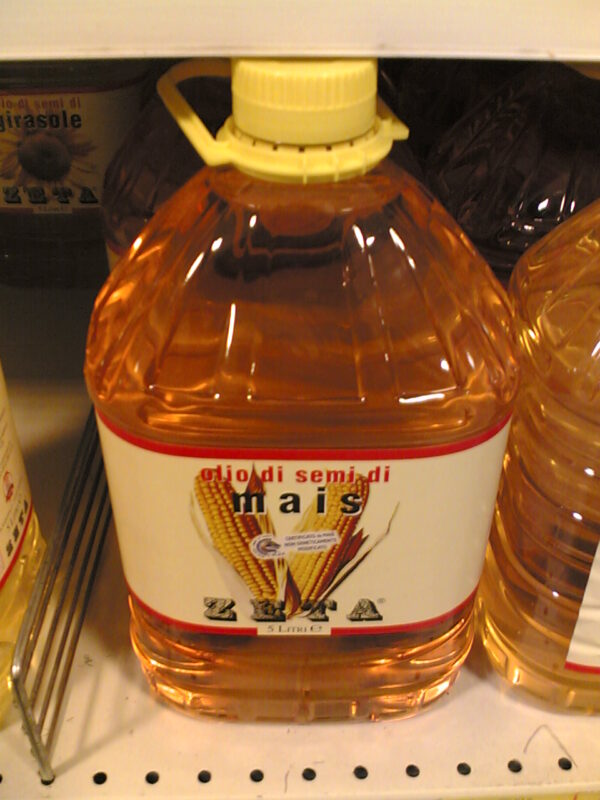
- PET bottles of 1, 2, 3 and 5 litres, with private label available
Every shipment comes with a certificate of analysis, certificate of origin and halal certificate. For customs, refined corn oil normally falls under HS 1515.29. Our import documents guide lists the papers you’ll need.
Matching the Spec to Your Use
Different buyers care about different lines in the refined corn oil specification. A bottler selling in clear PET wants a clean taste, a good cold test and a consistent colour. A restaurant chain cares most about FFA, smoke point and fry life. A snack maker wants low PV and good flavour stability. A mayonnaise plant wants a long cold test and a very fresh oil.
Tell us what you’re making and we’ll suggest which lines to tighten. Getting the spec right before the first order is far cheaper than fixing a quality complaint after it.
Checking Corn Oil When It Arrives
Even with quality final at loading, it’s worth testing a sample when the oil reaches you. It tells you how the oil travelled and gives you early warning before it goes into bottles or onto a production line. Most of our buyers run a short set of checks:
- Appearance at room temperature: clear, bright and golden
- Smell and taste: clean, mild, with no sharp or painty notes
- Free fatty acid and peroxide value, compared with the loading certificate
- A cold test, if you sell into a cool market
- A fatty acid profile on the first few shipments from any new supplier
Small differences from the loading results are normal. Labs never agree perfectly, and oil changes slowly over time. A big jump in PV or FFA, though, points to a problem with the container, the tank or the voyage, and you’ll want to raise it quickly while samples and records are fresh.
Keep your results on file. After a few shipments you’ll have a clear record of how each supplier’s oil really performs against the refined corn oil specification in your contract. That record is the best way to tell a reliable supplier from one who only looks good on paper, and it gives you something solid to point to when you negotiate the next order.
If you’d like help setting up a simple arrival testing routine, send us your current checks and we’ll suggest what to add or drop. For most buyers, a handful of quick tests on each shipment is plenty to keep everyone honest.
Frequently Asked Questions
What is the normal FFA for refined corn oil?
Most contracts set 0.05% to 0.10% max. We guarantee 0.10% max at loading.
Why is corn oil darker than sunflower oil?
Corn oil naturally contains more pigments, mainly carotenoids. A deeper golden colour is normal.
What is the iodine value of corn oil?
Usually between 103 and 135, most often around 120 to 128.
Does refined corn oil need winterizing?
Yes. Corn oil contains waxes that make it cloudy in the cold. Winterized oil passes a cold test of at least 5.5 hours at 0 °C.
How can I tell if corn oil is pure?
Ask for the fatty acid profile and iodine value. A sterol test can confirm it further.
What is the HS code for refined corn oil?
1515.29 at the six-digit level. Crude corn oil is 1515.21.
Ask for Our Corn Oil Specification Sheet
If you want a supplier who puts the full refined corn oil specification in writing and lets you test it, get in touch. Tell us your quantity, packing and port, and we’ll send a price, our full spec sheet and a recent certificate of analysis.
Email info@dthcompanyltd.com, WhatsApp +66 91 765 9104, or use our contact page. You can also see our full range of products.




One thought on “Refined Corn Oil Specification: 10 Essential Numbers for the Best Oil”