

If you’re about to buy crude palm oil, the crude palm oil specification is the page that protects your money. It’s a short list of lab numbers, but every one of them tells you something about how the oil was harvested, milled, stored and shipped. Get the numbers right in your contract and you get oil your refinery can work with. Leave them loose and you end up paying for water, dirt and oil that’s already started to break down.
We sell crude palm oil (CP0) in bulk to buyers worldwide, along with refined CP8 and CP10 grades. This guide walks through the crude palm oil specification we load against, what each number actually means, the limits most refiners accept, and the mistakes we see first-time buyers make.
Table of Contents
The short version
A standard crude palm oil specification for export covers five things: free fatty acid, moisture and impurities, DOBI, iodine value and melting point. Carotene content and colour often come along too. If a supplier can’t give you a certificate of analysis for those, don’t sign anything.
Here’s the spec we quote for our crude palm oil (CP0) for sale. It follows the usual trade standard, and it’s what our COA is tested against at loading.
| Parameter | Our CP0 limit | Test method |
|---|---|---|
| Free fatty acid (as palmitic) | 5.0% max | AOCS Ca 5a-40 |
| Moisture and impurities | 0.25% max | AOCS Ca 2c-25 / Ca 3a-46 |
| DOBI | 2.3 min (2.5 min on request) | PORIM p2.9 |
| Iodine value (Wijs) | 50 to 55 | AOCS Cd 1d-92 |
| Slip melting point | 33 to 39 °C | AOCS Cc 3-25 |
| Carotene (as beta-carotene) | 500 to 700 ppm | PORIM p2.6 |
| Colour | Deep orange to red | Visual |
| Appearance at 50 °C | Clear liquid | Visual |
Those numbers aren’t random. Each one lines up with a cost or a risk somewhere down the chain, which is what the rest of this article is about.
What crude palm oil actually is
Crude palm oil comes from the fleshy outer part of the oil palm fruit. Fresh fruit bunches are sterilised with steam, stripped, pressed and clarified at the mill. What comes out is a thick orange-red oil, full of carotene, vitamin E and a fair bit of natural free fatty acid.
It’s not the same as palm kernel oil, which comes from the seed. We explain that difference in our post on palm kernel oil vs palm oil. Crude palm oil is the raw material that refineries turn into RBD palm oil, olein and stearin. So when you read a crude palm oil specification, you’re really reading a forecast of how much good refined oil you’ll get out of it and how hard the refinery will have to work.
Free fatty acid: the number everyone looks at first
Free fatty acid (FFA) is the main line on any crude palm oil specification. It tells you how much of the oil has split apart through hydrolysis. Bruised fruit, fruit left too long before milling, and water in the storage tank all push it up.
The trade limit is 5.0% max, measured as palmitic acid. Good mills ship well under that. Oil from fresh, well-handled fruit often comes in around 3 to 4%.
Why does it matter so much? Every 1% of FFA has to be removed in refining, and you lose oil along with it. Higher FFA also means more steam and energy in deodorisation. A refinery manager will tell you straight: a 4.8% cargo costs more to refine than a 3.5% one, even though both “pass”.
FFA also keeps climbing after loading if there’s water in the oil. That’s why it’s never read on its own.
Moisture and impurities
Moisture and impurities (M&I) is usually written as one combined figure, 0.25% max. Some contracts split it out as moisture 0.15% max and impurities 0.10% max.
Moisture is the dangerous half. Water plus warm temperature plus time is exactly how FFA rises during a long voyage. Impurities are fibre, shell bits and sludge that got through clarification. They don’t add value. You pay for them by the tonne, then you pay again to filter them out.
When a buyer argues about the crude palm oil specification, it’s usually here. A cargo that loads at 0.20% M&I and 4.2% FFA is a lot safer than one that loads at 0.25% and 4.9%, because the second one has no room left for anything to go wrong at sea.
DOBI: the refinability test
DOBI stands for Deterioration of Bleachability Index. It’s the ratio of carotene to the oxidation products in the oil, read on a spectrophotometer. Put simply, it tells you how easy the oil will be to bleach.
- DOBI above 3.0: excellent, bleaches easily
- 2.5 to 3.0: good
- 2.3 to 2.5: fair, workable
- Below 2.3: poor, expect higher bleaching earth use and colour problems
Our crude palm oil specification sets DOBI at 2.3 minimum, and we can load at 2.5 minimum when the refinery asks for it. If you only check FFA and ignore DOBI, you can end up with oil that technically passes but refines into a dark, unstable product. Low DOBI usually points to overripe fruit, overheating at the mill, or oil that’s been sitting in tanks too long.
Iodine value and melting point
Iodine value (IV) measures how unsaturated the oil is. For crude palm oil it sits between 50 and 55. It doesn’t change much with handling, so it’s really an identity check. If the IV on a COA is well outside that range, the oil has probably been blended with something else.
Slip melting point is the temperature at which the fat softens enough to move up a small glass tube. For palm oil that’s 33 to 39 °C. It’s part of the reason crude palm oil goes semi-solid at room temperature in cooler countries. We wrote a whole piece on why palm oil solidifies if you want the detail.
IV also decides what the refinery can make from the oil after fractionation. Higher IV crude gives a better yield of liquid olein. That’s how the refined CP8 and CP10 grades get their names and cloud points.
Carotene and colour
Carotene is what makes crude palm oil red. A typical range is 500 to 700 ppm. Most of it is destroyed in standard refining, which is why RBD palm oil is pale yellow.
Carotene isn’t usually a rejection point in the crude palm oil specification, but it’s useful. Oil with very low carotene for its age has often been overheated or oxidised. If you’re buying crude oil to make red palm oil or to extract carotenoids, ask for a minimum carotene level in writing.
A complete crude palm oil specification, line by line
Here’s how we’d read a COA if it landed on our desk from another supplier. Go top to bottom, and check each number against the contract, not against your memory.
- Product name and grade. It should say crude palm oil or CPO, not “palm oil” on its own.
- Lot or tank number. It must match the bill of lading.
- Sampling details. Who drew the sample, when, and from where (shore tank, ship’s tank, flexitank).
- FFA. Under 5.0%. Note the actual number, not just “pass”.
- M&I. Under 0.25%.
- DOBI. At or above the contract minimum.
- IV and melting point. Inside the normal range.
- Lab name and signature. An independent surveyor’s report carries more weight than a mill’s own sheet.
If any line is missing, ask for it before the vessel sails, not after. Our guide to pre-shipment inspection for edible oil covers how to arrange your own surveyor.
How the lab tests each number
Most labs follow the methods in the AOCS official methods or the MPOB test methods, which are published by the Malaysian Palm Oil Board. The important thing is that both sides agree on the method before loading. FFA as palmitic and FFA as oleic give different numbers for the same oil, and that alone has started plenty of arguments.
Samples should be drawn as a composite from the top, middle and bottom of the tank. A single top sample can look cleaner than the oil really is, because water and sludge settle at the bottom.
Crude palm oil specification vs refined grades
It helps to see the crude palm oil specification next to the refined products, because that’s where the oil ends up.
| Parameter | Crude palm oil (CP0) | Refined palm olein CP10 | Refined palm olein CP8 |
|---|---|---|---|
| FFA | 5.0% max | 0.1% max | 0.1% max |
| M&I | 0.25% max | 0.1% max | 0.1% max |
| Iodine value | 50 to 55 | 56 min | 58 min |
| Cloud point | Not specified | 10 °C max | 8 °C max |
| Colour | Orange-red | 3.0 red max (5¼” Lovibond) | 3.0 red max (5¼” Lovibond) |
| Use | Refining feedstock | Frying, cooking, food plants | Cooking oil for cooler climates |
We sell all three. If you’re not sure whether to buy crude and refine it yourself or buy finished oil, see our refined palm oil CP10 and refined palm oil CP8 pages, or our longer comparison of refined palm oil vs crude palm oil.
Does the crude palm oil specification change by origin?
The core crude palm oil specification is the same whether the oil comes from Thailand, Malaysia, Indonesia, Latin America or West Africa. FFA 5% max and M&I 0.25% max are close to universal in export trade.
What does vary is the typical result inside those limits. Large integrated mills with short fruit-to-mill times tend to load at lower FFA and higher DOBI. Smallholder-heavy supply chains, where fruit can sit for a day or two, often run closer to the top of the range. Neither is wrong, but you should know which one you’re buying, because it changes how much margin you have.
Thai crude palm oil, which is what we mostly work with, usually loads comfortably inside the crude palm oil specification on FFA, with DOBI in the good range. We’ll show you recent COAs from the same mill group before you order, so you can see the pattern rather than one lucky batch.
Red flags on a crude palm oil specification sheet
Some things on a spec sheet should make you stop and ask more questions.
- Round numbers everywhere. Real lab results look like 3.87% or 0.18%, not 4.00% and 0.20% on every line.
- No test date, or a date months before shipment.
- A crude palm oil specification with no DOBI line at all. Serious refiners always ask for it, so serious sellers always test it.
- FFA quoted “as oleic” with no note. It reads lower than palmitic for the same oil.
- The same COA used for several shipments. Each lot needs its own.
If you see two or more of these together, slow down. It doesn’t always mean fraud, but it does mean you haven’t got the full picture yet.
Who pays for testing, and when
The usual practice is that the seller provides a COA at loading, and the buyer appoints an independent surveyor if they want one. Each side pays for its own inspector. If the two results disagree, the contract should name an umpire lab whose result is final.
Testing at discharge is common too, especially for long voyages. It’s worth paying for on any cargo where the crude palm oil specification sits close to the limits, because it tells you whether a claim is justified. A surveyor’s report costs far less than a cargo that turns out to be 0.5% over on FFA.
What pushes oil out of spec after loading
A cargo can leave in spec and arrive out of spec. These are the usual reasons.
- Water in the oil. Even 0.1% extra moisture speeds up FFA rise in warm holds.
- Heat. Crude palm oil is heated so it can be pumped, but overheating during transit damages DOBI and colour. Keep it around 50 to 55 °C for discharge, not hotter.
- Long storage before loading. Oil that sat in a shore tank for weeks has already lost some quality.
- Contaminated tanks or flexitanks. Residue from a previous cargo can ruin a parcel. Ask for tank cleanliness certificates.
Our flexitank vs ISO tank guide explains which container keeps crude oil safer on longer routes.
How to write the crude palm oil specification into your contract
A crude palm oil specification only protects you if it’s in the contract with a remedy attached. A short checklist:
- List every parameter with a max or min, and the test method.
- Say where quality is final: at loading, at discharge, or both.
- Name the independent surveyor, or say how one will be chosen.
- Add price adjustments. A common one is a discount for every 0.1% of FFA above an agreed base.
- Agree on a rejection limit, for example FFA above 5.5% or M&I above 0.5%.
- Keep a sealed reference sample from loading for at least three months.
Industry contracts from bodies like PORAM are a good starting point if you’re new to the trade.
Using the crude palm oil specification to compare suppliers
When you’ve got three quotes on the table, the price per ton is only half the story. Put the crude palm oil specification from each seller side by side and look at what they actually guarantee.
One seller might offer a slightly lower price at FFA 5.0% max and DOBI 2.3 min. Another might be a little higher at FFA 4.5% max and DOBI 2.5 min. For a refinery, the second offer often works out cheaper once you count refining loss, bleaching earth and energy. Ask each seller for their last three COAs, not just the crude palm oil specification they promise. A supplier who loads at 3.8% every time is worth more than one who quotes 5.0% and hits 4.9%.
Common mistakes buyers make
We’ve seen these more times than we’d like.
Accepting “standard spec” without numbers. Ask for the actual crude palm oil specification on paper. “Standard” means different things to different people.
Checking FFA only. FFA is important, but DOBI and M&I tell you whether the oil will stay good and refine well.
Paying before seeing a COA. Payment terms matter here. Our article on letter of credit vs TT payment explains how to tie payment to documents.
Buying from a supplier who can’t name a loading port. Real sellers know exactly where the oil is. If the answers stay vague, read our list of fake vegetable oil supplier warning signs.
Packaging and minimum order
We ship crude palm oil in bulk. The usual options are:
- Flexitanks in 20 ft containers, around 20 to 22 metric tons each
- ISO tanks, around 20 to 24 metric tons each
- Bulk vessel parcels for larger volumes
Crude oil is heated before discharge, so check that your receiving tank or flexitank has heating coils or a heating pad. Every shipment carries the full document set: commercial invoice, packing list, bill of lading, COA, certificate of origin and any health or Halal certificates your market needs. See documents required to import vegetable oil for the full list.
Certifications that sit behind our spec
A crude palm oil specification tells you about one cargo. Certifications tell you about the system that produced it. We work under ISO 22000, HACCP, GMP and Halal. RSPO-certified supply is available on request; our RSPO certified sustainable palm oil guide explains the supply chain models.
For buyers in Muslim markets, our Halal certified palm oil supplier page covers what to check.
How crude palm oil specification links to price
A tighter crude palm oil specification costs a little more, and it’s usually worth it. Low FFA, high DOBI oil yields more refined product, so refineries happily pay a premium. Cargoes close to the limit trade at a discount, or get claims after discharge.
If you want to understand how prices move week to week, read our guide to the crude palm oil price per ton and the broader palm oil wholesale price factors.
Health and safety notes for refiners
Crude oil quality also affects contaminants formed during refining. Oil with high FFA and poor handling tends to need harsher refining, and that can raise process contaminants such as 3-MCPD and glycidyl esters. If you sell into Europe, read our explainer on 3-MCPD in palm oil before you fix your crude palm oil specification, because a cleaner crude makes those limits much easier to meet.
Frequently asked questions
What is the standard crude palm oil specification for FFA? 5.0% max, measured as palmitic acid. Good quality cargoes usually load between 3% and 4.5%.
What does CP0 mean? It’s a trade name for crude palm oil, used to set it apart from refined olein grades like CP8 and CP10. It’s the unrefined starting point.
Is crude palm oil edible? Crude palm oil is a refining feedstock. It’s normally refined before it’s sold as cooking oil, although red palm oil made from carefully processed crude is eaten in some markets.
What DOBI should I ask for? 2.3 minimum is the common floor. Ask for 2.5 or higher if your refinery wants an easier bleach and lighter colour.
How long does crude palm oil keep? Stored clean, dry and at the right temperature, a few months is normal. Quality drops faster if moisture is high, so keep an eye on FFA.
Can you send a full crude palm oil specification sheet? Yes. Ask through our contact page and we’ll send the full sheet with a sample COA and current price.
Buy crude palm oil that meets the spec
We supply crude palm oil (CP0), refined palm olein CP8 and CP10, and the rest of our palm oil range to buyers worldwide. Every cargo ships with a COA tested against the crude palm oil specification in your contract, and you’re welcome to put your own surveyor on the loading.
Browse the full product list, read about us, or send your quantity, destination port and packaging through our contact page. We’ll come back with the full specification and a price.
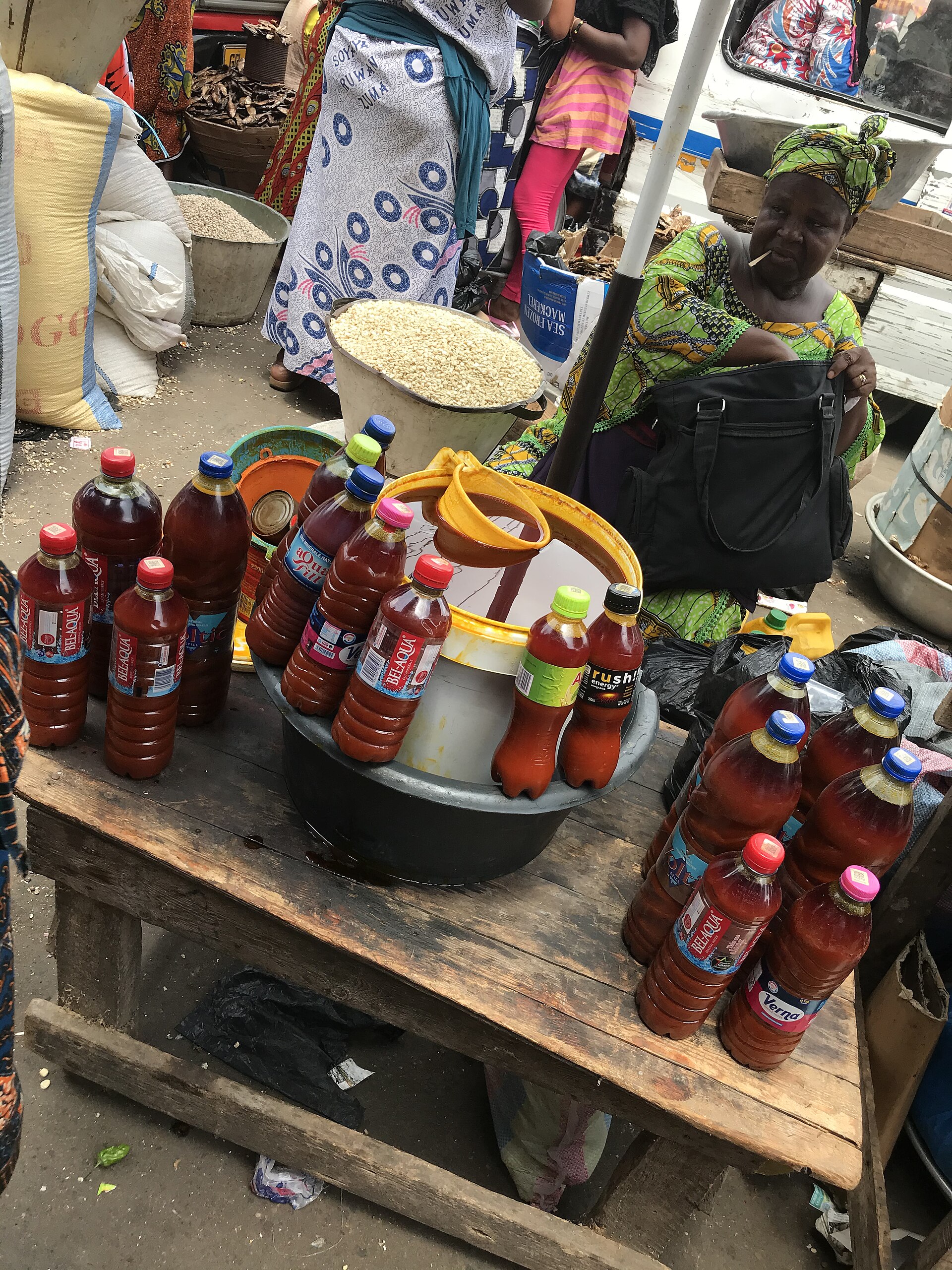
Featured photo: Darkemperror, CC BY-SA 4.0.

2 thoughts on “Crude Palm Oil Specification: 8 Essential Numbers for the Best CPO Deal”