


SFDA registration for imported cooking oil is the part of a Saudi deal that people tend to leave until the oil is already on the water. Then the container sits at Jeddah or Dammam, the clearance stalls, and storage charges start ticking while someone fixes a label or a missing product record. It happens more often than you’d think, and almost always for small, boring reasons.
We sell refined cooking oils to importers, wholesalers and packers in many countries, and Saudi buyers ask us the same questions again and again. So this guide is our plain answer: what SFDA registration for imported cooking oil actually involves, who does what, which documents the supplier should hand you, the label points that trip people up, and the specifications we ship so the oil passes testing at the port.
A quick honest note first. We’re an oil supplier, not a regulatory consultant. Saudi rules get updated and the SFDA portal changes its screens now and then. Treat this as a practical map from people who ship oil for a living, and check the current details with the SFDA or a licensed clearing agent before you commit money.
Table of Contents
What SFDA Registration for Imported Cooking Oil Really Means
The Saudi Food and Drug Authority (SFDA) controls food that enters and is sold in the Kingdom. For an importer, SFDA registration for imported cooking oil is really two things joined together. First, your company has to exist in the SFDA system as a registered food importer. Second, each product you bring in has to be listed in the SFDA product database with its details, label and origin.
Neither of those is the same as a certificate stamped on one shipment. Registration is the standing record. Each container then still goes through clearance, document checks and, quite often, sampling at the port. Buyers new to the market sometimes think that once the product is registered, every container just walks through. It doesn’t. Registration gets you to the door. The paperwork and the oil in each shipment still have to match it.
The good news is that for plain vegetable cooking oil the process is not exotic. Refined sunflower oil, soybean oil, palm olein and canola oil are low-risk foods compared to meat or infant formula. Most of the trouble with SFDA registration for imported cooking oil comes from labels and mismatched documents, not from the oil itself.
Who Is Responsible for SFDA Registration for Imported Cooking Oil
This catches foreign suppliers out. Under the Saudi system, the importer carries the responsibility. The Saudi company with a commercial registration (CR) that lists food trading as an activity opens the SFDA account, registers its warehouse and registers the products.
As the exporter, we can’t register your product in our name in Saudi Arabia. What we can do is give you everything the system asks for, in the right form, before the oil is loaded. That means product details, the finished label artwork, a certificate of analysis, origin documents and anything else your agent needs.
If you’re a trader without a Saudi entity, you’ll need a local importer of record to hold the registrations. Some buyers use a partner distributor for this. Others set up their own company. Either way, sort it out before you sign a purchase contract, not after.
Steps for SFDA Registration for Imported Cooking Oil
Here is how SFDA registration for imported cooking oil usually goes in practice. The order matters, because each step leans on the one before it.
Step 1: Get the commercial registration right
Your CR has to include food import or food trading as a listed activity. If it only says general trading, fix that first. Everything else in the SFDA system hangs off the CR.
Step 2: Open the importer account with the SFDA
The importer creates an account on the SFDA electronic services and registers as a food establishment. You’ll enter company details, contact people and the CR. Keep the login with someone who’ll still be at the company next year. We’ve seen buyers lose weeks because the one person who knew the password left.
Step 3: Register and license the warehouse
Imported food has to go to a storage place that meets SFDA conditions. For cooking oil that mostly means a clean, dry, covered store away from heat and direct sun, with pallets off the floor and some basic pest control. If you plan to bring oil in bulk and pack it locally, the packing site has its own requirements.
Step 4: Register each product
Now comes the product side of SFDA registration for imported cooking oil. Each product is entered separately: the brand name, the oil type, the pack sizes, the country of origin, the manufacturer and the label. A 1 litre and a 5 litre bottle of the same oil may sit under one product record or need separate entries depending on how the portal treats pack sizes at the time, so ask your agent. A sunflower oil and a soybean oil are definitely two separate products.
Step 5: Prepare the shipment documents
Before loading, line up the commercial invoice, packing list, bill of lading, certificate of origin, health certificate where requested and the certificate of analysis. We send drafts so your clearing agent can check them against the product record.
Step 6: Clear the container at the port
Customs clearance runs through the national single window, and the SFDA reviews the food side. The oil may be held for sampling. If the lab results and documents match, the container is released.
Step 7: Keep records for every lot
Keep the certificate of analysis, the lot numbers and the clearance papers for each shipment. If the SFDA ever asks about a batch on the market, you’ll want to answer in a day, not a month.
Documents for SFDA Registration for Imported Cooking Oil
The exact list shifts a little over time, but this is what we normally prepare or help with on our side. Having it ready early makes SFDA registration for imported cooking oil much less painful.
- Product details sheet with the oil type, ingredients, pack sizes, shelf life and storage conditions.
- Final label artwork in Arabic, or Arabic and English, exactly as it will be printed.
- Certificate of analysis (COA) from the lot you’re receiving, with fatty acid profile, free fatty acids, peroxide value, moisture and trans fat.
- Certificate of origin issued by the chamber of commerce in the producing country.
- Health certificate or free sale certificate where your agent or the SFDA asks for one.
- Halal certificate. For plant oils this is often asked for by buyers and retailers even where the rule doesn’t strictly demand it. We supply Halal-certified oil, so it’s an easy box to tick.
- Commercial invoice, packing list and bill of lading that use the same product names and quantities as the product record.
That last point sounds obvious. It isn’t. A mismatch as small as “Sunflower Oil” on the invoice and “Refined Sunflower Seed Oil” on the label can send a file back. We match our documents to your registered product name, word for word, if you tell us what it is.
Label Rules That Decide Your SFDA Registration for Imported Cooking Oil
Most holds we hear about in SFDA registration for imported cooking oil come back to the label. Saudi labelling follows Gulf (GSO) standards for prepackaged food, which the SFDA adopts. For cooking oil, these are the points to watch.
- Arabic is required. The mandatory information must be in Arabic. You can add English, but Arabic can’t be missing or hidden on a sticker that peels off.
- Name the oil properly. Say what it is: refined sunflower oil, refined soybean oil, palm olein. If it’s a blend, list the oils. Don’t call a palm olein blend “vegetable oil” and hope nobody asks.
- Net content in metric units, in litres or millilitres.
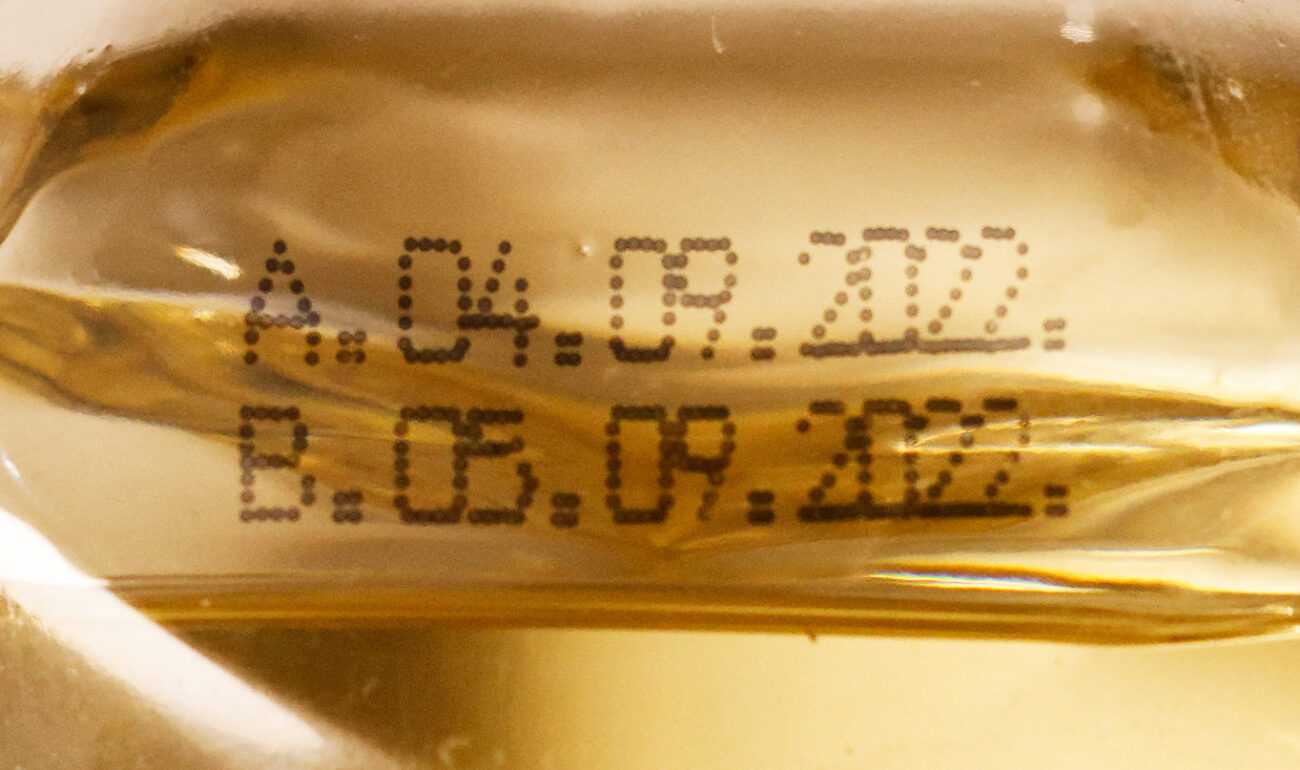
- Production date and expiry date. Use the format your agent recommends. Cooking oil usually carries 18 to 24 months depending on the oil and the pack.
- Country of origin and the name and address of the manufacturer or packer, plus the Saudi importer.
- Nutrition facts following the Gulf nutrition labelling standard, including trans fat.
- Storage instructions such as store in a cool dry place away from sunlight.
- Lot or batch number so the oil can be traced.
If you’re doing private label with us, send your artwork early. We check that the oil type, pack size and claims on the label match what we’re actually filling. A label that says “cholesterol free, rich in vitamin E” is fine for sunflower oil. A label that says “cold pressed” on refined oil is not, and it will cause you trouble.
Trans Fat Limits and Other Quality Points
Saudi Arabia was early on trans fat. The SFDA set a limit of 2% trans fat of total fat for vegetable oils and soft margarine, and later banned partially hydrogenated oils in food. For plain refined liquid oil this is rarely a problem if the refinery runs deodorisation at sensible temperatures. Our refined oils test well under that limit, and the trans fat figure is on every COA we send.
Other quality points the lab may look at on a sample are free fatty acids, peroxide value, moisture, colour and whether the oil is really what the label says. A sunflower oil that’s been stretched with cheaper oil shows up straight away in the fatty acid profile. That’s one more reason SFDA registration for imported cooking oil should be built on a supplier who gives you a real lot COA, not a generic sheet.
The Cooking Oils We Sell for the Saudi Market
We supply refined oils in retail packs, food-service packs and bulk. Below are the products Saudi buyers ask us for most, with the typical specification we load against. Each product page has more detail and you can ask for the full sheet.
| Oil we sell | FFA (as oleic) | Peroxide value at loading | Moisture and volatiles | Other key points |
|---|---|---|---|---|
| Refined sunflower oil | 0.1% max | 2.0 meq/kg max | 0.05% max | Iodine value 118 to 141, cold test 5.5 hours clear |
| Refined soybean oil | 0.1% max | 2.0 meq/kg max | 0.05% max | Iodine value 124 to 139, colour 2.0 red max (5.25 inch Lovibond) |
| Refined palm olein CP10 | 0.1% max | 2.0 meq/kg max | 0.1% max | Cloud point 10 C max, iodine value 56 min |
| Refined palm olein CP8 | 0.1% max | 2.0 meq/kg max | 0.1% max | Cloud point 8 C max, iodine value 58 min |
| RBD canola oil | 0.1% max | 2.0 meq/kg max | 0.05% max | Erucic acid under 2% |
| High oleic sunflower oil | 0.1% max | 2.0 meq/kg max | 0.05% max | Oleic acid 75% min, longer fry life |
All of these come with trans fat on the COA, and all of them are produced under ISO 22000, HACCP and GMP with Halal certification available. For a closer look at the numbers, our refined soybean oil specification and RBD canola oil specification guides go line by line.
Packing options
- PET bottles: 1 litre, 1.5 litre, 1.8 litre, 2 litre, 3 litre and 5 litre, packed in cartons.
- Jerrycans: 10, 18 and 20 litre for restaurants and bakeries.
- 18 litre tins for buyers who prefer metal.
- Flexitank in a 20 foot container, around 20 to 22 tonnes, for local packers.
If you’re wondering how many cartons go in one load, we wrote a separate guide on how much cooking oil fits in a 20ft container.
Bulk Oil and Local Packing
Some Saudi buyers import in flexitanks and fill bottles locally. That changes how SFDA registration for imported cooking oil works for you. The bulk oil is an ingredient going to a food factory, and the finished bottles become a locally packed product with the Saudi packer named on the label. Your packing plant needs its own SFDA licensing.
For bulk, SFDA registration for imported cooking oil is only half the job. We pay extra attention to the flexitank, the previous cargo of the container and the sealing. We send the COA from the shore tank before loading and can arrange an independent surveyor to sample at loading if you want one. Our guide on how many liters in a ton of vegetable oil is handy here, because bulk is priced by the tonne while your bottles are sold by the litre.
Timelines and Costs
How long does SFDA registration for imported cooking oil take? For a buyer who already has a CR with food activity and a licensed warehouse, adding a new cooking oil product can be fairly quick once the label is approved. Setting up from nothing takes longer, mostly because of the company and warehouse side.
The SFDA has historically offered imported food product registration as a free electronic service for importers. Your real costs tend to be the agent’s fees, label redesign and printing, lab testing and port storage if something goes wrong. Plan on the safe side and don’t book your first container to arrive the week the label gets submitted.
Common Mistakes With SFDA Registration for Imported Cooking Oil
We’ve watched a lot of first shipments. These are the mistakes we see most with SFDA registration for imported cooking oil:
- Shipping before the product record is done. The oil arrives, the record isn’t there, and the container waits.
- Label printed before approval. Thousands of bottles with the wrong Arabic name on them. Expensive.
- Different names on different documents. Invoice, packing list, label and product record must agree.
- Generic COA. A spec sheet is not a certificate of analysis. Ask for the lot COA.
- Short remaining shelf life. Retailers in the Kingdom often refuse stock with less than a set share of shelf life left. Old oil is a hard sell even if it’s legal.
- Forgetting the Arabic sticker quality. If you’re stickering imported bottles, the sticker must stay on and stay readable.
- Assuming GCC equals Saudi. Gulf standards are shared, but each country’s authority runs its own registration. UAE registration doesn’t cover Saudi Arabia.
How We Help With SFDA Registration for Imported Cooking Oil
We can’t hold the registration for you, but we can make your side of SFDA registration for imported cooking oil easy. On every Saudi order we offer:
- A product details sheet in the format your agent uses.
- Lot-specific COA with fatty acids, FFA, peroxide value, moisture, colour and trans fat.
- Label checking for private label, so the oil and the claims match.
- Arabic and English label printing on bottles and cartons if you’re using our packing.
- Certificate of origin, health certificate support and Halal certificate.
- Pre-shipment samples so your agent can test before you pay the balance.
We also supply buyers in other markets with very similar systems. If you trade in more than one country, our guides on FDA requirements for importing vegetable oil and NAFDAC registration for imported vegetable oil show how the paperwork differs. And if your Saudi customers include kosher food makers, see our page on being a kosher certified vegetable oil supplier.
Price Terms for Saudi Orders
Most Saudi buyers ask us for CIF Jeddah or CIF Dammam. Some prefer FOB and book their own freight. Both work, and the choice affects who handles what when something goes wrong at sea. We explain the trade-offs in CIF vs FOB vegetable oil. Whatever term you choose, the documents for SFDA registration for imported cooking oil are the same.
For the HS codes your agent will put on the declaration, our palm oil HS code guide covers palm olein, and the other oils follow the same chapter 15 logic.
A Realistic Timeline for a First Saudi Order
People always want a number of days. The honest answer is that it depends on where you start, but here’s how a first order usually runs with us when SFDA registration for imported cooking oil is done in parallel with production.
| Week | What happens |
|---|---|
| 1 | You send label artwork and pack sizes. We send the product sheet, a sample COA and a proforma invoice. |
| 2 to 3 | Your agent submits the product records. We print labels once the artwork is approved. |
| 3 to 4 | We fill and pack. Pre-shipment samples go out if you want them tested. |
| 4 to 5 | Container loads. Documents go to your agent for checking before the original set is released. |
| 6 to 8 | Sea transit and port clearance, depending on the route and the port. |
The step that slips most is label approval. If you start SFDA registration for imported cooking oil the day you sign the contract, the timeline above is quite achievable. If you start it when the ship sails, you’re gambling.
Quick Checklist Before You Ship
Print this, tick it, then book the container. It’s the short version of SFDA registration for imported cooking oil.
- CR includes food trading.
- SFDA importer account active and someone at the company can log in.
- Warehouse registered and meeting storage conditions.
- Product record complete for each oil and pack size.
- Arabic label approved and matching the product record.
- Trans fat and nutrition panel on the label.
- Lot COA, certificate of origin and Halal certificate ready.
- Invoice, packing list and bill of lading using the registered product name.
- Enough shelf life left on arrival for your retailers.
If every line has a tick, SFDA registration for imported cooking oil shouldn’t be the thing that holds your container. If one is missing, sort it now while the oil is still in our tank, not at the port.
Useful Official Pages
The Saudi Food and Drug Authority site has the current e-services and circulars. Gulf labelling and product standards are published by the GCC Standardization Organization. International quality limits for named vegetable oils sit in the Codex Alimentarius standards, which most Gulf standards follow closely. Customs clearance and tariffs come under the Zakat, Tax and Customs Authority.
FAQs on SFDA Registration for Imported Cooking Oil
Does every cooking oil need SFDA registration?
Yes, imported cooking oil sold in Saudi Arabia needs to be in the SFDA system through a registered importer. SFDA registration for imported cooking oil covers each product separately.
Can the foreign supplier register the product?
No. The Saudi importer with a valid CR registers the product. The supplier provides the documents.
Is Halal certification required for vegetable oil?
The strict Halal rules target animal-origin food, but many Saudi buyers and retailers still ask for it. We can supply Halal-certified oil.
What trans fat level is allowed?
The SFDA limit for vegetable oils is 2% of total fat. Our refined oils test well below that.
Do you print Arabic labels?
Yes. On our bottled oil we print Arabic and English labels to your approved artwork.
How long does SFDA registration for imported cooking oil take?
If your company and warehouse are already registered, adding a cooking oil product mostly depends on how fast the label is approved. Starting from scratch takes longer.
Does SFDA registration for imported cooking oil cover the other Gulf countries?
No. The Gulf countries share many standards, but SFDA registration for imported cooking oil only covers Saudi Arabia. The UAE, Kuwait, Qatar, Oman and Bahrain each have their own process.
Can I change the label after SFDA registration for imported cooking oil is done?
You can, but changes usually need updating in the product record. Don’t print a new label until the record matches it.
What is your minimum order?
Normally one 20 foot container, either packed oil or a flexitank.
Talk to Us About Oil for Saudi Arabia
If you’re working through SFDA registration for imported cooking oil, or you already have your product records and need a steady supplier, send us the oil type, pack sizes, monthly volume and port. We’ll come back with a price, the full specification and a sample COA your agent can check against the label.
Email info@dthcompanyltd.com, WhatsApp +66 91 765 9104, or use our contact page. You can browse our full product range or read more about us.






2 thoughts on “SFDA Registration for Imported Cooking Oil: 7 Easy Steps”