

Working with a private label cooking oil manufacturer is the quickest way to put your own brand of cooking oil on the shelf without building a refinery or a bottling plant. You choose the oil, the bottle, the label and the carton. We refine, fill, pack and ship it with your name on it. This page explains exactly how that works with us: the oils, the specs, the packs, the artwork process, minimums, lead times, costs and the mistakes that new brands make most often.
We are DTH Company Ltd, a private label cooking oil manufacturer based in Chiang Mai, Thailand. We pack private label cooking oil for importers, distributors, supermarket chains and food service brands around the world.
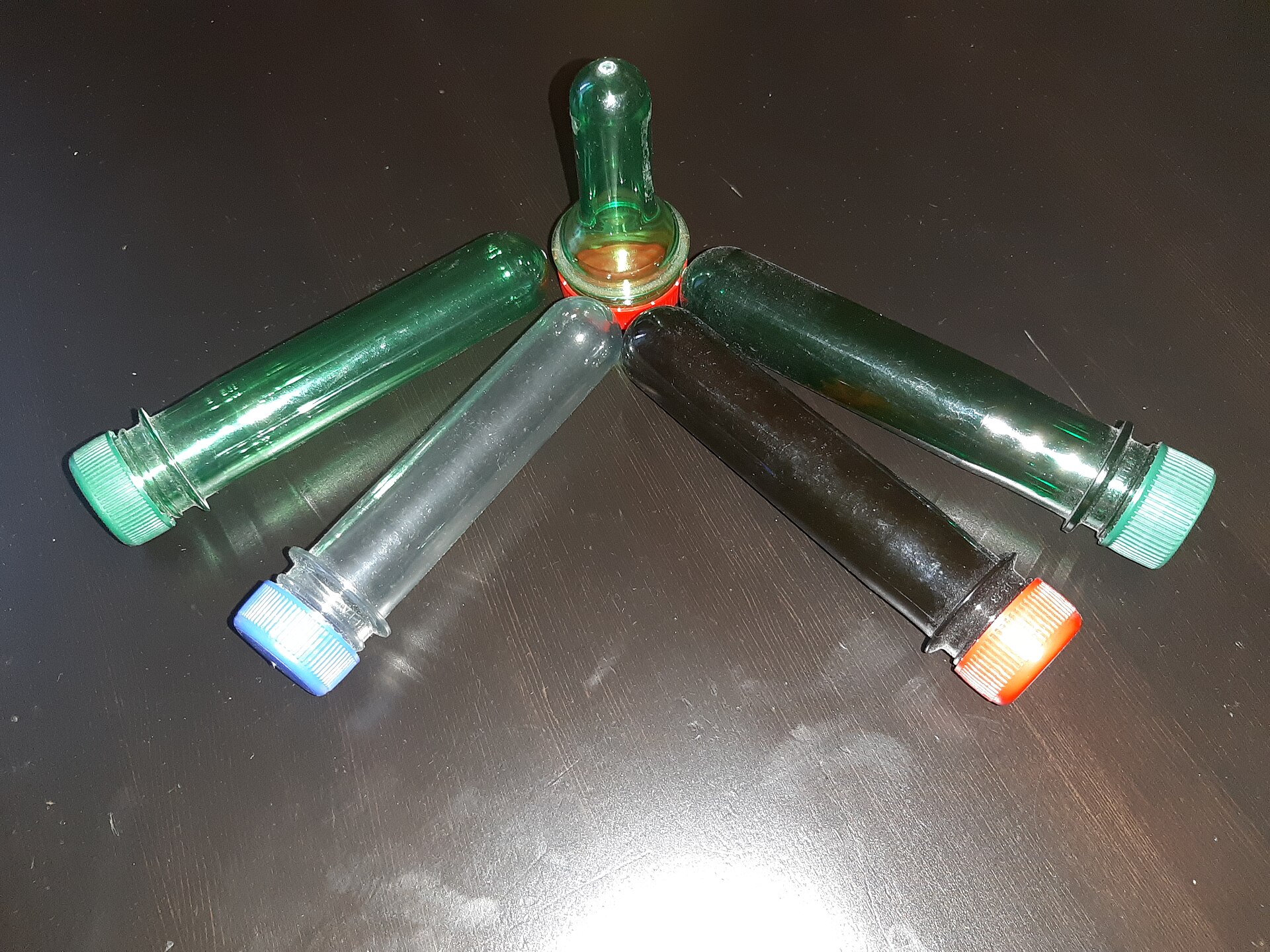
Table of Contents
What a Private Label Cooking Oil Manufacturer Does for You
The short version: everything except sell it. A private label cooking oil manufacturer takes care of the oil, the packaging and the export, so you can spend your time on customers.
Here’s what’s included when you work with us.
- Sourcing and refining the oil to an agreed specification
- Testing each batch and issuing a certificate of analysis
- Supplying bottles, caps, jerrycans, tins and cartons
- Printing your labels, sleeves or carton artwork
- Filling, capping, labelling, batch coding and packing
- Loading containers to a load plan
- Export documents, freight booking and insurance if you want it
You own the brand. We make the product. If that’s the arrangement you need, keep reading.
Why Use a Private Label Cooking Oil Manufacturer in Thailand
Thailand has one of the biggest food packaging industries in Asia. That matters a lot for private label. Good PET preforms, caps, labels, sleeves, jerrycans, tins and cartons are all made locally, so a private label cooking oil manufacturer here can source packaging quickly and reorder it without long waits.
The other half is the oil. Palm and coconut oil are produced in Thailand, while sunflower, soybean and canola oil are imported and refined. That means one private label cooking oil manufacturer can offer you several oils under one brand, filled on the same lines and shipped in the same container if you want.
And the ports work. Most of our containers go through Laem Chabang, which has direct sailings to most of the world. Predictable transit times make it much easier to plan launches and promotions.
Oils You Can Put Your Brand On
You can choose any of these oils for your own label when you work with us as your private label cooking oil manufacturer. Each link goes to the product page.
| Oil | Popular with | Product page |
|---|---|---|
| Refined sunflower oil | Supermarket brands, premium retail | Refined sunflower oil |
| High oleic sunflower oil | Food service and frying brands | High oleic sunflower oil |
| Organic sunflower oil | Organic and health stores | Organic sunflower oil |
| RBD palm olein CP10 | Value brands in warm climates | Refined palm oil CP10 |
| RBD palm olein CP8 | Value brands in cooler climates | Refined palm oil CP8 |
| Refined soybean oil | All-purpose brands | Refined soybean oil |
| Refined canola oil | Health-positioned brands | Refined canola oil |
| RBD and virgin coconut oil | Bakery, ethnic food, beauty | RBD coconut oil, Virgin coconut oil |
If your private label cooking oil manufacturer is set up for it, blends are possible too, such as palm and soybean, as long as the label describes them honestly and your local rules allow it.
Specifications for Private Label Cooking Oil Manufacturer Orders
Your brand is only as good as what’s inside the bottle. These are the limits we fill against for refined sunflower oil, our most popular private label oil.
| Parameter | Specification |
|---|---|
| Free fatty acid (as oleic) | 0.10% max |
| Peroxide value at filling | 2.0 meq/kg max |
| Moisture and volatile matter | 0.05% max |
| Insoluble impurities | 0.05% max |
| Colour (Lovibond 5¼ inch) | 3.0 red max |
| Iodine value (Wijs) | 118 to 141 |
| Relative density at 20 °C | 0.918 to 0.923 |
| Cold test (winterized grade) | 5.5 hours min at 0 °C |
| Smoke point | About 225 °C |
| Odour and taste | Neutral, no off flavour |
| Shelf life, sealed | 18 months in PET, up to 24 months in tins |
And for refined canola oil:
| Parameter | Specification |
|---|---|
| Appearance | Clear, light yellow |
| Free fatty acid (as oleic) | 0.05% max |
| Moisture and impurities | 0.1% max |
| Peroxide value | 1.0 meq O2/kg max |
| Iodine value (Wijs) | 105 to 126 |
| Shelf life | 18 to 24 months, cool and dry |
Test methods follow the American Oil Chemists’ Society. The limits sit within the Codex Alimentarius standard for named vegetable oils. Palm olein specs are in CP8 vs CP10 palm oil, and soybean in refined soybean oil specification.
A good private label cooking oil manufacturer will put the agreed spec into the contract. Ask for that. It protects your brand if anything goes wrong.
Bottles, Jerrycans and Tins
Choosing the pack with your private label cooking oil manufacturer is where most new brands spend the most time, and rightly so. The pack is what shoppers see.
| Pack | Material | Carton | Best for |
|---|---|---|---|
| 250 ml and 500 ml | PET | 24 per carton | Small shops, hotels, trial sizes |
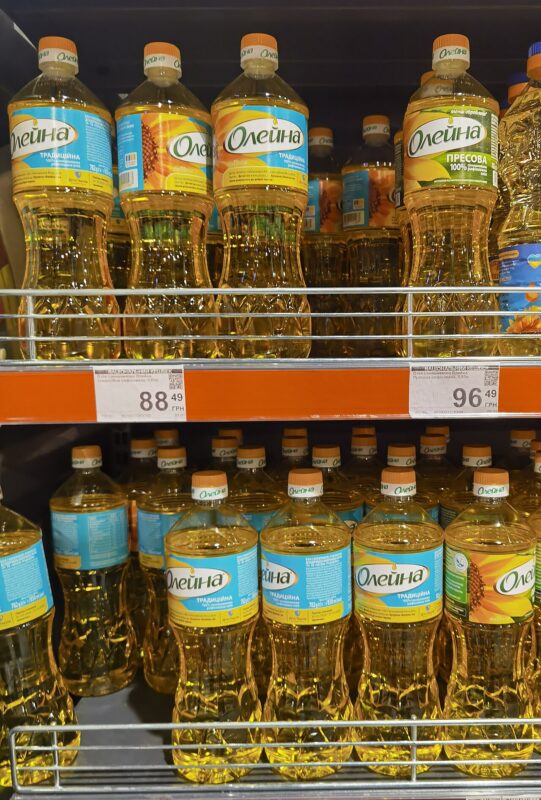
| 1 litre | PET | 12 per carton | Supermarkets, the core retail size |
| 1.8 and 2 litre | PET | 6 per carton | Family shoppers |
| 3 litre | PET with handle | 4 or 6 per carton | Value buyers |
| 5 litre | PET with handle | 4 per carton | Cash and carry, small restaurants |
| 1 litre pouch | Multilayer film | 10 or 12 per carton | Price-sensitive retail |
| 10 and 20 litre jerrycan | Food grade HDPE | Loose or palletised | Restaurants, traders, markets |
| 18 litre tin | Tinplate | Loose or palletised | Food service, bakeries, sweet shops |
| Glass bottles and jars | Glass | By size | Virgin coconut oil, premium oils |
PET bottles start life as small preforms, like the ones in the photo above. They’re heated and blown into shape, then filled. Polyethylene terephthalate is light, clear and food safe, which is why almost every cooking oil brand uses it.
Standard bottle or custom mould?
For a first order, I nearly always suggest a standard bottle with a strong label. Custom moulds look great, but they add cost and several weeks to the first order, and you need big volumes to pay them back. Once your brand is selling, you can move to your own bottle shape. A sensible private label cooking oil manufacturer will tell you this honestly rather than sell you a mould you don’t need yet.
Caps and closures
Flip-top caps are common on 1 litre and smaller bottles. Screw caps with a tamper ring are common on larger sizes. Handles on 3 and 5 litre bottles matter more than people think. A weak handle snaps in a shopper’s hand, and they remember the brand for the wrong reason.
Labels and sleeves
Paper and plastic film labels both work. Shrink sleeves cover more of the bottle and look premium, but cost more. Jerrycans can be printed directly or labelled. Tins are usually printed.
For a deeper comparison of bottles and jerrycans, read PET bottle vs jerrycan cooking oil packaging.
What Your Label Has to Say
We print what you approve, but your label has to meet the law in the country where it’s sold, not ours. Rules differ, but most countries ask for some version of the following.
- Product name, such as “Refined Sunflower Oil”
- Net volume in the correct format for your market
- Ingredients, if it’s a blend or has added vitamins
- Nutrition panel
- Name and address of the importer or brand owner
- Country of origin
- Batch number and best-before date
- Storage instructions
- Halal or other marks only if certified
Health claims such as “cholesterol free” or “good for the heart” are tightly controlled in many places. Check before you print. In the United States, for example, the FDA has detailed rules on food labelling and packaging. Send us your local rules, and as your private label cooking oil manufacturer we’ll check the proof against them and flag anything that looks wrong. The responsibility for local compliance stays with the brand owner, but we’d rather catch a problem before printing than after.
How the Private Label Process Works
Here’s the usual sequence for a first order with a private label cooking oil manufacturer like us.
- Brief. You tell us the oil, the packs, the target market, quantity and Incoterm.
- Offer. We send pricing, the spec, bottle and carton options and a load plan.
- Samples. We send oil samples and empty sample bottles, caps and cartons.
- Artwork. We send label templates with the exact dimensions. You or your designer prepare the artwork. We send a print proof.
- Approval. You sign off the proof. Nothing is printed before this.
- Contract and payment. Proforma invoice or contract, then deposit or letter of credit.
- Printing. Labels and cartons are printed. We send photos.
- Filling. Oil tested, filled, capped, labelled, coded and packed.
- Loading. Container loaded to the load plan, sealed and photographed. Your inspector can attend.
- Shipping and documents. The vessel sails and documents follow.
On repeat orders, steps 3 to 5 usually disappear. You just send a purchase order.
Private Label for Food Service Brands
Not every brand sits on a supermarket shelf. Many of our private label customers sell to restaurants, hotels, caterers and street food vendors. Their needs are different.
Food service buyers care about fry life, price per litre and a pack that survives rough handling. That usually means palm olein or high oleic sunflower oil in 18 litre tins or 20 litre jerrycans. The label can be simpler than retail, but it still needs to meet local rules, and a strong brand name still helps. Chefs are loyal to oil that behaves the same in the fryer every day.
If you’re building a food service brand, ask your private label cooking oil manufacturer for jerrycan drop-test results and tin seam checks. A cracked jerrycan in a hot kitchen is a safety problem, not just a mess. Our post on how often to change fryer oil is useful material to share with your restaurant customers.
A Realistic First-Order Timeline
Every brand asks how long it will take. Here is a realistic picture for a first private label order with us. Times overlap in places, and they depend on how fast artwork is approved.
| Stage | Typical time |
|---|---|
| Offer, samples and pack selection | 1 to 2 weeks |
| Artwork, proofing and approval | 1 to 3 weeks, mostly depends on you |
| Label and carton printing | About 2 weeks |
| Filling, packing and loading | About 1 to 2 weeks |
| Sea transit | Under 2 weeks to over 5 weeks, by destination |
The fastest first orders we see are from brands that arrive with finished artwork and a clear list of sizes. The slowest are the ones still choosing a name. Repeat orders skip most of the early stages, so a private label cooking oil manufacturer can usually load them in two to four weeks.
Minimum Order and Lead Time
As a private label cooking oil manufacturer, our minimum for most work is one 20 foot container, and that container can be split across two or three pack sizes. Below that, label and carton print runs become expensive per unit, and the economics stop working for you.
Lead time for a first order is usually longer than for our standard packs, because artwork approval and printing take time. After that, repeat orders load in roughly the same time as standard ones, typically two to four weeks from confirmed order. Sea transit comes on top. For more, see minimum order quantity for bulk cooking oil.
Any private label cooking oil manufacturer that promises a first branded container in a week is either not printing new labels or not being honest about the timeline.
What Drives the Price
Cooking oil prices move every week, so we quote per order rather than publish a price list. Here’s what goes into a private label quote.
- The oil, at the market price on the day.
- The pack, meaning bottle, cap, label and carton. Smaller packs cost more per litre.
- Filling and labour. Small bottles take longer.
- Printing. Labels and cartons, plus plates or cylinders the first time.
- Thai inland transport and port fees.
- Ocean freight and insurance on CFR or CIF terms, defined in the Incoterms rules.
- Documents and any inspection.
We show each of these separately. That makes it easier to see where your money goes and to compare us fairly with any other private label cooking oil manufacturer you’re talking to. Our offers are usually valid for a few days, because the oil market moves.
For a worked example of a packed container, see our post on the sunflower oil 40ft container price.
Quality Control on Private Label Runs
Your name is on the bottle, so quality control matters even more than usual. This is the part of being a private label cooking oil manufacturer we take most seriously. Here’s what happens on every private label run.
- Oil is tested before filling for free fatty acid, peroxide value, moisture and colour.
- Bottles and caps are checked for defects before they go on the line.
- Fill volume is checked during the run.
- Cap torque is checked so bottles don’t leak or crack.
- Labels are checked for position, adhesion and print quality.
- Batch codes and best-before dates are checked for legibility.
- Cartons are checked for strength and correct marking.
- Retained samples from each batch are kept.
We work under ISO 22000, HACCP, GMP and Halal systems. Our post on HACCP certified cooking oil manufacturer explains what to verify on a supplier’s certificates. And you’re always welcome to send SGS or another inspector to check the run. See pre-shipment inspection for edible oil.
Building a Brand That Lasts
The oil is a commodity. The brand isn’t. A private label cooking oil manufacturer can give you a great product, but these things are what turn it into a lasting brand. Consistency. Shoppers buy the same brand again when it looks, smells and fries the same every time. That’s the job of your private label cooking oil manufacturer.
A clear position. Value, premium, health, food service. Pick one and design for it. A value brand in a premium bottle confuses people, and so does the opposite.
The right sizes. Look at what sells in your market today and start there. You can add sizes later.
A strong carton. Shoppers never see it, but shop owners do. A carton that collapses gives your brand a bad name before a single bottle is sold.
Steady supply. Empty shelves teach shoppers to try another brand. Plan your orders so you never run out.
If you want to go deeper on the brand side, the general idea of private label products is well covered elsewhere. Our own posts on private label vegetable oil and the cooking oil repackaging business look at other routes to your own brand.
7 Proven Tips for Choosing a Private Label Cooking Oil Manufacturer
1. Ask for the spec in the contract
Don’t settle for “premium quality” on a brochure. Get the numbers in writing.
2. Get real samples
Oil samples and empty packs. Fill a bottle, drop it, squeeze it, leave it in the sun. See how the cap and handle hold up.
3. Check the artwork process
A good private label cooking oil manufacturer sends templates with exact dimensions and a print proof before anything is printed. If they don’t, expect mistakes.
4. Look at the cartons
Ask for photos of a filled, sealed carton and a pallet stack. Weak cartons are a common, expensive problem.
5. Verify the company
Video call from the line, registration papers, references. Read our guide on the warning signs of a fake vegetable oil supplier.
6. Agree safe payment terms
A deposit with balance against documents, or a letter of credit, is normal on a first order. See letter of credit vs TT payment.
7. Start with one container, then grow
Prove the brand in your market first. Then add sizes and volume. Any honest private label cooking oil manufacturer will support that approach.
Mistakes New Brands Make
Spending on a custom bottle mould before the brand has sold a single container.
Printing labels before checking local rules, then having to reprint after the container is held at the port.
Choosing CP10 palm olein in clear bottles for a cool market. It clouds on the shelf and shoppers think it’s spoiled. Use CP8 or sunflower instead.
Ordering only one size. A mixed first container tells you much more.
Picking a private label cooking oil manufacturer on price alone, without checking the bottle weight, the net volume or the oil grade behind the number.
Frequently Asked Questions
What is the minimum for private label?
With us as your private label cooking oil manufacturer, normally one 20 foot container, split across up to two or three sizes.
Can you design my label?
As a private label cooking oil manufacturer, we supply templates and can help with layout, but most brands use their own designer for the main artwork. We check the proof before printing.
Can I use my own bottle shape?
Yes, with a custom mould. It adds cost and time, so most brands start with a standard bottle.
Do you add vitamins?
Yes, fortified oil with vitamin A and D is available for markets that require or want it.
Can I get Halal on my label?
Yes, if the oil and process are covered by Halal certification. We’ll supply the certificate.
Which countries do you ship to?
As a private label cooking oil manufacturer with buyers worldwide, we ship to Asia, the Middle East, Africa, Europe, the Americas, the Caribbean and the Pacific.
Start Your Brand With a Private Label Cooking Oil Manufacturer You Can Trust
Send us the oil, pack sizes, target market, quantity, destination port and Incoterm. If you already have artwork, send that too. We’ll reply with pricing, the spec, pack options and a load plan, usually within one working day. You can read more about us or see how we work on OEM sunflower oil bottling Thailand.
Email info@dthcompanyltd.com, call or WhatsApp +66 91 765 9104, or use our contact page.


4 thoughts on “Private Label Cooking Oil Manufacturer: Trusted OEM Specs, Packing and 7 Proven Tips”