

PET bottle vs jerrycan cooking oil packaging sounds like a small choice next to the oil itself. It isn’t. The pack decides who buys your oil, how long it stays fresh, how much fits in a container, what you pay per litre for plastic, and whether your customers trust what’s inside. We’ve seen buyers switch from one to the other and double their sales, and we’ve seen the opposite.
We sell refined cooking oils worldwide in both PET bottles and jerrycans, plus tins, IBCs and flexitanks. This guide goes through the PET bottle vs jerrycan cooking oil packaging decision the way we talk it through with buyers: the real differences in protection, cost, loading and handling, which markets prefer which, and the packing specifications we offer. At the end you’ll find our oils with their specifications, so you can match the oil to the pack.
The numbers here are typical figures from our own packing. Packaging suppliers differ, so we confirm the exact bottle, jerrycan and carton with every quote.

Table of Contents
The Short Answer
Here’s the PET bottle vs jerrycan cooking oil packaging answer in a few lines. If you sell to households through shops and supermarkets, PET bottles from 1 to 5 litres usually win. If you sell to restaurants, caterers, bakeries, street food sellers or small shops that decant oil, jerrycans from 10 to 25 litres usually win. Most distributors end up stocking both.
The PET bottle vs jerrycan cooking oil packaging question is really a question about your customer. The rest of this guide helps you work out the details.
What We Mean by PET Bottles and Jerrycans
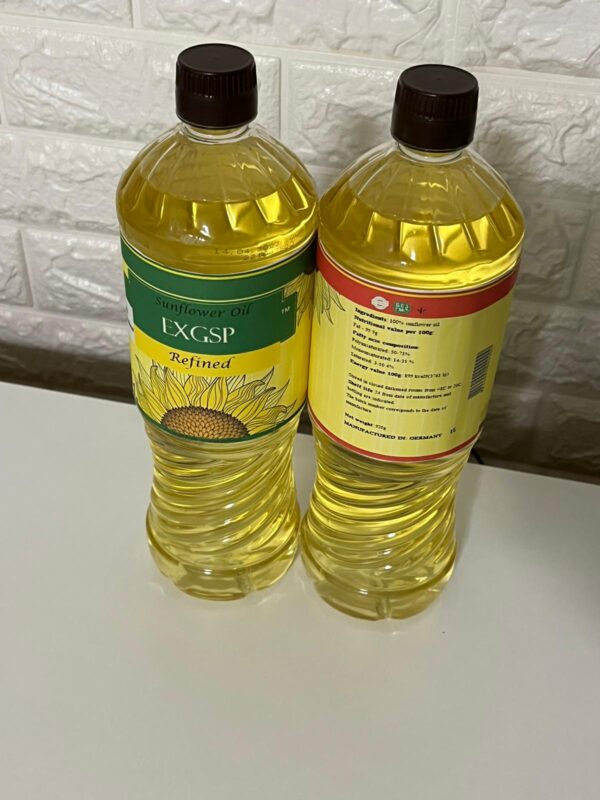
PET bottles are made from polyethylene terephthalate, the same clear plastic used for water and soft drinks. For cooking oil they normally come in 0.5, 1, 1.5, 1.8, 2, 3 and 5 litre sizes, with a screw cap, often with a tamper-evident ring, and a paper or film label or a shrink sleeve. They’re packed in cartons for shipping.
Jerrycans for cooking oil are usually made from HDPE, high density polyethylene, which is thicker and less clear. Common sizes are 5, 10, 18, 20 and 25 litres, with a handle, a wide screw cap and often an inner seal. They’re shipped without cartons, stacked directly.
One side note: you’ll also see 18 litre tins in food service, especially in the Middle East and parts of Asia. We cover them briefly below, because they’re the third option most buyers weigh up when they think about PET bottle vs jerrycan cooking oil packaging.
Side by Side Comparison
| Point | PET bottle | Jerrycan (HDPE) |
|---|---|---|
| Usual sizes | 0.5 to 5 litres | 5 to 25 litres |
| Main buyers | Households, supermarkets | Restaurants, caterers, bakeries, traders |
| Shelf appeal | High, oil is visible | Low to medium |
| Light protection | Low if clear, better if tinted | Good, opaque or semi-opaque |
| Oxygen barrier | Good | Lower than PET |
| Packaging cost per litre | Higher, especially 1 litre | Lower |
| Weight of packaging | Light per bottle, heavier per litre with cartons | Heavier per unit, lighter per litre |
| Breakage and leaks | Can split if dropped, caps can leak if overtightened or undertightened | Tough, handles rough handling well |
| Stacking | Needs strong cartons | Stacks directly, interlocking designs |
| Refill and fraud risk | Low | Higher, cans get refilled with other oil |
| Recycling | Widely recycled | Recyclable, often reused |
Neither pack wins on every line. That’s why the PET bottle vs jerrycan cooking oil packaging choice depends on your market.
Light, Oxygen and Shelf Life
Oil goes off in two main ways in the pack: light-driven oxidation and oxygen getting in. This is where PET bottle vs jerrycan cooking oil packaging has real technical differences.
Light
Clear PET lets light through. Supermarket lighting and sunlight speed up oxidation, especially in oils high in linoleic acid like sunflower and soybean oil. That’s why oil in clear bottles on a bright shelf can taste stale before its best-before date. Tinted PET, UV-blocking additives and keeping bottles in their cartons until they hit the shelf all help.
Jerrycans are thicker and usually opaque, so light is much less of an issue.
Oxygen
On oxygen, the PET bottle vs jerrycan cooking oil packaging comparison flips. Here PET is actually better. PET is a stronger barrier to oxygen than HDPE. Over long storage, a little more oxygen gets through a jerrycan wall than through a PET bottle wall. In practice, for refined oil used within its shelf life and stored in shade, both work fine.
Shelf life in practice
Whichever side of PET bottle vs jerrycan cooking oil packaging you pick, shelf life is similar. With good refining, low peroxide value at filling and sensible storage, refined oils in either pack normally carry 18 to 24 months shelf life. What shortens it is heat, light and poor quality oil going in. The oil matters more than the plastic. A certificate of analysis showing low PV at filling is the best start; see our guide on the certificate of analysis for edible oil.
Cost per Litre
Packaging cost per litre is one of the biggest practical differences in PET bottle vs jerrycan cooking oil packaging. Small bottles cost much more per litre than big cans, because you’re paying for more plastic, more caps, more labels and cartons for each litre of oil.
Roughly, from cheapest to most expensive per litre, here’s how PET bottle vs jerrycan cooking oil packaging and the other packs line up:
- Flexitank (bulk, no consumer pack).
- 20 to 25 litre jerrycan.
- 18 litre tin (more expensive than plastic but lasts).
- 5 litre PET bottle.
- 2 to 3 litre PET bottle.
- 1 litre PET bottle.
- 0.5 litre PET bottle.
On the other hand, retail customers pay more per litre for small bottles, so your margin can still be better on PET. Work out the price per litre at the till, not just the packaging cost.
How Many Fit in a Container
This is where PET bottle vs jerrycan cooking oil packaging hits freight cost. Small bottles fill the container by space before reaching the weight limit. Jerrycans and 5 litre bottles hit the weight limit first, so you carry more oil per container.
| Pack | Typical units in a 20 ft container | Litres of oil |
|---|---|---|
| 1 L PET, 12 per carton | about 1,300 to 1,600 cartons | about 15,600 to 19,200 L |
| 2 L PET, 6 per carton | about 1,300 to 1,500 cartons | about 15,600 to 18,000 L |
| 5 L PET, 4 per carton | about 1,050 to 1,200 cartons | about 21,000 to 24,000 L |
| 10 L jerrycan | about 2,000 to 2,200 | about 20,000 to 22,000 L |
| 20 L jerrycan | about 950 to 1,100 | about 19,000 to 22,000 L |
| 18 L tin | about 1,100 to 1,250 | about 19,800 to 22,500 L |
The full explanation, including pallets and weight limits, is in how much cooking oil fits in a 20ft container.
Handling, Breakage and Leaks
If your oil travels on rough roads, gets thrown off trucks or sits in hot open markets, the jerrycan has a clear advantage. HDPE takes knocks that would split a PET bottle, and there’s no carton to get wet and collapse.
On the PET side of PET bottle vs jerrycan cooking oil packaging, bottles are safe when packed properly, but carton quality matters a lot. A weak carton at the bottom of a stack in a humid warehouse can crush, and one split bottle soaks the whole carton. We use strong export cartons for exactly this reason. Caps matter too: undertightened caps weep, overtightened ones crack the neck finish.
In the PET bottle vs jerrycan cooking oil packaging debate, handling is often the deciding factor for distributors in markets with long, rough supply chains.
Refilling and Fake Oil
This is the uncomfortable side of jerrycans. Empty branded jerrycans get collected, refilled with cheap or used oil and sold again under the original brand. It happens in many markets, and it damages the brand owner when customers get bad oil.
You can reduce the risk with:
- Induction seals under the cap that tear when opened.
- Tamper-evident caps with breakaway rings.
- Printed or embossed batch codes.
- Labels that tear on removal.
PET bottles are refilled less often, because they’re cheap and easy to tell apart when tampered with. If you’re building a brand, factor this into your PET bottle vs jerrycan cooking oil packaging choice.
Which Markets Prefer Which
It varies by country, city and even neighbourhood, but here’s what we see.
- Supermarkets and modern retail mostly want 1, 2 and 5 litre PET bottles. Some want 3 litres.
- Traditional shops and markets often sell both, and some sell oil by the cup from a jerrycan.
- Restaurants and fast food buy 18 to 25 litre jerrycans or tins.
- Bakeries and snack makers buy jerrycans, tins or IBCs, depending on volume.
- Hotels and catering prefer jerrycans or tins for easy pouring and storage.
- Food factories usually skip consumer packs and buy IBCs or flexitanks.
If you’re a distributor, ask your top customers what they want before you decide. That one conversation settles most PET bottle vs jerrycan cooking oil packaging questions. Our guide on how to start a cooking oil distribution business goes deeper on choosing your customers.
PET Bottle vs Jerrycan Cooking Oil Packaging by Oil Type
The oil inside changes the answer a little.
- Sunflower and soybean oil are high in linoleic acid and more sensitive to light. In clear PET on bright shelves, they benefit from tinted bottles or UV protection. In jerrycans, light is less of a worry.
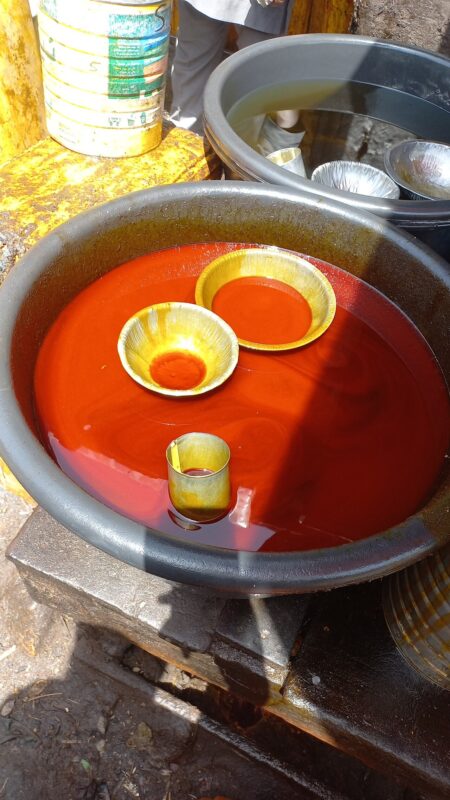
- Palm olein is more stable but clouds in the cold. Customers in cool climates sometimes think cloudy oil in a clear bottle has gone bad. A jerrycan hides that, while a PET bottle shows it. In cooler markets, CP8 in PET looks better than CP10.
- Canola oil sits in the middle on stability and sells well in PET in retail.
- High oleic sunflower oil is very stable and is mostly bought by frying customers, so it usually goes in jerrycans.
- Coconut oil goes solid below about 24 C, so narrow-neck bottles are a pain. Wide-mouth jars or jerrycans work better.
So the PET bottle vs jerrycan cooking oil packaging decision for palm olein in a cold country may not be the same as for sunflower oil in a hot one.
Climate and Storage
Heat speeds up oxidation in any pack. In hot countries, the warehouse and the shop matter as much as the bottle. Oil in a jerrycan baking in the sun outside a shop won’t last as long as oil in a PET bottle kept in a cool aisle.
In humid climates, cartons for PET bottles soften and collapse if stored on bare floors or near walls. Pallets and airflow help. Jerrycans don’t have that problem, which is one more reason they’re popular in tropical markets. When you think about PET bottle vs jerrycan cooking oil packaging, think about the worst place your oil will sit, not the best.
Caps, Seals and Labels
Small parts cause big complaints. For PET bottles, a good cap with a tamper-evident ring and the right torque on the filling line stops leaks and refilling. Labels should stay put when bottles get oily, so the glue and label material need to suit oil.
For jerrycans, an induction seal under the cap keeps the oil sealed in transit and shows if it’s been opened. A wide cap makes pouring easier for kitchen staff. Labels on jerrycans should resist oil and water, since they get handled by greasy hands every day.
A Simple Cost Example
Here’s a made-up example to show how the PET bottle vs jerrycan cooking oil packaging choice changes cost per litre. These aren’t prices, just the shape of the maths.
| Pack | Packaging cost per unit | Litres | Packaging cost per litre |
|---|---|---|---|
| 1 L PET bottle with cap, label and share of carton | 0.20 USD | 1 | 0.20 USD |
| 5 L PET bottle with cap, label and share of carton | 0.45 USD | 5 | 0.09 USD |
| 20 L HDPE jerrycan with cap and label | 1.10 USD | 20 | 0.055 USD |
Add freight per litre, which is also higher for small bottles, and the gap grows. Then compare it with what each customer pays per litre. Often the 1 litre bottle still makes the most money per litre, because households pay for convenience.
Branding and Private Label
For branding, PET bottle vs jerrycan cooking oil packaging isn’t a close call. PET bottles give you the best shelf presence. You can see the colour of the oil, and a good label or sleeve makes the brand stand out. For private label, PET is where most brands start.
Jerrycans can carry printed labels or direct printing too, and in food service a well-known can design builds trust. But nobody picks a jerrycan for looks. They pick it because it works.
Private label adds print minimums for labels, sleeves and cartons, which affect your first order size. See minimum order quantity for bulk cooking oil.
Food Safety and Material Rules
On food safety, PET bottle vs jerrycan cooking oil packaging is a draw. Both PET and HDPE are widely used and accepted for food contact when made from food-grade resin. What matters is that the packaging supplier can show compliance with food contact rules in your market, such as the US FDA rules or the EU plastics regulation. We use food-grade virgin material for both bottles and jerrycans, and can provide supplier declarations if your regulator asks.
Avoid recycled plastic of unknown origin for oil packaging. Oil can pull residues out of poor quality plastic over time, and that’s not something you want to explain to a food inspector.
Environmental Side
On recycling, both sides of PET bottle vs jerrycan cooking oil packaging have a story. PET is one of the most widely recycled plastics, and many countries collect it. HDPE is also recyclable, and jerrycans are very often reused by households for water and other liquids. Reuse is good for waste but can be a hygiene risk if cans held fuel or chemicals before. If sustainability claims matter to your customers, ask about lighter bottles and recycled-content options where food rules allow them.
What About Tins?
Tins sit outside the PET bottle vs jerrycan cooking oil packaging question but come up in almost every conversation. Tinplate gives total light protection, a strong oxygen barrier and a premium look in some markets. It costs more, it can dent and rust, and it’s heavier. In restaurants in the Gulf and parts of Asia, the 18 litre tin is still a standard. If your customers expect tins, we pack them.
Our Packing Options
| Pack | Material | Outer packing | Notes |
|---|---|---|---|
| 1 L bottle | Food-grade PET, tamper-evident cap | 12 per carton | Clear or tinted |
| 1.5 L, 1.8 L, 2 L bottles | Food-grade PET | 6 to 12 per carton | Popular in supermarkets |
| 3 L bottle | Food-grade PET with handle | 4 or 6 per carton | Family size |
| 5 L bottle | Food-grade PET with handle | 4 per carton | Best value retail size |
| 10 L jerrycan | Food-grade HDPE | None | Small restaurants, shops |
| 18 L and 20 L jerrycan | Food-grade HDPE, sealed cap | None | Food service standard |
| 25 L jerrycan | Food-grade HDPE | None | High volume users |
| 18 L tin | Lacquered tinplate | Single or carton | Food service, premium |
| 1,000 L IBC | HDPE in steel cage | None | Factories |
| Flexitank | Multi-layer food-grade PE | 20 ft container | Packers, about 20 to 22 MT |
Whatever you decide on PET bottle vs jerrycan cooking oil packaging, we print your private label on bottles, sleeves, cartons or jerrycan labels, and we check the artwork against the oil and your market’s rules before printing.
Oils We Pack in Bottles and Jerrycans
| Oil we sell | FFA | PV at loading | Moisture | Key spec | Usual pack |
|---|---|---|---|---|---|
| Refined sunflower oil | 0.1% max | 2.0 meq/kg max | 0.05% max | Iodine value 118 to 141 | PET bottles, jerrycans |
| Refined soybean oil | 0.1% max | 2.0 meq/kg max | 0.05% max | Iodine value 124 to 139 | PET bottles, jerrycans |
| Refined palm olein CP10 | 0.1% max | 2.0 meq/kg max | 0.1% max | Cloud point 10 C max | Jerrycans, tins, PET |
| Refined palm olein CP8 | 0.1% max | 2.0 meq/kg max | 0.1% max | Cloud point 8 C max | PET bottles for cooler markets |
| RBD canola oil | 0.1% max | 2.0 meq/kg max | 0.05% max | Erucic acid under 2% | PET bottles |
| High oleic sunflower oil | 0.1% max | 2.0 meq/kg max | 0.05% max | Oleic 75% min | Jerrycans for frying |
| RBD coconut oil | 0.1% max | 1.0 meq/kg max | 0.1% max | Iodine value 7 to 11 | Jerrycans, wide-mouth jars |
All our oils are produced under ISO 22000, HACCP and GMP with Halal certification. Every shipment comes with a lot COA. The oil is the same whichever side of PET bottle vs jerrycan cooking oil packaging you choose.
How to Decide: A Simple Guide
Ask yourself these questions and the PET bottle vs jerrycan cooking oil packaging decision usually becomes obvious.
- Who buys from you: households, or businesses?
- How far and how rough is your supply chain?
- Do your customers want to see the oil?
- Do you need the lowest cost per litre, or the best shelf price?
- Is refilling and fake oil a problem in your market?
- Are you building a brand, or selling on price?
If you answered households, short supply chain, yes, best shelf price, no, and brand: PET. If you answered businesses, long and rough, no, lowest cost, yes, and price: jerrycans. Mixed answers: stock both, which is what most distributors do.
Common Mistakes
These are the PET bottle vs jerrycan cooking oil packaging mistakes we see most.
- Clear bottles in a sunny shop window with sunflower oil inside.
- Weak cartons for PET bottles in humid warehouses.
- Cheap caps that leak in transit.
- Jerrycans with no tamper seal in markets where refilling is common.
- 1 litre bottles for food service customers who want 20 litres.
- Choosing the pack before asking customers.
Getting Samples in Both Packs
If you can’t decide, ask for samples of the same oil in a PET bottle and a jerrycan and show both to your customers. Our guide on how to request edible oil samples explains how. It’s the fastest way to settle the PET bottle vs jerrycan cooking oil packaging question with real feedback.
Useful References
Food contact rules for plastics are set out by the US FDA on its packaging and food contact substances page and by the European Commission on its food contact materials page. Quality limits for the oils themselves are in the Codex Alimentarius standards.
FAQs on PET Bottle vs Jerrycan Cooking Oil Packaging
Which keeps oil fresh longer, PET or jerrycan?
In PET bottle vs jerrycan cooking oil packaging, PET is a better oxygen barrier, while jerrycans block light better. With good oil and shaded storage, both give 18 to 24 months.
Is PET safe for cooking oil?
Yes, food-grade PET is widely used and accepted for edible oil.
Which is cheaper per litre?
Jerrycans and 5 litre bottles are cheaper per litre than small PET bottles.
Can I mix PET bottles and jerrycans in one container?
Yes. Mixed containers are common and a good way to serve both retail and food service customers.
Do you print private label on jerrycans?
Yes, with printed labels, and we can add tamper seals.
What’s the minimum order for each pack?
One 20 foot container per order, which can be mixed with sensible minimums per product.
Talk to Us About Packing
If you’re weighing up PET bottle vs jerrycan cooking oil packaging for your market, tell us who your customers are, which oil you want, and your port. We’ll suggest a pack mix, send prices for each option, the full specification and a sample COA.
Email info@dthcompanyltd.com, WhatsApp +66 91 765 9104, or use our contact page. You can also see our product range and read more about us.





16 thoughts on “PET Bottle vs Jerrycan Cooking Oil Packaging: 8 Best Tips”