

Organic sunflower oil is a small, fussy corner of the edible oil trade. There’s less of it, it costs more, and the paperwork matters as much as the oil. Buyers in this space usually get burned once by a supplier who calls their oil organic without the certificates to back it up. After that, they get careful. If you’re looking for organic sunflower oil wholesale supply that actually holds up when your certifier or your customer asks questions, this page is for you.
We’re a Thailand-based exporter of edible oils. We sell organic sunflower oil wholesale, both cold-pressed and refined, to food brands, natural grocers, cosmetics makers, bakeries and importers worldwide. Below you’ll find our specification, packing options, what the organic paperwork looks like, how pricing works, and how to order.
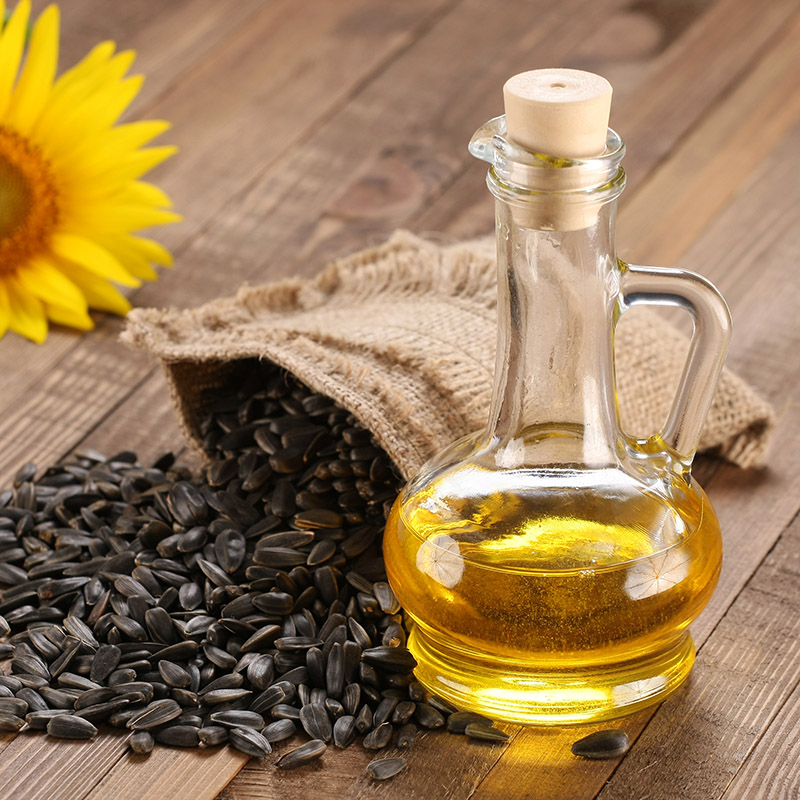
Table of Contents
What We Sell: Organic Sunflower Oil Wholesale
We supply two types:
- Cold-pressed (virgin) organic sunflower oil. Pressed from organic seed without chemical solvents, filtered, not refined. Golden colour, mild nutty taste. Popular with natural food brands, salad oils, cosmetics and skin care.
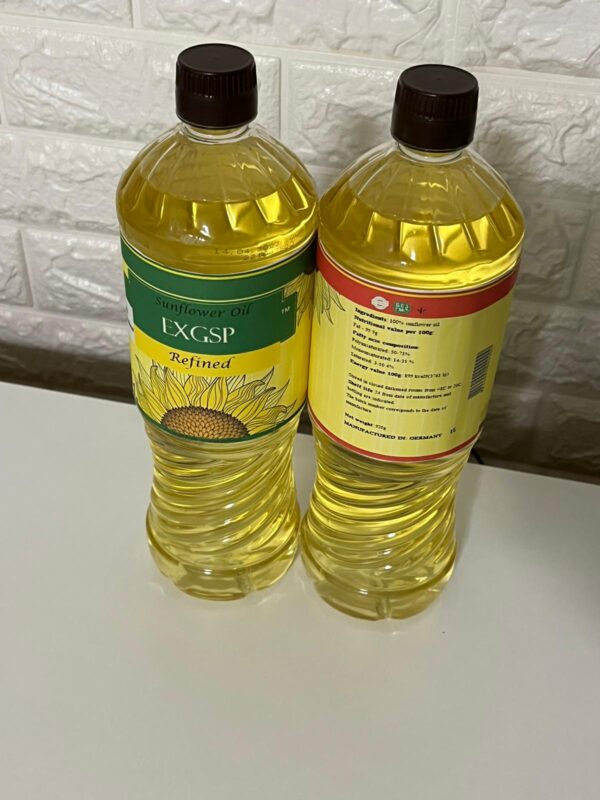
- Refined organic sunflower oil. Made from organic seed and refined with methods allowed under organic rules. Light colour, neutral taste, higher smoke point. Used for cooking, baking, frying and food manufacturing where a clean flavour matters.
Most organic sunflower oil wholesale buyers know which one they need. If you’re not sure, think about whether you want the oil to taste of something. If yes, cold-pressed. If no, refined.
Our full product sheet is on the organic sunflower oil page.
Specification
| Parameter | Cold-pressed | Refined |
|---|---|---|
| Appearance | Golden yellow | Light yellow |
| Odour and taste | Mild, nutty | Neutral |
| Free fatty acids | 1.5% max | 0.1% max |
| Moisture and impurities | 0.1% max | 0.1% max |
| Iodine value | 118 to 144 | 118 to 144 |
| Peroxide value | 10 meq/kg max | 10 meq/kg max |
| Smoke point | About 160 °C | About 232 °C |
| Shelf life | 12 to 18 months | 12 to 18 months |
Every lot ships with a certificate of analysis. Test methods follow standard industry methods such as those published by AOCS. If your brand needs extra tests, such as a full fatty acid profile, pesticide residue screening or contaminant testing, tell us before the contract and we’ll include them.
The Organic Paperwork
This is where most organic sunflower oil wholesale deals go right or wrong. An organic claim is only as good as the documents behind it. Here’s what you should expect, from us or anyone else:
- A valid organic certificate for the supplier, issued by an accredited certification body
- A certificate that covers the specific product, not just the company
- A transaction certificate or equivalent for each shipment, linking that lot to the organic chain
- Traceability back to the seed and the pressing or refining site
- Labelling and documents that match the organic standard of your market
Different markets use different organic rules. The European Union has its own organic farming regulation. The United States uses the USDA National Organic Program. Other countries have their own schemes or recognise these. Tell us which standard you need before we quote, and we’ll confirm in writing what we can supply under it. We’d rather say no up front than sell you organic oil your certifier won’t accept.
Cold-Pressed vs Refined: Which One to Buy
Cold-pressed organic sunflower oil keeps more of the seed’s natural character: colour, flavour, and some of the vitamin E and other minor components. It’s the better choice for salad oils, drizzling, raw food products, natural cosmetics and anything sold on its “unrefined” story. It has a lower smoke point and a shorter practical life once opened, so it’s not ideal for deep frying.
Refined organic sunflower oil is the workhorse. It’s clean, neutral and stable at higher heat. Bakeries, snack makers, ready-meal producers and organic food brands that need a cooking oil usually choose it. In organic sunflower oil wholesale, refined tends to move in larger volumes, while cold-pressed sells in smaller lots at a higher price.
If you need an oil that stands up to long frying, look at our high oleic sunflower oil as well.
Packing Options
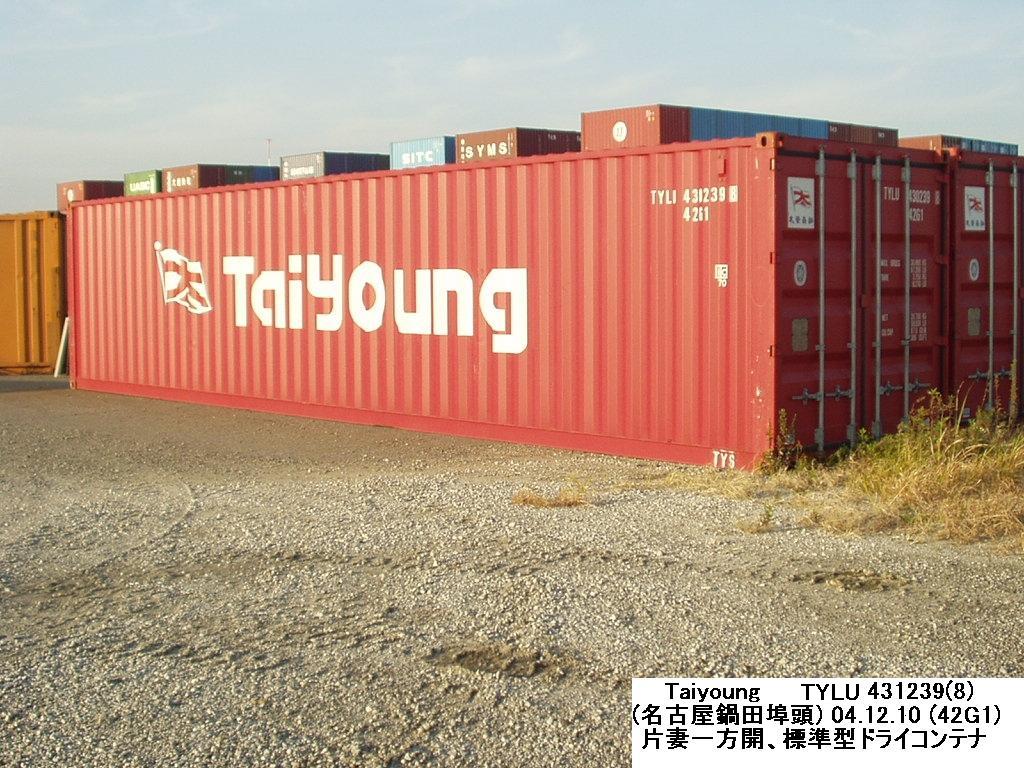
- Flexitanks of about 20 to 22 tons in a 20ft container, the cheapest per ton
- ISO tanks for buyers who need them
- Food-grade steel drums of 180 to 200 kg
- 25 litre jerrycans and 18 litre tins
- PET bottles from 250 ml up to 5 litres for retail
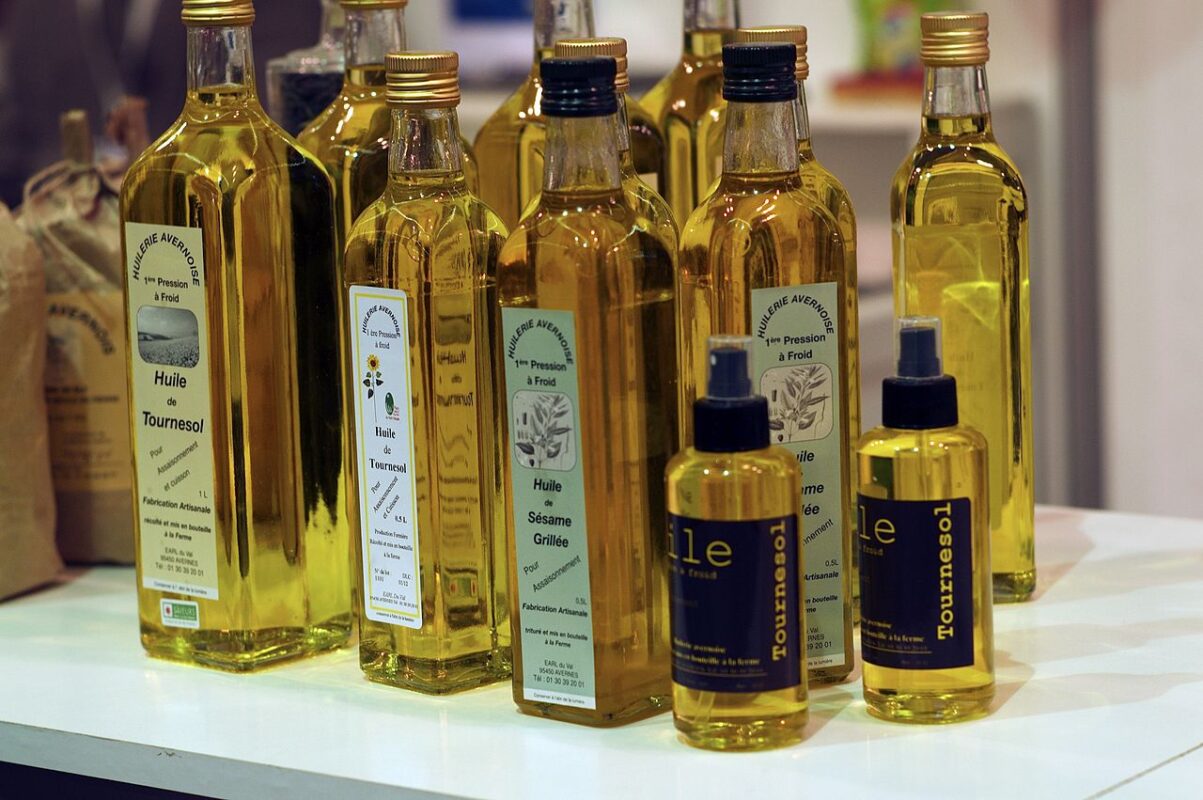
- Glass bottles for premium cold-pressed lines on request
- Your own label, printed to your artwork
In organic sunflower oil wholesale, cold-pressed oil is more sensitive to light and air than refined, so for retail we usually suggest dark PET or glass, with nitrogen flushing where possible. For organic sunflower oil wholesale in bulk, drums and flexitanks both work well if they’re new and food-grade, and filled without air pockets. See our notes on PET bottles vs jerrycans and how much oil fits in a 20ft container.
Minimum Order
For refined organic oil, the usual minimum is one 20ft container. For cold-pressed, which is often bought in smaller volumes, we can sometimes do part loads in drums, mixed with other products in the same container. Ask us. More detail on our minimum order quantity page.
How Organic Sunflower Oil Wholesale Pricing Works
We don’t publish a price list, because prices move. But organic sunflower oil wholesale prices always sit well above conventional sunflower oil, and here’s why:
- Organic seed is grown on less land, with lower yields and higher costs
- Supply is limited, so a short crop pushes prices up quickly
- Certification, audits and segregated handling all add cost
- Cold-pressed oil yields less oil per ton of seed than solvent extraction
- Smaller, more frequent shipments cost more per ton to handle
What changes the number you’ll be quoted:
- Cold-pressed or refined
- Which organic standard you need
- Packing, from flexitank to small bottles
- FOB or CIF your port
- Volume and how often you order
- Any extra testing you ask for
The fair way to compare two offers is same oil, same organic standard, same packing, same Incoterm. Delivery terms follow the ICC Incoterms rules, and we explain the difference in CIF vs FOB vegetable oil. For conventional sunflower price levels, see sunflower oil wholesale price per ton.
Shipping Worldwide
We ship organic sunflower oil wholesale orders to ports in Europe, North America, the Middle East, Asia, Africa, Oceania and Latin America.
| Destination | Approx. transit |
|---|---|
| Asia | 1 to 3 weeks |
| Middle East | 3 to 5 weeks |
| Europe | 4 to 6 weeks |
| Africa | 3 to 6 weeks |
| North America | 4 to 7 weeks |
| Latin America | 5 to 8 weeks |
Lines and routes change, so we confirm with the carrier before you sign. For organic shipments we make sure the container, flexitank or drums are clean, food-grade and not previously used for anything that could compromise the organic status.
Documents
- Commercial invoice and packing list
- Bill of lading
- Certificate of origin
- Certificate of analysis
- Organic certificate and shipment-level organic documents
- Health certificate
- Halal certificate and non-GMO declaration on request
- Independent inspection report on request
Organic imports often need the organic documents checked at the border before the goods are released. Send us your importer and certifier details early, so the shipment documents can be issued correctly. Our page on documents required to import vegetable oil covers the standard set.
How an Order Works
- You send product type, organic standard, quantity, packing, port and terms.
- We confirm what we can supply under that standard and send a dated offer.
- We send samples and organic documents for your review.
- You test the samples and check the paperwork with your certifier.
- We sign a contract with the spec and organic requirements written in.
- Deposit or letter of credit is arranged.
- We pack, test, inspect and load, and issue the shipment documents.
To request samples, see how to request edible oil samples.
Payment Terms
New buyers usually pay a deposit by bank transfer with the balance against copy documents, or open a letter of credit at sight. Repeat buyers can discuss other terms. We explain both in letter of credit vs TT.
7 Proven Tips for Organic Sunflower Oil Wholesale Buyers
1. Check the certificate, not the brochure
Ask for the organic certificate, check it’s valid, and check it names the product you’re buying. Look the supplier up in the certifier’s public database if there is one.
2. Ask for shipment-level documents
A company certificate isn’t enough. Each shipment needs its own organic paperwork.
3. Match the standard to your market
An oil certified for one market may not be accepted as organic in another. Confirm before you buy.
4. Taste and smell the cold-pressed sample
Good cold-pressed sunflower oil smells fresh and nutty. Any hint of paint, cardboard or fish means oxidation.
5. Protect it from light and heat
Use dark bottles for cold-pressed retail packs and store bulk oil cool.
6. Plan for limited supply
Organic seed is finite. Book volume early in the season if you need a steady supply.
7. Start with a trial order
Test the oil, the paperwork and the delivery once before committing to a long programme.
Mistakes We See
The most damaging is buying organic oil without checking the documents, then finding the certifier or customs won’t accept it. The goods then have to be sold as conventional, at a loss. Another is storing cold-pressed oil in clear bottles under shop lights, where it goes stale within weeks. A third is mixing up “natural”, “cold-pressed” and “organic”, which are three different things. Cold-pressed doesn’t mean organic, and organic doesn’t mean cold-pressed. In organic sunflower oil wholesale, being precise about the claim protects your brand.
Who Buys Organic Sunflower Oil Wholesale
- Organic and natural food brands
- Health food stores and organic supermarket chains
- Baby food and specialty food manufacturers
- Organic bakeries and snack makers
- Natural cosmetics, skin care and soap makers
- Importers and distributors of organic ingredients
- Restaurants and caterers running certified organic menus
Cosmetics buyers deserve a mention. Cold-pressed organic sunflower oil is a common base oil in lotions, creams, massage oils and soaps because it’s light and rich in linoleic acid. They usually want small drums and very consistent quality, plus a full spec sheet for their formulation records.
How Organic Fits With Our Other Sunflower Oils
We also sell refined sunflower oil, deodorized sunflower oil, high oleic sunflower oil and crude sunflower oil. Many organic sunflower oil wholesale buyers also carry a conventional line for price-sensitive customers. If that’s you, we can put organic and conventional oil in the same container, with clearly separate packing and labelling so the organic status is never in doubt.
Our Quality Control
Every lot of organic sunflower oil wholesale stock is tested before packing for free fatty acids, moisture, peroxide value, colour, odour and taste. Packing is checked and cleaned before filling, and organic oil is handled separately from conventional oil. We keep a retained sample from every shipment. We work under ISO 22000, HACCP, GMP and halal certification. For larger orders, we recommend independent inspection at loading by a firm such as SGS. See pre-shipment inspection for edible oil.
Storage
- Cool, dry and dark, ideally below 25 °C
- Tightly closed containers, minimal headspace
- Away from strong odours
- First in, first out
- Once opened, use cold-pressed oil within a few months
Stored properly, both types keep for 12 to 18 months. More on our sunflower oil shelf life page.
What Food Manufacturers Ask For
If you’re buying organic oil as an ingredient, your quality team will want more than a price. Expect to be asked for a full specification, a fatty acid profile, allergen and GMO statements, a contaminant and pesticide residue policy, the organic certificate, and evidence of food safety certification. Some will also want a supplier questionnaire filled in and a sample tested in their own lab.
We’re used to this. Send us your supplier approval checklist with your first enquiry and we’ll answer it alongside the quote. It saves weeks. Many organic sunflower oil wholesale deals stall not because of price, but because the buyer’s quality team is waiting for one missing document.
Organic Oil for Cosmetics and Soap
Cosmetics makers use organic sunflower oil as a carrier or base oil. It’s light, absorbs well and is high in linoleic acid. For this use, cold-pressed is the usual choice, and the buyer often cares about colour, odour and peroxide value more than a food buyer would, because those show up in the finished cream or soap.
They also tend to buy in smaller lots, often a few drums at a time, and want the same oil every time so their formulas don’t change. If you’re a cosmetics brand, tell us your batch size and how often you produce, and we’ll suggest a packing and ordering rhythm that keeps your oil fresh.
Why the Organic Market Is Different
Conventional sunflower oil is a big commodity market with lots of sellers and fast-moving prices. Organic is smaller and slower. There are fewer certified farms and processors, contracts often run for a season, and buyers and sellers tend to stick together once trust is built. For organic sunflower oil wholesale buyers, that means relationships matter more than spot price. A supplier who has kept your paperwork clean for two years is worth more than a cheaper one you’ve never tested.
It also means planning matters. If a new organic product line is coming, talk to us before you launch, not after. We’d much rather reserve oil for you in advance than tell you in the middle of the season that supply is tight.
A Buyer Example
A natural foods brand in Europe was buying organic cold-pressed sunflower oil from a small press that couldn’t keep up with demand. They needed more volume and better paperwork. We started with a trial of drums of cold-pressed oil with full shipment documents for their certifier. Once that cleared, they added refined organic oil in a flexitank for a new line of baked snacks. They now order a mixed container every couple of months. The key wasn’t price. It was getting the organic documents right every time, so their own certification never came under question.
Private Label Organic Oil
A lot of our organic sunflower oil wholesale customers sell under their own brand. The steps are simple. You send artwork and label text that meets your market’s food and organic labelling rules. We send a print proof. You approve, and we fill and label. Organic logos on the label have to match the certification of the oil and your own certification as the brand owner, so check that with your certifier before printing. More on our private label vegetable oil page.
Planning a Steady Supply
Organic supply is tighter than conventional, and a good year can be followed by a short one. If you sell organic oil every month, agree a regular volume with us and review it each season. That way we can reserve organic seed or oil for you instead of hunting for it at the last minute. With four to eight weeks of transit to many markets, order at least two months ahead and keep some safety stock.
How to Check a Supplier Before You Pay
Ask for company registration and export licence. Ask for the organic certificate and check it with the certifier. Ask for references. Ask for samples and a certificate of analysis from the real lot. Ask for a video call of the warehouse or plant. Any genuine organic sunflower oil wholesale supplier will be comfortable with all of that. If a seller offers organic oil below the price of conventional oil, or rushes you to pay in full up front, walk away. Our page on spotting a fake vegetable oil supplier has more warning signs.
Samples and What to Check
We send samples by courier with the certificate of analysis for that lot. When they arrive, check the colour against the spec, smell the oil straight from the bottle, and taste a little on bread. Cold-pressed oil should smell of sunflower seeds and nothing else. Refined oil should smell of almost nothing. Then send a portion to your lab if you need to. For organic sunflower oil wholesale orders, also send the organic documents that came with the sample to your certifier, so any questions get answered before the contract rather than after the oil is at your port.
Frequently Asked Questions
Do you sell organic sunflower oil wholesale worldwide?
Yes, to any port with regular container service.
Do you have cold-pressed and refined?
Yes, both.
Which organic standards can you supply?
Tell us the standard your market requires and we’ll confirm in writing what we can supply under it.
What’s the minimum order?
Usually one 20ft container. Smaller drum lots of cold-pressed oil may be possible in a mixed load.
Can you do private label?
Yes.
Can I get samples?
Yes, by courier.
Get an Organic Sunflower Oil Wholesale Quote
Send us the oil type, organic standard, quantity, packing and port. We’ll come back with a firm price, our full specification and an estimated loading date. You can also browse all our sunflower oils, see our products and read about us, or look at organic vegetable oil for sale and bulk refined sunflower oil supplier.
Email info@dthcompanyltd.com, call or WhatsApp +66 91 765 9104, or use our contact page.







One thought on “Organic Sunflower Oil Wholesale: Honest Exporter Guide and 7 Proven Tips”