

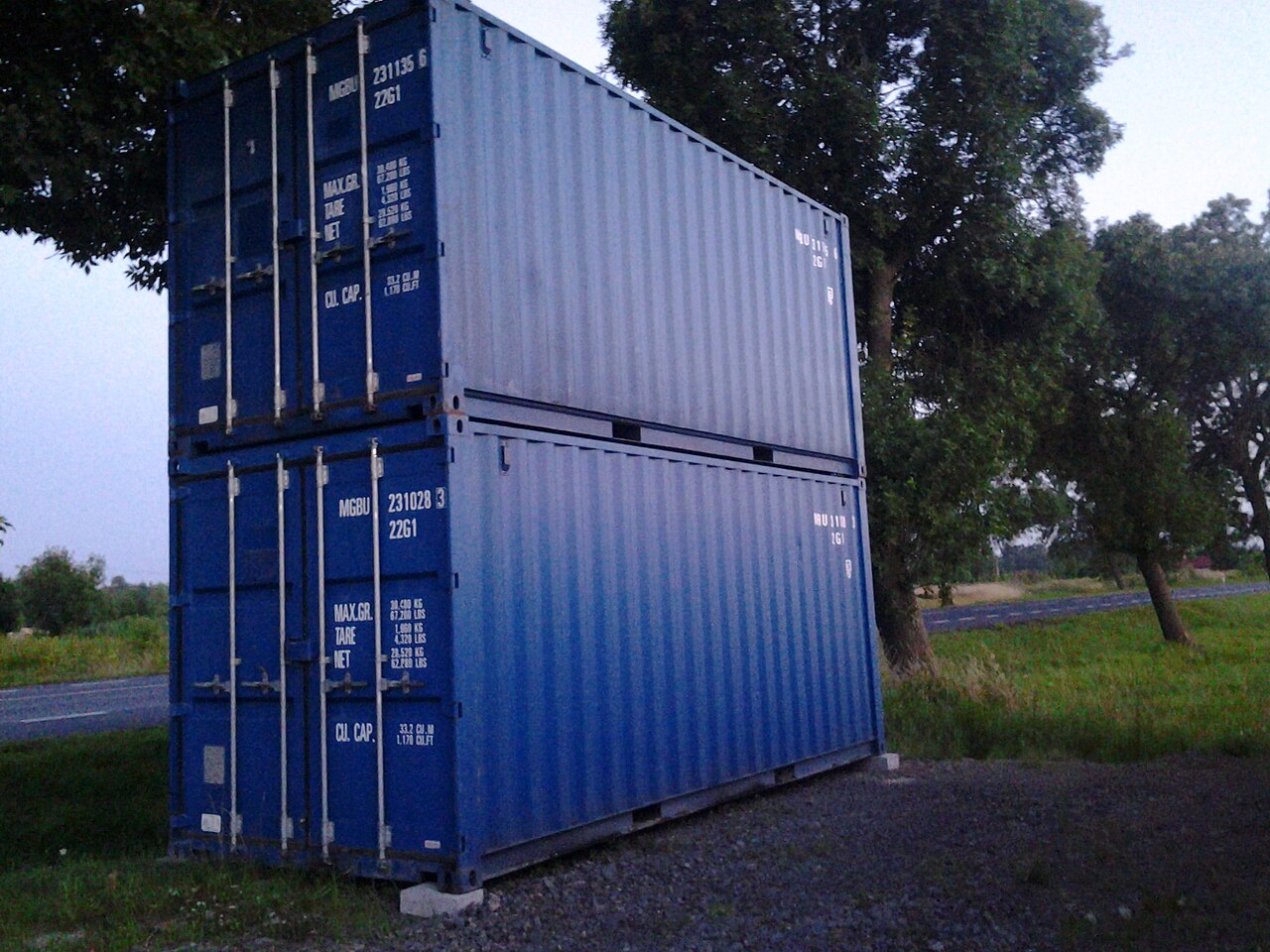
How much cooking oil fits in a 20ft container? The short answer is about 20 to 22 tonnes if you ship in a flexitank, and somewhere between about 14 and 21 tonnes if you ship packed oil, depending on the bottle, jerrycan or drum. The longer answer depends on weight limits, pack shape and whether you use pallets, and that’s what this guide is about.
We sell refined and crude cooking oils worldwide and load 20 foot containers most weeks, from 1 litre bottles to flexitanks. Buyers ask us how much cooking oil fits in a 20ft container almost every time they ask for a price, because the answer decides the landed cost per litre. Below are the real numbers we work with, how to calculate your own, the mistakes that waste space or money, and the oils we sell with their specifications.
The figures here are typical ranges from our own loading. Your exact count depends on your packaging supplier, your carrier’s weight limits and the road rules at both ends, so we always confirm the load plan before you pay.
Table of Contents
How Much Cooking Oil Fits in a 20ft Container: The Quick Table
Here’s the table most buyers want when they ask how much cooking oil fits in a 20ft container. All figures are approximate and assume refined vegetable oil at about 0.92 kg per litre.
| Packing | Units per 20ft | Litres of oil | Net oil weight |
|---|---|---|---|
| Flexitank | 1 flexitank | about 21,700 to 24,000 L | about 20 to 22 MT |
| 1 L PET bottles, 12 per carton | about 1,300 to 1,600 cartons | about 15,600 to 19,200 L | about 14.4 to 17.7 MT |
| 2 L PET bottles, 6 per carton | about 1,300 to 1,500 cartons | about 15,600 to 18,000 L | about 14.4 to 16.6 MT |
| 5 L PET bottles, 4 per carton | about 1,050 to 1,200 cartons | about 21,000 to 24,000 L | about 19.3 to 22 MT |
| 20 L jerrycans | about 950 to 1,100 cans | about 19,000 to 22,000 L | about 17.5 to 20.2 MT |
| 18 L tins | about 1,100 to 1,250 tins | about 19,800 to 22,500 L | about 18.2 to 20.7 MT |
| 200 L steel drums | 80 drums | about 16,000 L | about 14.7 MT |
| 1,000 L IBC totes | 18 to 20 totes | about 18,000 to 20,000 L | about 16.6 to 18.4 MT |
The pattern is clear. Small bottles fill the box before they reach the weight limit. Bigger packs and flexitanks hit the weight limit before they fill the box. That single idea explains most of the answer to how much cooking oil fits in a 20ft container.
Why Weight, Not Space, Usually Sets the Limit
To understand how much cooking oil fits in a 20ft container, start with the box. A standard 20 foot dry container has about 33 cubic metres of space inside. If oil were packed perfectly, that’s room for over 30 tonnes. But nobody ships 30 tonnes of oil in a 20 footer.
The container itself has a maximum gross weight, usually 30,480 kg including its own tare of around 2,200 kg. On paper that leaves about 28 tonnes for cargo. In practice the real limits are lower:
- Shipping lines often set their own cargo limits for 20 foot boxes on certain routes.
- Road rules at origin and destination limit the total weight of truck, chassis and container. In many countries that keeps cargo in a 20 footer around 20 to 24 tonnes. In some it’s lower.
- Flexitank ratings cap the volume, usually somewhere between 20,000 and 24,000 litres for oil.
So when someone asks how much cooking oil fits in a 20ft container, the honest first question back is: what’s the road limit at your end? Your forwarder will know. We’ll plan to that number.
Flexitank: The Most Oil per Container
If you want the most oil for your freight money, a flexitank wins, and it gives the biggest answer to how much cooking oil fits in a 20ft container. It’s a single-use, food-grade bag that fills almost the whole floor of a 20 foot container. We load it from the refinery tank, seal it and send it. At destination you pump it into your tank or packing line.
For how much cooking oil fits in a 20ft container using a flexitank, plan on about 20 to 22 tonnes of refined oil. That’s roughly 21,700 to 24,000 litres. We don’t underfill flexitanks, because a half-empty bag lets oil surge as the ship rolls, which stresses the bag and the container walls. The flexitank size is chosen to suit the oil and the weight limit.
A few practical points:
- Palm oil and coconut oil go solid at normal temperatures, so the flexitank needs a heating pad for discharge. We fit one for those oils.
- You need a tank or IBCs at destination to receive the oil, plus a pump or gravity discharge.
- Flexitank oil is usually priced per tonne, and our guide on how many liters in a ton of vegetable oil helps you convert to litres.
Bottled Oil: Where the Box Fills Before the Scale Does
With 1 litre and 2 litre bottles, the container fills up by space well before weight becomes a problem. That’s because bottles, cartons and the air between them take room. For how much cooking oil fits in a 20ft container in small bottles, figure on about 15,000 to 19,000 litres.
The exact number depends a lot on the bottle shape. Square bottles pack much tighter than round ones. A 1 litre square PET bottle can get you close to 1,600 cartons of 12. A rounder bottle with a fat shoulder might get you 1,300. If you’re designing your own private label bottle, think about this. A small change in bottle shape can add 10 to 15% more oil per container, which cuts freight per litre straight away.
5 litre bottles
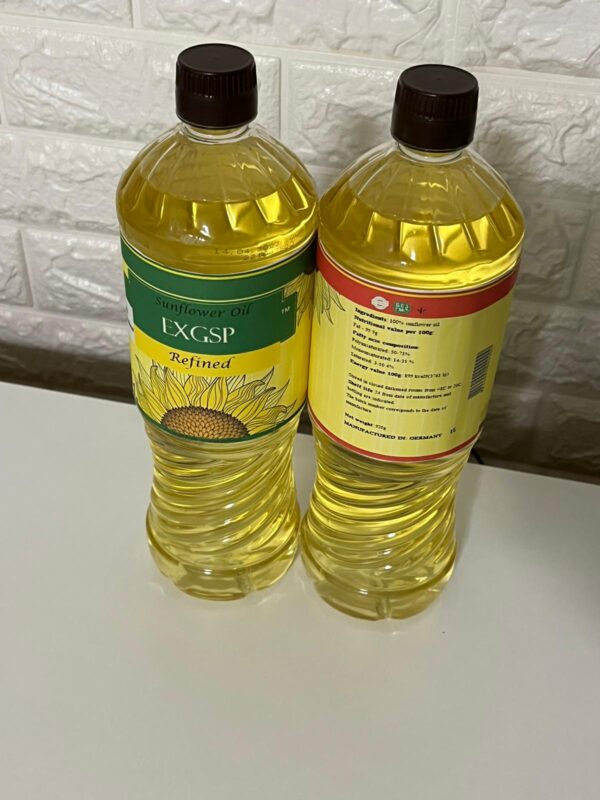
5 litre bottles in cartons of 4 are where packed oil starts hitting the weight limit. Around 1,100 cartons is a common load, giving about 22,000 litres and close to 21 tonnes gross. That’s why 5 litre packs give the lowest freight cost per litre of all the bottled options.
Jerrycans, Tins, Drums and IBCs
Food-service and industrial packs are their own story when you work out how much cooking oil fits in a 20ft container.
- 20 litre jerrycans load at about 950 to 1,100 pieces, limited mostly by weight. They’re popular with restaurants and bakeries because they’re easy to pour and carry.
- 18 litre tins load at about 1,100 to 1,250. Tins stack well and protect the oil from light, but they cost more than plastic.
- 200 litre drums usually go 80 to a container, two layers of 40. That’s only around 16,000 litres, so drums are the most expensive way to ship oil per litre. We only suggest them where the buyer has drum handling or needs small lots.
- 1,000 litre IBC totes load at 18 to 20, stacked two high. They’re handy for food factories without a big receiving tank.
Palletised or Floor Loaded?
Pallets change how much cooking oil fits in a 20ft container more than most buyers expect. They make unloading faster but use space. Pallets themselves take room and weight, and you can’t always stack pallets to the roof. For cartons of bottles, palletising usually cuts the number of cartons by about 10 to 20% compared to hand stacking on the floor.
So for how much cooking oil fits in a 20ft container on pallets, take the floor loaded figure and knock off around 10 to 20%. If your warehouse has forklifts and labour is expensive, pallets often pay for themselves. If labour is cheap and freight is expensive, floor loading wins. Some buyers meet in the middle with slip sheets, which take almost no space but still allow fast unloading with the right forklift attachment.
How to Calculate It Yourself
If you want to check our numbers or plan a new pack, here’s the simple method we use to work out how much cooking oil fits in a 20ft container.
- Find the gross weight per unit. For a carton of 4 x 5 litre bottles: 20 litres x 0.92 kg = 18.4 kg of oil, plus about 0.9 kg of bottles, caps, labels and carton, about 19.3 kg in total.
- Find your cargo weight limit. Ask your forwarder. Say it’s 21,500 kg.
- Divide. 21,500 / 19.3 = about 1,114 cartons by weight.
- Check the space. Measure the carton, work out how many fit per layer on a floor of about 5.9 by 2.35 metres, and how many layers fit in about 2.39 metres of height. If the space number is lower than the weight number, space is your limit.
- Take the lower number. That’s your load.
For the oil volume, multiply cartons by litres per carton. For weight in tonnes, multiply cartons by the net oil weight and divide by 1,000. That’s really all there is to it.
What About a 40ft Container?
Once people know how much cooking oil fits in a 20ft container, they often ask whether a 40 foot container is better. For oil, usually not. A 40 footer has twice the space but almost the same weight limit as a 20 footer, typically around 26 to 27 tonnes of cargo on paper and often less on the road. For heavy packs and flexitanks, you can’t use the extra space, and the freight costs more.
The exception is 1 litre bottles and other small packs, which are limited by space, not weight. A 40 foot container of 1 litre bottles can carry a lot more than a 20 footer and still stay under the weight limit. If you buy mostly 1 litre, ask us to quote both. For everything else, knowing how much cooking oil fits in a 20ft container is the number that matters.
Mixing Products in One Container
How much cooking oil fits in a 20ft container doesn’t change much when you mix products, and you don’t have to fill a container with one product. Many of our buyers mix pack sizes or oils in one 20 foot box, such as 600 cartons of 1 litre sunflower oil and 450 cartons of 5 litre palm olein. We plan the load so heavy cartons sit on the bottom and the weight is spread evenly. Each product does need a reasonable minimum quantity so the production run makes sense.
Mixed loads are a good way to test a new product with your customers without committing to a full container of it.
Freight Cost per Litre
Once you know how much cooking oil fits in a 20ft container, divide the freight by the litres to see what shipping adds to each bottle. Using a made-up freight of 2,000 USD per container, just to show the maths:
| Packing | Litres per 20ft | Freight per litre |
|---|---|---|
| Flexitank | about 23,000 L | about 0.087 USD |
| 5 L bottles | about 22,000 L | about 0.091 USD |
| 20 L jerrycans | about 20,000 L | about 0.10 USD |
| 1 L bottles | about 17,000 L | about 0.118 USD |
| 200 L drums | about 16,000 L | about 0.125 USD |
The difference looks small per litre, but over a year of containers it adds up. This is also why the price we quote for CIF versus FOB depends on the packing. Our guide to CIF vs FOB vegetable oil explains how freight is built into each.
Does the Type of Oil Change the Answer?
A little. Different oils have slightly different densities, so the same weight gives slightly different litres. Refined sunflower, soybean and canola oil sit around 0.92 kg per litre at room temperature. Palm olein is close to that. Coconut oil is similar when liquid, but goes solid below about 24 C.
For how much cooking oil fits in a 20ft container, the oil type changes the litres by maybe 1 or 2%. It’s not a big deal for bottled oil, because the bottle size fixes the litres. It matters more for flexitanks, where you’re buying by the tonne and selling by the litre.
Temperature matters too. Oil expands as it warms, so a flexitank loaded in a hot port holds slightly less oil by weight than the same flexitank in a cool one. Flexitank operators allow for this, which is one more reason not to try to squeeze in extra.
Packing Specifications We Use
Here’s the packaging we normally use, so you can see where the numbers above come from. If you need something different for your market, we can usually match it.
| Pack | Material | Carton or outer | Typical gross weight per unit |
|---|---|---|---|
| 1 L bottle | PET, tamper-evident cap | 12 per carton | about 11.6 kg per carton |
| 2 L bottle | PET | 6 per carton | about 11.5 kg per carton |
| 5 L bottle | PET with handle | 4 per carton | about 19.3 kg per carton |
| 20 L jerrycan | HDPE | single unit | about 19.4 kg |
| 18 L tin | Lacquered tinplate | single unit or 1 per carton | about 17.9 kg |
| 200 L drum | Steel, food-grade lined | single unit | about 202 kg |
| 1,000 L IBC | HDPE in steel cage | single unit | about 980 kg |
| Flexitank | Multi-layer food-grade PE | in 20 ft container | about 20 to 22 MT of oil |
When you’re working out how much cooking oil fits in a 20ft container, the gross weight per unit is the number that matters most. It’s the one most people forget to ask for.
Loading Day: What Actually Happens
It helps to know what happens on our side, so you can judge a load plan and see how much cooking oil fits in a 20ft container on the day.
For packed oil, the container arrives empty and gets checked for holes, damp, smells and a clean floor. We photograph it. Cartons go in by hand or forklift following the load plan, heavy at the bottom and spread evenly front to back. We use strapping or airbags where needed so nothing shifts. The doors close, the seal goes on, and the seal number is recorded on the documents.
For a flexitank, the container is lined with cardboard, the bag is laid out and a steel bulkhead goes across the doors. Oil is pumped in from the refinery tank through a filter, and we take a sample from the line for the certificate of analysis. Then the valve is closed, the container sealed and the weight recorded.
The verified gross mass, the total weight of the packed container, has to be declared to the shipping line before loading on the ship. That number is how the line checks the answer to how much cooking oil fits in a 20ft container, so it has to be accurate.
You get loading photos, the seal number and the weight with your documents.
Choosing the Right Pack for Your Market
The cheapest freight per litre isn’t always the best choice. What sells in your market matters more.
- Supermarkets in most markets want 1, 2 and 5 litre bottles. Mix them in one container to cover the shelf.
- Restaurants and bakeries want 18 or 20 litre packs. Jerrycans are cheaper; tins look more premium in some markets.
- Local packers want flexitanks so they can fill their own brand.
- Food factories often want IBCs or flexitanks feeding straight into production.
- Small importers testing a market do well with a mixed container.
So don’t only ask how much cooking oil fits in a 20ft container. Ask what mix of packs sells fastest for you, then fill the container with that.
Common Loading Mistakes
These are the mistakes we see when buyers work out how much cooking oil fits in a 20ft container on their own.
- Ignoring the road weight limit at destination and getting fined or stuck.
- Underfilling a flexitank. Surging oil can burst a bag.
- Choosing a round bottle without checking how many fit per container.
- Weak cartons that crush under stacking. Bottom layers carry a lot of weight.
- Forgetting heating pads for palm or coconut oil in flexitanks.
- Uneven loading that puts too much weight at one end of the container.
- Using drums out of habit when jerrycans or a flexitank would cost less per litre.
Oils We Sell by the Container
Now you know how much cooking oil fits in a 20ft container, here’s what goes in it. We sell every oil below by the 20 foot container, either packed or in a flexitank. Here’s what we typically load against, and you can ask for the full sheet.
| Oil we sell | FFA | Peroxide value at loading | Moisture | Key spec |
|---|---|---|---|---|
| Refined sunflower oil | 0.1% max | 2.0 meq/kg max | 0.05% max | Iodine value 118 to 141 |
| Refined soybean oil | 0.1% max | 2.0 meq/kg max | 0.05% max | Iodine value 124 to 139 |
| Refined palm olein CP10 | 0.1% max | 2.0 meq/kg max | 0.1% max | Cloud point 10 C max |
| Refined palm olein CP8 | 0.1% max | 2.0 meq/kg max | 0.1% max | Cloud point 8 C max |
| RBD canola oil | 0.1% max | 2.0 meq/kg max | 0.05% max | Erucic acid under 2% |
| RBD coconut oil | 0.1% max | 1.0 meq/kg max | 0.1% max | Iodine value 7 to 11 |
| Crude palm oil | 5% max | n/a | 0.5% max (M and I) | DOBI 2.3 min |
| Crude sunflower oil | 2.0% max | n/a | 0.2% max (M and I) | For refineries |
All of it is produced under ISO 22000, HACCP and GMP. Halal certification is standard, and kosher is available on request for some lots; see our page on being a kosher certified vegetable oil supplier.
Import Paperwork Is the Same Whatever the Pack
Knowing how much cooking oil fits in a 20ft container helps your costing, but the import rules don’t care about the pack. If you’re shipping to the US, read our guide on the FDA requirements for importing vegetable oil. For Saudi Arabia, see SFDA registration for imported cooking oil. Customs will also need the right tariff line, which our soybean oil HS code and palm oil HS code guides explain.
Useful References
Container sizes and weight ratings follow ISO standards; the International Organization for Standardization publishes the series 1 freight container specification. Safe container weights are also covered by the IMO’s verified gross mass rules, which require a declared weight for every packed container. For oil quality, the Codex Alimentarius standards are the international reference.
FAQs: How Much Cooking Oil Fits in a 20ft Container
How much cooking oil fits in a 20ft container in a flexitank?
About 20 to 22 tonnes, which is roughly 21,700 to 24,000 litres of refined oil.
How many cartons of 1 litre oil fit in a 20ft container?
About 1,300 to 1,600 cartons of 12 bottles, depending on the bottle shape and whether you use pallets.
How many 20 litre jerrycans fit in a 20ft container?
About 950 to 1,100, usually limited by weight.
How many drums of oil fit in a 20ft container?
Usually 80 drums of 200 litres, two layers high.
Is a 40ft container better for cooking oil?
Only for small bottles. For flexitanks and heavy packs, the 20 footer is usually better because weight limits are similar.
How much cooking oil fits in a 20ft container in 5 litre bottles?
About 1,050 to 1,200 cartons of 4 bottles, roughly 21,000 to 24,000 litres, usually limited by weight.
Does how much cooking oil fits in a 20ft container change with pallets?
Yes. Palletised loads usually carry about 10 to 20% fewer cartons than floor loaded ones.
Why do different suppliers quote different numbers for how much cooking oil fits in a 20ft container?
Because bottle shapes, carton sizes and weight limits differ. Always ask for the load plan and the gross weight per carton.
Can I mix oils and pack sizes in one container?
Yes, within sensible minimums per product.
Get a Load Plan and Price
If you’re still working out how much cooking oil fits in a 20ft container for your market, send us the oil, the packs you’re considering, your destination port and any weight limit your forwarder gave you. We’ll send a load plan, the number of cartons or litres, a price on CIF or FOB terms, the full specification and a sample COA.
Email info@dthcompanyltd.com, WhatsApp +66 91 765 9104, or use our contact page. You can see the full product range or read more about us.









17 thoughts on “How Much Cooking Oil Fits in a 20ft Container? 7 Best Facts”