If you buy cooking oil wholesale Auckland side for a restaurant group, a fish and chip chain, a bakery, a food factory or a distribution business, we can supply it. We sell refined sunflower oil, soybean oil, canola oil, RBD palm olein and coconut oil in 20 litre jerry cans, IBC totes, drums, flexitanks and private label bottles, shipped CIF Auckland or Tauranga. Below you’ll find the specs, packing, landed cost basics, MPI rules and a few honest tips we’ve picked up over the years.
New Zealand crushes very little of its own oilseed, so nearly all frying and food oil arrives by sea. That means the price a kitchen pays in Mt Wellington or East Tamaki depends a lot on how many hands the oil passes through between the refinery and the back door. Buying cooking oil wholesale Auckland direct from an exporter takes some of those hands out.
Table of Contents
Cooking Oil Wholesale Auckland: What We Supply
These are the oils our cooking oil wholesale Auckland customers order most. All are food grade, refined, and come with a batch certificate of analysis.
- Refined sunflower oil, light, clean flavour, good for shallow frying, dressings and bakery. See our refined sunflower oil page.
- High oleic sunflower oil, for long fryer life without palm. Details on the high oleic sunflower oil page.
- Refined soybean oil, a good value all-rounder for food factories. See refined soybean oil.
- Refined canola oil, popular with health conscious menus. See refined canola oil.
- RBD palm olein CP8 and CP10, the workhorse frying oil for takeaways. See CP8 and CP10.
- RBD coconut oil for bakery, confectionery and plant based foods. See RBD coconut oil.
You can browse the whole range on our products page.
Product Specifications
Here are the main numbers we load against for cooking oil wholesale Auckland orders. They follow international trade standards and the Codex standard for named vegetable oils, so your QA team won’t have to translate anything.
| Parameter | Refined sunflower | Refined soybean | Refined canola | RBD palm olein CP10 |
|---|---|---|---|---|
| Free fatty acid | Max 0.1% | Max 0.1% | Max 0.1% | Max 0.1% |
| Moisture and impurities | Max 0.1% | Max 0.1% | Max 0.1% | Max 0.1% |
| Peroxide value at loading | Max 2.0 meq/kg | Max 2.0 meq/kg | Max 2.0 meq/kg | Max 2.0 meq/kg |
| Iodine value | 118 to 141 | 124 to 139 | 105 to 126 | Min 56 |
| Colour (Lovibond 5.25 inch) | Max 1.5 Red | Max 2.0 Red | Max 2.0 Red | Max 3.0 Red |
| Cloud point | Clear at 0°C (winterized) | Clear at 0°C | Clear at 0°C | Max 10°C |
| Smoke point (approx.) | 225°C | 230°C | 220°C | 230°C |
| Odour and taste | Bland | Bland | Bland | Bland |
If you want the details for a single oil, we have full spec sheets for refined sunflower oil, refined soybean oil and RBD canola oil. The Codex Alimentarius site is the source for the international standards. Our cooking oil smoke point chart is handy if you’re choosing an oil for a specific menu.
Which Oil Suits Your Auckland Kitchen?
Auckland’s mild, damp weather is kinder to oil than Christchurch or Dunedin, but winter mornings still get down to 5 or 6°C. That matters if you’re thinking about palm olein, because CP10 goes cloudy below about 10°C. Nothing’s wrong with it when that happens, but it looks odd in a clear jerry can and it pours slowly.
From what we see across our cooking oil wholesale Auckland orders, buyers tend to settle into these patterns:
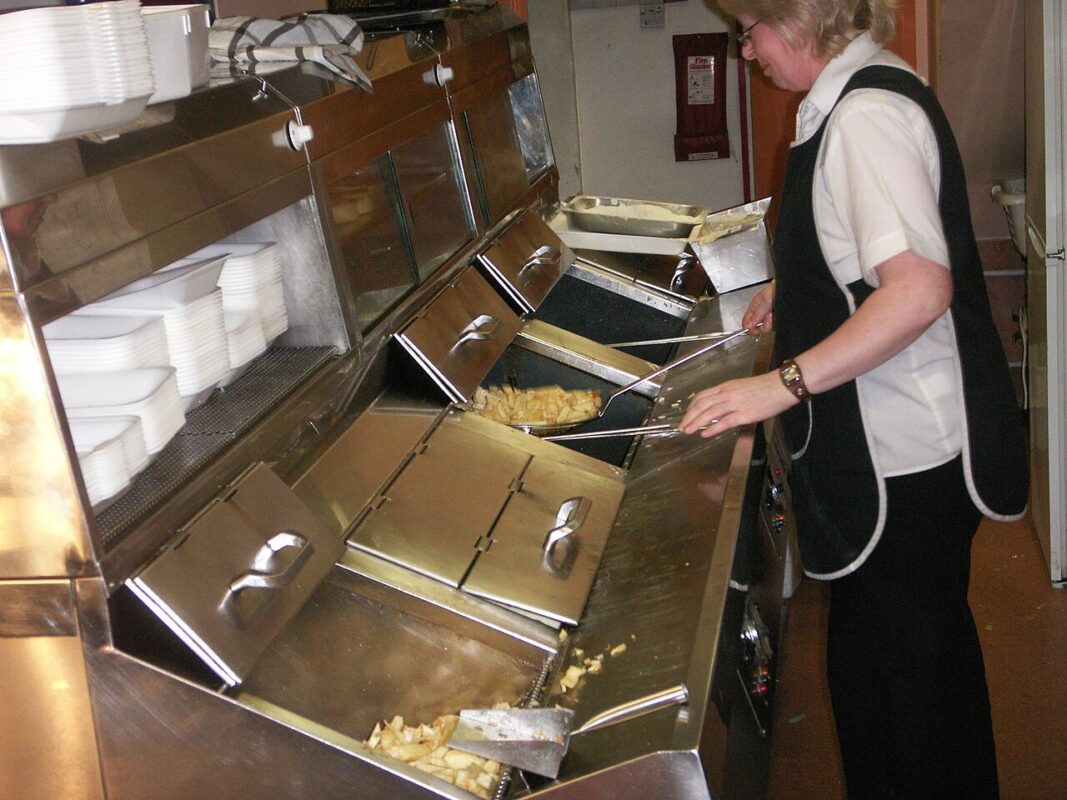
- Fish and chip shops and burger bars often run palm olein or a palm and canola blend for fryer life. Shops with cold storage rooms switch to CP8 in winter.
- Cafes and restaurants lean towards canola or sunflower because the oil stays clear and suits a wider range of dishes.
- Bakeries and donut makers use palm olein, high oleic sunflower or a blend.
- Food factories making chips, snacks, sauces or ready meals usually pick soybean or canola for price and a neutral taste.
- Ethnic grocers stock a mix, often sunflower and palm olein in 20 litre jerry cans for families who cook in volume.
Not sure which way to go? Our posts on canola oil vs sunflower oil, soybean oil vs sunflower oil and the best oil for deep frying chicken lay out the trade-offs.
Who Buys Cooking Oil Wholesale Auckland Volumes From Us
Our cooking oil wholesale Auckland buyers are mostly businesses that move oil every week, not once a year:
- Foodservice wholesalers who deliver to restaurants across Auckland, Waikato and Northland.
- Takeaway and franchise groups buying for several stores at once.
- Snack, chip and frozen food manufacturers.
- Supermarket private label programmes.
- Pacific Island and Asian grocery importers, some of whom re-export to Samoa, Tonga and Fiji.
- Repackers who buy bulk and fill their own bottles. If that’s you, our post on the cooking oil repackaging business is worth a look.
Packing Options
How you take delivery depends on your storage and how fast you use the oil. These are the formats we pack for cooking oil wholesale Auckland customers:
| Packing | Approx. per 20ft container | Good for |
|---|---|---|
| 20 litre jerry cans | 1,000 to 1,100 cans | Restaurants, takeaways, wholesalers |
| 5 litre bottles in cartons | About 3,600 to 4,000 bottles | Cash and carry, small cafes |
| 1 and 2 litre PET bottles | Depends on carton size | Retail and private label |
| 1,000 litre IBC totes | 18 to 20 IBCs | Factories, repackers |
| Flexitank | 20 to 23 MT | Plants with a bulk tank |
For a deeper look at the pros and cons, read PET bottle vs jerrycan cooking oil packaging and vegetable oil export packaging. If you’re working out volumes, we’ve got the numbers in how much cooking oil fits in a 20ft container and how many litres in a ton of vegetable oil.
If you’re mainly buying jerry cans, our breakdown of the RBD palm olein 20L jerry can price shows how each part of the per can cost is worked out.
Shipping to Auckland and Tauranga
Most cooking oil wholesale Auckland containers come in through Ports of Auckland. Some shipping lines call at Tauranga first, and the box then comes up by rail to MetroPort in Southdown. The Port of Tauranga is New Zealand’s biggest port, so it’s worth asking your forwarder which route is cheaper for your area. Transit from Southeast Asia is usually around three weeks, sometimes a bit longer with transhipment through Singapore or Australia.
We quote CIF Auckland or CIF Tauranga as standard, and FOB if you’d rather book your own freight. If you’re weighing the two, see CIF vs FOB vegetable oil.
MPI Rules for Imported Cooking Oil
New Zealand takes food safety seriously, and anyone bringing in cooking oil wholesale Auckland quantities needs to get the basics right:
- Registered food importer. Under the Food Act, businesses importing food for sale need to be registered with the Ministry for Primary Industries, or use an agent who is.
- Food standards. Labels and composition must meet the Food Standards Code from Food Standards Australia New Zealand. If we’re packing private label bottles, send your artwork and get it checked by your own adviser.
- Biosecurity. Pallets and wood packaging must be ISPM 15 treated. Containers need to be clean inside and out.
- Documents. Invoice, packing list, bill of lading, certificate of origin, COA, and halal certificates when needed.
We put together a list of documents required to import vegetable oil that covers most markets. A local customs broker will do the actual entry for you.
How Cooking Oil Wholesale Auckland Prices Work
Oil prices change daily, so we don’t put a fixed number on the website. Here’s what goes into a cooking oil wholesale Auckland quote, so you can compare offers fairly:
- The type of oil. Palm olein and soybean are usually the cheapest. Sunflower and canola sit in the middle. High oleic sunflower costs more.
- The world market price for that oil on the day.
- Packing. Bulk is cheapest per litre. Bottles cost the most.
- Freight to Auckland or Tauranga.
- Exchange rate between the US dollar and the New Zealand dollar.
- Order size and contract length. Regular monthly containers get better terms than a one-off.
If you want to understand the market side, our cooking oil price forecast for 2027, vegetable oil price per litre and wholesale vegetable oil price guides go further.
7 Proven Tips for Buying Cooking Oil Wholesale Auckland Businesses Can Count On
1. Work out your real monthly use first
Count how many jerry cans or litres you actually go through in a normal month, then a busy one. That number tells you whether you should buy a container yourself or buy through a distributor. Most single shops are better off buying cooking oil wholesale Auckland stock through a distributor. Groups of five or more stores often aren’t.
2. Ask for a sample before you sign
Fry with it. Run it for a week in one fryer next to your current oil. Look at colour, foaming, smell and how often you have to top up. Our post on how to request edible oil samples explains how it works.
3. Check the certificate of analysis for every batch
The COA should match your contract spec and the batch number on the drums or cans. A supplier who can’t send one isn’t worth the risk. See certificate of analysis for edible oil.
4. Book an independent inspection for the first shipment
For your first cooking oil wholesale Auckland order with any supplier, have an inspector check the oil at loading. It’s cheap insurance. Here’s how it works: pre-shipment inspection for edible oil.
5. Don’t pay everything up front to a stranger
Fake oil sellers target New Zealand buyers too. They quote prices well below market, push for urgent payment, and vanish. A letter of credit or a small deposit with the balance against documents protects you. Read letter of credit vs TT payment and our warning signs for a fake vegetable oil supplier.
6. Store the oil properly
Keep your cooking oil wholesale Auckland stock off the floor, out of sunlight and away from cleaning chemicals. Rotate it first in, first out. Our guide to the shelf life of sunflower, soybean and canola oil has the numbers.
7. Measure cost per fry, not cost per litre
An oil that’s ten cents cheaper per litre but needs changing twice as often isn’t cheaper. Keep a simple log of oil changes and top ups for a month. Our post on how often to change fryer oil shows you what to track.
Halal and Non-GMO Options
A fair share of Auckland’s restaurants serve halal food, and some buyers want non-GMO oil for their menus or their retail customers. Every cooking oil wholesale Auckland shipment can come with a halal certificate. For non-GMO, sunflower and canola are the easiest choices, and we can supply identity preserved non-GMO soybean oil on request. Our post on GMO vs non-GMO soybean oil explains the difference.
Private Label Cooking Oil for Auckland
If you’d like your own brand on the shelf, we can fill bottles or jerry cans with your label. A lot of cooking oil wholesale Auckland distributors start with one product, usually a 20 litre canola or palm olein jerry can for the trade, and add retail bottles once that’s selling. The minimum is generally one container per product. See our page on private label vegetable oil and our list of OEM cooking oil supplier options.
Checking Oil When It Arrives
When your cooking oil wholesale Auckland container is opened at your warehouse, do a quick check before the oil goes out to customers:
- Container seal number matches the bill of lading.
- No leaking cans, cracked caps or crushed cartons.
- Oil looks clear and bright at room temperature.
- It smells of almost nothing. Rancid or painty smells are a red flag.
- You keep a labelled sample from each batch.
If something isn’t right, take photos and tell us before you use or sell the oil. Our page on how to detect adulterated cooking oil has simple tests.
Our Other New Zealand and Pacific Supply
We already supply soybean oil and other vegetable oils into New Zealand. If you’re comparing options, read our posts on being a bulk soybean oil supplier to New Zealand and working with a vegetable oil importer in New Zealand. Across the Tasman, we also cover bulk sunflower oil for Australia.
Blends and Fryer Life
A lot of Auckland kitchens don’t run a single oil. They run a blend, and there’s a good reason for it. Straight canola gives a light, clean product but breaks down faster in a fryer that runs from 11 in the morning to 10 at night. Straight palm olein lasts a long time but can cloud on a cold morning and some customers don’t love the idea of palm. A 50/50 or 60/40 mix of the two often lands in the sweet spot.
We can blend to your ratio at the refinery and pack it in 20 litre jerry cans with your label. Several cooking oil wholesale Auckland distributors sell exactly this as their “premium fry” line to takeaway shops. If you want to understand why some oils last longer than others, read our posts on high oleic sunflower oil for frying and trans fat in vegetable oil.
One practical point: when you change oil type, give your cooks a heads up. Different oils brown food at slightly different rates, and a batch of chips that looked right on the old oil might come out a shade lighter on the new one. A week of side by side testing usually sorts it out.
Buying Through the Year: Contracts and Timing
Vegetable oil prices move with harvests, weather, biofuel policy and freight. Sunflower oil prices, for example, tend to react to the Black Sea harvest in late summer. Palm oil prices follow production in Southeast Asia, which dips during the drier months and picks up later in the year.
You can’t predict all of that, and we won’t pretend to. What you can do is take some of the guesswork out:
- Fix a price for three or six months on a set number of containers. You lose a bit if the market falls, but you sleep better if it rises.
- Split your volume. Some buyers fix half and buy the other half at the market price each month.
- Keep two to four weeks of stock in Auckland so a delayed ship doesn’t leave your customers short.
- Order winter grades early. If you want CP8 palm olein for June and July, book it by March or April.
Most of our regular cooking oil wholesale Auckland buyers end up on a rolling monthly contract with a price review every quarter. It keeps things simple on both sides.
Sustainability Questions From New Zealand Customers
New Zealand shoppers and chefs ask more questions about where their food comes from than they used to. With palm oil, the big question is deforestation. With soybean oil, it’s often GMO. With sunflower and canola, people mostly ask about origin.
For palm olein we can supply RSPO certified oil under the Mass Balance or Segregated models. The RSPO explains how each model works. Our page on RSPO certified sustainable palm oil covers the cost and paperwork. For every cooking oil wholesale Auckland order we can tell you the country of origin of the oil, which helps with menu and label claims.
If you’d rather avoid palm altogether, high oleic sunflower is the usual replacement. It costs more per litre but gives similar fryer life. We’ve written about palm oil free vegetable oil options if that’s the route you’re taking.
Getting Oil From the Port to Your Door
Once the container clears, your broker or transport company will truck it from the port or MetroPort to your warehouse. A 20ft container of jerry cans is about 19 to 20 tonnes gross, so check your site can take a side loader or that you have a forklift and dock to unload by hand.
Unloading 1,000 jerry cans by hand takes a team of three or four people a couple of hours. Palletised cans come off much faster with a forklift. If you’d like the cans palletised and shrink wrapped, tell us when you order. It slightly reduces how many fit in the container, but it saves a lot of labour at your end and cuts damage. For cooking oil wholesale Auckland buyers without a forklift, a hand unload is still fine, just plan the labour.
What to Look For in a Cooking Oil Wholesale Auckland Supplier
- A real company you can check, with a registered address.
- Samples on request.
- Written specs in the contract.
- Batch COAs and room for independent inspection.
- Sensible payment terms.
- Straight answers on loading dates.
If you’d like to know who we are first, our About Us page is the place to start. For general background, Wikipedia’s cooking oil article is a fair overview of the different oils.
How to Order
- Tell us which oil, how much, how it should be packed and which port.
- We send a written offer with specs, price, loading window and payment terms.
- We send samples if you’d like them.
- We agree the contract and payment method.
- We load, inspect and send documents.
- Your broker clears the oil and it’s trucked to your site.
The usual minimum for a direct cooking oil wholesale Auckland order is one 20ft container. If that’s more than you need, ask us about a distributor near you. Our post on the minimum order quantity for bulk cooking oil has more on mixed loads.
Frequently Asked Questions
Can I mix oils in one container?
Yes. A mixed container of, say, canola and palm olein jerry cans is common for cooking oil wholesale Auckland distributors.
Do you ship to Wellington and Christchurch?
Yes. Alongside cooking oil wholesale Auckland orders, we ship to Wellington, Lyttelton and Port Chalmers.
How long does the oil last?
Twelve to eighteen months for most refined oils if kept sealed, cool and dark.
Is it halal?
Yes. Halal certificates are available with every shipment.
How long from order to arrival?
Two to three weeks to load, then around three weeks at sea.
Get a Cooking Oil Wholesale Auckland Quote
Send us the oil type, quantity, packing and port, and we’ll reply with a clear cooking oil wholesale Auckland offer, usually within one working day.
Email info@dthcompanyltd.com, call or WhatsApp +66 91 765 9104, or fill in the form on our contact page. We can trade on FOSFA terms if your company prefers them.