

If you are looking for a bulk vegetable oil exporter Thailand can offer, you have probably already noticed that most supplier websites say the same things. Best quality, best price, fast shipping. It tells you nothing. So this page does it differently. Below you’ll find what we actually sell, the specifications we load against, how the oil is packed, what a normal order looks like from enquiry to arrival, and a few things I’d check before paying any supplier, including us.
We are DTH Company Ltd, a bulk vegetable oil exporter Thailand buyers can reach directly at our office in Chiang Mai. We sell sunflower, palm, soybean, canola and coconut oil to importers, wholesalers, food factories and repackers around the world. Some customers take one 20 foot container a quarter. Others take several flexitanks a month. The process is the same for both.

Table of Contents
What a Bulk Vegetable Oil Exporter Thailand Buyers Use Actually Does
A real exporter does more than forward a price list. We source and refine the oil, test it, pack it, book the freight, prepare the documents and stay on the phone until the container is released at your port. When something goes wrong, and in shipping something occasionally does, you need one company that owns the problem.
That is the job of a bulk vegetable oil exporter Thailand importers can rely on. It is not glamorous. Most of it is paperwork, lab reports and checking that the seal number on the bill of lading matches the seal on the container. But those details are what decide whether your oil clears customs in three days or sits at the port for three weeks.
Why buyers look at Thailand
Thailand is not the biggest grower of every oil we sell, and we won’t pretend it is. What Thailand does well is processing and logistics. The country has modern refineries, a big food packaging industry and deep water ports with direct sailings to Asia, the Middle East, Africa, Europe, Australia and the Americas. Most of our containers go out through Laem Chabang Port, with some loading in Bangkok.
For a buyer, that means you can put several oils in one supply relationship. Palm olein, refined sunflower and soybean oil can all come from the same bulk vegetable oil exporter Thailand side, on one contract style, with one set of documents. That saves a lot of time compared with chasing three suppliers in three countries.
The Oils We Export in Bulk
Here is the full range we sell as a bulk vegetable oil exporter Thailand side. Each name links to the product page, where you can see more detail and request a price.
Sunflower oil
- Refined sunflower oil for frying, retail bottles and food service
- Crude sunflower oil for refiners
- High oleic sunflower oil for snack makers and long fry life
- Organic sunflower oil for certified organic brands
- Deodorized sunflower oil for neutral taste applications
Palm oil
- Refined palm oil CP10, the standard RBD palm olein for warm climates
- Refined palm oil CP8, a clearer olein for cooler markets
- Crude palm oil CP0 for refineries and biodiesel plants
Soybean oil
Canola oil
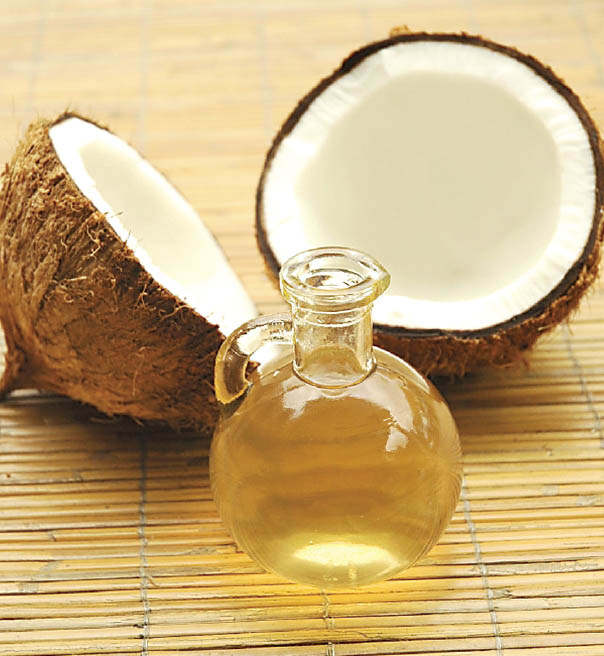
Coconut oil
If you want to see everything in one place, the products page lists the full range.
Bulk Vegetable Oil Exporter Thailand Specifications We Load Against
Every bulk vegetable oil exporter Thailand buyers deal with should be able to give you a written specification before you sign. Not a brochure. A table with limits and test methods. Here are ours for the two oils we ship most often.
Refined sunflower oil
| Parameter | Our limit | Test method |
|---|---|---|
| Appearance | Clear, bright, light golden yellow | Visual at 20 °C |
| Odour and taste | Neutral, no off flavour | Sensory |
| Free fatty acid (as oleic) | 0.1% max | AOCS Ca 5a-40 |
| Peroxide value | 10 meq O2/kg max (much lower at loading) | AOCS Cd 8b-90 |
| Moisture and volatile matter | 0.1% max | AOCS Ca 2c-25 |
| Insoluble impurities | 0.05% max | AOCS Ca 3a-46 |
| Iodine value (Wijs) | 118 to 144 | AOCS Cd 1d-92 |
| Colour (Lovibond 5¼ inch) | 1.5 red max | AOCS Cc 13e-92 |
| Cold test | Clear after 5.5 hours at 0 °C | AOCS Cc 11-53 |
| Smoke point | About 232 °C | AOCS Cc 9a-48 |
| Shelf life | 12 to 18 months sealed, cool and dry |
RBD palm olein CP10 and CP8
| Parameter | CP10 | CP8 |
|---|---|---|
| Cloud point | 10 °C max | 8 °C max |
| Iodine value (Wijs) | 56 min | 58 min |
| Free fatty acid (as palmitic) | 0.1% max | 0.1% max |
| Moisture and impurities | 0.1% max | 0.1% max |
| Peroxide value at loading | 2.0 meq/kg max | 2.0 meq/kg max |
| Colour (Lovibond 5¼ inch) | 3.0 red max | 3.0 red max |
| Slip melting point | 24 °C max | 22 °C max |
| Smoke point | About 230 °C | About 230 °C |
The test methods come from the American Oil Chemists’ Society, and the limits sit inside the Codex Alimentarius standard for named vegetable oils. If your country has its own rules, send them to us before we quote. Some markets want lower peroxide, a vitamin A addition or a specific label language, and it’s much easier to plan that in at the start.
For the other oils, our spec guides go into detail: refined soybean oil specification, RBD canola oil specification and RBD coconut oil specification.
How We Pack Bulk Vegetable Oil
Packing is where a lot of the real cost sits, so it’s worth choosing carefully before you ask a bulk vegetable oil exporter Thailand side for a price. As a bulk vegetable oil exporter Thailand customers use for both bulk and packed oil, we offer the full range.
| Packing | Typical quantity | Best for |
|---|---|---|
| Flexitank in 20 ft container | About 20 to 24 tonnes | Refiners, bottlers, large food plants |
| ISO tank | About 20 to 24 tonnes | Buyers who need a rigid tank or heated discharge |
| IBC (1,000 litre) | About 18 to 20 tonnes per container | Mid size factories, repackers |
| Steel drums (180 to 200 kg) | About 16 to 17 tonnes per container | Small factories, cosmetics, mixed orders |
| 18 litre tins and 20 litre jerrycans | Full container, palletised or loose | Restaurants, caterers, traders |
| PET bottles 250 ml to 5 litre | Full container, cartons | Supermarkets, retail distributors |
For a bulk vegetable oil exporter Thailand side, flexitanks are the cheapest way to move liquid oil. A single-use bag sits inside a normal dry container, and the oil is pumped in and out. If you have never received one before, read our guide on flexitank vs ISO tank and the step by step on sunflower oil flexitank shipment. Palm olein needs some care in cold weather, because it can cloud or partly solidify in transit. That’s normal, and gentle heating at discharge fixes it.
For packed oil, the numbers are different. A 40 foot container of 1 litre bottles holds roughly 22 to 23.5 tonnes of oil. Our post on how much cooking oil fits in a 20ft container walks through the load plans.
What an Order Looks Like, Start to Finish
People often ask how long it takes to buy from a bulk vegetable oil exporter Thailand side and what happens when. Here is the usual sequence with us.
- Enquiry. You tell us the oil, grade, packing, quantity, destination port and Incoterm.
- Offer. We send a price, the specification and a recent certificate of analysis. Offers are normally valid for a few days because the oil market moves.
- Samples. If you need them, we send oil samples by courier. See how to request edible oil samples.
- Contract. Proforma invoice or sales contract, then deposit or letter of credit.
- Production and testing. The batch is allocated or refined, tested, and the COA is issued.
- Loading. Container loaded, sealed and photographed. Independent inspection if you’ve asked for it.
- Shipping. Vessel departs. We send scanned documents straight away and originals by courier or through the bank.
- Arrival. You or your broker clear the goods.
From a confirmed order to vessel departure usually takes two to four weeks. Private label packing takes longer the first time, because labels and cartons have to be printed. Sea transit depends on where you are. Nearby Asian ports can be under two weeks. Parts of the Americas can be five or six.
Documents That Come With Every Shipment
Documents are the part that decides how fast your oil clears customs. A professional bulk vegetable oil exporter Thailand importers trust should send all of these without being asked.
- Commercial invoice and packing list
- Bill of lading
- Certificate of analysis for the exact batch
- Certificate of origin
- Health certificate or phytosanitary certificate where your country requires it
- Halal certificate on request
- Insurance certificate on CIF shipments
- Inspection certificate if you appoint SGS, Intertek or another inspector
Our full list, with what each one is for, is in documents required to import vegetable oil. And if the COA is new to you, certificate of analysis for edible oil explains which numbers to check first.
Certifications and Quality Control
As a bulk vegetable oil exporter Thailand buyers are welcome to audit, we work under ISO 22000, HACCP, GMP and Halal systems. Here’s what that means in practice, without the marketing.
ISO 22000 is a food safety management system. It covers how we control risk from raw oil to finished pack. HACCP is the hazard analysis behind it, the part that identifies where contamination could happen and how it’s stopped. GMP covers the day to day hygiene and handling rules on the lines. Halal certification matters for many of our buyers in the Middle East, Africa and Southeast Asia, and we can supply the certificate with each shipment.
On the quality side, every batch is tested before loading for free fatty acid, peroxide value, moisture and colour at minimum. Flexitanks and drums are checked for cleanliness. Bottled oil is checked for fill weight, cap torque and coding. If you want a third party to watch the loading, we welcome it. Our guide to pre-shipment inspection for edible oil shows how to set one up.
What Moves the Price
Buyers sometimes ask why a quote from a bulk vegetable oil exporter Thailand side changes from one week to the next. It’s not us being difficult. These are the things that move it.
- The raw oil market. Palm, soybean and sunflower oil are traded globally and prices change daily.
- Grade. High oleic, organic and CP8 grades cost more than standard grades.
- Packing. A flexitank is far cheaper per tonne than 1 litre bottles.
- Incoterm. FOB, CFR and CIF all include different costs. Our post on CIF vs FOB vegetable oil explains the difference, and the official Incoterms rules define who pays what.
- Freight. Ocean freight to West Africa is not the same as freight to Singapore. It also swings with the season.
- Quantity. Regular contract volumes get better pricing than a one-off container.
If you want to understand the landed cost better, read bulk vegetable oil price CIF. We always show the freight part of a quote separately so you can compare it properly.
Shipping Times From a Bulk Vegetable Oil Exporter Thailand Port
These are rough sea transit times from Laem Chabang. They change with the shipping line, the route and transhipment, so use them for planning, not as a promise.
| Destination region | Typical transit time |
|---|---|
| Southeast Asia | 3 to 10 days |
| East Asia (China, Korea, Japan) | 7 to 14 days |
| South Asia | 10 to 18 days |
| Middle East and Gulf | 14 to 22 days |
| East Africa | 18 to 28 days |
| West Africa | 28 to 40 days |
| Europe | 25 to 35 days |
| Australia and New Zealand | 14 to 25 days |
| North and South America, Caribbean | 30 to 45 days |
Add our loading time of two to four weeks, plus port clearance at your end, and you have the full picture. When you buy from a bulk vegetable oil exporter Thailand side for the first time, plan the order about two months before you want oil on the shelf. After that, regular contracts can be scheduled so a container arrives just as the last one runs down.
Thailand Versus Buying Straight From Origin
Some buyers ask why they should use a bulk vegetable oil exporter Thailand side at all, instead of buying sunflower oil direct from the Black Sea or soybean oil from South America. It’s a fair question, and sometimes buying direct from origin is the right call, especially for full vessel cargoes.
For container buyers it usually isn’t. Origin sellers often want big minimums, ship mostly in bulk vessels, and may not pack retail bottles or jerrycans. A bulk vegetable oil exporter Thailand side can combine several oils, pack them to your label, and ship one or two containers at a time with full documents. You also deal with one time zone, one contract format and one contact person for everything.
Storing the Oil After It Arrives
The oil leaves us in good condition, but how you store it decides how long it stays that way. A few simple rules help.
- Keep bulk tanks and packed oil out of direct sun. Heat and light speed up oxidation.
- Keep palm olein above about 25 °C in bulk tanks if you need it fully liquid. Do not overheat it.
- Use first in, first out. Older stock goes out first.
- Keep caps tight and drums closed. Air and moisture are the enemy.
- Don’t store oil next to chemicals, fuel or strong smelling goods.
Our guide to shelf life of sunflower oil, soybean and canola goes into more detail on storage. Any bulk vegetable oil exporter Thailand buyers work with should be happy to advise on this too, because bad storage at destination often gets blamed on the supplier.
Who Buys From Us
Our customers fall into a few groups, and each one needs something slightly different from a bulk vegetable oil exporter Thailand side. Here’s how we usually work with each.
Importers and wholesalers usually want packed oil in jerrycans, tins or bottles, often under their own label. They care about consistent quality, carton strength and documents that clear customs fast.
Food manufacturers such as snack, noodle, bakery and frying plants usually want bulk oil in flexitanks or ISO tanks. They care about the spec, especially free fatty acid, peroxide value and fry stability.
Refiners buy crude oil, CP0 palm, crude soybean or crude sunflower, and refine it themselves. They care about the crude spec, the FFA range and the price spread.
Repackers and distributors buy bulk oil and fill it into their own packs locally. They often start with IBCs or drums. If that’s you, our guide to the cooking oil repackaging business is worth reading.
We ship to Asia, the Middle East, Africa, Europe, North and South America, the Caribbean and the Pacific. Whichever group you’re in, tell us how you use the oil and we’ll suggest the grade and pack that fits.
7 Proven Tips for Choosing a Bulk Vegetable Oil Exporter Thailand Side
I’d give this advice to anyone, whether they buy from us or not.
1. Ask for the spec before the price
A cheap price with no spec means nothing, whether it comes from a bulk vegetable oil exporter Thailand side or anywhere else. Get the limits in writing first, then compare quotes on the same basis.
2. Get a recent COA
A real bulk vegetable oil exporter Thailand side can send a certificate of analysis from a recent batch within a day. If the supplier hesitates, take note.
3. Check the company is real
Look up the registration, ask for a video call, ask for the warehouse address. Scams in this trade are common. Our post on how to spot a fake vegetable oil supplier lists the warning signs.
4. Use safe payment terms on a first order
A letter of credit or a deposit with balance against documents protects both sides. Be very careful with anyone who wants full payment up front by wire to a personal account. We cover the options in letter of credit vs TT payment.
5. Appoint an inspector
A good bulk vegetable oil exporter Thailand buyers use will never object to inspection. An independent inspector such as SGS or Intertek can sample the oil and witness loading. It costs a little and removes a lot of risk.
6. Check your own import rules early
Your bulk vegetable oil exporter Thailand partner can help with documents, but registration, labelling and testing rules differ by country. Some need product registration before the first shipment. Sort it out before you book a container, not after.
7. Start with one container
Even if you plan to buy a lot, start with one container. Check the oil, the packing and the documents. Then scale up. Any honest bulk vegetable oil exporter Thailand buyers work with will understand.
Common Mistakes We See
A few things go wrong again and again, so here they are.
Buyers order CP10 palm olein for a cold market and are surprised when it clouds. If your winter temperatures drop below about 10 °C, think about CP8, or plan for heated storage.
Buyers compare a CIF price with an FOB price without noticing. The cheaper-looking quote turns out to be the expensive one.
Buyers forget the registration step. The oil arrives, and the port won’t release it until the product is registered. Storage charges add up fast.
Buyers skip the sample. Taste, colour and smell matter, especially for retail. A sample costs little and avoids a bad surprise.
And finally, buyers choose a bulk vegetable oil exporter Thailand side only on price, then find the documents are wrong or the cartons are weak. The cheapest quote is rarely the cheapest container once it lands.
Frequently Asked Questions
What is your minimum order?
For bulk oil, one flexitank of about 20 tonnes. For packed oil, normally one 20 foot container, and you can mix pack sizes. Smaller test orders are sometimes possible in drums or IBCs. Read more in minimum order quantity for bulk cooking oil.
Which ports do you ship from?
As a bulk vegetable oil exporter Thailand side, we load mostly at Laem Chabang, sometimes Bangkok. Both have direct links to the main world shipping lanes.
Can I get the oil under my own brand?
Yes. Private label bottles, jerrycans and tins are available. The first order takes longer because of artwork and printing.
Do you offer CIF prices?
Yes. We quote FOB, CFR or CIF to your port. Tell us the port and we’ll include freight.
How do I know the oil will match the sample?
Every shipment from us as a bulk vegetable oil exporter Thailand side comes with a COA for the actual batch, and you can appoint an inspector to sample at loading. As a bulk vegetable oil exporter Thailand customers return to, we’d rather you check than wonder.
Do you ship worldwide?
Yes. Asia, the Middle East, Africa, Europe, the Americas, the Caribbean and the Pacific.
Get a Quote From a Bulk Vegetable Oil Exporter Thailand Buyers Trust
Send us the oil, grade, packing, quantity, destination port and Incoterm. We’ll reply with a firm offer, the specification and a recent COA, normally within one working day. You can also read about us or see more on vegetable oil export Thailand.
Email info@dthcompanyltd.com, call or WhatsApp +66 91 765 9104, or use our contact page. Our office is at 201/7 Patan Rd., Patan, Muang, Chiang Mai 50300, Thailand.




One thought on “Bulk Vegetable Oil Exporter Thailand: Trusted Specs, Packing and 7 Proven Buying Tips”