Finding a cooking oil supplier Thailand importers can depend on is mostly about three things: the oil has to be right, the pack has to survive the trip, and the papers have to clear customs. Get any one of those wrong and the cheapest price in the world won’t save the deal. We supply refined cooking oil from Thailand to supermarkets, wholesalers, restaurants, caterers and food factories in Asia, Africa, the Middle East, Europe and the Americas. This page explains what we sell, the specs, the pack sizes and how buying from us works.

Thai food runs on frying oil. Walk down any street in Bangkok or Chiang Mai and you’ll see woks and deep pans going from morning to late at night. That local demand built a big, experienced cooking oil industry here, and that is what we draw on when we pack oil for buyers overseas.
Table of Contents
Cooking Oils We Sell
As a cooking oil supplier Thailand customers buy from for both retail and food service, we keep the range focused on the oils people actually cook with.
| Oil | Main uses | Product page |
|---|---|---|
| Refined sunflower oil | Retail bottles, light frying, salad, bakery | Refined sunflower oil |
| High oleic sunflower oil | Long-life frying, snacks, food service | High oleic sunflower oil |
| RBD palm olein CP10 | Deep frying, noodles, snacks, warm markets | Refined palm oil CP10 |
| RBD palm olein CP8 | Deep frying in cooler climates, clearer bottles | Refined palm oil CP8 |
| Refined soybean oil | All-purpose cooking, mayonnaise, dressings | Refined soybean oil |
| Refined canola oil | Healthier retail positioning, frying, baking | Refined canola oil |
| RBD coconut oil | Frying, bakery, confectionery | RBD coconut oil |
As a cooking oil supplier Thailand refiners also buy from, we sell crude grades too. Those are covered on the products page.
Why Buy Cooking Oil From Thailand
There are cheaper places to buy one particular oil on one particular day. That’s true of any origin. The reason buyers keep coming back to a cooking oil supplier Thailand side is the mix of things the country does well at the same time.
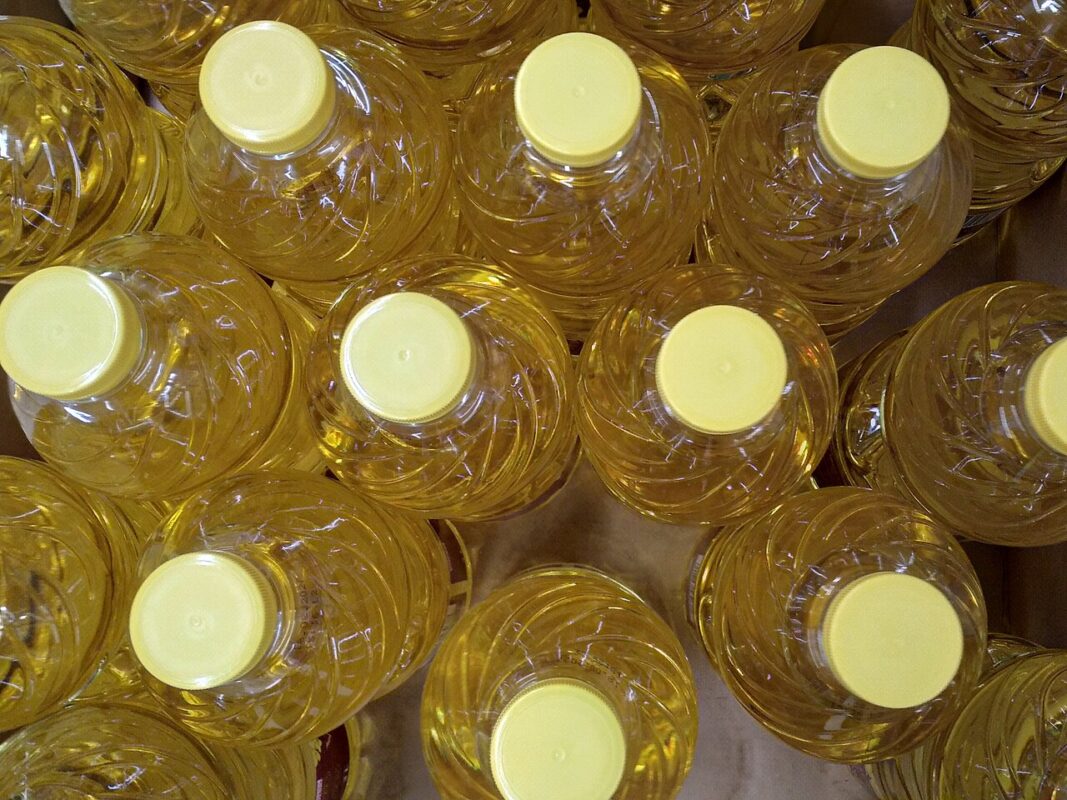
First, packing. Thailand has a large food packaging industry, so PET preforms, caps, labels, cartons, jerrycans and tins are easy to source in good quality. That matters more than people expect. A strong bottle and a well-made carton are the difference between a clean container and a container full of leaks.
Second, logistics. Laem Chabang is a big, well-run port with direct services to most of the world. As a cooking oil supplier Thailand importers use, we can book space to Africa, the Gulf, Europe, Australia or the Americas without strange routings.
Third, range. One cooking oil supplier Thailand side can load palm olein, sunflower, soybean and canola oil in the same container if you need it. For a distributor who wants to offer a few oils to shops, that’s a real saving in freight and paperwork.
And fourth, food safety culture. Thai food exporters ship to some of the strictest markets in the world, so systems like HACCP and good manufacturing practice are normal here, not special.
Which Oil Should You Buy?
This is the first question I’d ask any buyer, because the answer changes everything else. A good cooking oil supplier Thailand side should help you choose, not just push the most expensive grade.
For supermarket shelves
Most retail buyers who contact a cooking oil supplier Thailand side want one or two fast-moving oils. Refined sunflower oil sells well almost everywhere. It’s light, clear and looks good in a bottle. Canola oil works where shoppers care about health labels. In price-driven markets, palm olein or a palm and soybean blend may be the right choice. In cooler countries, choose CP8 palm olein or sunflower, because CP10 can cloud in the bottle on a cold shelf, and shoppers think cloudy oil is bad oil.
For restaurants and fast food
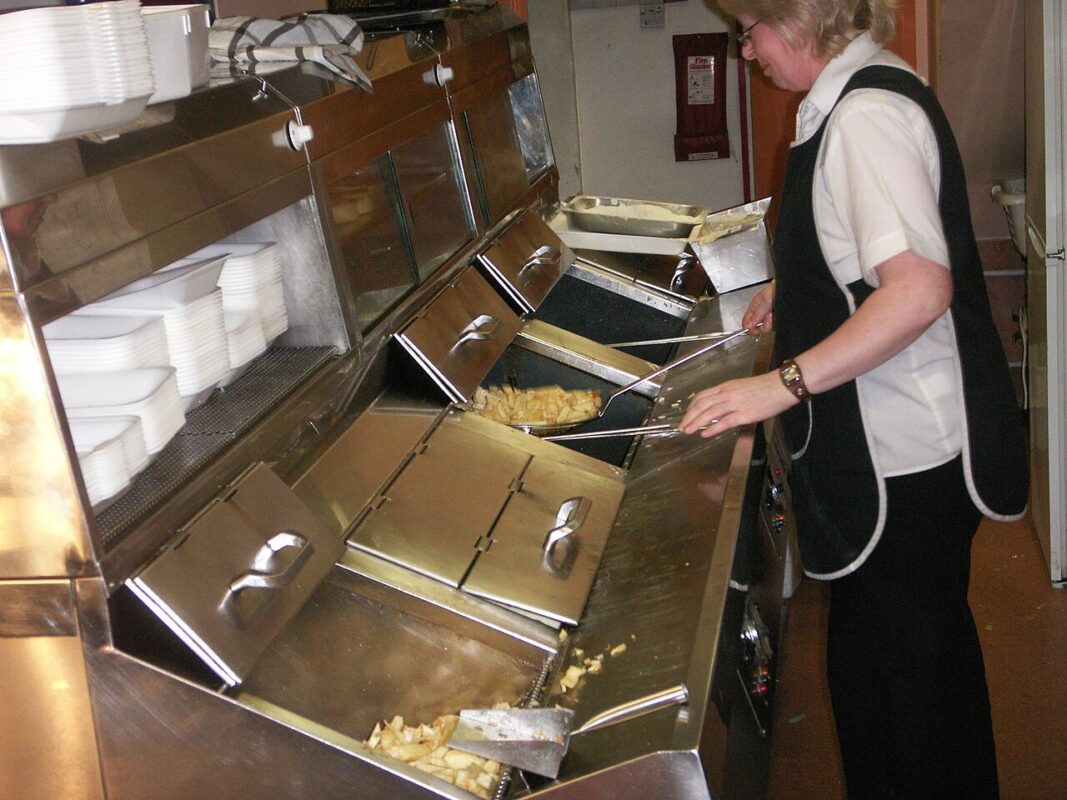
Deep fryers need oil that lasts. Palm olein and high oleic sunflower oil both hold up well under long frying hours. Regular sunflower and soybean oil are fine for pan and wok cooking but break down faster in a fryer that runs all day. Our post on how often to change fryer oil is worth sharing with your customers.
For food factories
Snack makers, noodle factories and bakeries usually buy bulk oil from a cooking oil supplier Thailand side and care about very specific numbers, such as free fatty acid, peroxide value and slip melting point. Tell us the application and we’ll suggest a grade. The cooking oil smoke point chart gives a quick comparison.
Specifications From Our Cooking Oil Supplier Thailand Lines
Here are the specs we guarantee as a cooking oil supplier Thailand side for refined soybean oil and refined canola oil. The sunflower and palm specs are in our guides to refined sunflower oil specification and CP8 vs CP10 palm oil.
Refined soybean oil
| Parameter | Our guarantee | Test method |
|---|---|---|
| Appearance at 20 °C | Clear, bright, no sediment | Visual |
| Odour and taste | Bland, neutral | Sensory |
| Free fatty acid (as oleic) | 0.10% max | AOCS Ca 5a-40 |
| Peroxide value at loading | 2.0 meq O2/kg max | AOCS Cd 8b-90 |
| Moisture and volatile matter | 0.05% max | AOCS Ca 2c-25 |
| Insoluble impurities | 0.05% max | AOCS Ca 3a-46 |
| Colour (Lovibond 5.25 inch) | Red 2.0 max, Yellow 20 max | AOCS Cc 13e-92 |
| Iodine value (Wijs) | 124 to 139 | AOCS Cd 1d-92 |
| Saponification value | 189 to 195 mg KOH/g | AOCS Cd 3-25 |
| Relative density at 20 °C | 0.919 to 0.925 | ISO 6883 |
| Soap content | 10 ppm max | AOCS Cc 17-95 |
| Smoke point | About 230 °C | AOCS Cc 9a-48 |
Refined canola oil
| Parameter | Specification |
|---|---|
| Appearance | Clear, light yellow liquid |
| Odour and taste | Odourless, neutral |
| Free fatty acid (as oleic) | 0.05% max |
| Moisture and impurities | 0.1% max |
| Peroxide value | 1.0 meq O2/kg max |
| Iodine value (Wijs) | 105 to 126 |
| Saponification value | 175 to 195 |
| Shelf life | 18 to 24 months, cool and dry |
These limits sit within the Codex Alimentarius standard for named vegetable oils. If your market has tighter rules, tell us before we quote and we’ll confirm in writing whether we can meet them. A cooking oil supplier Thailand buyers can trust will say no to a spec it can’t hit, rather than hoping the lab at your end doesn’t notice.
Pack Sizes and How Many Fit in a Container
Most of what we sell as a cooking oil supplier Thailand side goes out packed, not in bulk. Here are the common packs.
| Pack | Material | Carton | Who usually buys it |
|---|---|---|---|
| 250 ml and 500 ml bottle | PET | 24 per carton | Small shops, hotels, trial packs |
| 1 litre bottle | PET | 12 per carton | Supermarkets, the main retail size |
| 2 and 3 litre bottle | PET with handle | 6 or 4 per carton | Family shoppers |
| 5 litre bottle | PET with handle | 4 per carton | Cash and carry, small restaurants |
| 1 litre pouch | Multilayer film | 10 or 12 per carton | Price-sensitive retail |
| 10 and 20 litre jerrycan | Food grade HDPE | Loose or palletised | Restaurants, caterers, traders |
| 18 litre tin | Tinplate | Loose or palletised | Food service, bakeries, sweet shops |
With a cooking oil supplier Thailand side like us, mixed loads are normal. A first container might be half 1 litre bottles, a quarter 5 litre and a quarter 20 litre jerrycans. That lets you test the market before committing to one size. A 40 foot container of 1 litre bottles carries roughly 22 to 23.5 tonnes of oil. For the detail, see how much cooking oil fits in a 20ft container and our comparison of PET bottle vs jerrycan cooking oil packaging.
If you want bulk oil instead, we ship flexitanks, ISO tanks, IBCs and drums too. Our guide to flexitank vs ISO tank explains the difference.
Your Brand or Ours
You can buy oil in our standard packs or under your own label. Private label is where a cooking oil supplier Thailand side earns its keep, because the label has to be legal in your country, not ours. We print what you approve, but we’ll flag anything that looks likely to cause trouble, like a missing ingredient line, the wrong net volume format or a health claim your regulator might not accept.
The first private label order takes longer, because labels and cartons have to be designed and printed. Repeat orders run at the normal speed. Read our page on OEM sunflower oil bottling Thailand for how the artwork process works.
A Typical First Order, Step by Step
To make this less abstract, here is how a first order with a new wholesaler usually goes when they buy from our cooking oil supplier Thailand team.
- The buyer sends an enquiry: refined sunflower oil, 1 litre and 5 litre bottles, own brand, one 40 foot container, CIF to their port.
- We reply with a price, the specification, a recent COA, bottle and carton photos, and a suggested load plan.
- The buyer asks for samples. We courier two bottles of each size and a sample label.
- The buyer approves the samples and sends their label artwork. We check it against what we know of their local rules and send a print proof.
- Contract signed. Deposit paid or letter of credit opened.
- Labels and cartons are printed. We send photos.
- The oil is tested, filled, capped, labelled, coded and packed.
- Container loaded to the load plan, sealed and photographed. The buyer’s inspector attends if they’ve booked one.
- Documents are sent. The vessel sails.
- The buyer clears the goods, checks the cartons and sends feedback.
On repeat orders, steps 3 and 4 disappear, so the whole cycle gets much shorter. Most of our regular customers simply send a purchase order and a delivery month.
How Quality Is Controlled
People sometimes ask what stops a cooking oil supplier Thailand side from sending a good sample and then a poor container. Fair question. Here is what we do.
- Every batch is tested before filling for free fatty acid, peroxide value, moisture and colour.
- Bottles and caps are checked for leaks and cap torque.
- Fill weight is checked during the run.
- Every pack carries a batch code and best-before date.
- Cartons are checked for strength, because a crushed bottom row ruins a container.
- A certificate of analysis is issued for the exact batch you receive.
We work under ISO 22000, HACCP, GMP and Halal systems. If you’d like an independent check, appoint SGS or another inspector to sample at loading. We’re used to it. Our guide to pre-shipment inspection for edible oil explains the steps, and HACCP certified cooking oil manufacturer covers what to verify on the certificates.
Who We Supply as a Cooking Oil Supplier Thailand Side
Our buyers come in all sizes, but most fit one of these groups.
Importers and national distributors. They buy full containers of packed oil, often under their own brand, and sell on to wholesalers and supermarkets. They want consistent quality month after month and documents that clear fast.
Supermarket and cash and carry chains. Usually private label, usually 1 litre, 2 litre and 5 litre bottles. They care about shelf appearance, label accuracy and on-time delivery for promotions.
Restaurant groups, hotels and caterers. They want 18 litre tins and 20 litre jerrycans of frying oil that lasts in the fryer. Palm olein and high oleic sunflower are the usual choices.
Food factories. Snack, noodle, bakery and frozen food plants buy bulk oil in flexitanks or IBCs from a cooking oil supplier Thailand side, and they care most about the spec sheet.
Aid and institutional buyers. Some buy fortified oil with vitamin A and D added. We can quote for that too.
Whichever group you’re in, the conversation starts the same way. Tell us how the oil will be used, and we’ll suggest a grade and pack that fits. Read more about our wider range of bulk vegetable oil supplier options if you buy in bulk as well.
Prices and What Changes Them
We don’t publish a fixed price list, because cooking oil prices move every week with the world markets for palm, soybean and sunflower oil. What I can tell you is what goes into a quote from a cooking oil supplier Thailand side, so you can compare offers properly.
- The oil. The base price of the refined oil on the day.
- The pack. Bottles, caps, labels and cartons cost more per litre in small sizes.
- Filling and labour. Small packs take longer to fill.
- Branding. Private label printing, plus artwork the first time.
- Inland transport and port fees in Thailand.
- Ocean freight and insurance if you buy CFR or CIF.
- Documents and inspection.
We show each of these clearly. If another cooking oil supplier Thailand side quotes much lower, check whether the price is FOB or CIF, whether the bottle weight is the same, and whether the net volume is really 1 litre or 900 ml. The official Incoterms rules are worth a read if the terms are new to you. Our post on the sunflower oil 40ft container price shows a worked example.
Storage and Handling at Your Warehouse
Good oil can still go bad in a hot warehouse. A cooking oil supplier Thailand side can only control the oil until the container door opens at your end, so here’s what we suggest to every customer.
- Unload quickly. A container sitting in full sun at the port gets very hot inside.
- Stack cartons no higher than the carton marking says.
- Keep stock away from walls and direct sunlight.
- Rotate stock, oldest first.
- Keep palm olein somewhere warm if you sell it in clear bottles. Cold makes it cloudy, and shoppers don’t like cloudy oil, even though it’s harmless and clears again when warm.
- Keep oil away from fuel, chemicals and strong smells. Oil picks up odours.
If you’re new to this side of the business, our guide on how to start a cooking oil distribution business covers warehousing, credit and pricing in more depth.
Documents You Receive
Every shipment from us as a cooking oil supplier Thailand side includes:
- Commercial invoice and packing list
- Bill of lading
- Certificate of analysis
- Certificate of origin
- Health certificate where needed
- Halal certificate on request
- Insurance certificate for CIF orders
Some countries also need product registration before the first container arrives. For example, Thai food exports are regulated at home by the Thai FDA, while your own food authority decides what’s needed at your end. Check that early. Our list of documents required to import vegetable oil covers the usual paperwork.
7 Proven Tips for Choosing a Cooking Oil Supplier Thailand Side
1. Match the oil to your customers
Don’t buy what’s cheapest. Buy what your shoppers or kitchens will come back for. If you’re not sure, a mixed first container tells you fast.
2. Ask for a recent certificate of analysis
Any genuine cooking oil supplier Thailand importers deal with can send one in a day. Check the free fatty acid and peroxide value first. Our post on free fatty acid and peroxide value explains what the numbers mean.
3. Test samples yourself
Fry with it. Leave a bottle in the sun for a week. Put one in the fridge. Real-world tests tell you more than a brochure.
4. Check the bottle, not only the oil
Thin bottles crack. Weak caps leak. Poor cartons collapse in a stack. Ask for photos of the pack and the carton before you order.
5. Verify the company
Registration documents, a video call, a factory or warehouse address. Read how to spot a fake vegetable oil supplier before sending money anywhere.
6. Agree safe payment terms
A deposit with balance against documents, or a letter of credit, is normal for a first order. We explain both in letter of credit vs TT payment.
7. Plan around holidays
Demand for cooking oil jumps before big festivals in many countries. Order early so the container arrives before the rush, not after it. A cooking oil supplier Thailand side gets busy at the same time as you do.
Mistakes First-Time Buyers Make
Buying CP10 palm olein in bottles for a cold market, then getting complaints about cloudy oil. Choose CP8 or sunflower instead.
Ordering only one pack size. It’s much safer to split the first container and see what sells.
Forgetting the label rules. Labels that don’t meet local law can hold up a whole container. Send us your regulations before we print.
Comparing quotes on different bottle weights or different Incoterms. Line them up properly first.
Choosing a cooking oil supplier Thailand side because the website looks big. Look at the documents, the samples and how quickly they answer specific questions. That tells you more.
Frequently Asked Questions
Can you supply small quantities?
Like most cooking oil supplier Thailand exporters, our normal minimum for packed oil is one 20 foot container, and you can split it across sizes. For details, see minimum order quantity for bulk cooking oil.
Do you supply restaurants directly?
We supply restaurant groups, caterers and the wholesalers who serve them, usually in 18 litre tins and 20 litre jerrycans by the container.
What is the shelf life?
Most refined oils keep 12 to 24 months sealed, depending on the oil and pack. Tins usually last longer than PET. More in shelf life of sunflower oil, soybean and canola.
Is your oil Halal?
Yes. As a cooking oil supplier Thailand Muslim-majority markets buy from, Halal certification is available, and we can send the certificate with each shipment.
Which countries do you ship to?
As a cooking oil supplier Thailand side with customers worldwide, we ship to Asia, the Middle East, Africa, Europe, the Americas, the Caribbean and the Pacific.
How quickly can you load?
Standard oil in standard packs usually loads within two to four weeks of a confirmed order. Private label takes longer the first time.
Ask Our Cooking Oil Supplier Thailand Team for a Quote
Tell us the oil, the pack sizes, the brand (ours or yours), quantity, destination port and Incoterm. We’ll come back with a firm offer, the spec and a recent COA, usually within one working day. You can also learn more about us.
Email info@dthcompanyltd.com, call or WhatsApp +66 91 765 9104, or use our contact page.