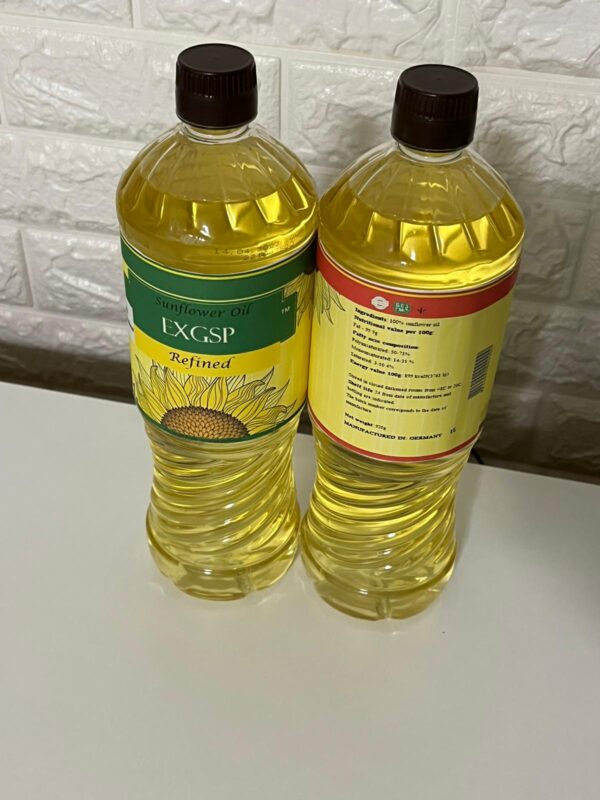
Sunflower oil vs rice bran oil is a question we get a lot, usually from distributors and food factories in Asia who are deciding what to stock or what to fry with. We sell refined and high oleic sunflower oil in bulk and in packs, shipped worldwide, so you should know where we stand before you read on. That said, rice bran oil is a good oil and for some jobs it’s the better pick. This page lays out the real differences: how each is made, what’s in it, how it behaves in a fryer, what it costs, how easy it is to buy in volume, and the specs of the sunflower oil we ship. At the end there’s a quick way to get a quote.
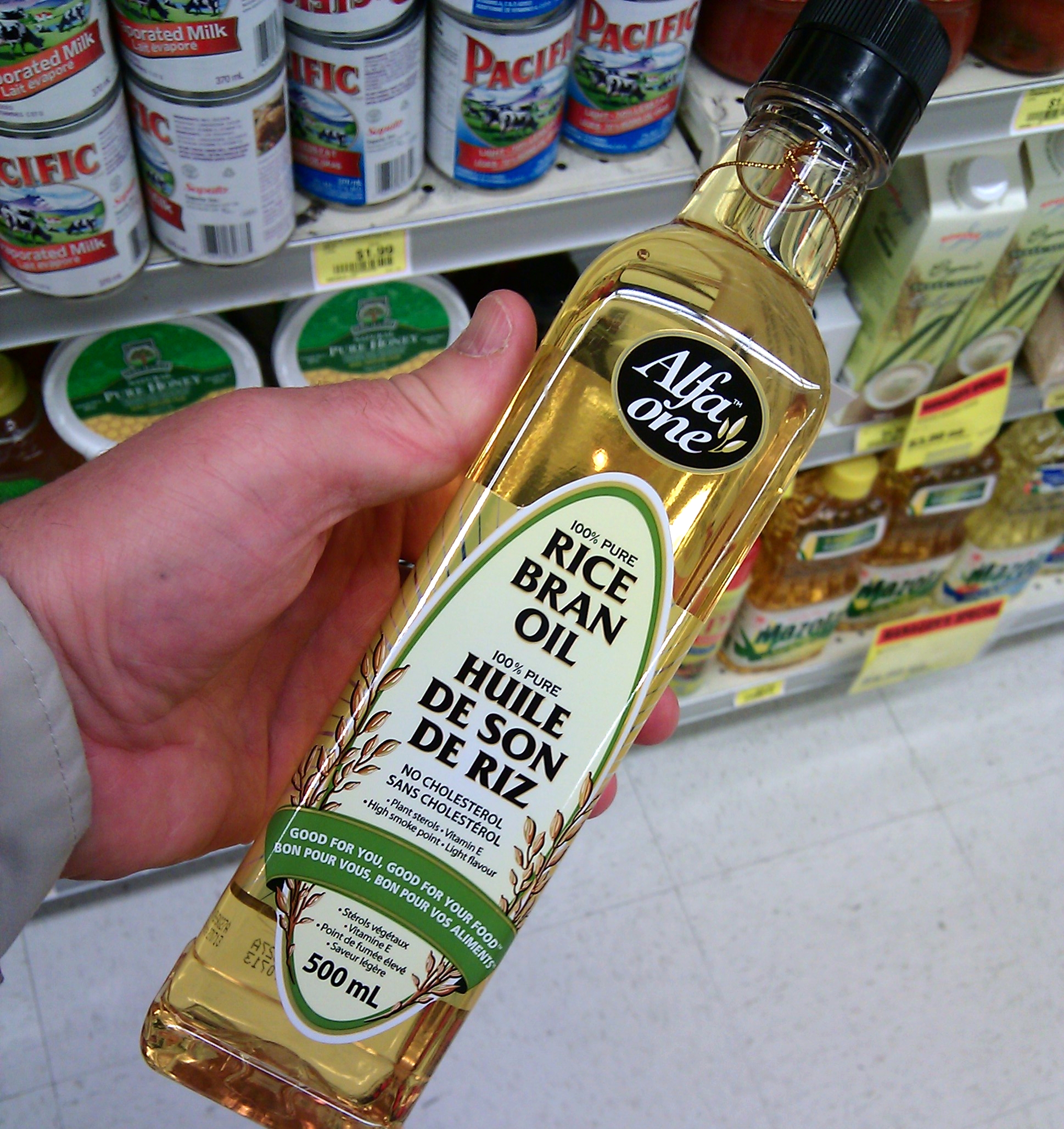
I’ve been loading edible oil containers for a long time. The comparison below is what I’d tell a buyer over the phone, not a brochure. Where rice bran oil wins, I’ll say so.
Table of Contents
Sunflower Oil vs Rice Bran Oil: The Short Answer
If you want the quick version of sunflower oil vs rice bran oil, here it is.
- Pick refined sunflower oil if you want a clear, neutral oil that’s easy to buy in any volume, works for everyday cooking, salad dressings and mayonnaise, and costs less in most markets.
- Pick high oleic sunflower oil if you fry all day and want the oil to last in the fryer.
- Pick rice bran oil if your customers already know and ask for it, if you want to sell on gamma oryzanol, or if you’re in a market like Japan or India where it has a strong following.
Most of our buyers who look at sunflower oil vs rice bran oil end up stocking sunflower as the main line because it’s cheaper and easier to source in steady volume. Some add a small amount of rice bran oil as a premium item. Both approaches work.
How Each Oil Is Made
Sunflower oil comes from pressing and extracting sunflower seeds. The crude oil is then degummed, neutralised, bleached, winterised to remove natural waxes, and deodorised. The result is a pale, clear oil with almost no taste or smell. We explain the steps in crude vs refined sunflower oil and winterized sunflower oil.
Rice bran oil comes from the bran layer that’s removed when brown rice is polished into white rice. The tricky part is timing. Once bran is separated, an enzyme in it starts breaking down the fat very quickly, so free fatty acids climb within hours. Mills have to stabilise the bran fast or the crude oil comes out very acidic. Because of that, rice bran oil is usually physically refined, and it also needs dewaxing because bran oil carries a lot of wax. Done well, the refined oil is light and mild. Done badly, it’s dark and has a heavier smell.
This is one reason quality varies more on the rice bran side of the sunflower oil vs rice bran oil question. With sunflower oil, refining is a very standard process done at huge scale in many countries. The general background on rice bran oil is covered well on its encyclopedia page.
Sunflower Oil vs Rice Bran Oil Side by Side
Here are typical values for refined oils. Exact numbers change from batch to batch and origin to origin.
| Point | Refined sunflower oil | High oleic sunflower oil | Refined rice bran oil |
|---|---|---|---|
| Colour | Very pale yellow | Pale yellow | Pale to golden yellow |
| Taste | Neutral | Neutral | Mild, slightly nutty |
| Saturated fat | about 10 to 12% | about 8 to 10% | about 20 to 25% |
| Oleic acid (omega 9) | about 15 to 35% | 75% and up | about 38 to 45% |
| Linoleic acid (omega 6) | about 50 to 70% | under 15% | about 30 to 36% |
| Smoke point | about 225 °C | about 230 °C | about 230 °C |
| Vitamin E | High, mostly alpha tocopherol | High | Moderate, includes tocotrienols |
| Gamma oryzanol | None | None | Yes, amount depends on refining |
| Cold behaviour | Stays clear if winterised | Stays clear | Can cloud if not well dewaxed |
| World supply | Very large | Large | Small |
| Usual price | Lower in most markets | A bit higher than regular | Higher in most markets |
Compare the fat profiles in more detail in sunflower oil fatty acid composition. Nutrient data for both oils can be checked on USDA FoodData Central.
Nutrition: What the Numbers Mean
People often frame sunflower oil vs rice bran oil as a health question, so let’s be straight about it.
Regular sunflower oil is high in linoleic acid, an omega 6 fat. That isn’t bad in itself, but most diets already have plenty of omega 6. High oleic sunflower oil flips that around and is mostly monounsaturated fat, close to olive oil in profile. Rice bran oil sits in the middle, with a fairly even split between monounsaturated and polyunsaturated fats, and more saturated fat than either sunflower type.
Sunflower oil is one of the best sources of vitamin E among common cooking oils. We cover that in sunflower oil vitamin E. Rice bran oil has less alpha tocopherol but carries tocotrienols and gamma oryzanol, a group of compounds that’s been studied for cholesterol effects. How much oryzanol is left depends heavily on refining, so if you plan to put it on a label, ask the supplier for a test result, not a brochure figure.
Neither oil has much omega 3. If that matters to you, see omega 6 to omega 3 ratio in cooking oils. For a broader view, read sunflower oil benefits and the honest flip side in side effects of sunflower oil.
One practical point for sellers: be careful with health claims on your labels. Many countries restrict what you can say about cholesterol or heart health. Selling on taste, clarity and frying performance is safer.
Frying Performance
This is where sunflower oil vs rice bran oil gets interesting for restaurants and snack factories.
Refined rice bran oil has a high smoke point and holds up reasonably well in the fryer. Many cooks in Japan use it for tempura because it gives a light, crisp coating. Regular sunflower oil also has a high smoke point, but because it’s rich in linoleic acid, it breaks down faster under long, continuous frying. In a busy fryer it darkens and needs changing sooner.
High oleic sunflower oil changes that picture. With 75% or more oleic acid, it’s very stable and in our experience lasts as long as rice bran oil in a commercial fryer, often longer. That’s why so many chip makers and fast food chains use it. If your main use is heavy frying, the real comparison isn’t regular sunflower oil vs rice bran oil, it’s high oleic sunflower oil vs rice bran oil, and high oleic usually wins on cost per fry.
More on this in high oleic sunflower oil for frying, is sunflower oil good for frying, how often to change fryer oil and our cooking oil smoke point chart.
Sunflower Oil vs Rice Bran Oil in Food Products
Refined sunflower oil is about as neutral as cooking oil gets. That makes it the default for mayonnaise, dressings, sauces, baked goods and canned fish, where you don’t want the oil to show up in the flavour. Winterised sunflower oil also stays clear in the fridge, which matters for mayonnaise and bottled dressings. See sunflower oil for mayonnaise manufacturing and tuna in sunflower oil.
Rice bran oil has a mild, slightly nutty note. In stir fries and tempura that can be a plus. In mayonnaise or a delicate dressing, it can be noticed, and if it isn’t well dewaxed it may cloud when chilled. For snack frying, both can work. For high volume chips and crisps, high oleic sunflower oil is the more common choice. See best oil for potato chips manufacturing.
Shelf Life: Sunflower Oil vs Rice Bran Oil
On shelf life, sunflower oil vs rice bran oil is a close call. In sealed packs stored cool and out of light, refined sunflower oil keeps 18 to 24 months and high oleic a bit longer. Rice bran oil generally keeps well too, helped by its natural antioxidants. The bigger risk with both is heat. A warehouse with a hot metal roof can ruin either oil in a few months. Keep stock between about 15 and 25 °C, off the floor on pallets, and sell oldest stock first. More in shelf life of sunflower oil.
Price and Supply
When buyers weigh sunflower oil vs rice bran oil on price, the result in most markets is clear. Sunflower oil is produced in very large volumes in Russia, Ukraine, Argentina, Kazakhstan, Turkey and the EU, so there’s a deep market, lots of sellers and plenty of refined oil available year round. Rice bran oil depends on rice milling, mostly in India, China, Japan, Thailand, Vietnam and Bangladesh. Total output is a small fraction of sunflower oil, and much of it is used in the country where it’s made.
That has a few effects. Rice bran oil usually costs more per tonne outside its home markets. Large, regular contracts are harder to secure. And quality can vary more between mills. With sunflower oil, it’s much easier to get the same spec, in the same pack, month after month.
Sunflower oil prices do move with the harvest, palm and soy prices, biodiesel policy and the dollar. Our outlook is in sunflower oil price forecast 2027, and the cost breakdown per tonne in sunflower oil wholesale price per ton. For origins, see top sunflower oil exporting countries.
Sunflower Oil vs Rice Bran Oil: Which Should Your Business Stock?
| Business | Our suggestion | Why |
|---|---|---|
| Supermarket, general range | Refined sunflower oil | Clear, cheap, familiar to most shoppers |
| Supermarket, premium shelf | Add rice bran or high oleic sunflower | Gives a higher priced option |
| Restaurant, mixed cooking | Refined sunflower oil | Neutral and cost effective |
| Fast food, heavy frying | High oleic sunflower oil | Lasts longer in the fryer |
| Japanese restaurant, tempura | Rice bran oil or high oleic sunflower | Light, crisp results |
| Mayonnaise and dressings | Winterised refined sunflower oil | Neutral taste, stays clear cold |
| Snack and chip factory | High oleic sunflower oil | Stability and steady supply |
| Bakery | Refined sunflower oil | Neutral and easy to handle |
If you’re unsure, start with refined sunflower oil as the core line and test a smaller premium oil alongside it. You can mix sizes and oil types in one container from us, which helps you test without tying up too much money.
Sunflower Oil vs Rice Bran Oil on the Retail Shelf
For a distributor, the sunflower oil vs rice bran oil choice is mostly about who walks into the shop. In markets where rice bran oil is a known name, shoppers will pay more for it, and a small facing next to sunflower oil can lift your average basket. Where nobody has heard of it, you’ll spend a lot of time explaining what it is, and that slows the stock down.
Sunflower oil is easier to sell almost everywhere. It’s familiar, the bottle looks clean and bright, and the price sits between palm oil and olive oil, which is where a lot of shoppers like to be. That’s why most of our retail buyers keep sunflower oil as the volume line and treat anything else as a side item.
If you want to test the sunflower oil vs rice bran oil question in your own shops, put both on the same shelf for two or three months and count what moves. Real sales tell you more than any article, including this one.
Common Myths About Sunflower Oil vs Rice Bran Oil
“Rice bran oil never breaks down.” It’s stable, but every oil degrades with heat, water and food particles. Filter and change it on a schedule, same as any other oil.
“Sunflower oil is bad for frying.” Regular sunflower oil is fine for normal home and restaurant cooking. For non stop frying, high oleic sunflower oil holds up very well.
“Oryzanol on the label means it’s in the bottle.” Refining can strip a lot of it out. Ask for the lab number.
“Refined means low quality.” Refining is what makes both oils clear, neutral and safe to store for long periods. See refined vs unrefined oil.
Most of the confusion around sunflower oil vs rice bran oil comes from marketing, not from the oils themselves. Both are useful. They just suit different jobs and different budgets.
A Buyer Example
A snack maker we work with was frying in rice bran oil and wanted to cut costs without losing crunch. We sent samples of regular and high oleic sunflower oil. Their team fried the same batch in all three oils for a full shift and tracked colour, smell and how often the oil needed topping up.
Regular sunflower oil darkened faster, as expected. High oleic sunflower oil held up about as well as the rice bran oil, and the chips tasted the same to their panel. They moved most of their volume to high oleic sunflower oil in flexitanks and kept a little rice bran oil for one premium product that names it on the pack.
That’s a fairly typical outcome when a factory runs its own sunflower oil vs rice bran oil trial. The numbers will be different in your plant, which is exactly why a side by side test is worth a day of your time.
Sunflower Oil We Supply: Specifications
Since we sell sunflower oil, here’s what you get. Every shipment comes with a certificate of analysis from an independent lab.
| Parameter | Refined sunflower oil | High oleic sunflower oil |
|---|---|---|
| Free fatty acids (as oleic) | max. 0.10% | max. 0.10% |
| Peroxide value at loading | max. 2.0 meq/kg | max. 2.0 meq/kg |
| Moisture and volatiles | max. 0.05% | max. 0.05% |
| Colour (Lovibond 5¼”) | max. 3.0 red | max. 3.0 red |
| Iodine value (Wijs) | 118 to 141 | 78 to 90 |
| Oleic acid | about 15 to 35% | min. 75% |
| Cold test | min. 5.5 hours at 0 °C | min. 5.5 hours at 0 °C |
| Smoke point | about 225 °C | about 230 °C |
| Shelf life | 18 to 24 months sealed | 24 months sealed |
These values follow the Codex Alimentarius standard for named vegetable oils. Full details are on refined sunflower oil specification and how to read the certificate is in certificate of analysis for edible oil. Product pages: refined sunflower oil, high oleic sunflower oil and organic sunflower oil.
Rice bran oil isn’t one of our standard lines. If you need it alongside sunflower oil, tell us and we’ll say honestly whether we can help on that order.
Packaging Options
| Pack | Best for |
|---|---|
| PET bottles 1 L, 2 L, 3 L, 5 L | Supermarkets and shops |
| 1 litre pouches | Price sensitive retail |
| 18 L tins | Bakeries, hotels |
| 10 L and 20 L jerrycans | Restaurants, wholesalers |
| 190 kg drums | Food factories |
| 1,000 L IBCs | Repackers, factories |
| Flexitanks, 20 to 22 tonnes | Large repackers and refiners |
See 1 litre pouches, 5 litre bottles, 20 litre jerrycans and sunflower oil in flexitanks. Own brand bottling is covered in private label vegetable oil.
7 Proven Tips When Choosing Between Sunflower Oil vs Rice Bran Oil
1. Start from the job, not the label
Heavy frying, neutral ingredient or retail shelf? The answer usually picks the oil for you.
2. Compare cost per use, not cost per tonne
An oil that lasts twice as long in the fryer can be cheaper even at a higher price. Do the maths with your own fryer.
3. Ask for a real certificate of analysis
For rice bran oil, ask for oryzanol and wax content. For sunflower oil, check free fatty acids, peroxide and cold test.
4. Test samples side by side
Fry the same food in both and taste it. Chill both overnight. See how to request edible oil samples.
5. Think about supply a year ahead
Can you get the same oil in the same pack next quarter? With sunflower oil vs rice bran oil, sunflower is usually easier to secure in steady volume.
6. Check label rules in your market
Health claims, origin and halal marks all have rules. See documents required to import vegetable oil.
7. Watch out for offers that look too good
The edible oil trade has its share of fake sellers. Read how to spot a fake vegetable oil supplier.
How Sunflower Oil Compares With Other Oils
If you’re still shopping around, these comparisons may help: sunflower oil vs palm oil, soybean oil vs sunflower oil, canola oil vs sunflower oil, corn oil vs sunflower oil, sunflower oil vs olive oil and refined vs cold pressed sunflower oil.
Shipping and Documents
We ship to Asia, the Middle East, Africa, Europe, the Americas and the Pacific. Minimum order is normally one 20 ft container, see minimum order quantity. Every shipment includes a commercial invoice, packing list, bill of lading, certificate of origin, certificate of analysis, health certificate where needed, halal or kosher certificate on request, an independent inspection report (see pre-shipment inspection) and the sunflower oil MSDS. Payment terms are explained in letter of credit vs TT payment and delivery terms in CIF vs FOB.
Frequently Asked Questions
Is rice bran oil healthier than sunflower oil?
Not simply. Rice bran oil has oryzanol and tocotrienols but more saturated fat. Sunflower oil has more vitamin E, and high oleic sunflower is mostly monounsaturated. In the sunflower oil vs rice bran oil debate, the better choice depends on how you cook and what else is in your diet.
Which is better for deep frying?
High oleic sunflower oil and rice bran oil both do well. Regular sunflower oil is fine for normal cooking but breaks down sooner in all day frying. See best oil for deep frying chicken.
Which is cheaper?
In most markets, sunflower oil. Rice bran oil can be competitive in its main producing countries.
Can I blend them?
Yes, blends are sold in some markets. Check the labelling rules where you sell, since blends usually have to list each oil.
Do you sell sunflower oil in small quantities?
We sell by the container, from 15 to 22 tonnes depending on pack. Mixed sizes in one container are fine.
Get a Quote for Sunflower Oil
Done weighing sunflower oil vs rice bran oil and ready to price sunflower oil? Tell us the grade, pack, quantity and destination port. We’ll send a written offer, usually within one working day. Not sure which grade fits? Tell us what you’ll use it for and we’ll suggest one.
Email: info@dthcompanyltd.com, phone and WhatsApp: +66 91 765 9104, or use our contact page. You can also learn more about us or browse all products.