

Mayonnaise is mostly oil. In a full fat recipe it’s somewhere between 65% and 80% of the jar, so the oil you pick decides most of how your product tastes, looks and holds up on the shelf. We supply sunflower oil for mayonnaise manufacturing to sauce and dressing makers worldwide, from small regional brands to big factories running several lines. This page covers the grades we sell, the specs that matter for mayo, packaging, and how to buy without surprises.
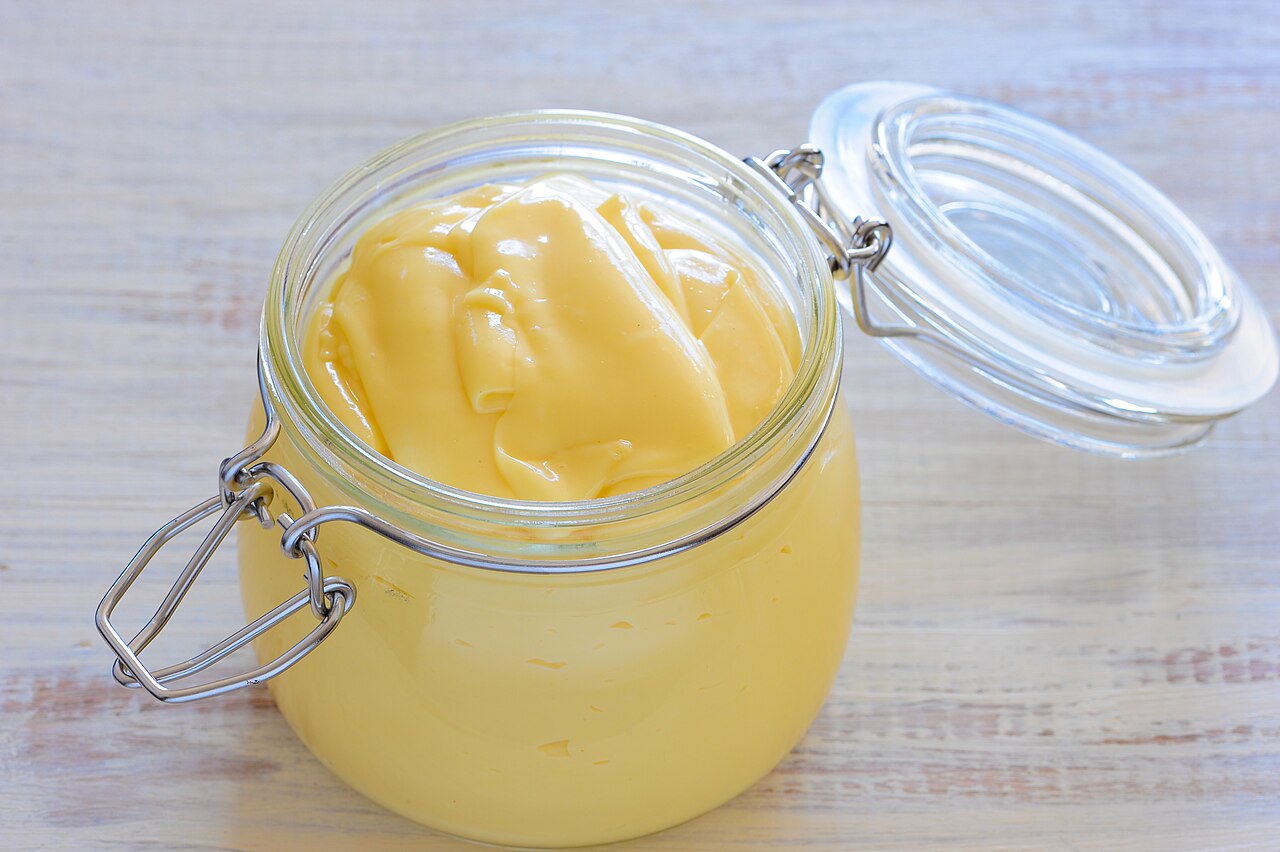
If you’re already making mayo, you’ll know most of the basics. What we want to do here is share what we’ve learned from years of selling sunflower oil for mayonnaise manufacturing, including the problems we see when the wrong oil goes into the mixer.
Table of Contents
Why Sunflower Oil Works So Well in Mayonnaise
There are good reasons sunflower oil is one of the most popular oils in mayo, especially in Europe, the Middle East, Africa and Latin America.
- Neutral taste. Well refined sunflower oil tastes of almost nothing, so your egg, vinegar, mustard and spices come through.
- Light colour. It gives that pale, creamy look people expect.
- Stays liquid in the fridge. Once winterized, it doesn’t crystallise at fridge temperatures, which keeps the emulsion stable.
- Good label appeal. “Made with sunflower oil” reads well on a jar, and it’s non-GMO by nature in most origins.
- Steady supply. It’s one of the most traded oils in the world, so you’re not relying on a niche crop.
Soybean and rapeseed oil are used too, and they work. But a lot of brands choose sunflower oil for mayonnaise manufacturing because of the taste and the clean label. If you want the comparisons, see soybean oil vs sunflower oil and canola oil vs sunflower oil.
Sunflower Oil for Mayonnaise Manufacturing: What We Sell
We offer three main grades for mayo and dressing producers:
- Winterized refined sunflower oil. Our standard grade for mayo. Fully refined, bleached, deodorized and dewaxed. This is what most of our mayo customers buy.
- High oleic sunflower oil. Much more stable against oxidation. Good for long shelf life products, export brands, and mayo sold in hot markets.
- Mid oleic sunflower oil. A middle ground on price and stability.
We can also supply organic sunflower oil for organic mayo lines, in smaller volumes.
Specifications for Mayonnaise Grade Sunflower Oil
These are our typical specs for winterized sunflower oil for mayonnaise manufacturing. Tighter limits are possible on request. Every delivery comes with a certificate of analysis.
| Parameter | Specification | Why it matters for mayo |
|---|---|---|
| Free fatty acid (as oleic) | 0.05% to 0.10% max | Higher acidity can give off flavours |
| Peroxide value at loading | 1.0 meq/kg max on request, 2.0 standard | Low PV means fresher oil and longer shelf life |
| Anisidine value | Low, reported on request | Shows past oxidation the PV can’t |
| Moisture and volatiles | 0.05% max | Water speeds up spoilage |
| Colour (Lovibond 5¼ inch) | 2.0 to 3.0 Red max | Keeps the mayo pale |
| Cold test | 5.5 hours min, longer on request | Stops waxes clouding and breaking the emulsion |
| Soap content | Nil to trace | Soap affects taste and emulsion |
| Iodine value (Wijs) | 118 to 141 (standard), lower for high oleic | Indicates fatty acid type |
| Taste and odour | Bland, neutral | Mayo shows off flavours fast |
| Oleic acid (high oleic grade) | 75% min | Better oxidative stability |
For background on the fatty acids, see sunflower oil fatty acid composition. The oil is produced to the Codex standard for named vegetable oils from the Codex Alimentarius.
Why Winterization Is Non-Negotiable
This is the one point we’d underline twice. Sunflower oil naturally contains small amounts of waxes from the seed hull. At room temperature you can’t see them. Put the oil in a fridge and those waxes crystallise into a haze.
In a bottle of cooking oil, that haze just looks bad. In mayo it’s worse. The tiny wax crystals can poke through the oil droplets and weaken the emulsion, and over time you can get oil separation in the jar. That’s why every litre of sunflower oil for mayonnaise manufacturing we sell is winterized and cold tested. If a supplier can’t show you a cold test result, don’t put their oil in your mayo.
Oxidation and Shelf Life
Oxidation is the main enemy of sunflower oil for mayonnaise manufacturing. Mayo is a big oil surface spread across billions of tiny droplets, mixed with water, salt and sometimes iron from the egg yolk. That’s close to perfect conditions for oxidation. Rancid notes in mayo usually start in the oil.
You can fight this in a few ways:
- Start with fresh oil. A low peroxide value on arrival buys you months of shelf life later.
- Choose high oleic sunflower oil for mayonnaise manufacturing if your product needs a long shelf life or goes to hot climates.
- Keep oil in your plant under nitrogen, away from light and heat, and use it in rotation.
- Use the right antioxidant system in your recipe, within local food rules. Many producers use a chelating agent to tie up trace metals.
- Fill jars with minimal headspace.
For more on how standard and high oleic grades compare, see high oleic vs regular sunflower oil. Natural vitamin E in the oil also helps a little; we wrote about that in sunflower oil vitamin E.
How Much Oil Goes Into Mayo
Rough ranges, so you can plan how much sunflower oil for mayonnaise manufacturing you need:
| Product | Typical oil content | Oil needed per 1,000 kg product |
|---|---|---|
| Full fat mayonnaise | 75% to 80% | 750 to 800 kg |
| Standard mayonnaise | 65% to 75% | 650 to 750 kg |
| Light mayo or salad cream | 30% to 50% | 300 to 500 kg |
| Dressings and sauces | 20% to 50% | 200 to 500 kg |
So a factory making 10 tonnes of full fat mayo a day is using close to 8 tonnes of sunflower oil for mayonnaise manufacturing every day. That’s a full 20 foot flexitank roughly every three days. At that scale, how you buy and store the oil matters a lot.
Packaging Options
We supply sunflower oil for mayonnaise manufacturing in the pack that suits your plant:
| Pack | Oil per unit | Best for |
|---|---|---|
| Flexitank in 20ft container | 20 to 22 MT | Factories with bulk tanks |
| IBC (1,000 litre) | About 920 kg | Mid-size plants without big tanks |
| Steel or HDPE drums | About 190 kg | Smaller producers, pilot lines |
| 20 litre jerrycans | About 18.4 kg | Small and artisan producers |
For bulk, see our guide to a sunflower oil flexitank shipment. For small producers, our sunflower oil 20 litre jerrycan supplier page shows what that pack looks like.
Storing Oil at Your Plant
Good sunflower oil for mayonnaise manufacturing can be ruined by poor storage. A few rules from what we’ve seen in customer plants:
- Use stainless steel or properly lined tanks. Avoid copper and brass anywhere oil touches, because they speed up oxidation.
- Blanket tanks with nitrogen if you can.
- Keep the oil cool and away from sunlight. Don’t heat it unless you need to.
- First in, first out. Don’t top up old oil with new.
- Clean tanks between batches, and dry them well.
- Test incoming oil before it goes into your main tank.
Testing When the Oil Arrives
We send a certificate of analysis with every delivery, but most mayo makers also run their own checks. At a minimum, we’d suggest testing free fatty acid, peroxide value, moisture, colour and a quick cold test, plus a taste panel. It takes an hour or two and stops a bad batch before it gets into production.
Our guides on free fatty acid and peroxide value and certificate of analysis for edible oil explain what each result means. If you’ve had trouble with blended or fake oil before, read how to detect adulterated cooking oil.
Certifications
Food factories need paperwork, and we know that. Every shipment of sunflower oil for mayonnaise manufacturing can carry the certificates your auditors ask for. Depending on the order, we can provide:
- Certificate of analysis for every batch
- Food safety certification from the producing plant, such as HACCP, ISO 22000 or FSSC 22000
- Halal certificate
- Kosher certificate
- Non-GMO statement
- Allergen statement
- Safety data sheet and product specification sheet
See our pages on HACCP certified cooking oil, halal vegetable oil and kosher certified vegetable oil.
Traceability and Food Safety
If a retailer or an auditor asks where the oil in your mayo came from, you need an answer quickly. Every load of sunflower oil for mayonnaise manufacturing we ship carries a lot number that links back to the production batch, the test results and the loading records. Drums, IBCs and jerrycans are coded individually. Flexitanks are recorded by container and seal number.
Keep those numbers in your own batch records. If you ever need to trace a jar back to the oil, it then takes minutes instead of days. It also makes any quality conversation with us much faster, because we can pull the exact records for the exact oil you used.
We also keep retained samples from each lot for a period after shipping. If something comes up months later, there’s still oil to test.
7 Proven Tips for Buying Sunflower Oil for Mayonnaise Manufacturing
1. Write the cold test into the contract
Not just “winterized”. Put a minimum number of hours on it, and say how it will be tested.
2. Set a peroxide value limit at delivery, not just at loading
Oil ages in transit. Agree what’s acceptable when it reaches your plant.
3. Taste every batch
Lab numbers can look perfect while the oil tastes slightly off. A trained taster catches it.
4. Consider high oleic for export brands
If your mayo travels far or sits on hot shelves, the extra cost of high oleic often pays back in fewer returns.
5. Don’t let price alone choose your supplier
A cheaper load of sunflower oil for mayonnaise manufacturing that breaks your emulsion costs far more than you saved.
6. Ask for samples from the actual production lot
A sample from a different batch tells you very little. See how to request edible oil samples.
7. Lock in supply
Mayo lines can’t stop for a missing ship. A supply contract with regular deliveries is far safer than spot buying.
Common Problems and What Usually Causes Them
| Problem in the mayo | Common oil-related cause |
|---|---|
| Oil separating in the fridge | Oil not properly winterized, waxes crystallising |
| Rancid or painty smell after a few weeks | High peroxide or anisidine value, poor storage |
| Yellow or darker colour than usual | Higher colour oil, or a blend with another oil |
| Soapy or bitter note | Residual soap from poor refining |
| Batch to batch taste changes | Mixing oil from different suppliers or lots |
Not every mayo problem comes from the sunflower oil for mayonnaise manufacturing, of course. Egg quality, mixing speed and the order of adding ingredients all matter. But when the oil is right, you’ve removed the biggest variable. If you want to read more on how the emulsion works, there’s a clear explanation of emulsions and a good overview of mayonnaise on Wikipedia.
Sunflower Oil vs Other Oils in Mayo
We sell several oils, so we’ve no reason to oversell one. Here’s how sunflower oil for mayonnaise manufacturing stacks up against the usual alternatives.
| Oil | Taste | Fridge stability | Oxidation stability | Typical cost |
|---|---|---|---|---|
| Refined sunflower (winterized) | Very neutral | Good | Moderate | Mid |
| High oleic sunflower | Very neutral | Good | High | Higher |
| Soybean oil (winterized) | Neutral, can revert to beany | Good | Moderate | Lower |
| Rapeseed or canola oil | Neutral to slightly grassy | Good | Moderate to good | Lower to mid |
| Olive oil | Strong | Can cloud | Good | High |
Palm olein isn’t really used for mayo because it clouds and thickens in the fridge. Some brands blend sunflower with rapeseed or soybean to manage cost. That works if the blend is fixed and declared, but changing the blend from batch to batch is a recipe for inconsistent product. If you want one oil you can keep on the label year after year, sunflower oil for mayonnaise manufacturing is a very safe choice.
How Oil Quality Shows Up in the Finished Jar
It’s easy to think of oil as a commodity. In mayo, it really isn’t. Small differences in the oil become visible, or tasteable, in the finished product.
Take colour. Two loads of sunflower oil for mayonnaise manufacturing can both pass a 3.0 Red limit, but one at 1.5 Red and one at 2.8 Red will give you noticeably different shades of mayo side by side on a shelf. If your brand has a signature colour, put a tighter colour range in your spec.
Or take taste. Oil that’s been sitting warm for a few weeks may still pass on peroxide value, but a sensitive taster can pick up a faint cardboard note. That note gets stronger in the jar over the following months. It’s why we deodorize close to shipping and why we push buyers to taste every batch, not just read the certificate.
And then there’s viscosity and texture. The oil’s fatty acid profile affects how the emulsion feels in the mouth. High oleic oil gives a slightly different feel from standard sunflower. Most consumers won’t notice, but your QA team will, so trial any grade change before you switch.
Switching Suppliers Without Upsetting Your Line
A lot of our mayo customers came to us from another supplier. If you’re thinking about switching your sunflower oil for mayonnaise manufacturing, here’s how to do it without drama.
- Share your current spec sheet with us, plus any problems you’ve had.
- We send samples from current production.
- Your lab tests them against your spec, and your taste panel compares them with your current oil.
- Run a small pilot batch of mayo and put it through your normal shelf life tests, including fridge storage.
- If it passes, start with one container alongside your existing supply.
- Once you’re happy with a few deliveries in a row, move more of your volume over.
It takes a few weeks, but it means no bad surprises on the production floor.
From Order to Delivery
Here’s how a typical order of sunflower oil for mayonnaise manufacturing runs with us:
- You send your grade, spec, volume, packaging and port.
- We send a written offer with price, specs and timing.
- Samples go out if you need them.
- You confirm, we issue a proforma invoice, and payment is arranged.
- The oil is refined, winterized, tested and packed.
- An inspector can attend if you want one.
- We load, ship and send the documents, including the certificate of analysis.
- You receive, test and pump into your tanks.
Loading is usually two to three weeks from confirmation, depending on the grade and the vessel. High oleic and organic can take a little longer, so give us more notice for those.
Planning Your Monthly Volumes
Mayo demand isn’t flat. Summer, barbecue season, Ramadan and the end of year holidays all push sales up in different markets. It pays to plan your sunflower oil for mayonnaise manufacturing around those peaks rather than scrambling when they hit.
What works well for most of our customers is a base volume every month, agreed ahead, with the option to add extra containers before the busy season. That way you’re never short, and you’re not paying to store oil you won’t use for months. Tell us your sales pattern and we’ll help you plan it.
Price and Minimum Order
The price of sunflower oil for mayonnaise manufacturing follows the bulk sunflower oil market, plus refining, winterizing, packaging and freight. High oleic costs more than standard. Tighter specs, like a very low peroxide value, can add a little too.
Our normal minimum is one 20 foot container, whether that’s one flexitank, around 20 IBCs, or around 80 drums. For current pricing, send us your volume and port. For general market levels, see sunflower oil wholesale price per ton and minimum order quantity for bulk cooking oil.
Who We Supply
Our sunflower oil for mayonnaise manufacturing goes to:
- Mayonnaise and sauce brands
- Private label producers making mayo for supermarkets
- Food service manufacturers making catering mayo in buckets
- Ready meal and sandwich factories
- Dressing and dip makers
We ship worldwide, to Africa, the Middle East, Asia, Europe, the Americas and the Pacific. Many of the same customers also buy oil for other lines; our post on soybean oil uses in food manufacturing covers some of those.
Why Mayo Makers Buy From Us
We get it right more often than not because we know what mayo needs. The oil is winterized and tested. The specs on the certificate match what’s in the tank. Deliveries come when they’re supposed to. And when you have a question about a batch, you get a real answer from someone who knows oil. Read more about us or see our full range of products, including refined sunflower oil and our deodorized sunflower oil bulk supplier offer.
Frequently Asked Questions
What is the best sunflower oil for mayonnaise manufacturing?
Refined, winterized sunflower oil with a low peroxide value and neutral taste. For long shelf life or hot markets, high oleic sunflower oil is even better.
Can I use non-winterized oil?
We don’t recommend it. Waxes in non-winterized oil can crystallise in the fridge and destabilise the emulsion.
Is your oil non-GMO?
Sunflower oil is generally non-GMO. We can provide a non-GMO statement with the order.
Do you supply small producers?
Yes. Our minimum is one 20 foot container, which can be jerrycans or drums rather than a flexitank.
Can I get samples?
Yes. We send samples so your lab and taste panel can test before you order.
Do you ship to my country?
Most likely. We supply sunflower oil for mayonnaise manufacturing worldwide. Tell us your port.
Request a Quote for Sunflower Oil for Mayonnaise Manufacturing
Tell us the grade, your monthly volume, packaging and destination port. If you have a spec sheet, send it over. We’ll come back with a written offer and samples if you need them, usually within one working day.
Email info@dthcompanyltd.com, call or WhatsApp +66 91 765 9104, or use our contact page.







2 thoughts on “Sunflower Oil for Mayonnaise Manufacturing: Trusted Supplier Specs and 7 Proven Buying Tips”