

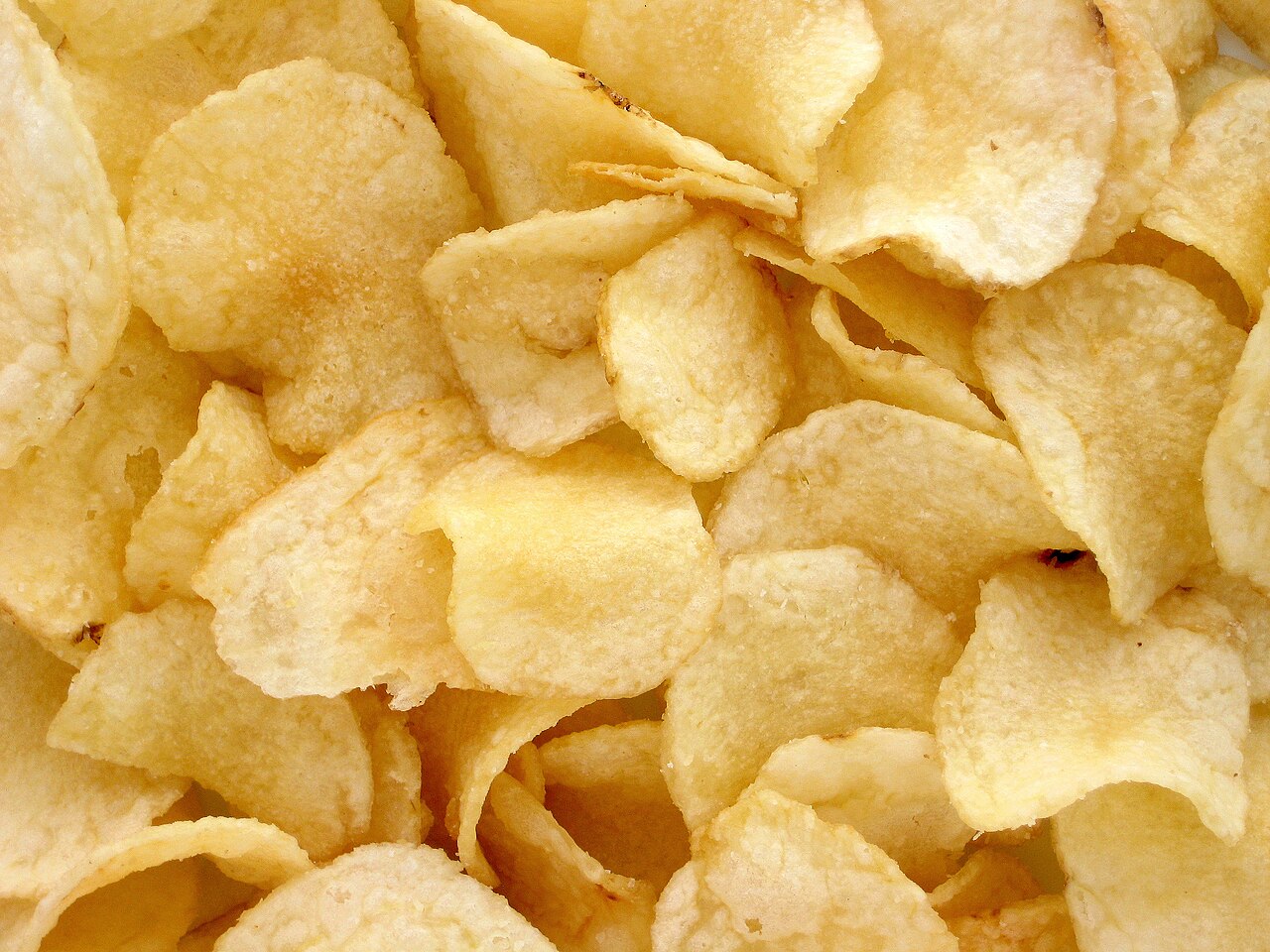
In a bag of potato chips, oil is usually 30% to 40% of the weight. That makes the best oil for potato chips manufacturing one of the biggest decisions a snack plant makes. It drives the taste, the crunch, the shelf life, the nutrition label and a big share of the cost of every bag. Change the oil and customers notice, sometimes within days.
We make and export refined frying oils for snack and potato chip producers in many countries, from small kettle chip makers to continuous lines running around the clock. This guide covers how to choose the best oil for potato chips manufacturing: what the oil has to do, how the main options compare, how to manage oil in a continuous fryer, and what to put in your specification. At the end you’ll find the oils we supply for chip plants, with their specifications and bulk packing.
Table of Contents
Why Oil Matters So Much in Chips
With most fried foods, oil is a cooking medium. With chips, it’s an ingredient. Thin potato slices lose most of their water in the fryer and take up oil in its place. That oil stays in the product, in the bag, for months.
That means the best oil for potato chips manufacturing has to do several things at once:
- Fry hundreds or thousands of kilos of slices an hour without breaking down
- Give a clean taste that lets the potato and the seasoning come through
- Give a crisp, not greasy, eating texture
- Stay fresh in the bag for the whole shelf life, often 4 to 9 months
- Fit the nutrition and labelling goals of the brand
- Come at a price that works at the scale of the plant
No oil is perfect on every point. Choosing the best oil for potato chips manufacturing is about picking the trade-off that suits your market.
How Chip Frying Works
To choose the best oil for potato chips manufacturing, it helps to know what happens in the fryer.
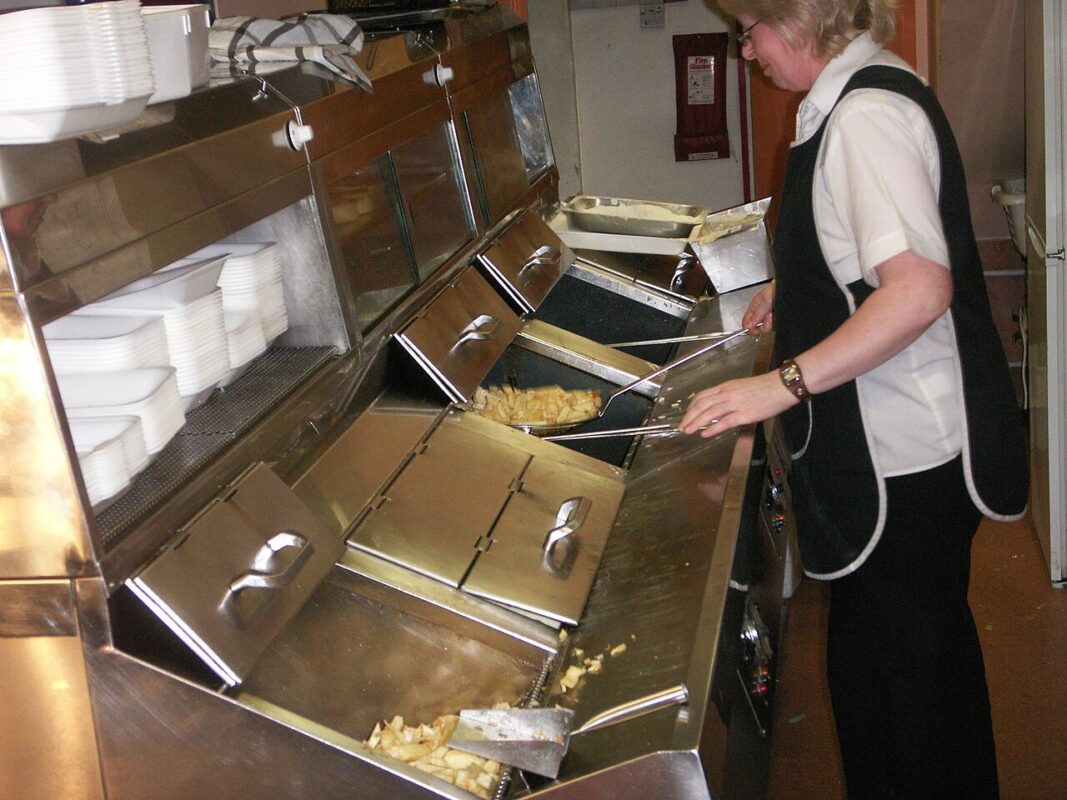
In a continuous fryer, slices go in at one end and come out cooked at the other, usually after two to four minutes. Oil runs at roughly 170 to 190 C at the inlet and drops as the cold, wet slices go in. The oil is pumped, filtered and heated continuously.
In a batch or kettle fryer, a load of slices goes into a pot of oil, the temperature drops sharply, then climbs back as the slices dry out. Kettle chips are harder and crunchier, and usually take up a bit less oil.
The key idea in both is oil turnover. Chips carry oil out of the fryer all the time, so fresh oil is added all the time. In a well-run continuous fryer, the whole fryer volume is replaced every few hours. That constant top-up keeps the frying oil fresh, which is why chip fryers can run for days without dumping oil. It also means the oil in the bag is mostly fresh oil, so the quality of the incoming oil matters a lot.
The Best Oil for Potato Chips Manufacturing: Main Options Compared
Here’s how the common choices compare when you’re looking for the best oil for potato chips manufacturing.
| Oil | Frying stability | Flavour | Shelf life in the bag | Saturated fat | Typical cost level |
|---|---|---|---|---|---|
| Refined palm olein | Very good | Neutral | Very good | Higher | Low |
| High oleic sunflower oil | Excellent | Very clean, light | Excellent | Low | Higher |
| Mid oleic sunflower oil | Very good | Clean | Very good | Low | Medium to high |
| Regular sunflower oil | Fair | Clean, light | Fair | Low | Medium |
| Cottonseed oil | Good | Slightly nutty, “classic” | Good | Medium | Medium |
| Corn oil | Good | Slight corn note | Good | Low to medium | Medium |
| High oleic canola | Excellent | Clean | Excellent | Low | Higher |
| Regular canola or soybean | Fair | Neutral, can turn fishy | Fair | Low | Low to medium |
| Rice bran oil | Good | Pleasant, light | Good | Medium | Medium |
| Blends (e.g. palm olein with sunflower) | Good to very good | Neutral | Good | Medium | Low to medium |
In practice, most of the world’s chips are fried in one of three oils, and each has a claim to be the best oil for potato chips manufacturing: palm olein, high or mid oleic sunflower oil, or a blend.
Palm Olein: The Global Standard
Refined palm olein is the most common choice as the best oil for potato chips manufacturing in Asia, Africa, the Middle East and much of Latin America. For many plants it’s simply the best oil for potato chips manufacturing on cost and stability.
- Stability. About half saturated, with almost no linolenic acid. It handles long frying well.
- Shelf life. Chips fried in palm olein keep their flavour for a long time.
- Crunch. It gives a crisp, dry eating texture.
- Cost. Usually the lowest cost refined frying oil.
The drawbacks are a higher saturated fat figure on the label, a slightly heavier mouthfeel than seed oils, and the fact that some consumers and retailers, mainly in Europe, prefer palm-free products. In cold storage, the oil on the chips can look a little waxy. For export to Europe, many brands switch to sunflower oil. See our post on palm oil free vegetable oil for that side of the market.
Good palm olein for chips should come with low FFA, low peroxide value, good colour and controlled 3-MCPD and glycidyl esters. Our post on 3-MCPD in palm oil explains why that last point matters to food makers.
High Oleic Sunflower Oil: The Premium Choice
High oleic sunflower oil is often called the best oil for potato chips manufacturing when the brand wants a clean taste, a light mouthfeel and a better nutrition label.
- Oleic acid of 75% or more, so very stable in the fryer
- Low saturated fat, which helps the label
- Very clean taste that lets the potato come through
- Excellent shelf life in the bag
- Liquid and clear, easy to handle in cold climates
The main downside is price. It costs more than palm olein and more than regular sunflower oil. Many premium European and North American brands use it anyway, because the taste and label are part of what customers pay for. Our post on high oleic vs regular sunflower oil gives the numbers.
Regular Sunflower Oil and Blends
Regular sunflower oil tastes great on chips when it’s fresh, but it breaks down faster under continuous frying, and chips made with it can go stale sooner. Many plants that want a sunflower label but can’t pay the high oleic premium use one of these approaches:
- Mid oleic sunflower oil, which sits between the two and is common in some markets
- A blend of regular and high oleic sunflower oil
- A blend of palm olein and sunflower oil, labelled as vegetable oil, which balances cost, stability and taste
Blends are widely used and perfectly legitimate, as long as the label says what’s in them. For many mid-price brands, a blend is honestly the best oil for potato chips manufacturing on balance.
Cottonseed, Corn and Canola for Chip Frying
For some brands, cottonseed oil is the best oil for potato chips manufacturing because it gives a flavour many people associate with classic American chips. It’s stable and has been used for decades, though supply and price vary.
Corn oil fries well and has a recognisable, mild taste that some brands like.
Regular canola and soybean oil are cheap and neutral but carry linolenic acid, which can give a fishy or painty note after long frying or long shelf life. High oleic canola fixes that and is common in North America.
Acrylamide and Frying Temperature
Acrylamide forms when starchy foods are fried or baked at high temperatures. Potato chips are one of the foods regulators watch most closely. In the EU, Regulation 2017/2158 sets a benchmark level of 750 micrograms per kilo for potato crisps and requires producers to follow mitigation steps. The text is on EUR-Lex.
Choosing the best oil for potato chips manufacturing doesn’t directly control acrylamide much. Potato variety, sugar content, slice thickness and frying temperature matter more. But a stable oil makes it easier to fry at slightly lower temperatures for longer without the oil breaking down, which helps. In practice, chip makers:
- Choose potato varieties low in reducing sugars
- Store potatoes at the right temperature to avoid sugar build-up
- Wash or blanch slices
- Control final frying temperature and avoid over-browning
- Sort out dark chips with optical sorters
More background is on the acrylamide page.
Managing the Best Oil for Potato Chips Manufacturing in the Fryer
Even the best oil for potato chips manufacturing will give poor chips if the fryer isn’t managed well. These are the points we see good plants control.
Oil turnover
Keep turnover high. If production is low and oil sits in the fryer for a long time, it degrades. Running at good throughput, or reducing the fryer oil volume, keeps the oil fresh.
FFA in the fryer
Free fatty acids rise slowly during frying. Many plants keep frying oil FFA below about 0.5% and watch the trend. A sudden jump usually means poor turnover, water problems or overheating. Our guide on free fatty acid and peroxide value explains both numbers.
Filtration
Continuous filtration removes fines, the small burnt bits of potato that darken the oil and speed up breakdown.
Temperature control
Avoid hot spots at heat exchangers. Overheated oil breaks down fast and can produce off flavours.
Air exposure
Steam from the frying slices helps protect the oil surface. Problems tend to start during shutdowns, when hot oil sits exposed to air. Cool the oil quickly at shutdown and cover the fryer.
Cleaning
Clean the fryer and oil system regularly and rinse thoroughly. Soap or cleaning residues in the oil cause foaming and off tastes.
Shelf Life and the Best Oil for Potato Chips Manufacturing
Once the chips are packed, the oil keeps changing. Oxygen in the bag, light, heat and time all cause rancidity. The best oil for potato chips manufacturing helps a lot here, but packaging and handling matter just as much.
- Nitrogen flushing reduces oxygen in the bag
- Metallised film blocks light
- Antioxidants, such as tocopherols or rosemary extract, can be added to the oil where local rules allow
- Fresh, low peroxide oil at the start gives you more room
- Cool storage in warehouses and shops slows everything down
If your chips start tasting stale before the best before date, the first thing to check is the peroxide value and FFA of the incoming oil, then the fryer management, then the packaging.
Seasoning, Flavour and the Oil Underneath
Seasoning sticks to the oil on the surface of the chip. That’s why a chip line sprays or tumbles seasoning straight after the fryer, while the oil is still warm. It also means the oil’s own flavour sits right under every seasoning you use.
A neutral, fresh oil lets a sour cream and onion or a chilli seasoning taste the way the developer intended. A tired oil, or one with a slight fishy note, fights the seasoning. Plain salted chips are the hardest test of all, because there’s nothing to hide behind. Many plants judge the best oil for potato chips manufacturing on plain salted chips for that reason.
If you change oil, have your seasoning supplier taste the new chips too. Sometimes a seasoning needs a small adjustment.
Cost Per Bag, Not Price Per Tonne
Because oil is such a big part of the product, chip makers think hard about cost. The mistake is comparing oils on price per tonne only.
What really matters is the oil cost per kilo of finished chips. That depends on:
- The price of the oil delivered to your plant
- How much oil the chips take up, which varies a little by oil and frying conditions
- How much oil you lose to fryer cleaning, shutdowns and dumping
- How often you have to discard oil because it’s degraded
- Customer complaints and returns when chips go stale early
A cheaper oil that breaks down faster can end up costing more per kilo of chips. On the other hand, paying a big premium for high oleic oil may not pay back if your chips sell in two months anyway. Working out the best oil for potato chips manufacturing for your plant means running these numbers with your own data.
Mistakes We See in Chip Plants
These come up again and again when we visit or talk to customers.
- Low turnover on a big fryer. The plant runs below capacity and the oil sits too long.
- Hot spots at the heat exchanger. Local overheating damages oil even when the average temperature looks fine.
- Long idle periods with hot oil. Hot oil exposed to air during breaks oxidises fast.
- Mixing oils in the tank. A new oil topped onto a different old oil gives unpredictable flavour.
- No incoming oil check. A single bad lot can affect thousands of bags.
- Changing supplier for a small price saving. Flavour consistency suffers and customers notice.
None of these are about which oil is the best oil for potato chips manufacturing. They’re about how the oil is handled. But they decide whether a good oil delivers what it should.
Baked, Vacuum-Fried and Kettle Chips
Not every chip is fried the standard way.
- Kettle chips are batch fried, slower and crunchier. Oil quality shows more, because the oil spends longer with the product. High oleic sunflower oil is very common here.
- Vacuum-fried chips are fried at lower temperatures under vacuum. They keep more colour and take up less acrylamide, and the oil lasts longer because of the low temperature and low oxygen.
- Baked or reformed chips use far less oil, often sprayed on. The oil still needs to be stable and fresh, since it’s on the surface of the product.
In each case, the best oil for potato chips manufacturing still comes down to stability, clean taste and fresh delivery.
What to Put in Your Oil Specification
A clear oil specification is how a chip plant makes sure it actually gets the best oil for potato chips manufacturing, lot after lot. Here’s what we suggest including.
| Parameter | Typical requirement for chip frying oil |
|---|---|
| Oil type | Named oil or declared blend |
| FFA (as oleic) | 0.1% max |
| Peroxide value | 1.0 to 2.0 meq/kg max on delivery |
| Moisture and impurities | 0.05% to 0.1% max |
| Colour (Lovibond) | Light, e.g. 3.0 red max for palm olein |
| Fatty acid profile | Within the agreed ranges for the oil |
| Oleic acid (high oleic oils) | 75% min |
| Cloud point (palm olein) | 10 C max or 8 C max |
| 3-MCPD and glycidyl esters | To your market’s limits |
| Smoke and flavour | Bland, no foreign taste |
| Certificates | Lot COA, halal, food safety certificates as needed |
Read our guide on the certificate of analysis for edible oil to make sure every lot is checked against this.
Bulk Supply for Chip Plants
Chip plants use a lot of oil, so how the best oil for potato chips manufacturing arrives at your gate matters too.
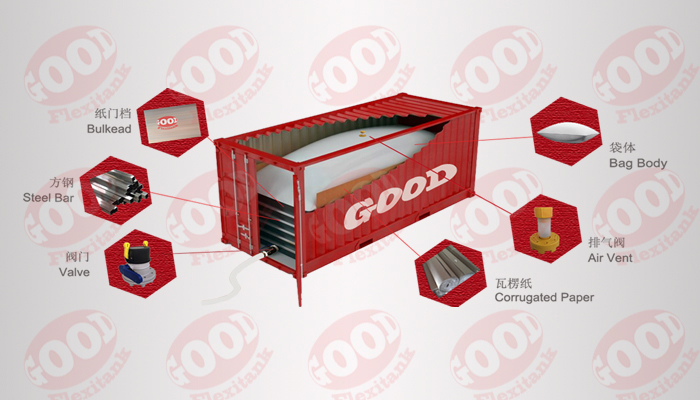
- Flexitanks in 20 foot containers hold roughly 20 to 22 tonnes and give the lowest cost per tonne. You need a heated or insulated receiving tank.
- ISO tanks suit plants that want very clean handling and can return the tank.
- IBCs and drums suit smaller kettle chip makers.
Palm olein may need gentle warming to unload in cooler climates. Our flexitank vs ISO tank post explains the options, and how much cooking oil fits in a 20ft container gives the loading figures.
Once they’ve found the best oil for potato chips manufacturing for their line, most chip makers buy on a contract for several months at a time, to steady both price and quality. Switching oil lots or suppliers often is one of the quickest ways to get flavour complaints.
How to Choose: A Simple Guide
Here’s the short version of how we help chip makers pick the best oil for potato chips manufacturing.
| Your situation | Our usual suggestion |
|---|---|
| Price-led brand, warm market | Refined palm olein CP10 |
| Price-led brand, cooler market | Palm olein CP8 or a palm and sunflower blend |
| Premium brand, clean label focus | High oleic sunflower oil |
| Export to Europe, palm-free claim | High oleic or regular sunflower oil |
| Kettle chips, artisanal | High oleic sunflower oil or a quality sunflower oil |
| Large plant balancing cost and quality | Blend of palm olein and high oleic sunflower oil |
Before switching, run a trial. Fry the same potatoes on your line with each oil, then run a shelf life test in your own packaging. Taste panels at one week, one month and three months tell you more than any spec sheet.
Our Range: The Best Oil for Potato Chips Manufacturing
These are the oils we supply to snack and chip makers looking for the best oil for potato chips manufacturing. Every lot is made under ISO 22000, HACCP and GMP, with halal certification and its own COA.
| Oil | FFA | Peroxide value | Moisture | Key spec | Bulk packing |
|---|---|---|---|---|---|
| Refined palm olein CP10 | 0.1% max | 2.0 meq/kg max | 0.1% max | Cloud point 10 C max, iodine value 56 min | Flexitank, ISO tank, drums |
| Refined palm olein CP8 | 0.1% max | 2.0 meq/kg max | 0.1% max | Cloud point 8 C max | Flexitank, ISO tank, drums |
| High oleic sunflower oil | 0.1% max | 2.0 meq/kg max | 0.05% max | Oleic acid 75% min | Flexitank, IBC, drums |
| Refined sunflower oil | 0.1% max | 2.0 meq/kg max | 0.05% max | Iodine value 118 to 141 | Flexitank, IBC, drums |
| Refined soybean oil | 0.1% max | 2.0 meq/kg max | 0.05% max | Iodine value 124 to 139 | Flexitank, IBC, drums |
| RBD canola oil | 0.1% max | 2.0 meq/kg max | 0.05% max | Erucic acid under 2% | Flexitank, IBC |
We can also supply blends of palm olein and sunflower oil to your ratio. Our usual minimum is one 20 foot container, explained on our minimum order quantity for bulk cooking oil page.
FAQs on the Best Oil for Potato Chips Manufacturing
What oil do most potato chip makers use?
Palm olein is the most common worldwide. High oleic and regular sunflower oil dominate in Europe. High oleic canola, cottonseed, corn and sunflower are common in North America.
Which oil gives chips the longest shelf life?
High oleic sunflower oil and high oleic canola, followed closely by palm olein.
Is palm olein the best oil for potato chips manufacturing?
Yes. It’s stable, crisp and low cost, which is why it’s so widely used.
How much oil is in potato chips?
Usually 30% to 40% of the finished weight, a bit less for kettle chips.
Can you supply a blend?
Yes. We blend palm olein and sunflower oil to your ratio, labelled as a blend.
Do you supply small kettle chip makers?
Yes, in drums or IBCs, within a container that can be shared across oils.
Get a Quote for Chip Frying Oil
Tell us your fryer type, monthly volume, the oil you use now and your port. We’ll suggest the best oil for potato chips manufacturing in your plant, send prices for bulk delivery, the full specification and samples for a line trial. See how to request edible oil samples. Email info@dthcompanyltd.com, WhatsApp +66 91 765 9104, or use our contact page. You can also browse our product range, or read the history of the potato chip.





2 thoughts on “Best Oil for Potato Chips Manufacturing: 7 Proven Choices”