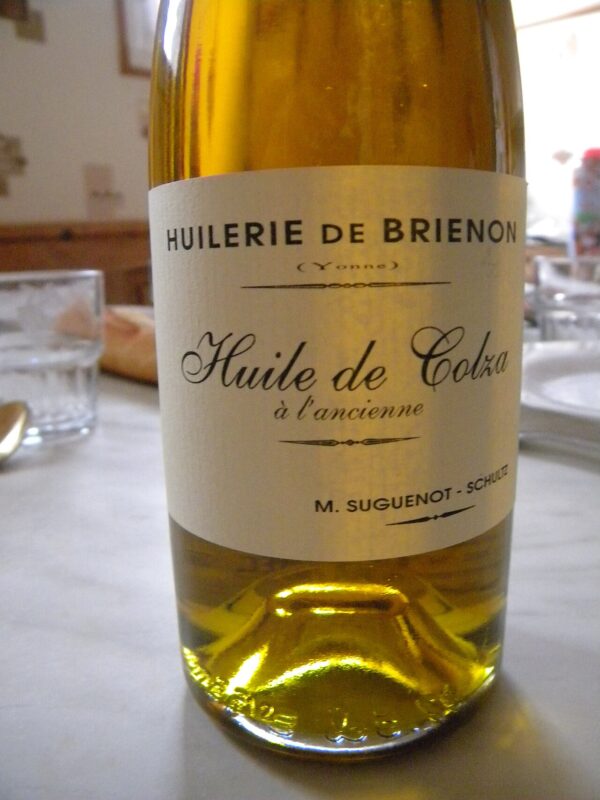
If you’re looking for a canola oil flexitank supplier, you probably already know the maths. One flexitank in a 20ft container carries about 21 to 22 metric tons of oil. Put the same oil in bottles or jerrycans and you lose several tons of payload, pay for packaging you’ll throw away, and spend a day unloading by hand. We ship refined, RBD and crude canola oil in flexitanks from Thailand to buyers all over the world, and this page is what we tell people before their first order.
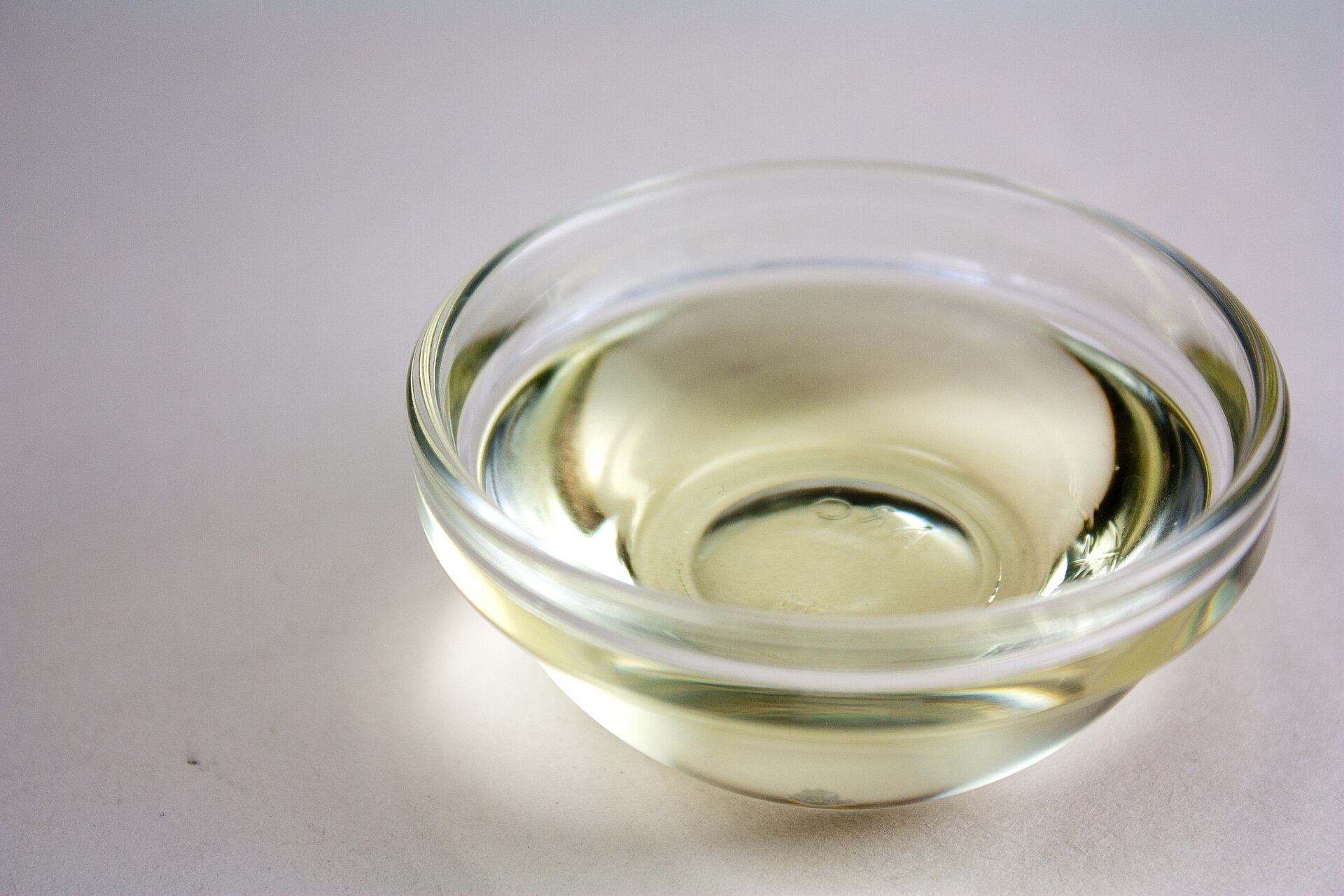
It covers what we sell, the specs, how a flexitank load actually works, what it costs you at the other end, and the mistakes we see buyers make. If you only want a price, skip to the last section and send us your port.
Table of Contents
What We Sell as a Canola Oil Flexitank Supplier
We’re an exporter based in Chiang Mai, Thailand. Canola is one of our main lines, along with soybean, sunflower, palm and coconut oil. As a canola oil flexitank supplier we load three grades:
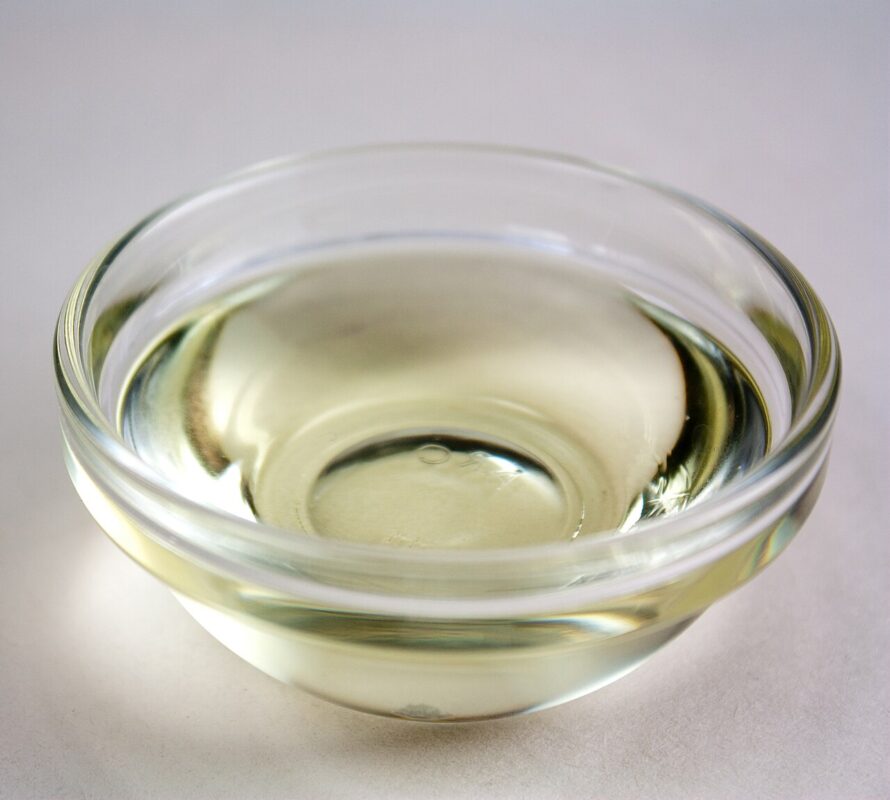
- RBD canola oil: refined, bleached and deodorised. This is the one most food factories and packers want. Clear, light yellow, no smell, ready to use or bottle.
- Refined canola oil: food grade for frying, cooking, dressings and general processing.
- Crude canola oil: for refineries, biodiesel plants and some feed uses.
Buyers who come to us as a canola oil flexitank supplier are importers, distributors, repackers, snack and sauce factories, and a few refineries. Most of them have their own storage tank, which is the main thing you need before a flexitank makes sense. Our plants work under ISO 22000, HACCP, GMP and Halal systems, and every load goes out with its paperwork.
Why Buyers Choose a Flexitank for Canola Oil
A flexitank is a big single-use bag, usually made of several layers of food-grade polyethylene inside a woven polypropylene outer, that sits on the floor of a standard 20ft dry container. It’s filled through a valve at one end and emptied through the same valve, or a bottom valve, with a pump.
For canola oil it’s close to ideal, which is why so much of it moves this way and why buyers go looking for a canola oil flexitank supplier in the first place. Canola stays liquid at normal temperatures, so you don’t need the heating pad that palm oil sometimes needs. The oil is clean and low in sediment, so the bag drains well. And the cost per ton is about as low as it gets for container shipping.
Here’s how it compares with the other ways we ship:
| Method | Oil per 20ft container | Cost per ton | Notes |
|---|---|---|---|
| Flexitank | About 21 to 22 MT | Lowest | Single use, needs a tank and pump at your end |
| ISO tank | About 20 to 23 MT | Higher | Reusable steel tank, return leg adds cost |
| 180 to 200 kg steel drums | About 14 to 16 MT | Higher | Good for small users, more waste |
| 18 L tins or 25 L jerrycans | About 17 to 20 MT | Higher still | Easy to resell, slow to unload |
| 1 L and 5 L PET bottles | Varies | Highest | Ready for shelves, no repacking |
If you use more than a container a month and you’ve got bulk storage, a canola oil flexitank supplier will almost always give you the lowest landed cost. If you sell to shops, you might be better off with packed oil. We do both, so we’ll tell you honestly which one fits.
There’s a longer comparison of the two bulk options in our guide on flexitank vs ISO tank.
Canola Oil Specifications We Load in Flexitanks
These are the standard specs on our product pages, the same ones we put in every contract as your canola oil flexitank supplier. Every flexitank is backed by a Certificate of Analysis for that lot, so you can check the numbers against what arrives.
RBD Canola Oil
| Parameter | Specification |
|---|---|
| Appearance | Clear, light yellow liquid |
| Odour and taste | Odourless, neutral taste |
| Free fatty acids (as oleic) | 0.05% max |
| Moisture and impurities | 0.1% max |
| Peroxide value | 1.0 meq O2/kg max |
| Iodine value (Wijs) | 105 to 126 |
| Saponification value | 175 to 195 |
| Shelf life | 18 to 24 months, cool and dry |
Refined Canola Oil
| Parameter | Specification |
|---|---|
| Appearance | Clear, light yellow liquid |
| Odour and taste | Neutral, odourless, bland |
| Free fatty acids (as oleic) | 0.1% max |
| Moisture and impurities | 0.1% max |
| Peroxide value | 2.0 meq O2/kg max |
| Iodine value (Wijs) | 105 to 126 |
| Saponification value | 175 to 195 |
| Shelf life | 12 to 18 months, cool and dry |
Crude Canola Oil
| Parameter | Specification |
|---|---|
| Appearance | Golden yellow to brown liquid |
| Odour and taste | Distinct natural odour |
| Free fatty acids (as oleic) | 2.0% max |
| Moisture and impurities | 0.5% max |
| Iodine value (Wijs) | 105 to 126 |
| Saponification value | 175 to 195 |
| Shelf life | 6 to 12 months, cool and dry |
If you need something tighter, say a lower peroxide value for a sauce plant, ask before you sign and we’ll tell you straight whether we can hold it. The full breakdowns are on our RBD canola oil specification and crude canola oil specification pages. For the international baseline, the Codex standard for named vegetable oils is published by the Codex Alimentarius Commission.

How Much Canola Oil Fits in One Flexitank
Flexitanks come in sizes from about 16,000 to 24,000 litres. For canola we normally use a 24,000 litre bag. Canola weighs roughly 0.91 to 0.92 kg per litre, so a full bag holds about 21 to 22 metric tons once you allow for the fill limit and the road weight rules on each side.
A few things decide the exact number:
- The bag rating. You don’t fill a flexitank to the brim. Overfilling strains the seams; underfilling lets the oil surge when the ship rolls, which is worse.
- Road limits. Some countries cap the gross weight of a loaded container on the truck. If yours is strict, we load a little less.
- The container. It has to be a sound 20ft dry box. Flexitanks aren’t used in 40ft containers, because the box isn’t built for that much liquid weight and the shipping lines won’t take it.
So when a canola oil flexitank supplier quotes you “one flexitank,” ask for the net tons they’ll actually load. We put it on the proforma. If you’re working out how much oil you’ll get per container in other packs, our article on how much cooking oil fits in a 20ft container has the full table.
What Happens on Loading Day
People ask what a good canola oil flexitank supplier actually does on the day, so here’s the short version of ours.
- We pick a clean, dry, odour-free 20ft container and inspect it. Anything with nails sticking out, holes or a strong smell goes back.
- The floor and walls are lined with cardboard so nothing can rub the bag.
- The flexitank is laid out, the valve placed at the door end, and a steel or timber bulkhead fitted behind the doors.
- The oil is pumped in through a filter and the volume checked by flow meter.
- Samples are drawn during loading and sealed. One goes to the lab for the COA, one is kept by us, and an independent surveyor can take one too.
- The container is sealed, the seal number recorded, and labels go on the doors to warn port workers it holds a liquid bulk load.
We send photos of every stage. If a canola oil flexitank supplier won’t send loading photos, I’d be asking why.
What You Need at Your End
This is where flexitank orders go wrong, and it’s almost never the oil. Before you order from any canola oil flexitank supplier, check you’ve got these:
- A storage tank that can take at least 22 tons, clean and dry, ideally with a heating coil if you’re somewhere cold in winter. Canola stays liquid down to quite low temperatures, but very cold oil pumps slowly.
- A pump and hose with the right fitting for the flexitank valve. Most bags use a standard 2 or 3 inch valve. We’ll tell you which one in advance.
- Somewhere to park the container level, close to your tank, while it’s discharged.
- A plan for the empty bag. It’s single use. Some places recycle them, some don’t.
Discharging a full flexitank of canola with a decent pump usually takes one to two hours. If you’ve never done it before, we’ll send you the unloading guide we give all first-time buyers. There’s also a useful walkthrough in our post on how to unload palm oil from a flexitank; canola is easier, because you skip the heating step.
What a Canola Oil Flexitank Supplier Should Charge You For
Your price per ton from a canola oil flexitank supplier is made up of a few parts. Knowing them helps you compare offers properly.
| Cost item | What it covers |
|---|---|
| Oil | The canola oil itself, priced per metric ton for the shipment month |
| Flexitank | The bag, fitting, bulkhead and lining, spread over the tons loaded |
| Inland and port costs | Trucking, loading, export documents, terminal handling in Thailand |
| Freight | Container freight to your port, spread over the tons loaded |
| Insurance | A small percentage of the cargo value, if you buy CIF |
The oil is the big number. Everything else is a few percent, but those few percent are where offers differ. We’ve written a separate guide on canola oil price per ton that covers today’s market levels and what moves them.
Ask whether the quote is FOB, CFR or CIF. A low FOB price can turn into an expensive landed price once you add freight from a long way off. The Incoterms rules from the ICC set out exactly who pays what, and we explain the differences for oil buyers in CIF vs FOB for vegetable oil.

Shipping Lines, Insurance and Paperwork
Not every shipping line takes flexitanks on every route, and some only take bags from approved makers. A serious canola oil flexitank supplier checks this before booking. We do. We also make sure the flexitank is covered by the maker’s liability insurance, because if a bag leaks, the cleaning bill for a container can be large.
The container owners’ trade body publishes a code of practice for flexitanks, and most good bag makers follow it. It’s worth a read if you’re new to bulk liquid shipping.
Every flexitank load from us comes with:
- Commercial invoice and packing list
- Bill of lading
- Certificate of Origin
- Certificate of Analysis for the lot
- Health or phytosanitary certificate where your country needs it
- Halal certificate on request
- Fumigation or container cleanliness certificate if asked
Check what your own customs wants before the oil ships. Our list of documents required to import vegetable oil covers most countries, and our canola oil HS code guide will help your broker classify it.
7 Proven Tips for Buying From a Canola Oil Flexitank Supplier
These come from what we’ve seen go right and wrong over a lot of shipments.
1. Get the spec in the contract, not just the email
The COA should match the contract spec line by line. If the contract only says “refined canola oil, good quality,” you’ve got nothing to argue with if it arrives off.
2. Ask for a sample first
We send a sample with its COA. You pay the courier and we take it off your first order. Any canola oil flexitank supplier worth dealing with will do something similar. Here’s how to request edible oil samples without wasting time.
3. Use an independent inspector on the first few loads
SGS, Intertek, Bureau Veritas, or whoever you trust. It costs a little and it protects both of us. More on that in our page on pre-shipment inspection for edible oil.
4. Check the bag maker
Ask which flexitank brand they use and whether it’s insured. Cheap bags save a few dollars and can cost you a container of oil.
5. Plan your discharge before the ship arrives
Free days at the port run out fast. If your tank is full or your pump isn’t ready, you’ll pay demurrage while the container waits.
6. Agree payment terms that protect you
We work on irrevocable LC at sight, or a deposit with the balance against copy documents. Read our comparison of letter of credit vs TT payment if you’re not sure which suits you.
7. Watch out for offers that look too good
If a canola oil flexitank supplier is far below the market, something is missing. It might be the oil quality, the quantity, or the supplier itself. We’ve written about the warning signs in how to spot a fake vegetable oil supplier.

Refined or Crude: Which Should You Put in the Flexitank?
It depends on what you do with it, and a good canola oil flexitank supplier should ask you that before quoting.
If you bottle, cook, fry or make food, buy RBD or refined. It’s ready to use and you don’t need a refinery.
If you own a refinery, or you make biodiesel, crude is cheaper per ton and you refine it yourself. Crude canola oil carries more free fatty acids and some gums, so make sure your tank and lines are suited to it. We also export crude in bulk, and there’s more detail on our crude canola oil exporter page.
Some buyers ask whether canola and rapeseed oil are the same thing. They’re close relatives, but canola is bred for low erucic acid and low glucosinolates. If your market uses the words differently, read canola oil vs rapeseed oil before you write your labels.
Questions to Ask Any Canola Oil Flexitank Supplier
Before you send a deposit to anyone, these are the questions worth asking. A real canola oil flexitank supplier will answer all of them without fuss.
- Where is the oil refined, and can you show me the plant’s certificates?
- What net tons will you load in each flexitank, and is that on the proforma?
- Which flexitank brand do you use, and is it insured?
- Can I have a sample and a COA from a recent lot?
- Will you accept an independent inspector at loading?
- Which shipping lines have accepted your flexitanks on my route?
- What happens if the oil arrives off spec?
If the answers are vague, or the canola oil flexitank supplier gets annoyed that you asked, that tells you something. We’d rather spend ten minutes on questions now than ten weeks on a claim later. And if you’re comparing several offers, put them in a simple table with the same headings, so you’re comparing the same thing each time: grade, net tons, price basis, bag brand, payment terms and loading date.
One more thing. Ask how long the canola oil flexitank supplier has been shipping to your region. Ports have their own habits. Some want a specific label on the doors, some inspect every bulk liquid load, and some are slow to release containers. A supplier who’s shipped there before already knows this.
Storage After the Oil Arrives
Canola keeps well if you treat it right, and that part is on you once the oil leaves your canola oil flexitank supplier. Keep the tank sealed, out of direct sun, and avoid copper or brass fittings, which speed up oxidation. Use the oil in rotation, first in first out. Refined canola keeps 12 to 18 months and RBD 18 to 24 months in good storage.
If you’re going to repack into bottles, try to do it within a few weeks of discharge and keep the headspace in your tank small. Our shelf life guide for sunflower, soybean and canola oil goes into more detail.
Who Buys Canola Oil in Flexitanks From Us
Mostly four kinds of buyer:
- Repackers and private label brands who fill their own bottles and want the cheapest possible oil cost. Some of them also use our private label service for part of their range.
- Food factories making sauces, dressings, snacks, bakery fats and ready meals.
- Distributors with bulk tanks who sell on to smaller users in drums or cans.
- Refineries and biodiesel plants taking crude.
We ship worldwide: Asia, the Middle East, Africa, Europe, the Americas and the Pacific. If your port takes container ships, we can almost certainly get a canola oil flexitank there.
A Worked Example
Say you’re a repacker who wants 22 tons of RBD canola delivered to your port, and you’re using us as your canola oil flexitank supplier for the first time.
- You send us the grade, the quantity, the destination port and when you need it.
- We quote a CIF price per metric ton for a 20ft flexitank and give you the spec sheet.
- You check a sample, and we sign a contract with the spec and payment terms written in.
- We book the container, load the flexitank and send you photos, the seal number and the COA.
- The ship sails. You get the documents, clear customs and truck the container to your site.
- You pump the oil into your tank, throw away or recycle the bag, and return the empty container.
From contract to loading usually takes one to three weeks for bulk. Sailing time depends on your port.
Why Work With Us as Your Canola Oil Flexitank Supplier
We’re not the biggest exporter out there and we don’t pretend to be. What we do well is answer quickly, stick to the spec we write down, and tell you when something’s going to be late before it’s late. As a canola oil flexitank supplier that’s most of what buyers care about.
- Three canola grades from one supplier
- Specs written into every contract, with a COA for every lot
- ISO 22000, HACCP, GMP and Halal systems
- Flexitanks from insured makers, loaded with photos at every step
- Packed oil too if you want a mixed programme
- Shipping to any container port in the world
If you want to read more about canola in general, the Canola Council of Canada has good background on the crop and the oil, and the canola oil entry on Wikipedia covers the basics in a few minutes. For a broader look at our range, see our canola oil and products pages, or how canola stacks up in canola oil vs soybean oil.
Frequently Asked Questions
How much does one flexitank of canola oil hold?
About 21 to 22 metric tons in a 24,000 litre bag inside a 20ft container.
Can you load canola oil in a 40ft container?
Not in a flexitank. Flexitanks are only used in 20ft containers. For 40ft we ship packed oil.
What’s the minimum order from a canola oil flexitank supplier like you?
One flexitank, which is one 20ft container.
Do you need a heating pad for canola oil?
Usually not. Canola stays liquid at normal temperatures. In very cold places a heating pad can make discharge quicker, and we can add one if you ask.
How long does it take to empty a flexitank?
One to two hours with a decent pump.
Can I get non-GMO canola oil in a flexitank?
Yes, subject to availability and with the right paperwork. It usually costs a bit more.
Which ports do you ship to?
Any container port worldwide that the shipping lines accept flexitanks for.
Get a Quote From a Canola Oil Flexitank Supplier
Send us four things: the grade (RBD, refined or crude), how many flexitanks, your destination port and when you need it. We’ll come back with a price per ton, the spec sheet and a loading date, usually within one working day.
Email info@dthcompanyltd.com, call or WhatsApp +66 91 765 9104, or use the form on our contact page. We’d rather give you a straight answer than a fast one, but most of the time we can do both.