

If you need a crude canola oil exporter who can ship real volume without drama, that’s what we do. We sell crude degummed canola oil to refiners, packers, feed mills and biodiesel plants, loaded in flexitanks, ISO tanks or as part of a bulk parcel, and delivered to ports around the world. This page gives you the full spec sheet, explains how pricing works, and tells you what to watch for when you buy.

I’ll be straight with you. Crude canola oil is not a hard product to understand, but it’s easy to buy badly. Most of the trouble we hear about from new customers came from a seller who promised a low price, then shipped oil with high phosphorus, high FFA, or a certificate nobody could check. A good crude canola oil exporter tells you what’s in the tank before it leaves, and stands behind it when it lands.
Table of Contents
What We Sell as a Crude Canola Oil Exporter
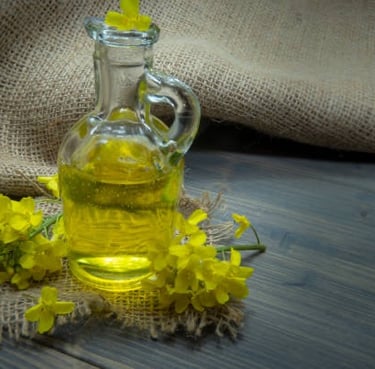
Our main line is crude degummed canola oil. That’s oil pressed and solvent-extracted from canola seed, then water-degummed to take most of the phospholipids out. It’s not food-ready yet. It goes to a refinery, where it’s neutralized, bleached and deodorized into the clear, light oil you see in bottles.
We also offer:
- Crude canola oil (non-degummed), for buyers whose refinery prefers to handle the gums themselves
- Crude rapeseed oil from European and Black Sea origin, when the price spread makes sense
- Refined canola oil for packers and food factories
- RBD canola oil in bulk, drums, jerrycans and bottles
You can see the product page for our crude canola oil for sale for a short summary, but the full detail is here.
Crude Degummed Canola Oil Specifications
These are the specs we load against. Every shipment comes with a certificate of analysis from an independent surveyor, so you can compare the numbers before you pay the balance.
| Parameter | Specification |
|---|---|
| Free fatty acid (as oleic) | Max 1.0% |
| Moisture and volatile matter | Max 0.2% |
| Insoluble impurities | Max 0.1% |
| Phosphorus | Max 200 ppm (degummed) |
| Erucic acid | Max 2.0% of total fatty acids |
| Iodine value (Wijs) | 105 to 126 |
| Saponification value | 182 to 193 mg KOH/g |
| Relative density at 20°C | 0.914 to 0.920 |
| Unsaponifiable matter | Max 2.0% |
| Colour (Lovibond 5¼”) | Typical 30 to 50 Yellow, 3 to 6 Red |
| Flash point | Min 250°C |
| Sulphur | Max 10 ppm |
For non-degummed crude canola oil, phosphorus can run up to 800 ppm or more, and the FFA limit is usually 1.5%. Tell us which one your refinery wants.
Typical fatty acid profile
| Fatty acid | Range |
|---|---|
| Palmitic (C16:0) | 3.5% to 5.5% |
| Stearic (C18:0) | 1.5% to 2.5% |
| Oleic (C18:1) | 56% to 66% |
| Linoleic (C18:2) | 17% to 23% |
| Linolenic (C18:3) | 8% to 11% |
| Erucic (C22:1) | Under 2% |
The low saturated fat and the high oleic share are the reason refiners like canola. It gives a light, stable oil that sells well in both retail and food service. If you want to read more about how iodine value relates to oil stability, we wrote about it in iodine value of vegetable oils.
Why the Specs Matter More Than the Price
A buyer once told us he’d saved $15 a tonne going with another crude canola oil exporter. Then he lost almost $40 a tonne in extra refining cost because the phosphorus was over 400 ppm and his bleaching earth use went up. That’s a common story.
Here’s what each number means to your refinery:
- FFA is lost oil. Every 1% FFA you neutralize turns into soapstock, and some neutral oil goes with it. High FFA crude means lower yield.
- Phosphorus drives your degumming and bleaching cost. Over the spec, and your filter press works harder.
- Moisture and impurities are weight you paid for that isn’t oil.
- Erucic acid has to stay under 2% for the oil to be called canola. Above that, it’s rapeseed oil, and some markets won’t accept it for food.
- Chlorophyll isn’t always on a spec sheet, but it matters. Green crude needs more bleaching earth. Ask your crude canola oil exporter what the chlorophyll runs at for the current crop.
The Codex standard for named vegetable oils sets the identity ranges for canola and rapeseed oil. You can read the standards on the Codex Alimentarius site, and we summarized the main points in our post on the Codex standard for named vegetable oils.
Where Our Crude Canola Oil Comes From
Canola was bred in Canada, and Canada is still the biggest canola exporter by a wide margin. Australia is the second big source, especially for non-GMO canola. Europe and the Black Sea grow a lot of rapeseed, which is close to canola and often sold under the same spec when erucic acid is low.
As a crude canola oil exporter, we source from crushing plants we’ve worked with for years. Origin affects a few things:
- Canadian canola is mostly GMO. It’s consistent, available all year, and usually the cheapest per tonne.
- Australian canola is available as non-GMO, which some buyers in Europe and Asia need. It costs more.
- European and Black Sea rapeseed oil can be competitive into the Mediterranean, the Middle East and North Africa because of the shorter voyage.
If you need a GMO declaration or a non-GMO certificate, say so at the enquiry stage. It changes where we buy. The Canola Council of Canada publishes good background on crop quality each year if you want to check how the new season looks.
Who Buys Crude Canola Oil From Us
Most of our crude canola oil goes to four kinds of buyers:
- Edible oil refineries that bottle canola oil under their own brand
- Food manufacturers with their own refining line, making margarine, shortening, mayonnaise and snack oils
- Biodiesel producers, who like canola’s cold flow properties
- Animal feed mills, who add crude oil as an energy source
Each one cares about different numbers. Biodiesel plants watch FFA, phosphorus and sulphur closely. Feed mills care more about price and moisture. Refineries care about all of it. When you ask a crude canola oil exporter for an offer, tell them what the oil is for. It saves time.
Packing Options: Flexitank, ISO Tank and Bulk Vessel
How you take the oil depends on your volume and your tank space at the port. A flexible crude canola oil exporter should offer more than one option.
| Packing | Typical quantity | Best for |
|---|---|---|
| Flexitank in 20ft container | 20 to 22 MT | Mid-size refiners and feed mills |
| ISO tank | 20 to 24 MT | Buyers who want a reusable, very clean tank |
| Bulk parcel on a tanker | 1,000 MT and up | Large refineries with shore tanks |
| IBC or drums | 0.9 to 1 MT per IBC | Small trial orders |
Flexitanks are the most common route for us as a crude canola oil exporter. One container, one flexitank, roughly 21 tonnes. No heating needed, because canola stays liquid in normal weather. We covered the whole flexitank process in our guide for sunflower oil flexitank buyers, and the same rules apply to canola.
If you’re unloading flexitanks for the first time, our post on how to unload oil from a flexitank walks through it step by step. It’s written for palm oil, but canola is easier because you skip the heating.
How a Crude Canola Oil Exporter Prices the Oil
Crude canola oil pricing starts from the futures market. Most traders look at ICE canola futures in Winnipeg and the Euronext rapeseed contract in Paris, then add or subtract a premium for origin, quality and timing.
On top of the base price, your offer includes:
- Freight, which can be a big share on long routes
- Flexitank or ISO tank cost
- Inspection and lab analysis
- Marine insurance if you buy CIF
- Bank charges for the letter of credit
We usually quote CFR or CIF to your port. If you want to understand what each term covers, the ICC Incoterms rules are the official source, and our piece on bulk vegetable oil price CIF explains it in plain language.
Why prices move
Canola tracks a few things closely: the Canadian crop size, palm oil prices in Southeast Asia, soybean oil prices in Chicago, crude petroleum (because of biodiesel), and the Canadian dollar. When biodiesel demand in North America rises, crude canola oil gets tighter and the premium goes up. We wrote a longer piece on the cooking oil price forecast if you want the bigger picture.
Because the market moves every day, any crude canola oil exporter who sends you a fixed price valid for two weeks is either padding the price or planning to change it later. Our offers are usually firm for 24 to 48 hours.
Documents You Get With Every Shipment
Paperwork matters as much as the oil, and a crude canola oil exporter who gets it wrong costs you money. Missing documents mean demurrage at your port and angry calls with customs. With every load we send:
- Commercial invoice and packing list
- Bill of lading
- Certificate of origin
- Certificate of analysis from an independent surveyor
- Certificate of quality and quantity
- Phytosanitary certificate where your country requires it
- Fumigation or non-fumigation declaration
- Flexitank or ISO tank cleanliness certificate
- Insurance certificate on CIF terms
- GMO or non-GMO declaration on request
Most international trade in crude vegetable oil follows FOSFA contract terms. We can work on FOSFA 53 or 54 for bulk, or on a simple sales contract for container business. Either way, the specs and the sampling method are written in.
7 Proven Tips for Buying From a Crude Canola Oil Exporter
These come from years of watching what works and what doesn’t. None of it is complicated.
1. Ask for a recent certificate of analysis, not a brochure
A brochure tells you what the oil could be. A certificate from the last loading tells you what it actually was. Any serious crude canola oil exporter has these on hand.
2. Name the inspection company yourself
SGS, Intertek, Bureau Veritas and Cotecna are the usual names. If the seller insists on a lab you’ve never heard of, that’s a warning. We’re happy to use whoever you choose.
3. Check phosphorus and chlorophyll for your refinery
Your refinery manager knows what the plant can handle. Put those limits in the contract. Don’t rely on “standard specs”.
4. Start with one or two containers
Even if you plan to buy thousands of tonnes, a trial load is cheap insurance. Run it through your refinery. Check the yield. Then scale up.
5. Use a letter of credit or a staged payment
We work with LC at sight, or a deposit with the balance against copy documents. Never send 100% in advance to a crude canola oil exporter you haven’t checked.
6. Know your import rules before the oil ships
Some countries need an import permit, a GMO approval, or pre-registration of the shipper. Find out early. If you’re not sure, ask us. We’ve shipped to a lot of places and can usually tell you what’s needed.
7. Plan your tank space
Oil sitting in a container at the port costs money every day. Have your storage tanks clean and empty before the vessel arrives. Crude canola oil keeps well in clean, closed tanks, but it doesn’t like heat, light or air.
Questions to Ask Any Crude Canola Oil Exporter Before You Sign
You can learn a lot about a seller from how they answer a few plain questions. A real crude canola oil exporter answers quickly and without fuss. A broker with nothing behind them goes quiet or changes the subject.
- Which crushing plant does the oil come from, and which country?
- Can I see the certificate of analysis from your last three loadings?
- Who does the inspection, and can I appoint my own surveyor?
- How do you measure the quantity in each flexitank?
- What happens if the oil arrives off-spec?
- Can you share a sample contract before I commit?
If a crude canola oil exporter won’t put the spec and the claim procedure in writing, walk away. It doesn’t matter how good the price looks. We send our draft contract with the offer, so you can read it before you decide anything.
Samples
We can send a sealed sample from a recent production lot by courier. It’s a fair way to test the oil in your lab before a first order. Keep in mind that the shipment itself is always checked against the contract spec, not the sample, because every crush lot is a little different. A careful crude canola oil exporter will tell you that up front.
Problems We’ve Seen (and How to Avoid Them)
Things go wrong in this business, even with a good crude canola oil exporter. Here are the ones that come up most.
Mixed oil. Some sellers blend cheaper oil into crude canola. A fatty acid profile from an independent lab catches this quickly. If the linolenic acid is low and the palmitic is high, something else is in there. Our guide on how to detect adulterated cooking oil covers the simple checks.
Water in the tank. Usually from poor container preparation or condensation. A proper flexitank installation and a dry container fix this.
Wrong quantity. Flexitank loads should be measured by weighbridge or flow meter, not guessed. Ask your crude canola oil exporter how they measure.
Document mistakes. A wrong HS code or a misspelled consignee can hold a container for weeks. We check every draft with the buyer before the bill of lading is issued.
Crude Canola vs. Other Crude Oils
Buyers often ask whether they should take crude canola, crude sunflower, crude soybean or crude palm. It depends on what you make and what your customers want.
| Oil | Strength | Watch out for |
|---|---|---|
| Crude canola oil | Low saturated fat, good stability, easy to refine | Chlorophyll can be high in some crops |
| Crude sunflower oil | Light taste, popular in retail | Waxes need winterizing |
| Crude soybean oil | Large supply, often cheapest | Higher linolenic, less stable for frying |
| Crude palm oil | Cheapest for frying fats | Solid at room temperature, needs heating |
We sell all of them, not just act as a crude canola oil exporter, so we don’t have a reason to push one over another. If you’re comparing, our pages on crude sunflower oil export and crude palm oil CP0 have the specs side by side.
Storage and Handling After Delivery
Once the oil is in your tank, a few simple habits keep it in shape:
- Keep tanks closed and, if possible, blanket with nitrogen for long storage
- Store below 30°C where you can
- Avoid copper and brass fittings, which speed up oxidation
- Refine within a reasonable time, ideally inside two to three months
- Test peroxide value and FFA every few weeks if the oil sits
Your crude canola oil exporter can’t control what happens after discharge, so this part is on you. Crude oil is more forgiving than refined oil because the natural tocopherols are still there. But it still oxidizes. The American Oil Chemists’ Society publishes the official test methods if your lab wants to set up its own checks.
Ports and Countries We Ship To
As a crude canola oil exporter we ship worldwide. Recent loads have gone to buyers in South and Southeast Asia, the Middle East, East and West Africa, Latin America and the Caribbean, and a few European refiners topping up between crops.
If your port takes containers, we can deliver. For bulk parcels, we need to know your discharge port draft and shore tank capacity. Landlocked buyers can take delivery at the nearest seaport, and we can help arrange inland trucking with partners.
Seasonal Things to Watch
New-crop canola in Canada is harvested from late August to October. Crush plants run hard after harvest, so supply of crude canola oil is usually good from October through spring. Prices can firm up in summer as old-crop stocks run down.
Australian harvest runs from October to December, which means fresh non-GMO supply arrives early in the year. European rapeseed comes in around July.
If you plan ahead, a crude canola oil exporter can lock in shipments when supply is easy and prices are softer. If you buy at the last minute, you take whatever the market gives you that week.
Why Choose Us as Your Crude Canola Oil Exporter
We’re not the biggest trader in the world, and we don’t pretend to be. What we do well:
- Clear specs, written into the contract
- Independent inspection at loading, by a company you can choose
- Quick, honest answers, usually the same working day
- Flexible volume, from one container to full bulk parcels
- A full range of oils, so you can mix crude canola with other products on one order
We’ve been in the vegetable oil trade for years and we’d rather keep a customer for ten years than make a quick margin on one shipment. You can read more about us on our about us page or browse the full canola oil range.
How to Order
Ordering is simple:
- Send us your enquiry: product, quantity, packing, destination port and target delivery month
- We send a firm offer with the spec sheet, valid for 24 to 48 hours
- You confirm, and we issue the sales contract
- You open the LC or pay the deposit
- We book the container or vessel, load the oil and arrange inspection
- Documents go to you or your bank
- You receive the oil at your port
For a first order, the whole process from enquiry to loading usually takes two to four weeks, depending on vessel schedules.
Frequently Asked Questions
What is the minimum order from a crude canola oil exporter?
For us, one 20ft container with a flexitank, about 21 metric tonnes. Smaller trial orders in IBCs are possible but cost more per tonne.
Can I use crude canola oil for cooking?
No. Crude oil needs refining before it’s safe and pleasant to eat. If you want oil ready for food use, ask for our refined or RBD canola oil.
Is your crude canola oil GMO?
Canadian origin is usually GMO. Australian and some European origin is available as non-GMO, with certificates. Tell us what you need.
How long does shipping take?
It depends on the origin and your port. Most routes take 25 to 45 days at sea, plus loading time.
Do you supply crude canola oil for biodiesel?
Yes. We can load against a biodiesel spec with tighter limits on phosphorus and sulphur.
What payment terms do you accept?
LC at sight is the most common. We also work with a deposit and the balance against copy documents for repeat customers.
Get a Quote From a Crude Canola Oil Exporter
Tell us the grade, quantity and destination port. We’ll send a firm offer with the spec sheet and loading window, normally within one working day.
Email info@dthcompanyltd.com, call or WhatsApp +66 91 765 9104, or use our contact page. You can also look through our full product list.






2 thoughts on “Crude Canola Oil Exporter: Trusted Supplier Offer and 7 Proven Tips”