

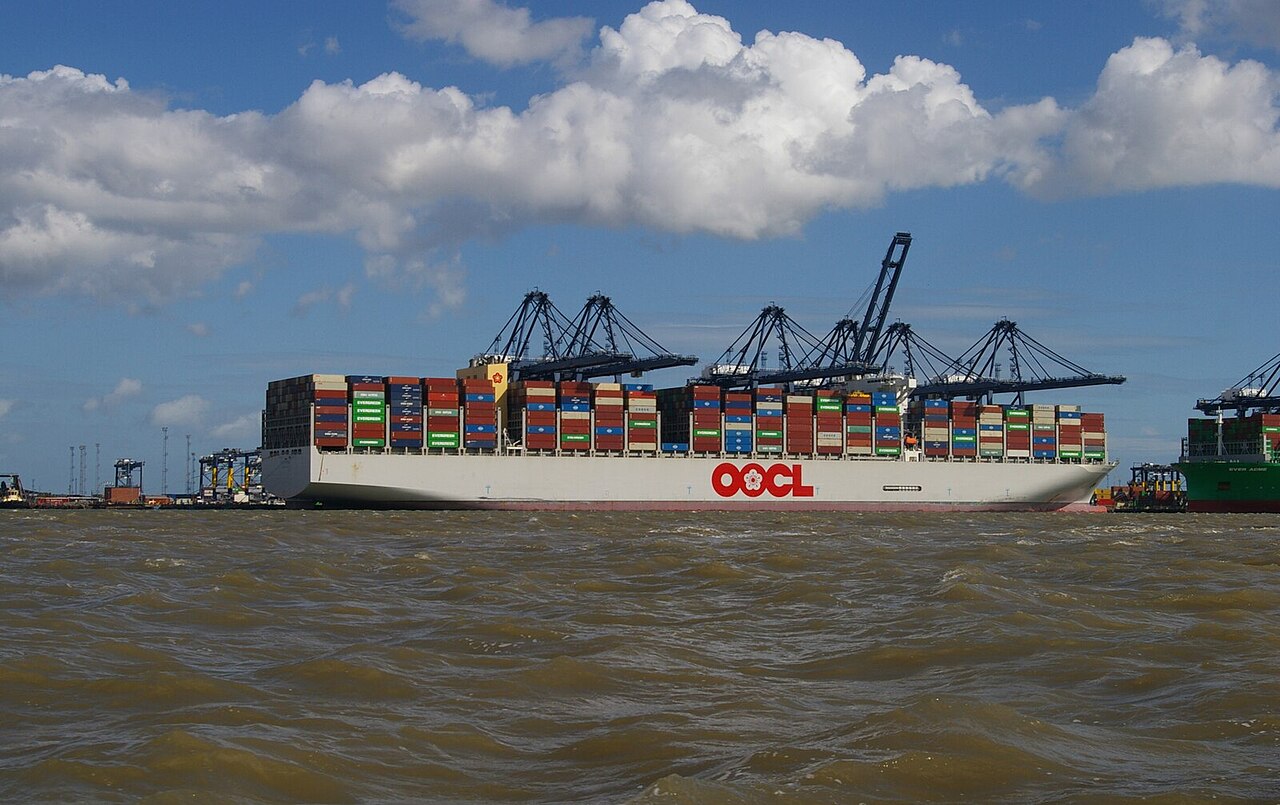
CIF vs FOB vegetable oil is the first real decision in most of the quotes we send, and it’s the one buyers most often get slightly wrong. Not because the terms are complicated, but because people assume CIF means the seller looks after the oil until it reaches your port. It doesn’t. The risk moves to you at the same moment under both terms, when the oil is loaded on the ship in the origin port.
We sell refined and crude vegetable oils worldwide, in bottles, jerrycans, flexitanks and bulk, and we quote both CIF and FOB every week. This guide explains CIF vs FOB vegetable oil the way it plays out on real shipments: who pays for what, where risk passes, how insurance works, the worked price maths, the hidden costs at destination, and how to pick the right term for your business. We also list the oils we sell and their specifications at the end, because the term only matters once you’ve got the right oil.
This is practical trade advice from a supplier, not legal advice. If your contract is large or unusual, have someone who drafts trade contracts look at it.
Table of Contents
CIF vs FOB Vegetable Oil in One Minute
In the CIF vs FOB vegetable oil choice, both are Incoterms rules published by the International Chamber of Commerce, and the current version is Incoterms 2020. Both are meant for sea and inland waterway transport.
- FOB (Free On Board) means we deliver the oil loaded on board the vessel you nominate at the named port of shipment. You book and pay the ocean freight and insurance.
- CIF (Cost, Insurance and Freight) means we deliver the oil on board at the port of shipment too, but we also book and pay the freight to your destination port and buy a minimum level of cargo insurance for you.
So the big CIF vs FOB vegetable oil difference is who organises and pays the freight and insurance. The risk point is the same: on board the ship at origin.
Who Pays What: CIF vs FOB Vegetable Oil Costs
Here’s how costs usually split. Local practice and your contract can shift a line or two, so always read the contract, but this is the normal picture for CIF vs FOB vegetable oil.
| Cost | FOB | CIF |
|---|---|---|
| Oil, packing and flexitank | Seller | Seller |
| Inland transport to the origin port | Seller | Seller |
| Export clearance and documents | Seller | Seller |
| Loading on board | Seller | Seller |
| Ocean freight | Buyer | Seller |
| Marine insurance | Buyer (optional but wise) | Seller (minimum cover) |
| Destination port charges and unloading | Buyer | Buyer, unless freight terms include them |
| Import clearance, duties and taxes | Buyer | Buyer |
| Delivery to your warehouse | Buyer | Buyer |
Notice how much stays with the buyer even under CIF. That surprises many people comparing CIF vs FOB vegetable oil for the first time. That’s the part that surprises people the first time.
Where the Risk Actually Passes
This is the most important point in the whole CIF vs FOB vegetable oil question, so it’s worth saying twice. Under both FOB and CIF, risk of loss or damage passes from seller to buyer when the oil is on board the vessel at the port of shipment.
If a flexitank is damaged at sea under CIF, the loss is legally yours, not ours. What CIF gives you is an insurance policy we bought in your favour, so you claim from the insurer. Under FOB, you’d claim on your own policy, if you bought one.
This is why we always tell buyers that CIF is about logistics and convenience, not about pushing risk onto the seller. If you want the seller to carry the risk to your port, you’re looking at a delivered term like DAP or DDP, and the price will reflect that.
Insurance Under CIF: The Minimum Is Low
Under Incoterms 2020, CIF only requires the seller to buy minimum cover, known as Institute Cargo Clauses (C), for at least 110% of the contract value. Clause C covers major events like fire, sinking, stranding and collision. It doesn’t cover a lot of the things that actually go wrong with oil, such as a leaking flexitank from rough handling or contamination.
For CIF vs FOB vegetable oil decisions, this matters. If you buy CIF, either ask us in the contract for all-risks cover, Institute Cargo Clauses (A), or buy a top-up policy yourself. We’re happy to quote CIF with Clause A cover. It costs a little more, and it’s usually worth it for a full flexitank of oil.
A Worked Example: CIF vs FOB Vegetable Oil Price
Here’s how the CIF vs FOB vegetable oil numbers fit together. These are made-up round figures to show the maths, not a price quote. Prices for oil and freight move every week.
Say we’re quoting refined sunflower oil in a flexitank, about 21 tonnes in one 20 foot container.
| Line | Per container | Per tonne (21 MT) |
|---|---|---|
| FOB price | 26,250 USD | 1,250 USD |
| Ocean freight | 2,100 USD | 100 USD |
| CFR price | 28,350 USD | 1,350 USD |
| Insurance (110% of CIF value, all risks, example rate) | about 95 USD | about 4.50 USD |
| CIF price | about 28,445 USD | about 1,354.50 USD |
To compare CIF vs FOB vegetable oil quotes fairly, take the FOB price, add the freight you can get yourself, add the insurance you’d buy, and compare that to the CIF price. If your forwarder has strong rates on your route, FOB often comes out cheaper. If you ship rarely, CIF is often cheaper because exporters book a lot of containers and get better rates.
One more thing. Bulk oil is priced per tonne, but you probably sell it by the litre. Our guide on how many liters in a ton of vegetable oil helps convert quotes to shelf prices.
The Hidden Costs at Destination
The part of CIF vs FOB vegetable oil that catches people out is what happens when the container lands.
Under CIF, the seller pays freight to your port, but the shipping line still charges destination fees: terminal handling, documentation, delivery order fees and, in some ports, extra local surcharges. These are paid by the buyer. When a seller has booked a very cheap CIF freight, the line sometimes makes up the margin with high destination charges. You don’t see them until the bill arrives.
Then there’s free time. Each line gives a number of free days before demurrage and detention start. Oil stuck at the port because of paperwork can cost real money every day.
Under FOB, you choose the line and agree the destination costs and free time up front. That control is one of the strongest reasons buyers pick FOB.
Our advice when you compare CIF vs FOB vegetable oil: ask your forwarder for the destination charges of the line we’re using under CIF, and ask us how many free days we’ve secured. We’re open about both.
Containers, Flexitanks and a Small Technical Point
Strictly speaking, the ICC suggests that for containerised cargo, FCA and CIP are better fits than FOB and CIF, because the seller usually hands the container to the terminal days before it’s loaded on board. Between those two points, under FOB or CIF, the risk is still technically with the seller even though the seller has lost physical control.
In the real vegetable oil trade, FOB and CIF are still used for containers all the time, and most buyers and banks are comfortable with them. If your bank or insurer prefers FCA or CIP, we can quote those too. The CIF vs FOB vegetable oil comparison maps directly: FCA is close to FOB, and CIP is close to CIF but with higher minimum insurance (Clause A).
For flexitanks, the seller normally supplies and installs the flexitank under both FOB and CIF, and it’s included in the price. Check your quote says so.
Bulk Vessel Shipments
For large volumes shipped in parcel tankers, CIF vs FOB vegetable oil works differently in practice.
- Under FOB, the buyer charters or books space on a tanker and nominates the vessel. The seller has to have the oil ready at the shore tank when the vessel arrives. If the vessel is late, delays and costs can land on the buyer. If the oil isn’t ready, they land on the seller.
- Under CIF, the seller books the vessel and handles loading, and laytime and demurrage at the discharge port are usually set out in the contract.
Bulk contracts are often based on standard forms from the Federation of Oils, Seeds and Fats Associations (FOSFA), which spell out quality, quantity, sampling, arbitration and much more. If you trade bulk regularly, it’s worth getting to know them.
Quality and Quantity: Where Are They Final?
Under both sides of CIF vs FOB vegetable oil, quality and quantity are usually measured at the loading port. That means the certificate of analysis and the surveyor’s report at loading are what count.
This is why, whatever you decide on CIF vs FOB vegetable oil, you should agree on:
- Who samples and tests at loading. Our lab, or an independent surveyor like SGS, Intertek or Bureau Veritas.
- What the specification is. In writing, with test methods.
- What happens if the oil fails. Price allowance, rejection or retest.
We always send the lot COA before loading, and buyers can appoint their own surveyor. For more on the numbers, see our refined soybean oil specification and crude canola oil specification guides.
Payment and Documents
The CIF vs FOB vegetable oil choice changes which documents the bank will want to see. Under CIF you’ll get an insurance certificate in the document set as well as the bill of lading, invoice, packing list, certificate of origin, COA and anything else in the letter of credit. Under FOB, there’s no insurance certificate from us, but the bill of lading must show the oil loaded on board on the vessel you nominated.
If you pay by letter of credit, make sure the LC matches the Incoterm. We see LCs asking for CIF documents on an FOB contract more often than you’d think, and the bank rejects them. Fixing an LC takes days. Checking it first takes minutes.
When FOB Makes More Sense
FOB is usually the better side of CIF vs FOB vegetable oil when:
- You or your forwarder have strong freight rates on the route.
- You want to control the shipping line, transit time and destination charges.
- You ship regularly and can consolidate bookings.
- Your company has an annual cargo insurance policy already.
- Your government or bank prefers buyers to control freight, which happens in some markets.
When CIF Makes More Sense
CIF is often better when:
- You import occasionally and don’t have a forwarder with good rates.
- You want one price to compare quotes easily.
- You want the seller to handle bookings, which is common for smaller importers.
- Your bank finances on a CIF basis.
There’s no universal winner in CIF vs FOB vegetable oil. It depends on your freight power and how much control you want.
How Freight Swings Change the Picture
Ocean freight doesn’t sit still. Rates on some routes doubled and halved more than once over the last few years, and surcharges appear with little notice when routes are disrupted. That affects CIF vs FOB vegetable oil in a way people don’t always think about.
Under CIF, once the contract is signed at a fixed price, freight increases after that point are the seller’s problem. That’s why CIF quotes usually have a short validity, often a few days, and why exporters add a small buffer. Under FOB, you carry the freight risk yourself, but you also get the benefit if rates fall.
If freight is volatile on your route, ask us to hold the CIF price for a set period, or quote FOB and CFR side by side so you can see what we’re assuming for freight. We’d rather show our numbers than argue about them later.
CIF vs FOB Vegetable Oil for Different Types of Buyers
Different buyers end up in different places on CIF vs FOB vegetable oil. Here’s what we usually see.
| Buyer | Usual choice | Why |
|---|---|---|
| Large refinery buying crude oil | FOB or CIF in bulk vessels | Own chartering team, or CIF under standard bulk contracts |
| Bottling plant buying flexitanks | CIF or CFR | Wants a landed cost and steady supply |
| Wholesaler buying packed oil | CIF | Simple comparison between suppliers |
| Supermarket chain importing direct | FOB | Own forwarder and annual freight contracts |
| First-time importer | CIF | Fewer moving parts on the first deal |
| Trader reselling at sea | CIF or CFR | Easier to sell on with documents |
None of these are rules. They’re patterns. If you’re not sure which fits, tell us how you buy freight today and we’ll suggest a term.
Our Advice for First-Time Importers
If this is your first container, our honest view on CIF vs FOB vegetable oil is to start with CIF, with Clause A insurance and an agreed number of free days at destination. You’ll have fewer people to coordinate, one price to approve and one company to call if something goes wrong before loading. Once you’ve done a few shipments and know your destination costs, compare our FOB price with your own freight and switch if it’s cheaper.
Whatever you choose, put it all in writing: the Incoterm with the version year, the named port, the insurance clause, the specification, the inspection at loading and the payment terms. A clear contract does more to protect you than the choice between CIF vs FOB vegetable oil terms ever will.
CFR, the Middle Option
CFR (Cost and Freight) sits between the two. The seller pays freight to your port, but you buy insurance yourself. Many experienced buyers prefer CFR because they want the seller’s freight rates but their own, wider insurance policy. If you’ve read this far on CIF vs FOB vegetable oil and you already have an annual insurance policy, CFR may be your best fit.
Common Mistakes With CIF vs FOB Vegetable Oil
- Thinking CIF puts risk on the seller until arrival. It doesn’t.
- Accepting Clause C insurance on a valuable oil cargo without topping up.
- Ignoring destination charges when comparing CIF quotes.
- Not agreeing free time for containers.
- An LC that doesn’t match the Incoterm.
- No written specification or sampling agreement at loading.
- Forgetting the named port. “FOB Thailand” isn’t enough. It should be FOB a named port, and CIF a named destination port.
Oils We Sell on CIF or FOB Terms
We quote every oil below either FOB at the Thai loading port or CIF to your named destination port, worldwide. Here’s the typical specification we load against.
| Oil we sell | FFA | Peroxide value at loading | Moisture | Key spec |
|---|---|---|---|---|
| Refined sunflower oil | 0.1% max | 2.0 meq/kg max | 0.05% max | Iodine value 118 to 141 |
| Refined soybean oil | 0.1% max | 2.0 meq/kg max | 0.05% max | Iodine value 124 to 139 |
| Refined palm olein CP10 | 0.1% max | 2.0 meq/kg max | 0.1% max | Cloud point 10 C max |
| Crude palm oil | 5% max | n/a | 0.5% max (M and I) | DOBI 2.3 min |
| Crude soybean oil | 1.0% max | n/a | 0.3% max (M and I) | Phosphorus 200 ppm max |
| RBD canola oil | 0.1% max | 2.0 meq/kg max | 0.05% max | Erucic acid under 2% |
| RBD coconut oil | 0.1% max | 1.0 meq/kg max | 0.1% max | Iodine value 7 to 11 |
Packing runs from 1 litre bottles to 20 litre jerrycans, 18 litre tins, IBC totes and flexitanks. See how much cooking oil fits in a 20ft container for what each pack means in tonnes.
We produce under ISO 22000, HACCP and GMP with Halal certification, and kosher on request for some lots. If you need it, read our page on being a kosher certified vegetable oil supplier.
Import Rules Don’t Change With the Incoterm
Whatever you choose on CIF vs FOB vegetable oil, the import side is yours. Registration, labels and customs follow your country’s rules. We’ve written guides on the FDA requirements for importing vegetable oil and SFDA registration for imported cooking oil, and for India, the edible oil import duty guide. Duties are calculated on the CIF value in most countries, even if you bought FOB, so customs will add freight and insurance to your FOB price anyway.
Quick Checklist Before You Choose
- Do you have better freight rates than the seller? Lean FOB.
- Do you want one simple landed figure? Lean CIF.
- Have you checked destination charges and free time?
- Is the insurance Clause A, not just Clause C?
- Does the LC match the Incoterm?
- Is the port named precisely?
- Is the specification and loading inspection agreed in writing?
Answer those and the CIF vs FOB vegetable oil choice usually makes itself.
Further Reading
The official rules are published by the ICC on its Incoterms rules page. For oil quality limits, the Codex Alimentarius standards are the international reference.
FAQs on CIF vs FOB Vegetable Oil
Is CIF or FOB cheaper for vegetable oil?
It depends on your freight rates. FOB plus your own freight and insurance can be cheaper if you have good rates. CIF is often cheaper for occasional importers.
Under CIF, who is responsible if the oil is damaged at sea?
The buyer carries the risk once the oil is on board, but claims on the insurance policy the seller bought.
What insurance does CIF include?
Minimum Clause C cover at 110% of the value, unless the contract asks for more. We can quote Clause A.
Do you quote CIF to any port?
To most major ports worldwide. Tell us the port and we’ll check the routing.
Is duty charged on the CIF vs FOB vegetable oil price?
Most countries calculate duty on the CIF value, so freight and insurance are included even if you bought FOB.
Can you quote CFR?
Yes. Many buyers with their own insurance prefer it.
Get a CIF or FOB Quote
Send us the oil, pack type, volume per month and your port, and tell us whether you’d like CIF, FOB, CFR or another term. We’ll reply with a price on your preferred basis, the full specification and a sample COA.
Email info@dthcompanyltd.com, WhatsApp +66 91 765 9104, or use our contact page. Browse our product range or read more about us.








11 thoughts on “CIF vs FOB Vegetable Oil: 7 Honest Differences for Buyers”