

If you import sunflower oil, it helps to know where it actually comes from. The top sunflower oil exporting countries are a short list, and what happens in those few places decides the price you pay, how fast your oil ships and what quality lands at your port. We’re a bulk supplier of refined, crude and high oleic sunflower oil, and we source from the main origins every month. This guide covers who the big exporters are, how they differ, what each origin is good for, and how to buy from them without getting burned. We’ll also share the specs and packing options we offer, so you can get a real quote at the end.
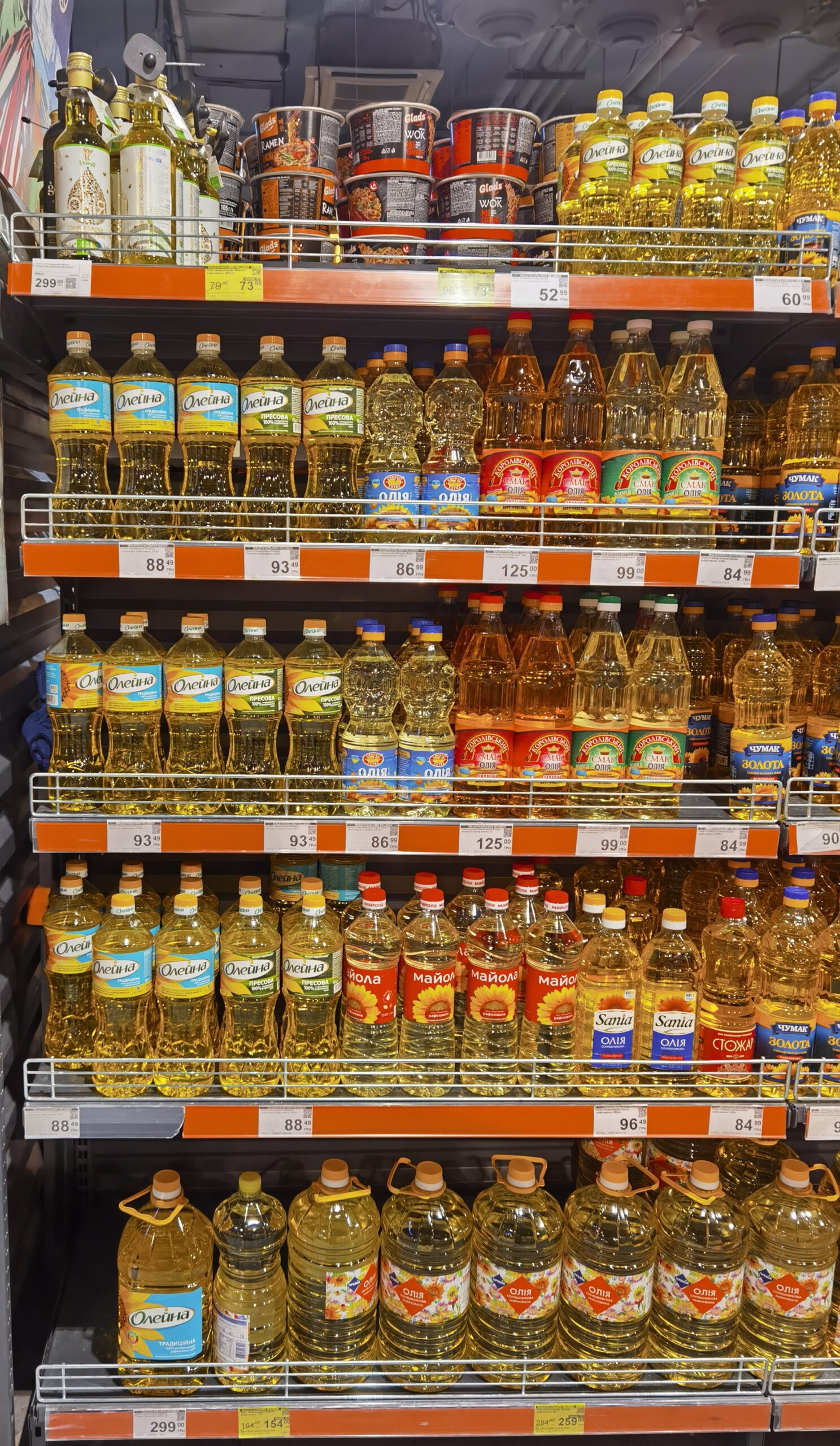
We’ve kept this practical. You won’t find long history lessons here. Just what a buyer needs to know about the top sunflower oil exporting countries in 2026 and going into 2027.
Table of Contents
Why the Top Sunflower Oil Exporting Countries Matter to Your Business
Sunflower oil is one of the most concentrated markets in food. A handful of countries supply most of what’s traded across borders. That’s good when their harvests are big, because there’s plenty of oil and prices soften. It’s bad when something goes wrong, because there aren’t many places to turn.
Knowing the top sunflower oil exporting countries helps you in three ways. You can judge whether a price offer is fair for that origin. You can spread your risk across more than one source. And you can spot a fake offer, because a seller claiming an origin that doesn’t fit the season or the route is a warning sign.
World sunflower oil exports were roughly 13.5 million tons in the 2025/26 season, which was a weak year. For 2026/27, the USDA oilseeds world markets and trade report expects exports to climb back towards 16 million tons, mostly because the Black Sea harvest recovered. Almost all of that volume comes from the countries below.
The Top Sunflower Oil Exporting Countries at a Glance
Here’s a simple overview. Volumes are rounded and change every season, so treat them as a guide rather than exact figures.
| Rank | Country | Approx. export volume (per season) | Main strength |
|---|---|---|---|
| 1 | Ukraine | 4 to 5 million tons | Huge crushing capacity, competitive prices |
| 2 | Russia | 4 to 5 million tons | Largest sunflower seed crop in the world |
| 3 | Argentina | 1 to 1.5 million tons | Opposite harvest season, high oleic supply |
| 4 | Kazakhstan | Around 0.8 million tons | Growing crusher, close to Central Asia and China |
| 5 | Turkey | Large re-exporter | Refines imported crude, ships packed oil |
| 6 | EU (Bulgaria, Romania, Hungary) | Varies | Short routes into Europe |
| 7 | Netherlands | Re-export hub | Trading and refining base for Europe |
| 8 | Moldova and Serbia | Smaller volumes | Niche and regional supply |
Russia and Ukraine together still ship the large majority of world exports. In most recent seasons, their combined share has been somewhere around two thirds or more. So when people talk about the top sunflower oil exporting countries, they really mean these two first and everyone else second.
1. Ukraine
For most of the last twenty years, Ukraine was the number one exporter. It has big, modern crushing plants close to the Black Sea ports of Odesa, Chornomorsk and Pivdennyi, and it crushes most of its own seed instead of exporting it raw.
In the 2025/26 season, Ukraine had a poor harvest and, for the first time in about two decades, Russia shipped slightly more sunflower oil. For 2026/27, Ukraine’s crop is bigger, and the forecasts put it back near the top, with exports around 5 million tons.
Good for: Crude and refined sunflower oil at competitive prices, large volumes, flexitank and bulk vessel loads.
Watch out for: War risk. Ports and plants have been attacked several times since 2022, and freight insurance costs more. Delays can happen at short notice.
Ukraine is a key origin among the top sunflower oil exporting countries for buyers in the EU, the Middle East, North Africa, India and Asia.
2. Russia
Russia grows more sunflower seed than any other country, often around 17 to 20 million tons a year. It crushes most of it at home and ships the oil from Novorossiysk, Rostov, Azov and Taman.
Russia uses a floating export duty on sunflower oil, which the government changes every month. That duty affects how competitive Russian oil is abroad. Buyers in India, China, Turkey, Iran, Egypt and Central Asia take a lot of Russian oil.
Good for: Large, steady volumes, crude and refined grades, often attractive pricing for Asian and Middle Eastern buyers.
Watch out for: Sanctions and payment issues in some markets, export duty changes, and the occasional export quota. Check your own country’s rules before buying Russian origin.
3. Argentina
Argentina is the big exporter outside the Black Sea, and it’s usually third on any list of the top sunflower oil exporting countries. It harvests between December and March, which is the opposite season to Europe and the Black Sea. That makes it a useful second source when Black Sea stocks run low before the new crop.
Argentina also produces a good amount of high oleic sunflower oil, which food manufacturers like for frying and snacks.
Good for: Counter-season supply, high oleic sunflower oil, buyers in South America, Africa, India and the Middle East.
Watch out for: Changes to export taxes and currency rules, which happen often in Argentina, and longer shipping times to Asia and Europe.
4. Kazakhstan
Kazakhstan is the newest name among the top sunflower oil exporting countries. It has invested in crushing plants and now ships around 800,000 tons a season, much of it by rail into Central Asia, Afghanistan, China and beyond.
Good for: Buyers in Central Asia and western China, rail shipments, flexitanks by rail.
Watch out for: Limited sea access, so it’s less practical for buyers far from the region.
5. Turkey
Turkey is a slightly unusual entry among the top sunflower oil exporting countries. It grows sunflower seed but nowhere near enough for its own needs. Instead, it imports crude oil and seed, mostly from Russia and Ukraine, refines it, bottles it and re-exports a large volume of packed oil to Iraq, Africa, the Middle East and Central Asia.
Good for: Packed oil in PET bottles and tins, fast delivery to Iraq and nearby markets, strong branding and packaging.
Watch out for: Prices include the extra step of import and refining, so bulk oil is often cheaper from the original source.
6. The European Union
The EU is a mixed case among the top sunflower oil exporting countries. Inside the EU, Bulgaria, Romania and Hungary are the main sunflower growers. They supply much of their oil to other EU countries, and some goes further afield. France and Spain also grow sunflowers, though they mostly use the oil at home.
Good for: Short, simple routes within Europe, EU food safety rules, traceability.
Watch out for: Higher prices than Black Sea origin and smaller volumes for export outside Europe.
7. The Netherlands
The Netherlands doesn’t grow much sunflower seed, but Rotterdam is a major trading and refining hub. Oil from the Black Sea and Argentina is often refined or stored there and then shipped around Europe. That’s why the Netherlands shows up in trade statistics as a big exporter. If you buy in Europe, our page on sunflower oil bulk supplier Netherlands may help.
8. Smaller Exporters Worth Knowing
Moldova, Serbia, South Africa, the United States and China all export some sunflower oil, but in much smaller amounts. The US focuses on high oleic and mid oleic oil for food makers. These origins fill gaps rather than set the market, so they rarely appear high on lists of the top sunflower oil exporting countries.
Who Buys From the Top Sunflower Oil Exporting Countries
The flip side of the list is the importers. India is the biggest buyer by far, followed by the EU, China, Turkey, Iraq, Egypt and Iran. Demand is also growing in Southeast Asia, East Africa and West Africa, where shoppers are moving from palm oil to lighter oils as incomes rise.
That matters for you because big buyers move prices. When India steps in to buy heavily from the top sunflower oil exporting countries, prices firm up for everyone else. When India switches to palm oil because it’s cheaper, sunflower oil can get easier to buy.
How Origin Affects Quality and Price
The oil itself is similar wherever it’s made, as long as it’s refined properly. But origin does affect a few things.
Price. Black Sea oil is usually the cheapest base. Argentine oil is often priced a little higher into Asia and Europe because of the longer voyage. EU oil tends to be dearer. Re-exported packed oil from Turkey carries the cost of the extra step.
Fatty acid profile. Regular sunflower oil from the Black Sea is high in linoleic acid. High oleic oil comes mainly from Argentina, the EU, the US and specific Black Sea contracts. Our guide to sunflower oil fatty acid composition explains the difference, and high oleic vs regular sunflower oil covers which one suits your use.
Paperwork. Some importing countries need certain documents or have rules on specific origins. Always check before you buy from any of the top sunflower oil exporting countries.
Timing. Black Sea oil is freshest from October to March. Argentine oil is freshest from March to August. Smart buyers use both.
Sunflower Oil Products We Supply From the Main Origins
We source from the top sunflower oil exporting countries and ship to buyers worldwide. Here’s what we sell:
- Refined sunflower oil for retail, food service and food factories
- Crude sunflower oil for refiners
- High oleic sunflower oil for frying and snack makers
- Deodorized sunflower oil for neutral flavour applications
- Winterized sunflower oil that stays clear in cold weather
- Organic sunflower oil for specialty buyers
Refined Sunflower Oil Specifications
These are the typical specs for our refined sunflower oil, whichever of the top sunflower oil exporting countries the oil comes from. Each shipment has its own certificate of analysis.
| Parameter | Specification |
|---|---|
| Product | Refined, bleached, deodorized, winterized sunflower oil |
| Free fatty acid (as oleic) | 0.10% max |
| Peroxide value at loading | 2.0 meq/kg max |
| Moisture and volatile matter | 0.05% max |
| Insoluble impurities | 0.05% max |
| Colour (Lovibond 5¼ inch cell) | 3.0 Red max |
| Iodine value (Wijs) | 118 to 141 |
| Relative density at 20 °C | 0.918 to 0.923 |
| Cold test | 5.5 hours min at 0 °C |
| Smoke point | About 225 °C |
| Taste and odour | Neutral, no off flavour |
| Shelf life | 18 to 24 months sealed |
These values sit within the Codex Alimentarius standard for named vegetable oils. You can read more on our refined sunflower oil specification page.
Packaging Options
Oil from all the top sunflower oil exporting countries we work with can be packed in the same formats.
| Pack | Best for |
|---|---|
| 1 L, 2 L, 3 L, 5 L PET bottles | Supermarkets, shops, retail brands |
| 10 L and 20 L jerrycans | Restaurants, open markets, wholesalers |
| 18 L tins | Bakeries, hotels, food service |
| 190 kg steel drums | Food factories |
| 1,000 L IBC totes | Repackers and factories |
| Flexitank, 20 to 22 tons | Big repackers and refiners |
Not sure which pack makes sense? Read PET bottle vs jerrycan cooking oil packaging, or check our sunflower oil flexitank supplier page for bulk.
7 Proven Tips for Buying From the Top Sunflower Oil Exporting Countries
Tip 1: Don’t rely on one origin
If all your oil comes from one country, one bad harvest or one blocked port can leave you empty. Mix Black Sea and Argentine supply if you can.
Tip 2: Match the origin to the season
Buy Black Sea oil after the autumn harvest and Argentine oil after their summer harvest. You’ll get fresher oil and often better prices.
Tip 3: Check the HS code and duties
Import duty on sunflower oil varies a lot between countries and between crude and refined grades. Our sunflower oil HS code guide helps you get the classification right.
Tip 4: Ask for independent inspection
Whichever of the top sunflower oil exporting countries your oil comes from, insist on an SGS or similar inspection at loading. Read about pre-shipment inspection for edible oil.
Tip 5: Get the incoterm right
FOB, CFR or CIF change who pays freight and insurance, and who carries the risk. See CIF vs FOB vegetable oil.
Tip 6: Be careful with offers that look too cheap
Scammers love to claim they have oil from the top sunflower oil exporting countries at prices well under the market. If the offer is far below everyone else, walk away. Our guide on spotting a fake vegetable oil supplier lists the red flags.
Tip 7: Use secure payment
A letter of credit or a TT with a small deposit and balance against documents keeps both sides honest. Read letter of credit vs TT payment.
What Could Change the Rankings
The list of the top sunflower oil exporting countries isn’t fixed. Russia and Ukraine swapped places in 2025/26, and they could swap again. A few things could reshape things over the next few years:
- How the war affects Ukraine’s ports and crushing plants
- Russian export duties and quotas
- Argentina’s export tax policy
- Kazakhstan’s investment in new plants
- Weather, especially summer heat in the Black Sea region
Prices follow these shifts. If you want to plan ahead, our sunflower oil price forecast 2027 looks at what we expect next year, and our sunflower oil wholesale price per ton guide explains how prices are built.
Ports, Routes and Transit Times
The route your oil takes matters almost as much as where it was crushed. Here’s a rough idea of how oil moves out of the top sunflower oil exporting countries.
| Origin | Main loading ports | Typical routes | Rough transit to Asia |
|---|---|---|---|
| Ukraine | Odesa, Chornomorsk, Pivdennyi, Danube ports | Black Sea, Bosphorus, Suez | 25 to 35 days |
| Russia | Novorossiysk, Taman, Azov, Rostov | Black Sea, Bosphorus, Suez | 25 to 35 days |
| Argentina | Rosario area, Bahía Blanca, Necochea | South Atlantic, Cape of Good Hope | 35 to 45 days |
| Kazakhstan | Rail hubs, Caspian ports | Rail to China and Central Asia | Varies by rail |
| Turkey | Mersin, Istanbul area | Mediterranean, overland to Iraq | 20 to 30 days |
These are only guides. Real times depend on transhipment, port congestion and whether the Suez route is open. When the Red Sea gets risky, some ships go round Africa and add one to two weeks.
For container shipments, which most of our buyers use, the oil is usually packed or put into a flexitank near the origin or at a refining hub, then shipped on a regular liner service. It’s slower than a direct tanker for huge volumes, but far more practical for one to twenty containers.
How We Pick the Right Origin for Each Buyer
We don’t push one origin on everybody. When a request comes in, we look at a few things before we quote.
Where you are. A buyer in the Gulf or East Africa usually gets the best landed price on Black Sea origin. A buyer in West Africa or South America might do better with Argentine oil at certain times of year.
What you’re making. If you fry snacks all day, high oleic oil from Argentina or the EU could save you money in the long run, because it lasts longer in the fryer. If you’re filling 1 litre bottles for supermarkets, standard refined oil from the Black Sea is the usual choice.
Your import rules. Some countries have restrictions on certain origins or need specific health certificates. We check this with you first so nothing gets stuck at customs.
Timing. If you need oil in May, it may be smarter to buy from Argentina, where the crop is fresh, rather than from the Black Sea, where old crop stocks are getting thin.
This is how we use what we know about the top sunflower oil exporting countries to give you a price that makes sense, not just the first number on the screen.
A Few Words on Labels and Origin Claims
If you’re selling packed oil under your own brand, be careful with what you put on the label. Some markets require the country of origin to appear on the pack. If the oil was crushed in one country and refined in another, the rules on what you call the origin differ from place to place. Ask your local food authority before you print.
We give a clear certificate of origin with every shipment, and we’ll tell you honestly where the seed was grown, where it was crushed and where it was refined. That’s the only way to keep your brand safe. You can find more background on the crop itself on the sunflower oil Wikipedia page.
Shipping and Documents
We ship to buyers across Asia, the Middle East, Africa, Europe, the Americas and the Pacific. Minimum order is usually one 20 foot container. Every shipment comes with:
- Commercial invoice and packing list
- Bill of lading
- Certificate of origin
- Certificate of analysis
- Health or phytosanitary certificate where needed
- Halal certificate on request
- Independent inspection report
New to importing? Our guide to documents required to import vegetable oil covers each one. You can also compare this with our page on top palm oil exporting countries if you buy both oils.
Frequently Asked Questions
Which are the top sunflower oil exporting countries?
Ukraine and Russia are clearly the two biggest, followed by Argentina, Kazakhstan and Turkey. The EU and the Netherlands also export a fair amount.
Who is the largest exporter right now?
Ukraine and Russia are close. Russia edged ahead in 2025/26, and Ukraine is expected to recover in 2026/27. It can change from season to season.
Is oil from the top sunflower oil exporting countries all the same quality?
Refined oil that meets Codex standards is very similar wherever it comes from. The bigger differences are price, timing and paperwork.
Can you supply oil from a specific origin?
Often, yes. Tell us which origin you need and we’ll tell you what’s possible for your quantity and timing.
Which origin is cheapest?
Most of the time, Black Sea oil gives the lowest base price. Argentine oil can be cheaper for some routes in the middle of the year. We’ll compare for your port.
Do you ship worldwide?
Yes. Give us your destination port and we’ll quote CIF.
Get a Quote From a Supplier Who Knows the Top Sunflower Oil Exporting Countries
Tell us the grade, packaging, quantity, preferred origin and destination port. We’ll send a written offer, usually within one working day.
Email info@dthcompanyltd.com, call or WhatsApp +66 91 765 9104, or use our contact page. You can also see all our products or read about us.








2 thoughts on “Top Sunflower Oil Exporting Countries: Trusted Supplier Guide and 7 Proven Buying Tips”