


If you run a refinery, the crude oil you buy decides your margin more than anything you do inside the plant. A good crude sunflower oil exporter gives you oil with low free fatty acid, low phosphorus, honest moisture figures and the same quality every shipment, so your refining loss stays where you budgeted it. We export crude sunflower oil in flexitanks, ISO tanks, drums and contract parcels to refiners, bottlers with their own refining line, soap and oleochemical plants, and traders worldwide.
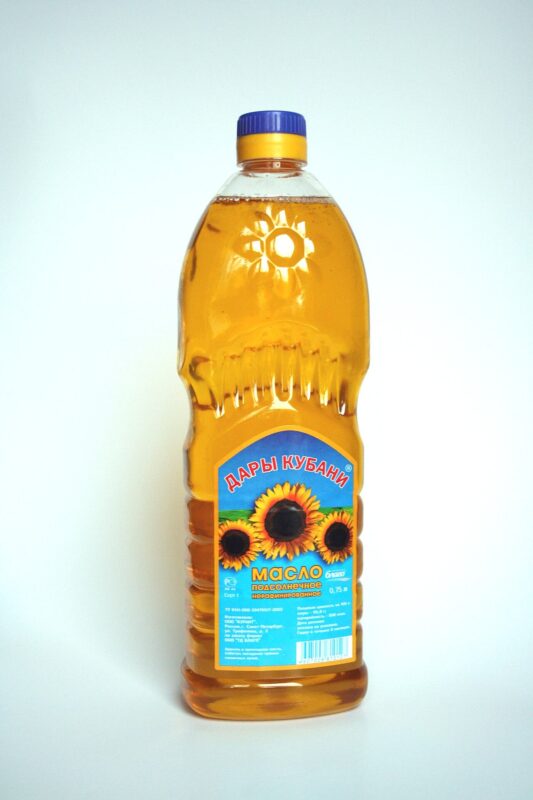
This page is for the people who’ll actually run the oil: refinery managers, QA heads and buyers who answer to them. You’ll find our specs, what each figure does to your yield, packing and loading details, the paperwork, how pricing works, and the questions to ask any crude sunflower oil exporter before you commit tanks to their oil.
Table of Contents
What We Supply as a Crude Sunflower Oil Exporter
| Product | Description | Typical buyers |
|---|---|---|
| Crude sunflower oil, linoleic type | Pressed and solvent extracted, not degummed | Edible oil refineries |
| Crude degummed sunflower oil | Water degummed, lower phosphorus | Refineries with physical refining, smaller plants |
| Crude high oleic sunflower oil | Oleic acid 80% min | Refiners making high oleic for frying and snacks |
| Crude sunflower oil, technical | Higher FFA, for non-food use | Soap, oleochemicals, biodiesel |
The linoleic type is what most buyers mean when they ask for crude. If you’re refining for retail bottles, it’s the grade to start with. See our crude sunflower oil page for the product overview, and high oleic sunflower oil if your end market wants a longer fry life.
Specifications From Our Crude Sunflower Oil Exporter Desk
These are the limits we contract to. Actual results for each lot appear on the certificate of analysis, and you’re welcome to have your own surveyor sample at loading.
Crude sunflower oil (linoleic)
| Parameter | Specification | Method |
|---|---|---|
| Free fatty acid (as oleic) | 2.0% max | AOCS Ca 5a-40 |
| Moisture and volatiles | 0.20% max | AOCS Ca 2c-25 |
| Insoluble impurities | 0.10% max | AOCS Ca 3a-46 |
| Phosphorus | Stated on COA, normally under 200 ppm | AOCS Ca 12-55 |
| Peroxide value | 10 meq O2/kg max | AOCS Cd 8b-90 |
| Iodine value (Wijs) | 118 to 141 | AOCS Cd 1d-92 |
| Wax content | Stated on COA, typically 0.2 to 0.5% | ISO method |
| Unsaponifiable matter | 1.5% max | AOCS Ca 6a-40 |
| Colour | Amber to dark yellow | Visual / Lovibond |
| Flash point | Above 225 °C | AOCS Cc 9c-95 |
Crude degummed sunflower oil
| Parameter | Specification |
|---|---|
| Free fatty acid (as oleic) | 1.5% max |
| Moisture and impurities | 0.20% max |
| Phosphorus | 50 ppm max |
| Iodine value | 118 to 141 |
Crude high oleic sunflower oil
| Parameter | Specification |
|---|---|
| Oleic acid (C18:1) | 80% min |
| Free fatty acid | 2.0% max |
| Moisture and impurities | 0.20% max |
| Iodine value | 78 to 90 |
All grades fall within the Codex Alimentarius standard for named vegetable oils. Test methods follow AOCS unless your contract names ISO equivalents. For background on the oil itself, the sunflower oil overview is a decent primer, and our page on sunflower oil fatty acid composition goes deeper.
What Each Number Does to Your Refinery
A COA is a forecast of your refining loss. Here’s how a refiner should read one from any crude sunflower oil exporter.
Free fatty acid
In chemical refining, every 1% of FFA costs you roughly 1.5 to 2% of oil in neutralising loss, because soap carries neutral oil with it. Crude at 1.2% FFA refines noticeably cheaper than crude at 2.0%. In physical refining, high FFA means more distillate and more steam.
Phosphorus
Phospholipids have to come out in degumming. High phosphorus means more acid, more water, more gums and more oil trapped in the gums. For physical refining you need it very low, which is why some plants buy crude degummed.
Moisture and impurities
You pay for these by weight and get nothing back. They also speed up hydrolysis in your tanks, so FFA climbs while the oil waits.
Waxes
Sunflower is high in waxes, which is why it needs winterising for retail. Higher wax content means more filter aid and more oil lost in the filter cake. See winterized sunflower oil.
Peroxide
High peroxide in crude suggests old or badly stored oil. Bleaching will bring it down, but it’s a warning about flavour stability after refining.
A good crude sunflower oil exporter will talk to you about these numbers, not just the price. Our FFA and peroxide guide and crude vs refined sunflower oil cover the chemistry in plain terms.
Refining Loss: A Quick Example
Here’s a simple illustration of why crude quality matters more than a few dollars on price. Say you refine 22 tons from one flexitank.
| Item | Crude A | Crude B |
|---|---|---|
| FFA | 1.2% | 2.0% |
| Moisture and impurities | 0.10% | 0.20% |
| Approximate refining loss | About 3.5% | About 5.2% |
| Refined oil out | About 21.2 MT | About 20.9 MT |
| Difference | About 0.4 MT less oil |
At a refined value of around US$1,550 per ton, that difference is worth roughly US$600 per flexitank. If Crude B is only US$10 per ton cheaper, it’s the dearer oil once it’s refined. These figures are rough, and every plant runs differently, but the logic holds. That’s why refiners stay with a crude sunflower oil exporter that loads to steady numbers.
Packing and Loading as a Crude Sunflower Oil Exporter
| Packing | Net per unit | Notes |
|---|---|---|
| Flexitank, 20 ft | About 20 to 22 MT | Most common for container buyers, single use, food grade |
| ISO tank | About 20 to 23 MT | Clean, reusable, quick discharge |
| Steel drum, 200 L | About 180 to 190 kg | For small plants and industrial users |
| IBC, 1,000 L | About 900 to 920 kg | Easy handling without shore tanks |
| Bulk parcel | By contract | For refiners with shore tanks and a berth |
Crude sunflower oil stays liquid at normal temperatures, so flexitanks don’t usually need heating, unlike palm oil. In very cold ports in winter, we can fit a heating pad. Our flexitank vs ISO tank guide helps you choose, and how much oil fits in a 20ft container has the load numbers.
We sample every flexitank during filling and keep a sealed retained sample. Seal numbers, flexitank numbers and loading photos go to you on the day. If you have a surveyor, they can sample from the same line at the same time.
Where the Crude Comes From
The world’s sunflower crop is concentrated in the Black Sea region, the European Union and Argentina. As a crude sunflower oil exporter, we buy from crushers we’ve approved and audited, and we tell you the origin on every contract and on the certificate of origin. Some buyers need a specific origin for customs or for their own customers. Tell us at enquiry and we’ll offer only that origin.
Crop timing matters for planning. Northern hemisphere harvest runs from late August to October, so new crop crude is usually freshest and most plentiful from October onwards. Argentina harvests early in the year, which gives a second window. The USDA oilseeds reports are a free way to follow crop size and trade flows. For a country-by-country picture, see top sunflower oil exporting countries.
A Simple Buying Calendar for Refiners
Refiners who plan their crude around the crop year usually pay less and run fresher oil. This is the rough pattern we see, though weather and politics can shift it in any given year.
| Months | What’s happening | What refiners usually do |
|---|---|---|
| September to November | Northern harvest, new crop crude arrives | Book forward cover for winter and spring |
| December to February | Steady crushing, holiday demand fades | Fill gaps, test new origins |
| March to May | Argentine crop, pre-Ramadan demand in some years | Watch the spread to palm and soybean oil |
| June to August | Old crop runs low, new crop weather in focus | Keep cover short unless the crop looks poor |
If you only buy when your tanks are nearly empty, you take whatever the market gives that week. If you plan three to six months ahead with your crude sunflower oil exporter, you can split purchases across the year and avoid the worst spikes. Some of our refinery customers fix half their volume ahead and buy the rest monthly, which gives them a mix of price certainty and flexibility. It’s a sensible approach for most plants, and easy to set up in a frame contract.
How a Crude Sunflower Oil Exporter Prices Oil
Crude sunflower oil trades against the world market, usually quoted FOB at origin ports. Lately Black Sea crude has been trading around US$1,380 to 1,400 per ton FOB after a firm autumn. Our price to you depends on:
- Origin and current market level
- Grade, and how tight the specs are
- Packing: flexitank, ISO tank, drums or parcel
- Volume and contract length
- Incoterm: FOB, CFR or CIF
- Payment terms
We quote in US dollars per metric ton, with a validity date. Buyers on monthly contracts often use a formula price: an agreed market reference plus a fixed premium, so nobody has to guess. For more on the outlook, see sunflower oil price forecast 2027 and sunflower oil price per ton. The ICC Incoterms rules define who pays for what.
Contract Terms
A crude sunflower oil exporter should give you a contract that covers:
- Quality, with the spec table and test methods attached
- Quantity, with tolerance, usually plus or minus 5%
- Shipment period, for example “second half of February”
- Inspection, naming the surveyor and whose result is final
- Weight basis, usually shipped weight with a surveyor’s certificate
- Payment, LC at sight or TT schedule
- Claims and arbitration
Many crude sunflower contracts are written on FOSFA terms, which most refiners and banks know well. We’re comfortable with FOSFA or with a simpler direct contract for smaller lots.
Documents With Every Shipment
Paperwork is where a crude sunflower oil exporter either saves you time or costs you a week at port.
- Commercial invoice and packing list
- Bill of lading
- Certificate of analysis
- Certificate of origin
- Phytosanitary or health certificate where required
- Surveyor’s quality and weight certificate if your contract calls for one
- Flexitank certificate
- Halal certificate on request
Crude sunflower oil normally falls under HS 1512.11. See sunflower oil HS code and documents required to import vegetable oil.
Non-Food Buyers
Not every buyer refines for food. Soap makers like sunflower for its mild, conditioning lather. Oleochemical plants split it into fatty acids and glycerine. Biodiesel producers use it where it’s priced well against other feedstocks. For these buyers, a crude sunflower oil exporter can offer technical grade oil with looser FFA limits at a lower price. See sunflower oil for soap making for an example of how buyers use it.
Storage at Your Plant
Once the oil arrives, it is your job to protect what you paid your crude sunflower oil exporter for.
Crude oil keeps reasonably well, but not forever. FFA creeps up if there’s water in the tank, and peroxide rises with heat and air. Pump flexitank oil into clean, dry tanks as soon as you can. Keep tank temperatures moderate, around ambient, and avoid heating crude sunflower oil unless you need to for pumping in cold weather. Settle and drain any water from tank bottoms. Plan to refine within a few months of arrival for the best yield.
Discharging a Crude Flexitank at Your Plant
Most first-time buyers worry about this more than they need to. Discharging crude sunflower oil from a flexitank is straightforward if you have the basics ready.
- A pump. A positive displacement or centrifugal pump rated for vegetable oil, usually 15 to 30 cubic metres per hour.
- Clean hoses and fittings. Most flexitanks come with a 3 inch valve. Check your coupling matches before the truck arrives.
- A clean, dry receiving tank. Drain water bottoms first. Water speeds up FFA rise.
- Time. Plan two to three hours per flexitank, including connection and draining.
Open the container doors carefully, since the bulkhead holds the load in. Discharge from the bottom valve, and lift the rear of the container slightly at the end to drain the last of the oil. Good flexitanks leave very little behind. If you’ve never done it, ask us for our discharge sheet. As a crude sunflower oil exporter shipping many flexitanks a month, we’ve written it for crews who’ve never seen one before.
Running a Trial Shipment Through Your Plant
When a refinery tests a new crude sunflower oil exporter, the trial should be run properly, or it tells you nothing. Here’s how our customers usually do it.
- Keep the trial oil in a separate tank, not blended with your existing crude.
- Test it on arrival for FFA, moisture, impurities, phosphorus and peroxide, using the same methods as our COA.
- Refine it as one batch, with your normal settings, and record chemical use, bleaching earth, filter aid and steam.
- Measure the yield: tons of refined oil out against tons of crude in.
- Check the finished oil for colour, cold test, flavour and peroxide, and run a storage test if you bottle for retail.
- Compare the results with your current supplier’s oil, run the same way.
If the numbers are good, move to a contract. If they’re not, tell us what you found. A serious crude sunflower oil exporter will want to see your data and either explain the gap or fix it.
Buying Crude for a New Refinery
We’re often asked to supply plants that are just starting up. New refineries face a few extra challenges, and a crude sunflower oil exporter can help with most of them.
- Commissioning batches. The first runs through a new plant rarely hit target. Start with crude that has comfortable margins on FFA and phosphorus, so you’re tuning the plant, not fighting the oil.
- Steady supply. Banks and investors want to see a supply contract. We can sign a frame agreement with monthly volumes so your financing isn’t held up.
- Mixed loads. Some new plants want crude sunflower plus a little crude palm oil or crude soybean oil to test other lines. We can ship those on the same sailing.
- Technical support. We can share typical refining settings for our crude and put your team in touch with ours to talk through degumming and winterising.
If you’re setting up a plant to bottle for your own brand, our pages on how we refine edible oil and the cooking oil repackaging business may also help with planning.
Common Problems With Crude Cargo, and How We Avoid Them
When buyers tell us about trouble with a past crude sunflower oil exporter, it’s usually one of these.
- Water at the bottom of the tank. Poor drying at the crusher or condensation in transit. We check moisture at loading and use new, dry flexitanks.
- FFA higher on arrival than on the COA. Usually water, heat or old oil. We load fresh oil, test just before loading, and ship promptly.
- Short weight. Poor calibration or a dishonest seller. We welcome a surveyor’s weight certificate at loading.
- Wrong grade. Technical oil sold as food grade, or blends sold as pure sunflower. Our COA includes the fatty acid profile on request, so you can confirm it’s genuine sunflower. Our guide on how to detect adulterated oil explains the checks.
- Documents that don’t match. Different weights on the invoice and the bill of lading, or a wrong HS code. We send drafts for your check first.
None of this is unusual for a careful crude sunflower oil exporter. It’s just the routine that keeps refiners coming back.
7 Proven Tips for Choosing a Crude Sunflower Oil Exporter
1. Ask for the last three COAs, not one
One good result is easy. Three steady ones tell you how the crude sunflower oil exporter really performs.
2. Agree methods before you agree price
Make sure both labs use the same methods for FFA, moisture and phosphorus.
3. Put phosphorus on the contract
Many offers leave it off. For a refiner, it’s one of the most important figures.
4. Use an independent surveyor
At loading, not just at discharge. See pre-shipment inspection for edible oil.
5. Price on refined yield, not just per ton
Run the numbers like the example above. The cheapest crude is often the dearest after refining.
6. Check the company is real
Scams in crude oil trading are common. Ask for registration documents, a plant or tank farm address, and a video call. Our article on fake vegetable oil suppliers lists the warning signs.
7. Start with one flexitank
Run it through your plant, check the loss, taste the finished oil, and see how the crude sunflower oil exporter handles the paperwork. Then move to a contract.
Why Refiners Work With Us
We know refiners judge us on yield, not on promises. So we keep things simple: steady crude from approved crushers, honest COAs, independent inspection welcomed, loading photos on the day and draft documents for your check before the originals go out. If something isn’t right, we’d rather hear about it straight away and fix it.
We also export refined oils, so if you need finished oil to cover a gap while your plant is down for maintenance, we can ship refined sunflower in flexitanks on short notice. Our earlier buying checklist for crude sunflower oil adds more on contracts with traders and indentors. For our wider range, see products and about us.
Frequently Asked Questions
What is the minimum order from your crude sunflower oil exporter desk?
One 20 ft flexitank, about 20 to 22 tons.
Do you supply crude degummed oil?
Yes, with phosphorus at 50 ppm max.
Can I choose the origin?
Yes. Tell us which origins your customs or customers accept.
Do flexitanks of crude sunflower oil need heating?
Usually not. Sunflower oil stays liquid at normal temperatures. Heating pads are available for very cold ports.
What payment terms do you accept?
LC at sight or TT with deposit and balance against documents. See LC vs TT.
Can you supply technical grade oil for soap or biodiesel?
Yes, at a lower price with looser FFA limits.
How fast can a crude sunflower oil exporter like you load?
Flexitank orders often load within one to three weeks of payment, depending on origin and booking.
Get a Quote From Our Crude Sunflower Oil Exporter Team
Tell us the grade, quantity, packing, destination port and the specs your plant needs. We’ll send a written offer with recent COAs, normally within one working day.
Email info@dthcompanyltd.com, call or WhatsApp +66 91 765 9104, or use our contact page.







2 thoughts on “Crude Sunflower Oil Exporter: Reliable Bulk Supply, Refinery Specs and 7 Proven Tips”