

If you’re one of the crude coconut oil importers USA refiners and soap plants depend on, you already know the problem. Coconut doesn’t grow in the lower 48, the big Philippine and Indonesian mills sell most of their volume through a handful of traders, and getting a steady supplier who will actually answer an email about a 20ft container is harder than it should be. That’s where we come in.
We export crude coconut oil (CNO, also called copra oil) from Southeast Asia to buyers in the United States and around the world. We ship in flexitanks, ISO tanks and steel drums, and we sell on FOB, CFR and CIF terms. This page sets out exactly what we sell, the specs we load against, how the US import side works, and what a first order looks like. It’s written for crude coconut oil importers USA buyers who want numbers, not a sales pitch.

Table of Contents
What We Sell to Crude Coconut Oil Importers USA Buyers
Our main line for crude coconut oil importers USA customers is standard crude coconut oil pressed from sun-dried or kiln-dried copra. It’s the raw oil that refiners turn into RBD coconut oil, and it’s what oleochemical plants split into lauric fatty acids. We also supply refined and virgin grades, so if your plant buys both, you can put them on the same booking.
| Product | Typical buyer in the US |
|---|---|
| Crude coconut oil (CNO) | Edible oil refiners, oleochemical plants, soap and detergent makers |
| RBD coconut oil | Bakeries, confectionery, popcorn, frying, cosmetics |
| Virgin coconut oil | Retail brands, natural food, supplements, skin care |
Most crude coconut oil importers USA side are refiners or chemical companies. A few are traders who resell to smaller soap makers in drums. We work with all three. The oil is the same; what changes is the packing and the paperwork.
Crude Coconut Oil Specification
Here’s the spec we load against for standard crude coconut oil, the same sheet we send to crude coconut oil importers USA refiners use. These are contract numbers, so if your refinery works to a tighter FFA or colour limit, tell us before we quote and we’ll check what the mill can hold.
| Parameter | Value |
|---|---|
| Appearance | Yellow to brownish liquid above 26°C, solid below |
| Free fatty acids (as lauric) | 5.0% max (3.0% max grade available) |
| Moisture and impurities | 0.5% max |
| Colour (Lovibond 5.25″) | 10 Red max |
| Iodine value (Wijs) | 7.5 to 10.5 |
| Saponification value | 248 to 265 mg KOH/g |
| Unsaponifiable matter | 0.5% max |
| Lauric acid (C12:0) | 45% to 53% |
| Slip melting point | 23°C to 26°C |
| HS code | 1513.11 |
If you want the background on any of these numbers, our full crude coconut oil specification guide goes test by test. The lauric acid range matters most to soap and oleochemical buyers, and we’ve covered that separately in lauric acid in coconut oil.
One honest note on FFA. Crude coconut oil climbs in FFA if copra is stored damp or the oil sits warm for weeks. A 3% oil at the mill can show 3.6% at discharge after a long voyage. That’s normal. What isn’t normal is a supplier who loads at the limit and leaves you nothing to work with. We aim to load well under contract FFA so you aren’t fighting the number when the surveyor samples at your end.

Who Buys Crude Coconut Oil in the United States
The US is one of the biggest coconut oil markets in the world, and almost every drop is imported. Crude coconut oil importers USA wide fall into a few groups:
- Edible oil refiners on the Gulf Coast, the Midwest and New Jersey, who refine, bleach and deodorise crude oil into RBD for food plants.
- Oleochemical producers who split coconut oil into fatty acids and fatty alcohols for detergents, shampoos and surfactants.
- Soap makers, from large bar-soap plants down to craft soap businesses buying a few drums at a time. Coconut is what gives soap its fast, bubbly lather. See coconut oil for soap making for more.
- Traders and distributors who buy by the container and sell on in drums or totes.
- Biofuel and industrial users, a smaller group but steady when the price spread works.
If you’re a refiner, flexitank or ISO tank is usually the answer. If you’re a distributor serving soap makers, drums make more sense. Either way, crude coconut oil importers USA buyers tend to want the same three things from a supplier: consistent FFA, clean documents, and someone who tells the truth about loading dates.
Packing Options for Crude Coconut Oil
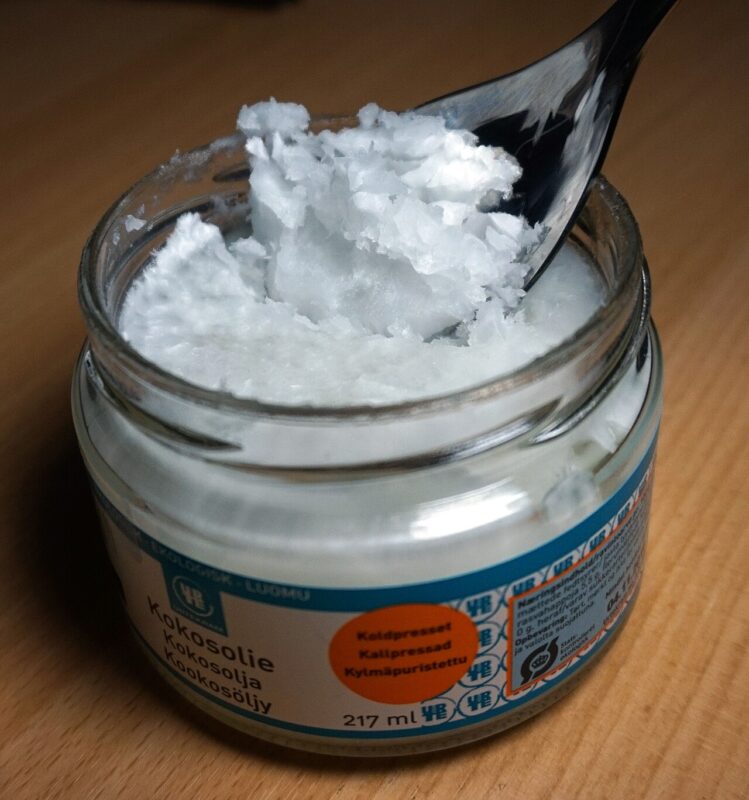
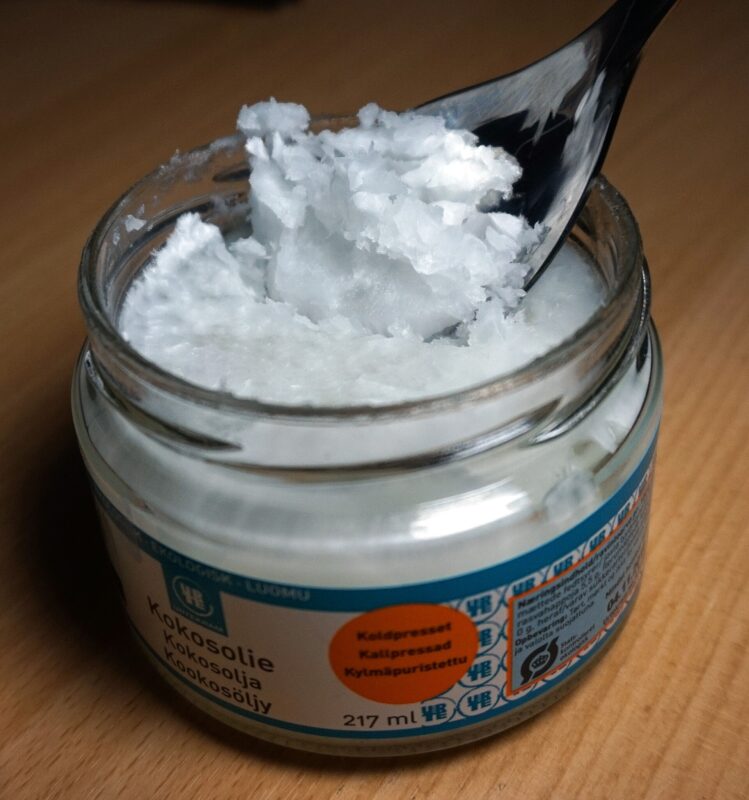
Crude coconut oil is solid at room temperature in most of the US for much of the year. Its melting point sits around 24°C to 26°C, so packing needs to allow for heating at discharge. We’ve written more on that in coconut oil melting point.
| Packing | Net load per 20ft | Best for |
|---|---|---|
| Flexitank with heating pad | 20 to 22 MT | Refiners and plants with heated discharge |
| ISO tank (heated) | About 20 MT | Buyers who need clean, fast heated unloading |
| Steel drums, 190 kg | About 15.2 MT (80 drums) | Distributors, soap makers, smaller users |
| IBC tote, 1,000 L | About 18 MT | Mid-size plants with forklift handling |
For flexitanks we fit a heating pad under the bag as standard on coconut oil going to North America. Without it, a January discharge in Houston or New Jersey can turn into a two-day job with steam lances. If you’ve never unloaded a flexitank before, our step-by-step on unloading oil from a flexitank applies to coconut oil too.

Importing Crude Coconut Oil Into the United States
The rules aren’t complicated, but they do catch first-time crude coconut oil importers USA side out. Here’s what you need in place.
FDA food facility registration and prior notice
Even crude oil that will be refined is treated as food if it’s going into the food chain. The overseas mill has to be registered with the FDA food facility registration system, and someone has to file prior notice before the vessel arrives. We give you the facility registration number with every quote. Our guide to FDA requirements for importing vegetable oil covers prior notice and FSVP in plain language.
FSVP
Under the Foreign Supplier Verification Program, the US importer of record is responsible for verifying the foreign supplier. For crude oil going to a refinery that applies a kill step, the requirements are lighter, but you still need a written file. We send our food safety certificates, a supplier questionnaire and lab results so your FSVP file is easy to build.
Tariff classification and duty
For crude coconut oil importers USA side, classification is simple. Crude coconut oil falls under HTS 1513.11. You can check the current rate on the US Harmonized Tariff Schedule. Historically the general duty on crude coconut oil has been free, but trade measures change, so always check the live schedule and ask your customs broker before you price a contract. Our coconut oil HS code guide explains the difference between 1513.11 and 1513.19.
Customs entry and documents
Your broker files the entry with US Customs and Border Protection. For every shipment we provide:
- Commercial invoice and packing list
- Bill of lading
- Certificate of origin
- Certificate of analysis from the mill
- Independent inspection report (quality and quantity)
- Fumigation or flexitank certificate where relevant
The full list, and what each one does, is in our post on documents required to import vegetable oil.
Shipping to US Ports
Most crude coconut oil importers USA buyers take delivery at one of four port groups:
| Port group | Typical transit from Southeast Asia |
|---|---|
| Los Angeles / Long Beach / Oakland | 18 to 25 days |
| Houston / New Orleans | 30 to 40 days |
| New York / New Jersey / Savannah | 30 to 38 days |
| Seattle / Tacoma | 18 to 24 days |
Transit times move with carrier schedules and transhipment hubs, so we confirm the routing with each booking. West Coast is fastest, but a lot of refining capacity sits on the Gulf, so many buyers accept the longer voyage and save on inland trucking.
How Pricing Works
For crude coconut oil importers USA buyers, pricing starts with the market. Crude coconut oil is priced off the Rotterdam and Manila coconut oil markets, and it moves with copra supply, weather in the Philippines and Indonesia, and the palm kernel oil spread. Lauric oils trade together, so when palm kernel oil runs up, coconut usually follows.
What actually goes into the number on your quote:
- The day’s market price for crude coconut oil
- FFA grade (3% max costs more than 5% max)
- Packing (drums cost more per tonne than flexitanks)
- Freight to your port
- Inspection and insurance on CIF terms
- Volume and contract length
For a deeper look at the moving parts, read coconut oil price per ton. We quote firm prices valid for a set number of days, not “indicative” numbers that change when you say yes.
Incoterms and payment
We sell FOB, CFR and CIF. The ICC Incoterms rules spell out who pays for what. Most crude coconut oil importers USA side prefer CIF to a named US port for the first few orders, then switch to FOB once they have their own freight contracts.
For payment we accept a confirmed irrevocable letter of credit at sight, or a deposit with balance against copy documents for repeat buyers. If you’re weighing the two, see letter of credit vs TT payment.
Quality Control and Inspection
Quality checks are where crude coconut oil importers USA side should push hardest. Every lot is sampled at the mill before loading and tested for FFA, moisture and impurities, colour and iodine value. We then appoint an independent surveyor such as SGS to draw and seal samples at loading. You’re welcome to nominate your own surveyor instead.
Test methods follow AOCS official methods, which is what most US refinery labs use, so the numbers on our certificate line up with what your lab will see. We keep retained samples for six months.
How to Order
- Send an enquiry. Grade, quantity, packing, port and preferred Incoterm.
- Get a firm quote. Price, spec, loading window and validity.
- Ask for a sample if you need one. We courier 500 g to 1 kg with a COA.
- Sign a contract. Spec, tolerance, inspection and payment terms in writing.
- Open the LC or pay the deposit.
- We load and ship. You get inspection results and draft documents before sailing.
- Documents released, oil discharged.
A first order for crude coconut oil importers USA buyers usually takes three to five weeks from contract to loading, plus transit.
7 Proven Tips for Crude Coconut Oil Importers USA Buyers
These come from watching what goes right and wrong on real shipments for crude coconut oil importers USA wide.
1. Write the FFA limit at discharge, not just at loading
FFA rises in transit. Agree on a loading limit and an arrival tolerance. It saves arguments later.
2. Always ask for heating on winter cargo
Coconut oil goes solid fast. A heating pad costs little compared with demurrage while you wait for the oil to melt.
3. Check the mill’s FDA registration yourself
Don’t take a number on trust. Ask for it and confirm it. Any serious supplier to crude coconut oil importers USA wide will hand it over without fuss.
4. Use an independent surveyor
The mill’s own COA is useful, but a third-party report protects you if a claim comes up.
5. Don’t chase the lowest price blindly
A quote far under the market usually means high FFA, short weight or a supplier who won’t deliver. If it looks too good, ask why.
6. Start with one container
Even big crude coconut oil importers USA side test a new supplier with a single 20ft before committing to a monthly program.
7. Plan your inland logistics early
Know who will truck the flexitank or ISO tank to your plant, and whether your tank farm can take it the day it lands.
Common Mistakes We See
- Booking flexitanks without checking that the receiving plant can heat and pump them.
- Comparing crude and RBD prices as if they were the same product.
- Leaving FSVP paperwork until the cargo is already on the water.
- Not stating the test method in the contract, then disagreeing over results.
- Ordering drums with no plan for melting oil in the drum in cold weather.
Crude vs RBD: Which One Should You Import?
If you have a refinery, crude is cheaper and gives you control over the final product. If you don’t, buy RBD. Plenty of crude coconut oil importers USA side actually buy both: crude for their own refining line and RBD to cover peaks or customers who want a specific spec. Our post on RBD coconut oil wholesale supply covers the refined grade, and virgin coconut oil wholesale USA covers the retail-grade side.
Some buyers also look at palm kernel oil as a substitute, since it’s another lauric oil. It’s a reasonable swap for some soap and oleochemical uses, less so for others. We compared the two oils’ families in coconut oil vs palm oil.
What a Typical Shipment Looks Like
It helps to see the whole thing laid out once, the way crude coconut oil importers USA side actually experience it. Here’s a real-world pattern for a 20ft flexitank going from a Southeast Asian port to Houston.
Week one, we agree the contract and the buyer opens an LC. Week two, the mill sets aside the lot and our lab runs FFA and moisture. Week three, the flexitank is fitted with a heating pad, the container is inspected for cleanliness, and the surveyor attends loading and seals the samples. The container gates in at port and sails within a few days. We send scanned documents the same week so the buyer’s broker can file prior notice and prepare the entry.
Around five weeks later the vessel lands in Houston. The broker clears the cargo, the trucker pulls the container to the plant, and the plant connects steam to the heating pad. Twelve to twenty hours later the oil is liquid and pumped into the tank. Most crude coconut oil importers USA side who’ve done it a few times can turn a flexitank in a single shift once it’s warm.
Storage After Discharge
Storage is the part many crude coconut oil importers USA side underestimate. Crude coconut oil is more stable than most crude seed oils because it’s highly saturated, but it still needs care.
- Keep storage tanks just above the melting point, around 30°C to 35°C. Don’t hold it hot for weeks; heat speeds up FFA rise.
- Use stainless steel or properly coated mild steel tanks. Bare copper or brass fittings push oxidation along.
- Drain water bottoms regularly. Water and crude coconut oil together mean rising FFA.
- Refine within a reasonable time. Crude oil isn’t meant to sit for a year.
Drum buyers should store drums upright, out of the rain, and warm them gently in a hot room or with drum heaters before decanting. Never put a naked flame under a drum.
Traceability and Sustainability Questions
More US food brands now ask where their coconut oil comes from. Coconut is mostly a smallholder crop, so full farm-level traceability is still rare. What we can provide is mill-level traceability: the mill name, location and processing records for each lot. If your customers want third-party certification, ask us about certified supply before you contract, because it’s limited and costs more.
For crude coconut oil importers USA buyers selling into personal care, there’s also growing interest in organic and fair-trade crude. Volumes are small but available on request.
Crude Coconut Oil vs Other Lauric Oils
Coconut and palm kernel oil are the two lauric oils in world trade. They behave in a similar way in soap and in oleochemicals, with high lauric and myristic acid. Coconut tends to have a slightly higher lauric content and a cleaner reputation with consumer brands. Palm kernel oil is often cheaper. Some crude coconut oil importers USA side keep both on their approved supplier list and switch based on the spread. We supply both if you’d like to compare.
Why Buyers Work With Us
We’re a working exporter, not a broker hiding behind three middlemen. You get a named contact, firm quotes and the same documents pack every time. We supply buyers across North America, Europe, the Middle East, Africa and Asia, and we sell the full range of edible oils if you want to consolidate suppliers. You can see the range on our products page and read more about us.
For crude coconut oil importers USA buyers in particular, we keep the paperwork tidy because we know US customs and FDA won’t wait for a missing certificate.
Quick Summary for Busy Buyers
If you only read one section, read this. We sell crude coconut oil with 5% max FFA as standard and 3% max on request, 0.5% max moisture and impurities, and lauric acid of 45% to 53%. We ship in heated flexitanks, ISO tanks, drums and totes to West Coast, Gulf and East Coast ports. Every lot comes with a mill COA, an independent inspection report, a certificate of origin and the mill’s FDA registration number. Minimum order is one 20ft container. Prices are firm, not indicative, and we load on the date we give you.
That’s the whole offer for crude coconut oil importers USA wide: honest specs, tidy paperwork, real dates.
For the full CNO spec sheet, grades and heated flexitank details, see our guide on choosing a crude coconut oil CNO supplier.
Frequently Asked Questions
What is the minimum order?
One 20ft container: one flexitank or about 80 drums.
Can you supply 3% FFA crude coconut oil?
Yes, subject to the season and copra quality. It carries a premium over 5% max oil.
Do you ship to inland US destinations?
We quote to US seaports. Your broker or trucker handles the inland leg, and we can suggest names if you need them.
Is your crude coconut oil food grade?
It’s produced in FDA-registered facilities and intended for refining into food-grade oil. It isn’t meant to be eaten without refining.
Can I get samples first?
Yes. We courier samples with a certificate of analysis. Most crude coconut oil importers USA buyers test a sample before the first contract.
Do you sell other oils too?
Yes: palm, soybean, sunflower, canola and coconut oils in crude and refined grades. Browse our coconut oil range or the vegetable oils we sell in the USA.
Get a Quote as Crude Coconut Oil Importers USA Buyers
Send us your grade, monthly volume, packing and discharge port. We’ll come back with a firm CIF or FOB price, our spec sheet and a loading date. Crude coconut oil importers USA wide use the same short form, so it takes you two minutes.
Email info@dthcompanyltd.com, call or WhatsApp +66 91 765 9104, or use our contact page.






One thought on “Crude Coconut Oil Importers USA: Trusted Exporter Offer and 7 Proven Tips”