

If you’re running a biodiesel plant, feedstock is most of your cost and almost all of your headaches. You need oil that arrives on time, meets spec, and comes with the sustainability papers your customers or regulators demand. We’re a crude palm oil for biodiesel supplier shipping CPO to fuel producers and blenders worldwide, by bulk vessel, ISO tank or flexitank. This page explains what we sell, the specs we work to, how pricing works, and what to watch out for.
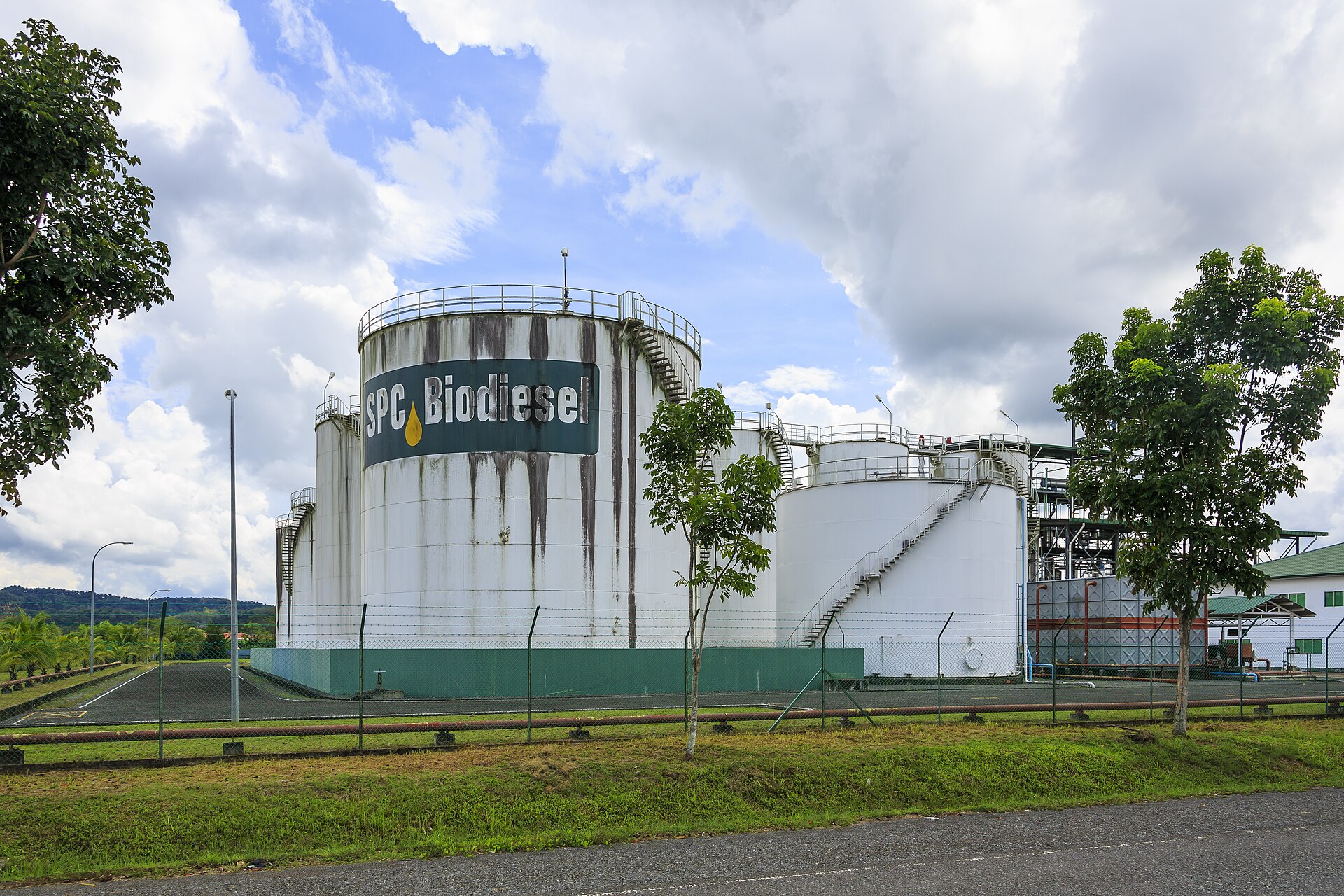
Table of Contents
What We Offer as a Crude Palm Oil for Biodiesel Supplier
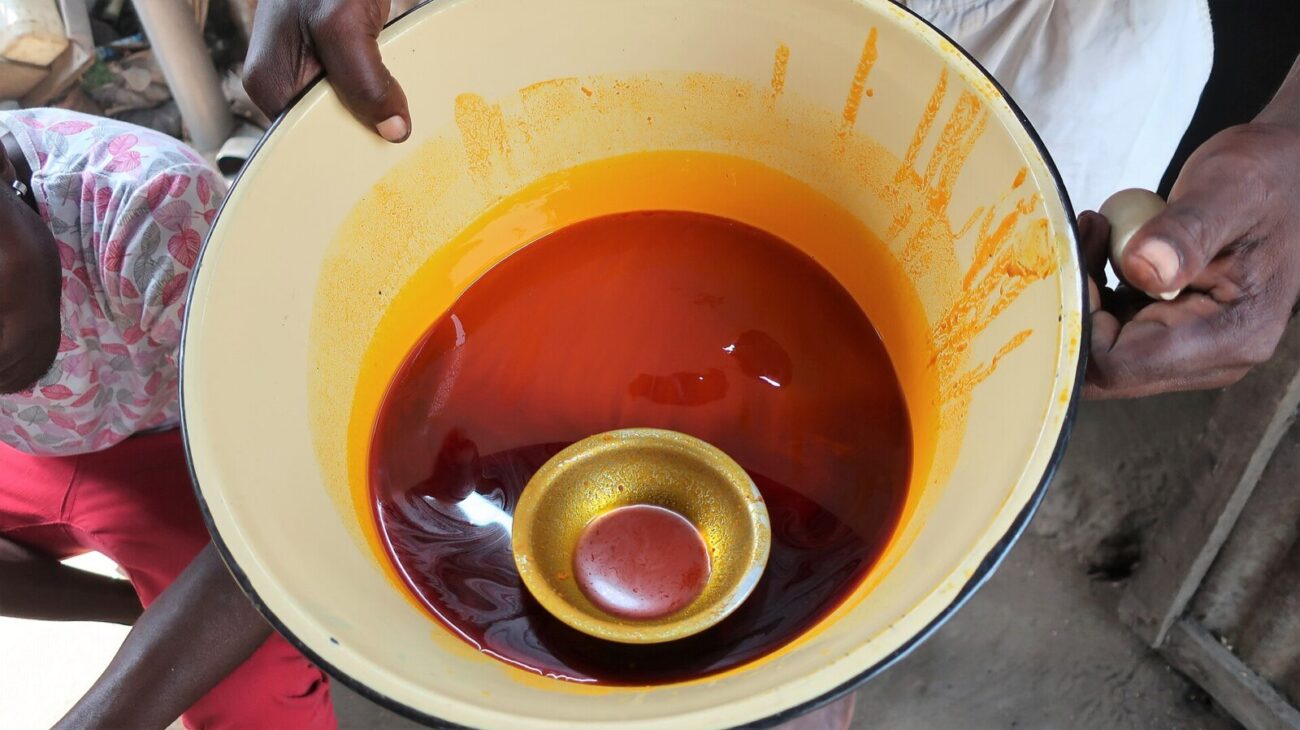
As a crude palm oil for biodiesel supplier, our main product for fuel buyers is standard crude palm oil, often called CP0 or CPO. It comes straight from the mill, before refining. For biodiesel that’s usually exactly what you want, because you don’t need to pay for bleaching and deodorizing that the fuel process doesn’t care about. See our crude palm oil CP0 page for the product itself.
Alongside CPO, we can also offer:
- Higher FFA crude palm oil at a discount, for plants with good pretreatment
- Palm fatty acid distillate (PFAD), a refining by-product some plants use with acid esterification
- Palm stearin, the harder fraction, when it’s priced below CPO
- Other crude oils such as crude soybean oil and crude canola oil for blending or when the spread makes sense
Being a crude palm oil for biodiesel supplier with several feedstocks means we can help you switch when the market shifts, instead of leaving you stuck with one oil.
Why Biodiesel Plants Use Crude Palm Oil
Ask any crude palm oil for biodiesel supplier and they’ll tell you palm is the most produced vegetable oil in the world, and it’s been a key biodiesel feedstock in Southeast Asia for years. Indonesia and Malaysia both run national blending programs, and a lot of their own CPO goes straight into fuel. For plants elsewhere, the case for palm comes down to a few things.
Yield and availability
Oil palm gives far more oil per hectare than soybean or rapeseed. Supply runs all year, with a seasonal dip early in the year, so you’re not waiting for a single harvest.
Cost
CPO is usually one of the cheapest vegetable oils traded in volume. When the gap between palm and gasoil is narrow, palm biodiesel margins look good.
Good fuel properties
Palm methyl ester has a high cetane number, often in the 60s, and good oxidation stability thanks to its saturated fat content. That means it burns cleanly and stores well.
The drawback: cold flow
The same saturated fat that gives palm biodiesel good stability also makes it cloud and gel at relatively warm temperatures. Pure palm methyl ester has a cold filter plugging point around +10 to +15°C. In tropical markets that’s fine. In cooler places, palm biodiesel is blended with fuel from softer oils or used at lower blend rates, and winter additives help. Any honest crude palm oil for biodiesel supplier should tell you this up front.
If you want a refresher on the chemistry, the biodiesel article on Wikipedia covers transesterification and feedstocks clearly.
Our Crude Palm Oil Specifications
We trade CPO on standard terms, like any established crude palm oil for biodiesel supplier. Here’s the usual contract spec. Every load is inspected and sampled at loading by an independent surveyor.
| Parameter | Standard CPO | Higher FFA CPO (biodiesel grade) |
|---|---|---|
| Free fatty acid (as palmitic) | Max 5.0% | 5.0 to 10.0% (by agreement) |
| Moisture and impurities | Max 0.5% | Max 1.0% |
| DOBI | Min 2.3 | Not guaranteed |
| Iodine value | 50 to 55 | 50 to 55 |
| Slip melting point | 33 to 39°C | 33 to 39°C |
| Carotene | 500 to 700 ppm | Varies |
| Phosphorus | Typically 10 to 30 ppm | Varies |
| Colour | Deep orange red | Orange red to brown |
There’s more detail in our crude palm oil specification guide. For biodiesel, FFA, moisture and phosphorus are the numbers that matter most to your process.
What the Specs Mean for Your Plant
Not every spec a crude palm oil for biodiesel supplier puts on a CPO contract is relevant to fuel. Here’s what to focus on.
Free fatty acid
Standard base catalysed transesterification doesn’t like FFA. Above about 0.5 to 1%, the FFA reacts with the catalyst to make soap, which wastes catalyst, lowers yield and makes separation a pain. So most plants running CPO, which has FFA of 3 to 5%, use an acid esterification pretreatment first, or physically refine the oil. If your plant has strong pretreatment, cheaper high FFA oil can pay off. If it doesn’t, ask your crude palm oil for biodiesel supplier for the lowest FFA they can offer, or consider refined palm oil.
Moisture and impurities
Water causes hydrolysis and soap. Dirt clogs filters. Both cost you yield. Keep both as low as possible.
Phosphorus
Phosphorus from gums can poison catalysts and push your finished fuel over the limit. Degumming handles it, but lower is better.
DOBI and carotene
These matter a lot for food refiners and very little for fuel. Don’t pay a premium for high DOBI if all you’re making is biodiesel. That’s one place where talking to a crude palm oil for biodiesel supplier who understands fuel buyers saves you money.
From CPO to Finished Biodiesel
Roughly speaking, one ton of oil makes about one ton of biodiesel, plus around 100 kg of crude glycerol. In practice your yield depends on FFA and on how well your plant runs. The finished fuel has to meet the standard in your market, which is usually EN 14214 in Europe and many other regions, or ASTM D6751 in the Americas.
| Property | Typical palm methyl ester | What it means |
|---|---|---|
| Cetane number | 60 to 65 | Good ignition, clean burn |
| Oxidation stability | Good | Stores well |
| Cold filter plugging point | About +10 to +15°C | Needs blending in cold climates |
| Iodine value | About 50 to 55 | Well within EN 14214 limit |
Sustainability and Certification
This is where a lot of deals are won or lost. Many biodiesel buyers can’t sell their fuel into regulated markets without proof that the feedstock meets sustainability rules. As a crude palm oil for biodiesel supplier, we offer CPO with:
- ISCC certification, which many biofuel markets accept. Details are on the ISCC website.
- RSPO certified oil, through segregated or mass balance supply chains. See RSPO.
- MSPO and ISPO national schemes. Our pages on MSPO certified palm oil and ISPO certified palm oil explain the difference.
A word of caution for European buyers. EU renewable energy rules treat palm based biofuel as high risk for indirect land use change and are phasing down how much of it counts towards targets. The deforestation regulation adds more checks on top. Before you buy palm for fuel destined for the EU, check what your customers can actually use. Our post on EUDR palm oil compliance covers the deforestation side. Outside Europe, rules vary a lot, and many markets have no such restriction.
How We Price Crude Palm Oil for Biodiesel
CPO prices are set off the Bursa Malaysia futures market, with Indonesian export levies and duties adding to the cost of Indonesian oil. In late 2026, CPO has been trading at roughly RM 4,500 to 4,800 per ton on Bursa, or something like USD 1,050 to 1,150 per ton, supported by strong crude oil prices and Indonesia’s high biodiesel blending rate. That figure is indicative only and moves daily.
What you pay as a fuel buyer depends on:
- The futures price on the day you fix
- Origin premium or discount
- FFA and quality, since higher FFA oil sells cheaper
- Certification premium for ISCC, RSPO and similar
- Shipping mode, parcel size and destination
- Payment terms
Biodiesel buyers also watch the gap between palm oil and gasoil, often called the POGO spread. When gasoil is expensive relative to palm, palm biodiesel makes money. When palm gets expensive, margins shrink. We can price on a fixed basis or on a futures linked formula, whichever suits your hedging. For general price levels, see our crude palm oil price per ton page. The Malaysian Palm Oil Board publishes the monthly supply and demand numbers that drive the market.
Shipping and Delivery
CPO is a heated cargo, and every crude palm oil for biodiesel supplier has to plan for that. It sets solid at room temperature in cooler climates, so it has to be warmed before it can be pumped. We ship it three ways.
| Mode | Typical size | Best for |
|---|---|---|
| Bulk vessel parcel | 1,000 to 10,000 MT and up | Large plants with port tanks |
| ISO tank | 20 to 24 MT | Regular mid size supply, heated discharge |
| Flexitank in 20ft | 20 to 22 MT | Smaller plants, inland delivery, trial loads |
Bulk CPO is usually traded on FOSFA contract terms, which set out quality, sampling, weighing and arbitration rules. The FOSFA site explains the standard contracts. For container shipments, read our guides on flexitank vs ISO tank and how to unload palm oil from a flexitank. Heating CPO to about 50 to 55°C before discharge is normal. Don’t overheat, since it pushes up FFA.
Documents With Every Shipment
- Commercial invoice and packing list
- Bill of lading
- Certificate of quality and quantity from an independent surveyor
- Certificate of origin
- Sustainability certificate and proof of sustainability where ordered
- Previous cargo declarations for the vessel or tanks, where required
- Insurance certificate on CIF shipments
7 Proven Tips for Choosing a Crude Palm Oil for Biodiesel Supplier
- Buy the spec your process needs, not the one food buyers pay for. If you have good pretreatment, higher FFA oil can cut your feedstock bill.
- Check certification before price. Cheap oil you can’t sell as compliant fuel is expensive oil.
- Agree on independent inspection. Name the surveyor in the contract, at both loading and discharge if you can.
- Use standard contract terms. FOSFA style terms give both sides a clear rulebook.
- Plan heating. Make sure your tanks, pipes and discharge set up can handle CPO in your coldest month.
- Think about pricing structure. A futures linked price lets you hedge. A fixed price gives certainty. Pick one on purpose.
- Work with a crude palm oil for biodiesel supplier who can offer alternatives. When palm spikes, being able to switch to soybean or canola oil keeps your plant running.
Who We Supply
We’re a crude palm oil for biodiesel supplier to fuel producers, blenders, oleochemical plants and refiners around the world, from Asia and the Middle East to Africa, Europe and the Americas. We’ve also written about supplying specific markets, such as crude palm oil suppliers for India and crude palm oil supplier Kenya. If you also refine for food, see refined palm oil vs crude palm oil. Our full palm oil range and products page show everything else we handle.
CPO Compared With Other Biodiesel Feedstocks
Fuel plants rarely run on one oil forever. Prices move, rules change, and the cheapest feedstock this quarter might be the dearest next quarter. Here’s how crude palm oil stacks up against the other oils we’re asked about.
| Feedstock | Typical FFA | Cold flow of the fuel | Oxidation stability | Relative cost |
|---|---|---|---|---|
| Crude palm oil | 3 to 5% | Poor (gels early) | Good | Low |
| PFAD | 70 to 90% | Poor | Good | Lowest |
| Crude soybean oil | Under 1% | Fair | Fair | Medium |
| Crude canola oil | Under 1.5% | Good | Fair | Medium to high |
| Used cooking oil | 2 to 15% | Varies | Varies | Low to medium |
A lot of plants in warm countries run mostly on palm. Plants in cooler places often blend palm with canola or soybean oil to bring the cold flow point down. If that’s you, a crude palm oil for biodiesel supplier who can also ship soft oils in the same program makes life a lot easier. We can, and we’re happy to help you work out the blend that hits your fuel spec at the lowest cost.
Spot, Term or Both?
How you buy matters nearly as much as what you buy. Most of our fuel customers end up with some mix of these.
Spot cargoes
You buy when you need oil, at that day’s price. It’s flexible, and it lets you jump on dips. The risk is that when supply is tight, spot oil gets hard to find and expensive.
Term contracts
You agree monthly volumes for three, six or twelve months. Prices can be fixed or linked to futures. You get supply security, and as a crude palm oil for biodiesel supplier we can plan mill allocations and shipping around you, which usually means a better premium.
A mix
Many plants cover 60 to 70% of their needs on term and buy the rest spot. That gives a steady base with room to be opportunistic. It’s what we’d suggest for most mid size plants starting out with us.
Problems at Discharge and How to Avoid Them
Most trouble with CPO happens at the receiving end, not at loading. These are the issues we see most, and the fixes.
- Oil set solid in the flexitank. In cool weather CPO won’t flow without heat. Order a flexitank with a heating pad and have steam or hot water ready on arrival.
- FFA rising in transit. Usually caused by overheating or water. Keep heating moderate, around 50 to 55°C, and only heat when you’re ready to pump.
- Weight disputes. Agree in the contract whose weights count and how shore tanks are measured. An independent surveyor at both ends settles most arguments before they start.
- Contamination from dirty tanks. Inspect and clean shore tanks before discharge. Check the vessel’s previous cargoes.
- Slow pumping. Partly solid oil and narrow pipes are a bad mix. Trace and insulate your lines.
We’ll talk you through discharge before the first shipment arrives. It’s part of the job for any crude palm oil for biodiesel supplier who wants repeat business.
What a Typical Bulk Shipment Looks Like
- You send your requirement: volume, FFA range, certification, delivery window and port.
- We offer a price, either fixed or as a premium to futures, with the contract terms.
- You confirm and open an LC, or we agree other payment terms for an established account.
- We nominate a vessel or book containers and agree the loading window.
- The independent surveyor inspects tanks, samples the oil and certifies quality and quantity at loading.
- We send the full documents, including sustainability paperwork, so you can present them to the bank and clear the cargo.
- At discharge, your surveyor samples and weighs. Any difference is handled under the contract.
For a regular buyer, we set this up once and then nominate each month. It runs quietly in the background, which is how a good crude palm oil for biodiesel supplier relationship should feel.
Why Fuel Buyers Work With Us
Biodiesel is a thin margin business. Our customers don’t have room for a cargo that arrives late, off spec, or without the right certificate. So the things they tell us they value are pretty plain. We quote fast and stick to it. Our specs on paper match the oil in the tank. Our sustainability documents are complete and correct. And when the market turns, we pick up the phone and tell them, rather than leaving them to find out from the screen.
We also don’t pretend palm is always the answer. If soybean or canola oil works out cheaper for your plant one month, we’ll say so and quote it. Being a crude palm oil for biodiesel supplier with a wide oil range means we can be straight with you. You can read a bit more about how we work on our about us page, or see how we supply CPO from Southeast Asia on our crude palm oil CP0 supplier Thailand page.
Questions to Ask Any Crude Palm Oil for Biodiesel Supplier
Before you sign anything, ask these. The answers tell you quickly who you’re dealing with.
- Which mills or bulking stations does the oil come from, and can you show the certificate chain?
- What FFA can you guarantee at loading, and what happens if it’s over?
- Who is the surveyor, and will you accept mine at discharge?
- Can you price off futures, and how do you handle fixing?
- What’s your plan if a vessel is delayed or a mill is short?
- Can you supply a second oil if palm becomes uneconomic?
A real crude palm oil for biodiesel supplier will answer all of these without fuss. If you get vague replies, pressure to pay upfront, or excuses about paperwork, walk away. There’s always another cargo. And if you’d like to put these questions to us, we’re a crude palm oil for biodiesel supplier that’s happy to go through every one of them on a call.
Frequently Asked Questions
Can crude palm oil be used directly for biodiesel?
Yes, but with pretreatment. CPO’s FFA is too high for straight base catalysed transesterification, so most plants use acid esterification first or physically refine the oil.
What’s the minimum order?
One 20ft flexitank or ISO tank for container shipments. Bulk vessel parcels usually start at around 1,000 MT.
Do you supply ISCC certified CPO?
Yes. As a crude palm oil for biodiesel supplier we offer ISCC oil subject to availability, with proof of sustainability for each shipment.
Can I get a price linked to Bursa Malaysia futures?
Yes. We can price as a premium or discount to the relevant futures month, or at a fixed price.
Is palm biodiesel allowed in the EU?
It’s restricted under EU renewable energy rules because of land use concerns, and its contribution to targets is being phased down. Check with your buyers before ordering for EU bound fuel.
What payment terms do you accept?
Usually an irrevocable LC at sight, which is normal for a crude palm oil for biodiesel supplier. For regular buyers we can discuss other terms.
Get a Quote From a Crude Palm Oil for Biodiesel Supplier
Send us your monthly volume, the FFA range your plant can handle, any certification you need, the shipping mode and your destination port. We’ll come back with a firm offer or a futures linked price, plus the full spec, usually within one working day.
Email info@dthcompanyltd.com, call or WhatsApp +66 91 765 9104, or use the form on our contact page. Whether you need one trial flexitank or a regular vessel program, we’re a crude palm oil for biodiesel supplier that keeps it simple and keeps you running.




One thought on “Crude Palm Oil for Biodiesel Supplier: Reliable CPO Specs, Pricing and 7 Proven Tips”