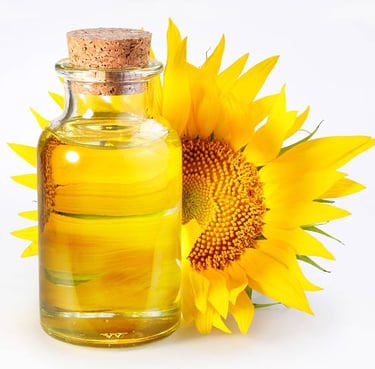
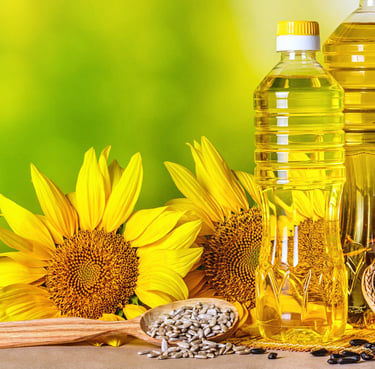
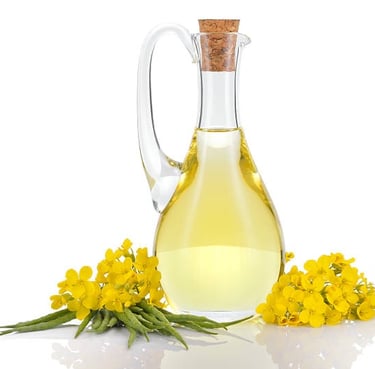
Food makers have been switching to high oleic soybean oil for a while now, and the reasons are mostly practical: it lasts longer in the fryer, keeps snacks fresh for longer on the shelf, and does it without hydrogenation or trans fat. We supply high oleic soybean oil in bulk and in packs to buyers worldwide. This page walks through the real high oleic soybean oil benefits, what the oil is, the specification we sell, how it compares with other oils, and how to buy it from us.
We’ll keep the claims honest. Some of what you read online about “healthy oils” is marketing. What follows is what we see in fryers, labs and buyers’ cost sheets.
Table of Contents
What Is High Oleic Soybean Oil?
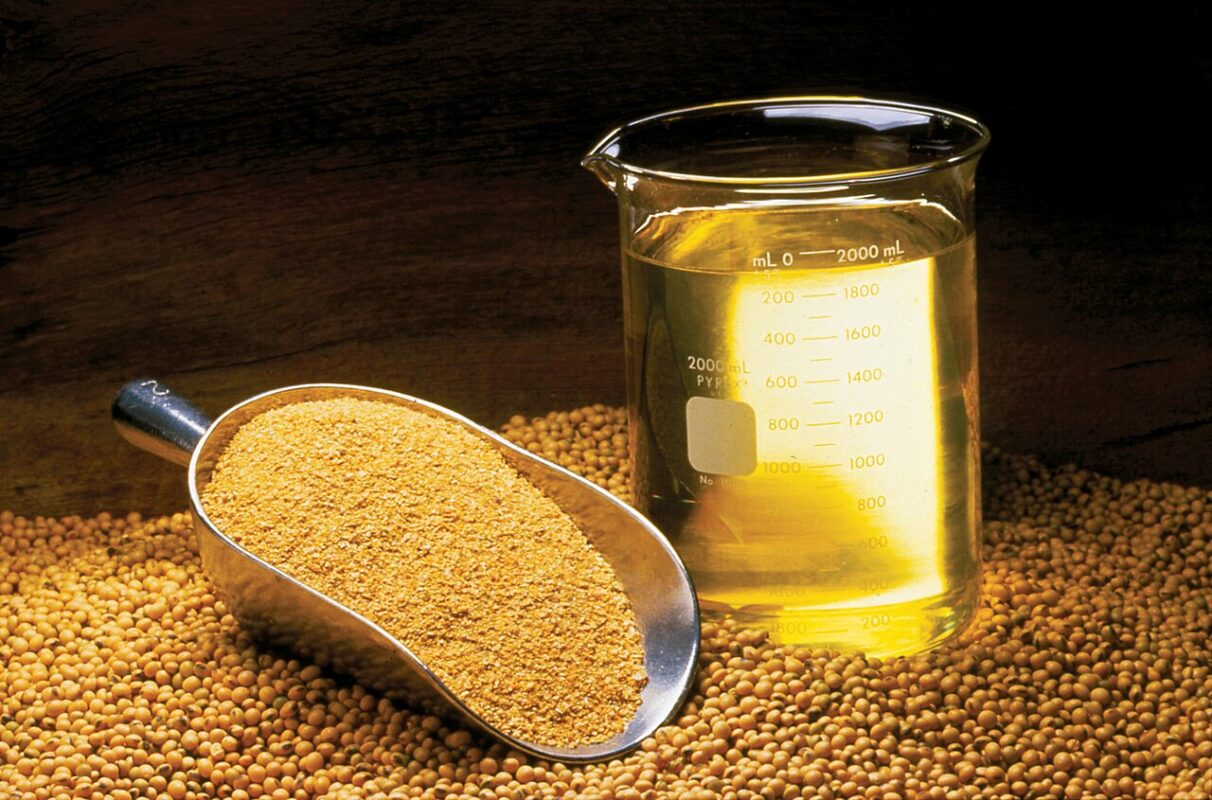
Regular soybean oil is mostly linoleic acid, a polyunsaturated fat, with a fair amount of linolenic acid too. Those fats are good for some things but they oxidize quickly, especially when heated. High oleic soybean oil comes from soybean varieties bred to produce much more oleic acid, the same monounsaturated fat that makes olive oil stable. Oleic acid typically goes from about 20% in regular soybean oil to 70% or more in high oleic oil, while linolenic acid drops to 3% or less.
Same plant, same crushing and refining, very different behaviour in a pan. That difference is where all the high oleic soybean oil benefits come from. If you want the chemistry, the oleic acid article on Wikipedia covers it. We’ve also compared the two oils side by side in high oleic soybean oil vs regular soybean oil.
Specification of the High Oleic Soybean Oil We Sell
Before getting into the high oleic soybean oil benefits, here’s what you’d actually receive. Every lot ships with a certificate of analysis.
| Parameter | Limit |
|---|---|
| Oleic acid C18:1 | 70% min (typically 72 to 78%) |
| Linoleic acid C18:2 | 5 to 15% |
| Linolenic acid C18:3 | 3.0% max |
| Saturated fatty acids total | About 12 to 16% |
| Trans fatty acids | Below 1% (no partial hydrogenation) |
| Free fatty acid (as oleic) | 0.05% max |
| Peroxide value at loading | 1.0 meq/kg max |
| Moisture and volatile matter | 0.05% max |
| Colour (Lovibond 5.25 inch cell) | 1.5 Red max |
| Smoke point | About 230 to 240 C |
| Odour and taste | Bland, neutral |
Our product page for high oleic soybean oil for sale has the short version, with packing and contact details.
High Oleic Soybean Oil Benefits for Food Businesses
Here’s where the oil earns its price. These are the high oleic soybean oil benefits our buyers report most often.
Much better frying stability
This is the biggest of all the high oleic soybean oil benefits. Oleic acid has one double bond, linoleic has two and linolenic three. Every extra double bond makes the fat more likely to react with oxygen and heat. With most of the linolenic gone and much of the linoleic replaced by oleic, the oil breaks down far more slowly in a hot fryer. In practice, kitchens and snack plants see fry life go up a lot compared with regular soybean oil, often enough to cut oil use noticeably. Our article on high oleic soybean oil for commercial frying goes into fryer management in detail.
Longer shelf life for finished food
The second of the high oleic soybean oil benefits follows from the first. The same stability carries into the bag of chips or crackers on a shop shelf. Snacks fried or sprayed with high oleic oil take longer to go stale or rancid. For brands shipping to hot countries or selling through long supply chains, that’s one of the most valuable high oleic soybean oil benefits, because it means fewer returns and less waste.
No trans fat, no hydrogenation
Before high oleic oils, the usual way to make soybean oil stable enough for heavy frying was partial hydrogenation, which creates trans fat. Health authorities have spent years pushing trans fat out of food. The WHO fact sheet on trans fat explains why. High oleic soybean oil gets its stability naturally, from its fatty acid profile, so there’s no need for hydrogenation. We explain this further in trans fat in vegetable oil.
Lower saturated fat than palm and shortening
This is one of the high oleic soybean oil benefits that matters for labels. A lot of fryers and bakeries use palm oil or hydrogenated shortening for stability. Those carry much more saturated fat. High oleic soybean oil gives you a lot of that stability with roughly a third of the saturated fat of palm oil. For labels in markets where saturated fat is watched closely, that counts. Compare it with palm in palm oil vs soybean oil.
Clean, neutral flavour
Customers taste this one of the high oleic soybean oil benefits directly. Food fried in regular soybean oil can pick up a “fishy” or painty note as the oil ages, because of linolenic acid breaking down. With linolenic at 3% or less, high oleic oil stays neutral much longer, so your fries taste like fries, not like old oil. Taste panels at our buyers’ plants often notice this before the lab does.
Less fryer cleaning and polymer build up
Oils that oxidize fast leave sticky polymer on fryer walls, belts and hoods. Stable oil leaves less. Cleaning takes less time, and equipment lasts a bit longer. It’s one of the quieter high oleic soybean oil benefits, but maintenance teams notice it.
A familiar ingredient on the label
It’s still soybean oil, and that’s one of the high oleic soybean oil benefits people overlook. For many markets, “soybean oil” is already on the ingredient list, so switching doesn’t confuse customers or force a label redesign. That’s an advantage over some specialty oils.
Health Side of High Oleic Soybean Oil Benefits
We sell oil, we’re not doctors, so we’ll stick to what’s widely accepted. Replacing saturated and trans fats with unsaturated fats is a long standing recommendation from health bodies around the world. High oleic soybean oil is mostly monounsaturated fat, low in saturated fat, and free of added trans fat, so it fits well with that advice.
In the United States, the FDA has allowed a qualified health claim for oils that contain at least 70% oleic acid, linked to replacing saturated fat in the diet. Rules differ by country, so check your own regulations before you put any health message on a label. If you’re comparing fat profiles across oils for nutrition reasons, our article on the omega 6 to omega 3 ratio in cooking oils is useful background.
The honest summary: the main high oleic soybean oil benefits are technical and commercial. The nutrition profile is a welcome extra, not a miracle.
Where Buyers Get High Oleic Soybean Oil Benefits
Here’s where we see the high oleic soybean oil benefits pay off most:
- Quick service restaurants and chains, for fries, chicken and fried snacks
- Potato chip and extruded snack plants, for frying and seasoning sprays
- Par fry and frozen food plants, for fries, nuggets and coated products
- Bakeries, for doughnut frying and as a liquid fat in some doughs
- Cracker and biscuit makers, as a spray oil that won’t go rancid quickly
- Nut roasters, for oil roasting and coating
- Margarine and spread makers, as a stable liquid oil in blends
- Salad dressing and sauce makers, where shelf life matters
If your uses are wider than frying, our guide to soybean oil uses in food manufacturing covers the rest.
For more on frying applications, read best oil for potato chips manufacturing and best oil for deep frying chicken.
High Oleic Soybean Oil Compared With Other Oils
| Oil | Oleic acid | Linolenic acid | Saturated fat | Frying stability |
|---|---|---|---|---|
| Regular soybean oil | About 20 to 25% | 5 to 10% | About 15% | Fair |
| High oleic soybean oil | 70 to 78% | Under 3% | About 12 to 16% | Very good |
| High oleic sunflower oil | 80% plus | Under 1% | About 8 to 10% | Very good |
| Canola oil | About 60% | 8 to 10% | About 7% | Good |
| Palm olein | About 40% | Under 0.5% | About 45% | Very good |
The table shows where the high oleic soybean oil benefits come from. High oleic sunflower oil is the closest rival. It has even more oleic acid and less saturated fat, but it often costs more and supply can swing with the sunflower crop in the Black Sea region. If you want to compare, see our high oleic sunflower oil page and high oleic sunflower oil for frying. Smoke points for all these oils are in our cooking oil smoke point chart.
Do the Benefits Pay for the Higher Price?
High oleic soybean oil costs more per ton than regular soybean oil. That’s normal; the beans are grown under contract and kept separate. So the question buyers ask is whether the high oleic soybean oil benefits cover that extra cost.
For heavy frying, usually yes. If the oil lasts much longer in the fryer, you buy less oil overall, throw less away, and spend less time changing it. A simple way to check is to run a trial in one or two fryers for a few weeks, measure how much oil you add and discard, and compare the cost per ton of finished product, not the price per ton of oil. Our guide on how often to change fryer oil explains how to measure it properly.
For uses where the oil isn’t heated much, like a cold dressing, regular refined soybean oil may be good enough. We’ll tell you honestly if we think you don’t need the high oleic grade.
How High Oleic Soybeans Are Grown and Processed
The oil starts on farms that grow special soybean varieties under contract. Some of these varieties came from biotech breeding and some from conventional breeding, but in both cases the plant’s own enzymes produce more oleic acid and less linoleic and linolenic acid in the seed. Farmers keep the crop apart at harvest, it’s stored in separate silos, and it’s crushed in dedicated runs so it doesn’t mix with ordinary beans.
After that, the process is the same as for any refined soybean oil: crushing, degumming, neutralizing, bleaching and deodorizing. Nothing is added to make it stable. That’s worth repeating because buyers sometimes assume “high oleic” means chemically modified oil. It doesn’t. The high oleic soybean oil benefits come from the bean, not from the refinery.
Because the beans have to be grown and handled separately, supply is planned a season ahead. That’s one reason the oil costs more, and one reason we ask big buyers to talk to us early.
High Oleic Soybean Oil Benefits for Snack Makers
Snack plants feel the high oleic soybean oil benefits in two places: the fryer and the shelf.
In a continuous fryer, fresh oil is always being added as product carries oil out, so turnover is high. Even so, regular soybean oil in a hot fryer slowly darkens and builds up free fatty acids and polar compounds. With high oleic oil those numbers rise more slowly, so the oil in the fryer stays closer to fresh oil. The chips come out lighter in colour and more even, batch after batch.
On the shelf, the big enemy is rancidity. A bag of chips with 30 to 35% oil inside is a lot of fat exposed to oxygen. Fat from high oleic oil oxidizes much more slowly, so the “best before” date can often be stretched, or the product simply tastes fresher at the end of its life. For brands exporting to hot climates, that’s often the deciding factor.
A third, less obvious gain: some snack makers were using palm olein for stability and switching to high oleic soybean oil lets them drop palm from the label. In some markets that’s a selling point on its own. If that’s your goal, our piece on palm oil free vegetable oil is worth a look.
High Oleic Soybean Oil Benefits for Restaurants and Chains
Restaurants don’t think in fatty acids. They think in how often the fryer gets changed, how the fries taste at 9 pm, and how much the oil bill is each month. That’s where the high oleic soybean oil benefits show up for them.
Kitchens that switch usually report fewer oil changes per week, more consistent colour on fried food late in the day, and less smell of old oil in the dining room. Staff spend less time draining and cleaning fryers. Across a chain of fifty or a hundred outlets, those savings add up quickly.
The key is to train staff to manage the oil properly. A stable oil abused at too high a temperature, never filtered, and never topped up, will still fail early. We’re happy to share the fryer management notes our chain customers use.
Benefits in Storage and Shipping
There’s one more group of high oleic soybean oil benefits that people forget: logistics. Because the oil oxidizes slowly, it handles long voyages and warm warehouses better than regular soybean oil. Peroxide values at arrival tend to stay low, even after weeks at sea and time in a port warehouse. For importers in tropical countries, that means less risk of oil turning before it’s sold.
It also means a longer usable life once a container is opened. A restaurant that buys a pallet of jerrycans can use the last can with more confidence. Our article on shelf life of soybean and other oils explains how storage affects every oil.
A Practical Plan for Switching
If you’re convinced the high oleic soybean oil benefits fit your business, here’s how buyers usually make the change without disrupting production:
- Get a sample and a COA, and check the oleic level yourself.
- Pick one fryer or one production line for a trial.
- Record your current oil use, discard and product quality for two weeks before switching.
- Run the high oleic oil for at least two to four weeks under the same conditions.
- Compare oil used per ton of product, number of changes, and taste panel results.
- If the numbers work, move the rest of the plant or chain over in stages.
- Lock in a supply contract so you don’t run short mid year.
Most buyers can see clear results within a month. If the numbers don’t work for you, at least you’ll know, and you’ll have real data instead of a sales pitch.
Packing and Supply
To deliver the high oleic soybean oil benefits to plants of every size, we supply the oil in several packs:
| Packing | Typical size | Best for |
|---|---|---|
| Flexitank | 20 to 22 MT per 20ft | Snack plants and large food factories |
| ISO tank | 20 to 24 MT | Repeat bulk lanes |
| IBC totes | About 900 kg | Mid sized plants |
| Jerrycans and bag in box | 18 to 20 L | Restaurants and chains |
| PET bottles | 1 to 5 L | Retail and private label |
Supply is more limited than regular soybean oil, because only part of the soybean crop is high oleic. If you’re planning a switch across a restaurant chain or a large plant, talk to us early so we can lock in volume. For the general soybean range, see our soybean oil page.
Documents and Certifications
Proof matters, because you only get the high oleic soybean oil benefits from the real grade. Every shipment comes with:
- Certificate of analysis including full fatty acid profile
- Certificate of origin
- Health certificate where required
- Halal certificate, and kosher on request (see our kosher certified oil notes)
- Independent inspection report if you nominate a surveyor
- Commercial invoice, packing list and bill of lading
See our list of documents required to import vegetable oil for country extras.
7 Proven Tips to Get the Most From High Oleic Soybean Oil
You only get the high oleic soybean oil benefits if you buy and use the oil properly. These tips come from buyers who’ve made the switch.
1. Check the oleic number on every COA
Ask for a full fatty acid profile, not just FFA and peroxide. If oleic is below 70%, it’s not true high oleic oil. Here’s what to read on a certificate of analysis.
2. Run a real trial before switching everything
Try it in a few fryers for a few weeks. Record oil top ups, discard and product quality.
3. Keep fryer temperatures right
Most frying is fine at 170 to 180 C. Going hotter wears out any oil faster, high oleic or not.
4. Filter daily and top up
Remove crumbs and add fresh oil regularly. That alone extends fry life a lot.
5. Measure polar compounds
A simple handheld tester tells you when oil really needs changing, so you don’t throw it out too early or too late.
6. Store it cool and sealed
Stable oil still deserves good storage. Keep it out of the sun and heat, and close containers properly.
7. Buy from a supplier who can prove the grade
Mixing regular soybean oil into “high oleic” oil does happen, and it’s one reason to avoid a fake vegetable oil supplier. Ask for COAs, samples and inspection. Our guide on how to detect adulterated cooking oil shows what to check.
Frequently Asked Questions
What are the main high oleic soybean oil benefits?
Longer fry life, longer shelf life for finished food, no trans fat, lower saturated fat than palm, and a neutral flavour that holds up.
Is high oleic soybean oil GMO?
Many commercial varieties come from biotech breeding, and some from conventional breeding. Ask us for the status of the lot you need.
Does high oleic soybean oil taste different?
It’s neutral, like regular refined soybean oil, but it stays neutral longer when heated. Among high oleic soybean oil benefits, buyers often rate this highly.
Can I use it for baking?
Yes, as a liquid oil, and the high oleic soybean oil benefits for shelf life apply to baked goods too. For laminated doughs you’ll still need a solid fat.
What is the minimum order?
One 20ft flexitank, or a mixed container of packed oil. See minimum order quantity.
Can you pack it under our brand?
Yes. See our private label vegetable oil service.
Order High Oleic Soybean Oil and Get the Benefits
If the high oleic soybean oil benefits make sense for your fryers or your products, send us your quantity, packing, destination port and Incoterm. We’ll reply with a written offer, a recent COA with fatty acid profile, and a sample if you’d like to trial it first. Learn more about us or see all our products.
Email info@dthcompanyltd.com, call or WhatsApp +66 91 765 9104, or use our contact page.