

If your cooking oil goes cloudy on the shelf every winter, you probably need CP8, not CP10. We’re a refined palm oil CP8 supplier shipping to packers, distributors, food factories and importers worldwide. Our CP8 palm olein stays clearer in cool weather, fries just as well as standard olein, and ships in flexitanks, drums, tins, jerrycans or bottles under your own brand.
This page explains what CP8 is, our full specification, the pack sizes we ship, how pricing works, and what to check before you sign with any refined palm oil CP8 supplier. If you just want a price, the contact details are at the end.
Table of Contents
What CP8 Palm Oil Is
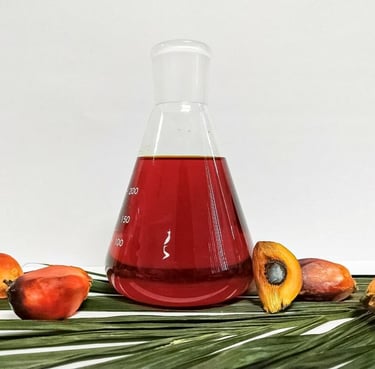
CP8 is refined, bleached and deodorised palm olein with a cloud point of 8 °C maximum. The number after “CP” is the cloud point, the temperature at which the oil starts to look hazy as it cools. Standard palm olein is CP10, which starts to cloud at about 10 °C. CP8 is fractionated a bit further, so it stays clear at slightly lower temperatures.
That doesn’t sound like much, but two degrees matter a lot in a shop with no heating in December, or a truck crossing a cold mountain road at night. That’s why a refined palm oil CP8 supplier is the first call for packers in cooler markets. Our post on RBD palm oil CP8 meaning explains the terms in more detail.
Who Buys From a Refined Palm Oil CP8 Supplier
Most of our CP8 goes to:
- Cooking oil packers selling clear bottles in markets with cool winters.
- Distributors and wholesalers who store oil in unheated warehouses.
- Food factories making sauces, dressings or chilled foods where oil sits in the fridge.
- Importers who switch from CP10 to CP8 for winter arrivals and back again in spring.
- Restaurants and caterers, through distributors, in places where kitchens get cold overnight.
Buyers in North India, Pakistan, Afghanistan, Central Asia, China, the Middle East in winter, East African highlands and parts of Europe all look for a refined palm oil CP8 supplier for exactly this reason. In hot, steady climates, CP10 is usually enough.
Why Clear Oil Sells Better
Shoppers judge cooking oil with their eyes before they ever taste it. A bottle that looks cloudy or has white flakes at the bottom gets left on the shelf, even though nothing is wrong with the oil. Shop owners send it back, distributors lose margin, and the brand takes the blame. That’s the real reason packers look for a refined palm oil CP8 supplier before winter.
It’s also why some brands use CP8 all year round in cooler regions. They’d rather pay a little more per ton than deal with returns and complaints. If your brand sells in places where nights drop below 10 °C for even part of the year, it’s worth testing CP8 against CP10 on your own shelves.
CP8 by Market
Each region has its own reasons for buying CP8. Here’s what we see most often from buyers who come to us as their refined palm oil CP8 supplier.
| Market | Why buyers choose CP8 | Common packing |
|---|---|---|
| North India and Pakistan | Cold winter nights, clear bottled oil | Flexitank, tins, PET bottles |
| Afghanistan and Central Asia | Long cold winters, long road transport | Tins, jerrycans |
| China | Cold north, retail clarity | Flexitank, ISO tank |
| Middle East in winter | Cool desert nights, Gulf and Levant retail | PET bottles, tins, jerrycans |
| East African highlands | Cool nights in Nairobi and Addis Ababa | Jerrycans, flexitank |
| Europe | Cold warehouses and shops | Flexitank, IBC |
If your market isn’t on the list, tell us where you sell and when, and we’ll tell you honestly whether CP8 is worth it.
A Seasonal Supply Plan
Most of our CP8 buyers don’t buy it all year. They switch in autumn and switch back in spring. A refined palm oil CP8 supplier who knows this can plan production with you instead of scrambling in October.
Here’s a simple plan we set up with many packers. In August, we agree the winter volume and the switch-over month. In September, the last CP10 shipments load. From October to January, CP8 loads each month, with heating pads in flexitanks for the coldest ports. In February, we load the last CP8 and book CP10 for March onward. Prices can be fixed for the season or linked to the market each month.
It sounds simple, but it saves a lot of stress. When every packer in a region wants CP8 at once, the buyers with a plan get their oil first.
Blending CP8 With Other Oils
Many packers blend palm olein with soybean, sunflower or canola oil to make a lighter, clearer oil. Blending lowers the cloud point, so some buyers find CP10 plus a soft oil works as well as straight CP8 in mild winters. In really cold places, CP8 plus a soft oil gives the best clarity of all.
We supply all of these oils, so you can buy your blend from one refined palm oil CP8 supplier and keep the paperwork simple. Our posts on palm oil vs soybean oil and sunflower oil vs palm oil explain how the oils behave together. You can also find refined sunflower and soybean oil on our site.
What We Sell
As a refined palm oil CP8 supplier, our main product is refined palm oil CP8. We also ship:
- Refined palm oil CP10 for warm months and hot climates.
- Crude palm oil CP0 for refiners.
- RBD palm olein in other grades on request.
See our full palm oil range.
CP8 Palm Oil Specification
These are the limits we work to on every lot of CP8. Each shipment comes with a certificate of analysis, and you can appoint your own surveyor at loading.
| Parameter | CP8 palm olein | CP10 palm olein (for comparison) |
|---|---|---|
| Cloud point | 8 °C max | 10 °C max |
| Iodine value (Wijs) | 58 min | 56 min |
| Free fatty acid (as palmitic) | 0.1% max | 0.1% max |
| Moisture and impurities | 0.1% max | 0.1% max |
| Peroxide value at loading | 2.0 meq/kg max | 2.0 meq/kg max |
| Colour (Lovibond 5¼ inch) | 3.0 red max | 3.0 red max |
| Slip melting point | 22 °C max | 24 °C max |
| Smoke point | About 230 °C | About 230 °C |
| Odour and taste | Neutral, bland | Neutral, bland |
The higher iodine value tells you CP8 carries a little more unsaturated fat, which is what keeps it liquid at lower temperatures. The fatty acid profile follows the palm olein range in the Codex Standard for Named Vegetable Oils. We test to AOCS official methods.
For more on the differences, read CP8 vs CP10 palm oil and our refined palm oil specifications CP8 guide.
When to Buy CP8 and When CP10 Is Enough
Many buyers switch grades through the year. Here’s the pattern we see most often.
| Shipment month | Arrives roughly | Grade most buyers choose |
|---|---|---|
| March to August | April to September | CP10 |
| September | October | CP10 or CP8, depending on storage |
| October to January | November to February | CP8 |
| February | March | CP8, then back to CP10 next order |
And here’s how the choice usually falls by use:
| Use | Better grade | Why |
|---|---|---|
| Deep frying in hot climates | CP10 | Same frying performance, lower cost |
| Retail bottles in cool climates | CP8 | Stays clear on the shelf |
| Food factories with heated tanks | CP10 | Heating removes the cloud point issue |
| Sauces and dressings kept chilled | CP8 | Less clouding in the fridge |
| Bakery and snack production | Either | Depends on storage temperature |
| Blending with soybean or sunflower oil | CP10 | The blend lowers cloud point anyway |
A good refined palm oil CP8 supplier will tell you honestly when CP10 will do. CP8 costs a bit more, and there’s no point paying for it if your oil never sees the cold.
Packing Options
As a refined palm oil CP8 supplier, we fit the packing to how you sell the oil:
| Packing | Net per unit | Per 20 ft container |
|---|---|---|
| Flexitank | About 20 to 22 MT | 1 flexitank |
| ISO tank | About 20 to 23 MT | Tank is the container |
| Steel drums | About 180 to 190 kg | About 80 drums |
| Tins | 16 L or 18 L | On request |
| Jerrycans | 18 L, 20 L or 25 L | On request |
| PET bottles | 1 L to 5 L | On request |
Bottles can go out under your own brand, with labels in your language. See private label palm oil supplier. Our post on refined palm oil packaging options compares the formats, and how to unload palm oil from flexitank covers bulk discharge.
Even CP8 can go partly solid in a flexitank in real cold, so we fit heating pads on winter shipments to cold ports.
Uses of CP8 Palm Oil
CP8 does everything CP10 does, with better clarity in cool weather. Buyers use it for:
- Bottled cooking oil for households.
- Deep frying in restaurants, street food and catering.
- Snack and instant noodle frying.
- Blending with soybean, sunflower or canola oil.
- Sauces, mayonnaise style products and dressings.
Our post on CP8 palm oil uses goes into each of these.
8 Proven Tips for Choosing a Refined Palm Oil CP8 Supplier
1. Check cloud point and iodine value on the COA
The whole point of CP8 is the cloud point. A real refined palm oil CP8 supplier will show 8 °C or lower on every lot, with iodine value of 58 or more. CP10 relabelled as CP8 is a common trick.
2. Run a simple cold test
Put a sample bottle in a fridge at around 8 to 10 °C overnight and compare it with CP10. You’ll see the difference. Here’s how to request edible oil samples.
3. Ask for COAs from several lots
One perfect COA tells you little. Ask the refined palm oil CP8 supplier for results from the last few shipments. Our guide to the certificate of analysis for edible oil shows how to read them.
4. Verify the company
Ask for registration, address and a named contact, then check them yourself. See how to spot a fake vegetable oil supplier.
5. Use independent inspection
A surveyor at loading samples and seals the oil. See pre-shipment inspection for edible oil.
6. Use a letter of credit for the first deal
It protects both sides. Be careful with anyone demanding full payment by wire first. Read letter of credit vs TT payment.
7. Plan winter orders early
Demand for CP8 jumps in autumn. A refined palm oil CP8 supplier can’t make extra overnight, so book winter volume six to eight weeks ahead.
8. Ask about halal and sustainability
Halal certificates are standard for most markets. If your buyers ask for certified sustainable palm, ask about it before you sign. Our RSPO certified sustainable palm oil guide explains the options, and halal certified palm oil supplier covers halal paperwork.
What Moves the CP8 Price
CP8 follows world palm oil prices, which mostly track Malaysian futures, Indonesian export policy and the gap between palm and soybean oil. The Malaysian Palm Oil Board publishes production and export data many traders follow. On top of the base price, CP8 carries a small premium over CP10 because it needs more fractionation and gives less yield.
Your landed price also depends on packing, freight, insurance and import duty. Our post on CP8 palm oil price per ton breaks this down, and palm oil wholesale price factors explains the wider market.
We quote firm CIF or FOB prices with a validity period. Send us your details and we’ll give you today’s number.
Shipping and Documents
We ship from Thailand to Asia, the Middle East, Africa, Europe and the Americas. Most buyers take CIF to their nearest port. See CIF vs FOB vegetable oil.
Each shipment comes with a commercial invoice, packing list, bill of lading, certificate of analysis, certificate of origin, halal certificate and health certificate where needed. Refined palm olein falls under HS 1511.90. See our palm oil HS code guide, and documents required to import vegetable oil for country rules.
How CP8 Is Made
CP8 starts as crude palm oil, which is refined, bleached and deodorised into RBD palm oil. That RBD oil is then cooled slowly so the harder fats crystallise, and the liquid part is filtered off. That liquid is palm olein. For CP8, the process is pushed a little further, or run twice, so more of the harder fat is removed. The result is an olein with a higher iodine value and a lower cloud point.
Because more of the oil ends up as stearin, the yield of CP8 is lower than CP10, which is why it costs a bit more. A refined palm oil CP8 supplier with good fractionation control can hit 8 °C reliably without wasting too much oil. If you want the full process, our guide to the palm oil fractionation process walks through each step, and palm stearin vs palm olein explains where the solid fraction goes.
What to Send for a Fast Quote
Send a refined palm oil CP8 supplier these details and you’ll get a proper quote much faster:
- Grade: CP8, CP10, or both for comparison.
- Quantity: one container, a trial, or a monthly or seasonal volume.
- Packing: flexitank, ISO tank, drums, tins, jerrycans or bottles.
- Destination port, and CIF or FOB.
- Arrival month, so we can plan heating pads for cold ports.
- Certificates needed, such as halal.
- Payment terms.
If you’re comparing offers, send the same list to every refined palm oil CP8 supplier you’re talking to, so the prices line up.
How an Order Works
- You send grade, quantity, packing, port and shipment month.
- We quote CIF or FOB with the full specification.
- We send a sample and recent COAs.
- We agree the contract with specs, loading date and payment terms.
- You open a letter of credit or pay the agreed deposit.
- We pack and load, with heating pads for winter bulk shipments.
- We send documents and stay in touch until the oil lands.
Our minimum order is one 20 ft container. See minimum order quantity for bulk cooking oil.
Quality Checks on Arrival
Test every shipment when it lands, even from a refined palm oil CP8 supplier you know well. Draw joint samples at discharge, seal them, and test cloud point, FFA, peroxide value and moisture. Compare the results with the loading COA.
Cloud point shouldn’t change during the voyage. If it’s higher on arrival, the oil may not be CP8 at all, or it may have been mixed with something else in a dirty tank. FFA and peroxide value can rise a little on a long, hot voyage, which is normal. A big jump is not. Any serious refined palm oil CP8 supplier will accept a claim backed by properly sealed joint samples.
Common Mistakes With CP8
- Ordering too late. By November, everyone wants CP8. Book in August or September.
- No cloud point in the contract. If it isn’t written down, you can’t claim against it.
- Cold floors. Stock left on bare concrete can cloud even in a “warm” warehouse. Raise it off the floor and keep it away from outside walls.
- Paying for CP8 when CP10 would do. In hot climates or heated factories, CP10 saves money with no downside.
- Choosing the cheapest refined palm oil CP8 supplier without checks. Relabelled CP10 is the most common problem we hear about.
Storage and Handling
Store CP8 cool, dry and out of direct sun. Keep tins and bottles off cold floors in winter, because stock on bare concrete can drop below the cloud point even when the warehouse feels fine. Keep bulk tanks clean and dry, and heat gently if the oil clouds. Never overheat palm olein, as it damages the oil. Our guide on refined palm oil storage and handling has more.
Why Buyers Choose Us as Their Refined Palm Oil CP8 Supplier
We’re a Thailand-based exporter with ISO 22000, HACCP, GMP and halal certification. As a refined palm oil CP8 supplier, we keep the cloud point honest, put every number in the contract, and send documents that match your LC. We’re also happy to tell you when CP10 will do the job and save you money.
Most buyers start with one container, run their own cold test and shelf check, and then move to seasonal orders. That’s the approach we’d recommend with any new supplier.
FAQs About Buying From a Refined Palm Oil CP8 Supplier
What’s the difference between CP8 and CP10?
CP8 has a cloud point of 8 °C max, CP10 has 10 °C max. CP8 stays clear at slightly lower temperatures.
Is CP8 better for frying?
Frying performance is about the same. The difference is clarity in cool weather.
When should I switch to CP8?
Most buyers switch for oil arriving between November and February in markets with cool winters.
What is the minimum order?
One 20 ft container.
Can you pack CP8 under my brand?
Yes, in PET bottles, tins and jerrycans with your label.
Do you supply halal certificates?
Yes, for every lot.
Contact a Refined Palm Oil CP8 Supplier Today
If you need a refined palm oil CP8 supplier for your winter orders or all year round, send us your quantity, packing, port and shipment month. We’ll reply with a firm price, our full specification and recent COAs. Email info@dthcompanyltd.com, call or WhatsApp +66 91 765 9104, or use our contact page.





One thought on “Refined Palm Oil CP8 Supplier: 8 Proven Tips for Smart Buyers”