

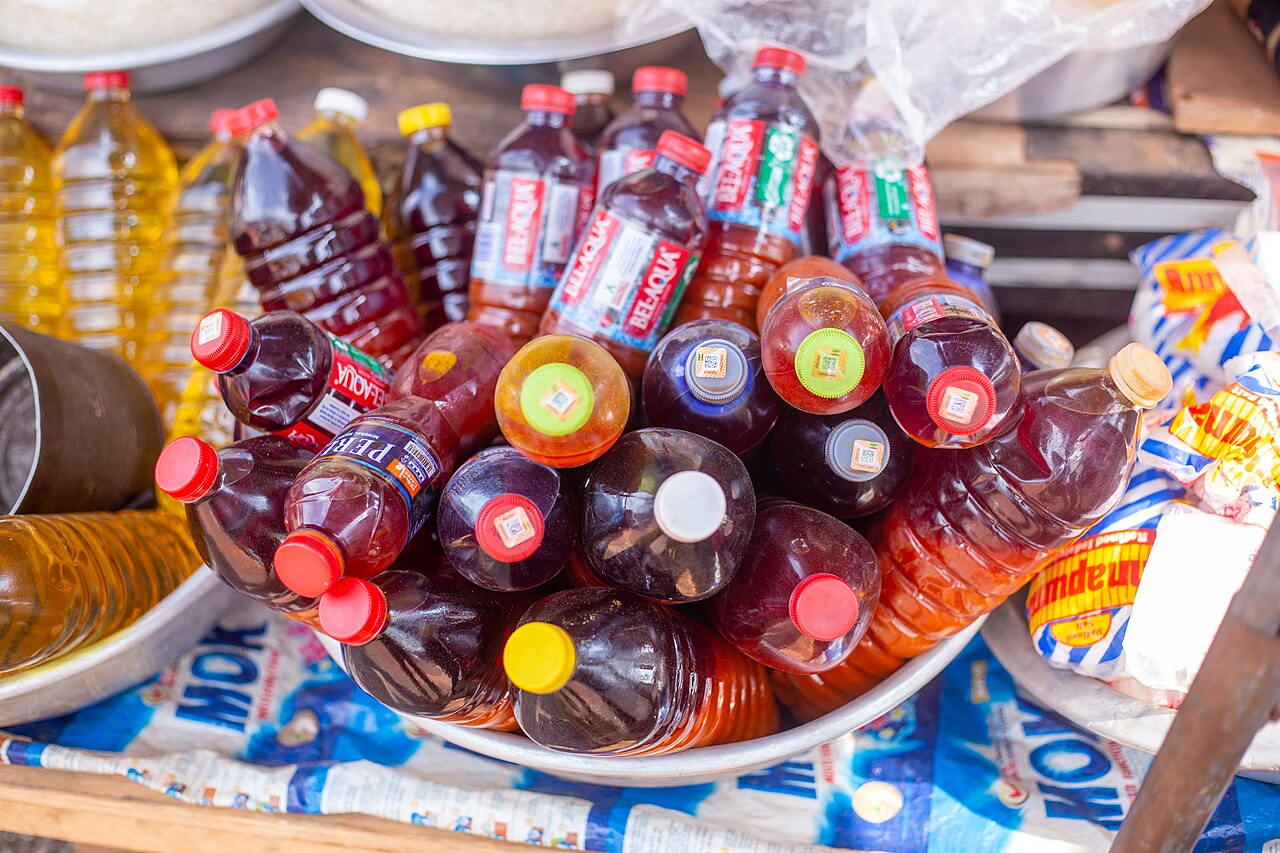
Palm oil saturated fat content is the number most people ask about first, usually with a worried look. Yes, palm oil is higher in saturated fat than most liquid vegetable oils. No, it isn’t anywhere near as high as coconut oil or butter. And for food makers, that saturated fat is a big part of why palm oil is so useful: it fries well, it gives bakery fats their structure, and it does all that without hydrogenation or trans fats.
We make and export crude palm oil, refined palm oil, palm olein and palm stearin to food factories, restaurant groups, distributors and importers worldwide. This guide lays out palm oil saturated fat content with real numbers, compares it with other fats, explains how fractions differ, and covers what it means for labels and health. You’ll find our palm products and their specifications near the end.

Table of Contents
The Short Answer
Palm oil is roughly 50% saturated fat, 40% monounsaturated fat and 10% polyunsaturated fat. Most of the saturated part is palmitic acid, with a little stearic and myristic acid.
That makes palm oil saturated fat content about:
- Five times higher than canola oil.
- About three to four times higher than sunflower, soybean or olive oil.
- Lower than butter, which is around 63 to 68% saturated.
- Much lower than coconut and palm kernel oil, which are over 80% saturated.
Palm olein, the liquid fraction most people buy as cooking oil, is a bit lower again, at about 44 to 46%.
Palm Oil Fatty Acid Profile
Here’s a typical breakdown for palm oil, as percent of total fatty acids.
| Fatty acid | Type | Typical share |
|---|---|---|
| Lauric (C12:0) | Saturated | Under 0.5% |
| Myristic (C14:0) | Saturated | 0.5 to 2% |
| Palmitic (C16:0) | Saturated | 39 to 47% |
| Stearic (C18:0) | Saturated | 3.5 to 6% |
| Arachidic (C20:0) | Saturated | Under 1% |
| Oleic (C18:1) | Monounsaturated | 36 to 44% |
| Linoleic (C18:2) | Polyunsaturated | 9 to 12% |
| Linolenic (C18:3) | Polyunsaturated | Under 0.5% |
Add up the saturated rows and you get palm oil saturated fat content of about 48 to 52%. The international Codex standard for named vegetable oils sets the official ranges, and our post on the Codex standard for named vegetable oils explains how buyers use it. For more on the whole oil, see refined palm oil composition.
How Fractions Change the Numbers
Palm oil is often split into a liquid part and a solid part by fractionation. The liquid part is palm olein. The solid part is palm stearin. Each has a different palm oil saturated fat content.
| Product | Saturated fat (approx.) | Monounsaturated | Polyunsaturated | Typical use |
|---|---|---|---|---|
| Palm oil (whole) | 48 to 52% | 37 to 41% | 9 to 11% | Bakery fats, soap, margarine |
| Palm olein CP10 | 44 to 46% | 41 to 44% | 11 to 13% | Frying, cooking oil |
| Palm olein CP8 | 42 to 44% | 42 to 45% | 12 to 14% | Cooking oil for cooler climates |
| Super olein | 37 to 40% | 45 to 47% | 13 to 15% | Clear retail oil, blends |
| Palm stearin | 55 to 75% | 20 to 35% | 5 to 9% | Shortening, margarine, soap |
| Palm kernel oil | About 82% | About 15% | About 2% | Confectionery, soap, cosmetics |
So if you’re comparing labels, check which palm product you’re looking at. Many people quote 50% for “palm oil” when the product in the bottle is actually olein at around 45%. Our guides on palm stearin vs palm olein and CP8 vs CP10 palm oil explain the fractions.
Palm Oil Saturated Fat Content Compared With Other Fats
| Fat or oil | Saturated fat (approx.) |
|---|---|
| Coconut oil | 87 to 90% |
| Palm kernel oil | About 82% |
| Butter | 63 to 68% |
| Palm stearin | 55 to 75% |
| Beef tallow | About 50% |
| Palm oil | 48 to 52% |
| Palm olein | 42 to 46% |
| Lard | 39 to 41% |
| Cottonseed oil | About 26% |
| Peanut oil | About 17% |
| Soybean oil | About 15% |
| Olive oil | 13 to 17% |
| Corn oil | 13 to 15% |
| Sunflower oil | 10 to 12% |
| Canola oil | 7 to 8% |
Palm sits right in the middle of the table: well above the seed oils, below the tropical lauric oils and dairy fat. For a side by side with other cooking oils, see sunflower oil vs palm oil, palm oil vs soybean oil and coconut oil vs palm oil.
Per Spoon and Per 100 Grams
Percentages are useful for buyers. Shoppers think in spoons. Here’s how palm oil saturated fat content looks per serving.
| Amount | Total fat | Saturated fat (palm oil) | Saturated fat (palm olein) |
|---|---|---|---|
| 1 teaspoon (4.5 g) | 4.5 g | About 2.2 g | About 2.0 g |
| 1 tablespoon (13.6 g) | 13.6 g | About 6.7 g | About 6.1 g |
| 100 g | 100 g | About 49 to 50 g | About 44 to 46 g |
Calories don’t depend on palm oil saturated fat content. Every oil gives about 884 kcal per 100 g, or roughly 120 kcal per tablespoon, so palm isn’t any more fattening than other oils. It’s the type of fat that differs.
Why Palm Is Mostly Palmitic Acid
Most of palm oil saturated fat content is palmitic acid, a 16 carbon saturated fat. It’s actually the most common saturated fat in the human body and in many foods, including meat, dairy and cocoa butter. It takes its name from the palm, where it was first found in large amounts.
Stearic acid, the 18 carbon saturated fat in cocoa butter and beef fat, is generally considered to have a neutral effect on blood cholesterol. Palmitic acid tends to raise LDL cholesterol more than unsaturated fats do. That’s the main reason health bodies suggest limiting saturated fat overall, including from palm.
The Triglyceride Structure Point
There’s a detail that often gets left out of the palm oil saturated fat content debate. Fats come as triglycerides, three fatty acids on a glycerol backbone. Where each fatty acid sits on that backbone affects how the body absorbs it.
In palm oil, the middle position of most triglycerides is taken by an unsaturated fatty acid, usually oleic acid. The saturated palmitic acid sits mostly on the outer positions. In lard and some dairy fat, palmitic acid sits more in the middle. Some researchers argue this makes palm’s saturated fat behave a little differently in the body. The evidence is still debated, and it doesn’t change the basic advice on total saturated fat, but it’s a fair point to know.
What Health Guidance Says
The World Health Organization’s healthy diet advice suggests keeping saturated fat under 10% of total energy intake and swapping it for unsaturated fats where possible. National dietary guidelines in many countries say much the same.
We’re oil makers, not doctors, so we’ll put it plainly. Palm oil saturated fat content is moderate to high, so it’s sensible not to make palm your only fat. Mixing in liquid oils like sunflower, soybean or canola balances the diet. On the other hand, palm oil contains no trans fat, carries natural vitamin E as tocotrienols, and in red palm oil, a lot of beta-carotene. More on that in palm oil vitamin E and tocotrienol content. For general background, there’s a good overview of saturated fat here.
Why Saturated Fat Is Useful in Food Making
For food factories, palm oil saturated fat content isn’t a flaw. It’s often the reason they buy it.
- Frying stability: saturated and monounsaturated fats resist breakdown at frying heat. Palm olein lasts much longer in a fryer than high linoleic seed oils.
- Solid at room temperature without hydrogenation: palm gives margarine, shortening and bakery fats their body naturally.
- No trans fats: before palm took over, many bakery fats were partly hydrogenated soybean oil, full of trans fats. Palm replaced much of that.
- Long shelf life: snacks fried in palm olein stay fresh longer.
- Texture: palm fats give the crumb of biscuits, the flake of pastry and the snap of some coatings.
Our posts on trans fat in vegetable oil and refined palm oil applications in food industry cover this in depth.
Lowering Saturated Fat in Your Product
If your customers or regulators want a lower palm oil saturated fat content in your product, you’ve got options without giving up palm completely:
- Use palm olein or super olein instead of whole palm oil for frying.
- Blend palm olein with sunflower, soybean or canola oil. A 50/50 blend with sunflower oil cuts saturated fat to under 30%.
- Switch to high oleic sunflower oil for frying where budget allows.
- In bakery, use interesterified blends that hold structure with less saturated fat.
We can supply blends to your target fatty acid profile. For a palm-free route, see palm oil free vegetable oil.
Labelling Saturated Fat
Most countries require saturated fat on the nutrition panel, so palm oil saturated fat content goes straight onto your label. The figure should come from the actual product you sell, not a generic database. Palm oil saturated fat content varies a few points between crude, refined, olein and stearin, and even between lots.
For a cooking oil bottle labelled per 100 ml, remember to convert using density. Palm olein weighs about 0.91 kg per litre at 20 to 25 C, so 100 ml holds about 91 g of oil and roughly 40 to 42 g of saturated fat. Private label customers can ask us for typical values per grade to build the label. See our private label palm oil supplier page.
How Saturated Fat Is Tested
Labs measure palm oil saturated fat content by gas chromatography of fatty acid methyl esters, using methods like ISO 12966 or AOCS Ce 1h. The report lists each fatty acid, and the lab adds up the saturated ones.
Two quick checks on any certificate:
- Iodine value: the lower it is, the more saturated the oil. Palm oil runs about 50 to 55, olein about 56 to 60, stearin 34 to 48. See iodine value of vegetable oils.
- Slip melting point and cloud point: higher numbers usually mean more saturated fat.
If the numbers don’t fit together, ask questions. Our certificate of analysis guide shows what to look for.
Red Palm Oil vs Refined Palm Oil
Crude or red palm oil and refined palm oil have the same fatty acid profile, so palm oil saturated fat content is the same in both. Refining removes colour, smell, free fatty acids and some of the vitamins, but it doesn’t change the fat balance. What does change is the minor components. Red palm oil keeps its beta-carotene and more tocotrienols. Refined oil loses most of the carotene but gains a neutral taste and longer shelf life. Our article on refined palm oil vs crude palm oil compares them.
Process Contaminants
One more quality topic sits next to palm oil saturated fat content in most buyer questions: 3-MCPD and glycidyl esters. These form during high temperature refining of many oils, and palm oil has historically shown higher levels. Good refiners control them closely, and regulators in many markets set limits, especially for infant food. We cover it in 3-MCPD in palm oil.
Does Cooking Change the Saturated Fat?
People sometimes ask whether frying or heating changes palm oil saturated fat content. It doesn’t, not in any way that matters. Heat breaks down some of the unsaturated fats through oxidation, but it doesn’t turn unsaturated fat into saturated fat. What does change is how much oil the food soaks up. Food fried at too low a temperature absorbs more oil, so it ends up carrying more fat of every kind.
So the practical advice is the same for any frying oil. Fry at the right heat, usually 170 to 180 C, drain food well, and change the oil on time. Our guide on the best oil for deep frying chicken covers fryer habits that cut oil uptake.
Palm Oil Saturated Fat Content in Everyday Foods
Palm oil turns up in a long list of foods, often under names like “vegetable oil”, “vegetable fat” or “palm fat”. Here’s where it commonly shows up and what it’s doing there:
- Biscuits and crackers: palm fat gives a crisp, short texture.
- Instant noodles: the noodles are often pre-fried in palm olein.
- Margarine and spreads: palm and palm stearin give body without hydrogenation.
- Chocolate spreads and fillings: palm fats keep them smooth and stable.
- Ice cream and non-dairy creamers: palm kernel and palm fats give creaminess.
- Snacks and crisps: frying oil, often palm olein.
- Bread and pastries: shortening based on palm.
In each case, the saturated fat you read on the label depends on how much palm is in the recipe, not just on palm oil saturated fat content itself. A biscuit that’s 20% fat, half of it palm, carries far less saturated fat per serving than the raw oil numbers suggest.
Myths About Palm Oil and Saturated Fat
A few claims we hear often:
- “Palm oil is pure saturated fat.” It isn’t. About half of palm oil is unsaturated, mostly oleic acid, the same fat that dominates olive oil.
- “Palm oil is worse than butter.” On saturated fat, butter is higher. Butter also contains cholesterol, which plant oils don’t.
- “Palm oil and palm kernel oil are the same.” They’re very different. Palm kernel oil is far more saturated.
- “Red palm oil has less saturated fat than refined.” The fat profile is the same. Red palm oil just keeps more carotene and vitamin E.
- “Palm olein is low in saturated fat.” It’s lower than palm oil, but still much higher than seed oils.
Clearing these up helps shoppers and buyers talk sensibly about palm oil saturated fat content instead of arguing past each other.
What Restaurants Should Know
For a restaurant or fast food chain, palm oil saturated fat content is a trade-off. Palm olein gives long fryer life, crisp food and a low cost per kilo fried, but some customers and health-focused brands want lower saturated fat on the menu.
The common solutions we see:
- Keep palm olein for the fryer, where it saves the most money, and use sunflower or canola oil for sauteing and dressings.
- Run a blend of palm olein and sunflower oil in the fryer, which cuts saturated fat while keeping much of the fryer life.
- Move to high oleic sunflower oil if your brand is built on a health message and the budget allows.
Any of these works. The right choice depends on your menu, your volumes and what your customers care about.
How Buyers in Different Regions See It
In South and Southeast Asia, much of Africa and parts of the Middle East, palm olein is the everyday cooking oil, and palm oil saturated fat content is rarely a buying issue. Price, clarity in the bottle and frying performance matter more. In Europe and North America, saturated fat and sustainability are both front of mind, and many brands use palm only where they truly need its solid fat.
We sell into all of these markets, so we’re used to adjusting grade and blend to local expectations. If you’re launching a product in a new region, tell us who your buyers are and we’ll suggest the palm product, blend or alternative that suits them. If price is your main driver, our guide on palm oil wholesale price factors explains what moves the market.
Our Palm Products for Sale
We supply palm products with consistent, documented fatty acid profiles to buyers worldwide. Every lot is made under ISO 22000, HACCP and GMP, halal certified, and ships with a certificate of analysis that includes the fatty acid profile on request.
- Refined palm olein CP10: about 44 to 46% saturated, for frying and cooking.
- Refined palm olein CP8: slightly lower saturated fat, clearer in cool weather.
- RBD palm oil: about 50% saturated, for bakery fats, margarine and soap.
- Crude palm oil: for refiners and industrial use.
- RBD palm stearin: on request.
Specifications
| Parameter | Palm olein CP10 | Palm olein CP8 | RBD palm oil |
|---|---|---|---|
| Saturated fat (typical) | 44 to 46% | 42 to 44% | 48 to 52% |
| Palmitic acid (C16:0) | 38 to 42% | 36 to 40% | 39 to 47% |
| Oleic acid (C18:1) | 40 to 44% | 42 to 45% | 36 to 44% |
| Free fatty acid (as palmitic) | 0.1% max | 0.1% max | 0.1% max |
| Moisture and impurities | 0.1% max | 0.1% max | 0.1% max |
| Iodine value (Wijs) | 56 min | 58 min | 50 to 55 |
| Cloud point | 10 C max | 8 C max | Not applicable |
| Slip melting point | 24 C max | 22 C max | 33 to 39 C |
| Peroxide value at loading | 2.0 meq/kg max | 2.0 meq/kg max | 2.0 meq/kg max |
| Colour (Lovibond 5.25 inch) | 3.0 red max | 3.0 red max | 3.0 red max |
Packing
- PET bottles of 1 L, 2 L, 3 L and 5 L.
- Jerrycans and tins of 16 L to 20 L.
- Drums of 190 kg.
- Flexitanks of about 20 to 22 tons and ISO tanks. See how to unload palm oil from flexitank.
- Private label on any retail pack.
A Quick Summary for Busy Buyers
If you only remember a few lines from this guide, make it these. Whole palm oil is about half saturated fat. Palm olein, the cooking oil grade, is a few points lower. Palm stearin and palm kernel oil are much higher. Seed oils like sunflower, soybean and canola are far lower.
That saturated fat is what makes palm stable in the fryer and solid in bakery fats without hydrogenation. It’s also why health advice suggests not relying on palm as your only fat. When you buy, ask for the fatty acid profile on the certificate, check the iodine value, and match the grade to the job. Do that, and palm oil saturated fat content becomes a number you manage on purpose rather than a surprise on your label. If you’d like help picking a grade or blend, just send us your product details and target profile.
FAQs on Palm Oil Saturated Fat Content
How much saturated fat is in palm oil?
About 48 to 52% of the fat in palm oil is saturated, mostly palmitic acid. Palm olein is lower, at about 42 to 46%.
Is palm oil higher in saturated fat than butter?
No. Butter is about 63 to 68% saturated. Palm oil is about 50%.
Is palm oil the same as palm kernel oil for saturated fat?
No. Palm kernel oil is about 82% saturated, much higher than palm oil.
Does palm oil contain trans fat?
Not naturally. Refined palm oil contains only trace amounts formed during refining, and it’s widely used to replace trans fat in bakery and frying.
Can you supply palm olein with lower saturated fat?
Yes. We supply CP8 olein, super olein and blends with sunflower or soybean oil to your target profile, in bottles, jerrycans and bulk worldwide.
Request Prices and a Profile
If palm oil saturated fat content matters to your product, tell us the grade or blend, your target fatty acid profile, pack size, quantity and destination port. We’ll send prices with a sample certificate showing the full profile. Email info@dthcompanyltd.com, WhatsApp +66 91 765 9104, or use our contact page. You can also browse our full product range.






One thought on “Palm Oil Saturated Fat Content: 7 Honest Facts to Know”