

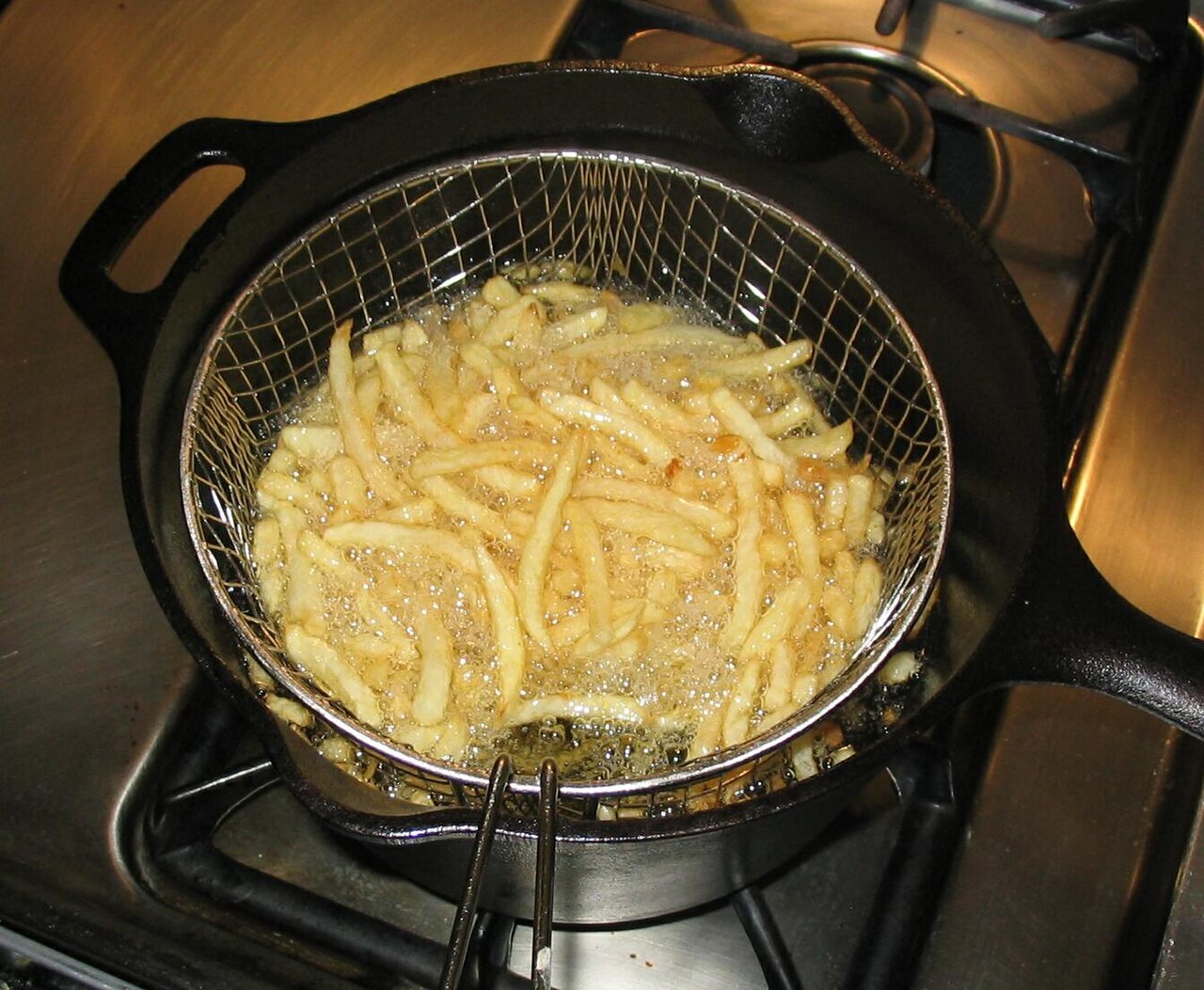
Is sunflower oil good for frying? Yes, it is. Refined sunflower oil has a high smoke point, a clean neutral taste and a light colour, and it fries food crisp without leaving a heavy coating. But there’s a catch that most articles skip. Regular sunflower oil and high oleic sunflower oil behave very differently in a fryer, and if you fry for hours every day, that difference shows up in your oil bill.
We make and export refined sunflower oil, high oleic sunflower oil and other frying oils to restaurants, fried chicken chains, snack factories, caterers and distributors around the world. This guide is the long answer to “is sunflower oil good for frying”, based on what we see in real kitchens and factories. At the end you’ll find the frying oils we sell, their specifications and pack sizes.
Table of Contents
The Short Answer
For home frying, shallow frying, stir frying and short deep frying sessions, refined sunflower oil is a very good choice. It’s affordable, it doesn’t smoke at normal frying temperatures, and food comes out light and golden.
For long, heavy commercial deep frying, regular sunflower oil works but wears out faster than some other oils. High oleic sunflower oil is the better pick there. It keeps the same clean taste but lasts much longer in the fryer.
So when someone asks us is sunflower oil good for frying, our first question back is: how many hours a day does your fryer run?
What Makes an Oil Good for Frying
Five things decide whether an oil fries well, and they are the same five we use to judge is sunflower oil good for frying:
- Smoke point: the oil has to stay below smoking at 160 to 190 C.
- Stability: how slowly it breaks down with heat, air and water from food.
- Taste: neutral oils let the food taste of itself.
- Fat type: more saturated or monounsaturated fat means more stability. More polyunsaturated fat means less.
- Price per kilo of food fried, not price per litre of oil.
Refined sunflower oil scores well on smoke point, taste and price. Its weak spot is stability, because regular sunflower oil is rich in linoleic acid, a polyunsaturated fat. High oleic sunflower oil fixes that weak spot. Keep these five points in mind and the question is sunflower oil good for frying gets much easier to answer for your own kitchen.
Sunflower Oil Smoke Point
Refined sunflower oil smokes at about 225 to 230 C. High oleic sunflower oil sits around 230 C or a little above. Unrefined, cold pressed sunflower oil is much lower, around 107 C, and should not be used for frying at all.
Most frying happens between 160 and 190 C, so refined sunflower oil has a comfortable safety margin. You can read more on what smoke point means and how it’s measured. Our cooking oil smoke point chart compares sunflower with palm, soybean, canola and corn.
One thing to know: smoke point drops as oil is used. Every frying session adds free fatty acids, and those lower the smoke point. Fresh sunflower oil at 228 C can be smoking at 190 C after a few heavy days. That’s why fryer care matters as much as the oil you start with.
What Happens to Oil in a Fryer
Deep frying is hard on any oil. Three things are going on at once.
- Oxidation: oxygen in the air reacts with the oil at high heat. This is the main enemy of polyunsaturated oils like regular sunflower.
- Hydrolysis: water from food splits fat molecules and creates free fatty acids. This lowers the smoke point and causes foaming.
- Polymerisation: broken-down molecules link together, making the oil thick, dark and sticky.
Regular sunflower oil, with 50 to 70% linoleic acid, oxidises faster than palm olein or high oleic oils. So in a busy fryer it darkens, foams and thickens sooner. It’s still safe to use within limits, but you’ll change it more often. This is the honest part of the is sunflower oil good for frying answer that suppliers often leave out.
Regular vs High Oleic Sunflower Oil for Frying
| Point | Regular refined sunflower oil | High oleic sunflower oil |
|---|---|---|
| Oleic acid | 14 to 39% | 75 to 90% |
| Linoleic acid | 48 to 74% | 2 to 17% |
| Smoke point | About 225 to 230 C | About 230 C |
| Oxidative stability | Moderate | Very high |
| Typical fryer life in a busy kitchen | Shorter | Often 2 to 3 times longer |
| Taste | Neutral | Neutral |
| Price | Lower | Higher per litre |
| Best for | Home frying, light commercial use | Restaurants, chains, snack factories |
The higher price of high oleic sunflower oil usually pays back through fewer oil changes. We explain the two grades in full in high oleic vs regular sunflower oil, and our post on high oleic sunflower oil for frying applications goes deeper into factory use.
Is Sunflower Oil Good for Frying at Home?
At home, yes, without much doubt. Is sunflower oil good for frying in a family kitchen? It is one of the best value choices you can make. Home fryers and pans run for minutes, not hours. The oil doesn’t have time to break down much before you’re done. Refined sunflower oil gives crisp chips, golden fritters, light tempura and clean fried eggs, and it costs less than most other neutral oils in many markets.
A few home tips:
- Heat oil to 170 to 180 C for most foods. A cooking thermometer helps.
- Don’t overfill the pan. Food should have room to move.
- Strain and reuse the oil two or three times for similar foods, then throw it away.
- Don’t mix used oil with fresh oil in the bottle.
- Store used oil covered, cool and dark between uses.
Is Sunflower Oil Good for Frying in Restaurants?
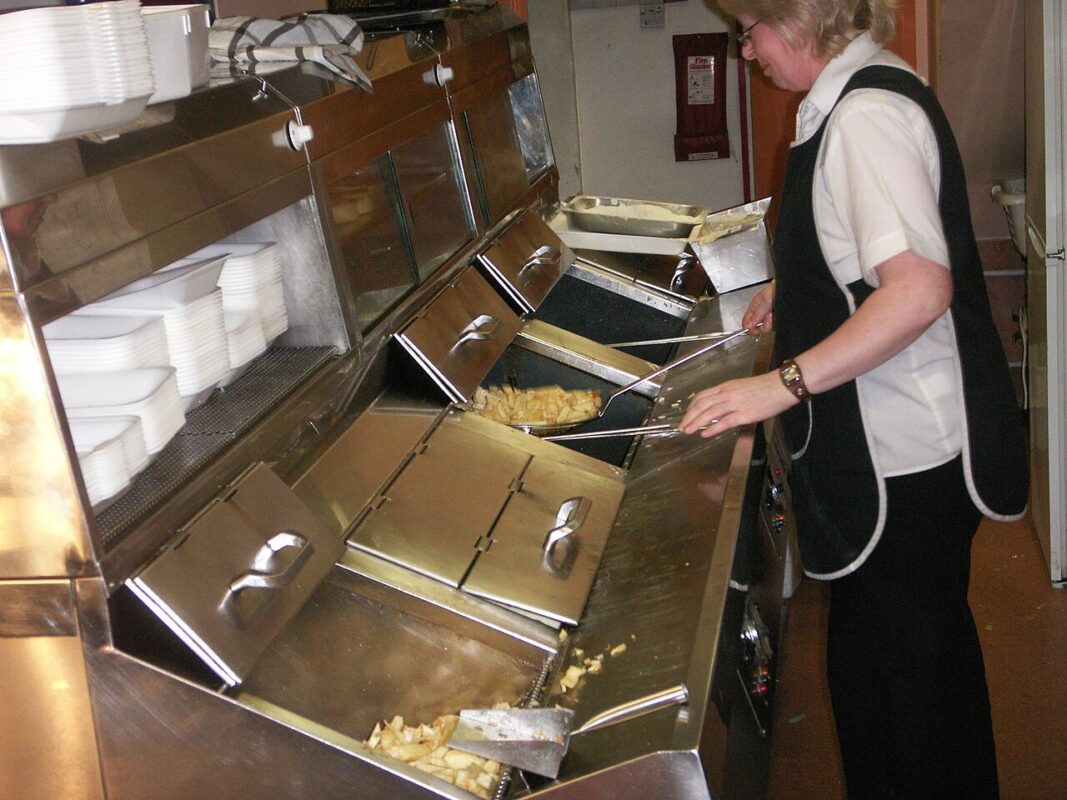
For restaurants, it depends on volume. Is sunflower oil good for frying in a small cafe that fries a few portions of chips a day? Yes, regular refined sunflower oil is fine and keeps costs low. In a fried chicken shop, a fish and chip shop or a burger chain that runs fryers ten hours a day, regular sunflower oil wears out quickly. High oleic sunflower oil or palm olein usually works out cheaper per kilo of food there.
Our guide on the best oil for deep frying chicken walks through the choices for heavy-use kitchens, and refined sunflower oil for hotels and restaurants covers food service packs and supply.
Is Sunflower Oil Good for Frying in Food Factories?
Snack makers, instant noodle plants and frozen food factories need oil that lasts for days in a continuous fryer and keeps the product shelf stable for months. Regular sunflower oil can leave fried snacks prone to going stale or rancid sooner, because the oil absorbed into the snack keeps oxidising in the bag.
That’s why most snack lines use high oleic sunflower oil, palm olein or a blend. Several European crisp brands moved to high oleic sunflower oil to cut saturated fat while keeping shelf life. Our post on the best oil for potato chips manufacturing covers this in detail.
Frying Temperatures by Food
| Food | Oil temperature | Notes |
|---|---|---|
| French fries, first fry | 150 to 160 C | Cooks the inside |
| French fries, second fry | 175 to 185 C | Crisps the outside |
| Chicken pieces | 165 to 175 C | Check core reaches 74 C |
| Fish in batter | 175 to 180 C | Short cook, crisp batter |
| Doughnuts | 175 to 185 C | Turn once |
| Tempura | 170 to 180 C | Light, quick |
| Spring rolls and samosas | 170 to 180 C | Golden, not dark |
| Potato crisps (factory) | 170 to 185 C | Depends on line |
All of these sit well under the smoke point of refined sunflower oil. If someone asks is sunflower oil good for frying at these temperatures, the answer is a clear yes.
How to Make Sunflower Frying Oil Last Longer
Whichever grade you use, good habits can double fryer life:
- Filter the oil every day, or after every busy shift.
- Top up with fresh oil regularly rather than letting the level drop.
- Turn the fryer down to about 120 C, or off, when it’s idle.
- Shake off ice and excess water from frozen food before frying.
- Never salt or season food over the fryer.
- Cover the fryer when it’s not in use to keep air and dust out.
- Keep fryers for different foods if you can, so fish doesn’t flavour chips.
- Clean the fryer properly and rinse out all detergent before refilling.
Our guide on how often to change fryer oil gives the signs it’s time to dump the oil.
When to Change the Oil
Watch for these signs:
- Dark colour, much darker than fresh oil.
- Foam that stays on the surface.
- Smoke at normal frying temperature.
- Thick, sticky feel and gummy build-up on the fryer walls.
- A sharp, rancid or fishy smell.
- Food that comes out greasy or too dark too quickly.
Many kitchens now use a total polar materials tester. Food safety rules in several countries set a limit of around 24 to 27% TPM. Above that, the oil must go. With regular sunflower oil you’ll hit that limit sooner than with high oleic oil, but either way the tester takes the guesswork out.
The Health Side of Frying With Sunflower Oil
Any frying adds fat to food, so moderation matters more than the oil you pick. Within that, refined sunflower oil has some points in its favour. It’s low in saturated fat, has almost no trans fat when properly refined, and is rich in vitamin E.
There’s one fair concern. Research has shown that oils high in polyunsaturated fat, including regular sunflower oil, form more aldehydes and other breakdown products than stable oils when they’re heated for a long time. This is one more reason heavy fryers use high oleic oils, and why changing oil on time matters. For short home frying, the effect is small.
So is sunflower oil good for frying from a health point of view? Used fresh and changed on time, yes. Used for days past its limit, no oil is a good idea. We cover related questions in side effects of sunflower oil and trans fat in vegetable oil.
How Sunflower Compares With Other Frying Oils
| Oil | Smoke point | Fryer life | Saturated fat | Taste | Relative cost |
|---|---|---|---|---|---|
| Refined sunflower oil | About 225 to 230 C | Moderate | Low | Neutral | Low to medium |
| High oleic sunflower oil | About 230 C | Long | Low | Neutral | Medium |
| Palm olein | About 230 C | Long | High | Neutral, slightly heavy | Low |
| Refined soybean oil | About 230 C | Moderate | Low to moderate | Neutral, can revert | Low |
| Canola oil | About 230 C | Moderate | Very low | Neutral | Low to medium |
| Peanut oil | About 230 C | Long | Moderate | Slightly nutty | High |
| Extra virgin olive oil | About 190 to 210 C | Moderate | Moderate | Strong | Very high |
For head to head detail, see sunflower oil vs palm oil, sunflower oil vs olive oil and sunflower oil vs vegetable oil.
Cost per Kilo of Food, Not per Litre
When buyers compare frying oils, they often look only at the price per litre or per ton. That’s the wrong number. What matters is how much oil you use to fry each kilo of food, including oil thrown away at each change.
Here’s a simple way to work it out:
- Track how many litres you buy in a month.
- Track how many kilos of food you fry in that month.
- Divide litres by kilos.
Run that test for a month with regular sunflower oil and a month with high oleic sunflower oil. Many busy kitchens find the high oleic oil costs less per kilo of food, even though the jerrycan costs more. Small kitchens often find regular sunflower is cheaper overall. Your own numbers give the real answer to is sunflower oil good for frying in your business.
Taste and Food Quality
One reason chefs keep coming back to sunflower oil is taste, and it is a big part of why we answer yes when asked is sunflower oil good for frying. It doesn’t carry flavour from one batch to the next as much as heavier oils, and it leaves fried food with a clean, light finish. Batters stay pale gold. Chips taste of potato. That’s a big plus for kitchens that fry many different foods in one fryer.
Palm olein, by contrast, can leave a slightly waxy feel when food cools. Soybean oil can develop a fishy note as it ages. Ask customers in a blind test, and sunflower-fried food usually scores well. If you want that taste with long fryer life, high oleic sunflower oil gives you both.
Is Sunflower Oil Good for Frying Different Foods?
Different foods put different stress on oil, so the answer shifts a little by menu.
- Chips and potato wedges: very easy on oil. Starch doesn’t release much water or flavour. Regular sunflower oil lasts well here.
- Chicken: tough on oil. Breading sheds crumbs, chicken releases water and fat, and seasoning gets into the fryer. High oleic sunflower oil or palm olein usually lasts longer.
- Fish: releases strong flavours that stay in the oil. Keep a separate fryer if you can. Sunflower oil gives a clean, light batter.
- Vegetables and tempura: lots of water, which speeds up hydrolysis. Fry in small batches at the right heat.
- Doughnuts and sweet pastries: sugar caramelises and darkens oil. A neutral sunflower oil keeps the taste clean.
- Samosas, spring rolls, plantain and cassava: a classic job for refined sunflower oil in many home kitchens and street food stalls.
So if you’re asking is sunflower oil good for frying chips, the answer is a confident yes. If you’re asking is sunflower oil good for frying chicken all day in a busy shop, the better answer is high oleic sunflower oil.
Is Sunflower Oil Good for Frying in Hot Climates?
Heat in the kitchen and heat in the warehouse both matter. In hot countries, unopened oil ages faster in storage, and fryers often run longer hours to feed street food trade.
Regular sunflower oil stays liquid and clear in any climate, which is a plus over palm olein in cooler places, but in very hot regions its higher linoleic content means it needs careful storage. Keep jerrycans in the shade, off the floor and away from the fryer line, and use stock in order of delivery. In the fryer, heavy users in hot climates usually get better value from high oleic sunflower oil or palm olein. Light users do just fine with regular sunflower. Our post on shelf life of sunflower oil, soybean and canola has storage advice that works anywhere.
A Real Kitchen Example
One of our restaurant customers ran two identical fryers for a month, one with regular refined sunflower oil and one with high oleic sunflower oil, frying the same chicken and chips menu. They filtered both daily and topped up as needed.
The regular sunflower oil needed a full change every three to four days. The high oleic oil went eight to ten days before hitting the same TPM reading. Even though the high oleic oil cost more per jerrycan, their monthly oil spend on that fryer dropped by close to a third. Their verdict on is sunflower oil good for frying was simple: yes, but pick the right grade for the job. Your results will depend on your menu and habits, so it’s worth running your own trial with samples.
Buying Frying Oil: What to Check
Once you have decided the answer to is sunflower oil good for frying in your business, and before you sign a supply contract for sunflower frying oil, check:
- Free fatty acid at loading: 0.10% max for refined oil.
- Peroxide value: 2.0 meq/kg max at loading.
- Fatty acid profile: confirms whether it’s regular or high oleic.
- Smoke point or flash point, if your local rules require it.
- Certificate of analysis for every lot.
- Halal, kosher or other certificates if your customers need them.
Our certificate of analysis guide lists every line worth checking.
Our Sunflower Frying Oils for Sale
We make sunflower frying oils under ISO 22000, HACCP and GMP. Every lot is halal certified, non-GMO and ships with its own certificate of analysis.
- Refined sunflower oil: for home frying, light restaurant use and general cooking.
- High oleic sunflower oil: for heavy commercial frying and snack factories.
- Refined palm olein CP10: low cost, long fryer life in warm climates.
- Refined soybean oil and RBD canola oil: other neutral frying options.
Frying oil specifications
| Parameter | Refined sunflower oil | High oleic sunflower oil |
|---|---|---|
| Free fatty acid (as oleic) | 0.10% max | 0.10% max |
| Peroxide value | 2.0 meq/kg max | 2.0 meq/kg max |
| Moisture and volatiles | 0.05% max | 0.05% max |
| Colour (Lovibond 5.25 inch) | Red 1.5 / Yellow 15 max | Red 2.0 / Yellow 20 max |
| Oleic acid | 14 to 39% | 75% min |
| Linoleic acid | 48 to 74% | 17% max |
| Smoke point | About 225 to 230 C | About 230 C |
| Cold test | 5.5 hours at 0 C | 5.5 hours at 0 C |
| Shelf life | 18 months | 24 months |
See the full test list in our refined sunflower oil specification guide.
Pack sizes for frying
- 18 L and 20 L jerrycans: the most popular pack for restaurants.
- 16 L and 18 L tins.
- 1 L, 2 L, 3 L and 5 L PET bottles for retail.
- 200 L drums, ISO tanks and flexitanks for factories.
- Private label in any of these packs. See private label vegetable oil.
FAQs: Is Sunflower Oil Good for Frying?
Is sunflower oil good for frying chips and fries?
Yes. Refined sunflower oil gives crisp, golden fries with a clean taste. For heavy restaurant use, high oleic sunflower oil lasts longer.
Is sunflower oil good for frying at high heat?
Refined sunflower oil handles up to about 225 to 230 C before smoking, well above normal frying temperatures of 160 to 190 C.
How many times can I reuse sunflower oil for frying?
At home, two to four times for similar foods if you strain it. In restaurants, it depends on volume, filtering and the oil grade. High oleic oil lasts longer.
Is cold pressed sunflower oil good for frying?
No. Unrefined sunflower oil has a low smoke point and strong flavour. Use refined sunflower oil for frying.
Is sunflower oil good for frying compared with palm oil?
Sunflower has less saturated fat and a lighter taste. Palm olein lasts longer in heavy fryers and costs less. High oleic sunflower gives long life with low saturated fat.
Do you sell frying oil in jerrycans worldwide?
Yes. We ship refined and high oleic sunflower oil in 18 L and 20 L jerrycans, tins and bulk to buyers around the world.
Order Sunflower Frying Oil
So, is sunflower oil good for frying? For most kitchens, yes, and for heavy fryers, high oleic sunflower oil is the stronger choice. Tell us how much you fry, which foods, your climate and your port, and we’ll recommend a grade and send a price for jerrycans, tins or bulk. We can ship samples for your own fryer trial. See how to request edible oil samples. Email info@dthcompanyltd.com, WhatsApp +66 91 765 9104, or use our contact page. You can also read about deep frying as a cooking method, or browse our full sunflower oil range.









3 thoughts on “Is Sunflower Oil Good for Frying? 7 Proven Expert Answers”