

Sunflower oil density sounds like a lab topic, but it touches every order we ship. It decides how many litres you get in a ton, how many kilos are in a jerrycan, how a flexitank is filled, and how a tank at the port is measured. Get it wrong and your stock count, your invoice or your customs declaration can be off by hundreds of litres a container.
We make and export refined sunflower oil, high oleic sunflower oil and other edible oils in bottles, jerrycans, tins and bulk to buyers all over the world. This guide covers sunflower oil density in plain terms: the figures, how temperature changes them, how to convert tons to litres, and how to measure density yourself. You’ll also find the specifications and pack sizes of the sunflower oils we sell.
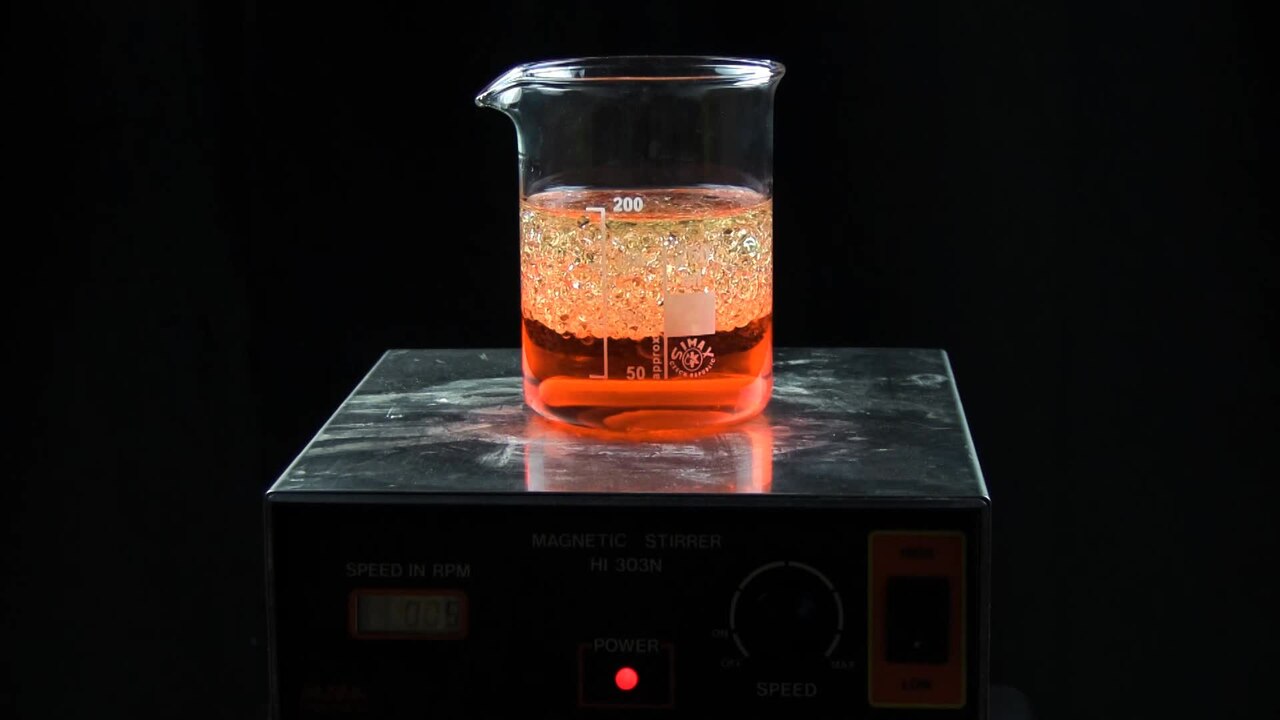
Table of Contents
The Quick Answer
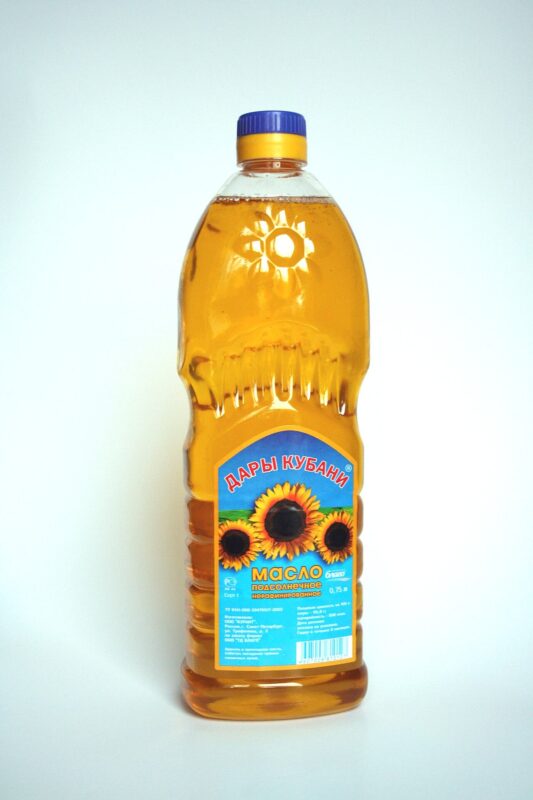
Refined sunflower oil density is about 0.919 kg per litre at 20 C. In everyday terms, one litre of sunflower oil weighs roughly 919 grams, and one metric ton is roughly 1,088 litres.
The international Codex standard sets the relative density of regular sunflower oil at 0.918 to 0.923 at 20 C, compared with water at 20 C. High oleic sunflower oil is a little lighter, at 0.909 to 0.915.
That’s the short version of sunflower oil density. The longer version matters if you buy, sell or store oil by the ton.
Density, Relative Density and Specific Gravity
These three terms get mixed up all the time, so here’s the difference.
- Density is mass per volume, for example 0.919 kg/L or 919 kg/m3. It has units.
- Relative density is the oil’s density divided by the density of water at a stated temperature. It has no units. Codex uses relative density at 20 C against water at 20 C.
- Specific gravity is an older name for relative density, still common in trade documents.
Because water at 20 C weighs about 0.998 kg/L, the true density of sunflower oil is very slightly below its relative density. For most commercial maths, the difference doesn’t matter. For tank gauging and big bulk contracts, it does. A good general explanation of density is worth a look if you want the physics.
Sunflower Oil Density at Different Temperatures
Oil expands when it warms up, so it gets lighter per litre. Sunflower oil density drops by roughly 0.00068 kg/L for every 1 C rise. Here are typical values for refined sunflower oil:
| Temperature | Density (kg/L) | Litres per metric ton |
|---|---|---|
| 10 C | 0.926 | 1,080 |
| 15 C | 0.922 | 1,085 |
| 20 C | 0.919 | 1,088 |
| 25 C | 0.916 | 1,092 |
| 30 C | 0.912 | 1,096 |
| 35 C | 0.909 | 1,100 |
| 40 C | 0.905 | 1,105 |
| 50 C | 0.899 | 1,112 |
| 60 C | 0.892 | 1,121 |
| 80 C | 0.878 | 1,139 |
| 100 C | 0.865 | 1,156 |
These are typical figures. Actual sunflower oil density varies a little by lot, grade and fatty acid profile, so for contracts always use the measured value on the certificate of analysis.
Why Temperature Matters in Trade
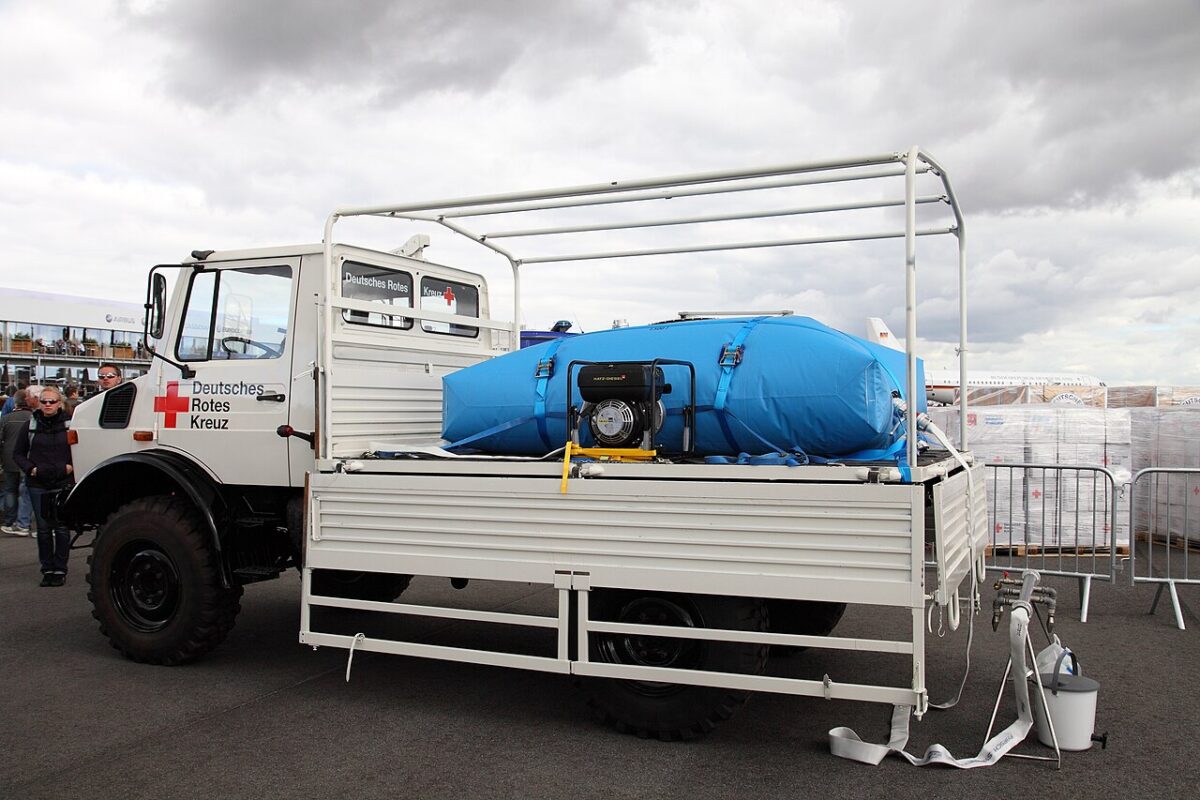
Say you load 22 metric tons of sunflower oil into a flexitank at 30 C. At that temperature you have about 24,110 litres. The container arrives in a cooler port and the oil cools to 20 C. You now have about 23,940 litres. Nothing leaked. The oil just shrank.
That’s why bulk oil is traded by weight, not volume. Weight doesn’t change with temperature. If someone sells you sunflower oil by the litre in bulk, ask at what temperature the litres were measured. A 10 C difference changes volume by around 0.75%. On a 20 ft flexitank that’s close to 180 litres.
Sunflower oil density and temperature together are the reason surveyors write both the volume and the temperature on every tank report.
Converting Tons to Litres and Back
The formula is simple:
- Litres = kilograms divided by density in kg/L.
- Kilograms = litres multiplied by density in kg/L.
Using sunflower oil density of 0.919 kg/L at 20 C:
| Quantity | Approximate equivalent |
|---|---|
| 1 metric ton | 1,088 litres |
| 1,000 litres | 919 kg |
| 1 litre | 919 g |
| 1 US gallon (3.785 L) | 3.48 kg |
| 20 ft flexitank, 22 MT | About 23,940 litres |
| 20 ft flexitank, 21 MT | About 22,850 litres |
Our full guide on how many liters in a ton of vegetable oil covers other oils too.
How Much a Bottle or Jerrycan Weighs
Retail and food service buyers often ask how much oil is in each pack by weight. Here’s the net oil weight at about 20 C, using standard sunflower oil density. The packaging adds more on top.
| Pack | Net volume | Net oil weight (approx.) |
|---|---|---|
| PET bottle | 1 L | 0.92 kg |
| PET bottle | 2 L | 1.84 kg |
| PET bottle | 3 L | 2.76 kg |
| PET bottle | 5 L | 4.60 kg |
| Jerrycan | 10 L | 9.19 kg |
| Tin | 16 L | 14.7 kg |
| Tin | 18 L | 16.5 kg |
| Jerrycan | 20 L | 18.4 kg |
| Drum | 200 L | 184 kg |
Some markets sell tins and jerrycans by net weight instead, for example “18 kg” or “16 kg”. If you switch between volume and weight labels, check your local labelling rules. Our post on PET bottle vs jerrycan cooking oil packaging covers pack choice in more detail.
How Many Bottles Fit in a Container
Sunflower oil density also decides how full a container can get before it hits the weight limit. A 20 ft container usually carries around 18 to 20 tons of packed oil, depending on carton size and road weight limits at destination.
Roughly, that means:
- 1 L bottles in cartons of 12: about 1,500 to 1,650 cartons.
- 5 L bottles in cartons of 4: about 950 to 1,050 cartons.
- 20 L jerrycans: about 950 to 1,000 units.
The exact number depends on bottle shape, pallet or floor loading and destination rules. Our guide on how much cooking oil fits in a 20ft container has the full breakdown.
Sunflower Oil Density Compared With Other Oils
Most vegetable oils sit in a narrow band. The differences come from fatty acid profile: more unsaturated fat usually means slightly higher density.
| Oil | Relative density at 20 C (approx.) |
|---|---|
| Regular sunflower oil | 0.918 to 0.923 |
| High oleic sunflower oil | 0.909 to 0.915 |
| Soybean oil | 0.919 to 0.925 |
| Canola oil | 0.914 to 0.920 |
| Corn oil | 0.917 to 0.925 |
| Olive oil | 0.910 to 0.916 |
| Palm olein (at 40 C) | 0.899 to 0.920 |
| Coconut oil (at 40 C) | 0.908 to 0.921 |
| Water | 0.998 |
Because the figures overlap, density alone can’t tell you which oil you have. But a reading well outside the sunflower range is a warning sign. Combine it with the fatty acid profile to be sure. See sunflower oil fatty acid composition for that test.
Why High Oleic Oil Is Lighter
High oleic sunflower oil has more monounsaturated oleic acid and much less polyunsaturated linoleic acid. Linoleic acid packs a little more tightly, so oils rich in it are slightly denser. That’s why high oleic sunflower oil density sits around 0.912 kg/L at 20 C, against about 0.919 for regular oil.
It sounds like a tiny difference, but on a 22 ton flexitank it’s about 170 litres. If your plant doses by volume, set your flow meters for the grade you actually receive. We explain the two grades in high oleic vs regular sunflower oil.
Why Oil Floats on Water
Sunflower oil density is about 8% lower than water, so oil floats. That’s why spilled oil sits on top of a puddle, why salad dressing separates, and why water in a storage tank collects at the bottom, under the oil.
That last point matters for buyers. Tank bottoms should be drained and checked for water before you take delivery. Moisture above about 0.05% to 0.1% speeds up spoilage and raises free fatty acids. Our certificate of analysis guide covers moisture limits.
Density vs Viscosity
People sometimes confuse the two. Density is how heavy the oil is per litre. Viscosity is how thick it is, or how slowly it flows.
Sunflower oil at 20 C has a viscosity of roughly 50 to 60 mPa.s, many times thicker than water, even though its density is lower. Viscosity drops sharply as oil warms, which is why oil is heated slightly before pumping in cold weather. For pump sizing and filling lines, you need both numbers. For weight and volume conversions, you only need sunflower oil density.
How to Measure Sunflower Oil Density
There are three common methods.
- Hydrometer: a weighted glass float read against a scale. Cheap and quick, good for warehouse checks. Accuracy depends on reading the meniscus well and correcting for temperature.
- Pycnometer: a small glass bottle of exact volume, weighed empty and full. Very accurate in a lab, but slow.
- Digital density meter: an oscillating U-tube instrument. Fast, accurate and temperature controlled. Most modern oil labs use one.
Standard methods include ISO 6883 and AOCS Cc 10a. Whatever method you use, always record the temperature. A density figure without a temperature is close to useless.
A simple warehouse check
- Bring a sample to a steady temperature, ideally 20 C.
- Fill a clean measuring cylinder to the line.
- Float a calibrated hydrometer and read the scale at eye level.
- Note the temperature.
- Correct the reading to 20 C using about 0.00068 per degree.
If the result falls far outside 0.915 to 0.925, ask for a lab test.
Density in Tank Gauging and Surveys
At ports and refineries, bulk oil is often measured by dipping the tank, reading the volume from a calibration table, then multiplying by density at the observed temperature. Surveyors take a sample, measure sunflower oil density in the lab, and apply a temperature correction to calculate weight.
Small errors add up. A density off by 0.003 on a 1,000 ton tank is about 3 tons of oil. That’s why big buyers name an independent surveyor in the contract and agree on the method in advance. Our guide on CIF vs FOB vegetable oil explains where in the shipment the final weight is fixed.
Following One Shipment From Tank to Shelf
It helps to see where density shows up in a real order. Here’s a typical bulk shipment of refined sunflower oil, step by step.
- At the refinery, the oil sits in a storage tank at around 25 to 35 C. The lab tests a sample and records the relative density at 20 C on the certificate of analysis.
- During loading into the flexitank, the plant weighs the container on a weighbridge, or meters the oil and converts volume to weight using the measured density and loading temperature.
- The bill of lading and invoice show net weight in metric tons. That’s the number you pay for.
- At the destination, the oil may have cooled or warmed by 10 C or more. The volume changes, but the weight doesn’t.
- At your bottling plant, the oil is pumped into a day tank and filled into bottles by volume. Your filling machine needs the right sunflower oil density to work out how many bottles you’ll get from each ton.
- On the shelf, the label shows litres. Behind each litre is about 919 grams of oil.
A bottler who uses 1.0 kg per litre in the stock system will think each ton makes 1,000 bottles of 1 L. In reality it makes close to 1,088. That gap looks like a gain at first, but it confuses costing, yield reports and stock checks for months. Using the correct sunflower oil density from day one avoids all of that. If you’re setting up a bottling line, our guide to the cooking oil repackaging business covers yield maths and equipment.
A Note on Units on Paperwork
Different countries and labs write the same number in different ways, and that alone causes confusion. You may see 0.919 kg/L, 919 kg/m3, 0.919 g/ml or 0.919 g/cm3. They all mean the same thing. A relative density of 0.920 has no unit at all.
Watch out for decimal commas too. A European certificate may show 0,919 where an American one shows 0.919. When you copy figures into a stock system or a customs form, make sure the comma doesn’t turn the value into 919 or 0. One buyer we know had a whole month of stock reports off because a spreadsheet read 0,919 as text. It’s a small thing, but getting sunflower oil density units right on paper saves a lot of time later.
Practical Tips for Buyers
- Buy bulk oil by metric ton, not by litre.
- If you must use litres, state the reference temperature, usually 20 C.
- Check that the certificate of analysis lists relative density at 20 C and that it fits the grade.
- Use the right density for the grade: about 0.919 for regular, about 0.912 for high oleic.
- Let oil settle and reach a stable temperature before measuring.
- Drain tank bottoms for water before transfer.
- Calibrate flow meters and filling machines for the oil you actually run.
These habits sound basic, but they protect your margin on every shipment.
Kitchen Measures: Cups and Spoons
Home cooks and recipe developers ask about sunflower oil density for a different reason. Recipes in some countries use cups and spoons, while others use grams. Here’s how the common measures convert, using about 0.92 g per millilitre:
| Measure | Volume | Weight of sunflower oil |
|---|---|---|
| 1 teaspoon | 5 ml | About 4.6 g |
| 1 tablespoon | 15 ml | About 13.8 g |
| 1/4 cup | 60 ml | About 55 g |
| 1/2 cup | 120 ml | About 110 g |
| 1 cup (US) | 240 ml | About 220 g |
If a cake recipe asks for 200 g of oil and you only have a measuring jug, pour about 218 ml. The same numbers work for most refined seed oils, since their densities are so close.
Density in Food Factories
In a factory, oil is usually dosed by weight on a load cell or by volume through a flow meter. Weight dosing is the safer choice, because it isn’t affected by temperature. Volume dosing works fine as long as the meter is set for the right sunflower oil density and the oil temperature is steady.
We’ve seen mayonnaise lines run a little thin in summer and a little thick in winter for exactly this reason. The oil was warmer and lighter in the hot months, so each litre of oil carried less mass into the recipe. A simple fix was to switch the oil dosing from litres to kilos, or to add temperature correction to the meter. If you make sauces, dressings or bakery products, check how your plant measures oil. Our post on soybean oil uses in food manufacturing covers other factory points that apply to sunflower oil too.
Density and Freight Costs
Shipping lines and truck companies charge by container, but containers and roads have weight limits. Because sunflower oil density is a little under 1 kg per litre, a container of oil in bottles usually hits its weight limit before it runs out of space. That’s why you can’t simply fill a 20 ft box to the roof with cartons.
For bulk, a 20 ft flexitank is normally filled to 21 or 22 tons. Going higher risks overloading the container and breaking road limits in the destination country. If your inland roads have stricter weight rules, we may load a little less. Ask us before you plan your trucking. More on terms and costs is in our minimum order quantity for bulk cooking oil guide.
Common Mistakes With Sunflower Oil Density
A few errors we see again and again:
- Using 1 kg per litre as a shortcut. That overstates weight by about 8% and throws off stock counts.
- Using a density from the internet for every oil and every temperature.
- Comparing a supplier’s litres measured warm with your litres measured cold.
- Forgetting that high oleic oil is lighter than regular sunflower oil.
- Reading a hydrometer without correcting for temperature.
- Mixing up relative density and density in kg/m3 on a spreadsheet, which puts the decimal point in the wrong place.
None of these are hard to fix. Agree on units and temperature at the contract stage, and ask for measured sunflower oil density on every certificate. Our guide to documents required to import vegetable oil shows where those figures appear in a shipment file.
Our Sunflower Oils for Sale
We sell regular and high oleic sunflower oils made under ISO 22000, HACCP and GMP. Each lot is halal certified, non-GMO and ships with a certificate of analysis that includes measured sunflower oil density at 20 C.
- Refined sunflower oil: winterized, for retail, food service and factories.
- High oleic sunflower oil: for frying and long shelf life.
- Crude sunflower oil: for refiners.
- Organic sunflower oil: for organic brands.
Specifications
| Parameter | Refined sunflower oil | High oleic sunflower oil |
|---|---|---|
| Relative density at 20 C | 0.918 to 0.923 | 0.909 to 0.915 |
| Free fatty acid (as oleic) | 0.10% max | 0.10% max |
| Peroxide value | 2.0 meq/kg max | 2.0 meq/kg max |
| Moisture and volatiles | 0.05% max | 0.05% max |
| Refractive index at 40 C | 1.461 to 1.468 | 1.461 to 1.471 |
| Iodine value | 118 to 141 | 78 to 90 |
| Saponification value | 188 to 194 mg KOH/g | 182 to 194 mg KOH/g |
| Colour (Lovibond 5.25 inch) | Red 1.5 / Yellow 15 max | Red 2.0 / Yellow 20 max |
| Cold test | 5.5 hours at 0 C | 5.5 hours at 0 C |
See every parameter in our refined sunflower oil specification guide.
Packing options
- PET bottles: 1 L, 2 L, 3 L, 5 L.
- Jerrycans: 10 L, 18 L, 20 L.
- Tins: 16 L and 18 L, or by net weight on request.
- Drums: 200 L.
- Bulk: flexitanks of about 21 to 22 tons in a 20 ft container, and ISO tanks.
- Private label on any pack. See private label vegetable oil.
FAQs on Sunflower Oil Density
What is the density of sunflower oil in kg/L?
About 0.919 kg/L at 20 C for refined regular sunflower oil. High oleic sunflower oil is about 0.912 kg/L.
How much does 1 litre of sunflower oil weigh?
About 919 grams at 20 C. It weighs a little less when warm and a little more when cold.
How many litres are in a ton of sunflower oil?
About 1,088 litres per metric ton at 20 C, and about 1,096 litres at 30 C.
Is sunflower oil denser than water?
No. Sunflower oil density is about 8% lower than water, so it floats.
Does sunflower oil density change with temperature?
Yes. It drops by about 0.00068 kg/L for every 1 C increase.
Do you sell sunflower oil by weight or by volume?
Bulk oil is sold by metric ton. Bottles, jerrycans and tins are sold by volume, with net weight on request. We ship worldwide.
Get a Price
Now that sunflower oil density and the ton to litre maths are clear, tell us the grade, pack, quantity and destination port you need. We’ll quote by ton or by pack, with full specifications and lead time, and we can send samples first. Email info@dthcompanyltd.com, WhatsApp +66 91 765 9104, or use our contact page. You can also browse our sunflower oil range, compare sunflower oil vs vegetable oil, or read general background on sunflower oil.








7 thoughts on “Sunflower Oil Density: 7 Essential Facts for Smart Buyers”