


Sunflower oil fatty acid composition is the single most useful number set on a sunflower oil certificate. It tells you what kind of sunflower oil you’re actually buying, how it will behave in a fryer, how long it will last on a shelf, and whether it’s been mixed with something cheaper. Yet a lot of buyers skip straight past it to price and pack size.
We produce and export regular, high oleic, organic and crude sunflower oil to importers, food factories, refiners and distributors worldwide, and every lot we ship carries a full fatty acid profile. This guide explains sunflower oil fatty acid composition in plain language: what the numbers are, what ranges are normal for each grade, and how to use them when you buy. The specs for the oils we sell are near the end.

Table of Contents
What Fatty Acids Are, in Plain Words
Every edible oil is mostly made of triglycerides. Think of a triglyceride as a small backbone (glycerol) holding three chains. Those chains are the fatty acids. Their length and the number of double bonds in each chain decide how the oil looks, tastes, cooks and keeps.
- Saturated fatty acids have no double bonds. They are stable and tend to be solid at room temperature. Palmitic (C16:0) and stearic (C18:0) are the main ones in sunflower oil.
- Monounsaturated fatty acids have one double bond. Oleic acid (C18:1), also called omega-9, is the big one.
- Polyunsaturated fatty acids have two or more double bonds. Linoleic acid (C18:2), an omega-6, dominates regular sunflower oil. Linolenic acid (C18:3), an omega-3, is almost absent.
The code “C18:2” simply means 18 carbon atoms and 2 double bonds. Once you read that code, the sunflower oil fatty acid composition table on any lab report makes sense.
Three Types of Sunflower Oil
There isn’t one sunflower oil fatty acid composition. There are three, because plant breeders developed seed types with very different oil.
- Regular (linoleic) sunflower oil: the traditional type, high in linoleic acid.
- Mid oleic sunflower oil: sometimes sold as NuSun, with a balance of oleic and linoleic.
- High oleic sunflower oil: bred to make mostly oleic acid, similar to olive oil.
All three come from the same plant species, and all are non-GMO. They were bred by conventional methods. The difference in fatty acid profile is what sets the price, the use and the shelf life.
Sunflower Oil Fatty Acid Composition by Grade
The ranges below follow the international Codex standard for named vegetable oils, which most contracts refer to. Figures are percent of total fatty acids.
| Fatty acid | Regular sunflower oil | Mid oleic sunflower oil | High oleic sunflower oil |
|---|---|---|---|
| C14:0 Myristic | ND to 0.2 | ND to 1.0 | ND to 0.1 |
| C16:0 Palmitic | 5.0 to 7.6 | 4.0 to 5.5 | 2.6 to 5.0 |
| C16:1 Palmitoleic | ND to 0.3 | ND to 0.05 | ND to 0.1 |
| C18:0 Stearic | 2.7 to 6.5 | 2.1 to 5.0 | 2.9 to 6.2 |
| C18:1 Oleic | 14.0 to 39.4 | 43.1 to 71.8 | 75.0 to 90.7 |
| C18:2 Linoleic | 48.3 to 74.0 | 18.7 to 45.3 | 2.1 to 17.0 |
| C18:3 Linolenic | ND to 0.3 | ND to 0.5 | ND to 0.3 |
| C20:0 Arachidic | 0.1 to 0.5 | 0.2 to 0.4 | 0.2 to 0.5 |
| C20:1 Eicosenoic | ND to 0.3 | 0.2 to 0.3 | 0.1 to 0.5 |
| C22:0 Behenic | 0.3 to 1.5 | 0.6 to 1.1 | 0.5 to 1.6 |
| C24:0 Lignoceric | ND to 0.5 | 0.3 to 0.4 | ND to 0.5 |
ND means not detected. You can see the full standard through the Codex Alimentarius site. Our post on the Codex standard for named vegetable oils explains how to use it in a contract.
What a Typical Lot Looks Like
Ranges are wide because seed variety, weather and growing region all shift the numbers. In practice, here’s what we usually see on a typical lot:
| Group | Regular sunflower oil | High oleic sunflower oil |
|---|---|---|
| Saturated (total) | About 10 to 12% | About 7 to 9% |
| Monounsaturated (mostly oleic) | About 20 to 35% | About 80 to 87% |
| Polyunsaturated (mostly linoleic) | About 55 to 68% | About 5 to 10% |
| Omega-3 (linolenic) | Under 0.3% | Under 0.3% |
So a typical regular sunflower oil fatty acid composition is roughly 6% palmitic, 4% stearic, 28% oleic and 61% linoleic. A typical high oleic lot is about 4% palmitic, 3% stearic, 83% oleic and 8% linoleic.
Why Weather Changes the Numbers
Here’s something many buyers don’t expect. Regular sunflower seed grown in a cool climate makes more linoleic acid. Seed grown where nights are warm during seed filling makes more oleic acid. That’s why regular sunflower oil from northern growing areas often runs 65 to 70% linoleic, while oil from warmer regions may sit closer to 55%, even from similar seed.
High oleic varieties are much less sensitive to weather. Their sunflower oil fatty acid composition stays high in oleic acid wherever they grow, which is one reason food factories like them. They get a predictable oil every season.
How the Profile Affects Frying
Double bonds are where oxygen attacks. The more double bonds in an oil, the faster it breaks down at frying heat. Linoleic acid has two double bonds, oleic acid has one, and saturated fats have none.
That’s why sunflower oil fatty acid composition matters so much in a fryer. Regular sunflower oil, with around 60% linoleic acid, oxidises faster in long deep frying. High oleic sunflower oil, with only 5 to 10% linoleic, can last two to three times longer. Both have a similar smoke point, around 225 to 230 C, but stability is a different thing from smoke point. Our article is sunflower oil good for frying goes through this in detail.
How the Profile Affects Shelf Life
The same rule applies on the shelf. More polyunsaturated fat means faster rancidity once the oil is exposed to light, heat and air. Regular sunflower oil typically carries 12 to 18 months of shelf life. High oleic sunflower oil often carries up to 24 months.
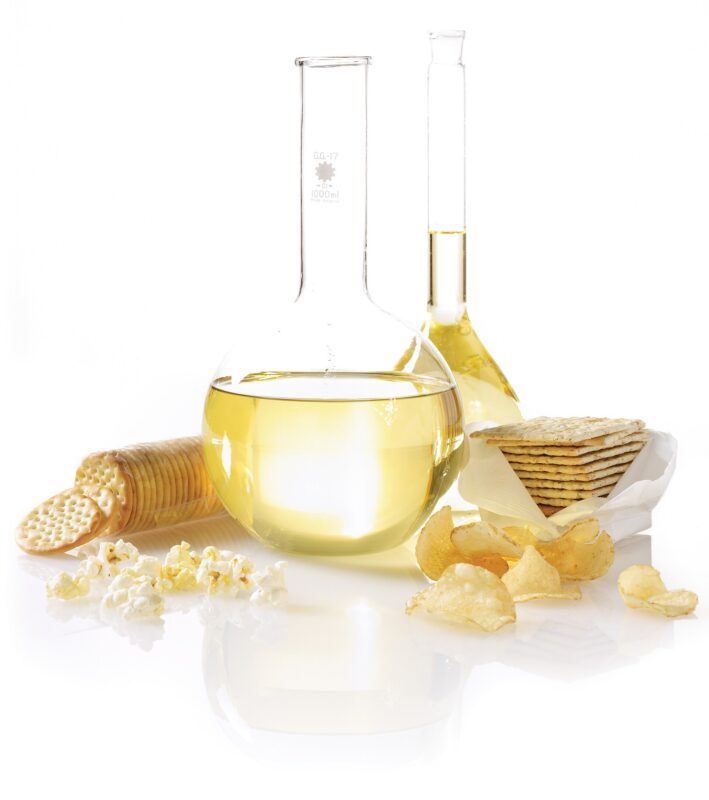
For products where the oil ends up inside the food, like crisps, crackers, biscuits and nuts, the sunflower oil fatty acid composition of the frying or baking oil decides how long the finished product stays fresh. That’s a big reason snack makers moved to high oleic oils. Our post on shelf life of sunflower oil, soybean and canola has more.
How the Profile Links to Iodine Value
Iodine value measures how unsaturated an oil is. More double bonds means a higher iodine value. Because it’s so closely tied to fatty acids, iodine value is a quick check on sunflower oil fatty acid composition.
- Regular sunflower oil: iodine value about 118 to 141.
- Mid oleic sunflower oil: about 94 to 122.
- High oleic sunflower oil: about 78 to 90.
If a supplier sells you “high oleic” oil with an iodine value of 125, something is wrong. Our post on the iodine value of vegetable oils explains the test.
Cold Behaviour and Clarity
Sunflower oil stays liquid well below 0 C, because it’s so low in saturated fat. The cloudiness people sometimes see in cold weather doesn’t come from fatty acids. It comes from natural waxes in the seed hull. Proper winterization removes them, and a cold test of 5.5 hours at 0 C proves it. See winterized sunflower oil for how that’s done.
The long-chain saturated acids in the table, behenic and lignoceric, are linked to those waxes and are slightly higher in sunflower than in most seed oils. That’s normal.
Nutrition and Health Points
From a diet point of view, sunflower oil fatty acid composition has three headlines:
- Low saturated fat, around 10 to 12% in regular oil and under 10% in high oleic.
- Regular oil is a strong source of linoleic acid, an essential omega-6 fat the body can’t make. You can read more about linoleic acid here.
- Almost no omega-3, so it doesn’t help the omega-3 side of the diet.
High oleic sunflower oil shifts the balance to monounsaturated fat, similar to olive oil, which many health-focused brands prefer. Our post on the omega-6 to omega-3 ratio in cooking oils covers the debate, and sunflower oil vs olive oil compares the two profiles side by side.
Trans Fats
Natural sunflower oil contains no trans fats. Small amounts, usually well under 1%, can form during deodorisation at high temperature. Good refiners keep deodorising conditions tight to hold trans fat low. A full sunflower oil fatty acid composition report from a good lab will list total trans isomers. Ask for it if you sell into markets with trans fat limits. More in trans fat in vegetable oil.
Minor Components That Aren’t Fatty Acids
About 1% of sunflower oil isn’t triglyceride at all. These minor parts don’t show in the fatty acid table, but they matter:
- Tocopherols (vitamin E): sunflower oil is very rich, mostly alpha tocopherol. See sunflower oil vitamin E.
- Plant sterols: mainly beta-sitosterol, with a pattern that helps identify true sunflower oil.
- Waxes: removed by winterization.
- Unsaponifiable matter: limited to 15 g/kg max in the standard.
How the Composition Is Tested
Labs measure sunflower oil fatty acid composition by gas chromatography. The oil is first turned into fatty acid methyl esters (FAMEs), which are then separated and measured in a GC column. The common methods are ISO 12966 and AOCS Ce 1h or Ce 1e.
When you get a certificate of analysis, check that:
- The lab names its method.
- All main fatty acids are listed, not just oleic and linoleic.
- The figures add up to about 100%.
- The profile fits the grade you ordered.
Our certificate of analysis guide shows the full checklist.
Using the Profile to Catch Adulteration
Sunflower oil fatty acid composition is one of the best tools to spot a fake or blended oil. A few red flags:
- Linolenic acid above 0.5%: suggests soybean or canola has been added.
- Palmitic acid well above 8%: suggests palm olein or cottonseed in the mix.
- Erucic acid present: suggests rapeseed oil.
- Oleic and linoleic numbers that don’t match any of the three sunflower types.
If you’re buying at a price that looks too good, a fatty acid test from an independent lab costs very little compared with a container of mislabelled oil. Our post on how to detect adulterated cooking oil lists more checks, and fake vegetable oil supplier covers the warning signs on the commercial side.
Which Profile Fits Which Use
| Use | Best sunflower type | Why |
|---|---|---|
| Retail bottle, everyday cooking | Regular, winterized | Low cost, neutral, clear |
| Mayonnaise and dressings | Regular, winterized | Stays liquid and clear when chilled |
| Restaurant deep frying | High oleic | Long fryer life |
| Potato crisps and snacks | High oleic or mid oleic | Shelf life of the finished snack |
| Infant formula and nutrition | High oleic | Stable, oleic-rich profile |
| Bakery | Regular or high oleic | Depends on shelf life needed |
| Cosmetics and skin care | High oleic or regular | Stability vs light skin feel |
| Canned fish | Regular | Traditional in many markets |
Does Refining Change the Profile?
A question we get from refiners and repackers a lot: does refining change sunflower oil fatty acid composition? Not in any meaningful way. Degumming, neutralising, bleaching, winterizing and deodorising remove gums, free fatty acids, colour, waxes and odour. The triglycerides themselves, and the fatty acid chains on them, come through almost unchanged.
So the profile of a crude sunflower oil is a reliable guide to the refined oil it will become. The small changes you might see are a slight drop in free fatty acids (which are removed), a tiny rise in trans isomers from deodorising, and lower tocopherols. If you refine yourself, our article on crude vs refined sunflower oil explains what to expect at each step.
Does Storage Change the Profile?
Over months in storage, the main fatty acid numbers stay about the same. What changes is oxidation. Linoleic acid slowly reacts with oxygen and forms peroxides, then aldehydes and other compounds that cause off flavours. A lab won’t usually see a big drop in linoleic acid in normal storage, but it will see a rising peroxide value and anisidine value.
This is why sunflower oil fatty acid composition and peroxide value go together on a good certificate. The profile tells you how vulnerable the oil is. The peroxide value tells you how much damage has already happened. Regular oil with 65% linoleic needs tighter storage than high oleic oil with 8% linoleic. Keep both cool, dark and sealed, and use nitrogen blanketing in bulk tanks where possible.
Sunflower Oil Fatty Acid Composition on Food Labels
In most markets, a nutrition panel shows total fat, saturated fat and sometimes monounsaturated, polyunsaturated and trans fat. All of those numbers come straight from the sunflower oil fatty acid composition of the oil you bottle.
For a 15 ml (about 14 g) serving of regular sunflower oil, a typical panel looks something like this: total fat 14 g, saturated about 1.5 g, monounsaturated about 4 g, polyunsaturated about 8.5 g, trans fat 0 g. For high oleic sunflower oil, the monounsaturated figure jumps to around 11.5 g and polyunsaturated falls to about 1 g.
If you’re a brand owner, base your label on the actual profile of the grade you buy, not a generic database value. Private label customers can ask us for typical values per grade to build their label, and we can check artwork for fat claims. See our private label vegetable oil service.
Sunflower Oil Fatty Acid Composition in Cosmetics and Soap
Outside food, the profile decides how sunflower oil behaves on skin and in soap. Linoleic-rich regular oil feels light, absorbs quickly and is popular in face oils and lotions. Its weakness is shelf life, so cosmetic makers often add vitamin E or rosemary extract.
High oleic sunflower oil feels a little richer and lasts much longer in the jar or bar, which is why many soap makers and cosmetic factories prefer it. In cold process soap, a high linoleic oil above about 15% of the recipe can lead to orange spots and rancidity over time. High oleic sunflower oil avoids that problem. When cosmetic buyers ask us for samples, the first thing we ask is which sunflower oil fatty acid composition their formula was built around.
Questions to Ask Your Supplier
When we sit down with a new buyer, these are the questions we wish every buyer asked about sunflower oil fatty acid composition before signing anything:
- Which sunflower type is this: regular, mid oleic or high oleic?
- What oleic and linoleic range can you guarantee in the contract, not just as typical values?
- Which lab runs the fatty acid test, and by which method?
- Can I see three recent certificates from different lots, so I can judge how steady the profile is?
- Will you keep a sealed retained sample from my lot for at least six months?
A good supplier answers all five without fuss. If a seller gets vague about the profile or can only show one old certificate, treat that as a warning. We’re happy to send recent certificates for any grade we sell, so you can check our sunflower oil fatty acid composition yourself before you place an order.
Comparing With Other Oils
| Oil | Saturated | Oleic | Linoleic | Linolenic |
|---|---|---|---|---|
| Regular sunflower | 10 to 12% | 14 to 39% | 48 to 74% | Under 0.3% |
| High oleic sunflower | 7 to 9% | 75 to 91% | 2 to 17% | Under 0.3% |
| Soybean | 14 to 16% | 17 to 30% | 48 to 59% | 4.5 to 11% |
| Canola | 6 to 8% | 51 to 70% | 15 to 30% | 5 to 14% |
| Corn | 13 to 15% | 20 to 42% | 34 to 65% | Under 2% |
| Palm olein | 40 to 45% | 39 to 45% | 10 to 13% | Under 0.6% |
| Olive | 13 to 17% | 55 to 83% | 2.5 to 21% | Under 1% |
For deeper comparisons, read sunflower oil vs vegetable oil, soybean oil vs sunflower oil and corn oil vs sunflower oil.
Writing the Profile Into Your Contract
If the sunflower oil fatty acid composition matters to your product, put it in the contract. Don’t rely on “sunflower oil, refined” alone. We suggest:
- Name the grade: regular, mid oleic or high oleic.
- Set a minimum oleic acid for high oleic oil, for example 75% or 80%.
- Set a maximum linolenic acid, for example 0.3%, to guard against blending.
- Refer to the Codex standard for the rest of the profile.
- Require a certificate of analysis per lot, from the producer’s lab or an independent surveyor.
Our Sunflower Oils and Their Profiles
We sell all main sunflower grades, each made under ISO 22000, HACCP and GMP, halal certified, non-GMO, with a full sunflower oil fatty acid composition on every certificate.
- Refined sunflower oil: regular linoleic type, winterized.
- High oleic sunflower oil: 75% oleic minimum, 80% plus on request.
- Crude sunflower oil: for refiners, with profile per lot.
- Organic sunflower oil: certified organic supply.
- Deodorized sunflower oil: fully neutral for cosmetics and delicate foods.
Key specifications
| Parameter | Refined sunflower oil | High oleic sunflower oil |
|---|---|---|
| Oleic acid (C18:1) | 14 to 39% | 75% min |
| Linoleic acid (C18:2) | 48 to 74% | 17% max |
| Linolenic acid (C18:3) | 0.3% max | 0.3% max |
| Palmitic acid (C16:0) | 5.0 to 7.6% | 2.6 to 5.0% |
| Free fatty acid (as oleic) | 0.10% max | 0.10% max |
| Peroxide value | 2.0 meq/kg max | 2.0 meq/kg max |
| Iodine value | 118 to 141 | 78 to 90 |
| Moisture and volatiles | 0.05% max | 0.05% max |
| Colour (Lovibond 5.25 inch) | Red 1.5 / Yellow 15 max | Red 2.0 / Yellow 20 max |
| Cold test | 5.5 hours at 0 C | 5.5 hours at 0 C |
The full parameter list is in our refined sunflower oil specification.
Packing
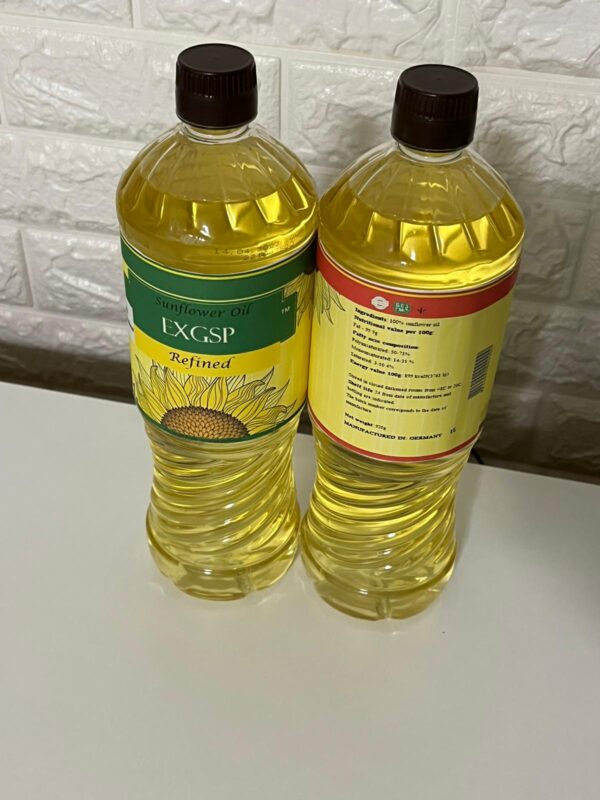
- PET bottles from 1 L to 5 L.
- Jerrycans of 10 L, 18 L and 20 L.
- Tins of 16 L and 18 L.
- Drums, flexitanks and ISO tanks for bulk.
- Private label available on all packs.
FAQs on Sunflower Oil Fatty Acid Composition
What is the main fatty acid in sunflower oil?
In regular sunflower oil it’s linoleic acid, usually 55 to 70%. In high oleic sunflower oil it’s oleic acid, 75 to 90%.
Is sunflower oil high in saturated fat?
No. Total saturated fat is about 10 to 12% in regular oil and 7 to 9% in high oleic oil, among the lowest of common cooking oils.
Does sunflower oil contain omega-3?
Very little. Linolenic acid is usually below 0.3%. If you need omega-3, canola or soybean oil carry more.
How do I check the sunflower oil fatty acid composition of a shipment?
Ask for a certificate of analysis with a full GC fatty acid profile per lot, and have an independent lab test a retained sample if you’re unsure.
Can you supply high oleic sunflower oil with 80% oleic?
Yes. Our standard is 75% minimum, and we can supply 80% plus on request, in bottles, jerrycans or bulk worldwide.
Request a Quote and a Sample COA
If you need a specific sunflower oil fatty acid composition for your product, tell us the grade, the oleic and linoleic range you need, the pack size, quantity and destination port. We’ll send a price and a sample certificate of analysis so you can check the profile before you order. Email info@dthcompanyltd.com, WhatsApp +66 91 765 9104, or use our contact page. You can also browse our sunflower oil range, or read how to request edible oil samples.









12 thoughts on “Sunflower Oil Fatty Acid Composition: 7 Best Proven Facts”